Christmas Leftovers for Birds: What's Safe and What's Not
Christmas leftovers for birds: which scraps are safe, from apples to mild cheese, and why roasting-tin turkey fat, salty food and chocolate stay inside.
In this article
- Which Christmas leftovers can birds eat?
- Why shouldn’t you put turkey fat out for birds?
- Can birds eat Christmas cake, mince pies and pastry?
- Is cheese safe for garden birds?
- Can birds eat leftover potatoes and rice?
- Which festive foods are harmful to birds?
- What about bread?
- Are nuts and fruit from the Christmas table safe?
- Christmas leftovers for birds: at a glance
- How to put leftovers out safely
- How we put this guide together
- Sources
- Frequently asked questions
Some Christmas leftovers are safe for birds, in small amounts: apples and pears, crumbs of Christmas cake or mince pie, a little mild grated cheese and plain cooked potato or rice. Keep turkey fat from the roasting tin, salty or seasoned food, chocolate, avocado, bread and anything mouldy indoors, and put out proper bird food alongside.
The big day leaves most kitchens with a fridge full of odds and ends, and it’s natural to look at the garden and think the birds could use them. In midwinter they can. Short days and long, cold nights mean small birds burn through their reserves fast. The catch is that a handful of festive foods do real harm, and the worst one, the fat in the roasting tin, looks like the most generous gift of all.
This guide goes through the Christmas table item by item, using guidance from the RSPB in the UK, NABU in Germany, the LPO in France, Vogelbescherming Nederland, and the Cornell Lab’s Project FeederWatch. Where these groups disagree, we say so.
Which Christmas leftovers can birds eat?
The short list is fruit, crumbs and a few plain starchy foods. An RSPB wildlife adviser has named crumbs from Christmas cake, mince pies and biscuits, mild grated cheese, cooked or uncooked rice, breakfast cereals, cooked potatoes and fruit as suitable leftovers.
That advice comes with three conditions that run through every bird society’s guidance:
- Nothing salty. The RSPB says salted food dehydrates birds.
- Nothing mouldy. Project FeederWatch warns that some moulds create toxins that are harmful to birds.
- Small amounts. Put out only what birds clear in a day. Vogelbescherming Nederland warns that cooked food scraps spoil quickly and that overfeeding attracts pests.
If a leftover passes all three tests, it’s probably fine as an occasional extra. If you’re not sure whether something was salted, seasoned or cooked in butter, leave it out.
Why shouldn’t you put turkey fat out for birds?
Because it ruins feathers. The RSPB explains that cooking fat from a roast mixes with meat juices into a runny, greasy mixture that sticks to feathers and stops them being waterproof. A bird that can’t keep dry can’t keep warm.
This is the one festive mistake bird groups warn about every December. In 2013 RSPB wildlife adviser Richard James put it bluntly: please don’t put the fat from your roasting tins outside for the birds, because you could be killing them with kindness. The same RSPB advice, reported by BirdGuides, gave three reasons:
- It smears. Soft, greasy fat transfers to feathers when birds feed and coats them.
- It can’t be separated. The fat in a roasting tin is mixed with meat juices and other leftovers.
- It spoils and it’s salty. It goes rancid very quickly, and high levels of salt are toxic to garden birds.
The same goes for goose and duck fat, the dripping from a ham and the fat skimmed off gravy. None of them are the pure fats the RSPB recommends.
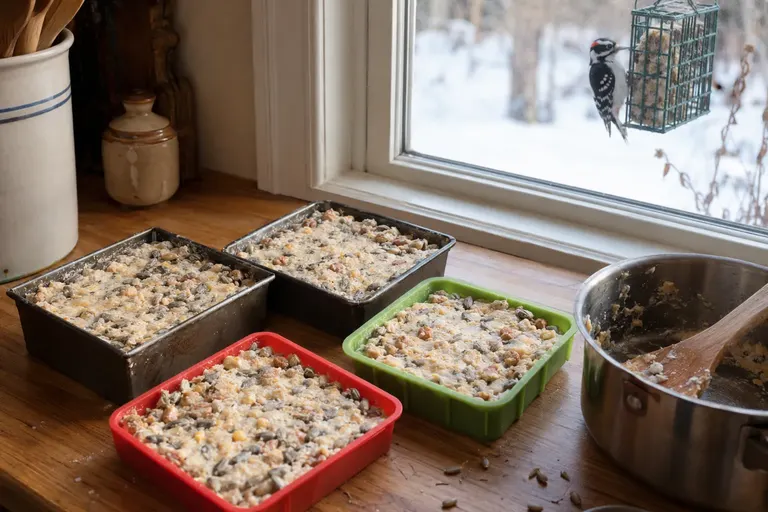
What to do instead: fat is a good winter food when it’s the right kind. The RSPB lists lard and beef suet as safe, and its adviser said only pure fats such as lard and suet should be used for homemade fat balls. Our homemade suet recipes show how to mix them with seed into cakes that set firm.
Can birds eat Christmas cake, mince pies and pastry?
Yes, as crumbs. The RSPB adviser listed crumbs of Christmas cake, mince pies and biscuits among suitable leftovers. Scatter a pinch on a bird table, not whole slices, and skip anything with dried vine fruit if you have a dog or cat.
There are two cautions. First, the LPO in France tells people not to give meal leftovers at all because they are often too salty, too sweet or too cooked for birds. That’s stricter than the UK advice, and a good reason to keep cake and pastry to an occasional pinch rather than a daily feed.
Second, think about pets. The RSPB says that if you have a dog or cat, you shouldn’t put out dried fruit, because vine fruits such as raisins can be toxic to them. Christmas cake, mince pies and Christmas pudding are packed with raisins, sultanas and currants. A dog that finds a pile of cake under the bird table is the bigger risk here.
Is cheese safe for garden birds?
A little mild grated cheese is on the RSPB’s list of suitable leftovers. Other groups are stricter, so keep it small, mild and fresh, and never put out rinds or salty cheese.
This is where national advice splits most clearly:
- RSPB (UK): its wildlife adviser listed mild grated cheese among suitable leftovers.
- LPO (France): says to avoid salted bacon and leftovers of meat and cheese completely.
The common ground is salt. A crumbling of mild cheese on the ground, which robins and blackbirds are used to foraging from, is the most any of these groups would allow. The leftover cheeseboard with its blue cheese, rinds and crackers belongs in the fridge or the bin.
Can birds eat leftover potatoes and rice?
Plain cooked potato and plain rice are on the RSPB adviser’s list, but only plain. Roast potatoes cooked in salted fat, mash made with butter and anything served with gravy fail the salt test.
NABU in Germany is clear that salty food such as bacon or salted potatoes should never be fed. Vogelbescherming Nederland adds that butter and margarine have a laxative effect on birds. So the realistic options are a spoonful of plain boiled or baked potato, or a little plain rice from the edge of the pan before anything was stirred in.
The old story that uncooked rice swells inside birds is a myth, as our guide to whether birds can eat rice explains. Cooked rice still spoils fast, though, so clear up whatever isn’t eaten the same day.
Which festive foods are harmful to birds?
Salty and seasoned food, roasting-tin fat, chocolate, avocado, milk and cream, butter, and anything mouldy are the ones to keep indoors. A few are toxic; most simply do more harm than good.
- Chocolate. The Pet Poison Helpline veterinary team says the theobromine and caffeine in chocolate are toxic to birds and can overstimulate the brain and heart. Selection boxes, chocolate log and chocolate-coated nuts stay inside.
- Avocado. The Merck Veterinary Manual describes avocado as toxic to birds, with caged birds the most sensitive. Keep guacamole and avocado skins off the bird table.
- Salted and seasoned food. Stuffing, gravy, crisps, ham, bacon, pigs in blankets and salted crackers all fail the salt test. The RSPB lists salted food among items to avoid.
- Salted nuts. Project FeederWatch says to avoid salted peanuts and peanuts roasted with coatings or flavourings, which rules out the party bowls.
- Milk, cream and butter. The RSPB says to avoid milk, and Vogelbescherming Nederland says butter and margarine act as a laxative. That includes brandy butter and cream.
- Cooked meat. The LPO says to avoid meat leftovers, and the RSPB warns that cooked food can attract unwanted visitors such as rats.
- Anything mouldy. Mouldy food goes in the bin, not the garden. The RSPB says not to use anything mouldy, and Project FeederWatch warns that some moulds create toxins harmful to birds.
For the wider list, including dried coconut and cooked porridge oats, see our guide to what not to feed birds.
What about bread?
Bread is best left out. NABU says it swells in birds’ stomachs and spoils quickly, and the LPO says never to give it. Leftover bread sauce, stuffing and croutons are also salty. Our full article on whether bread is bad for birds covers the details, including ducks.
Are nuts and fruit from the Christmas table safe?
Fruit is one of the best leftovers you can give. The RSPB says you can put out fruit such as apples and pears, as long as nothing is mouldy or salty, and the LPO recommends seasonal fruit including apples, pears and grapes.
Bruised and soft fruit is fine. The RSPB specifically suggests bruised apples and pears, and the LPO lists withered pears and apples. Halve or chop them and put them on the ground or a low table, where blackbirds, thrushes and robins feed. Our guide to fruit for birds covers which species take what.
Nuts are fine only when plain and unsalted. The RSPB says rigid steel mesh nut feeders are the only safe way to offer nuts to wild birds, so birds peck off small pieces. A bowl of salted mixed nuts doesn’t qualify.
Christmas leftovers for birds: at a glance
| Leftover | OK for birds? | Why |
|---|---|---|
| Apples, pears, grapes | Yes | RSPB and LPO both recommend fruit; remove before it moulds |
| Christmas cake, mince pie crumbs | Yes, crumbs only | Named by an RSPB adviser; skip if you have a dog or cat (raisins) |
| Mild grated cheese | Small amounts | RSPB lists it; the LPO says avoid |
| Plain cooked potato or rice | Small amounts | On the RSPB adviser’s list; no salt, butter or gravy |
| Unsalted nuts | Yes, in a mesh feeder | RSPB says rigid steel mesh only |
| Fat from the roasting tin | No | Smears feathers and ruins waterproofing, per the RSPB |
| Goose or duck fat, dripping | No | Not a pure fat like lard or suet |
| Roast potatoes in salted fat, stuffing, gravy | No | Salt dehydrates birds; NABU says no salted potatoes |
| Salted nuts, crisps, crackers | No | FeederWatch says avoid salted or flavoured peanuts |
| Bread | No | Swells and spoils, says NABU; LPO says never |
| Chocolate | No | Theobromine and caffeine are toxic to birds |
| Avocado, guacamole | No | Toxic to birds, per the Merck Veterinary Manual |
| Milk, cream, butter | No | RSPB says no milk; butter is a laxative, says Vogelbescherming |
| Cooked meat | No | LPO says avoid; cooked food draws rats |
| Anything mouldy | No | Some moulds produce toxins |
How to put leftovers out safely
How you serve scraps matters as much as what they are.
- Put out small amounts. A small handful at a time, so nothing sits overnight. Clear up leftovers before dark.
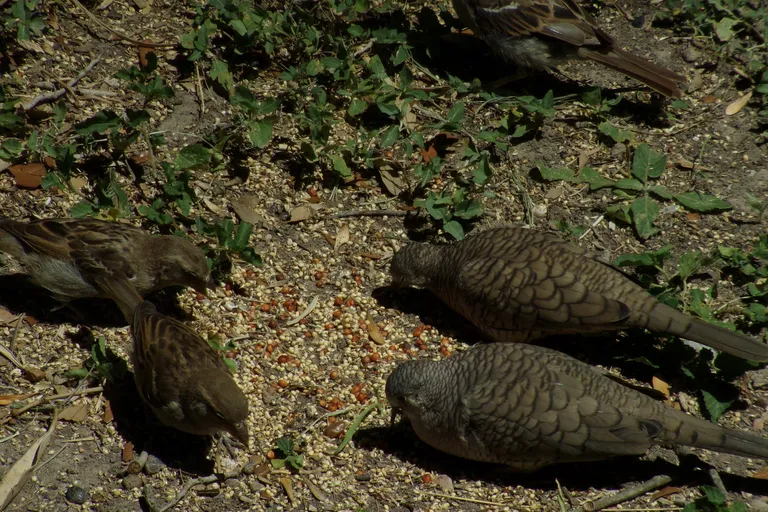
- Use the ground or a low table for soft food. Robins, blackbirds and thrushes feed low, and that’s where crumbs and fruit belong.
- Watch for rats. The RSPB warns that cooked food can attract rats. If you see them, stop putting out scraps and read our guide on keeping rats away from bird feeders.
- Keep the basics going. Leftovers are a festive extra, not a diet. The LPO recommends feeding birds in winter, and especially during long cold spells, with proper food such as black sunflower seed, unsalted peanuts and fat cakes. Our guide to what to feed birds in winter lists the staples.
- Don’t forget water. In a freeze, a clean, unfrozen water dish helps as much as food. The LPO advises renewing water every morning when it freezes. See keeping a bird bath ice-free in winter.
How we put this guide together
We haven’t run feeding trials ourselves. This guide is based on published guidance from the RSPB, NABU, the LPO, Vogelbescherming Nederland, the Cornell Lab’s Project FeederWatch, the Merck Veterinary Manual and the Pet Poison Helpline. Where these sources disagree, as they do on cheese, we’ve set out each position.
Sources
- RSPB: Three ways you can help birds in a cold snap
- RSPB: Household scraps for birds
- RSPB: How and what to feed your garden birds
- BirdGuides: Don’t feed the birds with turkey fat (RSPB advice, 2013)
- NABU: Vogelfütterung, Tipps für die richtige Winterfütterung
- LPO: Nourrir les oiseaux de son jardin en hiver
- Vogelbescherming Nederland: Wat is goed voer?
- Project FeederWatch (Cornell Lab): Food types

Frequently asked questions
Can I put turkey fat out for the birds?
No. The RSPB explains that fat from a roast mixes with meat juices during cooking into a runny, greasy mixture that sticks to feathers and stops them being waterproof. It also tends to be salty and goes rancid quickly. If you want to give birds fat, make a fat cake from pure lard or beef suet instead, which the RSPB lists as safe.
Can birds eat Christmas cake and mince pies?
Crumbs are fine for most gardens. An RSPB wildlife adviser has named crumbs of Christmas cake, mince pies and biscuits among suitable leftovers. Keep it to crumbs, not slabs, because the LPO in France warns that meal leftovers are often too sweet. If you have a dog or cat, skip anything with raisins, sultanas or currants, which the RSPB says can be toxic to pets.
Is cheese OK for garden birds?
A little mild grated cheese is on the RSPB's list of suitable leftovers, and robins and blackbirds will take it from the ground. The LPO in France is stricter and says to avoid cheese leftovers, mainly because so much leftover food is salty. If you offer any, make it a small amount of mild cheese, never rinds or salty cheese, and clear up what is left by evening.
Can birds eat leftover roast potatoes?
Plain cooked potato is fine in small amounts, according to an RSPB wildlife adviser. Roast potatoes are a different matter if they were cooked in salted fat or seasoned, because the RSPB says salted food dehydrates birds and NABU says never to put out salted potatoes. Offer only plain boiled or baked potato with no butter, salt or gravy.
Can I put bread out for birds at Christmas?
It is better not to. Bread is not poisonous, but NABU says it swells in the stomach and spoils quickly, and the LPO advises never giving bread at all. It fills birds up without the fat they need on cold nights. Plain seed, fat cakes made with lard or suet, and chopped apples or pears are far better festive treats.