How to Make Homemade Suet: 3 Easy Recipes for Birds
How to make homemade suet: render beef fat, mix it with oats, cornmeal and seeds, and set it in molds. Three safe recipes, plus which fats and add-ins to avoid.
In this article
- Quick answer: the basic method
- What is suet, and why do birds need it?
- Which fat should you use for homemade suet?
- How do you render suet?
- How do you make suet cakes? Three reliable recipes
- What can you add to homemade suet?
- How do you mold and shape homemade suet?
- How do you serve homemade suet?
- Who comes to suet feeders around the world?
- When should you put out homemade suet?
- How do you store homemade suet?
- Is homemade suet better than store-bought?
- Common mistakes
- Quick facts
- Sources
- Frequently asked questions
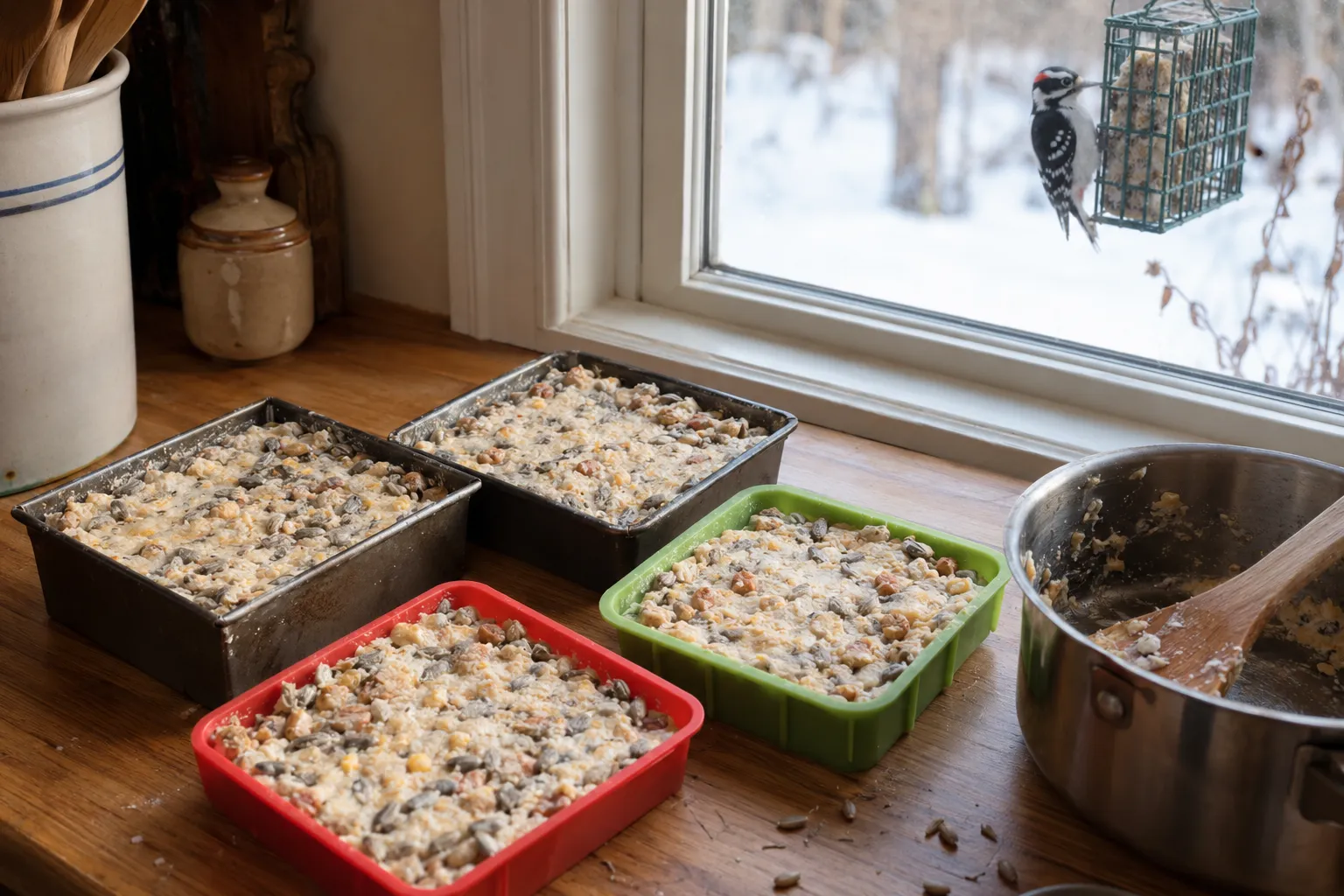
Here is how to make homemade suet: melt plain beef suet or lard over low heat, strain out any solids, then stir in dry ingredients such as quick oats, cornmeal, flour, crunchy peanut butter and seeds. Pour the mix into square molds or muffin tins, chill it until firm and serve it in a suet cage. A reliable starting ratio is roughly 1 part fat to 2 parts dry ingredients, which gives a firm cake that holds together outdoors.
Homemade suet is inexpensive, easy to customize and can be very popular with woodpeckers, nuthatches, chickadees, wrens and tits. The key is choosing the right fat, keeping salt and sugar out and serving it when the weather is cool enough to keep it firm.
Quick answer: the basic method
- Render the fat. Melt chopped beef suet or lard over low heat. Strain it through a fine sieve or cheesecloth.
- Mix in dry ingredients. Stir in oats, cornmeal, flour, peanut butter and seeds until the mix is thick, like cookie dough.
- Mold it. Press into square containers, muffin tins or molds sized for your suet cage.
- Chill. Refrigerate or freeze until solid.
- Serve and store. Put one cake out in a suet feeder. Wrap and freeze the rest.
What is suet, and why do birds need it?
Strictly speaking, suet is the hard, white fat found around the kidneys and loins of cattle and sheep. In bird feeding, “suet” has come to mean any fat-based cake or block, often mixed with seeds, grain, nuts, fruit or insects.
Fat is the most energy-dense food a bird can eat. Gram for gram, it holds more than twice the energy of carbohydrates or protein. That matters in winter, when small birds must eat enough in short days to survive long, cold nights. A chickadee or a tit may use up a large share of its fat reserves overnight just to keep warm, then must rebuild them the next day. Our guide on how birds stay warm in winter explains how they burn through those reserves.
Suet also appeals to insect-eating birds that ignore seed. Woodpeckers, nuthatches, wrens and some warblers naturally eat insect larvae, which are rich in fat and protein. Suet is a close substitute when insects are scarce.
Which fat should you use for homemade suet?
The fat you choose determines whether your cakes stay firm, stay fresh and stay safe for birds.
| Fat | Good for suet? | Notes |
|---|---|---|
| Raw beef suet (kidney fat) | Yes, the best choice | Hard and firm once rendered. Ask a butcher or grocery meat counter. |
| Lard (rendered pork fat) | Yes | Easy to buy. Softer than beef suet, so add more dry ingredients. |
| Beef tallow (already rendered) | Yes | Convenient. Check that it is plain, with no added salt or flavorings. |
| Bacon grease | No | Often salty, may contain curing preservatives, stays soft. |
| Roasting pan drippings | No | Mixed with meat juices and salt, stays greasy, spoils quickly. |
| Margarine and vegetable spreads | No | Too soft, can smear on feathers. |
| Vegetable oil | No | Liquid at room temperature, smears on feathers. |
| Solid vegetable shortening | Occasionally used | Some recipes use it, but it is softer than suet. Beef suet or lard is preferred. |
Why soft fats are a problem
Soft or liquid fats can smear onto feathers. Feathers insulate and waterproof a bird only when their fine structure is clean and properly aligned. Greasy feathers lose that function, which can be dangerous in cold, wet weather. Britain’s RSPB and other conservation groups specifically warn against putting out cooking fat from roasting tins for this reason.
Why salt matters
Small birds are sensitive to salt, and they cannot easily process large amounts. Keep salted fats, salted nuts and salty snacks out of your mix. Our guide to what not to feed birds covers other foods to avoid.
How do you render suet?
Rendering melts the fat and separates it from connective tissue, meat scraps and water. Rendered suet sets harder, resists spoiling and is less likely to go rancid than raw fat.
Step-by-step rendering
- Chop or grind the suet. Cut raw beef suet into small cubes, about half an inch, or ask your butcher to grind it. Smaller pieces melt faster and more evenly.
- Melt on low heat. Place the fat in a heavy saucepan or slow cooker on low. Stir occasionally. It will take roughly 30 minutes to a couple of hours depending on quantity. Do not let it smoke.
- Strain. Pour the liquid fat through a fine sieve lined with cheesecloth into a heat-safe bowl. Discard the solids, which are called cracklings.
- Cool and set. Let the fat cool until it turns solid and white.
- Render twice for firmer cakes. Many people melt and strain the fat a second time. This removes more impurities and gives a harder cake that holds up better in mild weather.
Safety tips for rendering
- Use low heat. Hot fat can cause serious burns and can catch fire if overheated.
- Never leave melting fat unattended on the stove.
- Keep children and pets away from the stove while you work.
- Let fat cool slightly before mixing in peanut butter or seeds, so they do not scorch.
- Never pour fat down the drain. Let leftover fat solidify and put it in the trash.
How do you make suet cakes? Three reliable recipes
These recipes use common kitchen ingredients. Treat the amounts as starting points. The right texture is thick and crumbly, like stiff cookie dough, not runny.
Recipe 1: Basic seed suet
Good for chickadees, titmice, nuthatches, woodpeckers and tits.
- 2 cups rendered beef suet or lard
- 2 cups quick-cooking oats
- 1 cup cornmeal
- 1 cup black oil sunflower seed or sunflower hearts
- 1/2 cup chopped unsalted peanuts
Method: Melt the fat, remove from heat and let it cool slightly. Stir in the oats and cornmeal, then the seeds and peanuts. Press into molds and chill until firm.
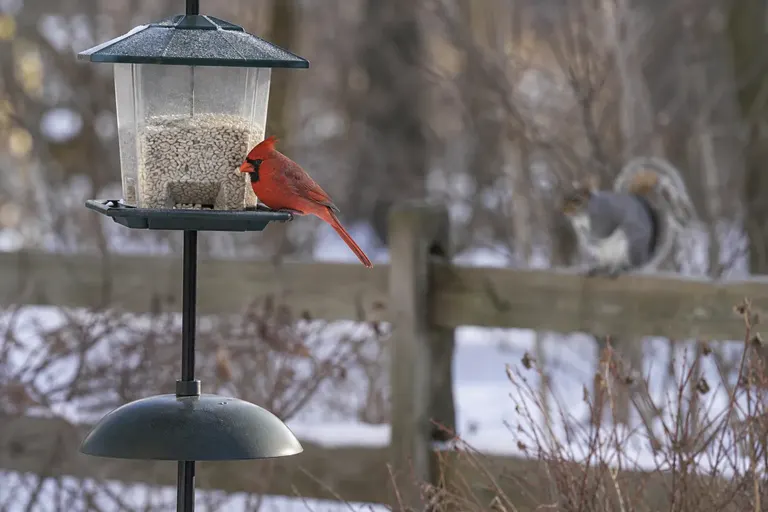
Sunflower hearts, which are seeds with the shells already removed, reduce mess under the feeder. Black oil sunflower is one of the most widely eaten seeds at feeders across North America, thanks to its thin shell and high oil content.
Recipe 2: No-melt suet dough
A firmer, crumbly mix that holds up better in mild weather and is especially popular with wrens, bluebirds and other birds that do not usually eat hard fat.
- 1 cup rendered suet or lard
- 1 cup crunchy peanut butter, unsalted and without added sugar if possible
- 2 cups quick-cooking oats
- 2 cups cornmeal
- 1 cup whole wheat or all-purpose flour
Method: Melt the fat and peanut butter together over low heat, stirring until smooth. Remove from heat. Mix the oats, cornmeal and flour in a large bowl, then pour in the fat mixture and stir until combined. The dough should be thick and crumbly. Press firmly into molds or roll into balls and chill.
The high proportion of flour and cornmeal is what makes this recipe “no-melt.” It is not completely heatproof, but it softens far less than plain fat. Many older recipes include a little sugar; you can leave it out, since birds do not need it. Read our guide on feeding birds peanut butter for more on choosing a safe peanut butter.
Recipe 3: Insect and fruit suet
Designed for insect eaters such as woodpeckers, wrens, bluebirds, mockingbirds and, in Europe, robins and blackbirds.
- 2 cups rendered suet or lard
- 1 cup quick-cooking oats
- 1 cup cornmeal
- 1/2 cup dried mealworms, chopped
- 1/2 cup chopped dried fruit, such as cranberries, cherries, blueberries or chopped apples
Method: Melt the fat and let it cool slightly. Stir in the oats and cornmeal, then the mealworms and fruit. Press into molds and chill.
Soak dried fruit in warm water for 10 to 15 minutes and pat it dry before mixing, to soften it. If you have dogs, note that raisins and grapes are toxic to them, so avoid those if dogs can reach fallen suet.
What can you add to homemade suet?
Good add-ins, in moderation:
- Grains: quick oats, rolled oats, cornmeal, whole wheat flour.
- Seeds: black oil sunflower, sunflower hearts, white proso millet, nyjer (mostly for finches, and a small amount goes a long way).
- Nuts: chopped unsalted peanuts, walnuts, pecans, almonds.
- Insects: dried mealworms, dried black soldier fly larvae.
- Fruit: chopped dried cranberries, cherries, blueberries, apples, currants.
- Other: unsalted crunchy peanut butter, crushed eggshells (baked first, for calcium in spring).
Avoid:
- Salt and salty foods, including salted nuts, chips and crackers.
- Chocolate, which contains compounds toxic to many animals.
- Moldy bread, grain or nuts. Molds can produce toxins harmful to birds. Bread is poor bird food even when fresh, since it fills birds up with little nutrition.
- Uncooked dried beans and anything spoiled or rancid.
- Honey and syrups, which add stickiness and spoil easily.
How do you mold and shape homemade suet?
The shape depends on how you plan to serve it.
Square cakes for suet cages
Most wire suet cages are sized for commercial cakes that are roughly 4 1/2 inches square and about 1 1/2 inches thick. Use a square plastic food container, a small baking dish or a silicone mold of similar size. Line with wax paper for easy release. Check the inside of your own feeder before you pick a mold.
Muffin tin rounds
Muffin tins make handy portions for tray feeders or can be wrapped in wax paper and frozen individually.
Suet balls
Roll a firm mix into balls about the size of a golf ball. In Europe, fat balls are a staple of garden bird feeding. Serve them in a dedicated fat ball feeder, never in the plastic mesh bags they are often sold in. Conservation groups warn that birds can catch feet, tongues and bills in mesh.
Log and pine cone feeders
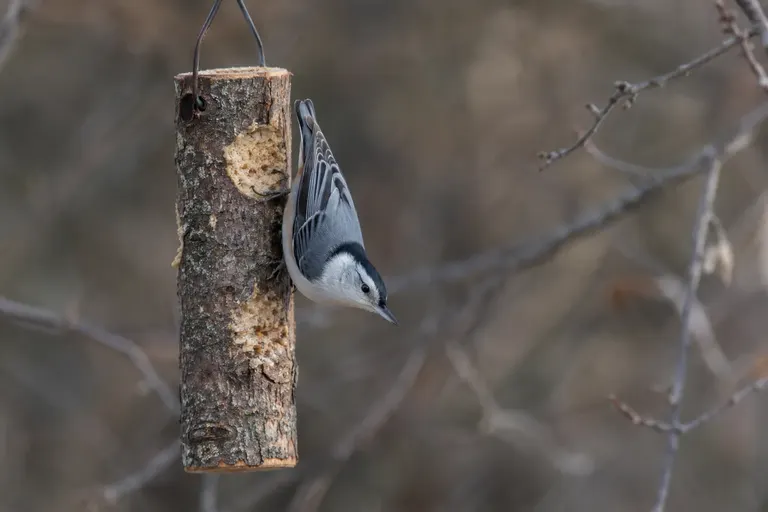
Drill 1 to 1 1/2 inch holes in a short hanging log and pack them with no-melt suet dough. Woodpeckers and nuthatches cling to the bark to feed, much as they would on a tree. Pine cones rolled in suet dough and seeds make an easy project to do with children.
Coconut shells
Half coconut shells filled with fat and seed are popular in Britain and across Europe. Hang them open side down to shed rain.
How do you serve homemade suet?
- Use a suet cage or log feeder. Cages keep the cake in one piece and let clinging birds feed naturally. Our guide to suet cake blends compares types of cakes.
- Hang it in shade. Direct sun softens suet quickly, even in cool weather.
- Hang near cover but out of cats’ reach. A spot 10 to 12 feet from shrubs gives birds shelter while reducing ambush risk.
- Try an upside-down feeder if starlings take over. Woodpeckers, nuthatches and chickadees feed easily while hanging upside down, but starlings and grackles find it harder.
- Start small. Put out one cake at a time so it gets eaten while still fresh.
Who comes to suet feeders around the world?
| Region | Birds that commonly visit suet or fat feeders |
|---|---|
| North America | Downy, Hairy and Red-bellied Woodpeckers, Northern Flicker, White-breasted and Red-breasted Nuthatches, chickadees, Tufted Titmouse, Carolina Wren, Blue Jay, Yellow-rumped Warbler, European Starling |
| United Kingdom and Europe | Blue Tit, Great Tit, Coal Tit, Long-tailed Tit, Great Spotted Woodpecker, Eurasian Nuthatch, European Robin, House Sparrow, starlings |
| Turkey | Great Tit, Blue Tit, Eurasian Nuthatch, Syrian and Great Spotted Woodpeckers, sparrows |
| Brazil | Suet feeding is less common because of the warm climate, and fruit feeders are more popular. In cooler southern highlands, birds such as thrushes and tanagers may take fat mixes in winter. |
Our species pages for the Downy Woodpecker and Carolina Wren include specific tips for attracting these regular suet visitors.
When should you put out homemade suet?
Suet is best in cool weather. As a rough guide, many bird feeders offer plain fat when daytime highs stay below about 50°F (10°C) and switch to no-melt dough or stop serving suet when it gets warmer.
In warm weather, suet softens, drips and goes rancid. Melted fat can coat feathers. It also spoils faster and attracts ants, flies, raccoons and other unwanted visitors. If you do offer suet in summer, use the no-melt recipe, keep the feeder in shade and replace cakes often. Our guide on whether to feed birds in summer looks at the trade-offs.
In winter, suet is one of the most useful foods you can offer. See our guide to what to feed birds in winter for how it fits with seed and water.
How do you store homemade suet?
- Freeze extras. Wrap each cake in wax paper, then store in a freezer bag. Frozen suet keeps for several months.
- Refrigerate short-term. Cakes you plan to use within a few weeks can stay in the refrigerator.
- Label and date. Use the oldest cakes first.
- Check before serving. Throw away suet that smells sour or “off,” shows mold or has turned oily and soft.
Is homemade suet better than store-bought?
Neither is automatically better. Each has trade-offs worth knowing.
- Control over ingredients. Making your own lets you choose exactly what goes in, leave out sugar and fillers, and tailor the mix to the birds you see, for example more insects for wrens or more peanuts for woodpeckers.
- Consistency. Commercial cakes are usually rendered and pressed to a uniform firmness, and many are formulated to resist softening in warmer weather. Homemade cakes vary more from batch to batch.
- Freshness. Homemade suet has no preservatives, so it should be frozen and used promptly. That is an advantage if you use it quickly and a drawback if cakes sit outside for weeks.
- Time and mess. Rendering takes an hour or two and leaves a greasy pan. Many people make a large batch once or twice a winter and freeze it.
Birds do not seem to care much either way, as long as the fat is fresh, firm and free of salt.
Common mistakes
- Using bacon grease or pan drippings. Too salty and too soft.
- Leaving out the dry ingredients. Plain melted lard stays soft and greasy. Dry ingredients bind the cake.
- Serving suet in hot weather without a no-melt recipe.
- Using mesh bags for fat balls, which can trap birds’ feet and tongues.
- Putting out too much at once, so it goes rancid before birds finish it.
- Not cleaning the feeder. Scrub suet cages periodically with hot, soapy water to remove old fat and mold.
- Rendering on high heat, which scorches fat and creates a fire risk.
Quick facts
- Beef suet, the hard fat around the kidneys, is the best base.
- Lard works too but needs more dry ingredients to stay firm.
- A ratio of about 1 part fat to 2 parts dry ingredients makes a firm cake.
- Avoid bacon grease, pan drippings, margarine, vegetable oil and salt.
- Serve suet mainly when the weather is cool, and use no-melt dough in mild weather.
- Never use mesh bags for fat balls.
- Freeze extra cakes, wrapped individually, for several months.
Sources
- Cornell Lab of Ornithology, White-breasted Nuthatch species account. https://www.allaboutbirds.org/guide/White-breasted_Nuthatch/overview
- Cornell Lab of Ornithology, Carolina Wren species account. https://www.allaboutbirds.org/guide/Carolina_Wren/overview
- Project FeederWatch, Cornell Lab of Ornithology and Birds Canada. https://feederwatch.org
- RSPB (Royal Society for the Protection of Birds). https://www.rspb.org.uk

Frequently asked questions
What fat is best for homemade suet?
Rendered beef suet, the hard fat from around the kidneys and loins, is the traditional choice because it sets firm and resists melting. Lard, which is rendered pork fat, also works and is easy to find, though it is softer, so mix it with dry ingredients to firm it up. Avoid bacon grease, cooking drippings, margarine and vegetable oils.
Is bacon grease safe for birds?
Most bird experts advise against it. Bacon grease is often high in salt and may contain preservatives such as nitrites from curing. It also tends to stay soft, so it can smear onto feathers and reduce their insulation and waterproofing. Pan drippings from roasts carry similar problems. Use plain rendered suet or lard instead.
How long does homemade suet last?
Wrapped and frozen, homemade suet cakes keep well for several months. In the refrigerator, plan on a few weeks. Outdoors, a cake usually lasts days to a couple of weeks depending on how many birds eat it and the temperature. Replace any suet that smells sour, looks moldy or has gone soft and oily.
Can you put out homemade suet in summer?
It is best to offer suet mainly in cool weather. Soft, melting fat can mat feathers and goes rancid quickly in heat. If you want to feed suet in warm months, use a no-melt recipe with plenty of flour and cornmeal, keep the feeder in shade and replace cakes often. Many people switch to seed and water in summer.
Which birds eat homemade suet?
In North America, woodpeckers, nuthatches, chickadees, titmice, wrens, jays and some warblers eat suet, as do starlings. In Europe and Turkey, tits, Great Spotted Woodpeckers, Eurasian Nuthatches, robins and long-tailed tits commonly visit fat feeders. Adding peanuts, insects or fruit to the mix broadens which species come.