Fruit for Birds: What to Offer and When
Fruit for birds: oranges and jelly for orioles in spring, apples and raisins for thrushes in winter, banana and papaya in the tropics, and how to serve it.
In this article
- Quick answer: fruit by season and bird
- Which birds eat fruit?
- What fruit should you offer, and how?
- Is grape jelly good for birds?
- When is the best time to offer fruit?
- What is the best way to set up a fruit station?
- Should you offer fruit or nectar?
- Why is planting fruit better than putting it out?
- What fruit should you not give birds?
- Can fruit make birds drunk?
- How do you keep fruit feeders clean and safe?
- Common mistakes when feeding fruit to birds
- Myths and facts
- Quick facts
- Sources
- Frequently asked questions
Fruit is a valuable food for birds, but only for the right birds at the right time. Offer halved oranges and small amounts of grape jelly in spring and late summer for orioles, tanagers and catbirds; chopped apples, pears and soaked raisins in winter for thrushes, robins, blackbirds and mockingbirds; and bananas, papaya and mango year round in tropical regions. Remove seeds and pits, avoid avocado, and replace fruit daily in warm weather and every 2 or 3 days in cool weather.
Most seed-eating birds, such as finches and sparrows, will largely ignore fruit. That is fine. Fruit is how you reach an entirely different set of visitors.
Quick answer: fruit by season and bird
| Season | Fruit to offer | Birds most likely to come |
|---|---|---|
| Spring (migration) | Orange halves, grape jelly, soaked raisins | Orioles, tanagers, catbirds, House Finches, warblers |
| Summer | Berries, cherries without pits, melon, orange | Catbirds, mockingbirds, robins, orioles, waxwings |
| Late summer to autumn | Orange, grapes, apple, jelly | Orioles fattening for migration, thrushes, tanagers |
| Winter | Halved or chopped apples and pears, soaked raisins, softened cranberries | Robins, thrushes, blackbirds, mockingbirds, waxwings, starlings |
| Year round in the tropics | Banana, papaya, mango, orange, watermelon | Tanagers, Bananaquits, thrushes, honeycreepers, bulbuls |
Which birds eat fruit?
Specialist and seasonal fruit eaters
Some birds rely heavily on fruit for part of the year. Cedar Waxwings in North America and Bohemian Waxwings across the northern hemisphere eat fruit for much of the year, often swallowing berries whole. American Robins that stay north for the winter switch mostly to fruit when the ground freezes and worms are out of reach. Our species guides to the Cedar Waxwing and American Robin explain how their diets shift.
Insect eaters that add fruit
Many birds eat mainly insects when breeding and add fruit before and after. Baltimore and Bullock’s Orioles, Gray Catbirds, Northern Mockingbirds, Scarlet and Summer Tanagers, and many warblers and vireos eat ripe fruit in late summer and autumn, when fat reserves for migration matter. Some studies suggest that migrating songbirds may even prefer fruits rich in fat, such as those of spicebush and dogwood, in autumn.
Occasional fruit takers
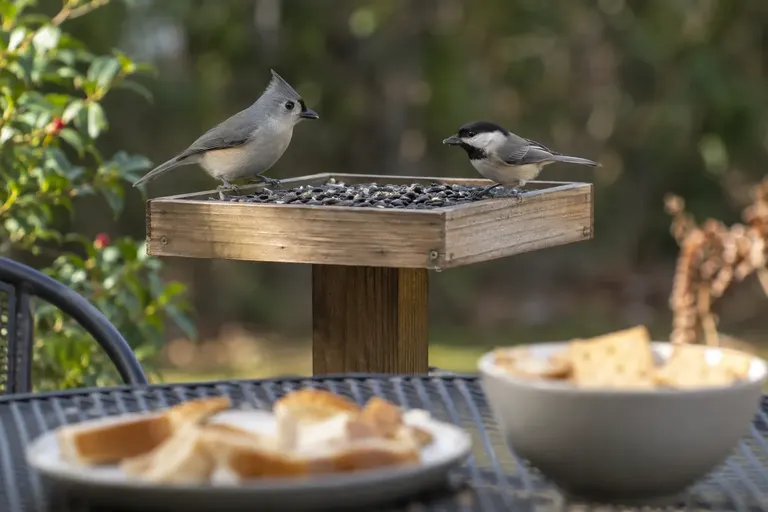
Woodpeckers, jays, starlings, House Finches and some sparrows will sample fruit, especially in winter. Red-bellied Woodpeckers readily take oranges and apples, for example.
Around the world
- UK and Europe: Common Blackbirds, Song Thrushes, Mistle Thrushes, European Starlings and European Robins eat fruit in the garden. In hard winters, Fieldfares and Redwings from Scandinavia arrive to feed on windfall apples. Blackcaps, many of which now winter in Britain and Ireland rather than farther south, eat apples and fat in gardens.
- Turkey: Blackbirds, starlings and, in the south, White-spectacled Bulbuls eat figs, mulberries, grapes and apples. Mulberry and fig trees are major natural food sources in summer.
- Brazil: Fruit feeding is a national habit. Bananas, papayas and oranges on a board or spike draw Sayaca and Palm Tanagers, Bananaquits, Rufous-bellied Thrushes, Blue Dacnises, Green Honeycreepers and many more. In the Atlantic Forest regions, a single fruit feeder can host a remarkable variety of tanagers.
What fruit should you offer, and how?
Oranges and citrus
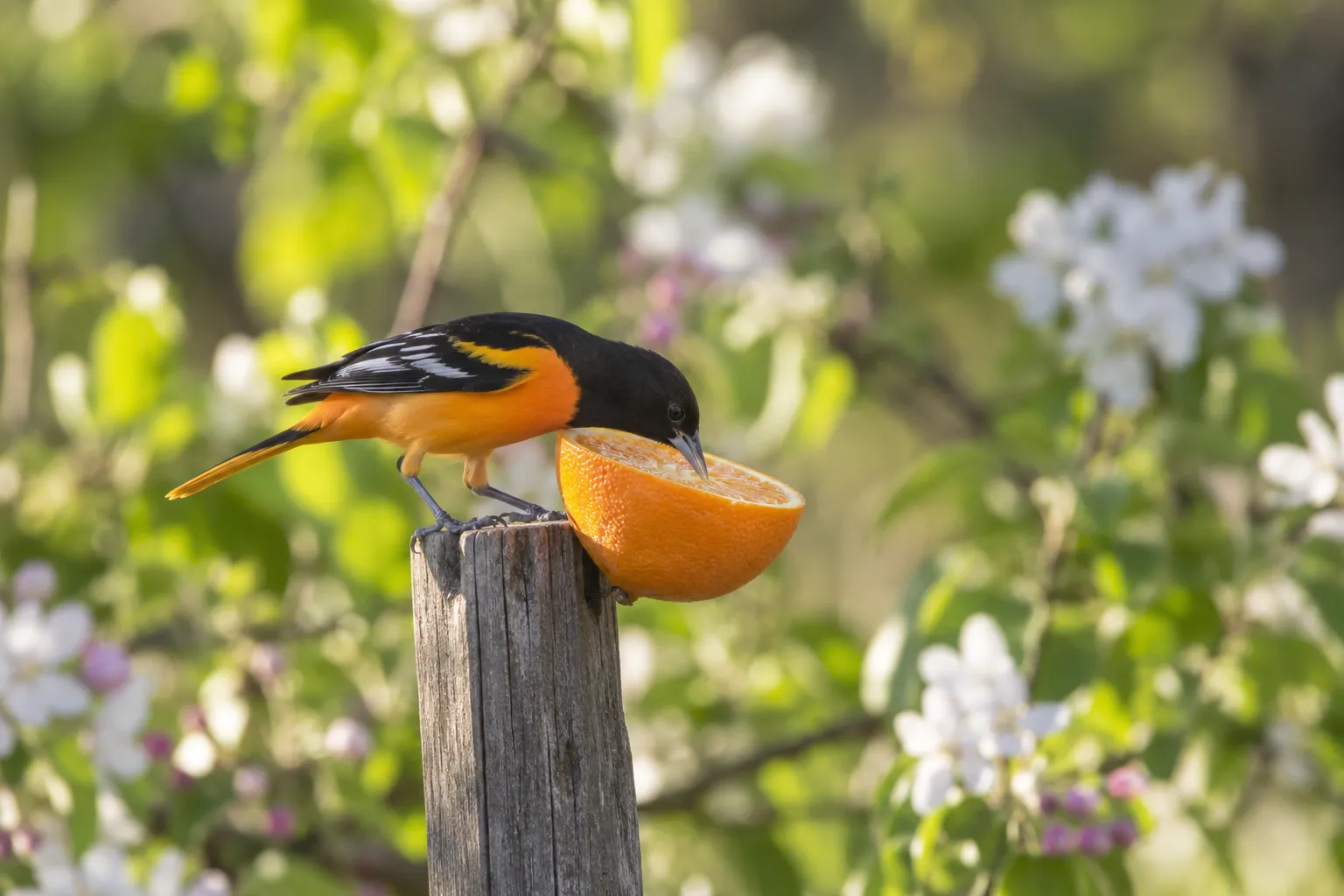
Cut oranges in half and press them onto a nail, spike or dedicated fruit feeder, cut side out. Orioles, tanagers, catbirds, woodpeckers and, in the tropics, tanagers and Bananaquits will feed on the pulp. Replace halves every day or two, and more often in heat. Grapefruit and tangerines work too, though oranges are the most widely used.
Apples and pears
Cut into halves, quarters or chunks. Remove the seeds and core first. Apple seeds contain amygdalin, which can release cyanide when crushed and digested. A few seeds are unlikely to harm a bird, but there is no reason to include them. Soft, bruised or windfall apples are fine if they are not moldy. In winter, halved apples placed on the lawn or a low tray are one of the best ways to attract thrushes and blackbirds in Europe and robins and mockingbirds in North America.
Bananas
Peel, or cut the whole banana lengthwise and leave it in the skin. Bananas are a staple at tropical fruit feeders and are widely used in Brazil. In temperate regions they draw fewer birds but are still taken by orioles, mockingbirds and tanagers. They turn brown fast, so offer small amounts.
Berries
Blueberries, raspberries, blackberries, strawberries, elderberries and mulberries are eaten by a huge range of birds. Offer fresh or thawed frozen berries on a tray. Even better, plant fruiting shrubs, which feed birds without any daily upkeep. See our guide to berry shrubs that feed birds all winter for native options by region.
Grapes, raisins and currants
Halve large grapes for small birds. Soak raisins, sultanas or currants in water for about an hour, which plumps them and makes them easier to eat. Grapes and raisins are toxic to dogs, so place them where pets cannot reach, but they are not known to harm wild birds.
Melon, papaya and mango
Cut into chunks or slices and offer on a tray or spike. These are especially useful in warm climates. Remove large seeds, and replace melon quickly, because it ferments and attracts insects fast.
Cherries, plums and peaches
Remove pits first. Stone-fruit pits also contain cyanide-releasing compounds and can be a choking hazard. Cut the flesh into chunks.
Dried fruit
Unsweetened dried cranberries, cherries, blueberries and chopped dates or figs can be softened in water before offering. Avoid sugared, sulfured or flavored dried fruit when you can, and never offer candied fruit.
Is grape jelly good for birds?
Grape jelly is a classic oriole food in North America. Baltimore Orioles, Orchard Orioles and Gray Catbirds come readily to small dishes of it. It is mostly sugar, which gives quick energy to birds that have just finished migration.
Use it with restraint:
- Offer small amounts. A couple of tablespoons in a shallow dish or a jelly cup, refreshed daily.
- Choose plain jelly. Avoid sugar-free versions with artificial sweeteners. Some people prefer lower-sugar jelly made with fruit juice.
- Cut back in the nesting season. Nestlings need insects, and parent birds that fill up on jelly may bring less protein to the nest. Many experienced feeders reduce jelly after the first few weeks and let orioles return to insects.
- Keep it clean. Jelly on feathers is sticky, so use cups or dishes that birds perch beside rather than wade into.
For a broader look at how orioles use feeders across the season, see our guide to the Baltimore Oriole.
When is the best time to offer fruit?
Spring migration
This is the peak time for orioles and tanagers in North America. Set out oranges and jelly a week or so before the usual arrival date for your area. Arrival typically runs from mid-April in the southern US to early or mid-May in the northern states and southern Canada. First arrivals are hungry and looking for sugar, and early feeding can help a pair settle nearby.
Nesting season
Once birds are feeding young, many switch to insects, and fruit visits fall. Keep offering small amounts of fruit if birds still come, but do not push sugary foods. Mealworms help insect-eating parents. See our mealworm guide for tips.
Late summer and autumn
Orioles, catbirds, tanagers and thrushes return to fruit before migration, as they put on fat. Oranges, grapes and berries are all useful. This is also when natural fruit is abundant, so feeder visits vary.
Winter
Fruit becomes important for robins, thrushes, mockingbirds, waxwings and, in Europe, blackbirds, Fieldfares and Redwings. Frost and snow can leave these birds with few options. Apples and soaked raisins on the ground are the classic winter offering. For the wider winter menu, see what to feed birds in winter.
Southern hemisphere and tropics
In Brazil and other tropical and subtropical regions, fruit can be offered year round, and it often draws more birds than seed. Seasons are reversed in the southern hemisphere, so the local breeding season, roughly September to January in much of southern Brazil, is when many birds shift toward insects for their young.
What is the best way to set up a fruit station?
You do not need special equipment. A few simple setups cover most situations.
Spikes and nails
A short stainless nail or spike on a post, fence rail or tree limb holds an orange half, an apple half or a slice of melon firmly. Birds perch on the rail and feed from the cut face. This is the simplest oriole setup, and it is widely used for tanagers in Brazil.
Trays and platforms
A shallow tray with drainage holes suits chopped apple, soaked raisins, berries, banana and grapes. It works for thrushes, robins, mockingbirds and blackbirds, which prefer a flat surface. Place a low tray near shrubs so shy birds have cover. Keep it clear of dense ground cover where cats can hide.
Small dishes and cups
Jelly and small berries do best in a shallow dish or cup, which keeps them from spreading onto feathers and makes daily cleaning easy.
On the ground
In winter, simply scattering apple halves and soaked raisins on the lawn is often the most effective approach for thrushes and blackbirds, which naturally forage on the ground. Move the spot every few days so leftovers do not build up.
A simple starter setup
- Choose a spot visible from a window, within a short flight of trees or shrubs.
- Fix one spike or nail to a post for orange or apple halves.
- Add a small tray with drainage for chopped fruit and soaked raisins.
- In spring, add a small dish of jelly for orioles and catbirds.
- Check daily. Remove anything brown, slimy, moldy or covered in wasps.
- Keep a water source nearby. Many fruit eaters, especially robins and thrushes, bathe often.
Should you offer fruit or nectar?
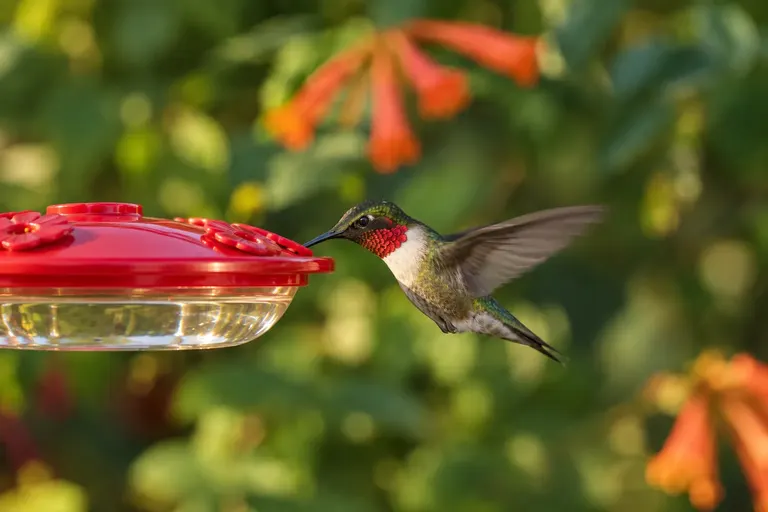
They attract different birds and are not interchangeable. Nectar, a plain solution of white sugar and water, feeds hummingbirds in the Americas and is also taken by orioles and, in the tropics, by Bananaquits and some tanagers. Fruit feeds a broader set of birds that eat whole food rather than sipping liquid. Many people in North America offer both in spring: nectar for hummingbirds and orioles, oranges and jelly for orioles and catbirds. Our guide to hummingbird nectar covers the correct 4:1 recipe and why dye is unnecessary.
Why is planting fruit better than putting it out?
Feeding fruit is a good way to see birds up close, but a garden full of fruiting plants does more. Native fruiting shrubs and trees feed birds across months without daily work, and many ripen in a sequence that matches bird needs. Early summer fruits such as serviceberry and mulberry feed breeding birds. Late summer fruits such as elderberry, dogwood and spicebush fuel autumn migrants. Persistent winter fruits, such as winterberry holly, hawthorn, crabapple and many viburnums, carry thrushes and waxwings through the cold months.
Fruit-eating birds return the favor. By swallowing fruit and passing seeds, they disperse plants across the landscape. Many native shrubs depend on birds to spread. In Brazil’s Atlantic Forest, for example, tanagers, thrushes and toucans are among the key dispersers of tree seeds, and in European hedgerows, thrushes spread hawthorn, rowan and holly.
In a small garden, even two or three fruiting shrubs can make a noticeable difference. Choose species native to your region, since they tend to suit local birds and support more insects, which nesting birds need.
What fruit should you not give birds?
- Avocado. Avocado contains persin, and it is widely reported to be toxic to birds, particularly pet parrots. Keep it off the menu.
- Seeds and pits of apples, cherries, apricots, peaches and plums. They contain compounds that can release cyanide. Remove them.
- Moldy or fermented fruit. Mold can produce toxins, and fermented fruit contains alcohol.
- Fruit in syrup, candied fruit or fruit pies. Too much sugar and additives.
- Rhubarb. The leaves are toxic, and the stalks are not a useful bird food.
Our wider list of what not to feed birds covers other risky foods.
Can fruit make birds drunk?
It can, though not usually from feeders. Waxwings and some thrushes eat large quantities of berries, and in late winter or after freeze-thaw cycles, berries left on the plant may ferment and contain alcohol. There are documented cases of Cedar Waxwings and Bohemian Waxwings becoming intoxicated, flying erratically and hitting windows or falling from perches. Waxwings are thought to have relatively large livers for their size, which may help them process small amounts of alcohol, but a big feed of fermented fruit can still overwhelm them.
At the feeder, the practical lesson is simple: replace fruit before it ferments, especially in warm weather.
How do you keep fruit feeders clean and safe?
Fruit spoils faster than seed, so feeding fruit means daily attention.
- Offer small amounts. Put out only what birds eat in a day.
- Replace fruit daily in warm weather and every two or three days in cool weather.
- Wash dishes and jelly cups in hot, soapy water every few days, rinse well and let them dry.
- Watch for insects. Wasps, hornets, bees and fruit flies are drawn to fruit and jelly. Moving a feeder a few feet can help, as can briefly removing fruit if wasps take over.
- Place fruit away from windows or treat windows to reduce collisions, since fruit-eating birds such as waxwings often fly fast in flocks.
- Keep fruit out of reach of pets if it includes grapes or raisins.
- Rake up fallen fruit so it does not rot on the ground and attract rats.
Common mistakes when feeding fruit to birds
- Putting out too much at once. Large piles rot before birds finish them.
- Giving up after a few days. Fruit eaters may take time to find a new food source. Consistency during migration windows helps.
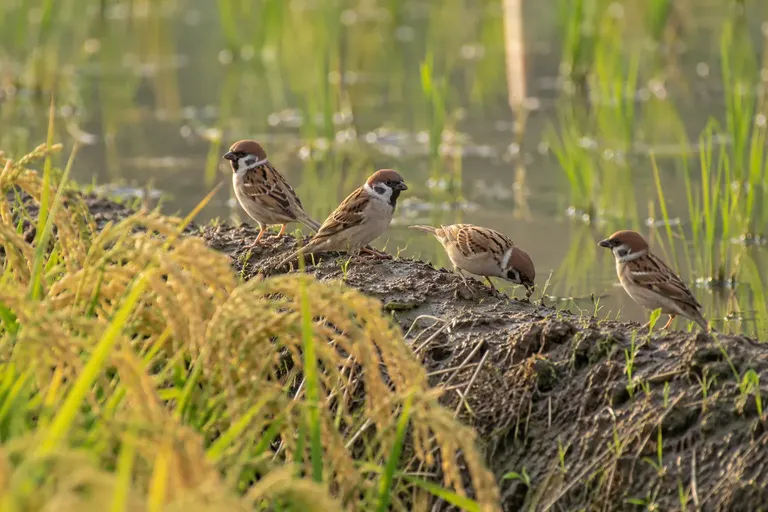
- Offering fruit to the wrong birds. Goldfinches and sparrows will rarely touch it. Match fruit to the species you have or want.
- Leaving jelly out all summer in large amounts. Keep it modest and cut back during nesting.
- Forgetting to remove seeds and pits. Take a few seconds to cut them out.
- Placing fruit only high up. Many fruit eaters, such as thrushes, blackbirds and robins, prefer to feed on or near the ground.
Myths and facts
Myth: Birds cannot eat citrus. Many birds, including orioles and tanagers, feed readily on oranges.
Myth: Grapes are poisonous to birds because they are poisonous to dogs. There is no good evidence that wild birds are harmed by grapes. Many birds eat wild grapes.
Myth: Fruit feeding makes birds dependent. Fruit is a small part of what most birds eat, and birds keep foraging naturally.
Fact: Planting fruit is better than buying it. A mix of native fruiting shrubs and trees feeds birds across seasons, supports insects and saves money.
Quick facts
- Orioles, tanagers, catbirds, thrushes, waxwings and mockingbirds are among the most frequent fruit eaters in North America.
- Blackbirds, thrushes, Fieldfares, Redwings and wintering Blackcaps take fruit in European gardens.
- Brazilian fruit feeders can attract many species of tanagers in a single morning.
- Remove apple seeds and stone-fruit pits before offering fruit.
- Avocado should never be offered to birds.
- Fermenting berries can intoxicate waxwings in late winter.
Sources
- Cornell Lab of Ornithology, All About Birds: Baltimore Oriole
- Cornell Lab of Ornithology, All About Birds: Cedar Waxwing
- Royal Society for the Protection of Birds: rspb.org.uk
- National Audubon Society: audubon.org
Frequently asked questions
What fruit can birds eat safely?
Most common fruits are safe for wild birds in moderation: apples and pears without seeds, oranges, bananas, grapes, berries, melon, papaya, mango, cherries without pits and soaked raisins or sultanas. Offer fresh, ripe or slightly soft fruit that is not moldy. Avoid avocado, which is toxic to birds, and remove apple seeds and stone-fruit pits, which contain compounds that release cyanide.
When should I put out oranges for orioles?
In eastern and central North America, put out oranges and grape jelly just before orioles arrive in spring, usually from mid-April in the South to early May farther north. Birds are hungry after migration and look for sugar-rich food. Many orioles switch to insects while feeding young, then return to fruit feeders in late summer before heading south.
Can birds eat grapes and raisins?
Yes. Grapes and raisins are toxic to dogs, but there is no good evidence they harm wild birds, and many fruit-eating birds eat wild grapes. Cut large grapes in half for small birds. Soak raisins, sultanas or currants in water for an hour or so before offering them, which makes them softer and easier to digest and adds water.
Is grape jelly bad for birds?
Grape jelly is mostly sugar and water. Orioles and catbirds love it, and in modest amounts it provides quick energy, especially after spring migration. The concern is volume: large amounts may displace the insects and protein birds need, especially while raising young. Offer a small dish, refresh it often, avoid sugar-free jelly with artificial sweeteners and cut back once nesting begins.
Why do waxwings sometimes act drunk after eating berries?
Berries that ripen and then partly ferment on the plant can contain alcohol. Waxwings eat fruit in large quantities, and there are documented cases of waxwings becoming intoxicated, flying poorly and colliding with windows or dying. It happens mainly in late winter and after freeze-thaw cycles. Offering fresh fruit and planting fruiting shrubs does not create this risk.