Is Bread Bad for Birds?
Is bread bad for birds? It is not poison, but it is empty food that crowds out fat and protein, molds fast and harms ducks. What to feed birds instead.
In this article
- Quick answer: should you feed birds bread?
- Is bread poisonous to birds?
- Why bread is bad for wild birds: the nutrition problem
- Moldy bread and bird health
- Is bread bad for ducks and geese?
- Is bread bad for songbirds and backyard birds?
- If bread is bad for birds, why do they eat it?
- Which breads and baked goods are worst?
- Is it ever OK to give birds bread?
- What to feed birds instead of bread
- How to break the bread habit at your house
- Common mistakes when feeding birds
- How we put this guide together
- Sources
- Frequently asked questions
Bread is bad for birds in the way junk food is bad for people. It is not poison, and a crust will not kill a sparrow. The problem is that bread fills a bird up without giving it the fat and protein it needs, it turns moldy fast, and at ponds it causes real harm to ducks and geese.
If you want to feed birds, put the bread back in the kitchen and put out plain black oil sunflower seed or suet instead. The rest of this guide explains why, which birds are most affected, and what to offer in its place.
Quick answer: should you feed birds bread?
- No, not as a regular food. Bird groups, from local Audubon chapters to Audubon California, ask people not to feed bread to wild birds.
- It is empty calories. Bread is mostly starch. The Dubuque Audubon Society notes that birds need proteins and fats throughout the year, and that bread leads to malnutrition.
- Moldy bread is a real hazard. Stale bread with mold can cause illness, and some molds produce toxins harmful to birds.
- Ducks and geese are the biggest concern. Bread-feeding at ponds is linked by bird groups to angel wing, a wing deformity in young waterfowl, and it pollutes the water.
- Better choices are cheap and easy: black oil sunflower seed, suet, unsalted peanuts, and fruit for fruit-eating birds.
Is bread poisonous to birds?
No. Plain bread is not toxic to birds, and a bird that eats a few crumbs is not in danger. That is why the advice can sound confusing: people see pigeons and gulls eating bread every day and nothing obvious happens.
The harm comes from three things instead of poison:
- Displacement. A bird’s stomach and crop hold a limited amount. Every beakful of bread is a beakful of something more nutritious it did not eat.
- Spoilage. Bread is moist and goes moldy faster than dry seed, especially on damp ground or in water.
- Side effects of the habit. Piles of bread attract crowds of birds, rodents and sometimes raccoons, and at ponds the leftovers rot in the water.
So the honest answer to “is bread bad for birds” is: not poisonous, but a poor food that causes harm when it becomes a regular part of their diet.
Why bread is bad for wild birds: the nutrition problem
Wild songbirds live on a high-energy diet. Seed-eaters such as chickadees, titmice, cardinals and finches eat oily seeds, and nearly all songbirds feed their young insects, which are rich in protein.
Bread offers a very different profile. It is mostly refined carbohydrate and water. Bakery bread usually contains added salt and sometimes sugar, and it has little of the fat that birds rely on for energy.
Why fat matters more than you think
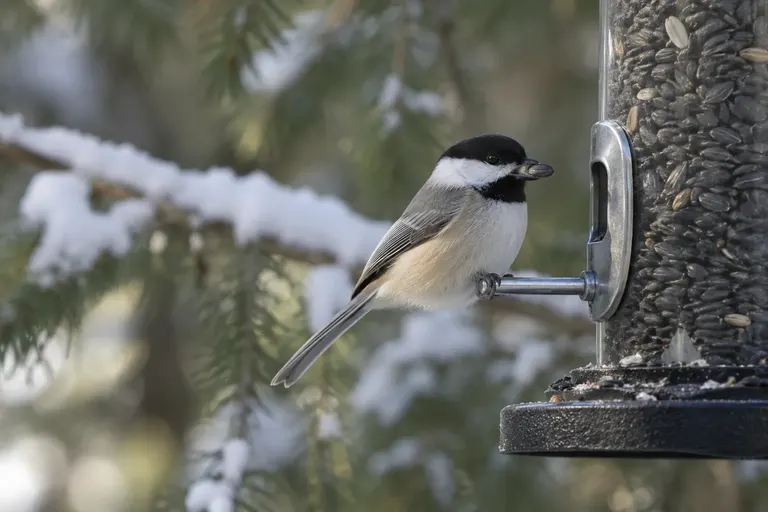
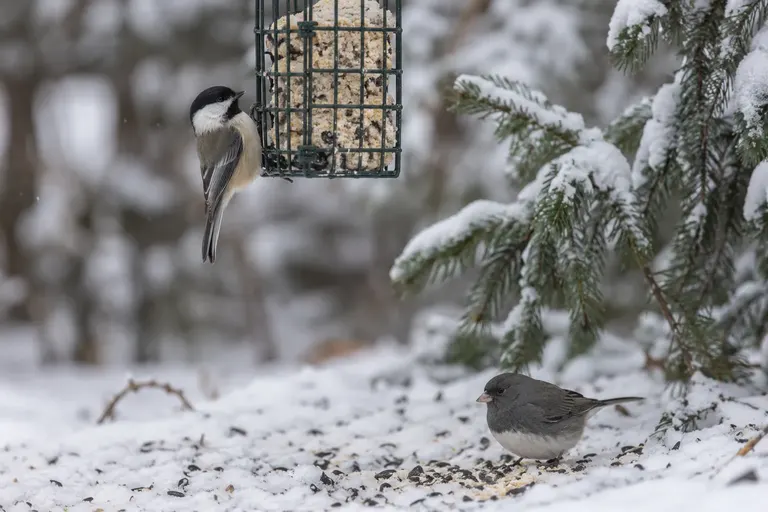
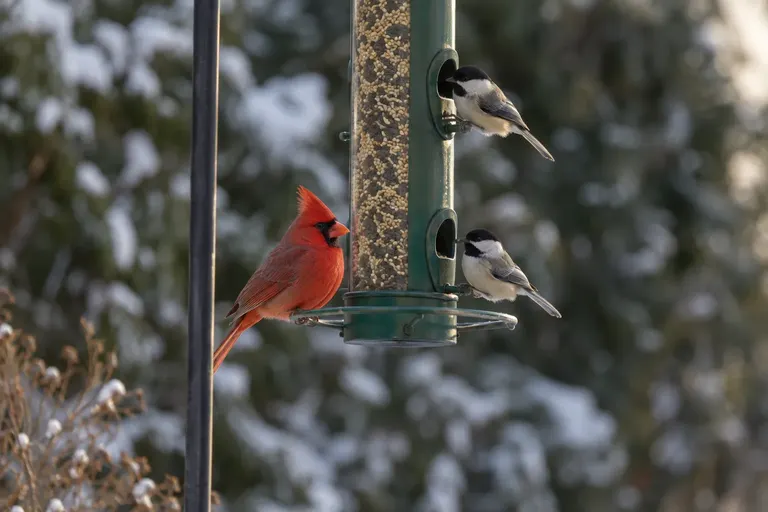
Small birds carry very little in reserve. On a cold winter night, a chickadee must burn stored fat to stay warm until morning, then refuel quickly after dawn. Foods with a high fat content, such as black oil sunflower seed and suet, give them a lot of energy per bite. Bread gives them bulk.
This is why bird groups put bread on their “do not feed” lists even though it is not poisonous. The Dubuque Audubon Society puts it plainly: bread leads to malnutrition. Our guide to winter bird feeding covers what birds need most when temperatures drop.
Protein for growing birds
In spring and summer, adult birds feed nestlings a diet heavy in insects. Nestlings grow extremely fast and need protein to build muscle, bone and feathers. A parent that fills up on bread near a busy patio is not helping its brood. If you want to support breeding birds, offering dried mealworms for bluebirds and wrens is far closer to what those young birds need.
Moldy bread and bird health
Bread is one of the fastest foods in the kitchen to grow mold, and once it is outside it gets wet from dew, rain and the ground. The Dubuque Audubon Society warns that stale bread with mold can cause illness.
Project FeederWatch, run by the Cornell Lab of Ornithology, makes a related point about other foods: it tells feeders to throw out moldy fruit and moldy peanuts because some molds create toxins that are harmful to birds. The same logic applies to bread. The risk is highest when bread sits in a pile on the lawn for a day or two in warm, humid weather.
Moldy food also brings a second problem. Wet, decaying food on the ground under a feeder is a hygiene issue for every bird that visits, and the Cornell Lab notes that moldy or decomposing seeds and hulls on feeder trays can make birds sick. If you see lethargic, fluffed-up birds at your feeders, take the feeders down, clean them and remove spoiled food from the ground.
Is bread bad for ducks and geese?
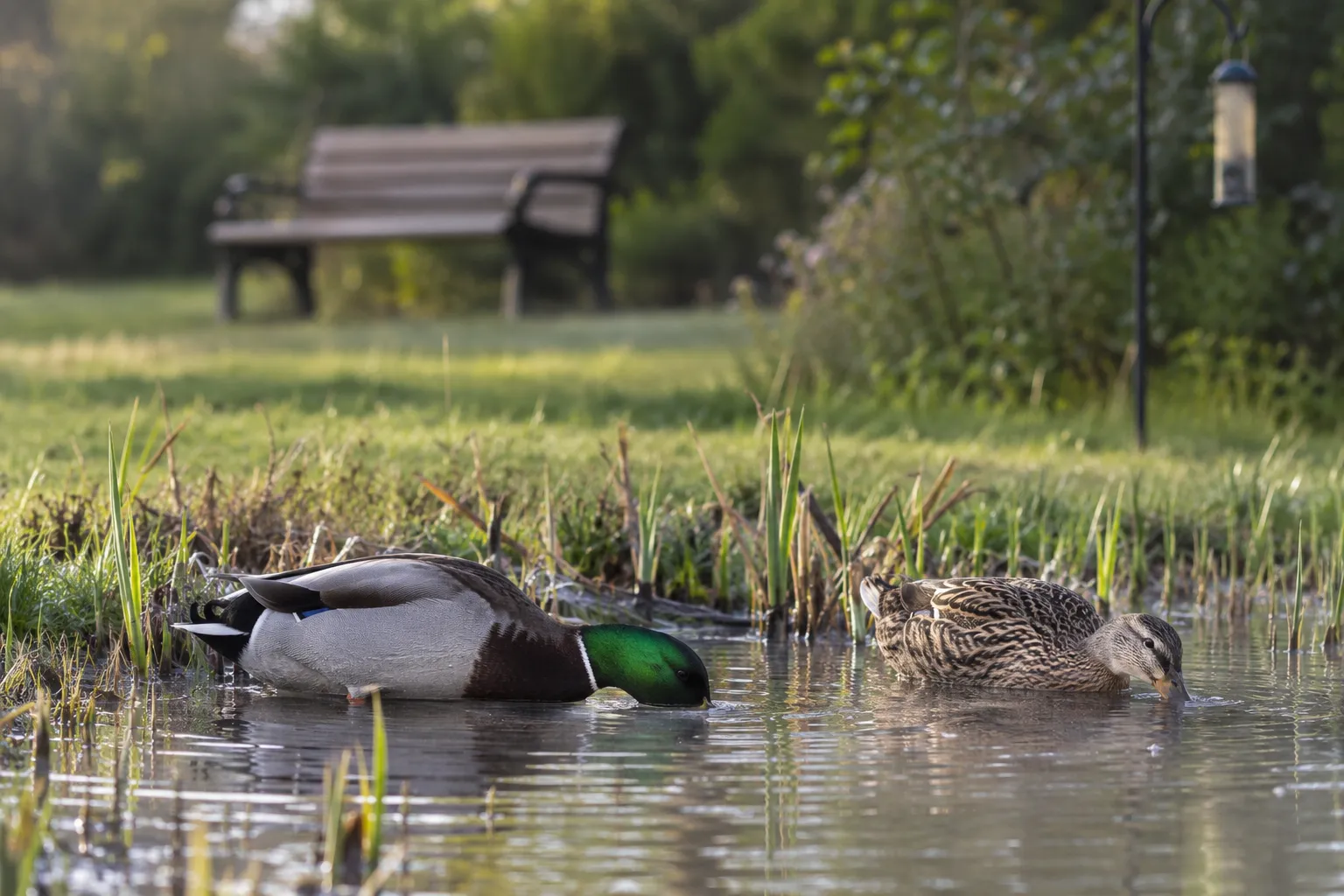
Ducks, geese and swans at city ponds eat more bread than any other wild birds, and this is where the case against bread is strongest.
Angel wing
Angel wing is a condition in which the last joint of a bird’s wing twists, so the flight feathers stick out sideways instead of lying flat against the body. A bird with angel wing cannot fly properly, which leaves it unable to escape predators or migrate.
Audubon California says angel wing in young waterfowl may have been caused by eating bread left by human visitors. The Dubuque Audubon Society goes further, explaining that a bread diet causes feathers to grow faster than the bone structure can support.
It is fair to add a note of caution. Scientific reviews of angel wing list several possible causes, including genetics, diets too high in carbohydrate and protein, and low levels of vitamin E, calcium and manganese. Some experts question how strong the bread link is. What is not in dispute is that angel wing is tied to diet during rapid growth, and that a diet full of bread is not a natural one for a young duck.
Water quality and crowding
Ducks rarely eat every piece. Bread that sinks or floats rots in the water, adding nutrients that can feed algae and lowering water quality. The Dubuque Audubon Society notes that uneaten bread left on the ground or floating in the water causes problems for the wider ecosystem.
Regular bread-feeding also draws unnaturally large, dense flocks to one spot. Birds packed closely together share more droppings, more water and more contact, which is how disease moves between birds. Crowding can also make geese bolder and more aggressive toward people, which is why many parks post “do not feed the waterfowl” signs.
What Audubon recommends instead
Audubon California’s advice is simple: help protect waterfowl by letting them find their own food at the pond, and never feed them food from home. Ducks are very good at feeding themselves on aquatic plants, seeds and invertebrates.
If your park allows feeding and you want to take children, check the local rules first. Waterway groups sometimes suggest small amounts of foods closer to a duck’s natural diet, such as plain whole grains or thawed peas, scattered on the bank rather than thrown in the water. Keep amounts tiny and treat it as a rare event, not a daily habit.
Is bread bad for songbirds and backyard birds?
At a backyard feeder, the problem is less dramatic than at a pond, but it is real.
- Low value food for small birds. Chickadees, nuthatches, titmice, wrens and finches get little from bread compared with sunflower seed or suet.
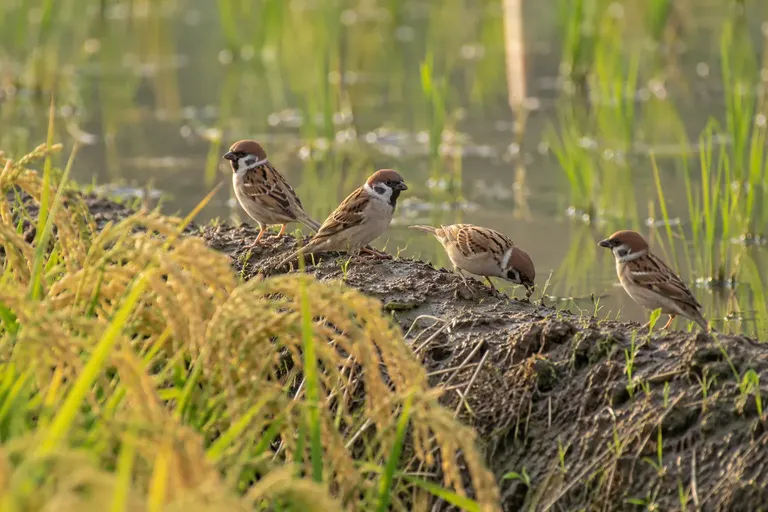
- It attracts the birds many people want less of. Bread on the lawn is a favorite of European Starlings, House Sparrows, pigeons, grackles and gulls. These birds arrive in flocks and can push smaller native birds away.
- It attracts mammals. Rats, mice, raccoons and opossums all eat bread. A pile on the lawn overnight is an invitation.
- It spoils in feeders. Bread cannot go in tube or hopper feeders, and on a tray it absorbs moisture and molds within a day or two in damp weather.
If bread is bad for birds, why do they eat it?
Birds eat bread for the same reason people eat chips: it is easy, it is there, and it tastes fine. Wild birds are opportunists. Evolution has tuned them to grab calories quickly when food appears, because the next meal is never guaranteed. A bird has no way of knowing that the soft white food on the lawn is a poor trade compared with a sunflower seed.
Gulls, pigeons, crows, starlings and ducks are especially quick to learn that people mean food. Once a flock learns that a certain bench or pond edge produces bread every afternoon, it will return and wait. That learned behavior is part of the problem, because it concentrates birds in one spot and teaches them to depend on a food that does not meet their needs.
So “the birds love it” is not evidence that bread is good for them. It only shows that bread is easy to eat.
Which breads and baked goods are worst?
All bread is a poor bird food, but some items are worse than others.
| Item | Main problem | Verdict |
|---|---|---|
| White sandwich bread | Low in fat and protein, molds fast | Avoid |
| Whole wheat or multigrain bread | Slightly more fiber, same core problems | Avoid |
| Moldy or stale bread | Molds can produce toxins | Never feed |
| Crackers and chips | Often salted, low value | Avoid |
| Donuts, cakes, sweet pastries | Sugar and fat in the wrong form | Avoid |
| Seasoned croutons, garlic bread | Salt, seasonings, oils | Never feed |
| Popcorn and sugary cereal | Low nutrition, often salted or buttered | Avoid |
The Dubuque Audubon Society lists bread, popcorn, crackers, chips, cereal and most processed foods as things birds should not be fed. Our full guide to what not to feed birds covers the rest of the kitchen, from bacon grease to avocado.
Is it ever OK to give birds bread?
There are narrow situations where a few crumbs do no meaningful harm:
- A small amount of fresh, plain bread eaten immediately by birds, with nothing left on the ground.
- A one-off moment with a child, when there is no bird seed in the house.
Even then, the best practice is to skip it. Bread feeding tends to become a habit, and the harm comes from habits: a daily pile on the lawn, a weekly bag at the pond. If you are going to feed birds regularly, spend a little on proper bird food and the question goes away.
What about bread used to bind homemade bird cakes?
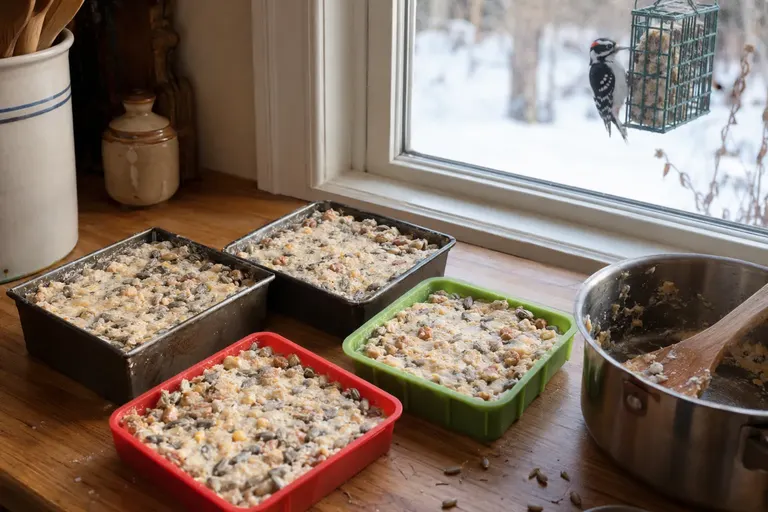
Some homemade suet recipes use breadcrumbs as filler. Rendered suet or plain lard mixed with cornmeal, oats and seed is a better base, because cornmeal and oats carry fewer additives. Keep homemade fat cakes to cold months, when they stay firm, and never use cooking fat or bacon drippings, which are salty and can smear onto feathers.
What to feed birds instead of bread
If you just want the swap, here it is. Each of these is inexpensive, widely sold and far better for wild birds than bread.
| Instead of bread, try | Who eats it | Why it is better |
|---|---|---|
| Black oil sunflower seed | Most feeder birds | High fat, thin shell, easy to open |
| Suet cakes | Woodpeckers, nuthatches, chickadees, wrens | Concentrated fat for energy |
| Unsalted peanuts | Jays, titmice, woodpeckers | Fat and protein |
| Sunflower hearts | Finches, chickadees, cardinals | No shells, no mess |
| Dried mealworms | Bluebirds, wrens, robins | Protein for breeding birds |
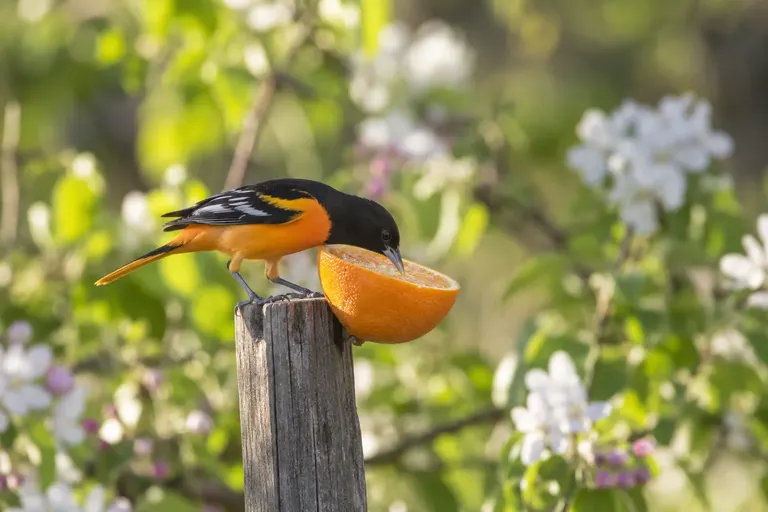
| Cut fruit | Orioles, catbirds, mockingbirds | Natural sugars in season |
Start with black oil sunflower
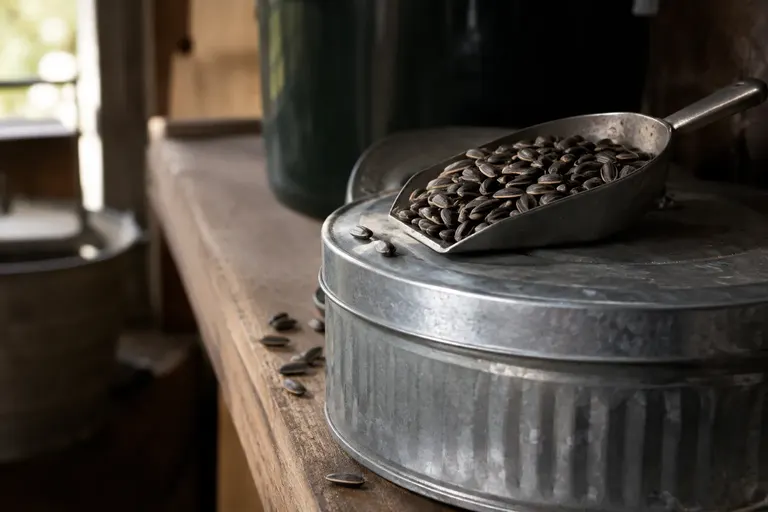
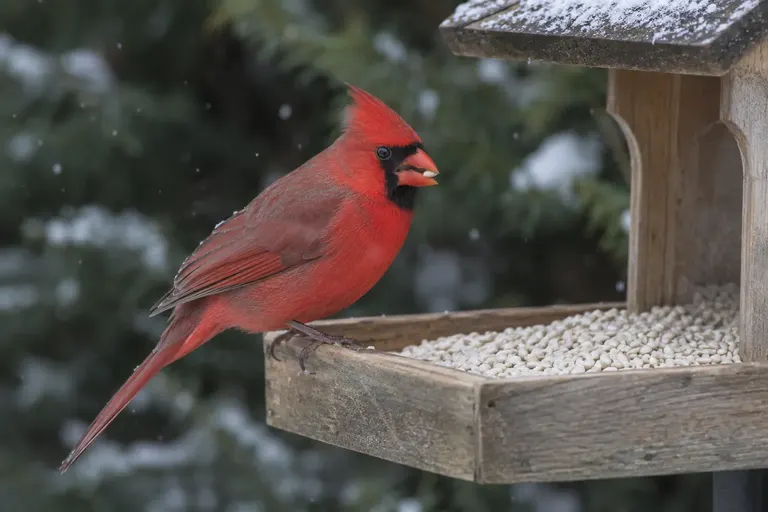
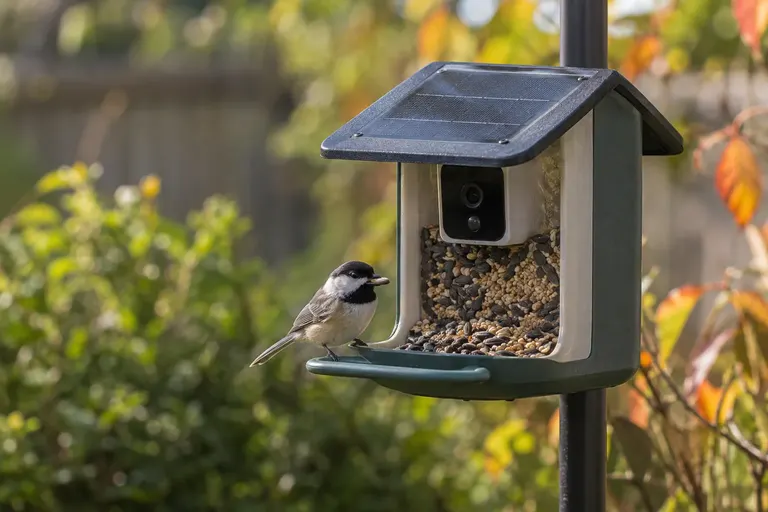
If you only buy one bag, make it black oil sunflower seed. The Cornell Lab describes it as the seed most feeder birds prefer, and its thin shell and high oil content make it ideal for small birds. Our guide to black oil sunflower seed explains why it is the best first food, and our roundup of the best bird seed to attract the most species compares blends if you want variety.
Add suet in cold weather
Suet cakes are rendered animal fat, often mixed with seed or nuts, and they give insect-eating birds such as woodpeckers and nuthatches the fat they would otherwise find in bark crevices. Our roundup of suet cakes and blends covers which ones hold up in warm weather.
Use a tray if you miss scattering food
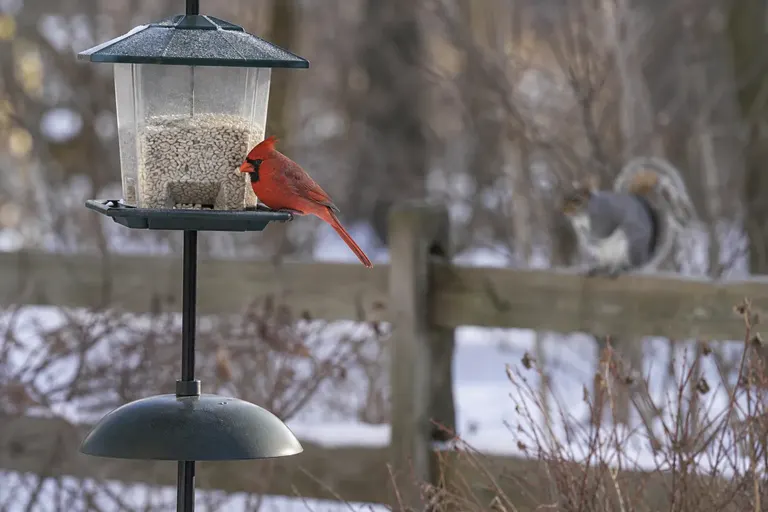
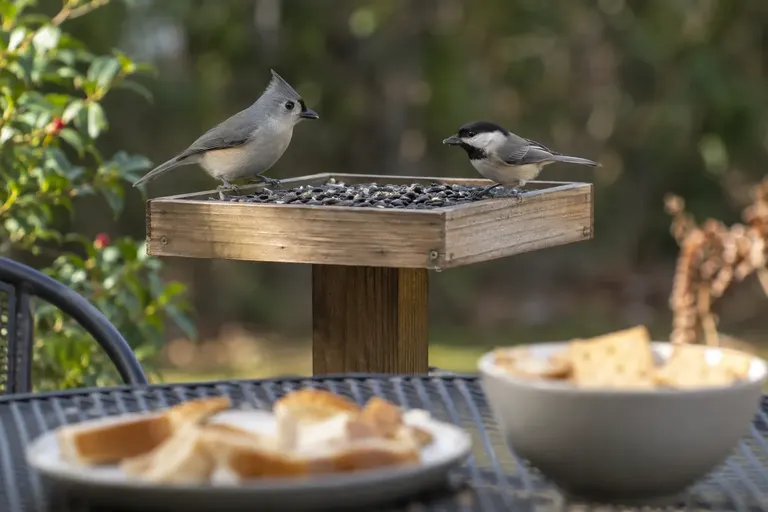
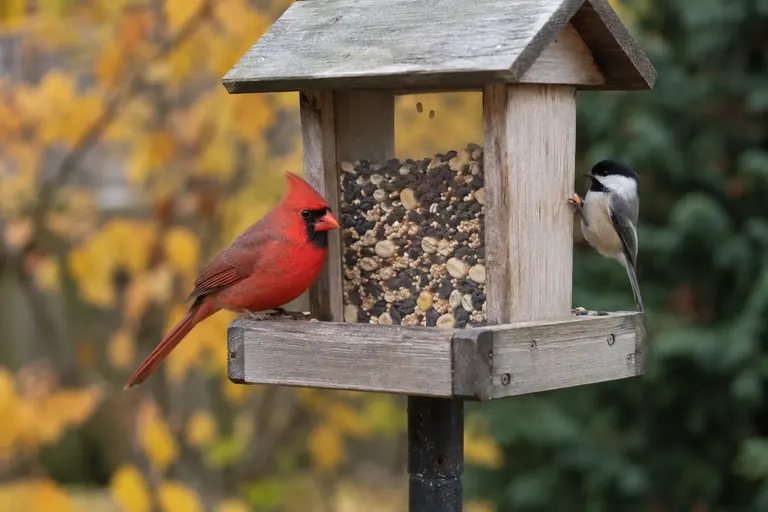
Part of the appeal of bread is the ritual of scattering it. A low platform or tray feeder gives you the same view of ground-feeding birds such as juncos, doves and cardinals, but keeps food off wet soil, and you can empty and rinse it easily.
How to break the bread habit at your house
Changing what the household feeds birds is often harder than knowing the facts. A few practical steps help:
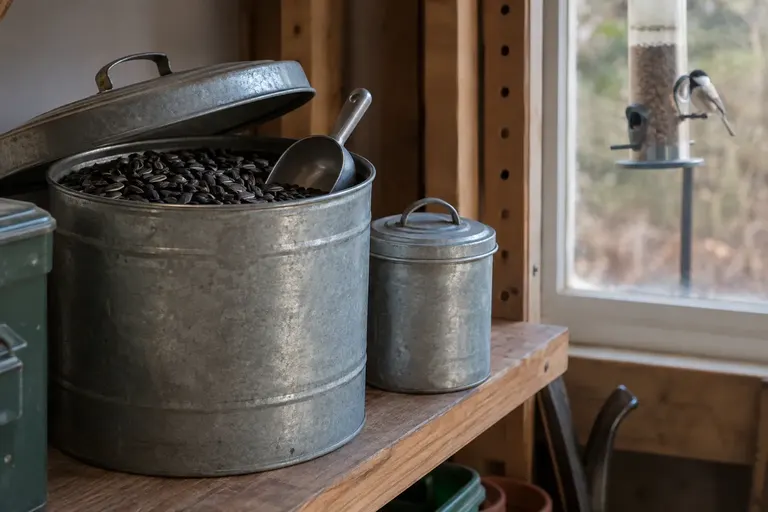
- Keep a small container of seed by the back door. If seed is easier to grab than bread, people use it.
- Compost or freeze stale bread. Stale bread goes to the bird table because it feels wasteful to throw away. Freeze it for breadcrumbs or add it to compost instead.
- Give children a job with seed. Let them fill a tray feeder or scatter a measured scoop of seed on a tray. The fun is watching birds arrive, not the bread itself.
- Swap the pond trip for a watching trip. Bring binoculars instead of a bag of crusts. Kids often enjoy spotting ducklings or counting species more than feeding.
- Tell neighbors kindly. If a neighbor throws bread onto a shared lawn or pond, a friendly note about angel wing and rats tends to land better than a lecture.
Common mistakes when feeding birds
- Putting out a big pile of anything at once. Whether bread or seed, uneaten food on damp ground spoils. Offer what birds can finish in a day or two.
- Feeding moldy leftovers. If you would not eat it because it is stale or moldy, do not give it to birds.
- Feeding waterfowl bread by the bagful. This is the single most harmful bread habit.
- Putting bread in feeders. It clogs ports, absorbs water and molds.
- Ignoring local rules. Many parks and some communities ban feeding waterfowl or wildlife. Check before you go.
- Leaving feeders dirty. Cornell recommends cleaning feeders about every two weeks, more often in heavy use or wet weather. See how to clean a bird feeder.
How we put this guide together
Perch and Glass has not run feeding trials. This guide is research-led. We drew on guidance from the Cornell Lab of Ornithology and Project FeederWatch, local and state Audubon organizations, and published summaries of the angel wing literature. Where experts disagree, such as on how strongly bread alone causes angel wing, we say so. We did not include statistics we could not trace to a reputable source.
Sources
- Audubon California: Bad idea, feeding bread to ducks and other birds
- Dubuque Audubon Society: Q and A, Feeding Bread
- Project FeederWatch: Food Types
- Cornell Lab of Ornithology, All About Birds: A Quick Guide to Seed Types
- Cornell Lab of Ornithology, All About Birds: How to Clean Your Bird Feeder
- Wikipedia: Angel wing (summary of proposed causes)
Frequently asked questions
Is bread bad for birds?
Bread is not poisonous, but bird groups advise against it. The Dubuque Audubon Society says bread leads to malnutrition because birds need protein and fat, and that stale, moldy bread can cause illness. For ducks and geese, Audubon groups link bread-heavy diets to angel wing, a wing deformity. Plain seed, suet or natural foraging is better.
Can birds eat bread crumbs in winter?
A few crumbs will not poison a bird, but winter is when bread does the most harm by displacement. Small birds burn a lot of energy on cold nights and need fat-rich food such as black oil sunflower seed, suet and peanuts. A crop full of bread is a crop not full of those foods, so choose high-fat foods in cold weather.
Why is bread bad for ducks?
Ducks fed bread at parks fill up on low-nutrition food, crowd together, and leave uneaten bread to rot in the water. Audubon California links bread-feeding to angel wing, in which a young bird's wing twists outward and it cannot fly. Researchers still debate how much bread itself causes the condition, but the advice from bird groups is consistent: do not feed ducks bread.
What can I feed ducks instead of bread?
The simplest answer from Audubon California is not to feed them at all and let them forage naturally. If your park allows feeding, small amounts of foods closer to a duck's natural diet, such as plain whole grains or thawed peas, are commonly suggested by waterway groups. Check local rules first, since many parks ban feeding waterfowl.
Is whole wheat or multigrain bread better for birds?
Only slightly. Whole grain bread carries a little more fiber and nutrients than white bread, but it is still mostly starch and water, low in the fat and protein wild birds need, and it molds just as fast. Most breads also contain salt. If you want to feed birds grains, plain seed made for birds is the better choice.