What to Feed Birds in Winter: High-Fat Foods That Work
What to feed birds in winter: high-fat black oil sunflower, suet, peanuts and nyjer, millet for ground feeders, fruit for thrushes, plus a source of open water.
In this article
- Quick answer: the best winter bird foods
- Why do birds need different food in winter?
- What are the best high-energy foods for winter?
- What should I feed ground-feeding birds in winter?
- What about birds that don’t eat seed?
- Winter bird foods around the world
- How much and how often should I feed?
- Don’t forget water
- Common mistakes when feeding birds in winter
- What should I not feed birds in winter?
- Myths and facts about winter bird feeding
- Quick facts
- A simple winter feeding plan
- Sources
- Frequently asked questions
The answer to what to feed birds in winter is foods that are high in fat and easy to eat. Black oil sunflower seed (roughly 40 percent fat), suet, peanuts and hulled sunflower hearts cover most species. Add white proso millet on a tray or the ground for sparrows, juncos and doves, nyjer for small finches, and chopped fruit or mealworms for thrushes, robins and wrens. Keep an ice-free source of water nearby, because thirst can be as much of a problem as hunger when everything is frozen.
The reason is simple physics. Small birds lose heat fast, days are short, and nights are long. The best winter foods deliver the most energy for the least effort, and they do it before the light goes.
Quick answer: the best winter bird foods
| Food | Main value | Birds that take it | Feeder type |
|---|---|---|---|
| Black oil sunflower | Fat and protein, thin shell | Chickadees, tits, finches, cardinals, nuthatches, jays | Tube, hopper, tray |
| Suet and fat cakes | Pure energy | Woodpeckers, nuthatches, chickadees, wrens, tits | Suet cage, log feeder |
| Peanuts (unsalted) | Fat and protein | Jays, woodpeckers, nuthatches, tits, titmice | Mesh peanut feeder, tray |
| Hulled sunflower hearts | Fat, no shells | Almost all seed eaters, including weak-billed birds | Tube, tray |
| Nyjer (niger) | Oil-rich small seed | Goldfinches, siskins, redpolls | Nyjer tube or sock |
| White proso millet | Starch, some protein | Juncos, sparrows, doves, buntings | Tray or scattered on the ground |
| Chopped apple, raisins | Sugar and water | Thrushes, robins, blackbirds, mockingbirds | Tray or ground |
| Mealworms | Protein and fat | Bluebirds, wrens, robins, European Robins | Dish or tray |
| Water | Drinking and bathing | Nearly everything | Heated or de-iced bath |
If you are starting from scratch, a tube of black oil sunflower and a suet cage will serve most of the birds in a typical yard. Our guide to black oil sunflower seed explains why it is the best single seed to start with.
Why do birds need different food in winter?
Birds do not change what they are physically able to eat in winter, but their energy budget changes sharply. Three pressures stack up at once.
Cold nights burn through fat reserves
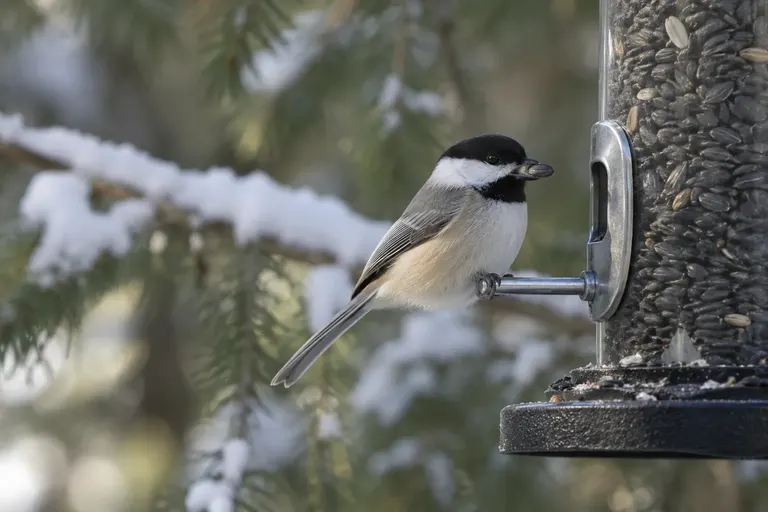
A small songbird has a high body temperature, often around 104 to 108°F (40 to 42°C), and a large surface area relative to its mass. On a cold night it must shiver almost continuously to stay warm. Studies of Black-capped Chickadees suggest they can gain roughly 10 percent of their body weight in fat during a winter day and burn most of it overnight. Many small birds also let their body temperature drop at night in a controlled state called regulated hypothermia, which saves energy but does not remove the need to refuel at dawn. For more on the physiology, see how birds stay warm in winter.
Days are short
At northern latitudes a winter day may give a bird only eight or nine hours of foraging light, and some of that is spent keeping watch for predators. That leaves less time to find more food. Foods that are dense in calories and quick to handle matter more.
Natural food runs low
Insects are dormant or hidden, many berries have been eaten by late winter, and snow or ice can cover seeds on the ground. Late winter, not early winter, is often the hungriest period, because natural stocks have been picked over for months.
So the winter menu is about energy density. Fat carries more than twice the calories per gram of carbohydrate or protein, which is why oily seeds, nuts and suet sit at the top of every expert list.
What are the best high-energy foods for winter?
Black oil sunflower seed
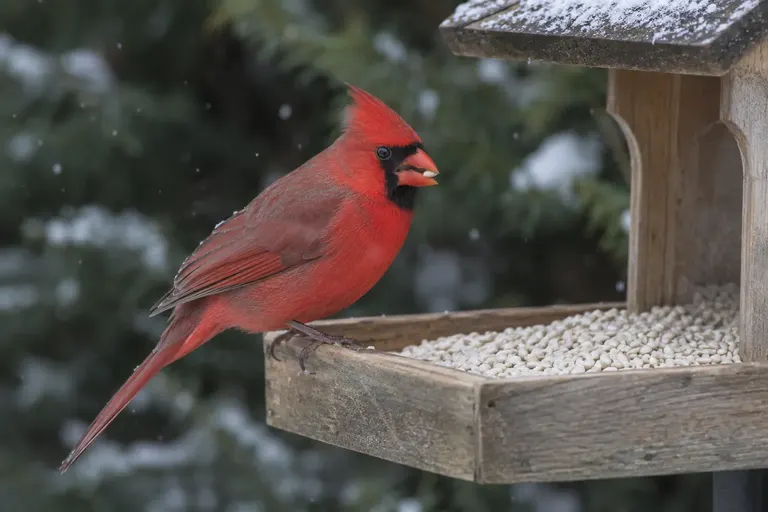
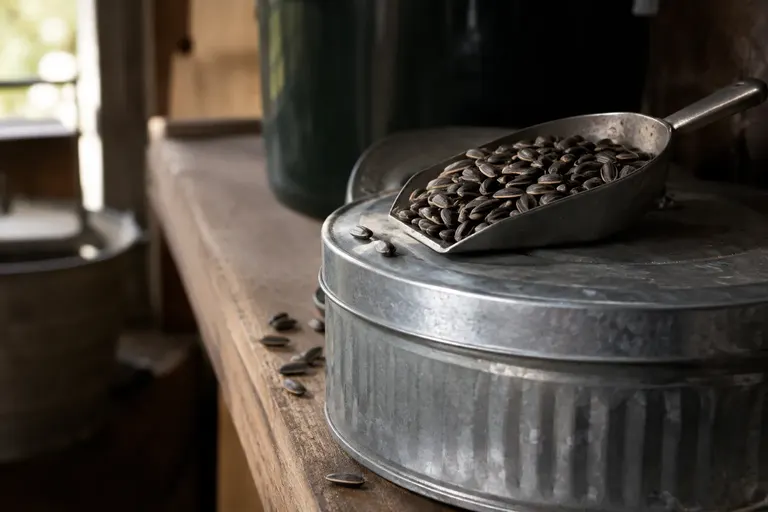
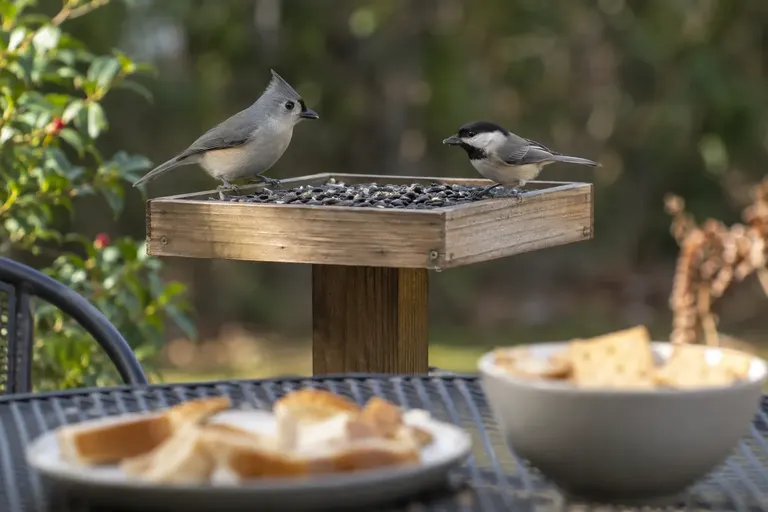
This is the workhorse. The seed is small with a thin shell, so even small-billed birds can crack it, and the kernel is fat-rich. In North America it brings in chickadees, titmice, nuthatches, cardinals, House Finches, Purple Finches and jays. In Europe and Turkey, Great Tits, Blue Tits, Greenfinches, Chaffinches and Eurasian Nuthatches take it readily. Striped sunflower has a thicker shell and suits larger birds, but black oil feeds more species.
Sunflower hearts (hulled sunflower)
Hearts are sunflower kernels without the shell. Birds spend no energy opening them, nothing is wasted, and there is no pile of hulls under the feeder. They cost more per bag and spoil faster when wet, so offer only what disappears in a day or two. Hearts are especially useful in severe cold, when every second of handling time counts.
Suet and fat cakes
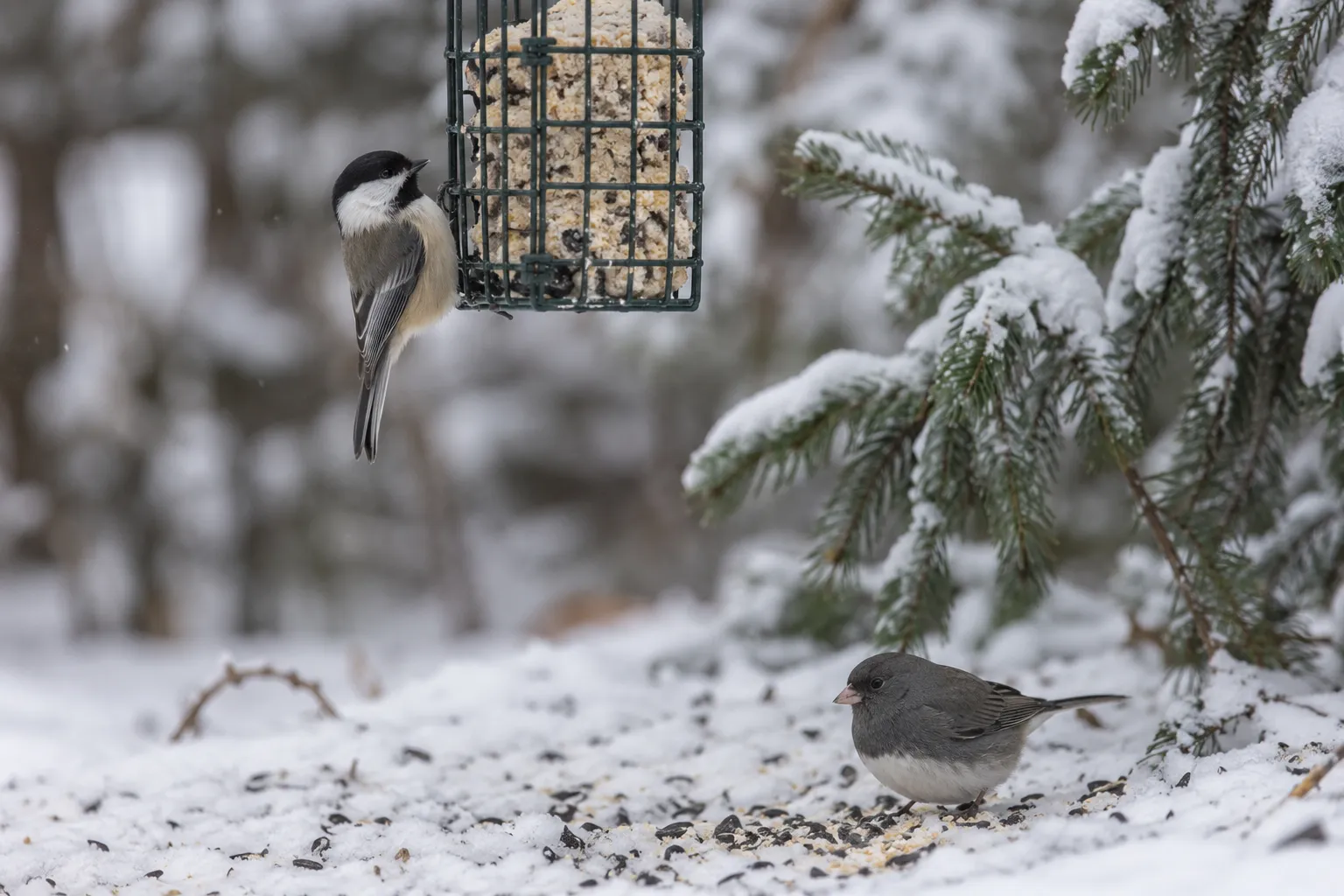
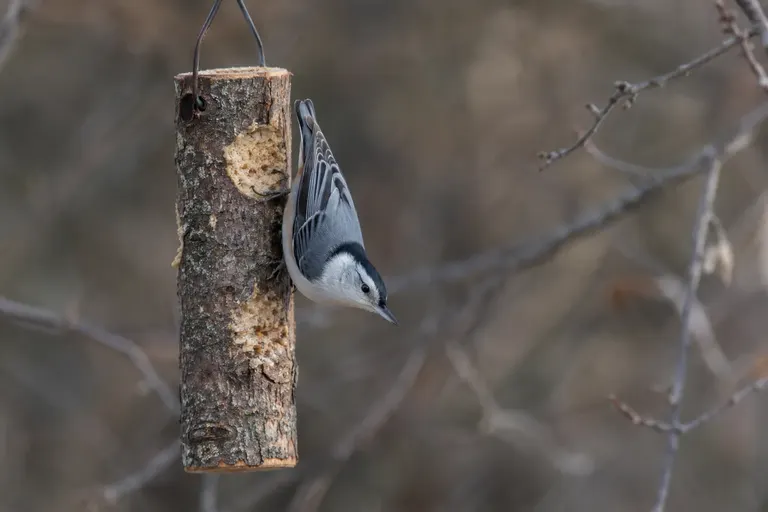
Suet is hard fat, traditionally from around beef kidneys, often mixed with seeds, peanuts, oats or dried insects. It is close to pure energy. Woodpeckers, nuthatches, chickadees, titmice, wrens, creepers and even some warblers that linger into winter will feed on it. In Europe the equivalent is the fat ball or fat cake, taken by tits, Great Spotted Woodpeckers, Long-tailed Tits and European Robins.
Winter is the ideal season for suet, because cold keeps it firm. See our picks for suet cakes and blends or learn how to make homemade suet.
One important note for European readers: many fat balls are sold in plastic mesh nets. Take them out of the net before hanging them in a proper feeder. Birds, especially woodpeckers, can catch a tongue or foot in the mesh, and UK conservation groups such as the RSPB advise against using the nets.
Peanuts
Plain, unsalted, raw or dry-roasted peanuts are high in fat and protein. Offer them shelled in a mesh feeder with small openings, so birds take small pieces rather than whole nuts, or as chopped pieces on a tray. In spring and summer, whole peanuts can be a choking risk for nestlings if parents carry them to the nest, which is why mesh feeders or chopped nuts are the safer habit year round. Peanuts must be dry and free of mold, because damp peanuts can harbor aflatoxins, toxic compounds made by certain molds.
Jays, woodpeckers, nuthatches, titmice and chickadees love them. In Europe, Great Tits, Blue Tits, Coal Tits and Eurasian Jays are regular peanut feeders.
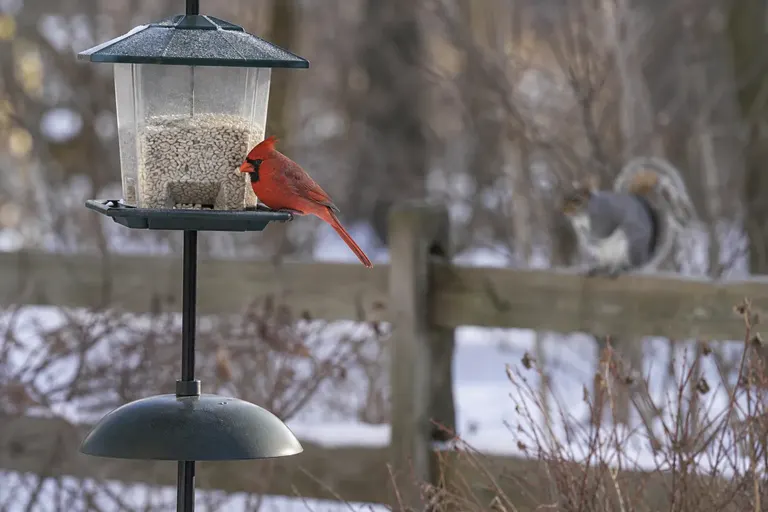
Nyjer (niger seed)
Nyjer is a tiny, oil-rich black seed from an African plant, Guizotia abyssinica. It needs a special feeder with small ports or a mesh sock. It is the favored food of American Goldfinches, Pine Siskins and redpolls in North America, and of European Goldfinches and Eurasian Siskins in Europe. It dries out and loses appeal if stored too long, so buy modest amounts.
What should I feed ground-feeding birds in winter?
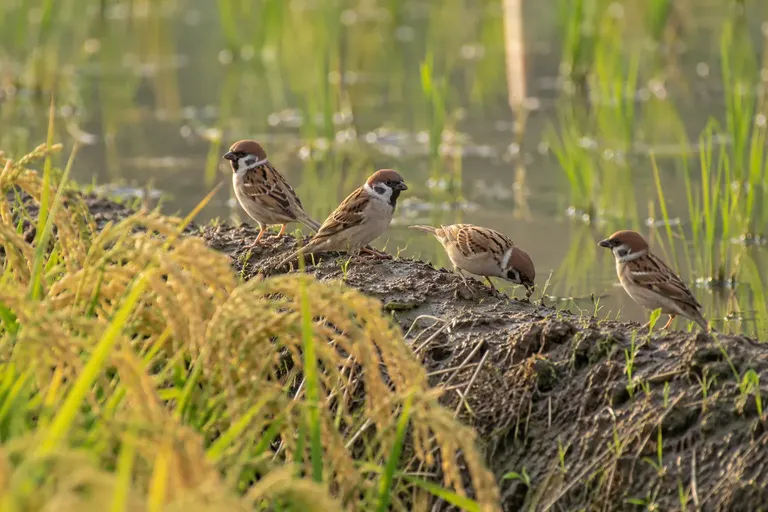
Many winter birds prefer to feed on the ground or on a flat surface. In North America that includes Dark-eyed Juncos, White-throated Sparrows, Song Sparrows, American Tree Sparrows, Mourning Doves and towhees. In Europe it includes Dunnocks, Chaffinches, European Robins, Common Blackbirds and Song Thrushes.
White proso millet
Small, round and cheap, white proso millet is a favorite of juncos, native sparrows, doves and buntings. Scatter it on a tray or a cleared patch of ground. It is less popular with finches and tits, so it complements rather than replaces sunflower.
Cracked corn
Cracked corn feeds doves, quail, juncos, sparrows and jays. It also attracts pigeons, blackbirds, starlings, squirrels, deer and rodents, so offer small amounts at a time. It spoils quickly when wet, so never leave a soggy pile in the snow.
After a snowfall
Snow can bury ground food in minutes. Sweep or shovel a small patch, or use a low platform feeder with a roof, so ground feeders can still eat. A low tray under a shrub or a brush pile gives them cover from hawks while they feed.
What about birds that don’t eat seed?
Some of the most welcome winter visitors never touch sunflower. They need different foods.
Fruit eaters
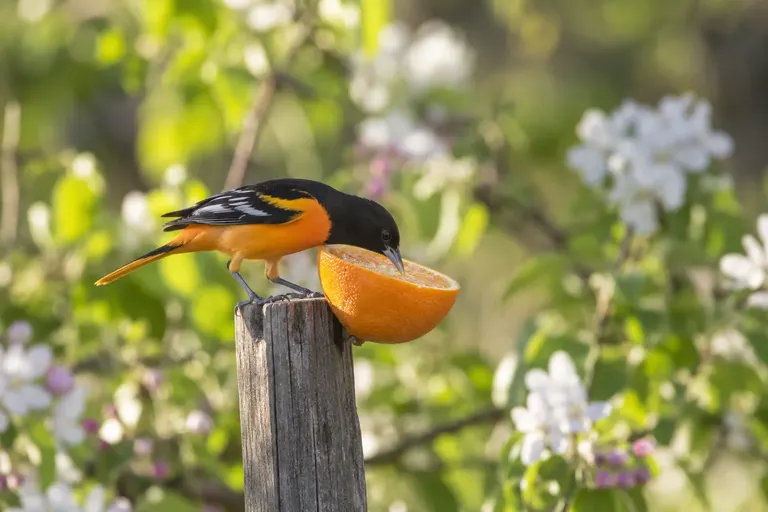
Thrushes, robins, mockingbirds, waxwings, blackbirds and starlings feed on fruit in winter. In the UK and much of Europe, windfall apples scattered on the lawn in a hard frost draw Common Blackbirds, Fieldfares and Redwings, winter visitors from Scandinavia and Russia. In North America, American Robins that stay north for the winter switch largely to fruit, as do Northern Mockingbirds and Cedar Waxwings.
Good winter options include halved apples and pears, soaked raisins or sultanas, and softened dried cranberries. Place fruit on the ground or a low tray. For a longer-term solution, plant fruiting shrubs; our guide to berry shrubs that feed birds all winter has regional choices.
Insect eaters
Wrens, bluebirds, European Robins and some woodpeckers eat insects year round. Dried or live mealworms, suet with insects, and soft fat mixes help them. Carolina Wrens, which are sensitive to hard winters at the northern edge of their range, readily come to suet and mealworms.
Seed heads and natural food
A garden that leaves coneflower, black-eyed Susan, sunflower and native grass seed heads standing through winter feeds finches and sparrows at no cost. Leaf litter shelters overwintering insects that wrens and thrushes pick through.
Winter bird foods around the world
Winter looks very different depending on where you live, and so does the best menu.
- Northern US and Canada: The core is sunflower, suet, peanuts and nyjer, plus millet for juncos and sparrows. Irruptive finches, such as Pine Siskins, Evening Grosbeaks and redpolls, can arrive in large numbers in some years, so be ready to refill often.
- UK and Northern Europe: Sunflower hearts, fat balls out of their nets, peanuts in mesh feeders, nyjer and apples on the lawn. Blue Tits, Great Tits, Long-tailed Tits, Goldfinches, Blackbirds and Robins are the regulars, with Fieldfares, Redwings and Bramblings in cold spells.
- Turkey: Winters are mild along the Aegean and Mediterranean coasts but harsh on the Anatolian plateau, where snow can lie for weeks. Sunflower, peanuts, fat and grain feed Great Tits, House Sparrows, Chaffinches, Greenfinches and Eurasian Collared Doves. In the cold interior, fat-rich foods matter most.
- Southern Brazil: Winter falls from June to August and is mild in most places, with occasional frosts in the south and highlands. Fruit such as banana, papaya and orange draws tanagers, Bananaquits and thrushes like the Rufous-bellied Thrush, while seed mixes bring Saffron Finches and Rufous-collared Sparrows. Here, water and fruit may matter as much as fat.
The principle is the same everywhere: match the food to the birds you actually have, and weight the menu toward energy when nights are coldest.
How much and how often should I feed?
Feed at the right times
Birds feed hardest at first light, to replace what they burned overnight, and again in the hour or two before dusk, to fuel the night ahead. Make sure feeders are full by dawn and topped up in mid-afternoon on cold days.
Be consistent
Studies of feeder use suggest most birds get only part of their daily intake from feeders and continue foraging naturally, so they are not simply helpless without you. But during extreme cold, heavy snow or ice storms, a reliable feeding station can be a real lifeline. If you travel, ask a neighbor to refill during cold snaps, and if you plan to stop feeding, taper off gradually in spring rather than in the depths of winter.
Offer amounts birds will finish
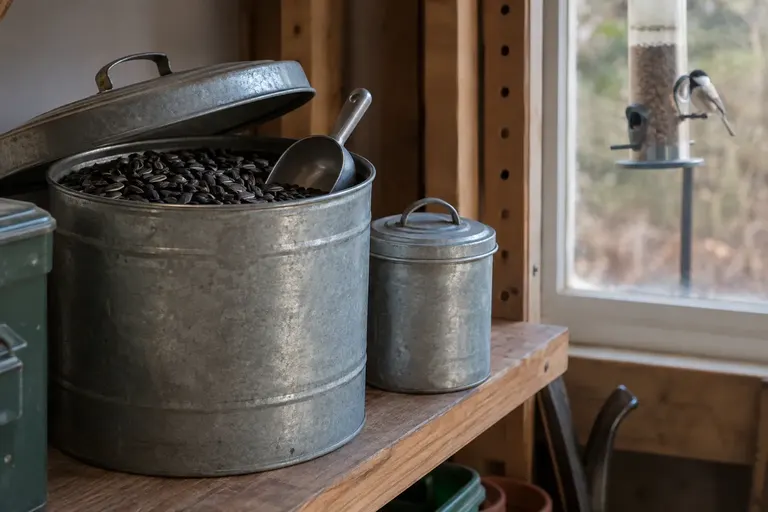
It is better to refill daily than to leave a week of food exposed to rain and snow. Wet seed clumps and molds, and uneaten food attracts rodents. A good rule is to put out roughly what disappears in one or two days.
Don’t forget water
Water may be the most overlooked winter resource. Birds need to drink, and bathing keeps feathers clean and well aligned, which is what makes them insulate properly. Eating snow costs a small bird precious body heat.
A heated bird bath, or a de-icer placed in an ordinary bath, keeps water open in freezing weather. If you do not have one, pour warm water into a shallow bath each morning. Never add antifreeze, salt or glycerin to bird water. Our guide to keeping a bird bath ice-free in winter covers the options.
Common mistakes when feeding birds in winter
- Relying on bread and kitchen scraps. Bread fills birds up without giving them the fat and protein they need.
- Buying cheap mixes full of filler. Red millet, milo and wheat are often left uneaten by backyard songbirds and end up rotting on the ground.
- Leaving wet seed in feeders. Clumped, moldy seed can harbor fungi linked to aspergillosis. Empty and dry any feeder that has taken in water.
- Letting feeders get dirty. Crowding at winter feeders spreads disease. Clean feeders roughly every two weeks, more often in heavy use.
- Using salted or flavored foods. Salted peanuts, seasoned snacks and sugary cereals are not suitable for birds.
- Leaving fat balls in plastic nets. Remove the netting and use a proper cage feeder.
- Putting feeders in exposed spots. Birds use more energy and face more predator risk in the open. Place feeders within about 10 feet of cover, such as shrubs or evergreens, but not so close that cats can ambush from hiding.
- Forgetting about water. A frozen bath is no use to anyone.
What should I not feed birds in winter?
Some foods do more harm than good at any time of year, and winter is no exception.
- Salted foods, including salted nuts, chips and crackers.
- Moldy or spoiled food, including stale bread, old seed and rotten fruit.
- Cooking fat from roasting pans. Melted drippings mixed with meat juices and salt stay soft and greasy, can smear on feathers and spoil fast. Hard suet or rendered, plain fat is different.
- Milk. Birds are not adapted to digest lactose.
- Chocolate, avocado and caffeine, which are known to be toxic to birds.
- Dry, uncooked rice in large amounts or cooked rice with salt or sauces.
Our longer list of what not to feed birds covers the details.
Myths and facts about winter bird feeding
Myth: Birds will die if you stop feeding them. Most birds use feeders as a supplement. The real risk is in short, severe spells of weather, so keep food available then.
Myth: Feeding in winter stops birds migrating. Migration is triggered mainly by day length and internal rhythms, not food supply. Feeders do not keep a healthy migrant from leaving. A bird that stays late is usually one that was already staying.
Myth: Birds’ feet freeze to metal perches. Bird feet have little moisture on their skin and have scales, and there is no good evidence of healthy birds freezing to metal perches.
Myth: Suet is only for winter. Suet is most practical in winter, but no-melt suet blends can be offered in summer too.
Quick facts
- Fat provides about 9 calories per gram, more than twice as much as carbohydrate or protein.
- Black oil sunflower seed is roughly 40 percent fat by weight.
- Small songbirds may burn most of the fat they gain each day during a single cold night.
- Late winter is often the leanest time for birds, not early winter.
- Water is as important as food when everything is frozen.
- Winter visitors such as Fieldfares, Redwings and Pine Siskins may appear at feeders only during cold spells or irruption years.
A simple winter feeding plan
- Put up a tube or hopper of black oil sunflower or sunflower hearts.
- Hang a suet cage or fat cake feeder near a tree trunk for woodpeckers and nuthatches.
- Add a nyjer feeder if you see goldfinches or siskins.
- Scatter millet on a low tray or cleared ground near cover for juncos, sparrows and doves.
- Put chopped apples or soaked raisins on the ground for thrushes and robins during hard frosts.
- Keep water open every day.
- Clean feeders every couple of weeks and rake up old hulls and droppings.
For a wider look at cold-weather care, including shelter and roosting, see our winter bird feeding guide. When comparing seed blends, look for mixes built on the foods above rather than cheap filler.
Sources
- Cornell Lab of Ornithology, All About Birds: Black-capped Chickadee
- Cornell Lab of Ornithology, All About Birds: Dark-eyed Junco
- Cornell Lab of Ornithology and Birds Canada: Project FeederWatch
- Royal Society for the Protection of Birds: rspb.org.uk
- British Trust for Ornithology: bto.org
- National Audubon Society: audubon.org
Frequently asked questions
What is the single best food to put out for birds in winter?
If you can offer only one food, choose black oil sunflower seed. Its thin shell is easy for small birds to open and the kernel is rich in fat, roughly 40 percent by weight. Chickadees, tits, finches, nuthatches, cardinals, jays and many sparrows eat it, so one feeder of it reaches more winter species than any other single seed.
Is it OK to feed birds bread in winter?
Bread is not poisonous in small amounts, but it is filling and low in the fat and protein birds need to survive cold nights. A bird that fills up on bread has less room for better food. It also molds quickly when wet. Offer seed, suet, peanuts or chopped fruit instead, and keep kitchen scraps to plain, unsalted fats in small quantities.
When should I start feeding birds for winter?
Many people start in autumn, around the time the first hard frosts arrive, so resident birds and winter visitors find the feeders before the hardest weather. There is no harm in feeding year round if feeders are kept clean. What matters most is keeping food available once cold weather sets in, especially during snow and ice storms.
Do birds need water in winter?
Yes. Birds drink every day and bathe to keep their feathers in condition, even in freezing weather. Eating snow costs them body heat. A shallow bath kept ice-free with a heater, or topped up with warm water on cold mornings, can attract as many birds as a feeder, including species that never eat seed.
Will birds starve if I stop feeding them in winter?
Research suggests most feeder birds get only part of their daily food from feeders and keep foraging on natural foods, so they do not depend on you entirely. The risk is greatest during sudden severe cold, snow or ice, when natural food is hard to reach. If you plan to stop, taper off gradually rather than in the middle of a cold snap.