What Not to Feed Birds: Foods That Harm and Safer Swaps
What not to feed birds: bread, salty snacks, milk, cooking fat, avocado, chocolate, honey or dyed nectar, and anything moldy. What to offer instead, and why.
In this article
- Quick answer: foods to never feed wild birds
- Why feeding birds the wrong food matters
- Bread, crackers and baked goods
- Salty, seasoned and processed snacks
- Milk and dairy
- Cooking fat, bacon grease and meat drippings
- Foods that are toxic to birds
- Hummingbird nectar mistakes
- Cheap filler seed and other waste foods
- Dried coconut, cooked oats and other items on the avoid list
- Table scraps, pet food and meat
- Myths: foods that are actually fine
- At a glance: what not to feed birds
- What to feed birds instead
- Feeder habits that harm birds
- How we put this guide together
- Sources
- Frequently asked questions
What not to feed birds comes down to four groups: empty-calorie human food such as bread and snacks, anything salted or seasoned, a short list of truly toxic foods such as avocado (Merck cites budgerigars that died after 8.7 grams of mashed avocado) and chocolate, and anything moldy, damp or spoiled. Add a few nectar mistakes, such as honey and red dye, and a few feeder habits that cause harm, and you have the full list.
The good news is that the right foods are simple: plain black oil sunflower, safflower, nyjer, suet, unsalted peanuts, and 4:1 sugar water for hummingbirds.
Quick answer: foods to never feed wild birds
- Bread and baked goods: fill birds up with little nutrition; moldy bread can make them ill.
- Crackers, chips, popcorn, sugary cereal and processed snacks: low value, often salty.
- Salted or seasoned nuts and seeds: Project FeederWatch says to avoid salted peanuts and nuts roasted with coatings or flavorings.
- Milk: the RSPB lists it among foods not to put out.
- Cooking fat, bacon grease and meat drippings: smear on feathers and ruin waterproofing, per the RSPB.
- Avocado: toxic to many birds, according to the Merck Veterinary Manual.
- Chocolate, caffeine and alcohol: toxic to many animals, with no benefit to birds.
- Honey, red dye, brown or raw sugar in nectar: use plain white sugar and water only.
- Anything moldy, damp or rancid: some molds create toxins harmful to birds.
- Dried coconut and cooked porridge oats: also on the RSPB’s avoid list.
Why feeding birds the wrong food matters
A backyard feeder is a small ecosystem. Birds visit repeatedly, often many times a day, so whatever you put out becomes a meaningful part of their diet. Wrong foods cause harm in three ways:
- Poor nutrition. Foods like bread fill a bird’s crop without supplying the fat and protein it needs, especially in cold weather or while raising young.
- Direct toxicity. A few foods, such as avocado and fungal toxins in moldy grain, poison birds.
- Physical harm. Greasy fats foul feathers. Spoiled food and dirty feeders spread disease among birds that gather close together.
There is also a fourth, indirect problem: wrong foods draw the wrong animals. Kitchen scraps attract rats, raccoons, skunks and flocks of starlings or pigeons that crowd out songbirds.
Bread, crackers and baked goods
Bread is the food people most often put out for birds, and the one bird groups most often ask them to stop.
Bread is not poisonous. The problem is what it replaces. The Dubuque Audubon Society says bread leads to malnutrition and that stale bread with mold can cause illness. It advises that birds should not be fed bread, popcorn, crackers, chips, cereal and most processed foods.
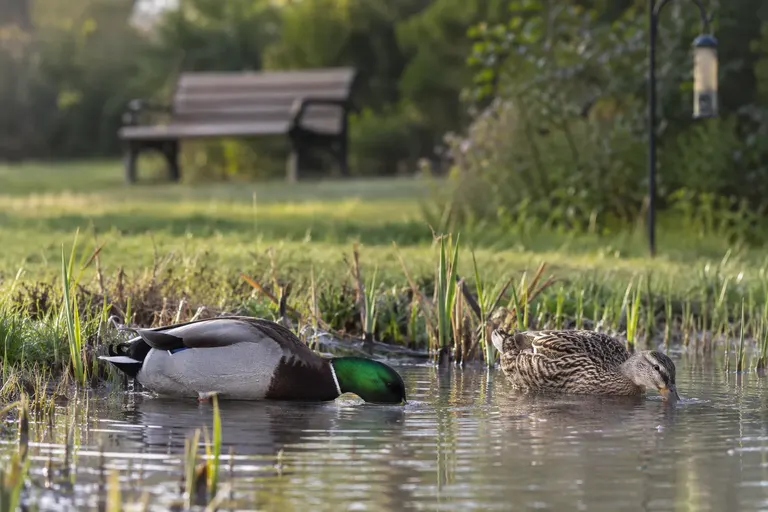
For waterfowl, the concern is sharper. Audubon California describes angel wing, a condition in which a young bird’s wing feathers twist outward so it cannot fly. The Dubuque Audubon Society explains that a bread-heavy diet causes feathers to grow faster than the bone structure can support. Bread thrown into ponds also rots, feeds algae and fouls the water.
Instead: offer plain seed at the feeder. At a pond, the best choice is to let ducks forage on their own, which is what Audubon California recommends. Our article is bread bad for birds? covers bread and waterfowl in more detail.
Salty, seasoned and processed snacks
Chips, pretzels, salted crackers, flavored popcorn and seasoned nuts share one problem: salt and additives that a bird has no need for and is not adapted to eat in quantity. Birds are small, so a little salt goes a long way.
Project FeederWatch’s guidance on peanuts is specific: avoid salted peanuts and peanuts roasted with any coatings or flavorings. The RSPB lists salted food among items not to put out. The same rule applies to sunflower seeds sold as snacks, which are often salted or roasted.
Instead: use plain, unsalted, raw or dry-roasted peanuts sold for birds, and plain black oil sunflower seed.
Milk and dairy
Milk is on the RSPB’s list of foods not to put out for birds. Birds are not mammals and do not drink milk in the wild, and dairy offers them nothing they cannot get from proper bird food. Milk also sours quickly in a dish outdoors.
Small amounts of hard cheese appear in some garden bird advice, mostly in the UK, but there is no reason to offer dairy at a North American feeder. Plain seed, suet and mealworms cover the same needs.
Instead: offer fresh water in a clean bird bath. Water helps birds in every season, especially during freezes and droughts.
Cooking fat, bacon grease and meat drippings
This is the one many people get wrong in winter, because fat for birds is a good idea in principle. The trouble is the kind of fat.
The RSPB explains that fat from a roast mixes with meat juices during cooking into a runny, greasy mixture that sticks to feathers and stops them being waterproof. Birds rely on well-kept feathers for insulation and to shed rain and snow. A bird with fouled plumage can lose heat fast.
Kitchen fat has other problems: bacon and many roasts are heavily salted, drippings go rancid quickly in mild weather, and the smell draws raccoons, opossums, skunks and neighborhood dogs.
Instead: use commercial suet cakes or rendered suet made for birds. Project FeederWatch does warn that unprocessed suet can become rancid in hot weather, so choose rendered, “no-melt” products for summer. Our guide to the best suet cakes and suet blends compares options.
Foods that are toxic to birds
Most “don’t feed” foods are simply poor nutrition. A few are genuinely toxic.
Avocado
The Merck Veterinary Manual lists avocado as toxic to birds. The compound persin can cause heart muscle damage. Signs in affected birds include lethargy, difficulty breathing, loss of appetite, swelling beneath the skin of the neck and chest, and death. The fruit, leaves, stems and seeds are all implicated, with leaves the most toxic part. Caged birds such as budgerigars and canaries appear most sensitive; Merck cites a case in which budgerigars that ate 8.7 grams of mashed avocado died within 48 hours. Never put avocado, guacamole or avocado skins where birds can reach them.
Chocolate, caffeine and alcohol
Chocolate contains theobromine and caffeine, which are toxic to many animals, and avian veterinarians warn pet bird owners to keep chocolate, coffee and alcohol away from their birds. There is no nutritional reason to offer any of them to wild birds, and even small amounts are a serious dose for a bird that weighs less than an ounce.
Moldy grain, nuts and fruit
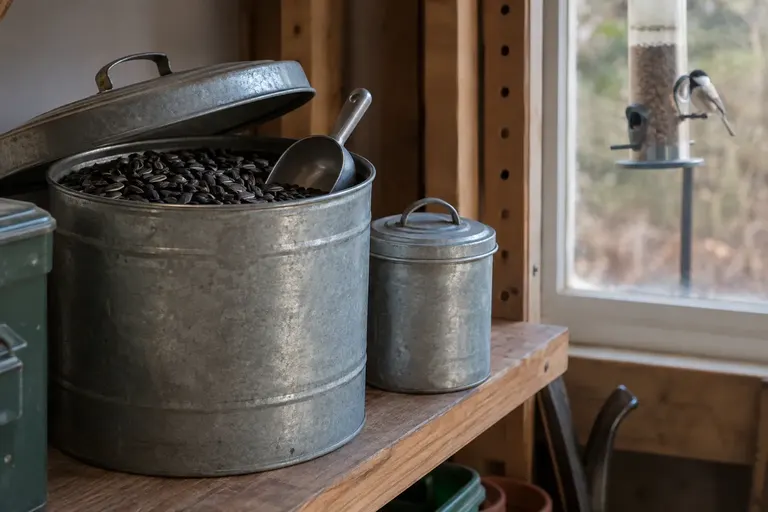
Mold is the hidden hazard in bird feeding. Project FeederWatch warns that some molds create toxins harmful to birds and says to dispose of moldy fruit and moldy peanut hearts immediately. The Cornell Lab of Ornithology names corn as the bird food most likely to be contaminated with aflatoxins, which it describes as extremely toxic even at low levels. Peanuts carry the same risk if stored poorly.
To reduce the risk:
- Never offer seed, nuts or corn that are clumped, musty-smelling, discolored or visibly moldy.
- Do not store bird food in plastic bags or anywhere it can get damp. The Cornell Lab says never to let corn get wet.
- In humid weather, offer only what birds eat in a day.
- Clean feeders so wet seed does not cake in the bottom.
Our guide on how to store bird seed so it stays fresh covers containers and shelf life.
Seed treated for planting
The Cornell Lab warns never to use corn treated with a red dye fungicide. The same caution applies to any seed sold for planting, such as treated garden, lawn or crop seed. These are often coated with fungicides or insecticides and are meant for soil, not birds.
Hummingbird nectar mistakes
Hummingbird feeders have their own list of what not to add.
- Honey: the Cornell Lab says bacteria and fungus thrive in diluted honey. Penn State Extension warns that fermented honey can cause a fatal fungal disease in hummingbirds.
- Red dye: the Cornell Lab, Audubon, Project FeederWatch and the Smithsonian’s National Zoo all advise against it. The red on the feeder attracts hummingbirds on its own.
- Corn syrup, raw or brown sugar: the Smithsonian’s National Zoo says never to use them.
- Artificial sweeteners: they provide no usable energy.
- Old nectar: the Cornell Lab says nectar should never be left out for more than two or three days, and should be changed daily in very hot weather.
The only recipe you need is 1 part plain white sugar to 4 parts water. Our full guide to the 4:1 hummingbird nectar recipe explains ratios, storage and cleaning.
Cheap filler seed and other waste foods
Some foods are not harmful, just wasteful, and the waste causes problems of its own.
The Cornell Lab identifies golden millet, red millet and flax as fillers in many cheap mixes that most birds reject. Birds kick them out of feeders, and the Cornell Lab notes the waste seed becomes a breeding ground for bacteria and fungus on the ground. Canary seed mainly attracts House Sparrows and cowbirds.
Instead: buy straight seeds or blends that list black oil sunflower or sunflower chips first. Straight seeds are usually the better value.
Dried coconut, cooked oats and other items on the avoid list
The RSPB also lists dried coconut and cooked porridge oats among foods not to put out for birds. Both come up often in homemade bird-food recipes, so it is worth checking any recipe before you follow it. Cooked oats become sticky and glue-like. If you want to add grain to homemade suet, use dry, uncooked rolled oats or cornmeal in small amounts.
Table scraps, pet food and meat
Leftover meat, pet food and mixed table scraps are not ideal for songbirds, and they attract animals you probably do not want: rats, raccoons, opossums, skunks, crows in large numbers and neighborhood cats. Meat spoils quickly and can grow harmful bacteria. In bear country, any food scent is a risk, and Project FeederWatch recommends against feeding birds at all when bears are active.
If you want to offer protein, use dried or live mealworms, which bluebirds, wrens and many other insect eaters take readily. See the best dried mealworms for bluebirds and wrens.
Myths: foods that are actually fine
Some foods have a bad reputation they do not deserve.
Uncooked rice
The idea that uncooked rice swells inside birds and makes them burst is a myth. Many wild birds eat grain, including rice in farm fields, without harm. Rice is not a particularly good feeder food, but it is not dangerous.
Peanut butter
There is no good evidence that plain peanut butter chokes birds. Many feeder owners offer it smeared on bark or mixed into suet. Use a plain product without added salt or sugar, and never one containing xylitol. Mixing it with cornmeal or oats makes it less sticky and stretches it further.
Fruit
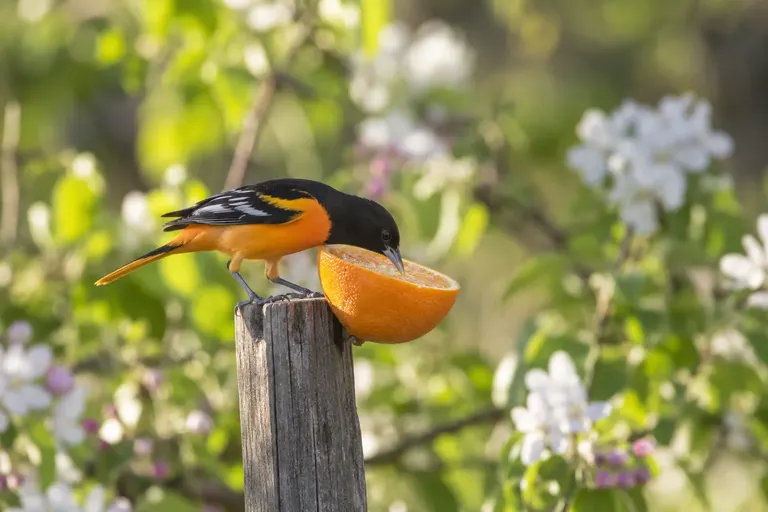
Many birds eat fruit. Orioles take orange halves and grape jelly in spring, and robins, mockingbirds, waxwings and catbirds take berries and chopped apple. Offer fresh fruit in small amounts and remove it before it molds, as Project FeederWatch advises. Choose plain grape jelly in small amounts rather than keeping a large dish out for days.
Eggshells
Crushed eggshells can supply calcium to nesting females. Project FeederWatch says to sterilize them first by boiling for 10 minutes or baking for 20 minutes at 250 degrees.
At a glance: what not to feed birds
| Food | Safe to offer? | Why |
|---|---|---|
| Bread, crackers, baked goods | No | Poor nutrition; moldy bread can cause illness; angel wing in waterfowl |
| Chips, pretzels, flavored popcorn | No | Salt and additives, little nutrition |
| Salted or seasoned nuts | No | FeederWatch says avoid salted or flavored peanuts |
| Milk | No | On the RSPB’s list of foods not to feed |
| Bacon grease, meat drippings | No | Fouls feathers and waterproofing, per the RSPB |
| Avocado | No | Persin is toxic to birds, per the Merck Veterinary Manual |
| Chocolate, coffee, alcohol | No | Toxic to many animals, no benefit |
| Moldy seed, nuts or fruit | No | Some molds create toxins; corn and peanuts can carry aflatoxins |
| Treated planting seed | No | Coated with fungicides or insecticides |
| Honey or red dye in nectar | No | Honey feeds fungus; dye is unnecessary and may be harmful |
| Dried coconut, cooked oats | No | On the RSPB’s avoid list |
| Filler mixes (red millet, flax) | Not recommended | Birds waste them; spilled seed rots |
| Uncooked rice | Yes | The “exploding bird” story is a myth |
| Plain peanut butter | Yes, in moderation | No salt, sugar or xylitol |
| Fresh fruit | Yes | Remove before it molds |
| Sterilized eggshells | Yes | Calcium for nesting birds |
What to feed birds instead
A simple setup covers almost every backyard bird:
- Black oil sunflower seed in a tube or hopper feeder. It attracts the widest range of species. See our guide to black oil sunflower seed.
- Suet in winter for woodpeckers, nuthatches and chickadees.
- Nyjer in a finch feeder for goldfinches.
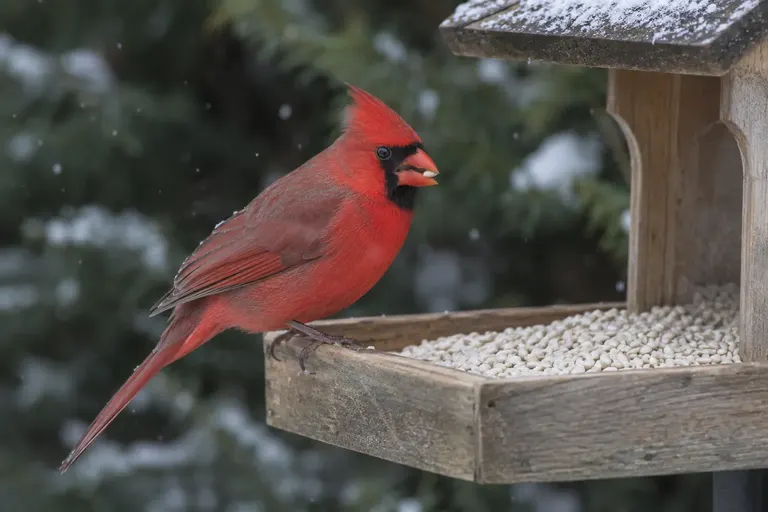
- Safflower if cardinals are your goal or grackles and squirrels are a problem.
- White proso millet on a low tray for juncos, doves and native sparrows, in moderation.
- 4:1 sugar water for hummingbirds, changed often.
- Fresh water year-round.
Feeder habits that harm birds
Food is only half the story. How you serve it matters too.
- Dirty feeders. Project FeederWatch recommends cleaning seed feeders every week or two, more often in wet weather or heavy use. Our guide on how to clean a bird feeder covers the method.
- Wet seed in the feeder bottom. Dump caked or wet seed right away.
- Piles of hulls and spilled seed. Rake them up so they do not rot.
- Antifreeze in bird baths. Project FeederWatch warns it is poisonous to all animals. Use a heated bird bath instead.
- Feeding through a disease outbreak. If you see sick birds, take feeders down, clean them and wait before rehanging. Our guide to sick birds at the feeder explains the signs.
How we put this guide together
We have not conducted feeding studies ourselves. This guide is based on published guidance from the Cornell Lab of Ornithology and Project FeederWatch, the RSPB, Audubon chapters, the Smithsonian’s National Zoo, Penn State Extension and the Merck Veterinary Manual. Where a claim is widely repeated but not backed by these sources, such as the uncooked rice story, we say so.
Sources
- Cornell Lab of Ornithology, All About Birds: A Quick Guide to Seed Types
- Project FeederWatch: Food Types
- RSPB: Three ways you can help birds in a cold snap
- Audubon California: Bad idea, feeding bread to ducks and other birds
- Dubuque Audubon Society: Q and A, Feeding Bread
- Merck Veterinary Manual: Avocado Toxicosis in Animals
- Smithsonian’s National Zoo: Hummingbird Nectar Recipe
Frequently asked questions
What human food is bad for birds?
Avoid bread, crackers, chips, popcorn and sugary cereal, which are low in nutrition; salted or seasoned nuts and snacks; milk; cooking fat and meat drippings, which can coat feathers; avocado, which is toxic to many birds; chocolate; and anything moldy. Bird groups such as the RSPB and local Audubon chapters list these among foods not to put out.
Is bread bad for birds?
Bread is not poisonous, but it fills birds up without giving them the fat and protein they need. The Dubuque Audubon Society says bread leads to malnutrition and stale, moldy bread can cause illness. For ducks and geese, a bread-heavy diet is linked to angel wing, a wing deformity that can leave young birds unable to fly.
Can birds eat uncooked rice?
Yes. The story that uncooked rice swells and makes birds explode is a myth. Many wild birds eat grains, including wild and cultivated rice, and their digestive systems handle it. Rice is not a great feeder food, since it is low in fat and attracts House Sparrows and pigeons, but it is not dangerous.
Can I put bacon grease out for birds?
No. The RSPB warns that cooking fat mixes with meat juices into a runny, greasy mixture that sticks to feathers and stops them being waterproof. Bacon grease is also salty and goes rancid in warm weather. Offer commercial suet cakes or rendered suet instead, which are processed to stay firm and are made for birds.
Is peanut butter safe for birds?
Plain peanut butter is generally considered fine in moderation. Choose one without added salt, sugar or the sweetener xylitol, and many people mix it with cornmeal or oats so it is less sticky. Like peanuts, it should be fresh; the Cornell Lab warns that peanuts can carry aflatoxins if stored poorly.
Should I stop feeding birds if they look sick?
Yes, take feeders down for a while and clean them. Sick birds at feeders can spread disease such as salmonellosis to healthy birds that crowd together. Clean feeders with a dilute bleach solution, rinse, dry and wait a week or two before rehanging. Contact your state wildlife agency if you see several sick or dead birds.