Bird Seed Ornaments and Seed Cakes: Safe, Easy Recipes
Bird seed ornaments and seed cakes need only seed, unflavored gelatin and a mold. Recipes from Audubon and extensions, what to skip and how to hang them.
In this article
- What are bird seed ornaments?
- Which binder should you use?
- How do you make gelatin bird seed ornaments?
- How do you make bird seed cakes?
- How do you make a pine cone bird feeder?
- How do you make a suet wreath or seed bell?
- How do you make a bird seed garland?
- What can you add, and what should you leave out?
- How should you hang bird seed ornaments safely?
- When should you put them out, and how long do they last?
- How long can a bird seed ornament stay outside?
- How do you keep ornament feeding hygienic?
- Which birds will visit?
- A good project for children
- Sources
- Frequently asked questions
Bird seed ornaments, and their bigger cousin the bird seed cake, are shapes of birdseed held together with a binder, usually unflavored gelatin or a plain hard fat, then hung from a branch for birds to peck at. The safest versions use unsalted seed, no bread, no glitter and no mesh bags, and they go out in the cold months when birds need extra energy.
They’re a popular winter project, especially with children, and a nice way to turn holiday decorating into something useful for garden birds. The details matter, though. The wrong fat, salty ingredients or a careless hanging loop can do more harm than good. This guide gives four recipes published by bird organizations, explains which ingredients to leave out and shows how to hang and replace ornaments safely.
What are bird seed ornaments?
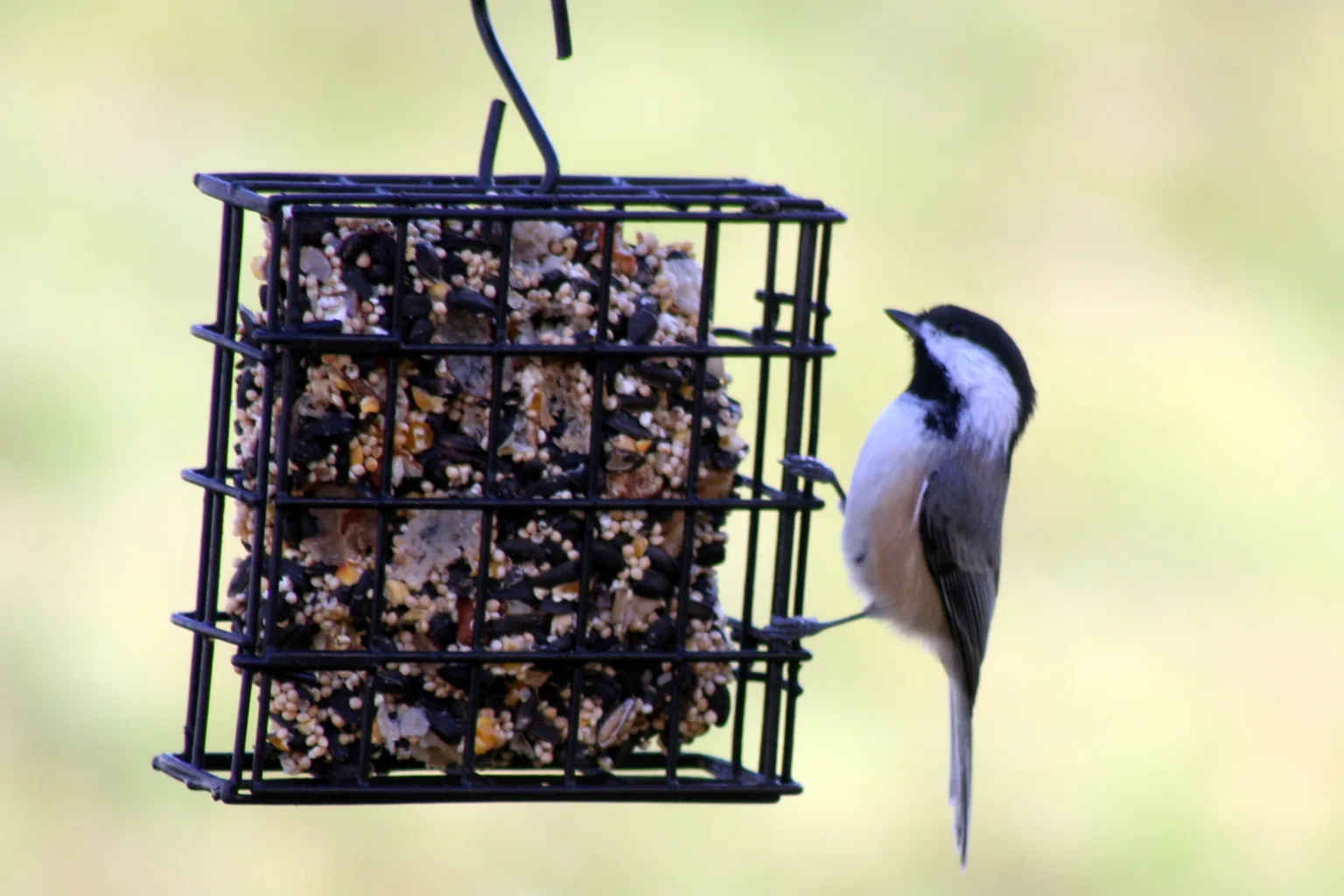
A bird seed ornament is any decorative feeder made from seed and a binder. The most common types are:
- Gelatin seed shapes, pressed into cookie cutters and set in the fridge.
- Pine cone feeders, packed with fat or bird-safe peanut butter and rolled in seed.
- Suet wreaths, poured into a ring mold and studded with fruit.
- Garlands, threaded with unsalted popcorn, peanuts in the shell and fruit.
All of them do the same job as a seed cake or suet block from a shop. They just look more festive and let you choose every ingredient.
Which binder should you use?
The binder decides how long an ornament lasts outdoors and which birds it suits. Gelatin makes light seed shapes, while fat gives a dense, high-energy treat.
| Binder | Holds up in | Best for | Watch out for |
|---|---|---|---|
| Unflavored gelatin | Cold, dry weather | Seed-eaters such as finches, sparrows and tits | Softens in rain and mild spells |
| Beef suet or mutton tallow | Cold weather | Tits, woodpeckers, nuthatches | Goes soft and rancid when warm |
| Lard | Cold weather | Tits, sparrows, robins | Softer than suet, add more seed |
| Coconut fat | Cold weather | A plant-based option | Lower energy than animal fat (NABU) |
| Unsalted bird peanut butter | Cold weather | Tits, nuthatches, woodpeckers | Only bird-safe, salt-free kinds |
Germany’s NABU notes that animal fats have a higher energy density than plant fats and are usually preferred by birds. If you want a plant-based option, coconut fat works, but the LPO in France advises against fats made from palm oil.
How do you make gelatin bird seed ornaments?
You need just four ingredients and a set of cookie cutters. This is the recipe Audubon publishes for its own birdseed ornaments.
Ingredients for one small batch:
- 2 cups birdseed (a mix with black oil sunflower and white millet works well)
- 1 tablespoon unflavored gelatin
- 2 tablespoons cold water
- 1/3 cup boiling water
Method:
- Sprinkle the gelatin over the cold water and let it soften for a minute.
- Pour in the boiling water and stir until the gelatin has fully dissolved.
- Stir in the birdseed until every seed is coated.
- Set metal cookie cutters on a tray lined with baking paper. Fill them with the seed mixture and press firmly so the shape is packed solid.
- Refrigerate overnight.
- Let the ornaments come to room temperature, then gently push them out of the cutters.
- Use a needle to pull a thread through each ornament at least half an inch (about 1 cm) from the edge, and tie a knot, as Audubon suggests.
Tip: a straw pushed through the shape before it sets leaves a clean hole for string, which is easier for children than a needle.
How much to make at once
Gelatin shapes keep best in the fridge until you hang them, so many people make a small batch each week. These multiples keep Audubon’s ratio.
| Batch | Birdseed | Unflavored gelatin | Cold water | Boiling water |
|---|---|---|---|---|
| Small | 2 cups | 1 tbsp | 2 tbsp | 1/3 cup |
| Double | 4 cups | 2 tbsp | 4 tbsp | 2/3 cup |
| Class or family project | 8 cups | 4 tbsp | 1/2 cup | 1 1/3 cups |
How do you make bird seed cakes?
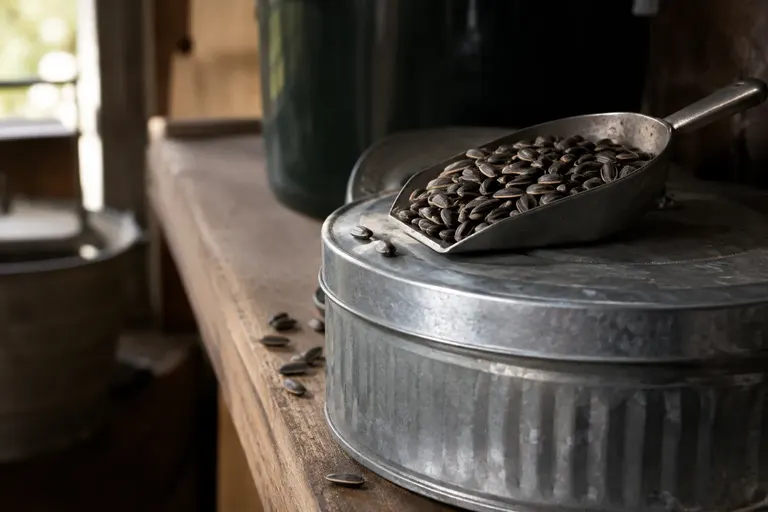
A bird seed cake is the same seed and gelatin mix as an ornament, packed into a bigger mold instead of a cookie cutter. University extension recipes from South Dakota State and K-State use unflavored gelatin, water and seed, with a little corn syrup in one version, then set the cakes in the fridge for a few hours or overnight.
South Dakota State University Extension recipe (gelatin and corn syrup)
This version comes from SDSU Extension’s Cloverbud activity sheet, written for young 4-H members.
Ingredients:
- 2 1/2 cups birdseed
- 2 packages unflavored gelatin
- 2 tablespoons corn syrup
- 1 cup water (1/2 cup cold, 1/2 cup boiling)
Method:
- Put 1/2 cup cold water in a large bowl and pour the gelatin on top.
- Add 1/2 cup boiling water and stir until the gelatin has completely dissolved.
- Stir in the corn syrup, then the birdseed, and mix well.
- Refrigerate the bowl for about 10 minutes, until the liquid firms up enough that it will not leak out from under the molds.
- Set cookie cutters or molds on a parchment-lined baking sheet and spoon in the mixture.
- Press a piece of drinking straw into each shape, leaving at least 1/2 inch between the hole and the edge.
- Refrigerate overnight, then ease the shapes out of the molds and pull out the straws.
- Thread twine through the hole, knot it and hang the cake from a branch, leaving room nearby for birds to perch.
The SDSU sheet calls for 12 cookie cutters. For one larger cake, press the same mixture into a single mold instead.
Gelatin-only seed cakes (K-State Extension and Cornell Lab)
K-State Research and Extension in Butler County and the Cornell Lab’s K-12 program both publish the same simple “bird seed cookie”: 2 cups birdseed, 1 packet unflavored gelatin, 2 tablespoons cold water and 1/3 cup boiling water. Spray the cutters with non-stick spray, press the mix in firmly, poke a hole with a skewer and refrigerate for a few hours to set. Cornell adds that you should let the cookies come to room temperature before you push them out.
Seed cake recipes compared
| Recipe | Birdseed | Unflavored gelatin | Water | Corn syrup | Set time |
|---|---|---|---|---|---|
| Audubon ornaments | 2 cups | 1 tbsp | 2 tbsp cold + 1/3 cup boiling | None | Overnight in the fridge |
| K-State Extension and Cornell K-12 | 2 cups | 1 packet | 2 tbsp cold + 1/3 cup boiling | None | A few hours in the fridge |
| SDSU Extension | 2 1/2 cups | 2 packages | 1/2 cup cold + 1/2 cup boiling | 2 tbsp | Overnight in the fridge |
What about flour in seed cakes?
Many craft sites add flour to bird seed cakes. We did not find a flour version published by Audubon or a university extension, so we have not included one here. The gelatin recipes above hold together without it.
A note on corn syrup: here it is a small amount of binder in a seed cake. It is not a stand-in for sugar in hummingbird feeders, where the Smithsonian’s National Zoo says never to use corn syrup.
Seed cakes vs suet cakes
A seed cake is mostly seed, so it suits seed eaters such as finches, sparrows and tits. A suet cake is mostly fat. The Cornell Lab describes suet cakes as blocks of suet or a thick substitute mixed with ingredients such as cornmeal, peanuts, fruit or dried insects, and they draw woodpeckers, nuthatches and chickadees. Our guide to suet for birds compares shop-bought cakes.
How do you make a pine cone bird feeder?
A pine cone feeder is the classic version and needs no special equipment. The Natural History Museum in London uses lard mixed with birdseed and notes that the cone itself acts as the holder, so you don’t need a separate fat ball feeder.
- Collect open, dry cones. IVN, a Dutch nature education group, tells children to let cones dry until they are fully open.
- Tie the string first. Tie a piece of twine around the base of the cone before you add any fat. IVN suggests about 30 cm (12 inches).
- Mix the coating. Let lard or suet soften at room temperature and work in birdseed until it all sticks together. Or use unsalted peanut butter made for birds.
- Pack the cone. Push the mix into the gaps between the scales.
- Roll in seed. Roll the cone in a tray of seed and chill it until firm.
The Natural History Museum also advises cleaning a cone in boiling water before you reuse it, because diseases can spread between birds at feeders.
If you’re thinking of peanut butter, read our guide on feeding birds peanut butter first. Ordinary jars often contain salt and sugar.
How do you make a suet wreath or seed bell?
Fat-based shapes are heavier and give more energy per bite, which suits tits and woodpeckers in hard weather.
Suet wreath (Audubon): melt 3 blocks of rendered suet, mix in 1/2 cup additive-free nut butter and 9 cups of birdseed, and add dried fruit and berries. Grease a ring cake pan, scatter fruit in the bottom, fill it with the mixture and refrigerate overnight. Turn it out and hang it with a wide ribbon.
Seed bell in a flowerpot (NABU): NABU suggests about 150 grams of fat, such as beef or mutton tallow, and about 150 grams of seed mix for each bell. Use a clay pot about 10 cm across with a small hole in the base, thread a stick or string through the hole, then fill the pot with the warm mixture. NABU adds that a splash of cooking oil stops the fat from setting too hard.
For a full guide to rendering fat and mixing firm cakes, see how to make homemade suet.
How do you make a bird seed garland?
A bird seed garland is unsalted, air-popped popcorn, peanuts in the shell, cranberries and apple and orange slices threaded on plain thread and draped over an outdoor tree. It needs no binder or fridge time.
Audubon threads the food in sections of 3 to 4 feet (roughly 1 to 1.2 m), ties them together while hanging, and drapes the garland from the top of the tree in a downward spiral. Keep the popcorn plain, and take the thread down once the food has gone.
What can you add, and what should you leave out?
Good additions, in moderation:
- Black oil sunflower seed or sunflower hearts
- White millet and other small seeds
- Chopped unsalted peanuts
- Rolled oats
- Dried fruit such as cranberries or chopped apple
- Dried mealworms, for robins and other insect-eaters
Leave these out:
| Ingredient | Why it doesn’t belong |
|---|---|
| Salt, salted nuts and salty snacks | The RSPB says salted foods dehydrate birds |
| Bread | Audubon leaves it out of its ornaments; the LPO lists it among foods not to give |
| Milk | The LPO advises against it |
| Glitter, paint and craft glue | Not food, and Audubon’s recipes exclude glitter |
| Cooking fat from the roasting tin or bacon | The Natural History Museum warns it is high in salt |
| Palm-oil-based fats | The LPO advises against them |
| Seed mixes padded with dried peas, lentils or rice | The LPO lists these as unsuitable |
Our full list of what not to feed birds covers other risky foods.
How should you hang bird seed ornaments safely?
Hang ornaments from a branch where birds can perch or cling, with a clear view around them so cats can’t ambush feeding birds.
- Use twine, cotton string or wide ribbon, tied firmly with a short loop.
- Never use mesh or netting. The RSPB says mesh bags can trap birds’ feet and even break legs, and the LPO warns specifically against citrus nets for fat balls.
- Think about windows. The Cornell Lab of Ornithology says that if feeders are near windows, the answer is to make those windows bird friendly rather than worry about exact distances. Our guide to window collisions explains how.
- Mind the distance from glass. Audubon suggests hanging its suet wreath three feet (about 1 m) or less from a window, to prevent collisions after birds feed. For other ways to protect glass, see why birds fly into windows.
- Give some shelter. A spot under the canopy of a tree or a roof edge keeps rain off gelatin shapes.
- Clear up. When an ornament is finished, take down the string so birds can’t get tangled in it.
- Expect squirrels. The Cornell Lab’s K-12 guide warns that squirrels are attracted to pine cone feeders, so hang them where squirrels can’t easily reach.
When should you put them out, and how long do they last?
Bird seed ornaments are a cold-weather food. The LPO frames garden feeding as a November to March activity, and Vogelbescherming Nederland says seeds and fat suit autumn and winter, while only mealworms are suitable in spring and summer. The Natural History Museum also advises against homemade fat balls in summer, because they can go soft and rancid. In the UK, the RSPB has asked since April 2026 for a pause on seed and peanuts from 1 May to 31 October to slow trichomonosis, so seed ornaments belong to November to April there; see feeding birds in summer.
Outdoors, an ornament should be replaced as soon as it turns soft, smells off or shows mold. Put out a few at a time so they get eaten while fresh, and keep spares in the fridge or freezer. Vogelbescherming advises not to put out too much food at once and to clean feeding places regularly. The RSPB recommends washing feeding stations every week with a mild disinfectant and hot water, then rinsing and drying them. Our guide on how to clean bird feeders walks through it.
How long can a bird seed ornament stay outside?
The RSPB advises clearing uneaten seeds and peanuts within one to two days and suet products within seven days, keeping food as dry as possible and putting out only what birds will eat. For ornaments, that means seed and gelatin shapes need replacing after a day or two, fat-based ones within a week.
Rain and mild spells shorten those limits, and the Cornell Lab warns that moldy or decomposing seeds and hulls can make birds sick.
| Ornament | Replace after (RSPB timings) | Replace sooner if |
|---|---|---|
| Gelatin seed shape or seed cake | 1 to 2 days | It goes soft after rain or a mild spell, or seed looks dark or clumped |
| Pine cone, suet wreath or seed bell | Up to 7 days | Fat smells off, softens or shows mold |
Keep spare ornaments sealed in the fridge; our guide to bird food storage covers seed containers.
How do you keep ornament feeding hygienic?
Crowded feeding spots spread disease. Audubon names salmonellosis, house finch eye disease, aspergillosis and avian pox among feeder infections and recommends several feeding points so birds crowd less.
- Clean reusable holders. Cookie cutters, wreath pans and wire holders need washing too. The Cornell Lab suggests soap and boiling water or no more than 1 part bleach to 9 parts water, then a thorough rinse and drying.
- Pause if birds look ill. If you see fluffed-up, lethargic birds, take ornaments down and read our guide to sick birds at the feeder.
Which birds will visit?
| Region | Likely visitors to seed and fat ornaments |
|---|---|
| UK and Europe | Blue tit, great tit, long-tailed tit, house sparrow, starling, plus robin, blackbird, jay and great spotted woodpecker at times |
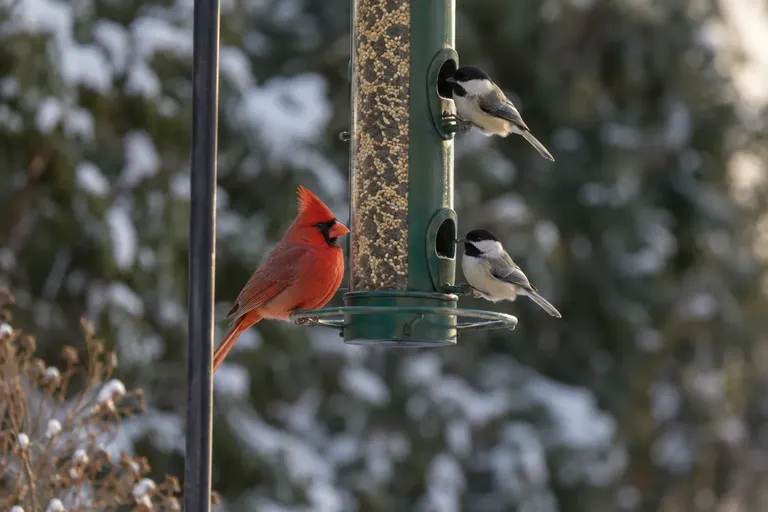
| North America | Chickadees, titmice, nuthatches and woodpeckers such as the Downy Woodpecker |
The European list follows the Natural History Museum’s guide. If you want to attract a wider mix, pair your ornaments with a regular feeder stocked with the right seed. Our guide to the best bird seed compares the main types, and what to feed birds in winter shows how ornaments fit into a full winter menu.
A good project for children
Ornaments are an easy first nature project. Children can press seed into cutters, roll pine cones and then watch which birds arrive. Adults should handle boiling water and melted fat. If you’d like to turn it into a longer activity, our guide to birding with kids has ideas for keeping a simple feeder diary.
Sources
- Audubon: DIY outdoor holiday decorations that double as treats for birds
- Natural History Museum: How to make fat balls for birds
- RSPB: How and what to feed your garden birds
- NABU: Vogelfutter selber machen
- LPO Nord: Fabriquer une mangeoire (PDF)
- Vogelbescherming Nederland: Vogels voeren
- SDSU Extension: Cloverbud Fun Zone, Birdseed Ornaments (PDF)
- K-State Research and Extension, Butler County: Feeding the Birds
- Cornell Lab of Ornithology K-12: Fun DIY Bird Feeders
- Cornell Lab, All About Birds: About suet, mealworms and other bird foods
- Smithsonian’s National Zoo: Hummingbird Nectar Recipe
- RSPB: All about bird feeding
- Cornell Lab, All About Birds: How to clean your bird feeder
- Audubon: Three easy but important ways to keep your bird feeder disease-free

Frequently asked questions
Is gelatin safe in bird seed ornaments?
Plain, unflavored gelatin is the binder Audubon uses in its own birdseed ornament recipe: one tablespoon of gelatin for two cups of seed. Use the unflavored powder only. Flavored jelly mixes contain sugar, colorings and sometimes sweeteners that birds don't need. Gelatin softens when it gets wet and warm, so hang gelatin ornaments where they get some shelter and replace any that turn soft or moldy.
Can I use regular peanut butter on a pine cone feeder?
Only if it's free of salt and other additives. Many supermarket peanut butters contain added salt, sugar and oils. Nature groups such as IVN in the Netherlands recommend peanut butter sold for birds, which has no salt. In Europe, a plain fat such as lard or beef suet is the usual choice, and the Natural History Museum in London uses lard for its pine cone feeders.
What should I hang bird seed ornaments with?
Use plain garden twine, cotton string or a wide ribbon, tied securely, and keep the loop short. Never wrap fat or seed in plastic mesh or citrus netting. The RSPB warns that mesh bags can trap birds' feet and even break legs, and the LPO in France gives the same warning. Collect and bin leftover string when the ornament is finished.
When should I put out bird seed ornaments?
Put them out in the cold months. The LPO's garden feeding advice covers November to March, and Vogelbescherming Nederland says seeds and fat suit autumn and winter, while only mealworms are suitable in spring and summer. Fat-based ornaments also soften and go rancid in warm weather, so stop making them once days turn mild.
Which birds eat homemade seed ornaments?
In Europe, blue tits, great tits, long-tailed tits, house sparrows and starlings are the most likely visitors to fat and seed feeders, and robins, blackbirds and great spotted woodpeckers may join them, according to the Natural History Museum. In North America, chickadees, titmice, nuthatches and woodpeckers are the usual visitors to seed cakes and fat feeders.