Sunflower Hearts for Birds: Hearts vs Black Oil vs Chips
Sunflower hearts for birds are sunflower kernels with the husk removed: no shells under the feeder, but spoil faster. Who eats them and how to store them.
In this article
- What are sunflower hearts?
- Sunflower hearts vs black oil vs striped vs chips
- Which birds eat sunflower hearts?
- Are sunflower hearts really no mess?
- What does ragweed have to do with bird seed?
- Do sunflower hearts go off faster than whole seed?
- How should you store sunflower hearts?
- Which feeders suit sunflower hearts?
- Can you feed sunflower hearts in summer?
- How do you keep a sunflower heart feeder clean?
- Are sunflower hearts worth it?
- Sources
- Frequently asked questions
Sunflower hearts are sunflower kernels with the husk removed, so birds eat everything and no shells pile up under the feeder. Nearly every bird that eats sunflower takes them, and many prefer them. The catch is shelf life: without a husk they spoil faster, so keep them dry and offer only a day or two’s worth.
They’re sold as sunflower hearts, hulled sunflower, sunflower kernels or sunflower chips, and they’re a staple of no-mess feeding. This guide covers how hearts compare with whole black oil, striped seed and chips, which birds eat them, the ragweed rule in Europe, storage, the right feeders and the new UK summer pause.
What are sunflower hearts?
Sunflower hearts are simply the edible kernel of the sunflower seed, with the shell taken off before you buy it. Project FeederWatch describes hulled sunflower as “simply sunflower seeds with the shell removed,” and notes it’s often sold as “no mess” sunflower.
Because the bird doesn’t have to crack anything, it can eat faster. The BTO points out that hearts cost more than black sunflower seed, but birds can feed more quickly and there’s no pile of husks left on the ground. Chips are the same kernel broken into smaller bits.
Sunflower hearts vs black oil vs striped vs chips
Hearts and chips trade mess and effort for shelf life. Black oil is the all-round in-shell seed, and striped seed has a thicker shell that some birds struggle with.
| Type | What it is | Shells under feeder | Who eats it | Shelf life and feeder fit |
|---|---|---|---|---|
| Sunflower hearts | Whole kernel, husk removed | None | Any bird that eats sunflower; many prefer it | Spoils quickly; needs a dry, covered feeder and small top-ups |
| Sunflower chips | Hulled kernel broken into pieces | None | Same birds as hearts | Same care as hearts; keep very dry |
| Black oil sunflower | Small seed with a thin black shell | Yes, husks drop below | Nearly all seed eaters can crack it | Keeps better in the shell; fine in trays, tubes, hoppers and window feeders |
| Striped sunflower | Larger seed with a thicker striped shell | Yes, heavier husks | Harder for House Sparrows and blackbirds to open | Keeps like black oil; useful to discourage some species |
The Cornell Lab explains that black oil seeds have very thin shells that “virtually all seed-eating birds” can crack, with a high-fat kernel that’s valuable in winter. Striped seed has a thicker shell that’s “much harder for House Sparrows and blackbirds to crack open,” which is why some people switch to it. Hearts remove that filter entirely: with no shell, every visitor gets an easy meal, squirrels included.
For a full look at the in-shell option, see our guide to black oil sunflower seeds.
Which birds eat sunflower hearts?
Almost every seed-eating garden bird will take hearts. Project FeederWatch says any bird that eats sunflower seed will also be attracted to hulled sunflower, and “many species will actually prefer” it.
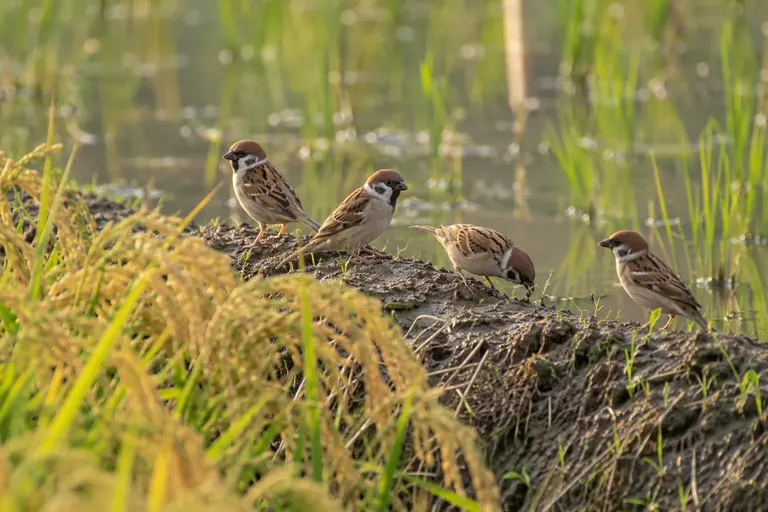
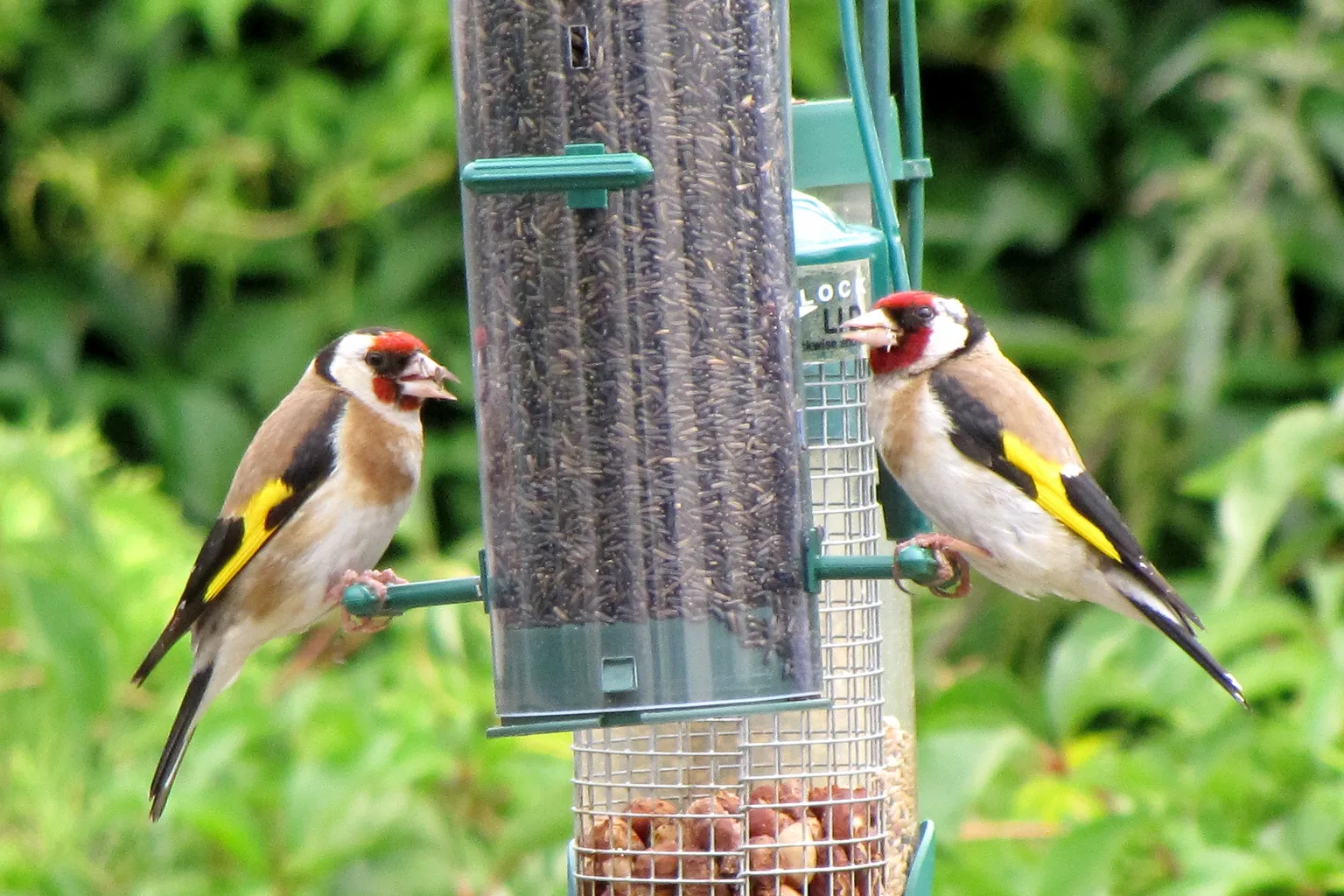
In Britain and Europe, the BTO notes that black sunflower seed is a favorite of greenfinches and tits, but “they may be shunned if sunflower hearts are available nearby,” and there’s some suggestion that goldfinches now favor hearts. Germany’s NABU lists finches, sparrows and buntings as seed eaters with strong bills, and says tits, woodpeckers and nuthatches also take sunflower seeds in winter.
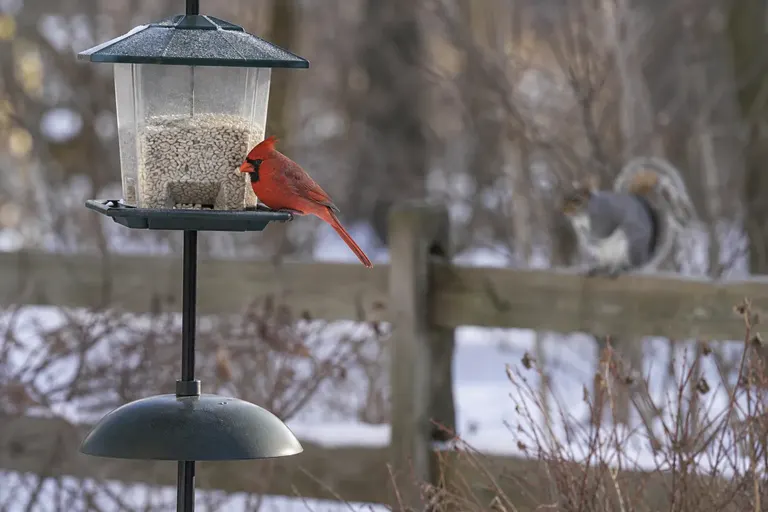
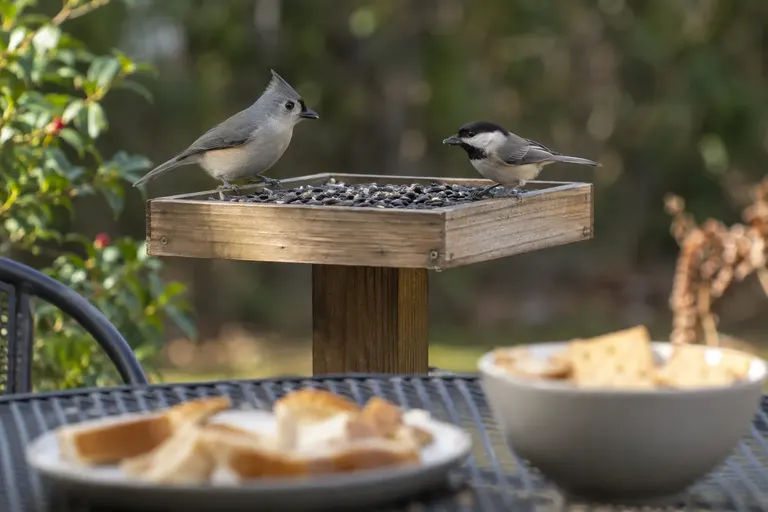
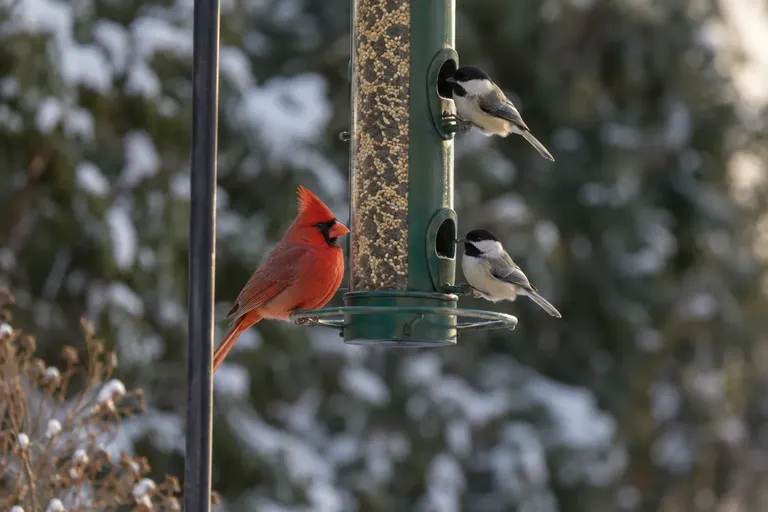
In North America, FeederWatch names cardinals, chickadees, finches and sparrows as the main sunflower eaters, with woodpeckers taking it on occasion.
| Region | Regular sunflower heart eaters |
|---|---|
| UK and Europe | Goldfinch, Greenfinch and other finches, House Sparrow, buntings, tits, Nuthatch, woodpeckers in winter |
| North America | Northern Cardinal, chickadees, finches such as American Goldfinch and House Finch, sparrows, occasional woodpeckers |
Are sunflower hearts really no mess?
Mostly, yes. With no husk, there’s nothing to drop, which is why FeederWatch says hulled sunflower “does indeed reduce the chaff underneath feeders.” That makes hearts a good fit above patios, decks, balconies and flower beds.
A few things can still end up below the feeder. Birds knock out loose pieces, and chips in particular can scatter. Any food on the ground can attract rats and pigeons, so a tray or seed catcher under the feeder still helps. For blends where every ingredient is shelled, see our guide to no-mess bird seed.
What does ragweed have to do with bird seed?
Common ragweed (Ambrosia artemisiifolia) is an invasive plant with strongly allergenic pollen, and its seeds can travel in bird food. NABU warns that commercial bird food often contains ragweed seeds and recommends higher-quality feed, noting that some producers filter the seeds out to below 0.005 percent.
In the EU, Commission Regulation (EU) No 574/2011 sets a maximum of 50 mg/kg of Ambrosia seeds in feed materials and in compound feed containing unground grains and seeds. The regulation records the European Food Safety Authority’s finding that bird feed may be an important way ragweed spreads, especially into areas where it isn’t yet established.
What this means for you:
- Buy bird food from sellers who state that it’s cleaned or controlled for ragweed.
- Keep feeding areas tidy and check the ground below feeders in summer for unfamiliar seedlings.
- Hearts don’t come with a guarantee of being ragweed free just because they’re hulled, so check the label like you would for any seed.
Do sunflower hearts go off faster than whole seed?
Yes. The husk protects the kernel, and once it’s gone the oily kernel is exposed to air and moisture. The Cornell Lab warns that “without the protection of the shell, sunflower hearts and chips quickly spoil, and can harbor dangerous bacteria,” and advises offering no more than birds can eat in a day or two. FeederWatch adds that hulled sunflower “tends to spoil more quickly than sunflower in the shell,” so it must stay dry.
Signs a batch has gone bad:
- Clumps that stick together or feel damp
- A musty or sour smell
- Visible mold, webbing or insects in the bag
- Kernels darkened or soft in the feeder
If you see any of these, bin the food and clean the feeder. Our guide to whether bird seed goes bad covers shelf life for every common seed.
How should you store sunflower hearts?
Keep hearts sealed, cool and dry, and buy only what you’ll use in a few weeks. Moisture and heat are what spoil them, and mice and rats will find an open bag.
- Use a lidded metal bin or sealed container, not the paper sack left open in a shed.
- Store it off the floor in a cool spot out of direct sun.
- Don’t top up old food with new. Use up the old batch or throw it away first.
- Buy smaller bags if you feed lightly, since hearts don’t keep as long as in-shell seed.
Our bird food storage guide compares containers and covers rodent-proofing.
Which feeders suit sunflower hearts?
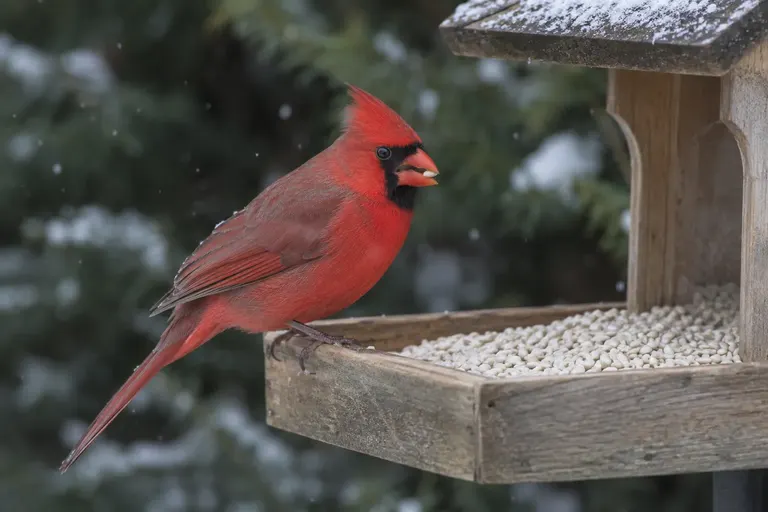
Use a feeder that keeps rain off and drains well, and fill it with only a day or two of hearts. The Cornell Lab says hearts and chips “shouldn’t be offered in tube feeders where moisture can collect.”
The RSPB’s current advice is to choose feeders that are easy to take apart and clean, keep rain out, limit condensation and drain easily. It also suggests avoiding bird tables and other flat-surfaced feeders, because sick birds can regurgitate food onto flat surfaces where healthy birds pick it up. NABU similarly recommends feeders where birds can’t walk in the food.
Good options:
- Seed feeders with a roof or rain guard and drainage holes in the base
- Covered hoppers or silo-style feeders that release a little food at a time
- Small hanging dishes with a dome, emptied and dried daily
If you’re choosing a tube, our tube feeder guide explains which ports and bases handle hulled seed. Squirrels love hearts as much as birds do, so if they raid your feeders, see our squirrel-proof feeder guide.
Can you feed sunflower hearts in summer?
In the UK, the answer has changed. In April 2026 the RSPB began asking people to pause feeding seeds and peanuts from 1 May to 31 October, because the risk of trichomonosis outbreaks is highest in summer and autumn. The disease has hit finches hard; the RSPB says greenfinches have dropped by over 65 percent in three decades. The BTO now gives the same seasonal advice.
That pause covers sunflower hearts. Small amounts of mealworms, fat balls or suet can continue, and the RSPB asks that seed and peanuts be eaten within one to two days when you do offer them from November to April.
Elsewhere the advice differs. NABU recommends winter feeding mainly from November to February and says to avoid sunflower seeds, peanuts and fatty food from April to July, when parents are raising chicks. In North America there’s no blanket pause, but heat speeds up spoilage, so the day-or-two rule matters even more. Our article on feeding birds in summer covers the trade-offs.
How do you keep a sunflower heart feeder clean?
Clean feeders at least once a week and clear food debris from underneath. That’s the RSPB’s baseline, and it also suggests moving feeders regularly so contamination doesn’t build up in one spot.
- Empty the feeder fully before refilling.
- Scrub with hot soapy water, rinse and let it dry completely before adding hearts.
- Wear gloves and wash your hands afterward.
- If you see sick or dead birds, stop feeding for a while and clean everything.
Our step-by-step guide to cleaning bird feeders covers brushes, disinfectants and drying.
Are sunflower hearts worth it?
They’re worth it when mess is your main problem, or when you want to give small finches and tits a quick, high-energy meal in winter. They’re less suited to wet, exposed spots, to feeders you can’t check daily, or to gardens overrun by squirrels.
A practical setup many people use: in-shell black oil in the main feeders over grass, and a small covered feeder of hearts over the patio where shells would be a nuisance.
Sources

Frequently asked questions
What are sunflower hearts for birds?
Sunflower hearts are sunflower kernels with the outer husk already removed. Birds eat the whole piece, so no shells pile up under the feeder. Cornell's Project FeederWatch says any bird that eats sunflower seed will also take hulled sunflower, and many species prefer it. The trade-off is that bare kernels spoil faster than seed in the shell, so they need dry storage and small top-ups.
What is the difference between sunflower hearts and sunflower chips?
Hearts are whole hulled kernels, while chips are hulled kernels broken into smaller pieces. Both come without a husk, so both leave no shells and both are eaten by the same sunflower-loving birds. Because chips have even more exposed surface, treat them the same way as hearts or stricter: keep them dry and put out only what birds clear in a day or two.
Do sunflower hearts go off?
Yes, faster than whole seed. The Cornell Lab warns that without the protection of the shell, sunflower hearts and chips spoil quickly and can harbor dangerous bacteria, so offer no more than birds eat in a day or two. Store the bag sealed in a cool, dry place, buy amounts you'll use within weeks, and throw away anything damp, clumped or musty.
Which birds eat sunflower hearts?
Almost every seed-eating garden bird. In Britain the BTO notes goldfinches may now favor hearts, and greenfinches and tits may skip black sunflower seed when hearts are nearby. NABU lists finches, sparrows and buntings as seed eaters, with tits, woodpeckers and nuthatches also taking sunflower in winter. In North America, cardinals, chickadees, finches and sparrows are regulars.
Should I feed sunflower hearts in summer?
In the UK, no. Since April 2026 the RSPB has asked people to pause seed and peanuts from 1 May to 31 October to cut the spread of trichomonosis among finches, and the BTO gives the same seasonal advice. Mealworms, fat balls or suet can continue in small amounts. Elsewhere, check your national bird society and keep hearts dry in warm weather.