Should You Feed Birds in Summer? What to Offer and Avoid
Should you feed birds in summer? Yes, if you keep feeders clean, food fresh and portions small. What to offer, what to avoid in heat and when to pause feeding.
In this article
- Quick answer
- Do birds need to be fed in summer?
- How does summer feeding affect nesting birds?
- Which birds visit feeders in summer?
- Does feeding during molt help birds?
- What are the best foods to offer birds in summer?
- What are the risks of feeding birds in hot weather?
- Is water more important than food in summer?
- When should you stop or pause feeding in summer?
- How can you help birds in summer without feeders?
- How do you set up a summer feeding routine?
- Summer feeding myths vs facts
- Common mistakes with summer feeding
- Quick facts
- Sources
- Frequently asked questions
Should you feed birds in summer? Yes, you can, and it is a real pleasure: you get to watch parents bring fledglings to the feeder, see orioles and hummingbirds up close, and help birds through nesting and molt. But birds do not need feeders in summer the way they can in winter, since a pair of Carolina Chickadees may need 6,000 to 9,000 caterpillars to raise one brood, and warm weather adds risks. The key is to offer small amounts of fresh food, clean more often, and provide water.
This guide covers why summer feeding is considered acceptable, what to offer and what to avoid in the heat, how feeding affects nesting birds, and the situations where pausing is the better choice.
Quick answer
- Summer feeding is fine if feeders are kept clean and food stays fresh.
- Birds do not rely on feeders in summer. Insects, seeds and fruit are abundant.
- Nestlings need insects, not seed. Feeders help mostly by saving parents time.
- Clean feeders more often. Heat and humidity speed mold and bacteria.
- Offer smaller amounts so food is eaten within a day or two.
- Change nectar every one to two days in hot weather.
- Water is the most valuable offering in heat and drought.
- Pause in bear country, during disease outbreaks, or if rats appear.
Do birds need to be fed in summer?
No, but that is not the same as saying they gain nothing from it. Summer is when wild food is most abundant. Insects peak, many plants set seed, and fruit ripens from midsummer onward. Healthy wild birds can meet their needs without feeders.
Summer is also a demanding season. Adults are busy feeding broods, often raising two or more in a season. Many species then go through their annual molt in late summer, which requires protein to grow new feathers. A reliable feeder can give adults quick calories, freeing them to spend more time finding the insects their chicks need.
The RSPB in the UK takes the view that feeding throughout the year can help birds, provided food is appropriate. North American authorities such as the Cornell Lab of Ornithology and Project FeederWatch also consider year-round feeding reasonable, with extra attention to hygiene in warm weather. There is no strong evidence that summer feeding makes birds dependent. We explain the research in do birds become dependent on feeders?
How does summer feeding affect nesting birds?
What do baby birds actually eat?
Nearly all songbird parents feed their nestlings insects and other invertebrates, even species that eat mostly seed as adults. Caterpillars are especially important. Entomologist Doug Tallamy’s work has popularized the estimate that a pair of Carolina Chickadees needs somewhere between 6,000 and 9,000 caterpillars to raise one brood. Seed alone cannot replace that protein and moisture. Seed is a snack for the parents, not a meal for the chicks.
A few North American exceptions stand out. American Goldfinches nest late in summer and feed their young mostly regurgitated seeds, which is why they are often seen at Nyjer and sunflower feeders in July and August. House Finches also feed their young largely on seeds. Pigeons and doves feed their young “crop milk,” a secretion from the parent’s crop, supplemented with seeds.
Can the wrong food harm nestlings?
Yes, which is why summer food choice matters more than winter food choice. The RSPB warns against offering whole peanuts during the breeding season, because parent birds may bring them to nestlings, which can choke on them. If you feed peanuts, use a mesh feeder so birds can take only small fragments. Bread, dry crackers and hard fat balls broken into chunks carry similar risks and offer poor nutrition.
Softer, protein-rich foods work well in summer:
- Mealworms, live or dried. The RSPB suggests soaking dried mealworms before offering them in the breeding season so they are softer and supply some moisture.
- Sunflower hearts. Easy to eat, no shells to crack, and less mess under the feeder.
- Soft suet dough or “no-melt” suet blends designed to hold up in heat.
What about fledglings at the feeder?
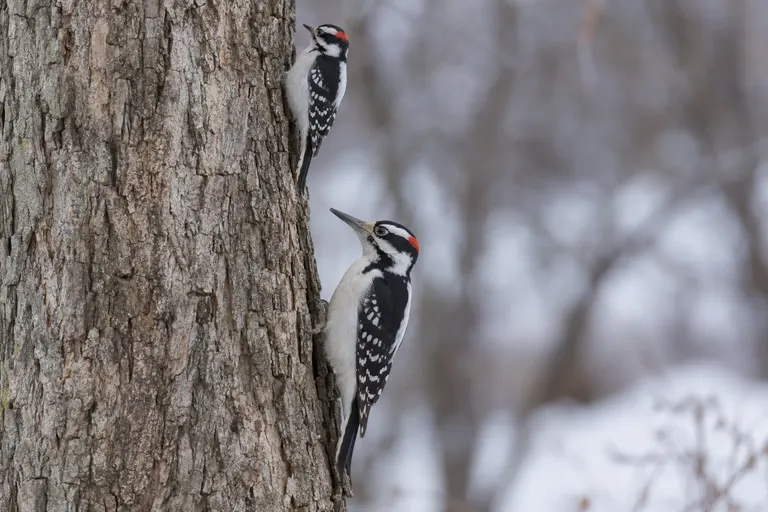
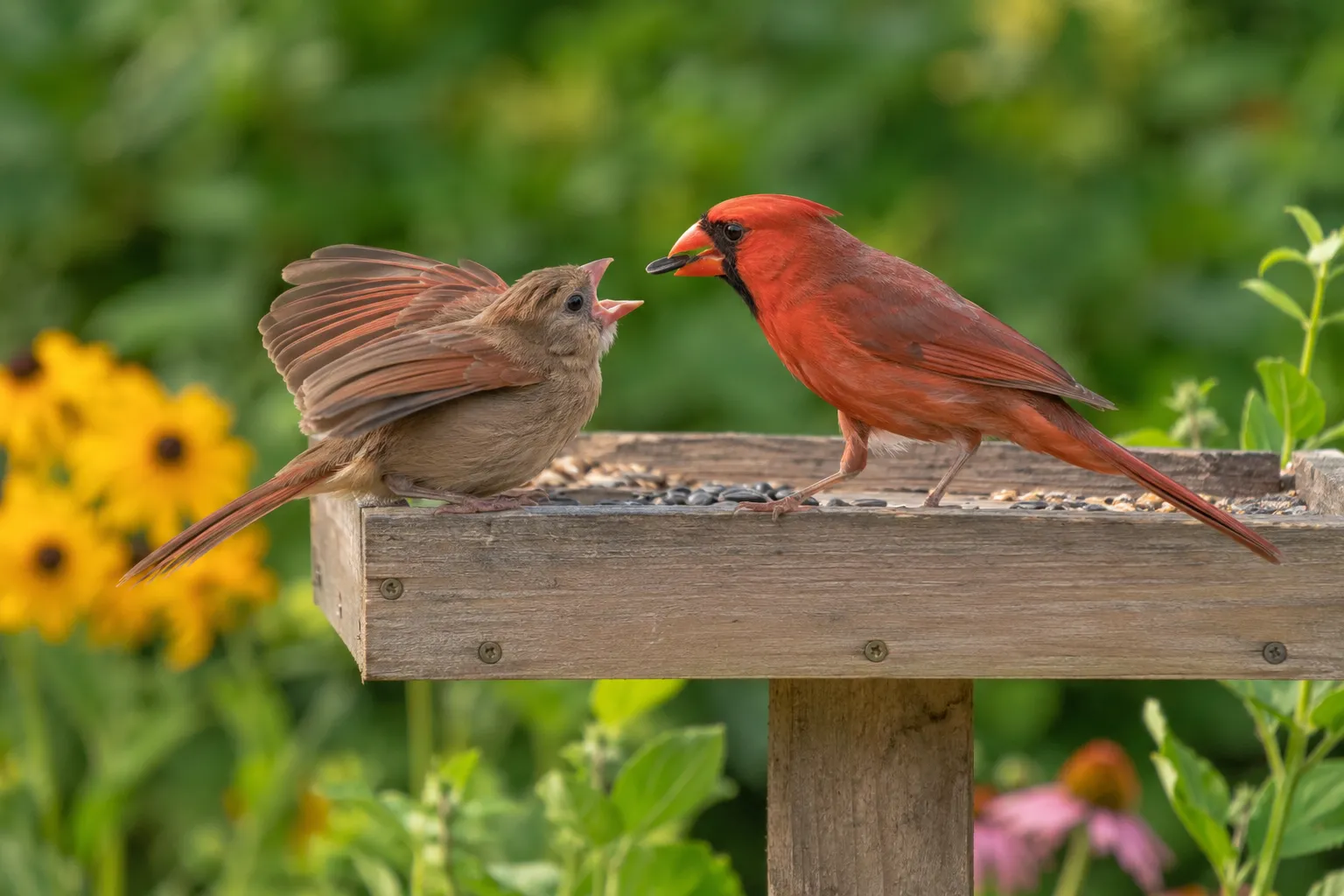
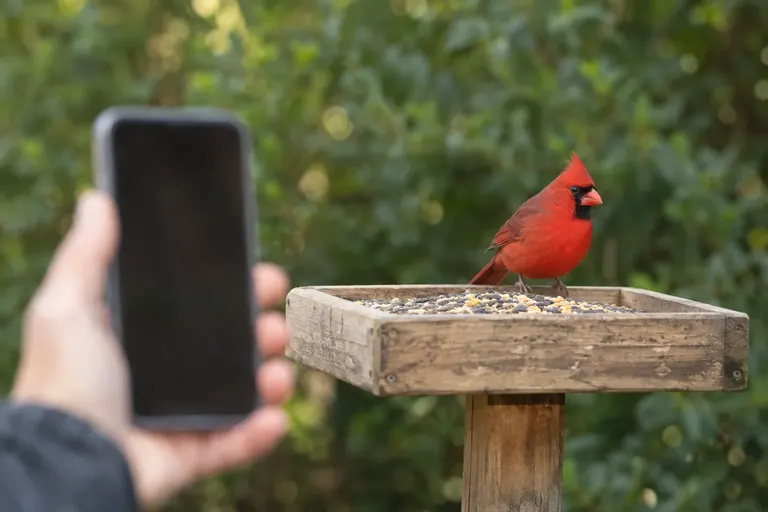
One of the joys of summer feeding is seeing adults bring their fledglings to the feeder and feed them there. Young cardinals, chickadees, woodpeckers and in Europe Great Tits and Blue Tits are regular sights. Fledglings often look scruffy, flutter their wings and beg loudly. They are usually healthy and do not need help. If you find one on the ground, watch from a distance first: parents are usually nearby.
Which birds visit feeders in summer?
Summer feeder traffic looks different from winter traffic. Some winter regulars thin out or disappear, while summer visitors that never touch a winter feeder show up.
North America
- Hummingbirds. Ruby-throated Hummingbirds in the East, and Anna’s, Black-chinned, Rufous and other species in the West, use nectar feeders most heavily in late summer, when young birds join adults and fall migration begins.
- Orioles. Baltimore and Orchard Orioles in the East, and Bullock’s and Hooded Orioles in the West, take nectar, orange halves and grape jelly, especially in spring and early summer.
- Grosbeaks and buntings. Rose-breasted and Black-headed Grosbeaks visit sunflower feeders, and Indigo Buntings sometimes take small seeds such as millet and Nyjer.
- Goldfinches. American Goldfinches are at their brightest and busiest in midsummer, when they nest.
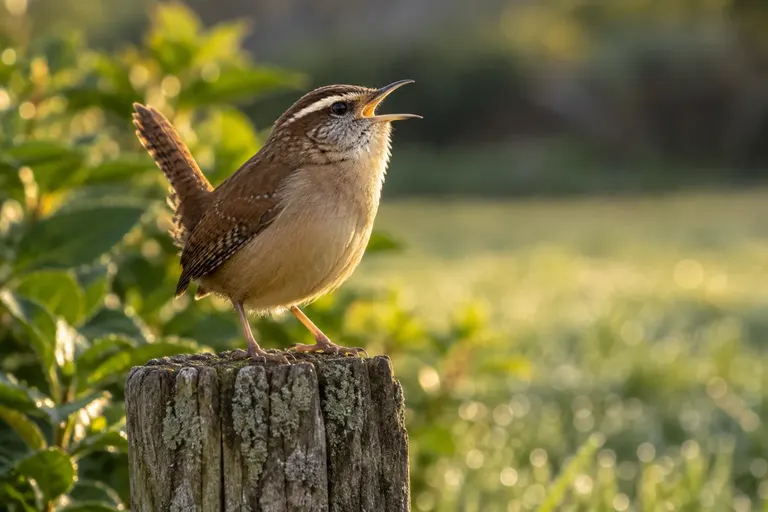
- Bluebirds and wrens. These insect-eaters come readily to mealworms.
Europe
In Britain and much of Europe, summer gardens bring family groups of House Sparrows, Starlings, Blue Tits and Great Tits to feeders, along with European Goldfinches and, where they persist, Greenfinches. Great Spotted Woodpeckers often bring their young to peanut and suet feeders in early summer. Recently fledged juveniles can look very different from adults, which makes summer a good time to practice identification.
Tropical and subtropical regions
In warmer regions, including much of Brazil, there is no harsh winter, so feeding is less about seasonal survival and more about attracting birds for enjoyment. Fruit feeders with banana, papaya or orange draw tanagers, thrushes and Bananaquits, and nectar feeders attract many hummingbird species. Here the same hygiene rules apply year-round: small portions, frequent cleaning and fresh fruit that is removed before it ferments.
Does feeding during molt help birds?
Many songbirds replace all their feathers in late summer, after breeding ends. Feathers are made mostly of protein (keratin), and growing a full new set is costly. During molt, birds often become quieter and more secretive, and their flight can be slightly less efficient while new flight feathers grow in.
Wild foods, especially insects and ripening seeds, usually cover these needs. Still, protein-rich offerings such as mealworms and sunflower hearts, together with clean bathing water, may help birds through this demanding period. Molt is also why some birds, such as Blue Jays and Northern Cardinals, occasionally look patchy or even bald-headed in late summer. It looks alarming but is usually normal.
What are the best foods to offer birds in summer?
| Food | Who eats it | Summer notes |
|---|---|---|
| Black oil sunflower seed | Cardinals, chickadees, titmice, finches, nuthatches, tits | Keep portions small; watch for clumping after rain |
| Sunflower hearts | Most seed eaters, goldfinches | No hulls; spoils faster when wet, so offer less |
| Nyjer (thistle) | American and European Goldfinches, siskins | Goldfinches nest late summer and use it heavily |
| Nectar (4:1 water to sugar) | Hummingbirds, orioles | Change every one to two days in heat |
| Oranges and grape jelly | Orioles, catbirds, some tanagers | Offer small amounts; remove before it spoils or draws wasps |
| Mealworms | Bluebirds, wrens, robins, chickadees | Soak dried ones in breeding season |
| No-melt suet dough | Woodpeckers, nuthatches, chickadees | Choose blends labeled for warm weather |
| Fresh water | Almost all birds | The most valuable offering in heat and drought |
For more detail, see our guides to fruit for birds and the 4:1 hummingbird nectar recipe.
Can you put out suet in summer?
Traditional rendered suet softens and can go rancid in heat. Melting fat can also coat feathers, which reduces their insulation and waterproofing, although this is more of a concern in soft, greasy products. In summer, choose “no-melt” or high-melt-point suet dough, which is mixed with flour or cornmeal to stay firm, put it in shade, and replace it if it softens, smells rancid or grows mold.
What are the risks of feeding birds in hot weather?
Spoiled seed and mold
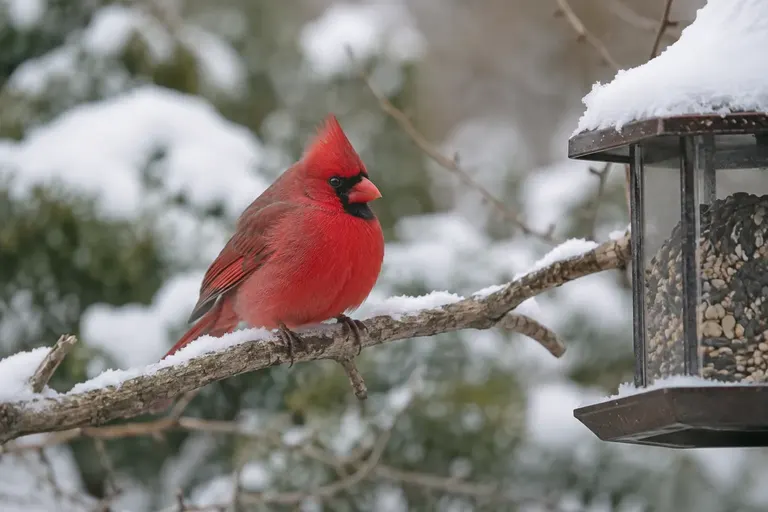
Heat plus humidity or rain is a recipe for moldy, clumped seed. Mold can produce toxins such as aflatoxins, which can harm birds. Tube feeders collect damp seed at the base, and trays can turn into a wet mash after a thunderstorm.
- Fill feeders only with what birds eat in a day or two.
- Use feeders with drainage holes, and tray feeders with mesh bottoms.
- Shake or tap feeders after rain and check for clumps.
- Store seed in a cool, dry place in a sealed container.
Disease
Warm weather helps bacteria such as Salmonella survive, and summer crowding at feeders can spread House Finch eye disease. Clean feeders at least every two weeks, and weekly in hot, humid weather. Scrub, soak in a dilute bleach solution (no more than 1 part bleach to 9 parts water), rinse well and dry completely. If you see sick birds, take feeders down for about two weeks. Our guide to cleaning feeders explains the steps.
Nectar fermentation
Hummingbird nectar ferments quickly in heat, and moldy nectar can harm hummingbirds. A common guideline is to change nectar every day or two when temperatures are in the upper 80s to 90s Fahrenheit (about 30 to 35°C), and every three to five days in milder weather. Hang nectar feeders in partial shade and fill them only partway.
Bees, wasps and ants
Nectar and fruit feeders attract insects in late summer. Feeders with bee guards and built-in ant moats help. Avoid spreading oil or insecticide on feeders or poles, as these can harm birds.
Bears
In bear country, feeders are one of the most common causes of human-bear conflict, and a bear that learns to raid feeders may be killed. Many state and provincial wildlife agencies advise taking all bird feeders down from roughly April through November, or whenever bears are active. If bears live near you, check your local guidance and switch to water, plantings and nest boxes during those months.
Rats and other rodents
Spilled seed attracts mice and rats, particularly in warm weather. Use no-waste foods like sunflower hearts, clean up under feeders, and consider bringing feeders in at night. See how to keep rats away from bird feeders.
Is water more important than food in summer?
For many birds, yes. In hot, dry weather, clean water for drinking and bathing can attract species that never visit seed feeders, including warblers, thrushes, tanagers and flycatchers. Bathing helps birds keep feathers in good condition, which matters during molt.
- Keep water shallow, about 1 to 2 inches deep at most, with a rough or sloped surface for footing.
- Place the bath near cover but not right beside dense shrubs where cats can hide.
- Change the water every day or two to prevent mosquito breeding and algae.
- Scrub the bath regularly.
See our guide on where to put a bird bath.
When should you stop or pause feeding in summer?
- You live in bear country. Follow your local wildlife agency’s advice.
- You see sick birds. Take feeders down for about two weeks and disinfect.
- Rats or other pests appear. Pause for a few weeks and clean up spilled seed.
- You cannot clean often. A dirty feeder in summer does more harm than no feeder.
- During local avian influenza advisories. Follow the guidance in bird flu and backyard feeders.
How can you help birds in summer without feeders?
Feeders are one tool. Habitat does more for birds in the breeding season:
- Plant native trees and shrubs. Oaks, cherries, willows and birches in North America, and native oaks, willows and hawthorns in Europe, support large numbers of caterpillars that parent birds need.
- Skip insecticides. They remove the food nestlings depend on.
- Grow seed plants. Sunflowers, coneflowers, rudbeckias and native grasses feed goldfinches and sparrows in late summer.
- Provide nest sites. Nest boxes, dense shrubs and dead trees (where safe) all help.
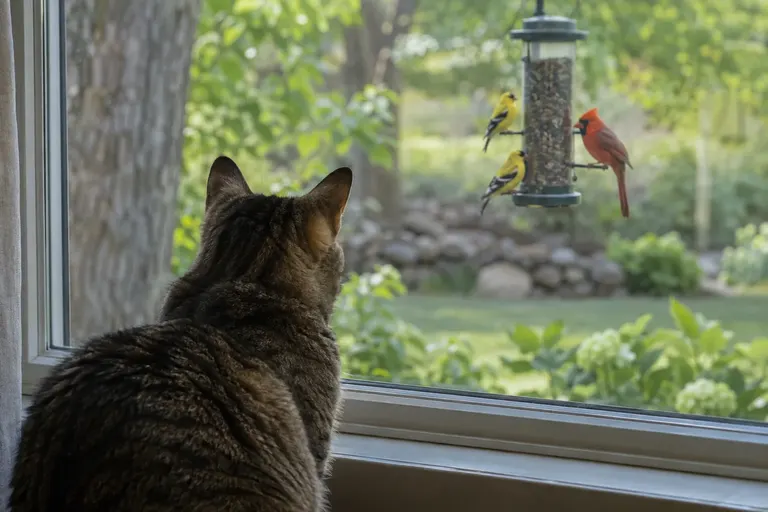
- Keep cats indoors. Fledglings on the ground are especially vulnerable.
How do you set up a summer feeding routine?
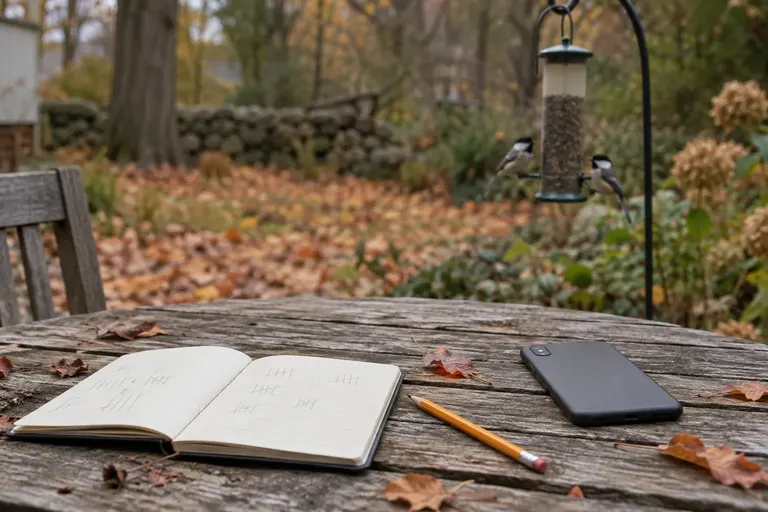
A simple routine keeps summer feeding safe and manageable:
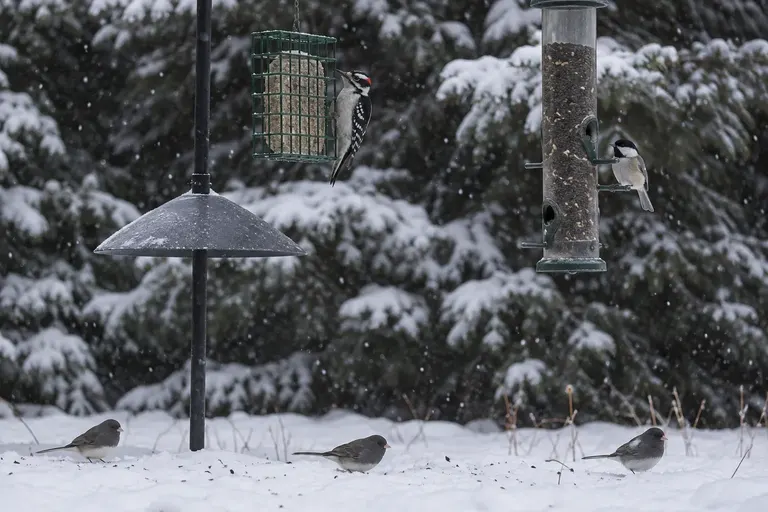
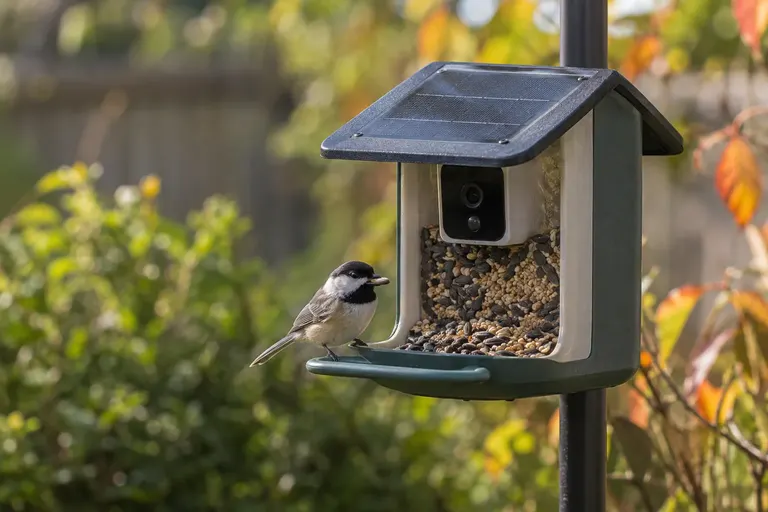
- Choose two or three feeders, not six. Fewer feeders are easier to keep clean. A sunflower feeder, a nectar feeder and a bird bath cover most summer visitors.
- Move feeders into partial shade. Shade slows spoilage of seed, suet and nectar, and keeps metal parts from getting too hot.
- Fill in the morning, lightly. Offer what birds will finish in a day or two. Morning is when most birds feed actively.
- Check after every storm. Tip out wet seed, wipe trays and look for clumps in tube ports.
- Refresh nectar and water on a schedule. Every one to two days in hot weather works well for both.
- Deep-clean weekly. Scrub and disinfect feeders, trays and baths, then dry completely.
- Rake under feeders. Clear hulls and dropped seed at least weekly so they do not rot or draw rodents.
Summer feeding myths vs facts
| Myth | Fact |
|---|---|
| Feeding in summer makes birds lazy or dependent. | Birds still find most of their food in the wild, especially insects for their young. |
| Birds do not visit feeders in summer. | Many do, including hummingbirds, orioles, goldfinches and families with fledglings. |
| Any food is fine in summer. | Whole peanuts, bread and soft suet carry extra risks in the breeding season and heat. |
| Nectar lasts a week. | In hot weather it can spoil within one to two days. |
| Water is only needed in winter. | Birds drink and bathe heavily in summer heat and during molt. |
Common mistakes with summer feeding
- Filling feeders to the top. Large amounts spoil before birds eat them.
- Offering whole peanuts or bread during nesting season. Both can harm nestlings.
- Using regular suet in heat. It softens, goes rancid and can soil feathers.
- Leaving nectar out too long. In hot weather it can spoil within a day or two.
- Ignoring the ground. Hulls and seed under feeders rot and attract rodents.
- Adding red dye to nectar. It is unnecessary; feeders already have red parts.
Quick facts
- Year-round feeding is widely considered acceptable with good hygiene.
- Most songbird nestlings are fed insects, not seed.
- American Goldfinches nest in late summer and feed their young mostly seeds.
- Change hummingbird nectar every one to two days in hot weather.
- The RSPB advises against whole peanuts during the breeding season.
- In bear country, feeders are usually best taken down while bears are active.
- Clean water can attract species that never visit seed feeders.
Sources
Frequently asked questions
Is it bad to feed birds in the summer?
No. The RSPB, the Cornell Lab and most bird organizations consider year-round feeding acceptable, as long as feeders are cleaned often and food stays fresh. Summer brings extra risks, such as spoiled seed, melting suet and faster-souring nectar, so offer smaller amounts and clean more often. Pause feeding if you live in bear country or see sick birds.
What should I feed birds in summer?
Good summer foods include black oil sunflower seed or sunflower hearts, Nyjer for goldfinches, nectar for hummingbirds and orioles, cut oranges and grape jelly in small amounts for orioles, mealworms for bluebirds and wrens, and no-melt suet dough. Fresh, clean water is often the most valuable thing you can provide in hot weather.
Does summer feeding harm baby birds?
Not if you offer suitable food. Most parent songbirds feed nestlings insects, and feeders mainly give adults quick energy so they can spend more time hunting caterpillars. Avoid whole peanuts, which the RSPB warns can choke nestlings, and avoid bread and dry, hard foods. Soaked or live mealworms and sunflower hearts are safer choices.
How often should I change hummingbird nectar in hot weather?
Nectar ferments and grows mold quickly in heat. Many experts suggest changing it every one to two days when temperatures are in the upper 80s to 90s Fahrenheit, and every few days in milder weather. Clean the feeder each time you refill it. Fill it only partly so you are not throwing out large amounts.
Should I take my bird feeders down in summer because of bears?
If you live in bear country, yes. Many state wildlife agencies advise taking feeders down from spring through late fall, when bears are active, because feeders are a common cause of bear conflicts. Bird seed is high in calories and bears learn to return. Offer water, native plants and nest boxes instead during those months.