Big Year Birding: What It Is and How to Do One
A big year in birding means recording as many bird species as you can from 1 January to 31 December in an area you choose. Rules, records and how to start.
In this article
- How does a big year work?
- What area does an ABA big year cover?
- Pick your size: types of big year
- What’s the big year record?
- Do heard-only birds count?
- How do you plan a big year month by month?
- How do you keep a big year list in eBird?
- What gear do you need for a big year?
- Big year etiquette
- Is a big year worth doing?
- Sources
- Frequently asked questions
A big year is a personal challenge to record as many bird species as you can in one calendar year, from 1 January to 31 December, inside an area you pick. The record-setting ones cover all of North America and take months of travel, but most people run a small one for their yard, county or state and track it in eBird.
This guide covers how the rules work, the records, the different sizes of big year, a month-by-month plan and how to keep your list without extra effort.
How does a big year work?
You choose an area and a set of counting rules, then log every species you identify during the calendar year. Each species counts once, the first time you record it, and the list resets on 1 January.
Most North American birders follow the American Birding Association’s rules. The ABA’s big year rules say a year runs from 12:00 AM on 1 January to 11:59 PM on 31 December, using local time wherever you are, and that each species counted must be on the ABA Checklist during that year.
The ABA’s recording rules set the basics for any list:
- Alive. Eggs don’t count.
- Wild. The bird isn’t there because people moved it or its recent ancestors.
- Unrestrained. Birds in cages, nets or hands don’t count.
- Ethical. The encounter has to follow the ABA Code of Birding Ethics.
If you’re only competing with yourself, you can set your own rules. The point is to decide them before 1 January and stick to them.
What area does an ABA big year cover?
The ABA Area is the 49 continental United States, Hawaii, Canada, the French islands of St. Pierre and Miquelon, and adjacent waters out to 200 miles from land or half the distance to a neighboring country, whichever is less. Hawaii became part of it in 2016, which added a set of species that simply weren’t countable before.
That size is why an ABA big year is a full-time job. Audubon describes serious contenders traveling roughly 270,000 miles and spending around 270 days away from home. Almost nobody needs to go that far to enjoy the idea.
Pick your size: types of big year
The easiest way to choose is by how much time you can give it. Smaller areas are cheaper, greener and often more fun, because every new species takes local knowledge rather than a plane ticket.
| Big year type | Area | Typical effort | Money spent |
|---|---|---|---|
| Yard year | Everything seen or heard from your property | A few minutes a day | Almost none |
| Patch year | One park, lake or loop you can cover in a morning | A few visits a week | Almost none |
| Green big year | Anywhere you reach on foot or by bike | Lots of walking or cycling | Low money, high time |
| County year | One county | Weekends plus short chases for rare birds | Low to moderate |
| State or province year | One state or province | Many weekends and some overnight trips | Moderate |
| ABA Area year | US, Canada, Hawaii, St. Pierre and Miquelon | Close to full-time travel | Very high |
| World year | Anywhere on Earth | Full-time, 12 months | Highest |
A few notes on the smaller formats:
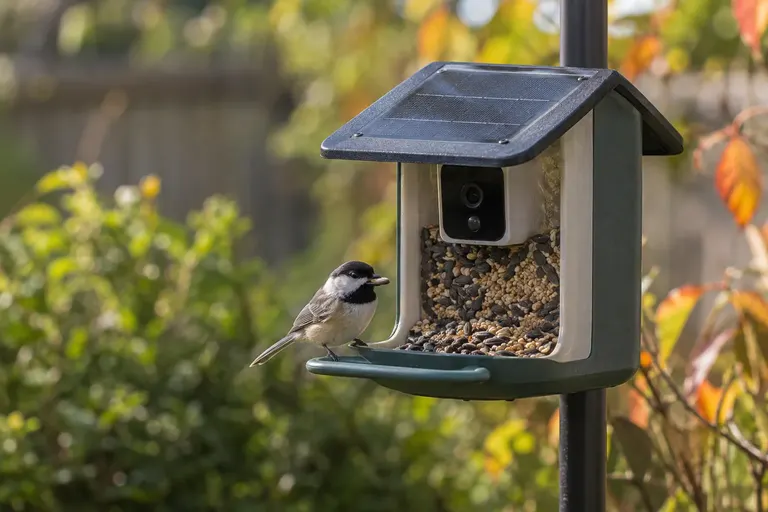
- Yard year. eBird’s own rule for yard lists is simple: the yard is the property you own or rent, and any bird you detect while you’re in it counts, even if the bird is outside it. Birds seen only on a feeder camera or by someone else don’t count.
- Patch year. eBird defines a patch as an area you can cover thoroughly in a morning or a few hours of birding. It can combine several nearby locations.
- Green big year. You travel only under your own power, on foot or by bike. The standout example is Dorian Anderson’s 2014 year: the ABA reports he cycled 17,830 miles through 28 states, walked another 493 miles and recorded 617 species without fossil fuels.
What’s the big year record?
For the ABA Area, the record is 839 species, set by John Weigel in 2019, according to Audubon. It came after a remarkable 2016, when the ABA’s year-end results showed four birders, Weigel among them, all passing Neil Hayward’s 2013 record of 749. Hayward had edged out Sandy Komito’s famous 748 from 1998.
For the whole world, Arjan Dwarshuis of the Netherlands recorded 6,852 species in 2016, beating Noah Strycker’s 2015 total of 6,042 set only a year earlier.
| Record | Birder | Year | Species |
|---|---|---|---|
| ABA Area | John Weigel | 2019 | 839 |
| ABA Area (previous) | Neil Hayward | 2013 | 749 |
| ABA Area (earlier) | Sandy Komito | 1998 | 748 |
| World | Arjan Dwarshuis | 2016 | 6,852 |
| World (previous) | Noah Strycker | 2015 | 6,042 |
| Green (bicycle, North America) | Dorian Anderson | 2014 | 617 |
Two caveats. Hawaii joined the ABA Area in 2016, so modern totals include species earlier record holders couldn’t count. And totals shift with taxonomy, because splits and lumps change which birds count as separate species. Some figures you’ll also see online include provisional species that were accepted later, and world totals differ depending on whether the IOC or Clements world list is used, so small differences between sources are normal.
Komito’s 1998 year is the one most people know, because Mark Obmascik’s book about it became the 2011 film The Big Year.
Do heard-only birds count?
Yes, under ABA rules. The recording rules say that for a first encounter with a species, identification may be by sight or sound, and eBird accepts heard-only records too.
That makes learning songs and calls one of the fastest ways to grow a list, especially for owls, rails and birds that sing from dense cover. A good starting point is our guide to birding by ear with 10 common songs, and Merlin Sound ID can help you check what you’re hearing. Just remember that the app is a tool for learning: under ABA-style rules, you’re the one who has to identify the bird.
How do you plan a big year month by month?
Plan around migration: bank the easy residents in January, give May everything you’ve got, then use the rest of the year to fill specific gaps. This outline fits most of temperate North America. Shift it a few weeks earlier in the South.
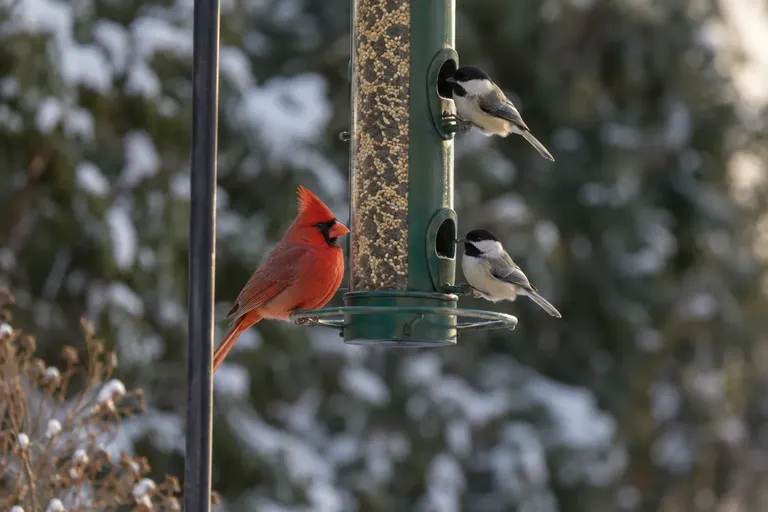
- January. Record every resident and winter visitor in the first week or two. Feeders, parks and open water give a fast start.
- February. Look for waterfowl on open water and listen for owls, which start calling in late winter.
- March and April. The first migrants arrive. Wetlands and mornings after a warm front are worth the effort.
- May. The peak. Warblers, vireos, flycatchers and thrushes move through fast, often in a few weeks. Go out early; our best time of day for birding guide explains why mornings pay off.
- June and July. Pick up breeding birds you missed and night birds. Dawn and dusk visits beat midday heat.
- August and September. Shorebird migration and the start of fall songbird movement.
- October and November. Sparrows, hawks, late migrants and the first winter arrivals.
- December. Chase the gaps. Audubon’s Christmas Bird Count, which runs from mid-December into early January, is a good excuse for a big push.
The Nature Conservancy’s advice for a budget big year adds a useful step before you start: use eBird data for your area to see how many species are realistic, then set a target that sits between achievable and challenging. A spreadsheet of target species with the date you found each one is enough to keep you focused.
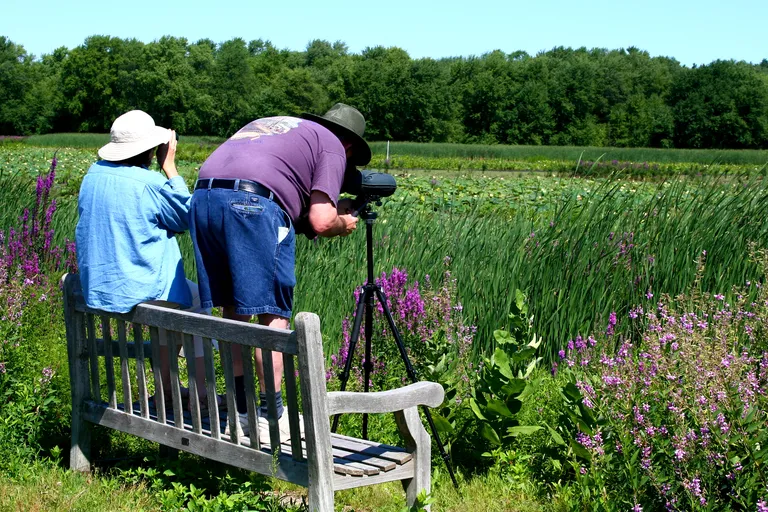
How do you keep a big year list in eBird?
Submit an eBird checklist every time you go out, and eBird adds up your year list automatically. My eBird shows your life, year, month and day totals and lets you drill down by country, state and county.
Here’s the short version:
- Create a free eBird account and log checklists on the eBird Mobile app or the website.
- For a yard year, open My Yard and add your home location. For a patch year, open My Patch and add every location that belongs to your patch.
- Keep your checklists public if you want your yard or patch total to show in eBird’s Top 100 rankings. Only public checklists count there.
- Hide or avoid exact locations for sensitive species, such as nesting owls.
eBird updates its taxonomy once a year, in October, so your total can move by a species or two after a split or lump. Our eBird guide walks through setup in detail, and the same checklists build your life list at no extra effort.
What gear do you need for a big year?
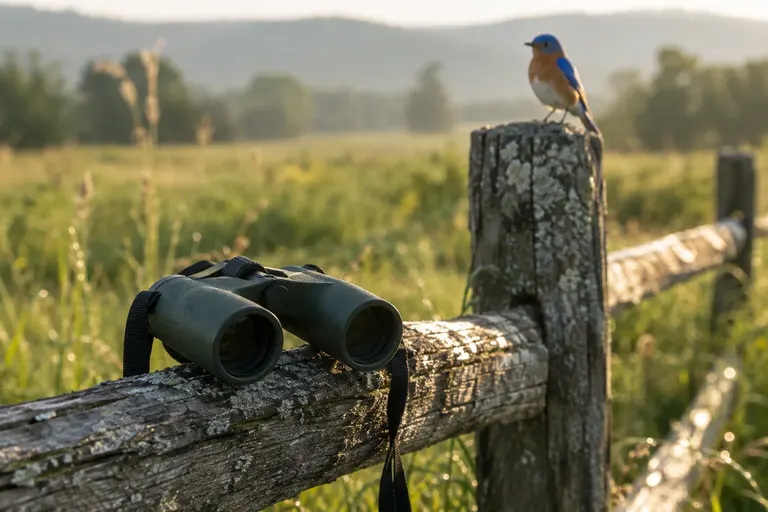
For a yard, patch or county year, you need binoculars you’ll carry every day and a phone for eBird. That’s it. A spotting scope helps for distant ducks and shorebirds, but it’s a later purchase, not a requirement.
If you’re choosing binoculars, start with our pick of the best binoculars for beginners. Comfort and a wide, bright view matter more than high magnification when you’re out often.
Big year etiquette
A big year doesn’t change the rules of good birding. The ABA’s recording rules only count birds found under conditions that follow the ABA Code of Birding Ethics, so a bird you flush, bait or stress for a better look arguably shouldn’t go on the list at all.
- Stay on public land or ask permission before entering private property.
- Keep your distance from nests and roosts.
- Go easy on playback, especially in the breeding season.
- Share rare bird locations responsibly, and don’t publish sites for sensitive species.
Our guide to birding etiquette covers the details.
Is a big year worth doing?
For most people, a small big year is worth it. It gives you a reason to get out more often, pushes you to learn birds you’d otherwise overlook, and teaches you when each species arrives and leaves where you live.
The trade-off is time. A county or state year can take most weekends, and chasing rarities can turn a relaxing hobby into a to-do list. If that sounds stressful, a yard or patch year gives you most of the fun with none of the driving. Many birders simply keep a relaxed year list every year and only go “big” when they feel like it.
Sources
- American Birding Association: ABA Recording Rules
- ABA Blog: 2016 ABA Big Year Update, The Results
- ABA Blog: An Interview with Dorian Anderson, Pedal-Powered Big Year Champ
- Audubon: My Brief Reign and Embarrassing Fall as a Fantasy Birder (ABA record reference)
- eBird Help Center: Patch and Yard Lists in eBird
- The Nature Conservancy: How to Do a Big Year on a Budget

Frequently asked questions
What is a big year in birding?
A big year is a personal challenge to record as many bird species as possible in one calendar year, from 1 January to 31 December, inside an area you choose. The famous ones cover all of North America, but most people run a small version for their yard, a local patch, a county or a state and keep the list in eBird.
What is the big year record for North America?
According to Audubon, the ABA Area big year record is 839 species, set by John Weigel in 2019. The ABA Area now includes Hawaii, which joined in 2016 and added species that weren't countable before, so older totals such as Sandy Komito's 748 in 1998 and Neil Hayward's 749 in 2013 aren't directly comparable.
What is the world big year record?
Dutch birder Arjan Dwarshuis recorded 6,852 species in 2016 while traveling across several continents, beating Noah Strycker's 2015 total of 6,042. Dwarshuis used his year to raise money for BirdLife International's work on threatened species. Totals depend on which world checklist is used, so published figures for both years vary slightly.
Do birds you only hear count on a big year list?
Under the American Birding Association's recording rules, yes. The rules say that for a first encounter with a species, identification may be by sight or sound. eBird also accepts heard-only records. The bird still has to be alive, wild and unrestrained, and you have to be the one who identifies it, so a recording played to you doesn't count.
Can you do a big year from your backyard?
Yes. A yard big year counts every species you see or hear from your own property during the year. eBird has a built-in yard list: add your home location under My Yard and every checklist you submit from there counts toward it. It costs almost nothing and turns ordinary days at the window into a small, steady challenge.