How to Identify Birds: 5 Clues Experienced Birders Use
How to identify birds with 5 clues: size and shape, color pattern, behavior, habitat and season, and sound. Learn the order that makes ID fast and reliable.
In this article
- Quick answer: the five clues
- Clue 1: What size and shape is the bird?
- Clue 2: What is the bird’s color pattern?
- Clue 3: How is the bird behaving?
- Clue 4: Where and when did you see it?
- Clue 5: What does the bird sound like?
- Learn bird families first
- How do you identify birds in flight?
- A step-by-step routine for identifying an unknown bird
- Tools that help you identify birds
- Common mistakes in bird identification
- How to practice bird identification
- Sources
- Frequently asked questions
The fastest way to learn how to identify birds is to work through 5 clues in order: size and shape, color pattern, behavior, habitat and season, and sound. The Cornell Lab of Ornithology teaches the first 4 as its keys to identification. Start with shape, not color: experienced birders can often name a bird from its silhouette, because shape rarely changes with light, age or season, while color often does. Used together, the clues make most backyard birds easy and narrow the hard ones to two or three options.
The Cornell Lab of Ornithology teaches the first four as its “four keys” to bird identification. Sound is the fifth, and for many species it is the most reliable of all.
Quick answer: the five clues
| Clue | What to note | Example |
|---|---|---|
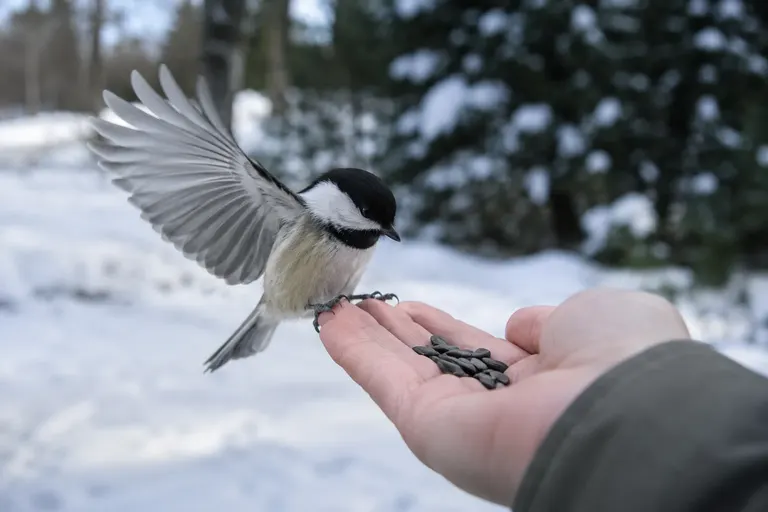
| 1. Size and shape | Size compared with a known bird; bill shape; tail length and shape; body build; legs | A chickadee has a large head, plump body, narrow tail and short bill |
| 2. Color pattern | Where the colors are, not just which colors; wing bars, eye rings, head stripes, tail patterns | A Cedar Waxwing has a black mask, yellow tail tip and red wing tips |
| 3. Behavior | How it moves, feeds, flies and perches | Nuthatches climb headfirst down trunks; phoebes pump their tails |
| 4. Habitat and season | Where you are, what habitat, and what month | A sparrow in a salt marsh in winter narrows the options fast |
| 5. Sound | Song, calls and non-vocal sounds like drumming | A mourning dove’s soft cooing, a cardinal’s loud whistled “cheer” |
Clue 1: What size and shape is the bird?
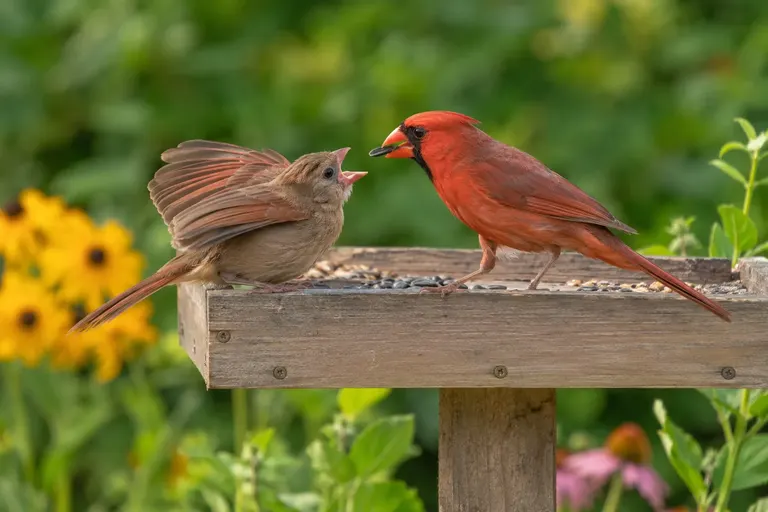
Size and shape come first because they are the most stable clues. A cardinal is cardinal-shaped whether it is a bright red male, a brown female or a scruffy molting juvenile.
Compare with reference birds
Estimating size in inches is hard in the field. Compare instead with birds you already know. Field guides and the Cornell Lab commonly use these reference sizes:
- Sparrow-sized: House Sparrow, Song Sparrow.
- Robin-sized: American Robin.
- Crow-sized: American Crow.
Ask: is it smaller than a sparrow, between a sparrow and a robin, about robin-sized, between a robin and a crow, or bigger? That single question eliminates most of the field guide.
Look at the bill
The bill tells you what a bird eats, and it is often the fastest clue to its family.
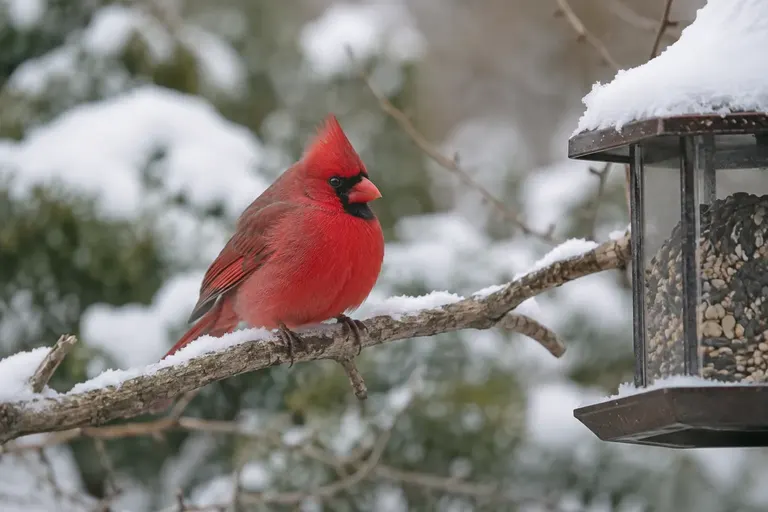
- Short, thick and conical: seed eaters such as sparrows, finches, cardinals and grosbeaks.
- Thin and pointed: insect eaters such as warblers, vireos and wrens.
- Chisel-like: woodpeckers.
- Hooked: hawks, falcons, owls and shrikes.
- Long and thin: hummingbirds, and many shorebirds.
- Flat and wide: flycatchers, which catch insects in the air.
Look at the tail, wings and legs
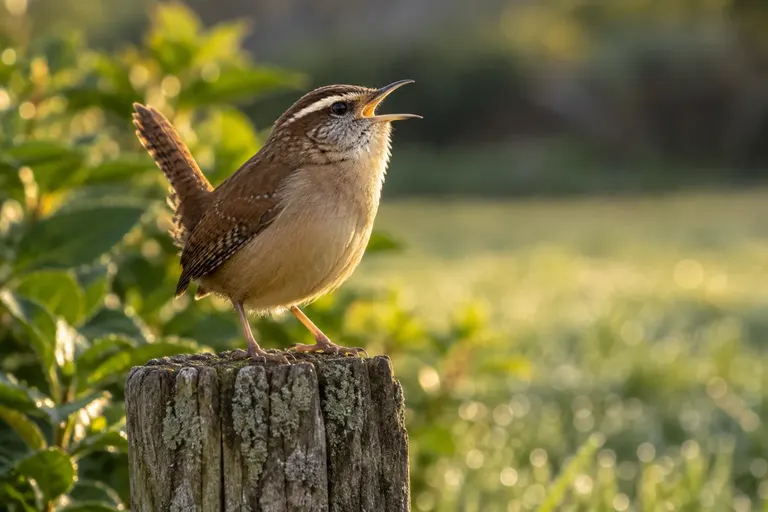
- Tail: long or short, notched or rounded, fanned or held cocked up. A wren’s upturned tail is distinctive.
- Wings: in flight, pointed wings suggest a falcon or swallow; broad, rounded wings suggest a hawk such as a Cooper’s Hawk.
- Legs: long legs suggest a wader or a ground-running bird such as a robin or Killdeer.
- Body: plump like a chickadee, slender like a mockingbird, or chunky like a starling.

Shape in practice: Downy vs Hairy Woodpecker
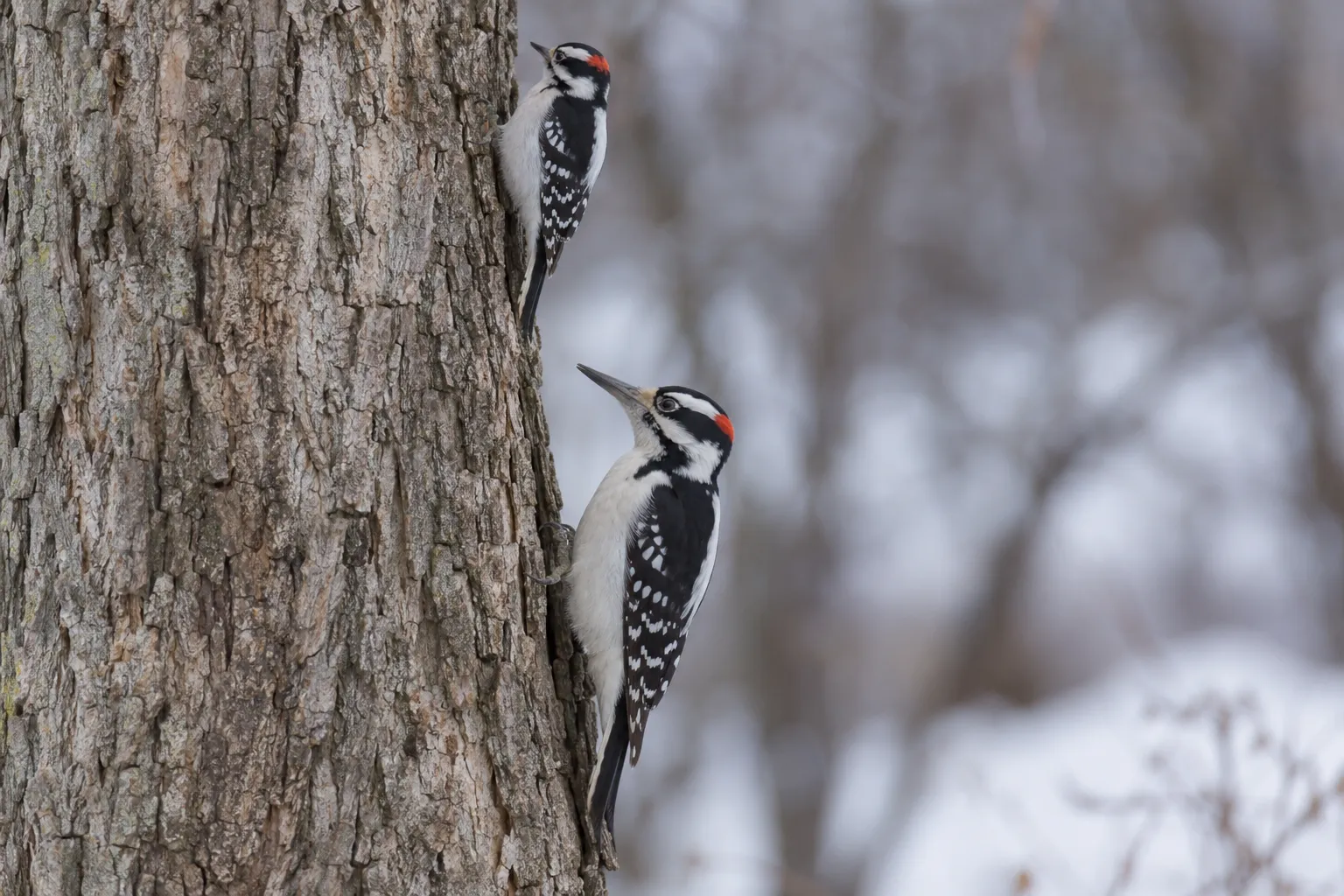
These two look almost identical in color and pattern. Shape separates them. A Downy’s bill is short, much shorter than its head is deep. A Hairy’s bill is long, about as long as the head. The Hairy is also noticeably larger, closer to robin-sized, while the Downy is closer to sparrow-sized. Our species pages for the Downy Woodpecker and Hairy Woodpecker cover the other differences.
Clue 2: What is the bird’s color pattern?
Once you have shape, look at the pattern: where the colors sit on the bird. Pattern is more useful than exact shade, because light, shadow and wear change how colors look.
Field marks to check, head to tail
- Head: crown stripes, eyebrow stripe (supercilium), eyeline, eye ring, mustache or whisker stripe, throat color.
- Bill: color, and whether the upper and lower halves differ.
- Breast and belly: plain, streaked or spotted; any central spot; color of the flanks.
- Back: plain or streaked.
- Wings: wing bars (how many, what color), patches in the flight feathers.
- Tail: white outer feathers, bands, spots or a colored tip.
- Rump: a contrasting patch, often seen only in flight.
Birders call these “field marks”. Good field guides point to the ones that matter most for each species with small arrows or notes. Learning which marks to check for each family is a large part of becoming a skilled birder.
Color can mislead
- Lighting: a bird in shade can look black; morning sun turns gray birds warm.
- Season: American Goldfinch males are bright yellow in summer and olive-brown in winter.
- Age and sex: females and young birds often look very different from adult males.
- Regional variation: Song Sparrows range from pale in the desert to dark and heavily streaked in the Pacific Northwest.
- Diet: some Cedar Waxwings show orange tail tips instead of yellow because of pigments in introduced honeysuckle berries.
- Unusual pigment: leucistic birds with white patches can look like a different species entirely.
Pattern in practice: House Finch vs Purple Finch
Males of both are red, but the pattern differs. Male House Finches have red concentrated on the head, breast and rump with brown streaks along the sides of the belly. Male Purple Finches look as if they were dipped in raspberry juice, with color washing over the back and wings and much cleaner flanks. Females are easier: female Purple Finches have a bold face pattern with a white eyebrow, while female House Finches have a plain, blurry brown face. See our House Finch page for more.
Clue 3: How is the bird behaving?
Behavior often identifies a bird before you see details. The Cornell Lab counts behavior, including how a bird moves, feeds and vocalizes, as one of its four keys.
Feeding behavior
- Climbs headfirst down trunks: nuthatches.
- Hitches up trunks using the tail as a prop: woodpeckers and Brown Creepers.
- Scratches in leaves with a two-footed hop: towhees and many sparrows.
- Flies out from a perch to catch insects and returns: flycatchers and phoebes.
- Hangs upside down on twigs: chickadees and titmice.
- Runs, stops and tilts its head on a lawn: American Robin.
Movement and posture
- Tail pumping: Eastern Phoebes pump their tails while perched, and Song Sparrows pump theirs in flight.
- Tail cocking: wrens often hold their tails up.
- Flight style: woodpeckers and goldfinches fly in a bouncing, undulating path; doves fly fast and direct; Turkey Vultures soar with wings in a shallow V and tilt from side to side.
- Flocking: starlings, waxwings and blackbirds move in tight flocks, while many other species are seen alone or in pairs.
Behavior in practice: crow vs raven
American Crows and Common Ravens are both big and black. Ravens are larger, often soar and glide like hawks, and show a wedge-shaped tail in flight, while crows flap more steadily and show a fan-shaped tail. Their voices differ too: a crow’s familiar “caw” versus a raven’s deep, croaking call.
Clue 4: Where and when did you see it?
Habitat, range and season can eliminate most candidates before you open a guide. The Cornell Lab lists habitat as a key because each species has strong preferences.
Habitat
Ask what kind of place you are in: deciduous woods, conifer forest, open field, marsh, shoreline, suburban yard or city park. A streaky sparrow in a wet thicket suggests different species than one in a dry grassland. A small plover running on a dry field far from water may be a Killdeer, which the Cornell Lab notes often uses open grassy and rocky areas.
Range and season
- Range maps: check that the bird you are considering normally occurs where you are. A bird well outside its range is possible, but far less likely than a common local species.
- Season: some birds are present year-round, some only in summer or winter, and some only during migration. A “hummingbird” at a Minnesota feeder in January is more likely something else, or a rare vagrant worth reporting.
- eBird bar charts: eBird shows which species are reported in your county week by week. It is the best tool for checking whether a bird fits the time and place. Our guide on how to use eBird explains bar charts and alerts.
Birders have a saying: “When you hear hoofbeats, think horses, not zebras.” The common bird is almost always the right answer.
Clue 5: What does the bird sound like?
Many experienced birders find most birds by ear first. In a leafy forest in summer, you may hear many more birds than you see.
Songs vs calls
- Songs are usually longer and more complex, often given by males in the breeding season to defend territory and attract mates.
- Calls are shorter sounds used year-round for contact, alarm and flight. Learning common calls helps enormously in fall and winter.
How to learn bird sounds
- Start with the birds in your yard. Learn five common songs well before trying more.
- Use memory phrases. Many birders learn the White-throated Sparrow’s whistle as “Old Sam Peabody, Peabody, Peabody,” and the Song Sparrow’s as “maids, maids, maids, put on your tea-kettle-ettle-ettle.”
- Describe the quality. Is it whistled, buzzy, trilled, harsh or liquid? Rising or falling? Repeated or varied?
- Watch the bird sing. Linking a sound to a bird you can see makes it stick.
- Use Merlin Sound ID as a tutor. Let it suggest a species, then find the bird and confirm. Our guide on using Merlin Sound ID without getting fooled covers mimics and common errors.
Non-vocal sounds
Woodpeckers drum on resonant surfaces, Mourning Doves’ wings whistle on takeoff, and Ruffed Grouse make a low thumping by beating their wings. These are clues too.
Learn bird families first
One of the biggest shortcuts in bird identification is learning to place a bird in its family before worrying about the species. Once you know “that is a woodpecker” or “that is a sparrow,” you only need to compare a handful of pages, not the whole guide.
Families that beginners meet most often, and a quick way to recognize each:
- Sparrows: small, brown, streaky ground birds with short conical bills.
- Finches: similar bills to sparrows, but often more colorful, with notched tails and bouncy flight.
- Woodpeckers: cling to trunks, chisel bills, stiff tails used as a prop.
- Chickadees and titmice: small, acrobatic, big-headed, often in noisy groups.
- Warblers: small, active, thin-billed insect eaters, often in treetops during migration.
- Thrushes: round-headed, medium-sized, often on the ground; the American Robin is the familiar one.
- Hawks: hooked bills, broad wings, soaring or perched still at edges.
- Doves: small heads, plump bodies, pointed or long tails, fast direct flight.
Most field guides are arranged by family. Spending an evening leafing through yours to learn the family shapes pays off every time you go out.
How do you identify birds in flight?
Flying birds rarely show fine field marks, so shape and behavior do most of the work.
- Wing shape: long and pointed (falcons, swallows), broad and rounded (hawks such as Cooper’s Hawk), or long and narrow for gliding (gulls).
- Flight pattern: steady flapping, bounding up and down, flap-and-glide, or soaring in circles.
- Flock shape: tight synchronized flocks (starlings, shorebirds), loose groups, or V formations (geese).
- Tail: long or short, forked, notched, rounded or wedge-shaped.
- Flashes of color: white outer tail feathers on a junco or a white rump on a Northern Flicker are often the only marks you see.
Hawks are a good example of how hard flight ID can be. Cooper’s and Sharp-shinned Hawks look very similar, and females of the smaller Sharp-shinned approach the size of male Cooper’s. Birders use a combination of clues, including head size relative to the body and the shape of the tail tip, and even experts sometimes leave a quick view unidentified. It is fine to record “Accipiter sp.” when you cannot be sure.
A step-by-step routine for identifying an unknown bird
- Watch the bird as long as it stays. Do not look down at a book or phone while the bird is in view.
- Note size and shape against a familiar bird. Check the bill.
- Scan field marks from head to tail.
- Watch what it does: how it feeds, moves and flies.
- Listen and, if possible, record a few seconds of sound with your phone.
- Take a photo if you can, even a poor one.
- Note place, habitat and date.
- Then consult your field guide, Merlin or eBird to narrow the options.
- Compare lookalikes before settling on an answer.
- Record it in eBird or a notebook, marking uncertain IDs as uncertain.
Good binoculars make every step easier. If you struggle to get birds into view quickly, see our guide on how to find a bird in your binoculars fast.

Tools that help you identify birds
- Field guides: show similar species side by side with key marks highlighted. Compare options in our guide to the best field guides for North American birds.
- Merlin Bird ID: free from the Cornell Lab, with Sound ID, Photo ID and a step-by-step wizard that asks three simple questions. Sound ID and Photo ID work offline after downloading a regional pack.
- eBird: checks what is expected where and when you are birding.
- Other apps: compared in our guide to the best bird identification apps.
- Local experts: Audubon chapters and bird clubs run walks where experienced birders share ID tips.
Common mistakes in bird identification
Leading with color. Color changes with light, age, sex and season. Shape does not.
Stopping at the first match. Always check the similar species listed next to it in the guide.
Ignoring range and season. A picture match that is out of range is usually a misidentification.
Relying on one field mark. Several Song Sparrow lookalikes also have a breast spot. Use combinations of marks.
Trusting an app without confirming. Apps suggest; you decide.
Forcing an ID. Some birds get away. Writing “sparrow sp.” is honest and better than a wrong name on your list.
Looking at the book first. The bird leaves in seconds. The book stays.
How to practice bird identification
- Watch the same place daily. Ten minutes at your feeder every morning builds familiarity faster than an occasional long trip.
- Learn the common birds cold. Knowing them instantly makes unusual birds stand out.
- Sketch or describe birds in a notebook before checking a guide. It trains you to notice.
- Study one family at a time. Spend a week on sparrows, then woodpeckers, then finches.
- Review your photos and recordings with a guide at home.
- Bird with others. Group walks speed up learning more than any book.
Sources
Frequently asked questions
What is the easiest way to identify a bird?
Start with size and shape rather than color. Compare the bird with one you already know, such as a sparrow, robin or crow, and note its bill, tail and legs. Then add color pattern, behavior, habitat and sound. The free Merlin Bird ID app from the Cornell Lab can suggest matches from a photo, a recording or a few simple answers.
What are the four keys to bird identification?
The Cornell Lab of Ornithology teaches four keys: size and shape, color pattern, behavior, and habitat. Used together, they narrow a sighting to a handful of possibilities. Many birders add sound as a fifth key, because songs and calls identify many birds that are hard to see, and they often reveal birds before you spot them.
Can an app identify birds by sound?
Yes. Merlin Bird ID's Sound ID listens through your phone microphone and suggests species in real time, and it works offline once you download a regional bird pack. It is very useful but not perfect. Mimics, distant noises and similar songs can cause errors, so confirm unusual suggestions by seeing the bird or checking eBird records for your area.
How do you tell a Downy Woodpecker from a Hairy Woodpecker?
Look at the bill compared with the head. A Downy Woodpecker's bill is short, much shorter than the depth of its head, while a Hairy Woodpecker's bill is long, about as long as the head is deep. Hairy Woodpeckers are also noticeably larger. Downies usually show black spots or bars on the white outer tail feathers.
How long does it take to learn to identify birds?
Most people can learn the 15 to 20 most common birds in their yard within a few weeks of regular watching. Learning songs, seasonal plumages and tricky groups such as sparrows, warblers and gulls takes years, and even experts keep learning. Short daily sessions in the same place build skill faster than occasional long trips.