How Long Do Backyard Birds Live? Lifespans by Species
How long do backyard birds live? Most small songbirds live 2 to 5 years on average, though banding records show some reach 10 to 15 years or more. Here is why.
In this article
- Quick answer: how long common backyard birds live
- How do scientists know how long birds live?
- Why do so many birds die young?
- Why do some birds live much longer than others?
- How long do birds live around the world?
- Do pet birds live longer than wild birds?
- Do birds age?
- How can backyard birders help birds live longer?
- How can you tell how old a bird is?
- Do male and female birds live the same length of time?
- Why do you rarely see dead birds?
- Myths about bird lifespans
- Quick facts
- Sources
- Frequently asked questions
How long do backyard birds live? Most small species live only 2 to 5 years on average in the wild, even though many can live 10 years or more. The average is low because so many birds die in their first year: in many small songbirds, well over half of young birds fail to survive to their first breeding season. Adults that make it through that first winter often live several more years, and bird banding records show exceptional individuals living 10, 15, even 30 years.
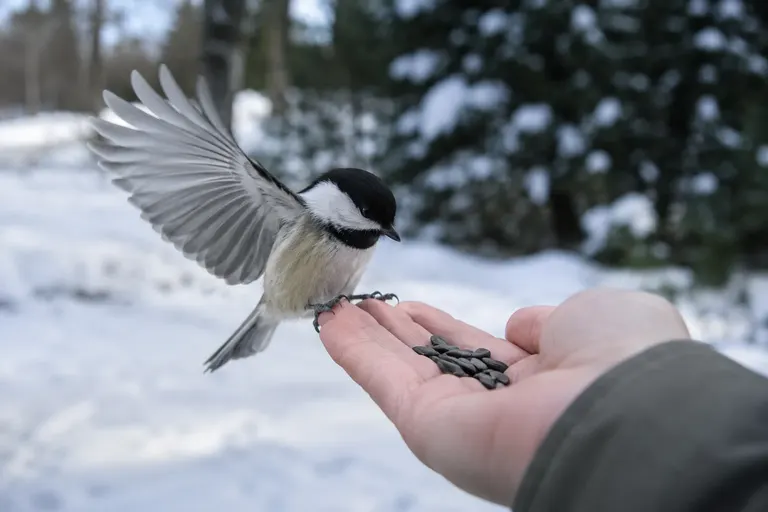
That gap between the average and the maximum is the key to understanding bird lifespans. A chickadee is capable of living more than a decade, but in a world of hawks, cats, winter storms and windows, few do. This guide explains typical lifespans of common backyard birds, how scientists measure them, why small birds live fast and die young, and what backyard birders can do to help birds live longer.
Quick answer: how long common backyard birds live
The table below shows approximate longevity records for wild, banded birds of common North American backyard species, as reported by the Cornell Lab of Ornithology’s All About Birds, alongside typical lifespans. Records are rounded and represent rare individuals.
| Species | Typical lifespan in the wild | Oldest known wild bird (approx.) |
|---|---|---|
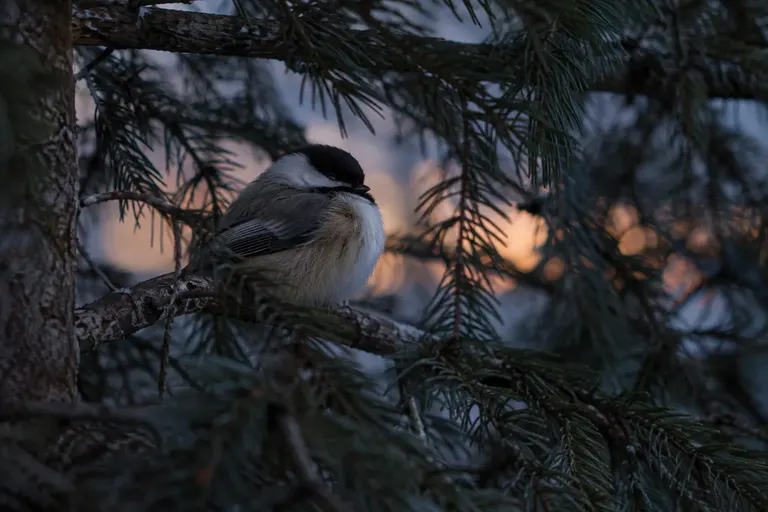
| Black-capped Chickadee | 2 to 3 years | More than 11 years |
| Northern Cardinal | A few years | About 15.5 years |
| Blue Jay | Several years | Nearly 27 years |
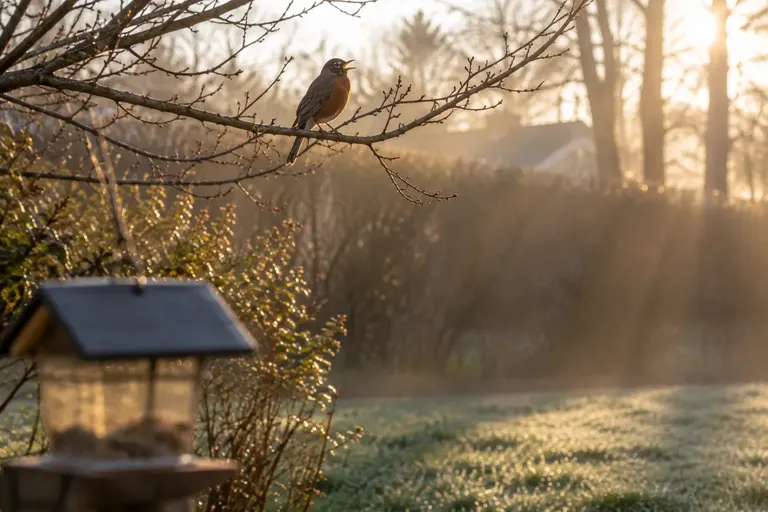
| American Robin | 1 to 2 years | Nearly 14 years |
| Mourning Dove | 1 to 2 years | More than 30 years |
| Downy Woodpecker | A few years | Nearly 12 years |
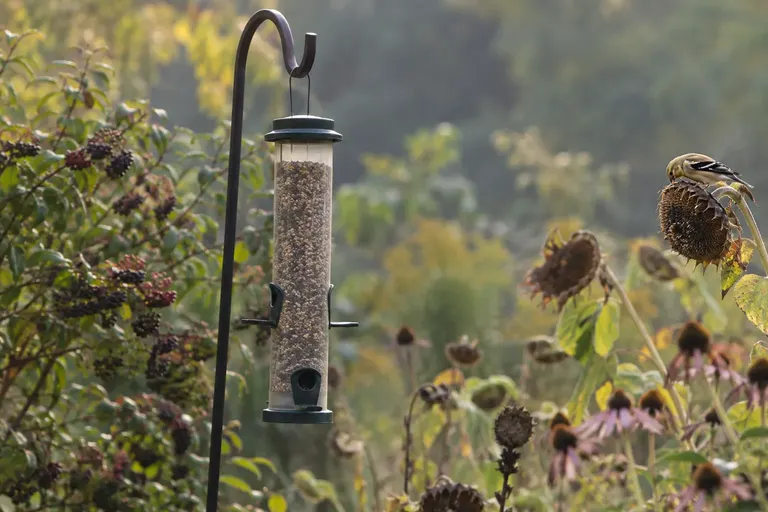
| American Goldfinch | A few years | More than 10 years |
| Ruby-throated Hummingbird | A few years | About 9 years |
Typical figures are rough estimates that vary by source and population, and records change as new banded birds are recovered. The takeaway is the pattern rather than the exact numbers: typical lifespans are measured in a few years, while record lifespans are several times longer.
How do scientists know how long birds live?
You cannot tell a bird’s age by looking at it once it has its adult plumage. Most knowledge of bird lifespans comes from banding, called ringing in Britain and much of the world.
Banding and ringing
Licensed banders catch birds, usually in fine mist nets or traps, and fit a small, lightweight metal band with a unique number to one leg. The bird is released within minutes. If that bird is caught again, found dead or reported years later, the band reveals exactly how old it is, or at least a minimum age.
Large national programs coordinate this work:
- The Bird Banding Laboratory of the US Geological Survey, jointly with Canada, manages banding records in North America and publishes longevity records.
- The British Trust for Ornithology runs the ringing scheme in Britain and Ireland, with records going back more than a century.
- EURING coordinates ringing schemes across Europe.
- CEMAVE coordinates bird banding in Brazil.

Survival rates
The more useful measure for scientists is annual survival: the proportion of birds alive one year that are still alive the next. Researchers estimate this from repeated captures of banded birds. For many small temperate songbirds, adult annual survival is roughly 40 to 60 percent. That means that of 100 adult birds alive this spring, perhaps 40 to 60 will still be alive next spring. First-year survival is usually lower still.
Why records are only minimums
A longevity record reflects the oldest bird that happened to be banded and then recovered. Most banded birds are never seen again. Older birds certainly exist that were never banded, so true maximum lifespans are probably somewhat higher than the records suggest.
Why do so many birds die young?
First-year birds face the steepest odds. They are inexperienced at finding food, avoiding predators and choosing shelter, and many face their first migration or first winter within months of hatching.
The main causes of death
- Predation. Hawks, owls, snakes, squirrels, crows, jays and many other animals prey on eggs, nestlings and adults. Outdoor domestic cats are a major cause of bird deaths; a widely cited 2013 study estimated that free-ranging cats kill more than a billion birds a year in the United States alone. Our guide to cats and birds covers what homeowners can do.
- Starvation and exposure. Cold snaps, ice storms and late spring freezes can kill large numbers of small birds, whose tiny bodies store limited fat.
- Collisions. Windows kill enormous numbers of birds, with estimates for the United States running into the hundreds of millions each year. Our guide on how to stop birds hitting windows explains proven fixes.
- Disease. Diseases can spread at feeders and bird baths, including salmonellosis, House Finch eye disease and trichomonosis.
- Migration. Long journeys carry high risk from storms, exhaustion, collisions with buildings and lack of stopover habitat.
Nest failure
Many eggs and nestlings never fledge. Depending on species and habitat, a large share of nests fail to produce any young, mostly because of predators. Birds compensate by nesting again, sometimes several times a season.
Why do some birds live much longer than others?
Bird lifespans vary enormously, from a couple of years for many small songbirds to many decades for seabirds and parrots. Scientists describe this with the idea of a “pace of life.”
Fast and slow lives
- Fast-living species breed in their first year, lay large clutches, often nest several times a year and have low annual survival. Most small songbirds, such as chickadees, tits, wrens and sparrows, fit this pattern.
- Slow-living species delay breeding for years, lay one or few eggs and have high annual survival. Albatrosses, large parrots, many seabirds and eagles fit this pattern.
The trade-off makes sense. If a bird’s chance of surviving each year is low, it pays to breed early and invest heavily now. If survival is high, it pays to invest in staying alive and spread breeding over many years.
Size matters, but not always
Larger birds generally live longer. But birds live longer than mammals of similar size, and some small birds are surprisingly long-lived for their weight. Hummingbirds, which weigh only a few grams, have banding records approaching or passing a decade in some species. Birds also appear to resist some forms of cellular aging better than mammals of similar size, which is an active area of research.
Tropical and southern birds
Many tropical songbirds live longer and breed more slowly than their temperate relatives. Studies comparing birds in the tropics and southern hemisphere with North American and European birds have found that many tropical species lay smaller clutches and have higher adult survival. In Brazil’s Atlantic Forest or in the tropical Andes, a small songbird may lay two eggs where a similar-sized northern bird lays five or more.
How long do birds live around the world?
A few examples illustrate the range:
- Laysan Albatross: a female known as Wisdom, banded on Midway Atoll in 1956, is the oldest known wild bird. She has been recorded breeding into her seventies.
- Eurasian Oystercatcher: British and European ringing records include birds over 40 years old.
- Arctic Tern: ringed birds have lived more than 30 years, during which each may fly the equivalent of several trips to the Moon over its many migrations.
- Great Tit and Blue Tit: in Europe, most live only a couple of years, though ringing records show some individuals surviving beyond a decade.
- European Robin: a familiar garden bird across Europe, with a typical lifespan of only a year or two, though exceptional individuals live much longer.
- Rufous Hornero: a common backyard bird across much of Brazil and Argentina, known for its oven-shaped mud nests; like many southern birds, it has been less intensively studied, and precise lifespan data are limited.
- Large parrots and cockatoos: can live many decades, especially in captivity.
Do pet birds live longer than wild birds?
Yes, often much longer. Captive birds are protected from predators, starvation and harsh weather, and receive veterinary care. Budgerigars, which are small parrots, commonly live 5 to 10 years in captivity, and large parrots can live 50 years or more. The gap between captive and wild lifespans is further evidence that most wild birds die from external causes rather than old age.
Do birds age?
Birds do age, but in the wild few live long enough for aging to be the main cause of death. Long-term studies of long-lived seabirds and some songbirds show that very old individuals may breed less successfully or have lower survival. Birds are of great interest to researchers studying aging because many live far longer than mammals of similar size, despite high metabolic rates and body temperatures.
How can backyard birders help birds live longer?
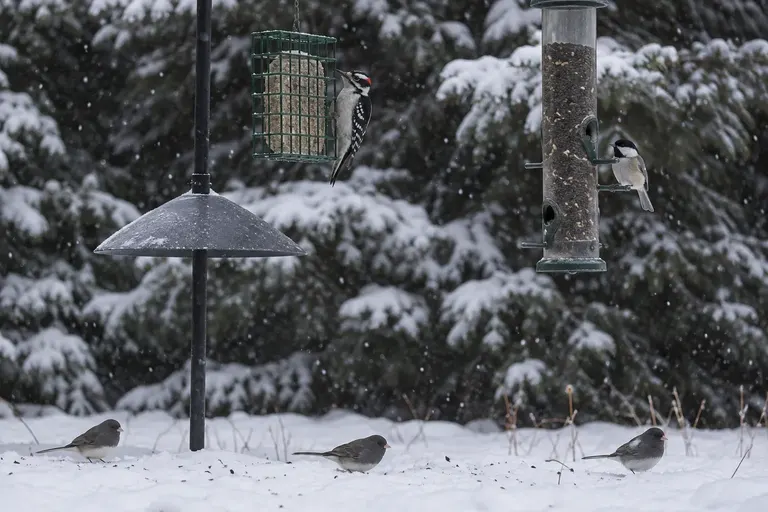
You cannot change a bird’s biology, but you can reduce many of the main causes of death in your own yard.
Practical steps
- Keep cats indoors, or use an enclosed outdoor space. This is the single most effective step for many households.
- Treat windows. Use patterns, films, screens or external markings spaced closely enough to break up reflections. Place feeders within about 3 feet of windows or more than 30 feet away. Our guide on where to put a bird feeder explains the reasoning.
- Clean feeders and baths regularly. Clean feeders reduce disease transmission. See our guide on how to clean bird feeders.
- Provide water, including in winter where safe. Our guide to keeping a bird bath ice-free explains how.
- Offer high-energy food in cold weather. Suet and black oil sunflower seed help birds build fat reserves. Our guide on winter bird feeding covers what birds need.
- Plant native trees and shrubs. They provide shelter from predators and weather, plus insects for nestlings.
- Avoid pesticides. Insecticides reduce the food birds need to raise young.
- Leave cover. Brush piles, dense shrubs and evergreens offer escape from hawks and shelter on cold nights.
Do feeders really help survival?
Research suggests feeders can improve winter survival for some species, particularly in harsh conditions, and long-term data from Britain suggest garden feeding has influenced the populations of some common species. Feeding can also increase disease transmission when feeders are dirty or crowded. The balance is generally positive when feeders are kept clean and placed safely.
How can you tell how old a bird is?
For most backyard birds, you can tell a young bird from an adult for a few months, but after that, age becomes very hard to judge by eye.
Juvenile and first-year plumage
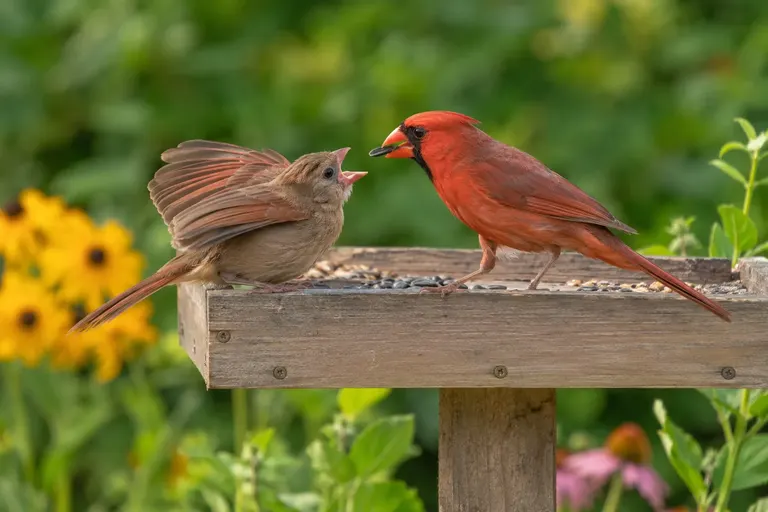
Many young birds look different from adults when they first leave the nest. Juvenile American Robins have spotted breasts, and young European Robins are speckled brown with no red breast at all. Young starlings are plain gray-brown. Within weeks to months, most small songbirds molt into plumage that looks much like an adult’s. Our guide on why birds molt explains the process.
Clues banders use
Trained banders can often separate first-year birds from older adults in the hand, using details such as:
- Molt limits: a contrast between newer and older feathers in the wing, since many first-year birds replace only some of their juvenile feathers.
- Feather shape and wear: juvenile tail feathers are often more pointed and more worn.
- Skull ossification: in many songbirds, the skull is not fully layered with bone in young birds, which banders can check through the skin.
- Eye and mouth color: in some species these change with age.
After the second year, most small songbirds cannot be aged further by appearance. That is why banding records, which follow known individuals, are so valuable.
Birds that show their age
Some larger birds take several years to reach adult plumage. Bald Eagles do not get their full white head and tail until around five years old. Many large gulls pass through several years of mottled brown and gray plumages before reaching adult colors. These birds wear a rough age label for their first few years.
Do male and female birds live the same length of time?
Not always. In many species, the sexes face different risks. Males that sing from exposed perches and defend territories may be more visible to predators, while females bear the costs of producing eggs and, in many species, incubating on the nest, where they can be caught by predators. Some studies have found higher adult survival in males than females in many bird species, the reverse of the pattern in mammals, but differences vary widely by species and are often small. For most backyard birds, detailed data comparing the sexes are limited.
Why do you rarely see dead birds?
Given how many birds die each year, people are often surprised by how seldom they find bodies. There are good reasons:
- Predators and scavengers remove them quickly. Many birds die in the jaws or talons of a predator and are eaten. Those that die of other causes are often found by scavengers such as foxes, raccoons, crows, gulls and insects within hours or days.
- Sick birds hide. Weak or ill birds often seek dense cover, where they are hard to find.
- Small bodies decompose fast, especially in warm weather.
- Many deaths happen away from people, such as during migration over oceans and deserts.
When you do find several dead or sick birds at once, especially near feeders, it can point to disease. Report unusual numbers to your state wildlife agency or national equivalent, and clean or remove feeders for a while.
Myths about bird lifespans
Myth: The same robins come back to my yard every year for decades. Fact: with typical lifespans of a couple of years, the robins in your yard are likely different individuals within a few seasons, even if the territory is used year after year.
Myth: Small birds die of old age in winter. Fact: most die from cold, starvation or predators, not old age.
Myth: Birds that live in captivity show how long they “should” live. Fact: captive lifespans show the biological potential, not what is normal in the wild.
Myth: Every bird at my feeder is an adult. Fact: in late summer and fall, many are young birds from that year, and many will not survive the winter.
Quick facts
- Most small backyard songbirds live 2 to 5 years on average in the wild.
- First-year mortality is high; many young birds do not reach their first breeding season.
- Adult annual survival in many small temperate songbirds is roughly 40 to 60 percent.
- Banding records show some Mourning Doves living more than 30 years and Blue Jays nearly 27.
- The oldest known wild bird is a Laysan Albatross recorded breeding into her seventies.
- Tropical songbirds often lay fewer eggs and live longer than temperate relatives.
- Indoor cats, window treatments and clean feeders are the most effective ways to help backyard birds survive.
Sources
Frequently asked questions
What is the average lifespan of a backyard bird?
For most small songbirds, such as chickadees, finches, sparrows and wrens, the average lifespan is only about 2 to 3 years once you include the many birds that die in their first year. Adults that survive their first winter often live several more years. Larger backyard birds, such as jays, doves and woodpeckers, tend to live somewhat longer on average.
What is the oldest backyard bird on record?
Among common North American backyard birds, banding records reported by the Cornell Lab include a Mourning Dove that lived more than 30 years and a Blue Jay that lived nearly 27 years. These are exceptional individuals. Most members of those species live far shorter lives, and records reflect only the birds that happen to be banded and later found.
Do birds die of old age in the wild?
Rarely. Most wild birds die from predation, starvation, disease, collisions or severe weather long before they reach old age. Studies of long-lived seabirds show some signs of aging, such as reduced breeding in the oldest individuals, but for small songbirds the risk of death each year stays high throughout life, so very few birds ever become truly old.
Do bird feeders help birds live longer?
Research suggests feeders can improve winter survival for some species, especially in very cold weather, and long-term studies have linked feeding to changes in bird populations. Feeders also carry risks, including disease spread and attraction of predators. Keeping feeders clean, placing them safely and reducing window strikes are the best ways to make feeding a net benefit.
Why do small birds have such short lives?
Small birds face high risks from predators, cold and food shortages, and their fast metabolism leaves little reserve. Species facing high mortality tend to evolve a fast pace of life: breeding early, raising many young and investing less in long-term survival. Larger birds and seabirds with fewer threats typically breed later, raise fewer young and live much longer.