Where Do Birds Go in Winter? Who Leaves and Who Stays
Where do birds go in winter? Some fly to Central or South America or Africa, some move a short way south, some stay and roost, others arrive from the north.
In this article
- Quick answer: the four winter strategies
- Why do some birds leave while others stay?
- Where do long-distance migrants go?
- Which birds only move a short way?
- Where do the birds that stay go?
- Which birds arrive for the winter?
- Table: where common North American birds spend the winter
- Table: where common birds in Britain spend the winter
- Why do my feeder birds seem to disappear in fall?
- How can you help birds wherever they spend the winter?
- Sources
- Frequently asked questions
Birds handle winter in four ways. Long-distance migrants like Barn Swallows and Baltimore Orioles fly to Central America, South America or Africa. Short-distance migrants move a few hundred miles south. Residents like chickadees and cardinals stay and shelter in cavities, evergreens and flocks. And winter visitors, such as juncos and Redwings, arrive from farther north.
So the honest answer to “where did my birds go?” is that it depends on the bird and on where you live. This guide breaks it down by strategy, then gives a species-by-species table for North America and one for Britain and Europe, so you can see which of your birds left, which are still around, and which ones just arrived.
Quick answer: the four winter strategies
| Strategy | What the birds do | Examples |
|---|---|---|
| Long-distance migrant | Leave the continent’s north for the tropics or the Southern Hemisphere | Barn Swallow, Chimney Swift, Blackpoll Warbler, Common Swift |
| Short or medium-distance migrant | Move south within the same continent, often a few hundred miles | Red-winged Blackbird, Yellow-rumped Warbler, many Snow Geese |
| Resident | Stay in the same area all year and find shelter locally | Black-capped Chickadee, Northern Cardinal, Great Tit |
| Winter visitor | Breed farther north and arrive in fall to spend winter with you | Dark-eyed Junco, American Tree Sparrow, Redwing, Brambling |
Many species don’t fit neatly into one box. The Cornell Lab of Ornithology also describes partial migrants, where some individuals of a species move and others stay, and irruptive migrants, which leave their usual range only in some years. More than 300 North American bird species are long-distance migrants, according to the Cornell Lab.
Why do some birds leave while others stay?
Food, not cold, decides it. The Cornell Lab says escaping cold temperatures is not itself a major factor in migration. Many birds can survive freezing weather as long as they can find enough to eat.
That’s why the birds that leave are mostly insect specialists. Swallows and swifts catch insects in the air, and most warblers pick them from leaves. In a northern winter those insects are gone, so the birds must follow them south. A chickadee, on the other hand, can switch to seeds, stored food and suet, and a cardinal cracks seeds all year. If you want the full story of how migrants find their way, see our guide on how birds know where to migrate.
Where do long-distance migrants go?
Mostly to Central and South America from North America, and to Africa from Europe.
In North America, the Cornell Lab and Audubon give these destinations:
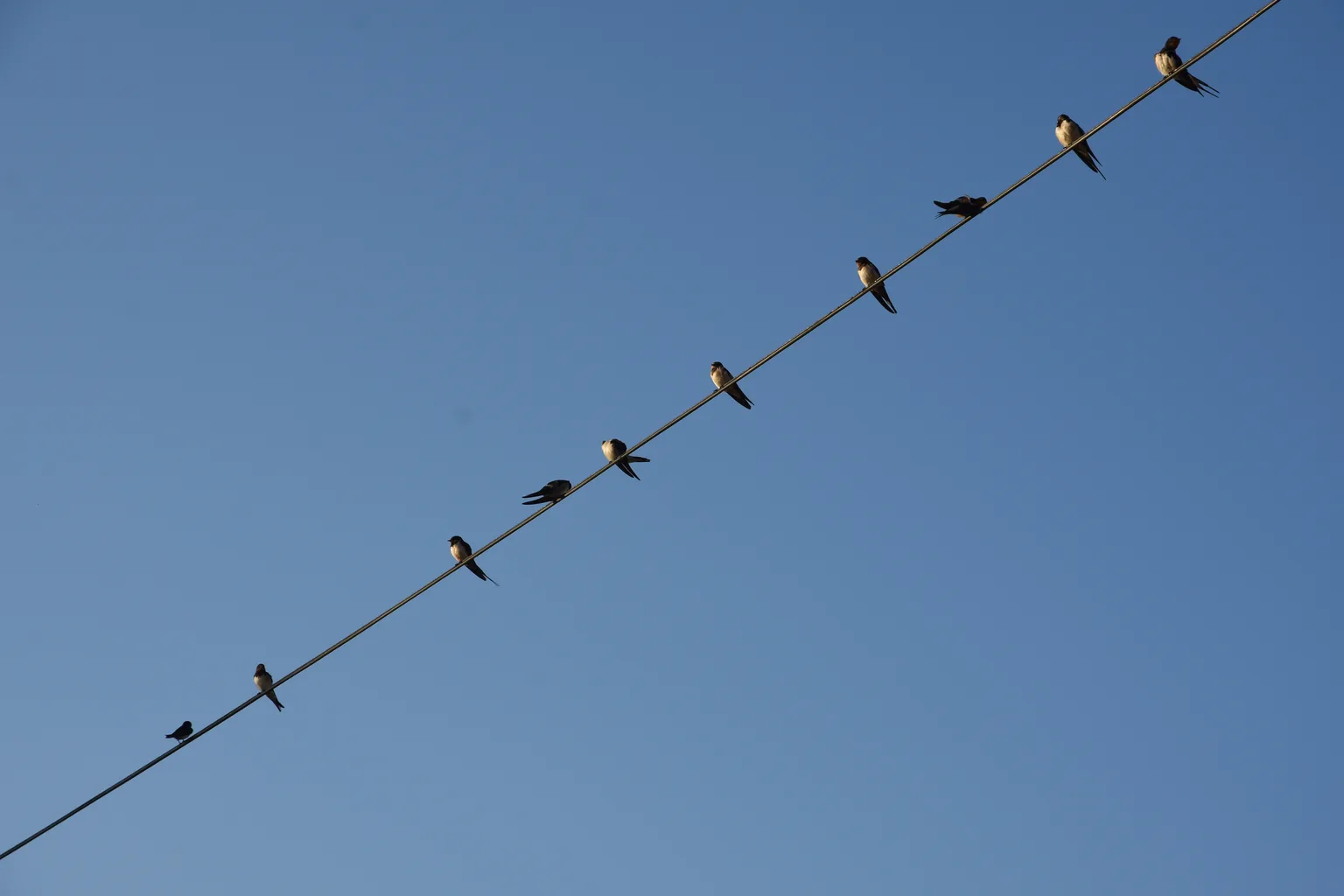
- Barn Swallow: wintering areas in Central and South America. Southbound migration may begin by late June in Florida or early July in Massachusetts.
- Chimney Swift: eastern Peru and perhaps elsewhere in the Amazon Basin, according to Audubon.
- Blackpoll Warbler: South America east of the Andes, after what the Cornell Lab calls the longest overwater journey of any songbird, nearly 1,800 miles nonstop over the Atlantic.
- Baltimore Oriole: Florida, the Caribbean, Central America and the northern tip of South America. Some leave as early as July.
- Northern Yellow Warbler: Central America and northern South America.
- Ruby-throated Hummingbird: Central America, with some staying along the Gulf Coast and at the tip of Florida.
In Britain and much of Europe, the summer insect eaters head for Africa. The BTO says many British Swallows spend the winter in South Africa. The RSPB says Swifts winter in Africa and head back there from early August, covering around 22,000 km (about 14,000 miles) a year.
How far is that, exactly? Our guides on how far birds migrate and which bird migrates the farthest go into the record holders.
Which birds only move a short way?
Many familiar yard birds are short-distance or partial migrants. They shift south within the same continent, and often only the northern part of the population moves.
- Red-winged Blackbird: birds from northern North America winter in the southern United States, up to about 800 miles from where they bred. Southern and some western populations don’t migrate at all, the Cornell Lab says.
- Yellow-rumped Warbler: some western birds simply move to the nearby Pacific Coast, while others go on to Mexico and Central America.
- Dark-eyed Junco: juncos that breed in Canada and Alaska move to the southern United States, while some in the Appalachians and the West don’t migrate at all.
- European Robin: the BTO describes the Robin in Britain as both a resident and a winter visitor, with birds from northern and eastern Europe swelling the numbers.
Partial migration is why a species can seem to stay all year in your yard even though individual birds come and go. The robin on your fence in January may not be the one that nested there in May.
Where do the birds that stay go?
They don’t go far. Residents spend winter close to where they nested, but they change where they sleep, what they eat and who they spend time with.
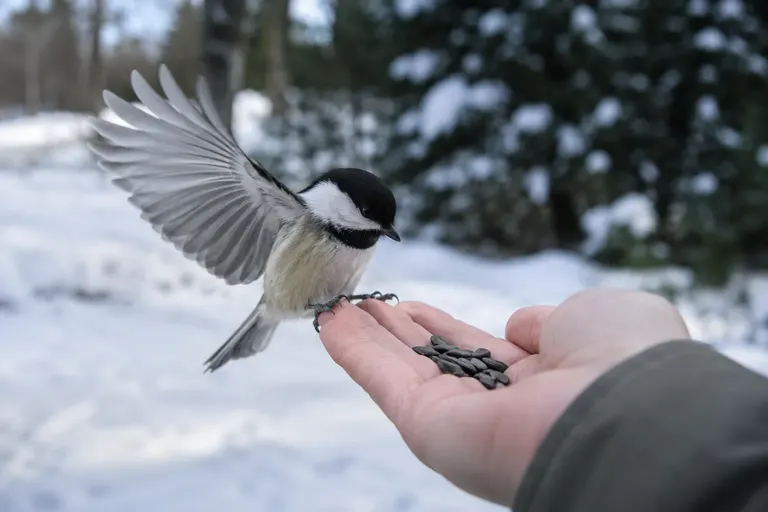
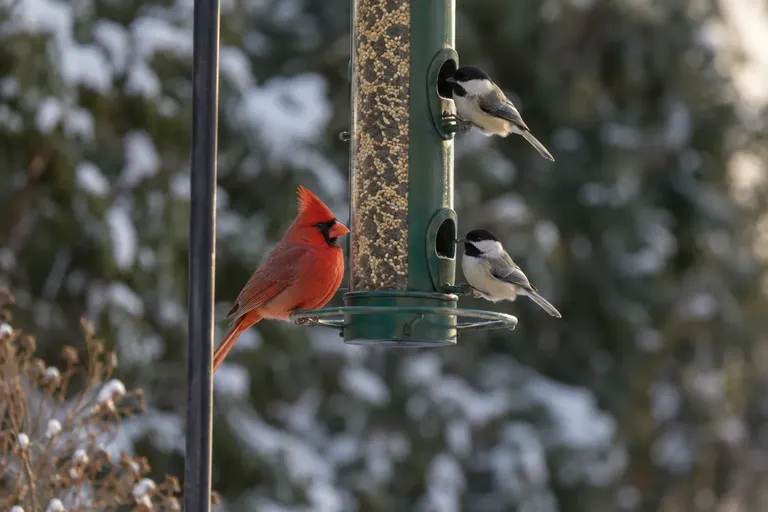
- Cavities and boxes. The Cornell Lab notes that Black-capped Chickadees virtually always sleep in their own individual cavity, even when temperatures are far below zero. Old woodpecker holes and nest boxes serve the same purpose for other small birds.
- Communal roosts. Some species gather in huge numbers at night. American Robin roosts can include a quarter of a million birds in winter, and the BTO says Starling roosts in Britain can number over a million.
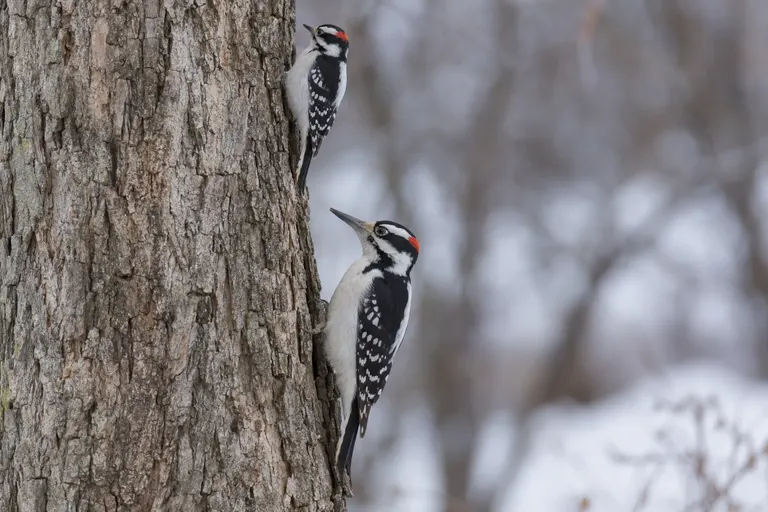
- Mixed flocks. In winter, chickadees form the core of flocks that also include nuthatches and woodpeckers. Moving as a group makes it easier to find food and spot predators.
- Dense evergreens and thickets. Conifers, hedges and ivy cut the wind and hide birds at night.
Our guides on where birds go at night and how birds stay warm in winter explain roosting, fluffed feathers and the other tricks residents rely on.
Which birds arrive for the winter?
For many yards, winter brings new birds, not just fewer. These are species that breed in the far north and treat your region as their south.
In North America, the classic arrivals are Dark-eyed Juncos and American Tree Sparrows. The Cornell Lab says tree sparrows breed in far northern North America and winter as far south as northern Arizona, Texas and Alabama, with females generally wintering farther south than males. Snow Geese travel from Arctic breeding grounds, and some that winter along the Atlantic coast breed in Greenland. Our guide to winter birds arriving at your feeder covers how to identify them and what they eat.
In Britain, the BTO lists:
- Redwing: around 700,000 winter in the UK, arriving from Iceland and Fennoscandia from the second half of September and leaving by mid-April.
- Fieldfare: arrives from Fennoscandia, western Russia and eastern Europe in October. Numbers depend on berry crops nearer their breeding grounds.
- Brambling: arrives from Fennoscandia in autumn, in numbers that vary from year to year.
- Blackcap: British breeders leave for southern Europe and are replaced by Blackcaps from central Europe. Since the 1950s, Blackcaps from southern Germany and Austria have increasingly flown northwest to Britain instead of southwest to Spain, and BTO research links this new route to garden bird feeding.
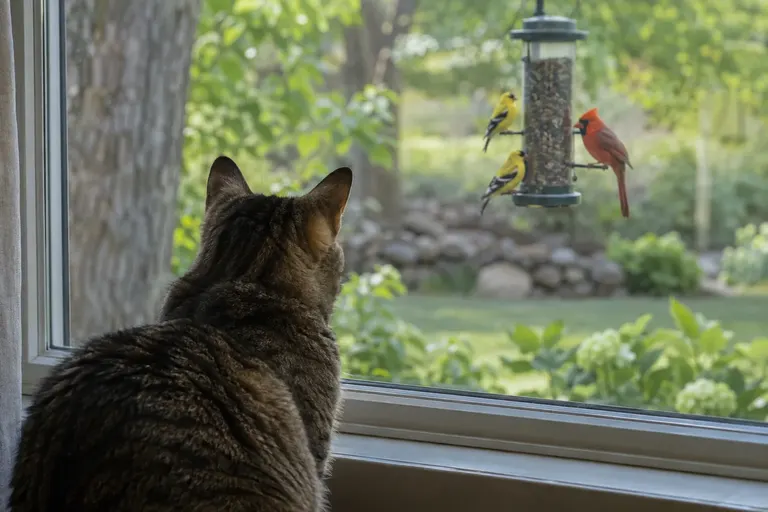
Table: where common North American birds spend the winter
| Bird | Stays or leaves? | Where it spends winter |
|---|---|---|
| Barn Swallow | Leaves | Central and South America |
| Chimney Swift | Leaves | Eastern Peru and the Amazon Basin |
| Blackpoll Warbler | Leaves | South America east of the Andes |
| Baltimore Oriole | Leaves | Florida, Caribbean, Central America, northern South America |
| Ruby-throated Hummingbird | Leaves | Mostly Central America, some on the Gulf Coast |
| Yellow-rumped Warbler | Short to long move | Pacific Coast, Mexico, Central America |
| Red-winged Blackbird | Northern birds leave | Southern United States; southern birds stay |
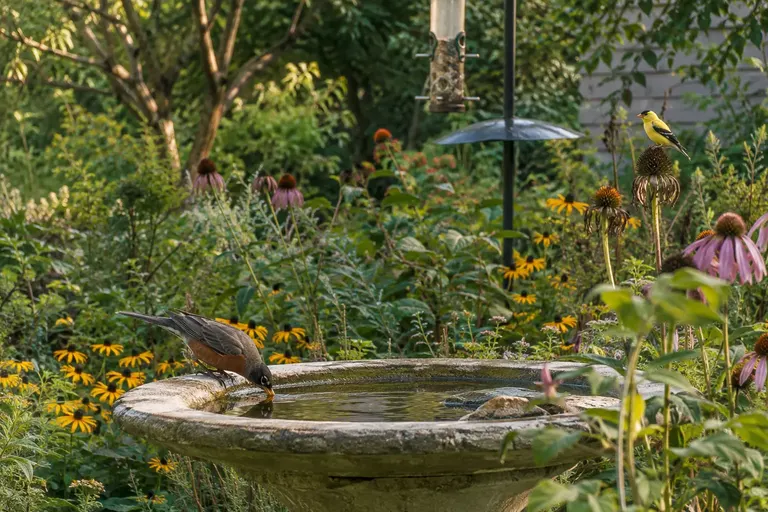
| American Robin | Many stay | Often in the breeding range, in berry-rich woods and big roosts |
| Black-capped Chickadee | Stays | Same area, roosting in tree cavities |
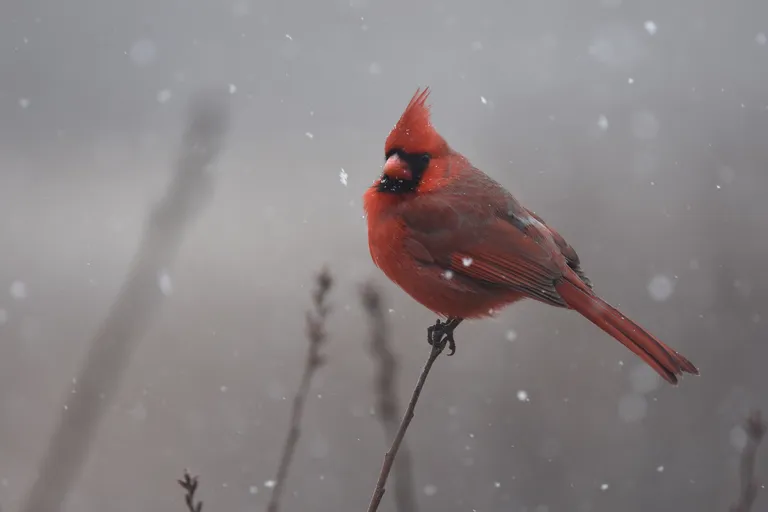
| Northern Cardinal | Stays | Same area all year |
| Dark-eyed Junco | Arrives in most of the US | Across the United States, from Canadian and Alaskan breeding grounds |
| American Tree Sparrow | Arrives | Northern and central North America, south to Arizona, Texas, Alabama |
| Snow Goose | Leaves the Arctic | Wintering sites roughly due south of their breeding grounds |
Sources: Cornell Lab of Ornithology All About Birds species pages; Audubon Guide to North American Birds (Chimney Swift).
Table: where common birds in Britain spend the winter
| Bird | Stays or leaves? | Where it spends winter |
|---|---|---|
| Swallow | Leaves | Africa, many British birds in South Africa |
| Swift | Leaves from early August | Africa |
| Robin | Mostly stays | Britain, joined by birds from northern and eastern Europe |
| Blackcap | Breeders leave, others arrive | British breeders to southern Europe; central European birds winter in Britain |
| Starling | Stays, plus arrivals | Britain, with northern European birds and roosts of over a million |
| Redwing | Arrives | Across Britain and Ireland, from Iceland and Fennoscandia |
| Fieldfare | Arrives | Britain and Ireland, from Fennoscandia, western Russia and eastern Europe |
| Brambling | Arrives | Britain and Ireland, from Fennoscandia |
Sources: BTO BirdFacts species pages; RSPB species pages.
Why do my feeder birds seem to disappear in fall?
Often they haven’t gone anywhere. In early fall, wild seeds, nuts and berries are at their peak, so birds spend less time at feeders. Some species also change habits. The Cornell Lab notes that many American Robins spend the whole winter in their breeding range but move into moist woods with fruiting trees, roost in large flocks and spend much more time in trees, so they’re simply less visible.
Feeder numbers usually rise again once natural food runs low, after hard frosts and the first snow. That’s also when new arrivals such as juncos start working the ground under feeders.
How can you help birds wherever they spend the winter?
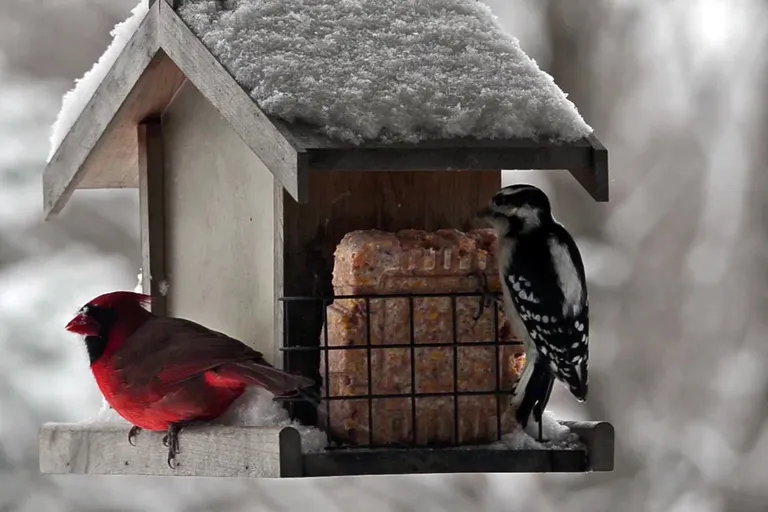
For the birds that stay or arrive, the most useful things are high-energy food, open water and shelter. Black oil sunflower seed, suet and a heated birdbath cover most needs, and dense shrubs or evergreens give birds a place to roost. Our guide to winter bird feeding covers the details.
For the ones that leave, most of the help happens in spring and summer: native plants that support the insects they eat, windows made safer for birds, and nesting space. Their winter survival depends on habitat far from your yard, so the breeding season is when your garden matters most to them.
Sources
- The Basics of Bird Migration: How, Why, and Where (Cornell Lab of Ornithology)
- All About Birds species guides: Barn Swallow, Blackpoll Warbler, American Robin, Dark-eyed Junco, Black-capped Chickadee (Cornell Lab)
- Chimney Swift, Guide to North American Birds (Audubon)
- Redwing, BirdFacts (BTO)
- Blackcap, BirdFacts (BTO)
- Swift (RSPB)

Frequently asked questions
Where do birds go in winter?
It depends on the species. Long-distance migrants such as Barn Swallows and Baltimore Orioles fly to Central and South America or the Caribbean. Short-distance migrants such as many Red-winged Blackbirds shift to the southern United States. Residents like chickadees and cardinals stay put and shelter in cavities and dense cover, while juncos and tree sparrows arrive from Canada to spend winter in your yard.
Do birds migrate because of the cold?
Mostly no. The Cornell Lab of Ornithology says escaping cold temperatures is not itself a major reason birds migrate. Food is. Swallows, swifts and most warblers eat flying insects, which disappear in a northern winter, so they have to leave. Seed and suet eaters such as chickadees and cardinals can find enough food to survive freezing weather, so they stay.
Why did the birds disappear from my feeder in the fall?
Some of them migrated, but many simply changed their routine. In fall, wild seeds and berries are abundant, so birds visit feeders less. American Robins, for example, often stay in their breeding range all winter but move to berry-rich woods, roost in large flocks and spend more time in trees, so they seem to vanish from lawns. Feeder traffic usually picks up again after snow and hard frosts.
Where do birds sleep in winter?
Small residents sleep in sheltered spots that hold heat. The Cornell Lab notes that Black-capped Chickadees almost always sleep in their own tree cavity, even far below zero. Other birds use dense evergreens, nest boxes or ivy, and some gather in huge communal roosts: American Robin roosts can hold a quarter of a million birds and European Starling roosts in Britain can top a million.
Which birds come south to spend the winter?
In much of the United States, Dark-eyed Juncos and American Tree Sparrows are the classic winter arrivals, coming from Canada and Alaska. Snow Geese reach their wintering grounds from the Arctic, some from as far as Siberia or Greenland. In Britain the main arrivals are Redwings and Fieldfares from Scandinavia, Bramblings, and extra Robins, Starlings and Blackcaps from mainland Europe.