What Is the Fastest Bird?
What is the fastest bird? The Peregrine Falcon, which tops 200 mph in a hunting dive. Here are the fastest fliers in level flight, runners and swimmers too.
In this article
- Quick answer: the fastest birds by category
- How fast is a Peregrine Falcon, really?
- What is the fastest bird in level flight?
- What are the fastest birds relative to their size?
- What is the fastest running bird?
- What is the fastest swimming bird?
- How fast do ordinary birds fly?
- Which fast birds can you see around the world?
- Why is measuring bird speed so difficult?
- Myths vs facts about fast birds
- What makes a bird fast? The anatomy of speed
- What does this mean for backyard birders?
- Quick facts
- Sources
- Frequently asked questions
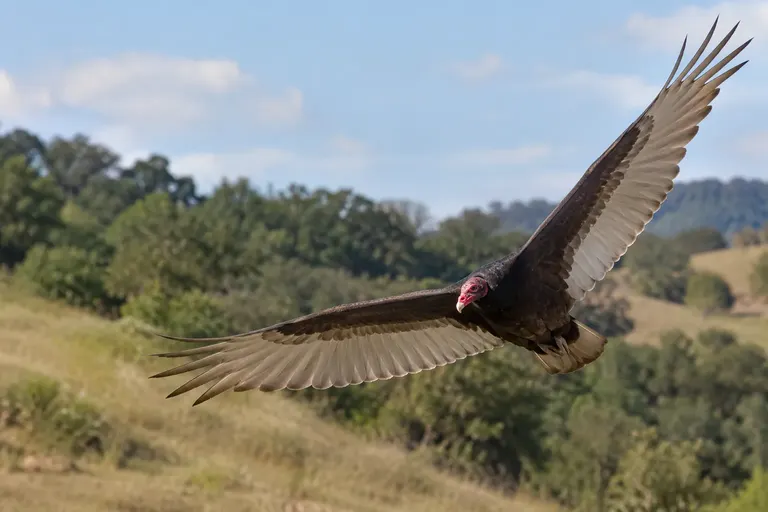
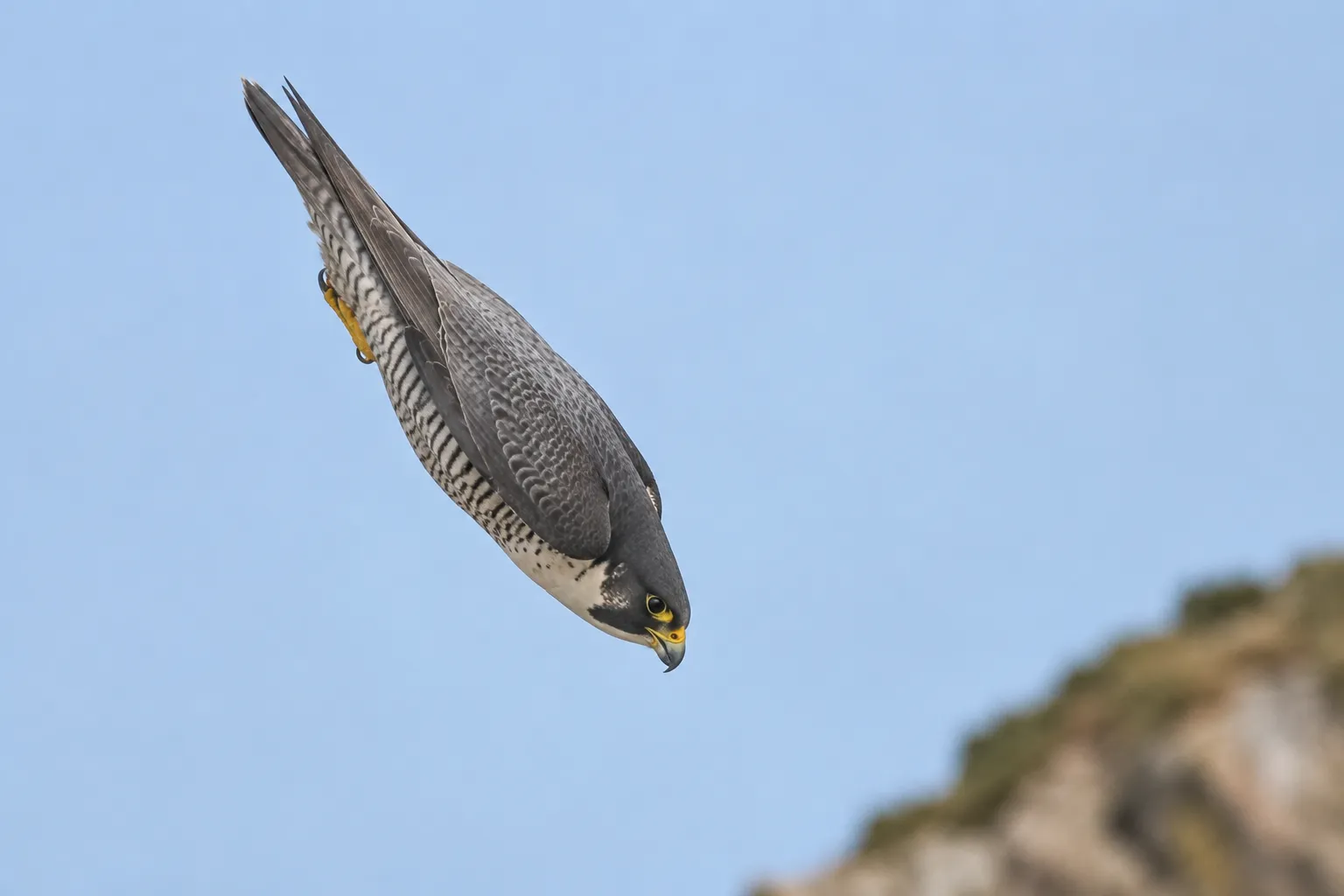
The fastest bird is the Peregrine Falcon. In a hunting dive, called a stoop, it routinely exceeds 200 mph, about 320 km/h, which makes it the fastest animal on Earth. The highest widely quoted figure is about 242 mph, roughly 389 km/h, recorded for a trained falcon diving from a very high altitude.
That answer covers diving. For level flapping flight, running and swimming, the champions are different birds, and the records are messier. Here is what the evidence actually supports.
Quick answer: the fastest birds by category
| Category | Fastest bird | Top speed (approx.) | How solid is the figure? |
|---|---|---|---|
| Diving | Peregrine Falcon | 200+ mph (320+ km/h); about 242 mph (389 km/h) record | Strong for 200+; the record is a trained bird |
| Level flight (measured) | Common Swift | About 69 mph (111 km/h) | Radar-measured, peer-reviewed |
| Long nonstop migration | Great Snipe | Around 60 mph (97 km/h) average | Tracked with geolocators; tailwinds help |
| Running | Common Ostrich | About 43 mph (70 km/h) | Well established |
| Swimming | Gentoo Penguin | About 22 mph (36 km/h) burst | Widely cited; bursts only |
| Relative to body size | Anna’s Hummingbird (courtship dive) | About 385 body lengths per second | Measured with high-speed video |
How fast is a Peregrine Falcon, really?
A Peregrine in level flapping flight is quick but not extraordinary; it cruises in roughly the same range as ducks and pigeons and accelerates hard when chasing. What sets it apart is the stoop. A falcon climbs high above its prey, folds its wings and drops almost vertically, trading height for speed.
The famous record comes from falconer and skydiver Ken Franklin, who dove alongside a trained Peregrine named Frightful in the late 1990s and early 2000s. Diving from a very great height, the bird reportedly reached about 242 mph. That is a real measurement, but it is not typical. Wild Peregrines usually stoop from lower heights at birds such as pigeons, ducks and shorebirds, and their speeds vary with the dive. Still, well over 100 mph is normal, and speeds above 200 mph are within their range.
How does a falcon survive diving that fast?
Several features help, and some are better understood than others:
- A streamlined shape. With wings folded into a tight teardrop, the falcon reduces drag dramatically. Wind tunnel studies suggest it adjusts its body shape during a dive to manage speed and steering.
- Stiff, strong feathers. Peregrine flight feathers are narrow and stiff, and the bird’s chest muscles and keel are large for its size.
- Nostril baffles. Peregrines have small bony tubercles inside their nostrils. A widely repeated explanation is that these slow and deflect incoming air so the bird can breathe at high speed. It is plausible and often cited, but it has not been tested as thoroughly as the popular accounts suggest.
- A third eyelid. Birds have a clear nictitating membrane that sweeps across the eye. It helps protect and clean the eye during fast flight.
- Sharp eyesight at speed. Falcons have two areas of sharp vision in each eye. Researchers have shown that Peregrines approach prey on a curved path that keeps the target in view of a particular region of the retina, which helps them lock on at high speed.
The Peregrine is also one of the most widespread birds in the world, found on every continent except Antarctica. Once devastated in many regions by DDT, it has recovered well in North America and Europe and now nests on city buildings, bridges and cathedrals. If you live in a large city, there is a good chance one hunts pigeons within a few miles of your home.
What is the fastest bird in level flight?
This is harder than it sounds. Speed in level flight depends on wind, altitude, how the bird is measured and whether the figure is ground speed or airspeed. A goose with a 40 mph tailwind can post an impressive ground speed while flying at a leisurely pace through the air.
Common Swift
The best-supported record for fast level flight comes from the Common Swift, a Eurasian species that spends most of its life on the wing. A radar study in Sweden, published in 2010, recorded swifts reaching about 31 meters per second, roughly 69 mph or 111 km/h, during “screaming parties,” their fast group display flights. Swifts are built for speed and endurance: long, narrow, sickle-shaped wings, a compact body and a tiny bill. Tracking studies have found that some Common Swifts stay airborne for most of the ten months they spend away from their breeding sites.
White-throated Needletail
Many lists name the White-throated Needletail, a large swift of Asia and Australia, as the fastest bird in level flight at about 105 mph, 170 km/h. That figure comes from older observations that are not considered reliable by modern standards. The needletail is certainly very fast, but the exact number should be treated as unverified.
Ducks, geese and shorebirds
Many waterfowl are strong, fast fliers. Diving ducks such as Canvasbacks and mergansers, and dabbling ducks such as teal, are often said to reach 50 to 70 mph in level flight, and higher with a tailwind. Some older claims, such as a Red-breasted Merganser clocked at 100 mph by an airplane, are anecdotal. The safe conclusion is that fast ducks can match or beat the Common Swift’s ground speed under good wind conditions, but careful measurements are scarce.
Great Snipe: the fastest long-haul migrant
For sustained speed over long distances, the Great Snipe is remarkable. In a study published in 2011, researchers fitted small geolocators to Great Snipes breeding in Sweden. Some flew nonstop from northern Europe to sub-Saharan Africa, a journey of several thousand kilometers, in roughly three to four days, averaging close to 60 mph, about 97 km/h. Tailwinds helped, but this is still one of the fastest sustained migrations known for a bird that flaps the whole way.
For more on endurance flyers, see our guide to which bird migrates the farthest.
What are the fastest birds relative to their size?
Raw speed favors big birds. Relative speed tells a different story.
A male Anna’s Hummingbird, common along the Pacific coast of North America, performs a courtship dive in which he climbs high above a female and then plunges down past her. In a 2009 study, Christopher Clark measured these dives with high-speed video. Males reached about 27 meters per second, roughly 60 mph. That is fast in absolute terms for a bird weighing about 4 grams, around the weight of a nickel. Measured in body lengths, it works out to about 385 body lengths per second, more than a Peregrine’s stoop or a jet fighter’s top speed in body lengths. As the male pulls out of the dive, he experiences forces of roughly nine times gravity.
Hummingbirds also hold records for wingbeat speed. Small species beat their wings dozens of times per second, and a hovering hummingbird has one of the highest metabolic rates of any vertebrate. Our guide on how hummingbirds hover explains the mechanics.

What is the fastest running bird?
The Common Ostrich of Africa is the fastest bird on land and the fastest two-legged runner alive. Ostriches can sprint at about 43 mph, 70 km/h, and keep up somewhat lower speeds over long distances. Their long legs, powerful thigh muscles and reduced toes, just two on each foot, make them efficient runners. Their wings, though useless for flight, help with balance and turning.
Other fast runners include:
- Emu (Australia): can run at roughly 30 mph, around 50 km/h.
- Greater Rhea (South America): a strong runner in open grasslands, with estimates in a similar range to the emu.
- Greater Roadrunner (southwestern US and Mexico): a cuckoo that can run about 20 mph, fast enough to catch lizards, snakes and even small birds.
What is the fastest swimming bird?
The Gentoo Penguin of the Southern Ocean is usually cited as the fastest swimmer, with bursts of around 22 mph, 36 km/h. Penguins “fly” underwater with stiff, flipper-like wings, and their dense bones reduce buoyancy so they can dive efficiently. Most of the time they swim much slower to conserve energy.
Among flying birds that also swim underwater, auks such as puffins, murres and razorbills, and diving ducks such as eiders, are strong, fast swimmers, though reliable speed figures are harder to find.
How fast do ordinary birds fly?
Most of the birds you see every day are not built for record speeds, and they do not need to be. Rough, commonly cited ranges for everyday cruising flight look like this, with the caveat that wind, effort and measurement method all shift the numbers:
- Small songbirds such as sparrows, finches and chickadees usually cruise at somewhere around 15 to 30 mph, faster when fleeing.
- Pigeons and doves are strong, direct fliers. Racing pigeons often average 40 mph or more over a race, and much more with a good tailwind.
- Crows and jays tend to fly steadily at moderate speeds, often in the 20s to 30s mph.
- Geese and swans cruise at roughly 30 to 50 mph on migration, with big boosts from tailwinds.
- Hummingbirds in normal forward flight commonly travel at around 25 to 30 mph, with faster bursts in chases and dives.
Many small migrants are also slower than people assume. They cover long distances not by flying fast but by flying for many hours at a stretch, night after night, and refueling in between.
Which fast birds can you see around the world?
Speed champions are spread across continents, so almost anyone can see an impressively fast bird somewhere nearby:
- North America: Peregrine Falcons on city skyscrapers and cliffs; Merlins in winter; Chimney Swifts over towns in summer; Canvasbacks and other diving ducks on big lakes.
- Europe: Peregrines on cathedrals and quarries; Eurasian Hobbies, small falcons fast enough to catch swifts and swallows; Common Swifts screaming over rooftops from late spring to late summer.
- South America: Peregrines that migrate south from the Arctic for the northern winter; Aplomado Falcons in open grasslands; Greater Rheas running across the pampas.
- Turkey and the Middle East: Peregrines, Saker Falcons and Lanner Falcons, all powerful hunters; Alpine and Common Swifts over cities and gorges.
- Africa: Ostriches on the savanna, the world’s fastest running birds, and Lanner Falcons hunting over open country.
- Australia and Asia: White-throated Needletails sweeping over forests and coasts, and Emus on inland plains.
Why is measuring bird speed so difficult?
Many popular bird speed claims fall apart when you ask how they were measured. Common problems include:
- Ground speed vs airspeed. A bird’s speed relative to the ground includes the wind. A tailwind can add tens of miles per hour.
- Car and airplane pacing. Early records often came from people driving or flying alongside birds and reading their speedometers. That is imprecise and can reflect a frightened bird’s escape burst.
- Stopwatch timing. Timing a bird between two points is easy to get wrong over short distances.
- Unusual conditions. Trained birds diving from aircraft or birds fleeing a predator do not show typical behavior.
- Repeated numbers. Once a figure appears in a popular book, it tends to be copied for decades whether or not it was reliable.
Modern tools such as tracking radar, GPS tags, geolocators and high-speed video are giving much more reliable data, and several classic “records” have not held up.
Myths vs facts about fast birds
Myth: the Peregrine hits 242 mph every time it hunts. Fact: 242 mph is a record from a trained falcon diving from a great height. Typical hunting stoops are slower, though still often well over 100 mph.
Myth: the White-throated Needletail is proven to fly 105 mph. Fact: that figure comes from older, unverified reports. Radar-measured level flight records are lower.
Myth: big birds are always the fastest. Fact: in absolute terms, larger birds often win, but relative to body size, tiny hummingbirds outperform falcons.
Myth: fast birds are always flapping hard. Fact: the fastest bird speeds come from diving, where gravity does most of the work. Long-distance migrants such as godwits and swifts are more about efficiency than raw speed.
Myth: birds fly faster to escape storms. Fact: birds do react to weather, but most speed changes come from wind direction. Migrants time their departures with favorable tailwinds when they can. Read more in can birds predict the weather.
What makes a bird fast? The anatomy of speed
Fast birds share several traits:
- Wing shape. Long, narrow, pointed wings, such as those of falcons, swifts and swallows, reduce drag and suit fast, efficient flight. Short, rounded wings, such as those of Cooper’s Hawks and many songbirds, trade top speed for acceleration and agility among branches.
- Powerful flight muscles. The pectoral muscles that power the downstroke can make up a large share of a flying bird’s body weight.
- Light, strong skeleton. Many birds have air-filled bones that reduce weight without losing strength. See do birds have hollow bones.
- A super-efficient respiratory system. Birds move air through their lungs in one direction using a series of air sacs, which delivers oxygen more efficiently than mammal lungs do. Our guide on how birds breathe explains how.
- Flying in formation. Some migrants save energy by flying in V formations. Here is why birds fly in a V.

What does this mean for backyard birders?
You may never see a Peregrine stoop, but speed shapes what happens at your feeder every day.
- Accipiters are the speed demons of the yard. Cooper’s Hawks and Sharp-shinned Hawks in North America, and Eurasian Sparrowhawks in Europe, hunt small birds with sudden bursts and sharp turns. Their short, rounded wings and long tails make them agile rather than fast in a straight line. If one has adopted your feeder, see how to stop hawks from hunting at your feeder.
- Merlins and kestrels. Small falcons such as Merlins sometimes chase songbirds and shorebirds with fast, low, direct flight.
- Swallows and swifts. Chimney Swifts in the Americas and Common Swifts in Europe and Asia zip over neighborhoods catching insects. Watching them is a quick lesson in wing shape.
- Hummingbird dives. In spring, male Anna’s, Allen’s and other western hummingbirds perform steep courtship dives. Listen for a sharp chirp or buzz at the bottom of the dive; it is made by the tail feathers.
If you want to catch fast birds in binoculars, practice finding a bird quickly and following it smoothly. Our guide on how to find a bird in your binoculars fast has simple drills.
Quick facts
- The Peregrine Falcon is the fastest animal on Earth in a dive, exceeding 200 mph.
- The highest widely quoted Peregrine speed is about 242 mph, from a trained bird.
- Radar has measured Common Swifts at about 69 mph in level flight.
- Great Snipes have averaged close to 60 mph on nonstop migrations of several thousand kilometers.
- The Ostrich runs at about 43 mph, faster than any other two-legged animal.
- The Gentoo Penguin swims at about 22 mph in bursts.
- A male Anna’s Hummingbird’s dive reaches about 385 body lengths per second.
- Many old speed records, including 105 mph for the White-throated Needletail, are unverified.
Sources



Frequently asked questions
How fast can a Peregrine Falcon dive?
Peregrines regularly exceed 200 mph, about 320 km/h, in steep hunting dives called stoops. The highest widely quoted figure is about 242 mph, roughly 389 km/h, for a trained falcon diving from a great height after a skydiver's lure. Wild birds hunting normal prey probably dive more slowly most of the time, but even ordinary stoops are faster than any other animal's movement.
What is the fastest bird in level flight?
There is no single agreed answer because level-flight speeds are hard to measure fairly. Radar studies have recorded Common Swifts at about 69 mph, 111 km/h, during display flights. Some ducks, geese and shorebirds reach similar ground speeds with a tailwind. The often-repeated 105 mph for the White-throated Needletail comes from old, unverified reports.
What is the fastest running bird?
The Common Ostrich is the fastest bird on land and the fastest two-legged runner of any living animal. It can sprint at around 43 mph, about 70 km/h, for short bursts and hold slower speeds for much longer. Emus are next among large birds. In North America the Greater Roadrunner reaches roughly 20 mph.
What is the fastest swimming bird?
The Gentoo Penguin is usually cited as the fastest swimming bird, with burst speeds of around 22 mph, roughly 36 km/h. Most penguins cruise much slower, closer to 4 to 6 mph, to save energy. Their wings are stiff flippers that work like underwater wings, and their bodies are torpedo-shaped to cut drag.
Is a Peregrine Falcon faster than a cheetah?
In a dive, yes, by a wide margin. A cheetah sprints at around 60 to 70 mph on the ground, while a stooping Peregrine exceeds 200 mph. In level flapping flight, a Peregrine is much slower, probably in the range of a fast car on a city street, so the comparison depends on how you define speed.
Which backyard bird is the fastest?
The fastest birds you are likely to see near a feeder are small raptors such as Merlins, Cooper's Hawks and Sharp-shinned Hawks, which rely on bursts of speed and surprise. Among songbirds, swallows and swifts are the quickest fliers. For its size, a male Anna's Hummingbird in a courtship dive is one of the fastest animals ever measured.