Great Backyard Bird Count 2027: A First-Timer's Guide
The Great Backyard Bird Count runs February 12-15, 2027. Count birds for 15 minutes anywhere in the world, then submit with Merlin or eBird. Here's how.

In this article
- Great Backyard Bird Count at a glance
- What is the Great Backyard Bird Count?
- When is the 2027 Great Backyard Bird Count?
- How big is the Great Backyard Bird Count?
- How do you take part? Four steps
- Merlin or eBird: which should you use?
- How do you count birds correctly?
- Tips for your first Great Backyard Bird Count
- Common mistakes to avoid
- What happens to your data?
- Sources
- Frequently asked questions
The Great Backyard Bird Count (GBBC) is a free, worldwide bird count held over four days each February. For 2027 it runs February 12-15. You watch birds for at least 15 minutes, anywhere, note every species you see or hear, and submit your sightings with the Merlin Bird ID app or eBird. No registration, no fee and no experience needed.
It’s run by the Cornell Lab of Ornithology, the National Audubon Society and Birds Canada, and it’s one of the easiest ways to turn a quiet winter morning at the window into real data that scientists use. This guide walks you through how it works, how to count properly, and how to submit your first list.
Great Backyard Bird Count at a glance
| Question | Answer |
|---|---|
| When | February 12-15, 2027 (Friday to Monday) |
| Where | Anywhere in the world: backyard, balcony, park, trail |
| How long | 15 minutes or more, on at least one of the four days |
| Who runs it | Cornell Lab of Ornithology, National Audubon Society, Birds Canada |
| How to submit | Merlin Bird ID (beginners) or eBird (experienced birders) |
| Registration | Not needed; a free Cornell Lab account covers both apps |
| Cost | Free |
| Data entry | Opens at midnight local time on day one; recently open until March 1 |
What is the Great Backyard Bird Count?
It’s a four-day snapshot of the world’s birds, built from ordinary people’s sightings. Anyone can count for as little as 15 minutes, and every list adds to a global picture of where birds are in mid-February.
The count started in 1998, launched by the Cornell Lab and Audubon as the first online community science project to collect data on wild birds and show the results in near real time. Birds Canada joined in 2009, and in 2013 the count went global when it began running through eBird. The 2027 count will be the 30th.
Timing matters. The organizers say the February data helps scientists understand bird populations before one of their annual migrations. Because the count uses the same four-day window each year, the results can be compared over time.
When is the 2027 Great Backyard Bird Count?
The 2027 count runs Friday, February 12 through Monday, February 15. Birdcount.org, Audubon and Birds Canada all list the same dates.
In general the GBBC is held over four days in mid-February, usually spanning a weekend. Counting starts at midnight local time on the first day, anywhere in the world, and you can only report birds seen during the four count days. In recent years, data entry has stayed open until March 1, so you have a couple of weeks to type in paper notes. Check birdcount.org closer to the date for any changes.
How big is the Great Backyard Bird Count?
Very big, and growing. The 2026 final results from birdcount.org show:
| 2026 GBBC result | Number |
|---|---|
| Estimated participants | About 1,146,000 |
| Species recorded | 8,257 |
| Countries or eBird subregions | 216 |
| eBird checklists | 467,696 |
| Birds saved in Merlin | 1,239,329 |
| Photos, videos and sounds added to Macaulay Library | 246,225 |
The United States sent in the most checklists, more than 253,000, followed by Canada. Colombia recorded the most species of any country, 1,376, ahead of Brazil, Ecuador and India. In the US, the birds most often identified in Merlin were the Northern Cardinal, House Finch and Dark-eyed Junco. In Canada, the Black-capped Chickadee topped the Merlin list.
How do you take part? Four steps
Taking part takes as little as 15 minutes. Here’s the whole process.
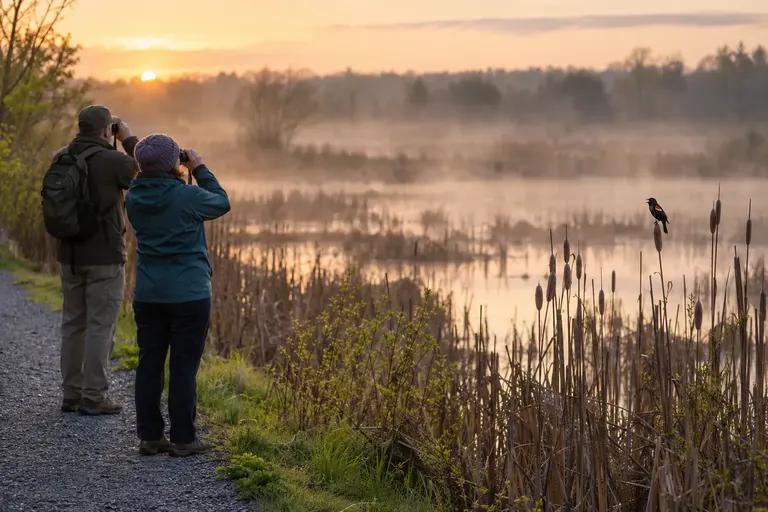
- Pick a spot. Your backyard, a window overlooking feeders, a local park or a trail. The organizers say you can count alone or with others, anywhere you find birds.
- Watch for at least 15 minutes. You can count once or many times over the four days. Note the start time and how long you watched.
- Identify and count everything. Write down every species you see or hear and how many of each. Use the counting rules below.
- Submit. Save your birds in Merlin or enter a checklist in eBird. No separate GBBC registration is needed.
If you already use Merlin or eBird, you don’t have to do anything special. Every bird you save or report during the four days counts toward the GBBC.
Merlin or eBird: which should you use?
The organizers suggest Merlin for beginners and eBird for more experienced birders. Both are free, and one Cornell Lab account works in both.
| Merlin Bird ID | eBird | |
|---|---|---|
| Best for | Beginners, families, casual counts | Birders who can identify most local species |
| What you submit | Individual birds you identified and saved | A full checklist of every species with counts |
| Helps with ID | Yes: Sound ID, Photo ID and step-by-step questions | No, you enter what you already know |
| Records effort (time, distance) | No | Yes |
| Value for research | Good for presence of species | Higher, because it includes counts and effort |
Submitting with Merlin
Identify a bird with Merlin’s Sound ID, Photo ID or step-by-step questions, then tap “This Is My Bird!” Merlin asks you to confirm the date and location, then saves the bird to your list. The Cornell Lab notes that saved birds also sync to eBird. Save only birds you saw or heard in person, not birds from photos, videos or live cams.
If you’re new to Merlin, read our guide on using Merlin Sound ID without getting fooled first. Sound ID is very good, but it can suggest birds that aren’t there, so confirm a suggestion by sight or by listening again before you save it.
Submitting with eBird
In the eBird Mobile app or on ebird.org, start a checklist, choose your location, enter each species with a count, and say whether you reported everything you identified (a “complete” checklist). eBird’s news post for the 2026 count asked participants to submit complete checklists and follow its counting guidance. Our step-by-step guide on how to use eBird covers protocols, locations and common mistakes.
How do you count birds correctly?
Report the highest number of each species you see at one time, not a total of every bird that comes and goes. That’s the single most important rule, and it stops you counting the same chickadee ten times.
eBird’s counting guidance adds a few more points:
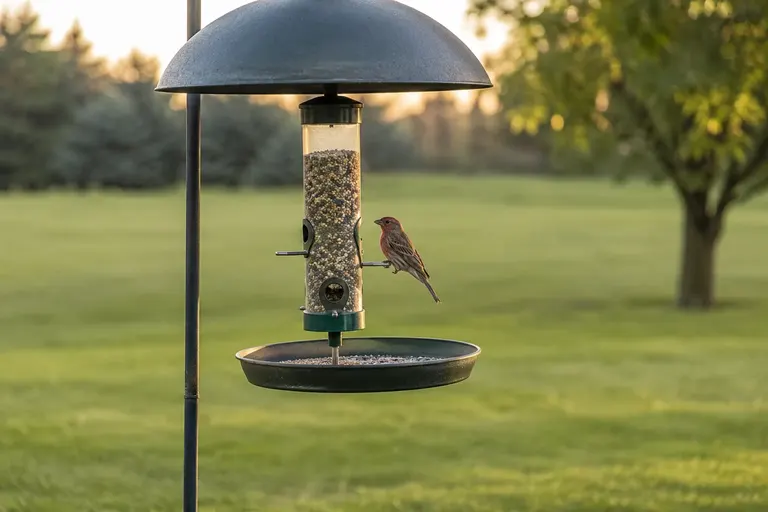
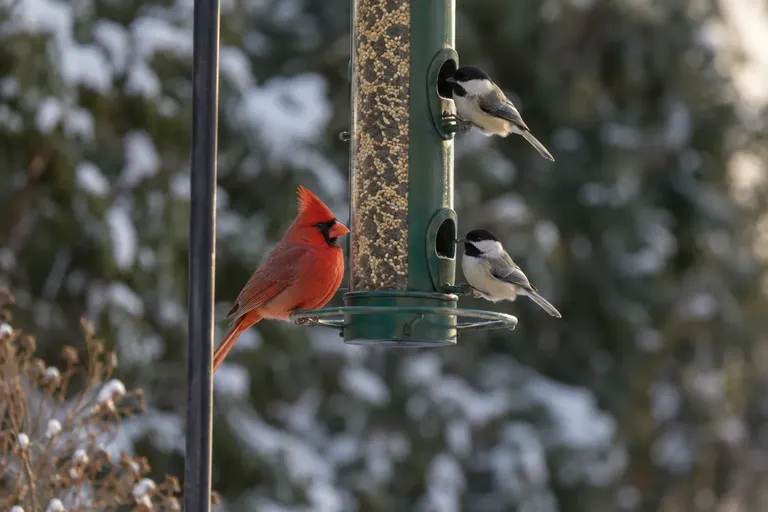
- Feeders: if you see four blue jays together, then two, then three, report four. Add more only if you know they’re different birds, for example a male and a female cardinal seen at different times.
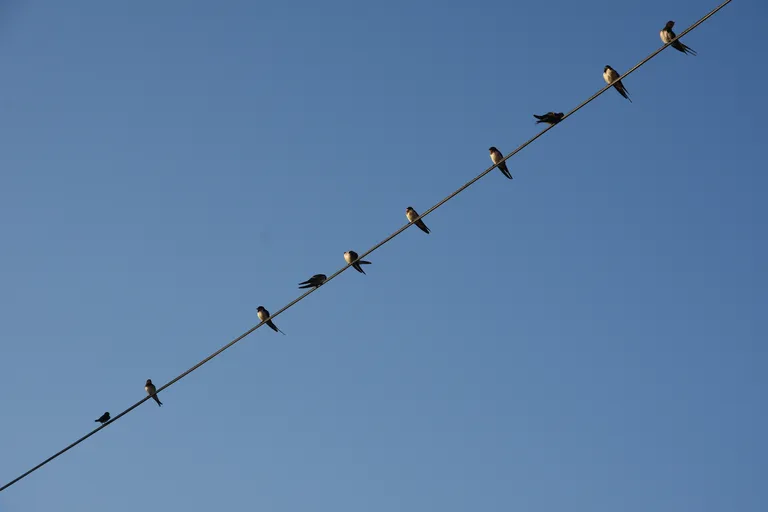
- Flocks: count 10 birds one by one, then estimate how many “blocks of 10” are in the flock. A rough estimate is far more useful than no number.
- Avoid “X”: eBird lets you mark a species as present without a count, but it asks you to give a number whenever you can, because researchers need counts to track population trends.
- Be conservative: if you think you saw the same bird twice, count it once.
- Heard birds count: report birds you identified by sound, as long as you’re confident.
For a backyard count, eBird’s “stationary” protocol fits best. eBird recommends keeping stationary checklists under three hours and traveling checklists under 8 km (5 miles), and it asks for one checklist per location, so don’t combine your yard and the park on one list.
Tips for your first Great Backyard Bird Count
A little preparation makes 15 minutes much more rewarding.
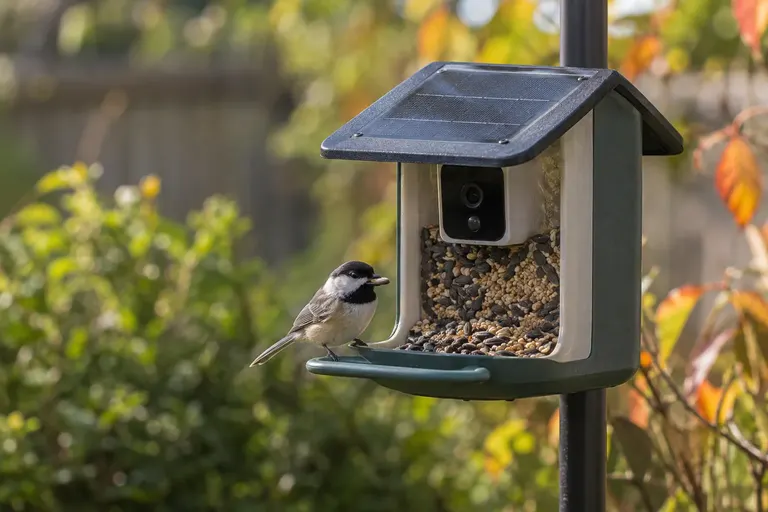
- Stock your feeders a few days early. Birds find reliable food quickly in winter. Our guide to winter bird feeding covers the best foods for February.
- Pick your time well. Birds are not equally active all day. Our guide to the best time of day for birding explains when to watch.
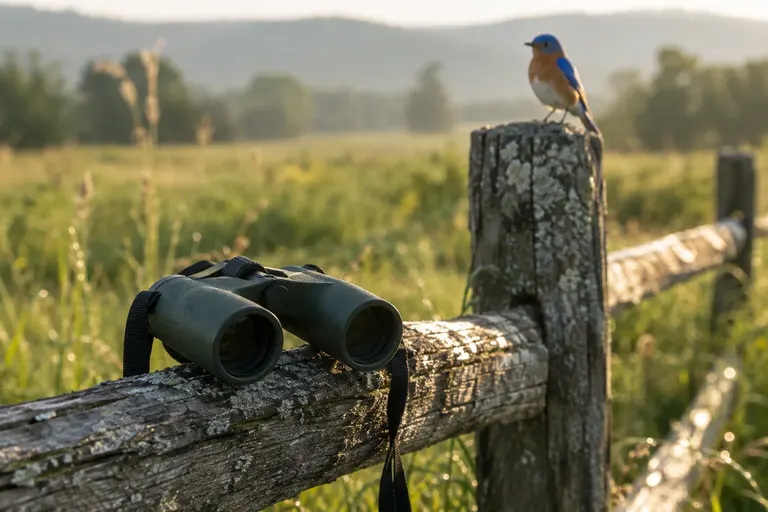
- Keep binoculars by the window. Even a basic pair helps you separate look-alike sparrows and finches. See our picks for binoculars for backyard birding.
- Learn your regulars first. Knowing your 10 most common yard birds makes the count fast. Our guide on how to identify birds is a good start.
- Count more than once. Different birds show up at different times of day, and each session can be its own checklist.
- Bring the kids. The count needs no experience, which makes it a natural family project. See birding with kids for ideas that keep them interested.
- Add a photo of anything unusual. eBird encourages photos on checklists, especially for rare birds.
Common mistakes to avoid
Most first-timer errors are easy to fix.
- Adding up every visit. Use the highest number seen at once.
- Guessing IDs. If you can’t tell two species apart, leave it out or use a broader option in eBird, such as “sparrow sp.”
- Trusting an app suggestion blindly. Confirm Merlin’s suggestions before saving.
- Mixing locations. One checklist per place.
- Reporting birds from outside the count days. Only sightings from the four days count.
- Leaving out common birds. House Sparrows, starlings and pigeons matter to the data too.
What happens to your data?
Your sightings go into eBird, the Cornell Lab’s global bird database, where they sit alongside millions of other records. The organizers say GBBC data helps scientists understand global bird populations, and Audubon says the results help researchers follow population trends and inform conservation. You can explore live maps and results by country on the GBBC site during and after the count.
The GBBC is also a good gateway to other projects. Many participants go on to Project FeederWatch, which runs through the winter, or keep a yard list and life list in eBird year-round.
Sources

Frequently asked questions
When is the Great Backyard Bird Count 2027?
The 2027 Great Backyard Bird Count runs from Friday, February 12 to Monday, February 15, 2027, according to birdcount.org, Audubon and Birds Canada. It will be the 30th annual count. You only need to watch birds for 15 minutes or more on at least one of those four days, and counting starts at midnight local time wherever you are in the world.
Do I need to register for the Great Backyard Bird Count?
No. The organizers say there is no separate sign-up. You need a free Cornell Lab account to save birds in Merlin or submit a checklist in eBird, and that same account covers both apps. If you already use Merlin or eBird, every bird you save or report during the four count days is counted toward the GBBC automatically.
Can I take part in the Great Backyard Bird Count outside the US?
Yes. The count has been global since 2013, when it began running through eBird. In 2026 participants reported birds from 216 countries or eBird subregions, and Colombia recorded the most species of any country. Merlin works on seven continents, so you can join from a backyard, balcony or park anywhere in the world.
How do I count birds at a feeder without counting the same bird twice?
Report the highest number of each species you see at one time, not a running total. If four chickadees are on the feeder together, then two, then three, you report four. eBird's counting guidance says you can add birds only when you're sure they are different individuals, for example a male and a female cardinal seen separately.
Should I use Merlin or eBird for the Great Backyard Bird Count?
The organizers suggest Merlin for beginners and eBird for more experienced birders. Merlin lets you identify a bird and save it with a date and place in a few taps. eBird lets you submit a full checklist with every species, a count for each one, start time and duration, which gives researchers more useful data.