Birding With Kids: What Keeps Them Interested
Birding with kids works best when it is short, hands-on and close to home: a window feeder, a real job, a simple game and a sound app to keep them hooked.
In this article
- Quick answer: what keeps kids interested in birds
- Why start birding with kids at home?
- What age can kids start birding?
- Activities that keep kids engaged
- Best apps and tools for birding with kids
- How to teach kids their first birds
- Rainy day and winter birding ideas
- What binoculars should a child use?
- Citizen science projects families can join
- How long should a birding outing with kids last?
- Planning a birding walk kids will enjoy
- Teaching kids birding etiquette
- Common mistakes when birding with kids
- Keeping the interest going over time
- Sources
- Frequently asked questions
Birding with kids works best when it is short, close to home and hands-on. The most reliable setup is a feeder they can see from a window, ideally within about 3 feet of the glass, a real job for them to do, a simple game, and a sound app that turns birdsong into names. Long hikes, silent waiting and adult-size binoculars are what usually lose them.
This guide covers what works at different ages, the activities that hold attention, the gear that actually helps, and the mistakes parents and grandparents make without meaning to.
Quick answer: what keeps kids interested in birds
| What works | Why it works |
|---|---|
| A feeder visible from a window | Guaranteed birds, no waiting, no weather |
| A real job (counter, spotter, recorder) | Kids like responsibility more than instruction |
| Short outings, 20 to 45 minutes | Ending on a high note brings them back |
| Games like bird bingo or a scavenger hunt | Turns watching into a challenge |
| A sound ID app | Instant answers feel like magic |
| Drawing and journaling | Slows kids down so they notice details |
| Kid-size binoculars | Real optics that fit small hands and faces |
| Citizen science projects | Their sightings matter to scientists |
Why start birding with kids at home?
Home is where birding is easiest for children. There is a bathroom, snacks and a warm room nearby, and birds come to you instead of the other way around.
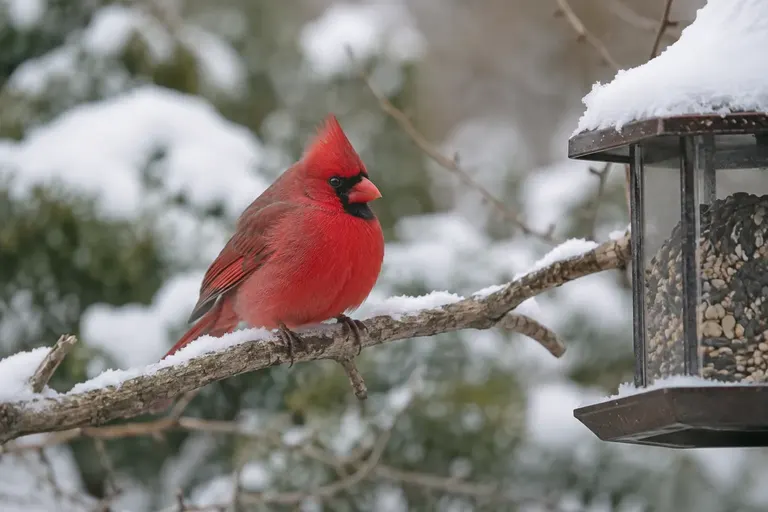
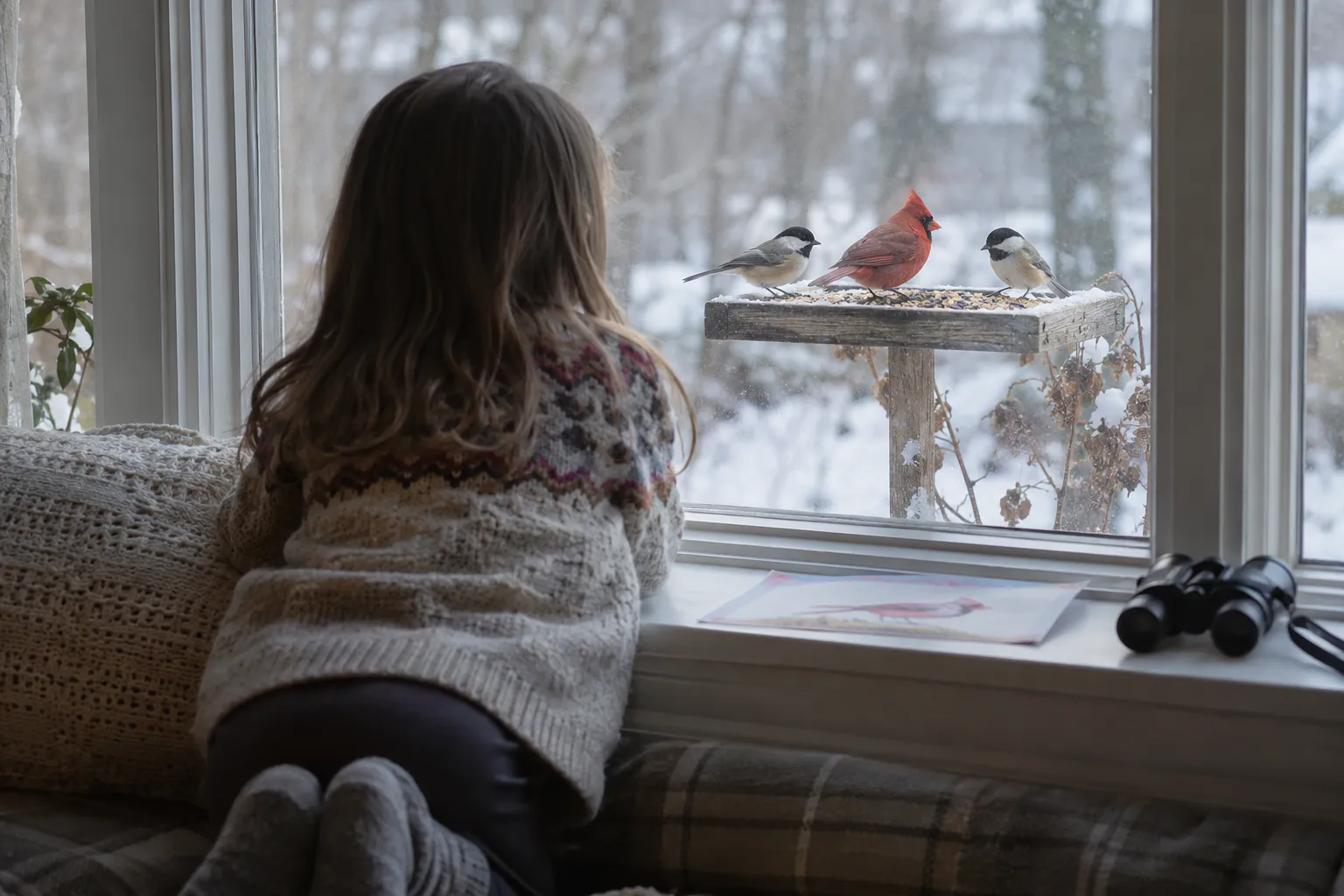
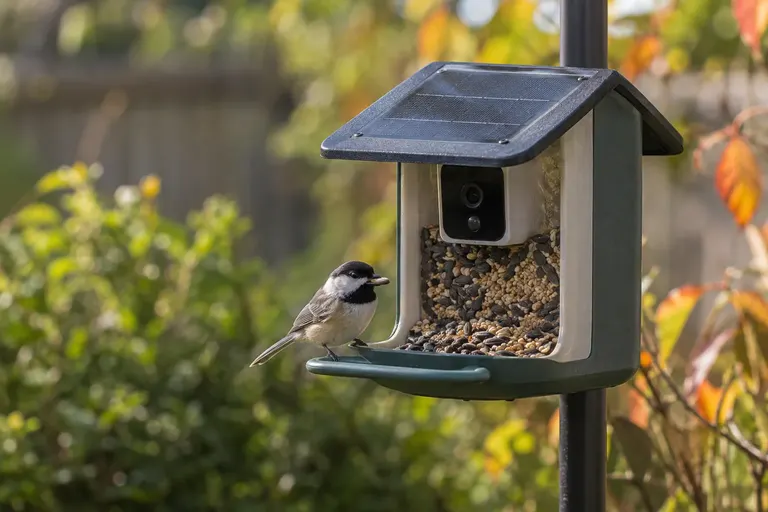
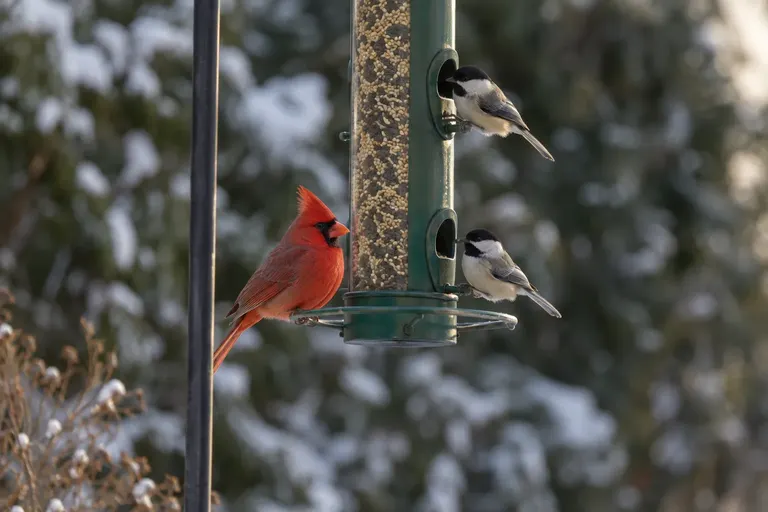
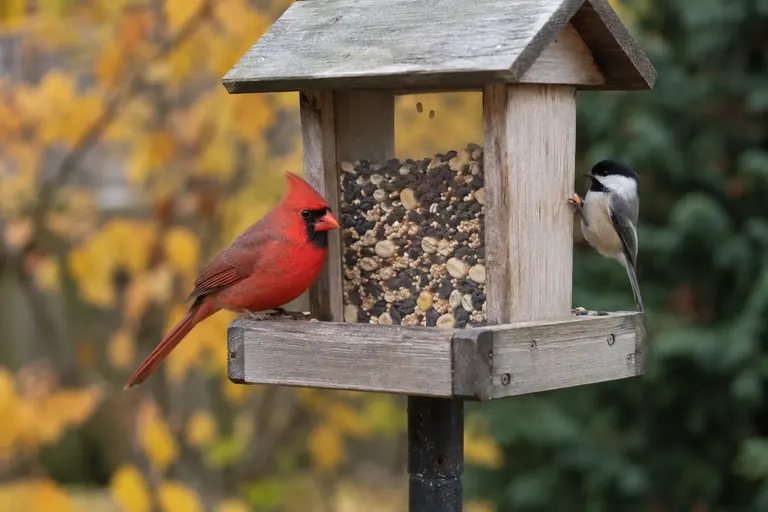
A feeder placed where kids can see it from a table or window seat does most of the work. Within a few days of stocking it with black oil sunflower seed, most yards in North America draw chickadees, titmice, cardinals, finches or sparrows, depending on region and season. Kids begin to recognize “regulars,” and that familiarity is what turns casual watching into a hobby.
Some practical tips:
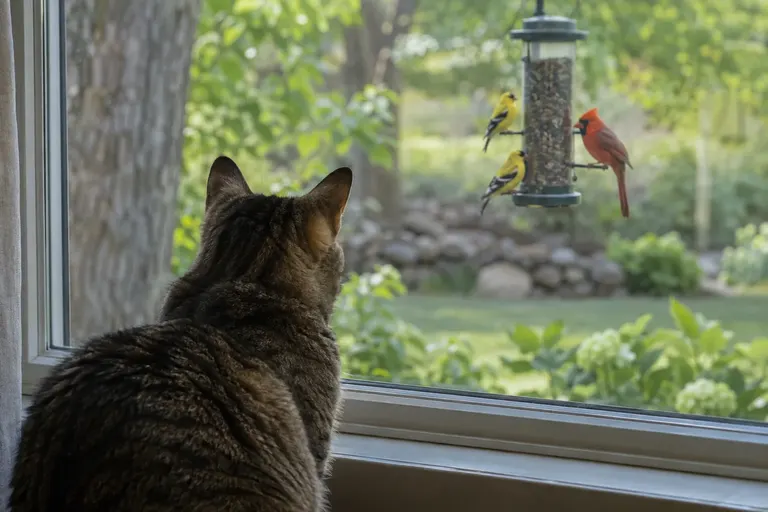
- Place the feeder close to the window. A spot within about 3 feet of the glass gives kids a close view and, according to Cornell Lab guidance, is also safer for birds because they cannot build up speed before a collision. Our guide on where to put a bird feeder covers the details.
- Start with one easy food. Black oil sunflower seed attracts the widest range of feeder birds. See black oil sunflower seed for why.
- Add variety later. A suet cake brings woodpeckers, a platform with millet brings juncos and doves, and each new visitor is a reason to keep watching.
- Let kids help fill it. Scooping seed is a job, and it builds ownership.
A window-mounted feeder, which attaches to the glass with suction cups, is especially good for small children, because birds land inches from their faces. It also lets kids see details that are hard to pick out at a distance: the white cheek of a chickadee, the tiny feet of a goldfinch, or the way a titmouse holds a seed against a perch and hammers it open. Those close looks often spark the first real questions, and questions are what turn a pastime into a hobby. If birds are slow to find a new feeder, be patient; it can take days or even a couple of weeks for them to discover it.
What age can kids start birding?
Any age. What changes is the approach.
Toddlers and preschoolers (about 2 to 5)
- Focus on colors, sizes and sounds: “Is it bigger than a sparrow? What color is its head?”
- Name just a few birds: cardinal, robin, crow, duck, chickadee.
- Mimic simple calls. Chickadees say their name, and crows are easy to imitate.
- Use picture books and simple bird cards.
- Keep “sessions” to a few minutes at the window.
Early elementary (about 6 to 8)
- Introduce kid-size binoculars and teach them to find a bird with their eyes first, then lift the binoculars.
- Start a simple list of birds they have seen. Our guide on how to keep a life list has ideas that scale down well for kids.
- Play games: bird bingo, “first to spot a red bird,” counting contests.
- Try a sound app together and match songs to birds at the feeder.
Older kids and teens (about 9 and up)
- Hand over real responsibility: submitting the family’s eBird checklist, planning a morning walk, or running the feeder.
- Encourage photography, drawing or audio recording.
- Look for local youth bird clubs or young birder programs through Audubon chapters and state ornithological groups.
- Let them teach you. Explaining a field mark is one of the fastest ways to learn it.
Activities that keep kids engaged
Bird bingo
Make a simple 3x3 or 4x4 grid with pictures of birds likely in your area and a few “wild cards” such as “a bird eating,” “a bird on the ground,” “a bird taking a bath” or “a bird singing.” Behaviors are easier to spot than rare species, and they teach kids to watch what birds do, not just what they are.
Scavenger hunt
On a walk, give kids a list of things to find: a feather (to look at and photograph, not collect), a nest high in a tree, a bird flying in a V, a bird with a red patch, a woodpecker drumming, a bird with a long tail. Crossing items off keeps momentum going.
Counting jobs
Kids love counting. Ask them to count the most birds of one species they see at the same time, which is also how many bird surveys count birds, so there is no double counting. That number becomes their contribution to your checklist.
Draw and journal
Give kids a small sketchbook and colored pencils. Drawing forces them to look closely at beak shape, wing bars and tail length. A simple journal page can include the date, weather, birds seen, and a drawing of their favorite. Over a season, it becomes a keepsake.
Sound safaris
Stand still for two minutes with eyes closed and count how many different bird sounds you hear. Then open the Merlin app and see what it detects. Kids often hear more than adults because they have not yet learned to tune birdsong out.
Nest box watch
A nest box in the yard gives kids a spring storyline: nest building, eggs, feeding trips and fledging. Watch from a distance and keep visits short. NestWatch, from the Cornell Lab, offers birdhouse plans for many species, some simple enough for kids to help build, plus guidance on monitoring nests responsibly.
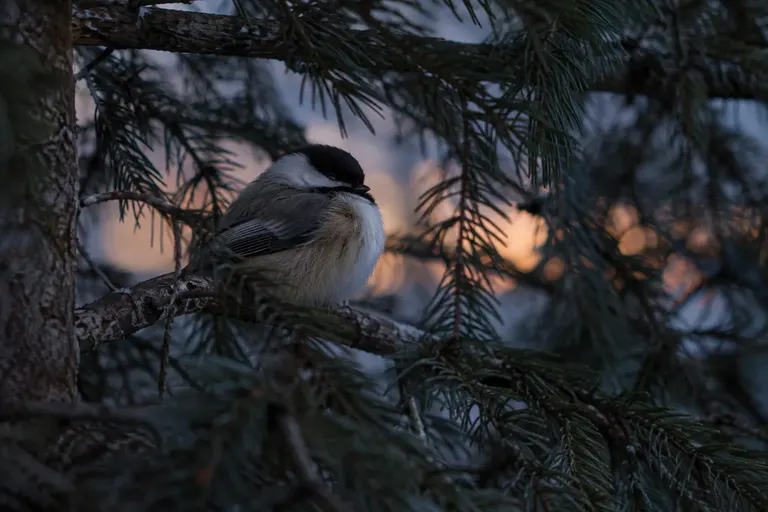
Water feature
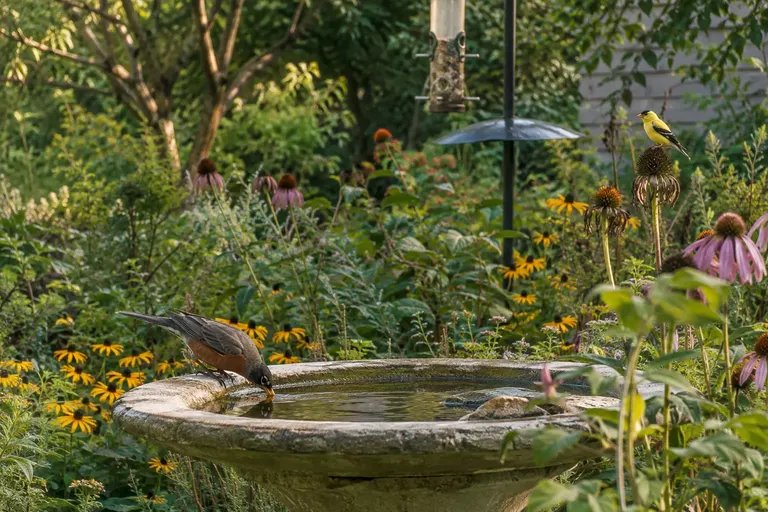
A shallow birdbath brings species that never visit feeders, such as robins and many warblers during migration. Watching birds bathe is endlessly entertaining for kids. Clean it and refresh the water every few days.
Best apps and tools for birding with kids
Merlin Bird ID
Merlin is free from the Cornell Lab of Ornithology. Its Sound ID listens to birds around you and shows suggestions in real time as each bird sings. Photo ID identifies birds from pictures, and a step-by-step wizard asks a few simple questions about size, color and location. Regional bird packs can be downloaded for offline use. Merlin also has a “Save My Bird” feature that builds a simple personal list.
One tip: treat Merlin’s suggestions as a starting point, not a final answer. Look at the bird together and check the match. Our guide to Merlin Sound ID explains how it can be fooled and how to double-check.
eBird
For older kids who like data, eBird turns sightings into checklists, maps and personal lists. It is free and also run by the Cornell Lab. Submitting a checklist gives kids a sense that their observations count for something beyond the family.
Field guides
A physical field guide still has a place. Kids enjoy flipping pages to find “their” bird, and a regional guide with fewer species is less overwhelming than a continent-wide book. Our roundup of field guides covers options.
How to teach kids their first birds
Kids learn birds the same way adults do, just faster when it feels like a game. Start with a small set and build from there.
- Pick five “anchor birds.” Choose five common birds they will see often, such as American Robin, Northern Cardinal, Mourning Dove, American Crow and a chickadee. Learn those well before adding more.
- Compare size to anchors. “Is it smaller than a robin? Bigger than a sparrow?” Size comparisons are one of the most useful clues in bird identification.
- Look at shape before color. A cardinal’s crest, a woodpecker’s stiff tail and a hummingbird’s needle bill are easier to remember than exact shades.
- Notice behavior. Nuthatches creep headfirst down trunks. Doves walk on the ground. Woodpeckers hitch up trees. Kids remember what a bird does.
- Connect a sound. A chickadee’s “chick-a-dee-dee-dee,” a cardinal’s loud “cheer, cheer, cheer” and a crow’s “caw” are easy first songs.
- Add one new bird at a time. When a new visitor appears, compare it to the anchors: “It is shaped like a sparrow but has a red head.”
Our guide on how to identify birds explains the five clues experienced birders use, and each one adapts easily for kids.
Rainy day and winter birding ideas
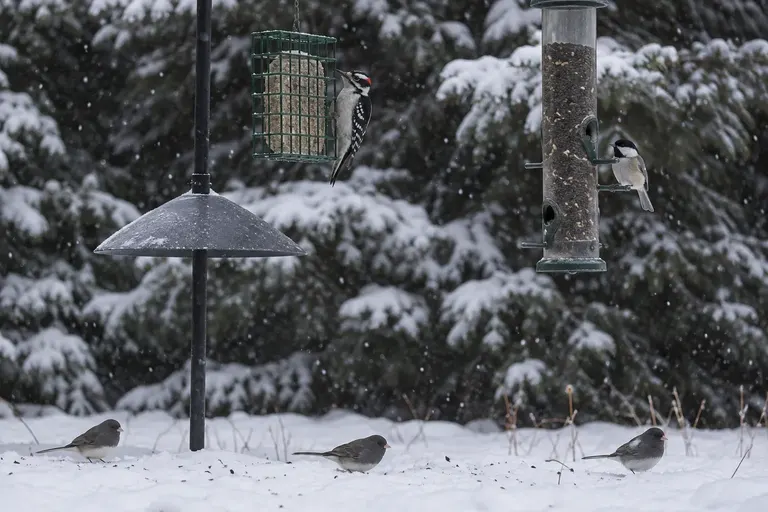
Bad weather does not have to end the hobby. Some of the best feeder activity happens on cold, snowy days, when birds need food most.
- Window watch with hot cocoa. Set up a “bird station” by the window with binoculars, a notebook and a field guide.
- Feeder bird tally. Count the most of each species seen at once and compare with last week.
- Bird art. Draw or paint the birds seen that morning, or make a poster of the family yard list.
- Listen online. The Cornell Lab’s All About Birds pages include recordings of songs and calls. Play a few and quiz each other.
- Build or paint a nest box in winter so it is ready before spring nesting begins.
- Make a simple bird guide of your own yard, with a page for each species kids have seen.
What binoculars should a child use?
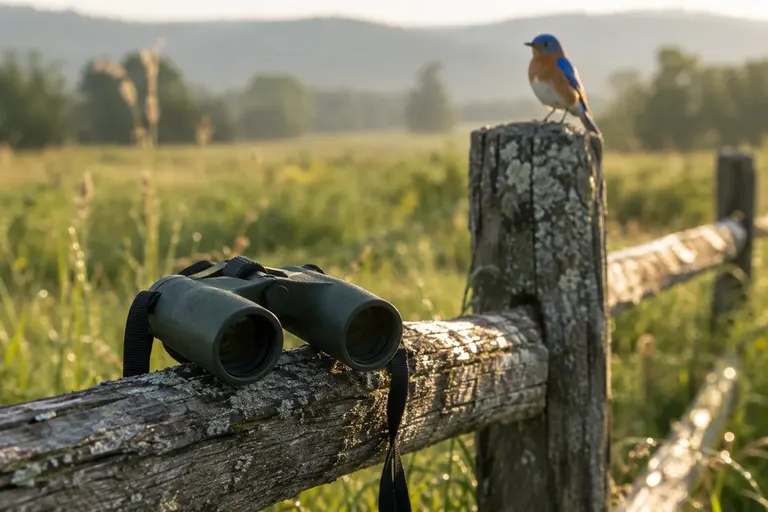
Real, properly sized binoculars make a big difference. Many toy binoculars have poor lenses that give dim, blurry views, and a frustrated child will conclude that binoculars “don’t work.”
What to look for:
- Low magnification, around 6x to 8x, for a wider, steadier view.
- Small, light body that small hands can hold for more than a minute.
- A narrow minimum eye spacing (interpupillary distance), so the two barrels line up with a child’s eyes.
- Rubber armor that survives drops.
- A neck strap, always worn, to prevent dropped binoculars.
Teach the basic technique: find the bird with your eyes, keep looking at it, then bring the binoculars up to your eyes without looking away. Our guide on binoculars for kids compares options that suit young birders.
Citizen science projects families can join
Few things motivate kids more than knowing real scientists will use their observations.
- Great Backyard Bird Count. Run by the Cornell Lab of Ornithology, National Audubon Society and Birds Canada, it takes place over four days each February. Participants need to count for as little as 15 minutes on one of those days and can submit through eBird or Merlin.
- Project FeederWatch. Run by the Cornell Lab and Birds Canada, it runs from November through April. You count birds at your feeders on days you choose. It is a good fit for families with a window feeder. There is a small annual participation fee in the US.
- Christmas Bird Count. Audubon’s long-running winter count takes place each year from mid-December into early January in local “count circles.” Many circles welcome families, and some have feeder-watcher options for people who count from home.
- NestWatch. Families monitoring a nest box can report nest contents and outcomes, following the program’s guidelines.
How long should a birding outing with kids last?
Shorter than you think. For young children, 20 to 45 minutes of active birding is often plenty, and a few minutes at a window can be a full session for toddlers. For older kids, a morning outing of an hour or two can work if there is variety.
Signs it is time to wrap up:
- Questions stop and complaints start.
- They start throwing sticks or chasing each other.
- They ask about snacks for the third time.
End on a high point, ideally right after a good sighting. That memory is what they will ask to repeat.
Planning a birding walk kids will enjoy
- Choose the right place. Ponds, marshes and lakes are ideal: ducks, geese, herons and swallows are big, active and easy to see. Nature centers often have feeders, boardwalks and bathrooms.
- Choose the right time. Morning is usually the most active time for birds, but a kid who is tired or hungry will not enjoy any time. Birds are often most active in the first few hours after sunrise, especially in spring and summer.
- Pack snacks and water. A hungry kid ends the trip.
- Dress for the weather, with an extra layer.
- Give everyone a role: navigator, spotter, counter, photographer.
- Bring a notebook or print a bingo card.
- Plan a reward stop, such as a playground or a picnic.
Teaching kids birding etiquette
Kids learn good habits by copying adults. A few simple rules go a long way:
- Quiet voices and slow movements help everyone see more birds.
- Stay on the trail.
- Never chase birds or throw things at them.
- Leave nests, eggs and feathers where they are. In the US, the Migratory Bird Treaty Act protects most native birds, including their nests and feathers. Photos are the souvenir.
- Let others look too.
Our full guide to birding etiquette covers the rules adult birders follow, and older kids often enjoy being trusted with them.
Common mistakes when birding with kids
- Starting too big. A long hike to look for a rare bird is a hard first outing. Start at a feeder.
- Toy binoculars. Poor optics lead to frustration. Real, kid-size binoculars are worth it.
- Too much talking. Kids tune out lectures. Ask questions instead: “What do you notice about its beak?”
- Expecting silence. Some chatter is fine. Teach “quiet mode” for close birds, not for the whole walk.
- Correcting every ID. Let them guess, then look together. Discovery sticks better than correction.
- Making it a chore. If birding becomes homework, interest fades fast.
- Staying too long. Leave while it is still fun.
Keeping the interest going over time
The children who stick with birding usually have a steady supply of small wins. A few ways to provide them:
- Keep a family yard list on the fridge and celebrate each new species.
- Track the seasons. Note the first hummingbird, the first junco of fall, the first robin song of spring.
- Visit a new habitat each season.
- Connect birds to other interests, such as art, photography, technology, maps or science fair projects.
- Join a group. Local Audubon chapters and nature centers often run family walks.
And be patient. A child who loses interest at 10 may come back to birds at 15 or 30, and the memories of a feeder outside the kitchen window are often what bring them back.
Sources
Frequently asked questions
What age can kids start birding?
Toddlers can enjoy watching a feeder through a window and naming colors and sizes. Around ages 4 to 6, many children can learn a handful of common birds by sight and sound. By 7 or 8, most can use kid-size binoculars and a simple app with help. There is no minimum age; the approach just changes as they grow.
What are the best binoculars for a child?
Look for small, light binoculars with low magnification, around 6x or 8x, a close interpupillary range for narrow-set eyes, and rubber armor that survives drops. Toy binoculars usually give dim, blurry views that discourage kids. See our guide to binoculars for kids for specific options.
How do I keep kids interested in birding?
Keep outings short, start at home, give them a real job such as counting birds or holding the checklist, turn it into a game like bird bingo, and let them lead. Sound ID apps, drawing and simple citizen science projects add variety. Stop while they are still having fun, not after they are bored.
Is Merlin Bird ID good for kids?
Yes. Merlin is free from the Cornell Lab of Ornithology, and its Sound ID shows bird names in real time as birds sing, which many kids find exciting. Photo ID lets them identify birds from pictures. Encourage kids to use it as a starting point, then look at the bird and check the match together.
What citizen science projects can kids join?
The Great Backyard Bird Count each February asks for as little as 15 minutes of counting over a four-day weekend. Project FeederWatch runs November through April and can be done from a kitchen window. Audubon's Christmas Bird Count welcomes families through local circles. All three are run by established conservation organizations.