Sick Bird at Feeder? Signs and What to Do Next
Sick bird at feeder? Take its feeders down for about two weeks, disinfect them in 1:9 bleach, clean the ground and bird bath, and call a rehabilitator.
In this article
- Quick answer: what to do when you see a sick bird
- Signs of a sick bird at your feeder
- Common bird diseases seen at feeders
- Step by step: what to do when you see a sick bird
- Which feeders spread disease most?
- When is it safe to put feeders back?
- How to prevent disease at your feeders
- How to protect yourself and your pets
- Common mistakes
- Sources
- Frequently asked questions
If you spot a sick bird at feeder stations in your yard, take down the feeders it is using for about two weeks, disinfect them in a solution of no more than 1 part bleach to 9 parts water, rake up seed and droppings underneath, and scrub the bird bath. Do not try to treat the bird yourself. Call a licensed wildlife rehabilitator if a bird needs help, and report clusters of dead birds to your state wildlife agency.
Those steps come from Project FeederWatch and the Cornell Lab of Ornithology. The reasoning is simple: feeders bring birds closer together than they would normally gather, and when a sick bird feeds alongside healthy ones, the feeder becomes a meeting point for disease. Taking the food away for a while spreads the birds out and breaks the chain.
Quick answer: what to do when you see a sick bird
- Take down the feeders the sick bird is using, for about two weeks. If several birds look sick, take all feeders down.
- Clean and disinfect every feeder. Scrub off debris, soak in a dilute bleach solution (no more than 1 part bleach to 9 parts water), rinse well and dry completely.
- Clean the ground. Rake up seed, hulls and droppings under the feeders and bag them.
- Empty and scrub bird baths, then refill with fresh water, or pause them too.
- Do not treat the bird. Call a licensed wildlife rehabilitator for advice.
- Report dead birds to your state wildlife agency if you find several, or suspect a disease outbreak.
- Put feeders back clean, then keep cleaning every week or two.
Signs of a sick bird at your feeder
Healthy birds are alert, wary and quick to fly. A sick bird often behaves differently.
| Sign | What it may indicate |
|---|---|
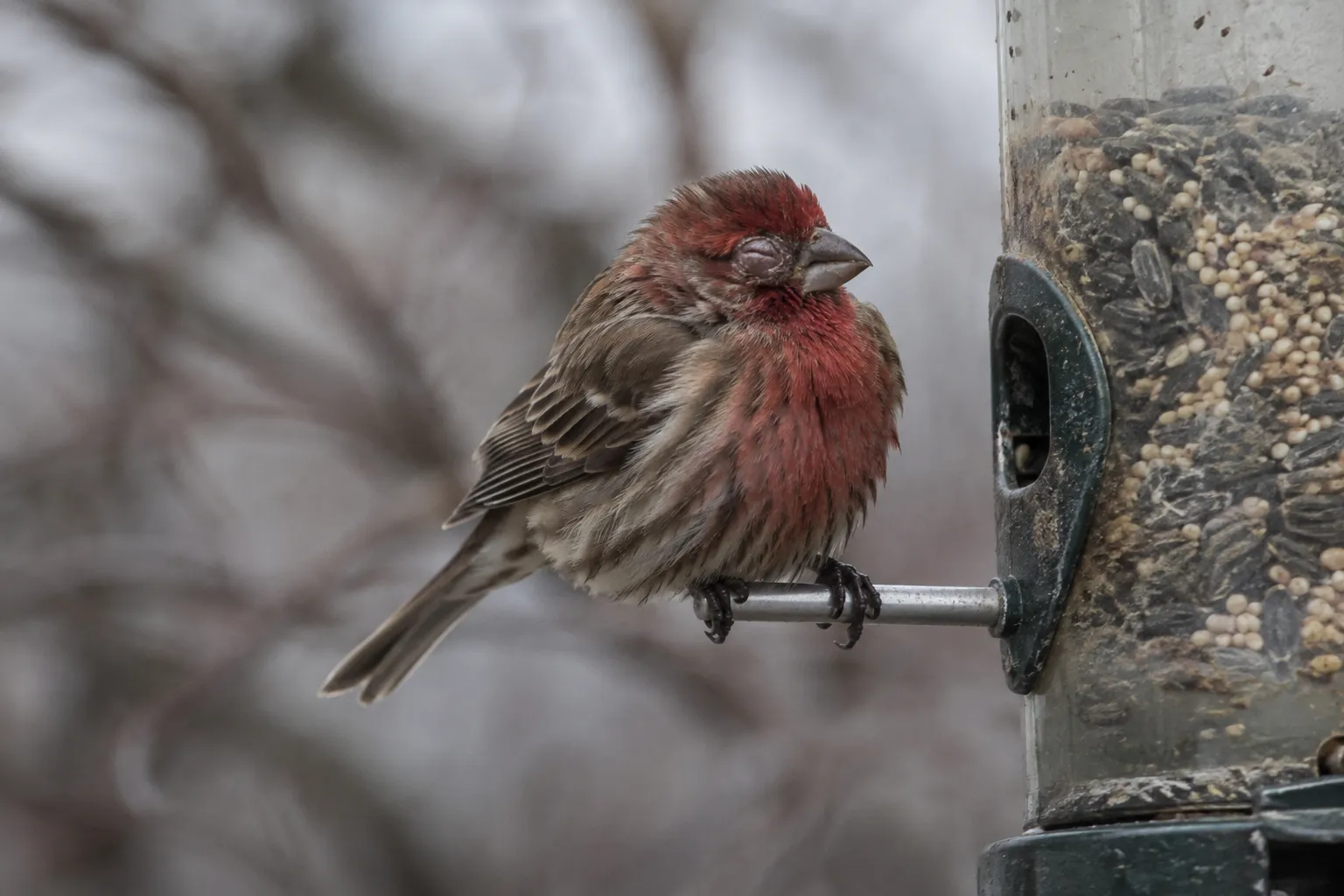
| Fluffed-up feathers, sitting still for long periods | General illness, including salmonellosis |
| Stays at feeder when other birds flush; easy to approach | Weakness or impaired vision |
| Red, swollen, runny or crusty eyes | House Finch eye disease (mycoplasmal conjunctivitis) |
| Wart-like growths on the face, eyes, legs or feet | Avian pox |
| Wet or matted feathers around the bill, drooling, trouble swallowing | Possible trichomonosis |
| Labored breathing, open-mouth breathing, tail bobbing | Possible respiratory infection such as aspergillosis |
| Thin body, swollen eyelids, lethargy | Salmonellosis |
| Tremors, head tilt, loss of balance | Possible neurological disease; report and call wildlife officials |
| Several dead birds in a short time | Possible outbreak; report to your state wildlife agency |
Signs overlap, and you cannot diagnose disease reliably by sight. The good news is that the backyard response is almost the same for all of them: remove feeders, clean thoroughly and get professional help for individual birds.
Not every odd-looking bird is sick
Some things that look alarming are normal:
- Bald or patchy heads on cardinals and Blue Jays in late summer and fall are often related to molt or feather mites. The bird usually looks otherwise healthy and active. If it is alert and feeding normally, there is no need to take feeders down.
- Fluffed feathers on a cold morning are normal insulation. Healthy birds fluff up in the cold but stay alert and fly when startled.
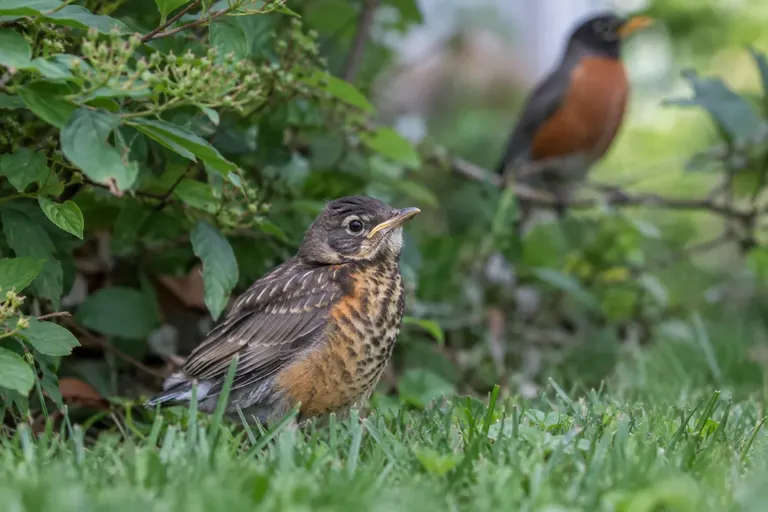
- Fledglings in summer can look scruffy and clumsy. See our guide to what to do if you found a baby bird.
The combination to watch for is fluffed feathers plus lethargy, especially when the bird does not flee as others do.
Common bird diseases seen at feeders
Salmonellosis
Salmonellosis is caused by Salmonella bacteria and spreads through fecal contamination of food and water, according to Project FeederWatch. Sick birds may look thin or fluffed up, with swollen eyelids and lethargy. Outbreaks can hit winter finch flocks such as Pine Siskins and goldfinches hard, because these birds gather in large numbers at feeders.
Platform trays and ground feeding areas, where birds stand in the food, are especially good at spreading oral-fecal diseases. Project FeederWatch suggests considering retiring tray feeders when you see these diseases.
Salmonella can also infect people and pets, so wear gloves and wash your hands after cleaning feeders.
House Finch eye disease (mycoplasmal conjunctivitis)
This disease is caused by the bacterium Mycoplasma gallisepticum, which also causes respiratory disease in poultry. Signs are red, swollen, runny or crusty eyes, and severe cases can lead to blindness, according to Project FeederWatch. The Cornell Lab notes that other small songbirds, often American Goldfinches and Purple Finches, can also be infected.
The Cornell Lab tracked this disease through a participatory science study from 1994 to 2008. Birds pass the infection to each other at places where they gather, and feeder ports are a likely route because infected eyes touch the same surfaces healthy birds use. Project FeederWatch specifically recommends disinfecting tube feeders when you see eye disease. For more on the most affected species, see our guide to attracting House Finches.
Avian pox
Avian pox is a virus with two forms, according to Project FeederWatch. The more visible form causes wart-like growths on featherless areas such as around the eyes, the base of the bill, the legs and the feet. The other form causes lesions in the mouth and throat. It spreads by direct contact between birds and through contaminated surfaces such as feeders and perches.
Trichomonosis
Trichomonosis is caused by a protozoan parasite, Trichomonas gallinae, that lives in the upper digestive tract of pigeons and doves and can cause disease in many other species. It creates lesions in the throat and esophagus, which can make swallowing difficult and eventually cause starvation. It spreads through contaminated food and water, when parents feed young and when hawks eat infected birds.
Mourning Doves are a common host at feeders. A dove or finch with a wet, matted face, drooling or regurgitated seed, or repeated failed attempts to swallow may have it. Because water can carry the parasite, bird baths should be emptied and cleaned during an outbreak. Our guide to attracting Mourning Doves covers where they feed and drink.
Aspergillosis
Aspergillosis is a fungal respiratory infection associated with moldy seed and damp debris. Birds may breathe with difficulty. Prevention is simple: keep seed dry, discard any that smells musty or looks clumped or moldy, and clean out the bottoms of tube feeders where wet seed collects. Our guide on how to store bird seed explains how to keep it dry.
Avian influenza
Project FeederWatch notes that avian influenza symptoms vary by strain, and mild forms are common in wild birds, while severe strains can have serious impacts on wild bird populations. Highly pathogenic strains have mostly been reported in waterfowl, raptors and scavenging birds rather than typical feeder songbirds, but surveillance is ongoing.
Practical steps:
- Report unusual deaths, especially of several birds at once, to your state wildlife agency.
- Do not handle sick or dead birds bare-handed.
- If you keep backyard poultry, check your state agriculture department’s current advice on feeders and wild bird contact.
West Nile virus
West Nile virus is spread by mosquitoes. Crows, jays and their relatives are especially vulnerable. The Cornell Lab recommends keeping bird baths clean so they do not become mosquito breeding sites. Change bath water every few days.
Step by step: what to do when you see a sick bird
1. Take down the right feeders
Project FeederWatch recommends removing the feeders a sick bird is using for a couple of weeks. The Cornell Lab adds that when several diseased birds appear, you should take all feeders down for at least a week to give the birds a chance to disperse. In practice, two weeks covers both recommendations.
Removing feeders does not harm the healthy birds. Wild birds get most of their food from natural sources and shift easily when a feeder disappears.
2. Clean and disinfect everything
The Cornell Lab suggests taking feeders apart and either running them through a dishwasher on a hot setting or hand washing with soap and boiling water, or with a dilute bleach solution of no more than 1 part bleach to 9 parts water.
- Wear rubber or disposable gloves.
- Empty old seed into a bag for the trash, not the compost.
- Scrub off droppings and caked seed with a brush.
- Soak in the bleach solution, or use the dishwasher if the feeder is dishwasher safe.
- Rinse thoroughly with clean water.
- Dry completely before refilling.
Our full guide on how to clean a bird feeder covers every feeder type in detail.
3. Clean the ground and the bath
Seed hulls and droppings under feeders harbor disease. Rake them up and bag them. Scrub bird baths, rinse and refill, or leave them empty during the pause. If your yard has a birdbath that sick doves or finches were using, cleaning it matters as much as cleaning the feeders.
4. Help an individual sick bird, safely
If a sick bird is sitting still and easy to approach, the Cornell Lab recommends calling a wildlife rehabilitator or veterinarian before trying to capture it. Some clinics cannot isolate contagious birds, and calling ahead lets them tell you what to do.
If they ask you to bring it in:
- Prepare a box first, lined with a cloth, with air holes.
- Wear disposable gloves.
- Gently capture the bird and place it in the box.
- Keep it dark, quiet and warm, away from pets and children.
- Do not give food, water or medicine.
- Wash your hands thoroughly afterward.
The Animal Help Now website (ahnow.org) can help you find wildlife help near you, or you can search your state name plus “wildlife rehabilitation.”
5. Report dead birds when disease is suspected
The Cornell Lab advises contacting your local health department or the USGS National Wildlife Health Center if you suspect disease is involved in bird deaths. For disease outbreak concerns, your county health department or a state game warden can also help. Only collect a bird if officials ask you to. If they do:
- Wear disposable gloves.
- Double-bag the bird in plastic.
- Record your name and contact information, the date, location, species and circumstances.
- Freeze it if you cannot deliver it right away, and if officials tell you to.
If you find a single dead bird below a window, it is more likely a collision than disease. See our guide on how to stop birds hitting windows.
6. Put feeders back, and watch
After about two weeks, put clean feeders back up with fresh, dry seed. Watch for returning signs of illness. If sick birds show up again, repeat the pause and cleaning, and consider switching from tray feeding to tube or hopper feeders.
Which feeders spread disease most?
Every feeder can spread disease if it is dirty, but design makes a difference in how germs move between birds.
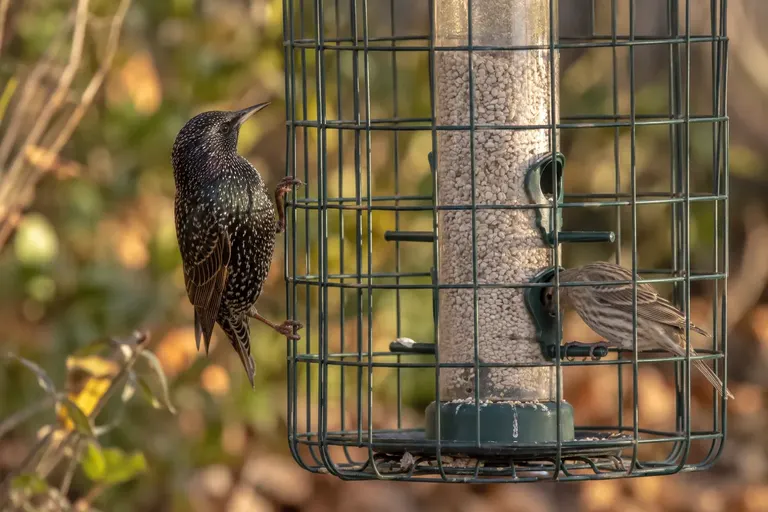
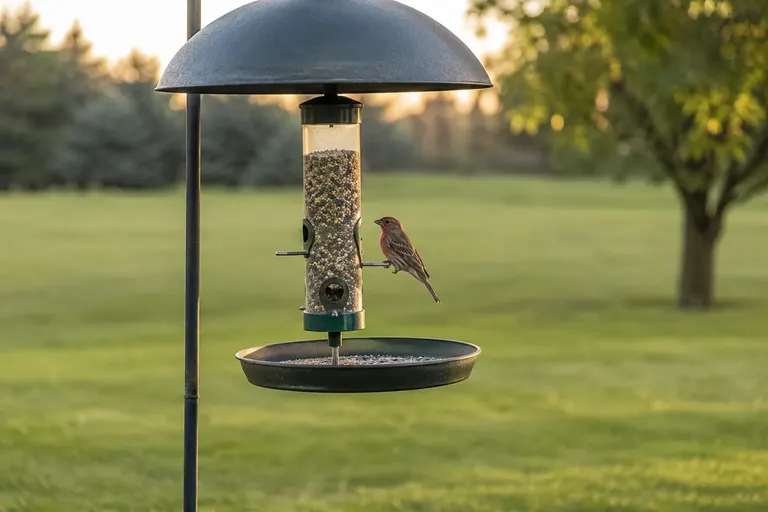
- Platform and tray feeders. Birds stand on the food and leave droppings in it. Project FeederWatch suggests considering retiring tray feeders when you see oral-fecal diseases such as salmonellosis. If you keep one, choose a model with a mesh or drainage floor and clean it often.
- Ground feeding. Scattered seed mixes with droppings and damp soil, and it cannot be disinfected. Pause it entirely during an outbreak.
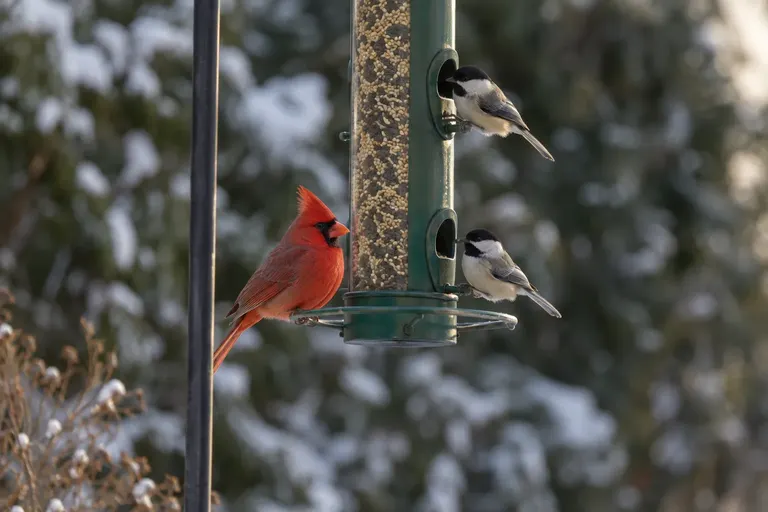
- Tube feeders. Ports and perches are shared surfaces that birds touch with their faces and eyes. That makes them a likely route for House Finch eye disease, which is why Project FeederWatch recommends disinfecting tube feeders when you see it. Wet seed can also cake in the bottom of a tube and grow mold.
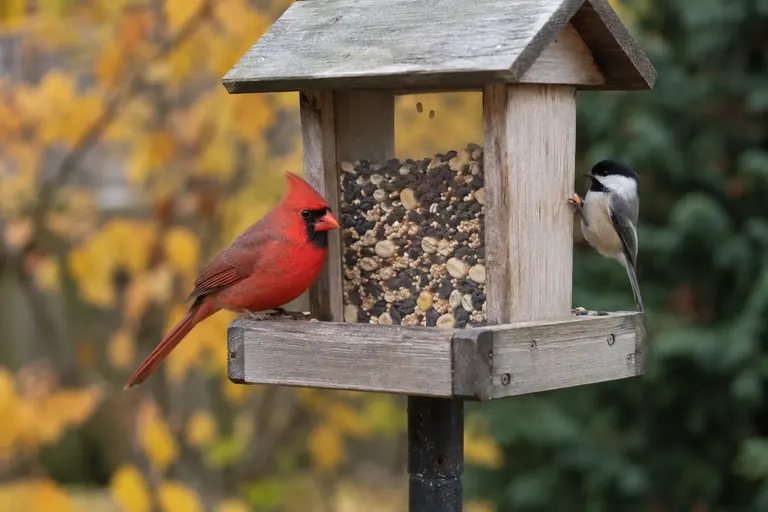
- Hopper feeders. Seed stays drier than on trays, but the ledge collects droppings and hulls. Clean the ledge and check the hopper for clumped seed.
- Suet feeders. Suet can turn rancid in heat. Replace it when it smells off or looks soft and discolored, and scrub the cage.
- Hummingbird feeders. Sugar water spoils quickly, so Project FeederWatch recommends cleaning them every couple of days, ideally at each refill.
- Bird baths. Shared water can carry parasites such as the one that causes trichomonosis, and standing water breeds mosquitoes.
The best feeders for bird health are the ones you can take apart and scrub easily. When you shop for replacements, look for tubes that come apart fully, removable bases and no hidden seams where wet seed can hide.
When is it safe to put feeders back?
After about two weeks of cleaning and pausing, you can put feeders back if you no longer see sick birds in the yard. Start with one or two clean feeders rather than all of them, keep them spread apart, and fill them with fresh, dry seed. Check them daily for a week or two. If you spot another bird with crusty eyes, growths or lethargy, take feeders down again and repeat the cleaning. Repeated outbreaks at the same station are a signal to clean more often, cut back on tray and ground feeding, and space feeders farther apart.
How to prevent disease at your feeders
Prevention is easier than dealing with an outbreak.
| Habit | Why it helps |
|---|---|
| Clean seed and suet feeders every week or two | Project FeederWatch’s recommended interval; more often in wet weather or heavy use |
| Clean hummingbird feeders every couple of days | Sugar water spoils quickly, especially in heat |
| Rake up hulls and droppings under feeders | Removes a major source of Salmonella and mold |
| Keep seed dry and fresh | Prevents mold linked to aspergillosis |
| Spread out feeders | Reduces crowding at any one feeder |
| Limit tray and ground feeding | Birds stand in the food, which spreads oral-fecal disease |
| Change bird bath water every few days | Cuts mosquito breeding and waterborne parasites |
| Use feeders that are easy to take apart | If you can’t clean it, you won’t |
Crowding matters. A single overloaded feeder with dozens of finches jostling for ports is a better disease spreader than several feeders spread across the yard. For placement guidance, see where to put a bird feeder.
How to protect yourself and your pets
Most bird diseases pose little risk to people with basic hygiene, but a few precautions make sense:
- Wear gloves when cleaning feeders, baths and the ground underneath.
- Wash your hands with soap and water afterward.
- Clean feeders outside, or in a utility sink, not where you prepare food.
- Keep children and pets away from sick or dead birds.
- Keep cats indoors. Sick birds are easy prey, and cats can pick up infections from them.
Common mistakes
- Leaving feeders up “because the birds need food.” During an outbreak, feeders spread disease faster than they help.
- Adding medicine to water or seed. It cannot dose birds properly and can harm healthy ones. Leave treatment to rehabilitators.
- Cleaning feeders but not the ground. Seed and droppings underneath keep spreading germs.
- Forgetting the bird bath. Water spreads trichomonosis and other pathogens.
- Bringing a sick bird indoors without calling first. Get guidance from a rehabilitator before you capture a bird.
- Touching dead birds bare-handed. Always use gloves, and report clusters.
- Putting feeders back too soon. Give birds about two weeks to disperse.
Sources
- Sick Birds and Bird Diseases (Project FeederWatch)
- Feeding Birds FAQs (Project FeederWatch)
- What do I do if I find a sick, injured, or dead bird? (Cornell Lab, All About Birds)
- I’ve seen a sick House Finch with red, swollen, or weepy eyes (Cornell Lab, All About Birds)
- USGS National Wildlife Health Center
- Animal Help Now: wildlife emergency locator
Frequently asked questions
What does a sick bird at a feeder look like?
Sick birds often look fluffed up and lethargic, stay at the feeder when other birds fly off, and let people approach closely. Specific signs include red, swollen or crusty eyes (House Finch eye disease), wart-like growths on the face or feet (avian pox), and a wet or matted face with trouble swallowing (trichomonosis). Any of these is a reason to take feeders down.
How long should I take my bird feeders down if I see a sick bird?
Project FeederWatch recommends removing the feeders a sick bird is using for a couple of weeks, and the Cornell Lab says to take all feeders down for at least a week when several sick birds appear. Many people use two weeks. Clean and disinfect everything before you put feeders back, and watch for returning signs.
Can I catch a disease from birds at my feeder?
Some bird diseases can infect people, most notably Salmonella, which spreads through droppings. The risk is low with basic hygiene. Wear gloves when cleaning feeders and bird baths, wash your hands well afterward, clean feeders outside rather than in the kitchen sink, and keep pets and children away from sick or dead birds.
Should I try to treat a sick wild bird?
No. Project FeederWatch advises against trying to treat wild birds yourself, and adding medicine to water or seed can harm healthy birds. Licensed wildlife rehabilitators can diagnose and treat sick birds. Call one before trying to capture a bird, since some facilities cannot isolate contagious birds and will advise you on what to do.
Who do I report dead birds to?
If you find several dead birds or suspect disease, contact your state wildlife agency, local health department or the USGS National Wildlife Health Center, as the Cornell Lab advises. If they ask you to collect a bird, wear disposable gloves, double-bag it, and record the date, location, species and circumstances.