Do Birds Reuse Nests?
Do birds reuse nests? Most songbirds build a fresh nest for every brood, but eagles, ospreys, swallows, phoebes and cavity nesters often reuse old sites.
In this article
- Quick answer: which birds reuse nests?
- Why don’t most birds reuse their nests?
- Which birds do reuse their nests, and why?
- Do birds return to the same place even if they build a new nest?
- Do birds reuse nests within the same season?
- Myths vs facts about nest reuse
- What happens to old nests?
- What does this mean for backyard birders?
- Quick facts
- Sources
- Frequently asked questions
Most birds do not reuse their nests. The majority of songbirds, from robins to cardinals to goldfinches, build a brand-new nest for every nesting attempt, often even for a second brood in the same summer. A smaller but important group does reuse nests: eagles, ospreys, storks, many swallows and phoebes, and cavity nesters such as bluebirds, chickadees and titmice return to old sites and repair or add to them. One famous Florida Bald Eagle nest was reported at roughly 9.5 feet wide and 20 feet deep.
The difference comes down to cost and risk. A flimsy grass cup is cheap to replace, and an old one is often flattened, dirty and full of parasites. A massive stick platform, a mud nest built from hundreds of beakfuls, or a safe tree cavity is expensive to replace, so reusing it pays off.
Quick answer: which birds reuse nests?
| Group | Reuse nests? | Typical pattern |
|---|---|---|
| Small open-cup songbirds (cardinals, goldfinches, sparrows, warblers) | Rarely | New nest for each brood |
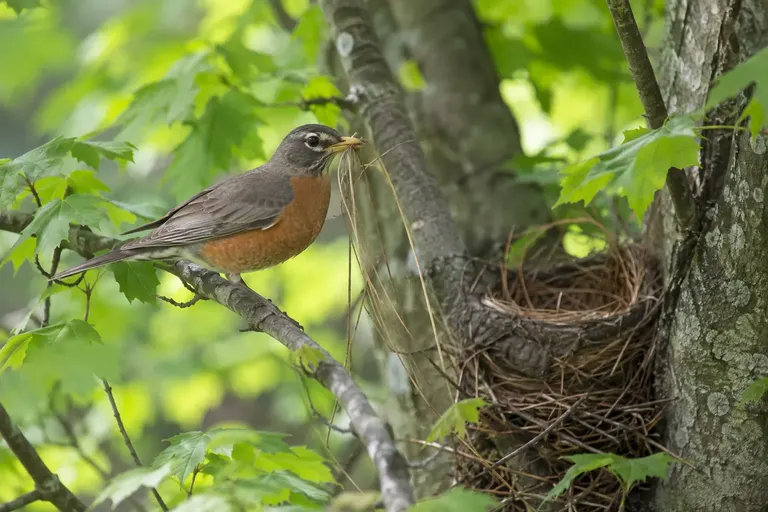
| American Robin | Sometimes | Usually builds anew, occasionally on top of an old nest |
| Barn Swallow, Eastern Phoebe | Often | Repair and reline old mud nests |
| Bald Eagle, Osprey, White Stork | Very often | Add material to the same nest for years |
| Woodpeckers | Usually not | Most excavate a fresh cavity each year |
| Bluebirds, chickadees, titmice, wrens, tits | Reuse the site | Build a new nest inside an old cavity or box |
| Great Horned Owl, many falcons | Borrow | Use nests built by other species, or bare ledges |
| Mourning Dove | Sometimes | May reuse its own flimsy nest or another bird’s |
Why don’t most birds reuse their nests?
For a typical songbird, a nest is a single-use tool. It needs to hold eggs and chicks for roughly four weeks, and by the end of that time it is usually worn out. Several pressures make building fresh the better strategy.
Parasites build up in old nests
A used nest is a nursery for more than birds. Mites, fleas, lice and the larvae of blowflies (genus Protocalliphora in North America) live in nest material and feed on nestlings’ blood. Their numbers can build across a nesting attempt. Starting again with clean material means the next brood begins with fewer pests. This is widely considered one of the main reasons small birds do not move back into last month’s nest.
Old nests are damaged and dirty
By the time a brood fledges, a cup nest has been stretched by growing bodies, trampled and soaked by rain. Parents of many songbirds carry away droppings in neat packets called fecal sacs, but nests still get soiled toward the end. A nest that has lost its shape insulates eggs less well and may not hold together for another month.
Predators may know where it is
Nest predators such as jays, crows, snakes, raccoons and squirrels search areas where they found food before. A nest that has already been used has had weeks of parents flying in and out and chicks begging loudly. Moving to a new spot, even a few yards away, may reduce the chance that a predator that learned the location comes back. The strength of this effect likely varies by species and habitat, but the logic is well supported in studies of nest-site choice.
Building is relatively cheap for small birds
A small cup nest can often be finished in a few days. For a pair that may nest two or three times a summer, that cost is modest compared with the potential cost of parasites or predation. You can read more about how different species put their nests together in how do birds build nests.
Which birds do reuse their nests, and why?
Reuse makes sense when a nest or site is costly to build, hard to find, or unusually safe. Several very different groups fit that description.
Eagles, ospreys and storks: the heavy builders
Bald Eagles are the classic example. A pair often returns to the same nest year after year, adding sticks, grass and soft lining each season. Because material is added annually, eagle nests can become enormous. The Cornell Lab of Ornithology describes typical Bald Eagle nests as several feet across, and one famous Florida nest was reported at roughly 9.5 feet wide and 20 feet deep. Some pairs maintain more than one nest in their territory and switch between them.
Ospreys behave similarly, returning to the same platform, dead snag, channel marker or utility pole and rebuilding on top of last year’s structure. This is why nest platforms for Ospreys are so successful: once a pair claims one, they may use it for many years.
In Europe, White Storks are famous for returning to the same rooftop, chimney or church tower nests. Some stork nests are known to have been used over many decades, and they can grow very large and heavy as generations of storks add material. Storks that migrate thousands of miles to Africa and back still find their way to the same village roof.
Swallows and phoebes: mud nests worth keeping
Barn Swallows build cups from mud pellets, carried a beakful at a time and stuck to a beam or wall. Eastern Phoebes build mud and moss nests on ledges under bridges, eaves and porches. Because these nests take so many trips to build, both species often repair and reline an old nest rather than start over. A phoebe may even reuse the same nest for a second brood in a single season, and nests under the same porch can be used across several years.
Cliff Swallows, which nest in colonies of gourd-shaped mud nests under bridges and cliffs, also reuse old nests. Research on Cliff Swallows in Nebraska found that old nests could carry heavy loads of swallow bugs, a blood-feeding parasite, so colonies face a tradeoff between saving building effort and inheriting parasites. That tradeoff runs through the whole question of nest reuse.
Cavity nesters: reusing the hole, not the nest
Woodpeckers are primary cavity excavators. Most species dig a fresh hole each year, which takes considerable time and effort. Their old holes do not go to waste: they become homes for secondary cavity nesters that cannot excavate hard wood themselves.
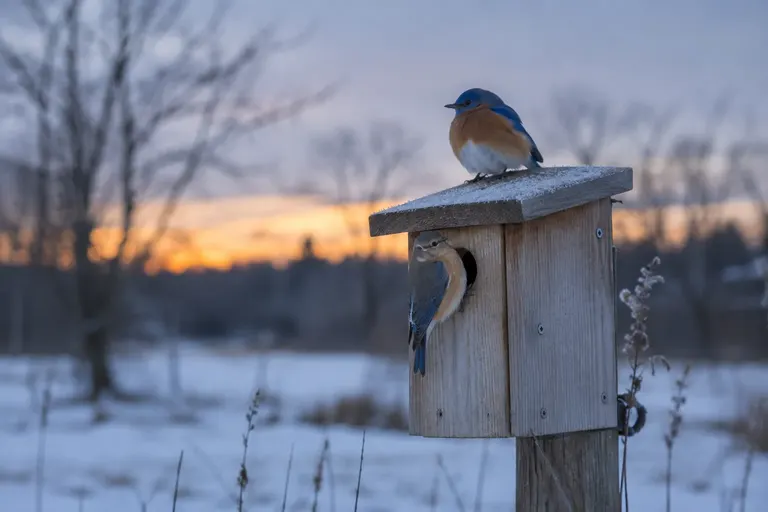
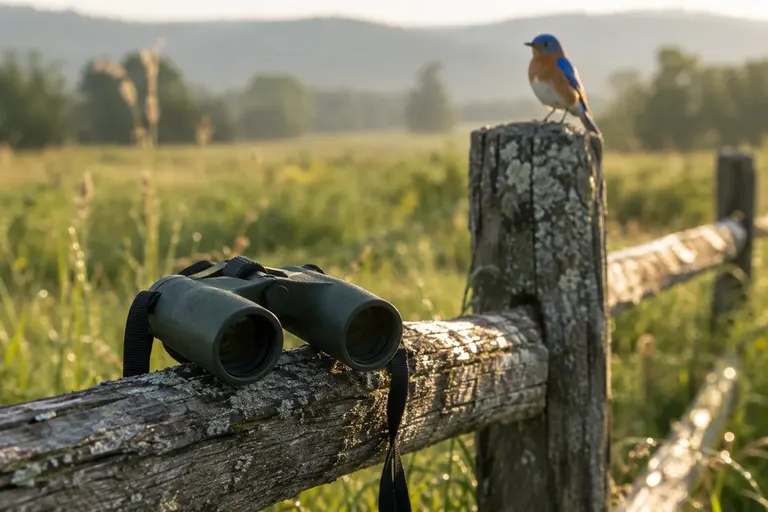
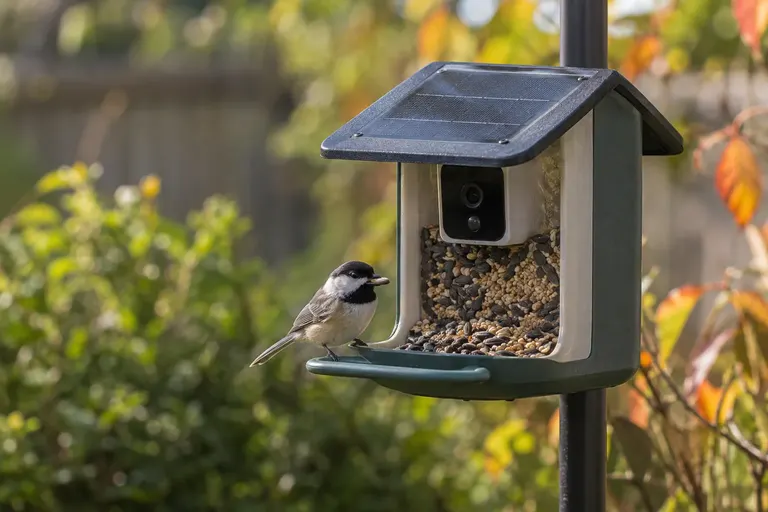
That second group includes Eastern and Western Bluebirds, Tree Swallows, chickadees, titmice, nuthatches, House Wrens, and in Europe, Great Tits, Blue Tits and Pied Flycatchers. These birds reuse the cavity or nest box, but usually bring in fresh nest material. A bluebird raising a second brood in the same box will typically build a new nest, sometimes directly on top of the old one. That can raise the nest close to the entrance hole, which is one reason nest box monitors often remove the first nest once the chicks fledge.
If you host cavity nesters, see how to clean out a birdhouse and birdhouse hole sizes by species.
Borrowers: owls, falcons and doves
Some birds reuse nests that another species built. Great Horned Owls do not build their own nests. They typically take over old nests of Red-tailed Hawks, crows, ravens or herons, or use squirrel dreys, tree cavities and cliff ledges. Great Horned Owls start nesting very early, often in midwinter, so a hawk nest from last year is usually available.
Falcons such as Peregrine Falcons and American Kestrels do not build stick nests at all. Peregrines make a simple scrape on a cliff ledge or building, and a good ledge may be used by successive pairs for many years. Kestrels nest in cavities and boxes. Merlins in many areas use old crow or magpie nests.
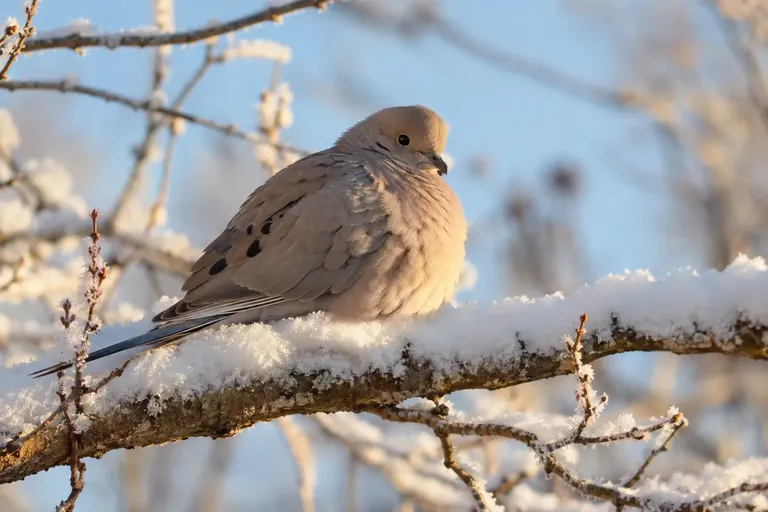
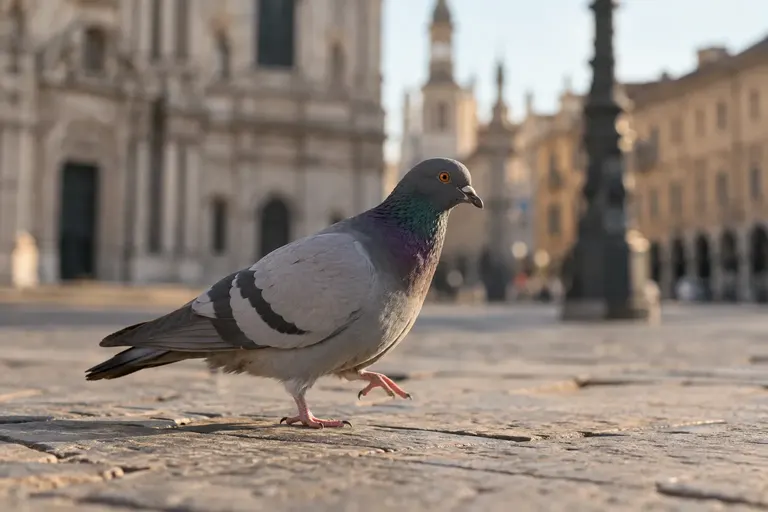
Mourning Doves build famously flimsy platforms of twigs. They sometimes reuse their own nests for later broods and sometimes lay on an old robin or grackle nest. Rock Pigeons often reuse the same nest site repeatedly, with the nest growing thicker as droppings and material accumulate.
Colonial builders: nests that last generations
The Sociable Weaver of southern Africa builds some of the largest bird structures on Earth: communal thatched nests that fill the crown of a tree, with many separate chambers used by dozens of birds. These structures are maintained and reused continuously, and some are thought to persist for many decades. They also shelter the birds from the Kalahari’s heat by day and cold by night.
Do birds return to the same place even if they build a new nest?
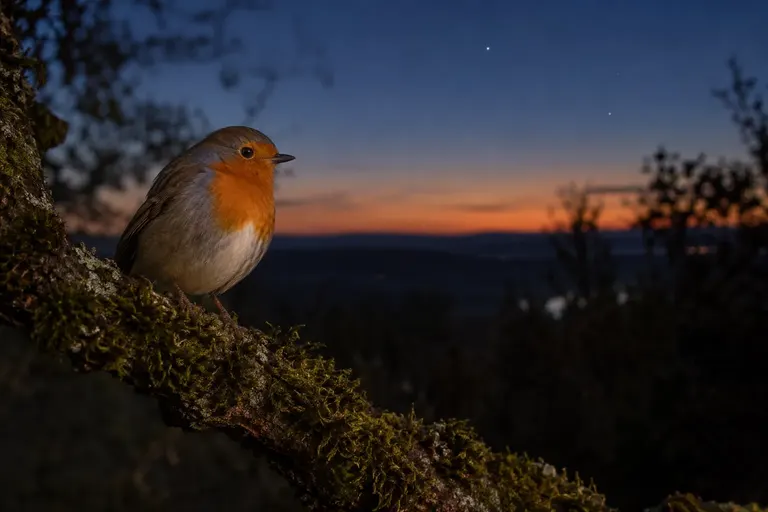
Yes, very often. Returning to the same territory is called site fidelity, and it is common in migratory and resident birds alike. A robin may nest in the same spruce each spring while building a fresh nest each time. A House Wren may come back to the same yard and pick a different box. Many long-distance migrants, including Barn Swallows and Baltimore Orioles, have been shown through banding to return to the same area year after year.
Site fidelity makes sense because a bird that nested successfully in a spot has good evidence that the spot works: enough food, suitable cover and tolerable predator pressure. Birds that fail often move farther for their next attempt. This return is sometimes mistaken for nest reuse, especially when a new nest appears right next to last year’s.
Pairs returning to the same place can also look like pairs that mated for life, but the two are separate questions. See do birds mate for life for how pair bonds actually work.
Do birds reuse nests within the same season?
This varies more than year-to-year reuse. Species that raise multiple broods each summer handle it differently.
- American Robins usually build a new nest for each brood, often in a different tree or on a different part of the same structure. Occasionally a robin reuses or builds on an existing nest.
- Eastern Bluebirds often raise a second brood in the same box but build a new nest inside it.
- Barn Swallows and Eastern Phoebes commonly reuse the same nest for a second brood after relining it.
- House Finches often build a new nest, though they may nest in the same hanging planter or wreath repeatedly.
- Mourning Doves may reuse the same flimsy platform several times in a season.
- Northern Cardinals typically build a new nest for each attempt, and males may help gather material while females do most of the construction.
If you watch a pair through a season, you will often see a new nest go up within days of the first brood fledging, while the male continues to feed the fledglings from the first nest.
Myths vs facts about nest reuse
Myth: Birds live in their nests all year. Fact: For most species, a nest is a place to lay eggs and raise young, not a home. Once the young leave, the adults and fledglings sleep perched in dense foliage or in cavities. See do birds sleep in nests for the details.
Myth: Leaving old nests up will attract the same birds back. Fact: For most open-cup songbirds, an old nest has little pull. They are more likely returning to the habitat. For cavity nesters, the value is in the box or hole, not the old material inside.
Myth: An empty nest in fall means the birds were driven off. Fact: Almost every nest you find in autumn has simply finished its job. Deciduous trees drop their leaves and reveal nests that were there all summer.
Myth: You must leave old nests in birdhouses because birds prefer them. Fact: Evidence is mixed. Experiments with nest boxes have found that some species show little preference, some avoid boxes with old material, and some appear to use them. Most nest box programs in North America and Europe recommend cleaning boxes after the season, mainly to reduce parasites and keep the box usable.
What happens to old nests?
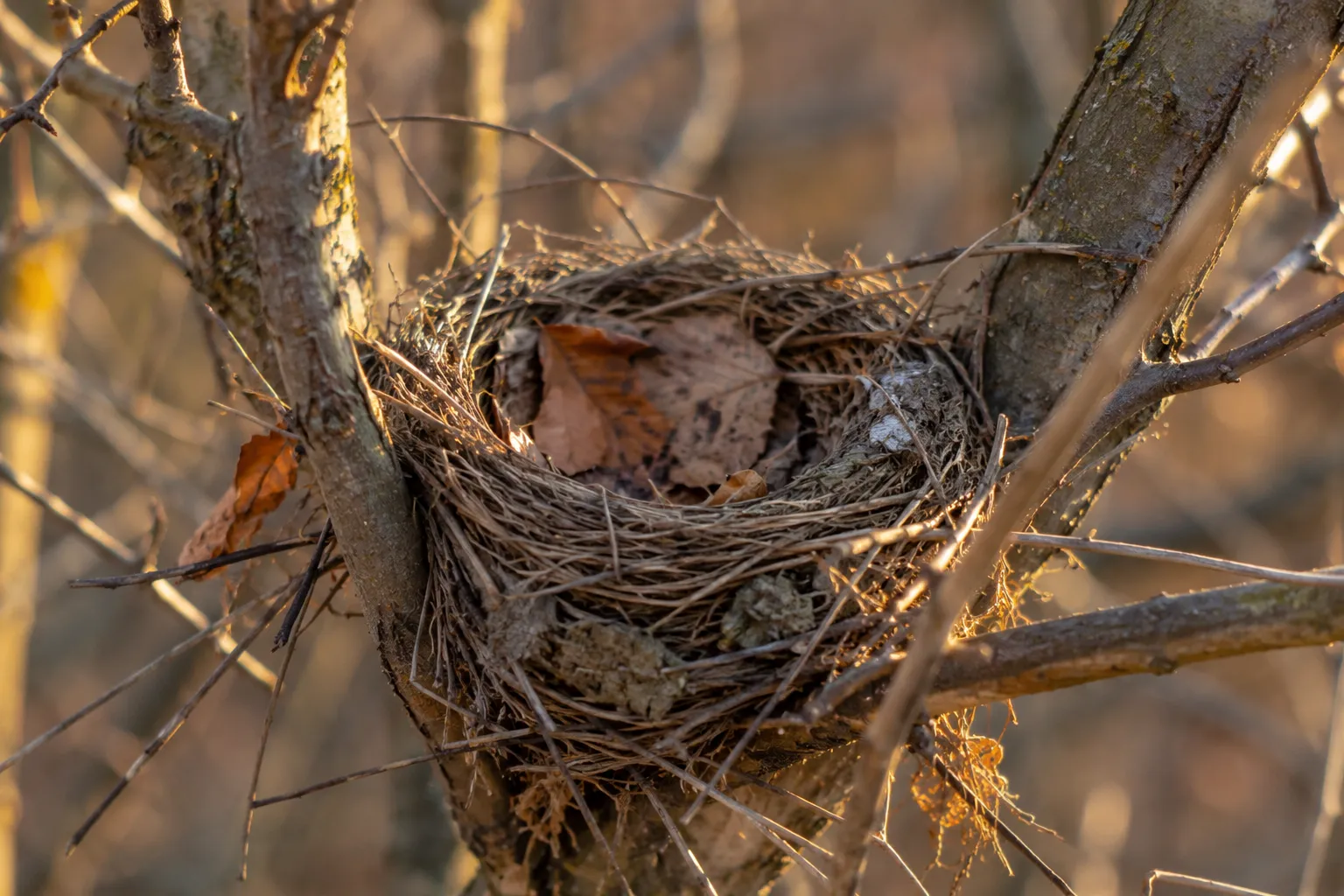
Abandoned nests do not simply sit empty. White-footed mice and deer mice in North America sometimes roof over old cup nests and use them as winter shelters. Insects and spiders overwinter in the material. Some birds pull material from old nests, including other species’ nests, to build their own. Weather gradually breaks down grass and moss nests, and most small cups are gone within a year.
Large stick nests can persist far longer. Old hawk and crow nests become future owl nests. Woodpecker cavities can be used by a series of different species over many years, and some woodland ecologists describe woodpeckers as “ecosystem engineers” for this reason.
What does this mean for backyard birders?
Knowing which birds reuse nests helps you make better decisions in your yard.
Clean nest boxes, leave natural nests alone
For nest boxes, most monitoring programs recommend removing the old nest after young have fledged or at the end of the season. Wear gloves, check that the nest is truly inactive, and dispose of the material away from the box. Our guide on when to put up birdhouses covers timing if you are adding new boxes.
For natural nests in shrubs and trees, there is usually no need to do anything. They will break down on their own.
Know the law before you remove anything
In the United States, the Migratory Bird Treaty Act protects nearly all native birds, their eggs and their active nests. Removing or destroying an active nest is illegal. An inactive, empty nest can generally be removed, but possessing nests or eggs as collectibles is not allowed without a permit. The UK, the European Union, Brazil and Turkey all have their own wildlife laws protecting nesting birds, so check local rules before disturbing any nest.
The usual exceptions in US law are non-native species such as House Sparrows, European Starlings and Rock Pigeons, which are not covered by the act. State and local laws may still apply.
Plan for returning builders
If Barn Swallows or phoebes nest on your porch, expect them back. You can place a small board beneath the nest to catch droppings rather than removing the nest after the season. If an Osprey or eagle nests on your property, local wildlife agencies can advise on buffers and seasonal restrictions.
Give robins and phoebes a ledge
Robins and phoebes happily use simple nesting shelves under eaves or on sheds. Because phoebes reuse nests, a well-placed shelf can host them for years. Learn more about robin nesting habits on our American Robin guide.
Quick facts
- Most songbirds build a new nest for every brood.
- Nest reuse is most common where nests are expensive to build (eagles, ospreys, storks, swallows) or cavities are scarce (bluebirds, chickadees, tits).
- Parasites such as mites, fleas and blowfly larvae are a leading reason birds avoid old nests.
- Returning to the same territory is far more common than reusing the same nest.
- Great Horned Owls and many falcons do not build nests; they borrow old ones or use bare ledges.
- In the United States, active nests of native birds are protected by federal law.
Sources
Frequently asked questions
Do robins reuse their nests?
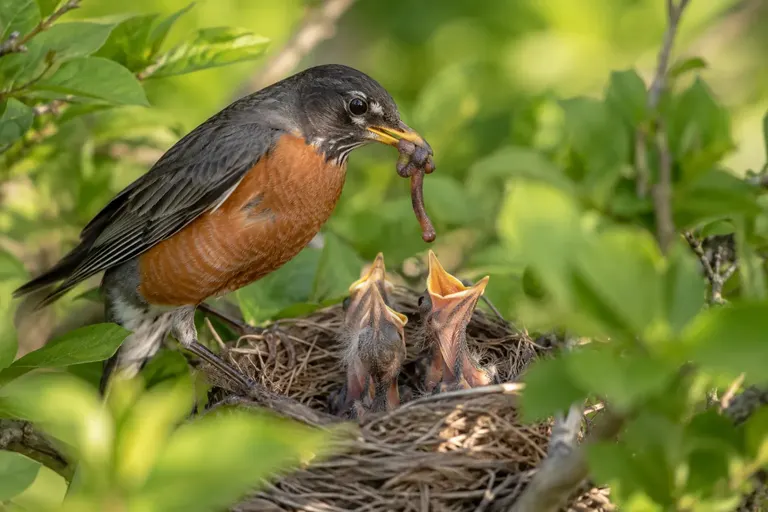
American Robins usually build a new nest for each brood, even within the same summer, although the new nest is often close to the old one. Occasionally a robin builds on top of an old nest or repairs it. Because robins raise two or three broods a year in many areas, you may see several nests in the same yard or even on the same ledge.
Should I remove an old nest from my birdhouse?
Most nest box programs, including the Cornell Lab's NestWatch, recommend cleaning out boxes once the young have fledged or after the breeding season ends. Old material can harbor mites, fleas and blowfly larvae, and a full box leaves little room for a new nest. Never remove a nest that still holds eggs or young.
Is it legal to remove an old bird nest?
In the United States, the Migratory Bird Treaty Act protects native birds, their eggs and their active nests. Removing or destroying an active nest is illegal. An empty, inactive nest can generally be removed, for example from a nest box, but keeping nests as collectibles is not allowed without a permit. Other countries have similar protections.
Do birds come back to the same nest every year?
Many birds return to the same territory or nest site year after year, but that is not the same as reusing the nest itself. Bald Eagles, Ospreys, White Storks, Barn Swallows and Eastern Phoebes often reuse and repair the actual structure. Most small songbirds return to the area and then build a new nest.
Do birds sleep in their old nests in winter?
Rarely. Songbirds use nests for eggs and young, not as beds, and most open cup nests are abandoned once the chicks fledge. Some cavity nesters, such as bluebirds, chickadees and woodpeckers, do roost in tree holes or nest boxes on cold nights, which is one reason to leave clean boxes up through winter.