How Do Birds Build Nests?
How do birds build nests? With only a beak and feet, birds weave, glue with mud, spider silk or saliva, and shape the cup with their bodies. Here is how.
In this article
- Quick answer: the main types of bird nests
- What tools do birds use to build nests?
- How does a songbird build a cup nest, step by step?
- What materials do birds use?
- How do hummingbirds build such tiny nests?
- How do orioles and weavers weave nests?
- How do birds build with mud?
- How do woodpeckers build nests?
- What about cavity nesters that cannot dig?
- Do birds know how to build nests by instinct?
- How do birds choose where to build?
- How long does nest building take?
- What about birds that barely build at all?
- Common mistakes backyard birders make with nesting birds
- How can you help birds build nests?
- Quick facts
- Sources
- Frequently asked questions
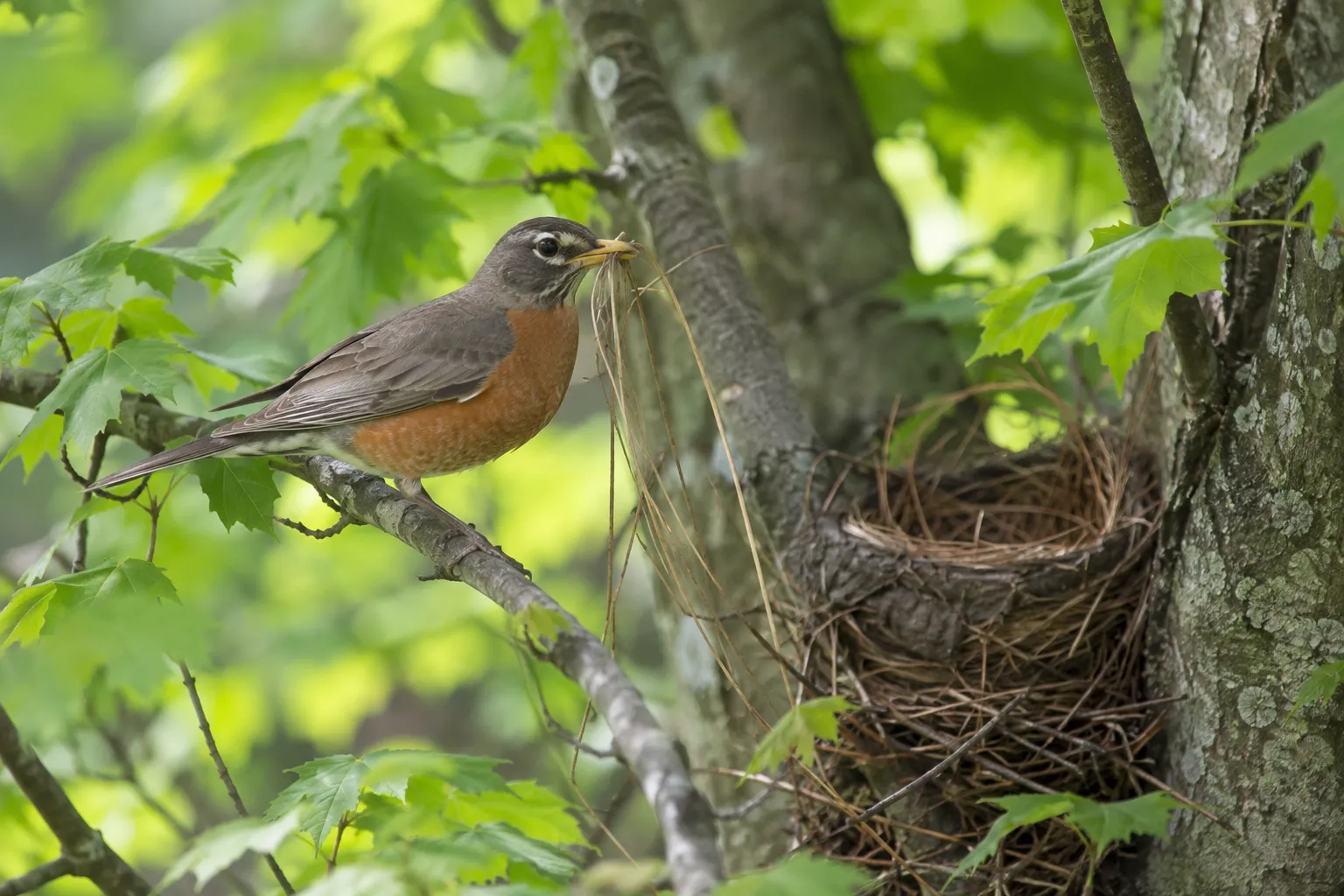
How do birds build nests? Using only their beaks, feet and bodies. They gather materials one load at a time, then weave, tuck, press or glue them into place, and many species finish the inside by sitting in the nest and turning, pushing outward with their breast and feet to mold a snug cup. The glue varies by species: mud for swallows, spider silk for hummingbirds, sticky saliva for swifts.
There is no single way birds build. Some dig tunnels, some carve holes in trees, some tie knots, and some lay eggs on a bare ledge with no nest at all. Each style reflects the bird’s size, habitat and predators.
Quick answer: the main types of bird nests
| Nest type | How it is made | Examples |
|---|---|---|
| Scrape | Shallow hollow pressed into ground or gravel | Killdeer, terns, many falcons |
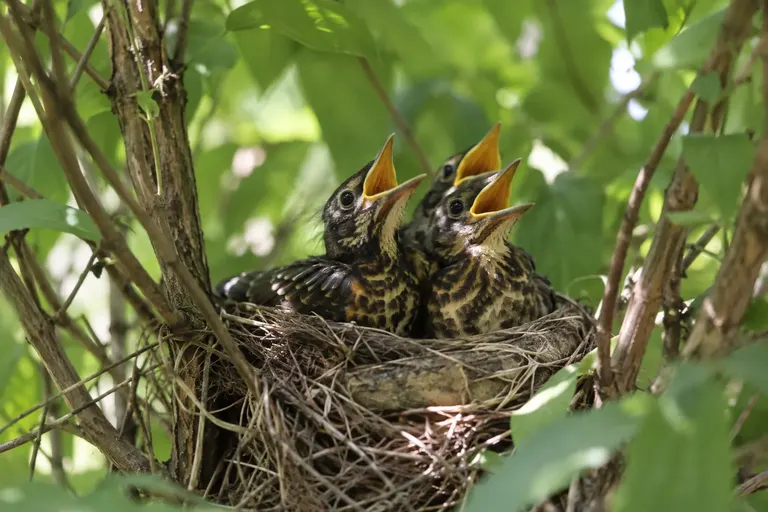
| Cup | Materials woven or pressed into a bowl | American Robin, Northern Cardinal, finches |
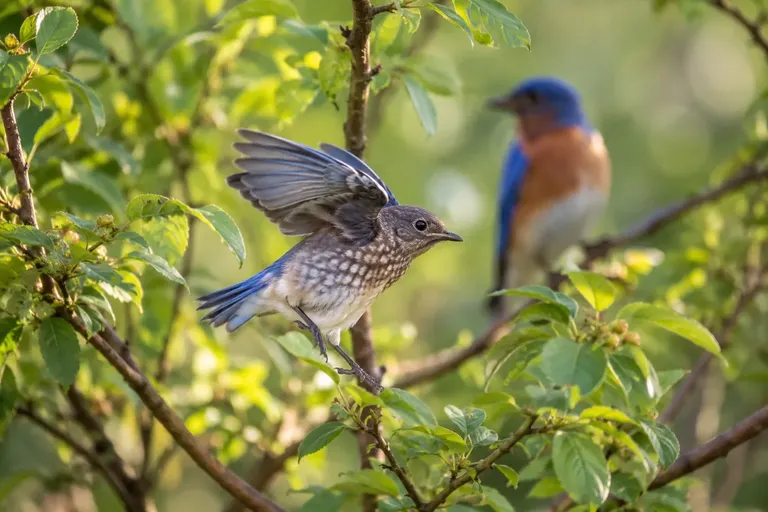
| Cavity | Hole excavated in wood, or an existing hole | Woodpeckers (excavate), bluebirds, chickadees, tits |
| Platform | Loose stack of sticks | Bald Eagle, herons, Mourning Dove |
| Pendant or pouch | Fibers woven into a hanging bag | Baltimore Oriole, weavers |
| Mud | Pellets of wet mud stuck to a surface | Barn Swallow, Eastern Phoebe, Rufous Hornero |
| Burrow | Tunnel dug into soil or bank | Belted Kingfisher, Bank Swallow, puffins, bee-eaters |
| Mound | Heap of decaying vegetation or sand that heats eggs | Australian Brush-turkey, Malleefowl |
| Floating | Raft of wet plants anchored in water | Grebes |
| Saliva | Twigs glued with saliva, or nests made of saliva | Chimney Swift, swiftlets |
What tools do birds use to build nests?
A bird has no hands, so its beak does most of the work. The beak picks up material, carries it, pokes it into the structure, pulls strands through gaps and, in weavers, ties knots. Feet hold material down, scratch out hollows and, in cavity excavators, brace the body against the tree while the bill chisels.
The body is a tool too. Once the outer frame is in place, many songbirds climb in, crouch and rotate, pressing their breast against the walls and kicking backward with their feet. Repeated many times, this motion shapes a round cup that fits the bird’s body. The inside diameter of a songbird’s cup nest often closely matches the size of the bird that built it, because the bird was the mold.
How does a songbird build a cup nest, step by step?
Details differ between species, but the American Robin shows the general sequence well. The female does most of the building.
- Choosing the site. The female tests possible spots, often a fork in a tree, a dense shrub or a ledge on a building. She may sit in a spot briefly before committing.
- Laying the foundation. She brings coarse material such as dead grass, twigs and sometimes paper or string, forming a loose base.
- Building the walls. More grass is added and worked into the base, rising into a rim.
- Adding mud. Robins carry mud (or, in a dry spell, mud-soaked vegetation) and plaster the inside of the cup. This is the step that makes a robin nest so sturdy.
- Molding the cup. She sits in the wet cup and turns, pressing it into shape with her breast.
- Lining it. Finally she lines the hardened cup with fine, soft grasses, which cushion and insulate the eggs.
The Cornell Lab of Ornithology notes that robins may build a new nest for each brood. Our American Robin guide covers the rest of their nesting season, and do birds reuse nests explains why so many birds start fresh.
What materials do birds use?
Almost anything small, light and workable. The list below covers the most common categories.
- Structural materials: twigs, sticks, grass stems, weed stalks, strips of bark, roots and pine needles.
- Binding materials: mud, spider silk, caterpillar silk, saliva and sticky plant fibers.
- Lining materials: feathers, fur, hair, plant down (from cattails, thistles, willows and dandelions), moss and fine grasses.
- Camouflage: lichen flakes, bark bits and moss stuck to the outside.
- Unusual extras: Great Crested Flycatchers are well known for often weaving shed snake skin into their nests. Many birds use human materials such as string, plastic and paper.
Why do some birds add green herbs to their nests?
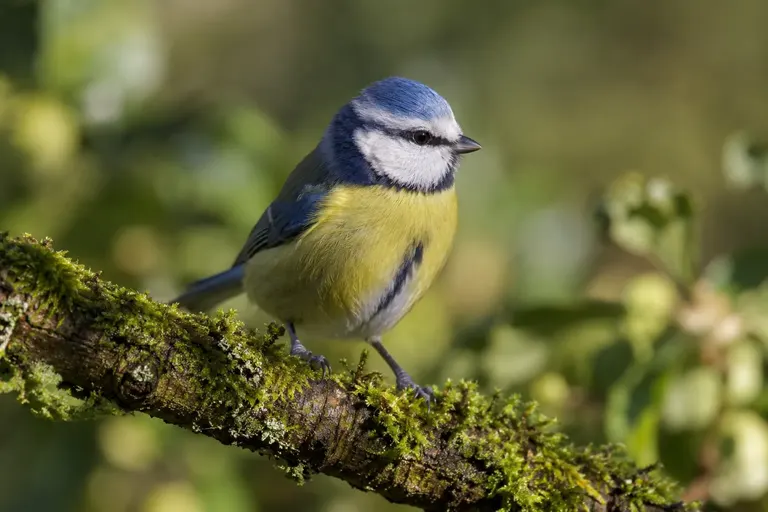
European Starlings and Blue Tits have been observed adding fresh aromatic plants, such as yarrow, lavender or mint, to their nests during the nesting period. Researchers have proposed that the compounds in these plants may reduce parasites or bacteria, or help nestlings in other ways. Studies have found some supporting evidence, including work on Blue Tits in Corsica, but the full explanation is still debated. It is a good example of how nest material choice can be more than structural.
How do hummingbirds build such tiny nests?
The female Ruby-throated Hummingbird builds alone. Her nest is about the size of a large thimble or half a walnut shell. She starts with soft plant down, often from thistles or dandelions, and binds it together and to a small branch with strands of spider silk. She then decorates the outside with flakes of lichen, which help the nest blend into the bark.
Spider silk is the key material. It is sticky and stretchy, so the nest can expand as the two chicks grow. Many small birds, from gnatcatchers to kinglets and Long-tailed Tits in Europe, rely on spider silk the same way. See our Ruby-throated Hummingbird guide for more on their breeding season.
How do orioles and weavers weave nests?
Baltimore Orioles build a hanging pouch from long plant fibers, grass, grapevine bark and sometimes hair or string. The female anchors fibers to the tips of drooping branches, then pokes and pulls strands back and forth with her bill, creating a loose weave that tightens into a deep bag. The entrance is at the top, and the eggs sit at the bottom, out of reach of many predators. Our Baltimore Oriole guide has more.
Weavers of Africa and Asia take this further. In many species the male does the building. Village Weaver males strip long strands from grass or palm leaves, loop them around a twig and tie them in place using movements that function much like knots. They then weave a ring, extend it into a roofed chamber with a downward-facing entrance, and display beneath it to passing females. If a female rejects a nest, the male may tear it down and start again. Studies on weavers dating back to the mid-20th century suggested that young males build messier nests and improve with practice.
The Sociable Weaver of southern Africa builds colonially. Many birds work on one huge thatched structure with separate chambers, which can fill the crown of a tree and last for many years.
How do birds build with mud?
Mud builders collect wet soil in their bills, often at puddle edges, and stick pellets onto a wall, beam or rock face. Each pellet must dry partly before the next layer can bear weight, so mud nests are built in stages.
- Barn Swallows mix mud pellets with grass stems for strength, forming an open cup against a beam or wall, and line it with feathers.
- Cliff Swallows build enclosed, gourd-shaped mud nests with a tunnel entrance, packed side by side in colonies under bridges and cliffs.
- Eastern Phoebes combine mud with moss and grass on sheltered ledges.
- Rufous Horneros, common across much of South America including southern Brazil and Argentina, build large mud “ovens” with a curved entrance chamber on posts and branches. The name hornero comes from the Spanish word for baker, because the nest resembles a clay oven.
A dry spring can delay mud builders. Keeping a patch of damp soil in your yard can help, and many backyard birders see swallows and robins using it within days.
How do woodpeckers build nests?
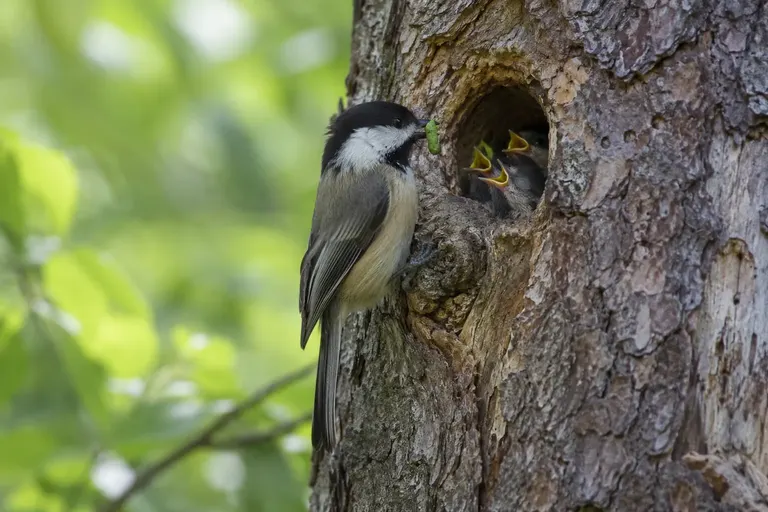
Woodpeckers excavate. Both members of a pair typically take turns chiseling a round entrance hole into a dead or decaying trunk or limb, then digging downward to form a chamber. They do not bring in soft lining. Instead, they leave a bed of wood chips at the bottom for the eggs. Excavation can take one to several weeks depending on the species and the wood.
Softened, fungus-infected wood is easier to dig, and woodpeckers are thought to detect such wood when choosing a site. For the mechanics of all that drumming and chiseling, see why do woodpeckers peck wood.
Chickadees can also excavate their own holes in very soft, rotten wood, although they often use existing cavities. Once a cavity is ready, they build a nest of moss and soft fur inside it.
What about cavity nesters that cannot dig?
Bluebirds, House Wrens, Tree Swallows, titmice and, in Europe, Great Tits and Blue Tits depend on existing holes or nest boxes. Inside the cavity they build a nest of grasses, pine needles, moss, fur or feathers, depending on the species.
House Wrens have an unusual system. The male fills several cavities with small twigs, sometimes in more than one nest box. The female then inspects these starter nests, chooses one and adds a soft cup lining. Males may also fill empty boxes with sticks, which can prevent other birds using them. More on this in our House Wren guide.
Do birds know how to build nests by instinct?
Partly. Nest type is strongly tied to species. A robin builds a robin nest and an oriole builds an oriole nest, even if it grew up in a nest box or was hand-raised. That tells us a large part of the behavior is inherited.
But learning matters more than scientists once assumed. Research led by Susan Healy and colleagues, much of it on Zebra Finches, has shown that birds:
- prefer materials they have handled before or that worked well in the past,
- change their choice of material based on experience of nest success,
- can copy material choices from other birds they watch, and
- become more efficient builders with practice.
Nest building is therefore best described as an inherited plan that each bird refines through experience. That is one reason a young bird’s first nest is sometimes rougher than later ones.
How do birds choose where to build?
Site choice may matter as much as construction. A beautifully built nest in the wrong place is quickly found by a jay, snake or raccoon. Birds weigh several factors when picking a spot.
- Concealment. Cardinals, catbirds and many sparrows tuck nests deep in dense shrubs or tangles where predators struggle to see or reach them.
- Height and access. Orioles hang nests from thin outer twigs that squirrels and climbing snakes have trouble reaching. Ground nesters rely on camouflage instead.
- Shelter from weather. Phoebes and swallows choose spots under overhangs that keep rain off mud nests, which would otherwise soften.
- Nearby food. Parents make hundreds of feeding trips a day at the height of the nestling period, so a site close to good foraging saves energy.
- Past experience. Birds that nested successfully in an area tend to return, while those that lost a nest often move farther away.
In many species the female makes the final decision, sometimes after the male has shown her several candidate sites. Watching a pair visit spot after spot in early spring is one of the easier nesting behaviors to observe from a window.
How long does nest building take?
Timing varies widely.
| Bird | Approximate building time |
|---|---|
| Many small cup-nesting songbirds | A few days to about a week |
| Hummingbirds | About a week, sometimes longer |
| Woodpeckers (excavation) | One to several weeks |
| Barn Swallows | Can take a week or two, less when repairing an old nest |
| Eagles and Ospreys | Weeks for a new nest; added to every year |
Weather, material supply and experience all affect building speed. A pair that loses a nest to a predator often builds the replacement faster.
What about birds that barely build at all?
Several successful birds use minimal or no nests.
- Killdeer lay eggs in a shallow scrape on gravel, sometimes decorated with a few pebbles or bits of shell. The speckled eggs blend in.
- Peregrine Falcons scrape a hollow in gravel on a cliff or building ledge.
- Common Murres lay a single egg on bare cliff ledges. The egg’s pointed shape and other features are thought to help it stay on the ledge, though researchers still debate which factors matter most.
- White Terns of tropical oceans lay one egg directly on a bare branch or rock, with no nest material at all.
- Emperor Penguins hold the egg on their feet, covered by a warm fold of skin.
- Megapodes such as the Australian Brush-turkey build huge mounds of leaf litter. Heat from decomposition warms the eggs, and the male adjusts the mound to regulate temperature.
Common mistakes backyard birders make with nesting birds
- Offering the wrong nesting material. Dryer lint can hold water and fall apart, and it may carry detergent residues. Long string, yarn, fishing line and long human hair can tangle legs and necks.
- Using pet fur from treated animals. Research in England detected insecticides from pet flea and tick treatments in the nests of tits that had been lined with pet fur. Only offer fur from untreated animals, or skip it.
- Cleaning up the whole yard. Birds need dead grass, twigs, leaves and plant down. Our article leave the leaves explains why a less tidy yard helps.
- Checking nests too often. Frequent visits during building and egg laying can cause some birds to abandon a site. Watch from a distance.
- Trimming hedges in spring. Many songbirds nest in dense shrubs. Save heavy pruning for late fall or winter.
- Removing active nests. In the US, active nests of native birds are protected by the Migratory Bird Treaty Act.
How can you help birds build nests?
- Leave a small patch of bare, damp soil or a shallow mud puddle in spring for robins, swallows and phoebes.
- Let some native plants go to seed and keep seed heads that produce down, such as native thistles and milkweed.
- Keep a brush pile or some dead twigs for stick builders.
- Leave spider webs under eaves and in shrubs where you can; hummingbirds and gnatcatchers need the silk.
- Provide nest boxes with the correct entrance size for your local cavity nesters.
- Plant dense native shrubs for cup nesters like cardinals, catbirds and sparrows.
Quick facts
- Birds build nests with their beaks, feet and bodies; many shape the cup by sitting and turning.
- Common “glues” are mud, spider silk and saliva.
- In many songbirds only the female builds; in weavers the male builds; in woodpeckers and eagles both partners share the work.
- Nest building combines inherited behavior with learning from experience.
- Some birds, such as Killdeer, Peregrine Falcons and White Terns, build little or no nest.
- Spider silk lets hummingbird nests stretch as the chicks grow.
Sources
Frequently asked questions
How long does it take a bird to build a nest?
It depends on the species and the nest. Many small songbirds finish a cup nest in a few days to about a week, and a second nest later in the season often goes faster. Hummingbirds can take a week or more. Large stick nests like those of eagles and Ospreys are built over weeks and then added to for years.
Do male or female birds build the nest?
It varies. In many North American songbirds, such as robins, cardinals and hummingbirds, the female does most or all of the building. In woodpeckers, swallows and eagles both partners build. In some species the male builds: male weavers construct woven nests to attract females, and male House Wrens fill cavities with sticks before a female chooses one.
Is nest building instinct or learned?
Both. Birds raised without ever seeing a nest can still build a recognizable nest of their species' type, so the basic program is inherited. But experiments, especially with Zebra Finches, show birds refine their choice of materials and technique with experience and by watching others, and weavers are thought to build more neatly as they age.
Should I put out nesting material for birds?
Natural materials help: leave some dead grass, twigs, moss, leaves and mud in the yard. If you put out extras, choose short plant fibers or untreated natural wool. Avoid dryer lint, long string, fishing line and fur from pets treated with flea or tick products, which can tangle birds or expose nestlings to chemicals.
What do birds use to hold their nests together?
Birds use several natural glues and fasteners. Hummingbirds, gnatcatchers and many small birds bind nests with spider silk. Swallows, phoebes and horneros use wet mud. Swifts glue twigs or build entire nests with sticky saliva. Weavers and orioles tie and interlace plant fibers so tightly that the nest holds without any glue.