Do Birds Sleep in Nests?
Do birds sleep in nests? Mostly no. Nests are nurseries for eggs and chicks; adults sleep on branches, in cavities, on water or even in flight. Here is why.
In this article
- Quick facts
- Why don’t most birds sleep in their nests?
- So where do birds sleep?
- Which birds do sleep in nests?
- Do birds sleep in nests in winter?
- Do baby birds sleep in the nest?
- How do birds sleep safely?
- How much do birds sleep, and do they dream?
- Do birds sleep in the same place every night?
- How can you tell a sleeping bird from a sick one?
- Myths vs facts about bird sleep
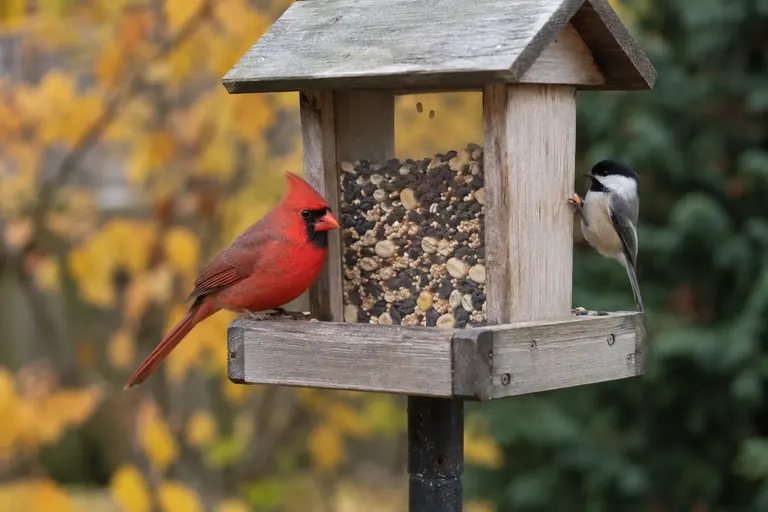
- What this means for backyard birders
- Sources
- Frequently asked questions
Mostly, no. For most birds a nest is a nursery, not a bedroom: it holds eggs and young and is used only during the breeding season. Adult birds usually sleep perched on branches, tucked into tree cavities, floating on water or standing on one leg, and Common Swifts can stay aloft for about 10 months without landing. The main exception is a parent incubating eggs or brooding chicks, which sleeps on the nest at night. Some cavity nesters also roost in old nests or nest boxes in cold weather.
That short answer covers most backyard birds, but the details vary widely across species. Here is where birds actually sleep, why most avoid their nests, and which ones break the rule.
Quick facts
- Nests are mainly used for eggs and chicks, not adult sleep.
- Incubating and brooding parents, often but not always the female, sleep on the nest at night.
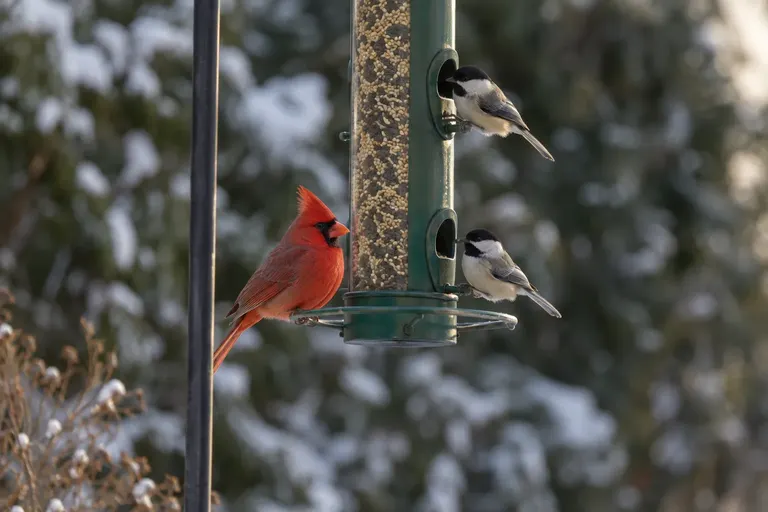
- Most songbirds sleep perched in thick foliage, evergreen trees or hedges.
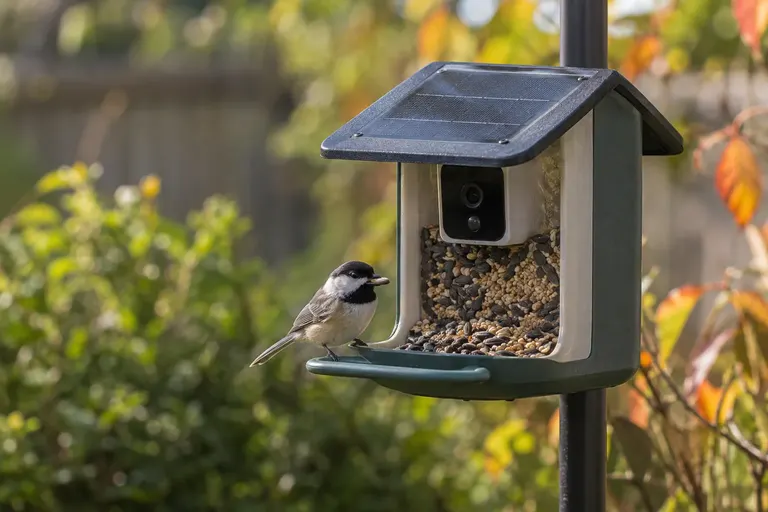
- Cavity birds such as woodpeckers, chickadees and nuthatches sleep in holes or nest boxes.
- Once young leave the nest, most do not return to it.
- Some birds sleep with half the brain at a time, and a few can sleep while flying.
Why don’t most birds sleep in their nests?
A nest is built for a single job: keeping eggs warm and chicks safe until they can leave. After that, it becomes a liability for several reasons.
Nests attract predators
A nest used for weeks leaves traces: droppings, smells, and a pattern of adults coming and going. Predators such as snakes, raccoons, cats, squirrels, jays and crows learn where nests are. A bird sleeping in a known spot every night would be easier to find. Spreading out to sleep in dense cover lowers that risk.
Nests get dirty and full of parasites
By the time chicks fledge, many nests hold droppings, feather dust and parasites such as mites, lice and blowfly larvae. Sleeping in that environment would expose adults to the same pests. This is one reason why many birds build a new nest for each brood and why nest boxes are cleaned out at the end of the season. See our guide on when and how to clean out a birdhouse and our article on whether birds reuse nests.
Many nests are not built for adults
Most cup nests are just big enough for a sitting parent and its eggs or young. An open cup offers little shelter from wind and rain, and many are placed where an adult bird would be exposed. Outside the breeding season, sleeping in a thick evergreen gives better protection.
So where do birds sleep?
Perched in dense cover
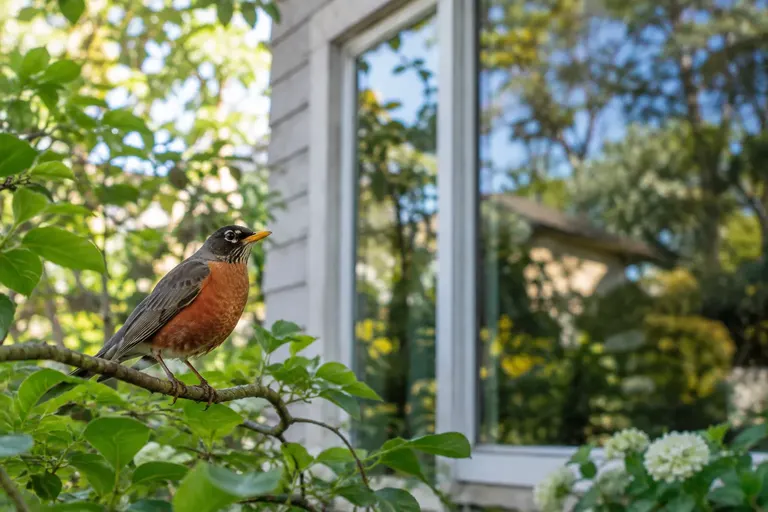
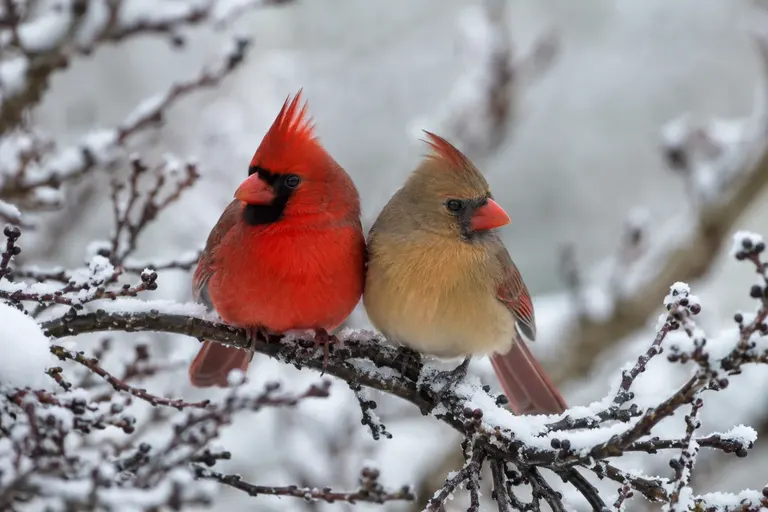
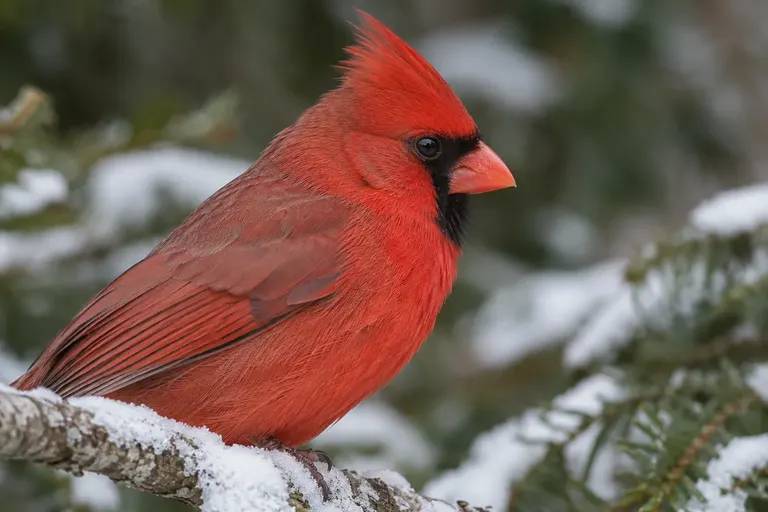
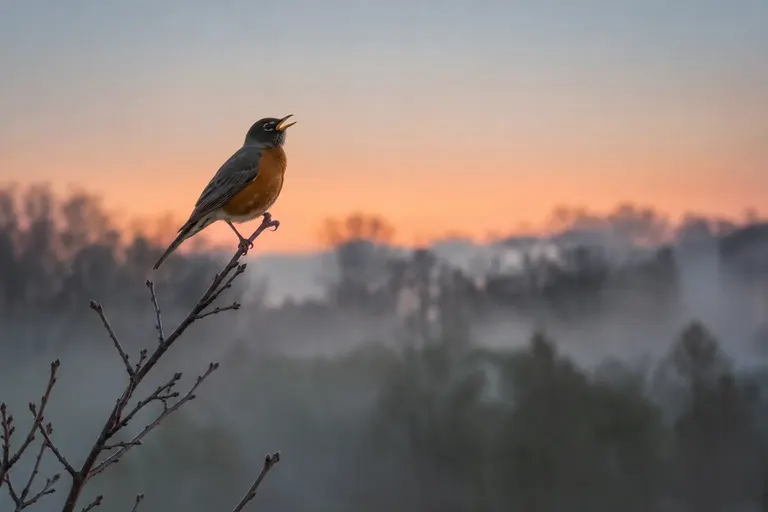
The typical backyard songbird, such as a cardinal, sparrow, finch, robin or dove, spends the night perched on a branch deep inside thick vegetation. Evergreens, holly, dense hedges, vine tangles and thickets are favorite spots because they block wind, hold a little warmth and hide the bird from owls and climbing predators.
Birds usually fluff their feathers, tuck their bill into the feathers of their back or shoulder, and sometimes pull one leg up into their belly feathers. When a bird crouches on a perch, tendons that run behind the ankle tighten the toes around the branch, so it can grip without much effort even while relaxed. Read more in how birds perch without falling when asleep.
In tree cavities and nest boxes
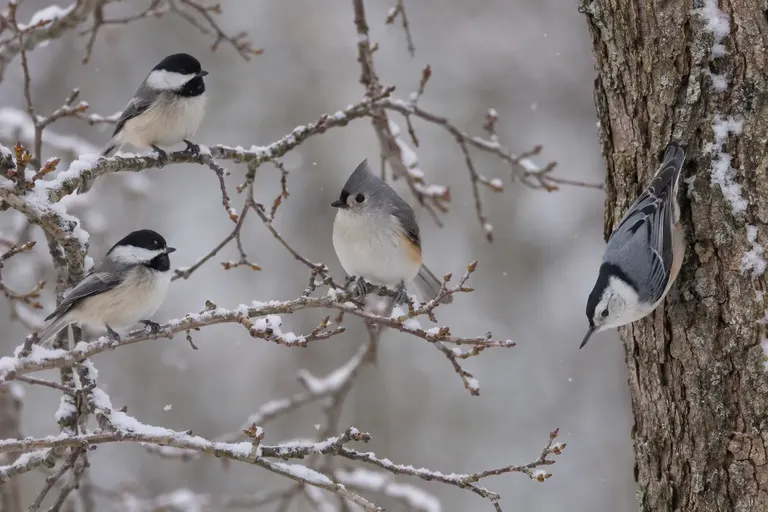
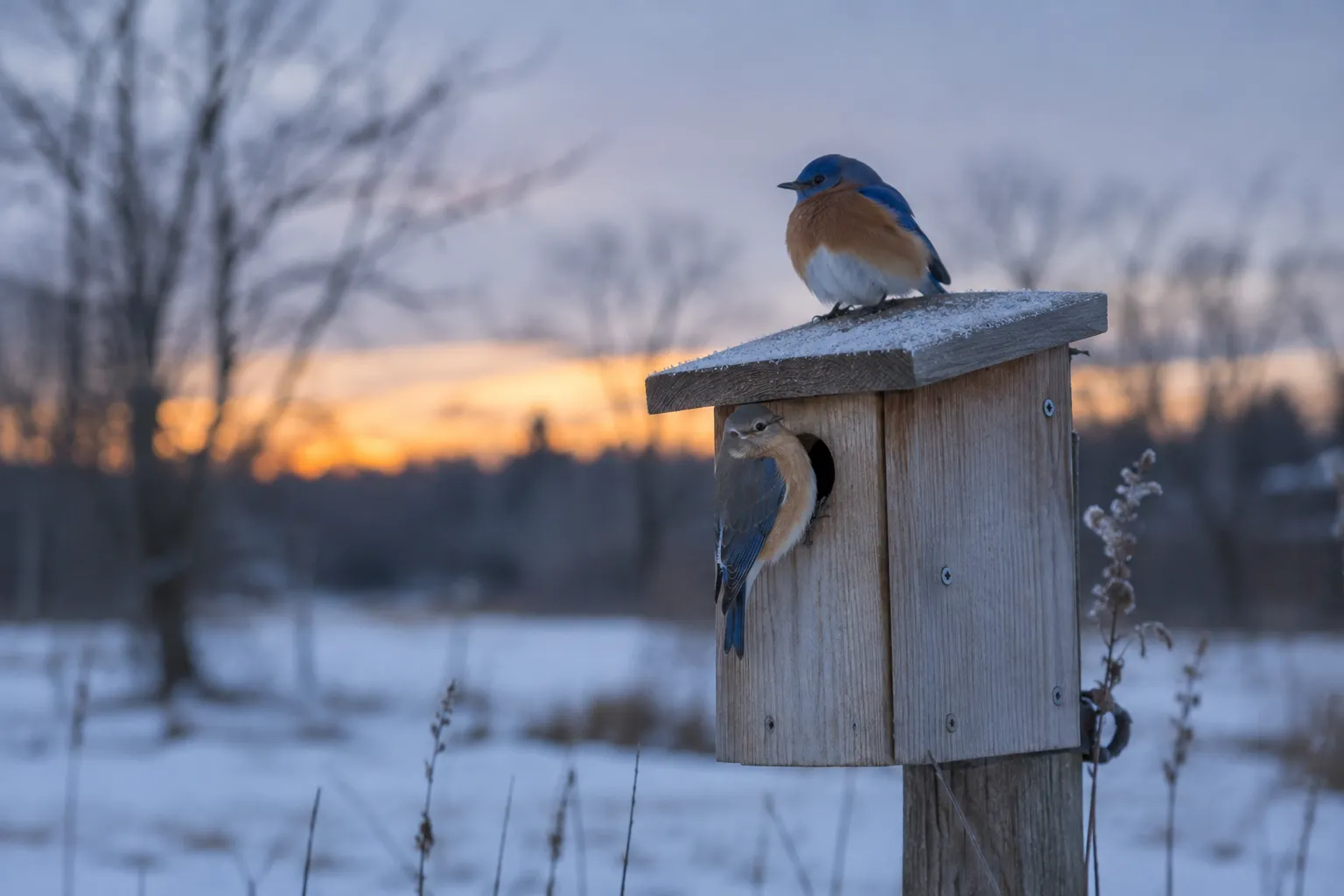
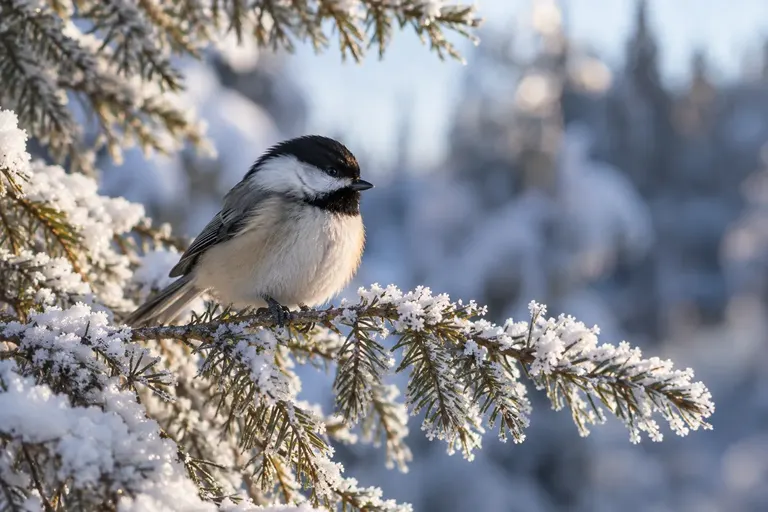
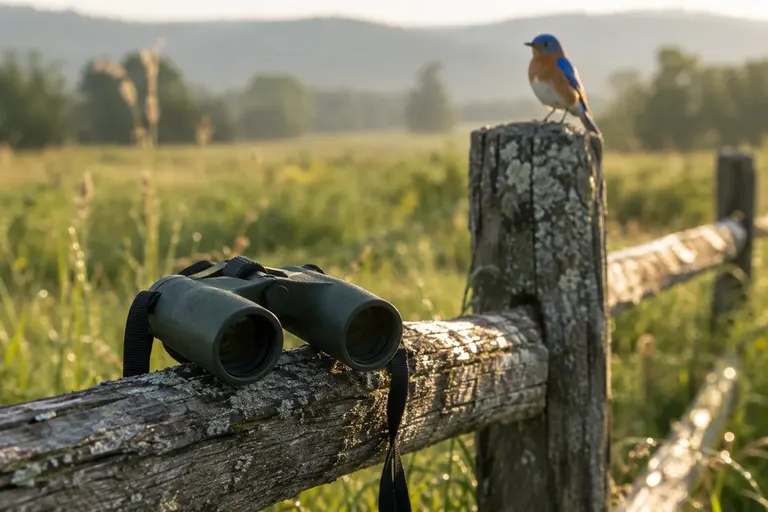
Birds that nest in holes often sleep in holes too, especially in winter. Woodpeckers excavate separate roost cavities, often in fall, and sleep inside with their bodies braced against the wall. Chickadees, titmice, nuthatches, bluebirds and some wrens roost in old woodpecker holes, natural cavities and nest boxes.
A cavity can be noticeably warmer than the open air on a cold night, mainly because it blocks wind and traps the birds’ own body heat. Some species share. Eastern Bluebirds have been found packed together in a single nest box on winter nights. In Europe, Eurasian Wrens are known to roost communally in cold weather, with records of dozens of wrens crowding into one nest box or crevice.
Communal roosts in the open
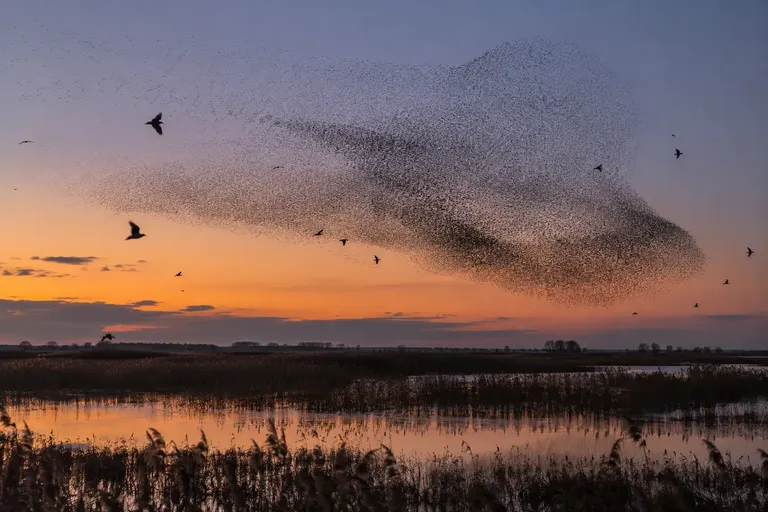
Many birds gather in large groups to sleep. American Crows form winter roosts that can hold thousands of birds in some cities. European Starlings gather in huge roosts, famously preceded by swirling murmurations at dusk. Swallows and martins gather in reed beds before migration. Long-tailed Tits in Europe huddle side by side in a tight row on a branch to share warmth.
These roosts likely help with warmth, safety in numbers and, some researchers think, sharing information about food. See our guide to where birds go at night.
On water and in shallows
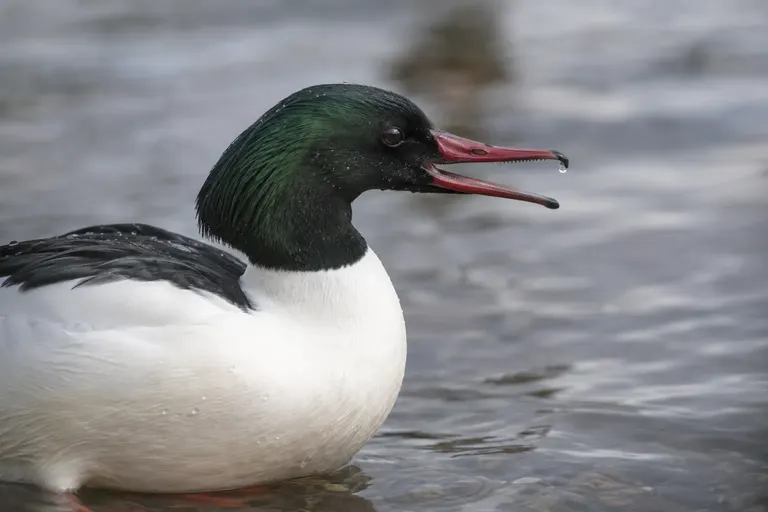
Ducks, geese, swans and gulls often sleep floating on open water, where land predators cannot easily reach them. Herons, flamingos and many shorebirds sleep standing in shallow water or on sandbars, often on one leg with their bill tucked in.
In the air
A few birds can sleep while flying. Common Swifts spend most of their non-breeding months airborne, and a 2016 study using tracking devices found some individuals stayed aloft for about 10 months without landing. Scientists believe they must sleep in flight, though direct brain recordings from swifts have not been made. For Great Frigatebirds, a 2016 study that recorded brain activity during long ocean flights found they did sleep in flight, often with one half of the brain at a time, but only for a small fraction of the time they slept on land.
Which birds do sleep in nests?
There are some clear exceptions to the “nests are for chicks” rule.
| Situation | Examples | Why |
|---|---|---|
| Incubating or brooding parents | Almost all nesting birds | Eggs and small chicks need warmth all night |
| Winter roosting in nest boxes | Eastern Bluebirds, chickadees, titmice, wrens | Cavities give shelter from cold and wind |
| Dormitory or roost nests | Some wrens and weavers | Separate structures built for sleeping |
| Year-round colonial nests | Sociable Weaver in southern Africa | Huge communal nests insulate against heat and cold |
| Mud nests | Rufous Hornero in South America | Enclosed oven-like nests offer good shelter |
| Old nests of other birds | House Sparrows, some finches | Opportunistic use for shelter |
Parents on the nest
When eggs are being incubated or young chicks are being brooded, one parent stays on the nest at night. In many songbirds that is the female; in some species males share night duties. The parent sleeps in short bouts while sitting, keeping the eggs or chicks warm.
Once chicks have feathers and can keep themselves warm, brooding often stops, and the parent may sleep nearby instead of on the nest.
Dormitory nests
Some birds build nests used mainly for sleeping. Male House Wrens and Marsh Wrens in North America and Eurasian Wrens in Europe often build several extra nests, some of which are later used for roosting. Several weaver species in Africa and Asia also roost in their woven nests outside the breeding season.
The most spectacular example is the Sociable Weaver of southern Africa. Colonies build enormous shared nests with many chambers, which can last for decades. The birds use them year round, and the thick thatch buffers them against hot days and cold desert nights.
Mud oven nests
In Brazil, Argentina and neighboring countries, the Rufous Hornero builds a sturdy, rounded mud nest shaped like an old wood-fired oven. These durable structures are reused by other species and can provide shelter long after breeding, though how often horneros themselves sleep in them outside breeding varies.
Do birds sleep in nests in winter?
Open cup nests left over from summer are rarely used for sleeping. By winter most are damp, flattened or falling apart, and they offer little protection from wind or snow. You might occasionally see a bird perched in or beside an old cup nest, but it is not a regular habit for most species.
Enclosed spaces are different. In cold climates, winter is when cavity roosting matters most. A small bird loses heat quickly on a long winter night, and sheltering inside a hole or box cuts wind chill and lets several birds share body heat. This is why cavity nesters such as chickadees, titmice, nuthatches, bluebirds, wrens and Downy Woodpeckers may be found sleeping in nest boxes from late fall to early spring.
A few non-cavity species also use enclosed shelters in winter. House Sparrows often roost in old nests tucked into eaves, vents and dense ivy, and in parts of Europe they are well known for sleeping in noisy groups in thick hedges or climbers. In short, if a nest is enclosed and dry, birds may sleep in it in winter. If it is an open cup, they almost always choose a sheltered branch instead.
Do baby birds sleep in the nest?
Yes, while they are nestlings. Young songbirds spend most of their time in the nest asleep, waking to beg when a parent arrives with food. Their parents brood them at night until they can hold their own body temperature.
Once they fledge, most young birds do not return. Fledglings spend nights perched in cover near where they left the nest, often close to their siblings, while parents continue to feed them. Some species, such as a few swallows and wrens, may return to roost in or near the nest briefly, but that is unusual. For more on this stage, see how long baby birds stay in the nest.
How do birds sleep safely?
Birds have several strategies to reduce the dangers of sleeping.
Sleeping with half the brain
Many birds can sleep with one hemisphere of the brain while the other stays awake. This is called unihemispheric slow-wave sleep. The eye connected to the awake hemisphere stays open. A well-known 1999 study by Niels Rattenborg and colleagues found that Mallards at the ends of a row of sleeping ducks used this more often than ducks in the middle, and kept the open eye pointed away from the group, toward where danger might come from.
Saving energy on cold nights
Small birds burn a lot of energy staying warm overnight. Some species lower their body temperature at night to save energy. Black-capped Chickadees are known to enter a controlled state of lowered body temperature, called regulated hypothermia, on cold nights. Hummingbirds can go further, into torpor, where body temperature and metabolism drop steeply. See how birds stay warm in winter.
Choosing safe spots
Birds pick roosts that are hard for predators to reach: the thin tips of branches, dense thorny shrubs, the middle of large flocks, open water, or holes too small for predators to enter.
How much do birds sleep, and do they dream?
Bird sleep is surprisingly similar to ours in some ways. Like mammals, birds have two main types of sleep: slow-wave sleep, when brain activity is slow and synchronized, and rapid eye movement (REM) sleep, when brain activity looks more like waking. In birds, REM episodes are usually very short, often just seconds long, and a sleeping bird cycles between the two states many times a night.
Whether birds dream in any sense we would recognize is unknown. Some research on Zebra Finches found that song-related brain areas replay activity patterns during sleep that resemble the patterns used when singing, which suggests sleep may help young birds practice and consolidate learned song. That is an intriguing finding, but it does not tell us what, if anything, the bird experiences.
How long birds sleep depends mainly on the length of the night. Most daytime birds sleep through the dark hours, so they sleep longer in winter than in summer. During migration, many songbirds that normally sleep at night fly through much of it instead. They appear to make up for lost sleep with short naps during the day, some lasting only seconds.
Do birds sleep in the same place every night?
Often, yes. Many birds have favorite roost sites they return to repeatedly, as long as the spot stays safe. A cardinal may use the same holly bush through the winter, and a woodpecker may sleep in the same roost hole for months. Communal roosts of crows or starlings can be used for years, sometimes decades.
Birds do switch roosts when conditions change. A spell of harsh weather may push them into denser cover or a cavity, a predator may drive them out, and leaf fall in autumn removes cover that summer roosts depended on. After a disturbance, such as an owl attack or a noisy night, birds may abandon a roost entirely.
How can you tell a sleeping bird from a sick one?
This comes up often at feeders. Healthy birds sometimes nap during the day, especially in cold weather or after a big meal, and they may look fluffed up with eyes half closed. The difference is in how they respond.
- A resting bird wakes quickly when something moves nearby, looks around alertly and flies off normally if approached.
- A sick bird often stays fluffed up for long periods, sits on the feeder or ground without moving away, may have crusty or swollen eyes, and is slow to react.
If you see a bird that stays puffed and lethargic at a feeder, especially with eye problems, take the feeder down and clean it, since some diseases spread at feeding stations. Our guide to sick birds at the feeder explains what to look for.
Myths vs facts about bird sleep
Myth: Birds go back to their nests every night. Fact: Most birds use nests only for raising young and sleep elsewhere the rest of the year.
Myth: A nest with no bird in it at night has been abandoned. Fact: Once chicks are feathered, parents often stop brooding and sleep nearby. An empty nest after fledging is normal.
Myth: Birds sleep for a solid eight hours. Fact: Bird sleep is usually broken into many short bouts, with frequent brief waking to check for danger.
Myth: Birdhouses are only useful in spring. Fact: Many cavity birds sleep in boxes on cold winter nights.
What this means for backyard birders
You can help birds get a safe night’s sleep with a few simple steps.
- Plant or keep dense evergreens and shrubs. Native evergreens, holly, junipers and thick hedges give birds sheltered roosts. Our guide to designing a small bird-friendly garden covers layout ideas.
- Leave nest boxes up in winter. Clean them after the breeding season, then leave them in place so cavity birds can roost inside.
- Consider a roost box. Roost boxes typically have the entrance near the bottom, which helps keep warm air in, and inside perches so several birds can huddle.
- Build a brush pile. A tangle of branches can shelter sparrows, wrens and juncos on cold nights. Pile branches loosely so there are gaps birds can slip into, with the densest part near the ground.
- Reduce night hazards. Keep cats indoors and cut unnecessary outdoor lighting, which can disturb roosting birds.
- Do not disturb roosts. Avoid shining lights into shrubs or boxes at night. A bird flushed from its roost in the cold loses energy it may need to survive.
Sources
Frequently asked questions
Where do birds sleep at night if not in nests?
Most songbirds sleep perched in dense cover such as evergreen trees, thick shrubs, vines and hedges, where they are hidden from predators and sheltered from wind. Cavity-dwelling birds like woodpeckers, chickadees and nuthatches sleep in tree holes or nest boxes. Waterbirds often sleep floating on water or standing in shallows, and some seabirds and swifts can sleep in flight.
Do baby birds go back to the nest to sleep after they fledge?
Usually not. Once most songbird young leave the nest, they spend nights perched in cover nearby, often close to their siblings, while parents keep feeding them. A few species, including some swallows and wrens, have been reported returning to roost in or near the nest for a short time after fledging, but this is the exception.
Do birds use birdhouses in winter?
Yes. Cavity-roosting birds such as Eastern Bluebirds, chickadees, titmice, nuthatches, wrens and small woodpeckers may sleep in nest boxes on cold nights, sometimes several birds packed together for warmth. Leaving clean boxes up through winter, or adding a roost box, gives them shelter.
How do birds sleep without falling off a branch?
When a perching bird crouches, tendons running behind the ankle pull its toes closed around the branch, and ridged tendon surfaces help hold that grip with little muscle effort. That lets the bird stay locked on while relaxed. Birds also tuck their heads and fluff their feathers to save heat.
Do birds sleep with one eye open?
Some do. Many birds can sleep with one half of the brain while the other half stays alert, keeping the eye connected to the waking half open. Studies of Mallards showed ducks at the edge of a sleeping row used this more often, keeping the open eye facing away from the group toward possible danger.