Do Birds Get Frostbite?
Do birds get frostbite? Rarely, thanks to cold-tolerant feet and clever blood flow, but it does happen, especially to doves' toes. Here is how birds avoid it.
In this article
- Quick answer: how do birds avoid frostbite?
- Do birds get frostbite in the wild?
- Why don’t birds’ feet freeze?
- How does behavior protect birds from frostbite?
- Which birds have special adaptations for extreme cold?
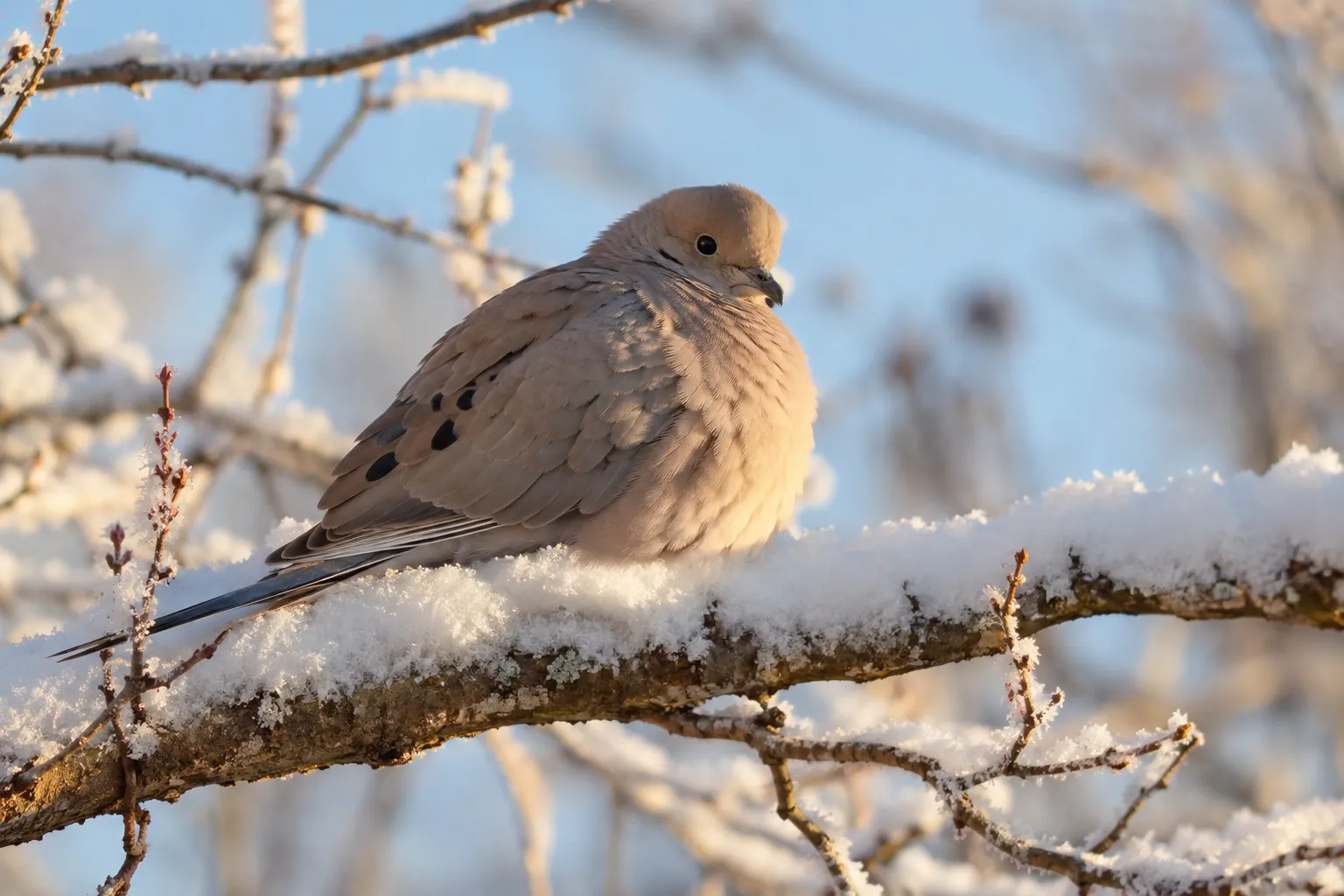
- Why are Mourning Doves so prone to frostbite?
- Can a bird’s feet stick to metal?
- What does frostbite look like in birds?
- Do backyard chickens and pet birds get frostbite?
- How can backyard birders help birds in freezing weather?
- Common mistakes
- Myths and facts
- Quick facts
- Sources
- Frequently asked questions
Birds can get frostbite, but it is rare in healthy wild birds. Their feet and legs are built from bone, tendon and tough scales with little soft tissue to freeze, and a heat-exchange system in the legs cools blood that leaves the body at around 104°F, keeping the feet just above freezing while wasting very little body heat. When frostbite does happen, it usually affects the toes of birds that are sick, wet or poorly adapted to the cold, and backyard observers most often see it in Mourning Doves.
The way birds avoid frostbite is one of the neatest pieces of engineering in the animal world. It also explains why a chickadee can stand barefoot on a metal feeder at minus 20°F and be fine.
Quick answer: how do birds avoid frostbite?
- Low-risk feet. Bird feet are mostly bone, tendon and scaly skin, with few muscles and nerves and little fluid-filled tissue.
- Countercurrent heat exchange. Warm arterial blood heading to the feet warms the cold venous blood coming back, so the body keeps its heat and the feet run cold but not frozen.
- Blood flow control. Birds can narrow or open blood vessels in their legs to adjust how much heat reaches the feet.
- Behavior. Tucking a foot into belly feathers, crouching to cover both feet, standing on one leg and sheltering at night all cut heat loss.
- When it fails. Sick, injured or wet birds, and species at the cold edge of their range, are most likely to get frostbite.
Do birds get frostbite in the wild?
Yes, but far less than you might expect given how much time they spend standing on snow, ice and frozen branches. Reports of frostbite in wild birds tend to cluster in a few situations:
- Mourning Doves in northern winters. In the northern United States and southern Canada, backyard observers often see Mourning Doves with missing toes or swollen, darkened feet in late winter. Doves spend long periods on frozen ground, and they may be less well adapted to severe cold than species with a long northern history.
- Birds that are already weak. Illness, injury and starvation reduce a bird’s ability to generate heat and circulate blood to its feet.
- Wet feet in hard frost. Standing in slush or bathing in freezing weather, then perching as temperatures plunge, can increase the risk.
- Species with exposed bare skin. Wild Turkeys and other birds with bare heads and wattles can occasionally suffer frostbite on these parts in extreme cold.
Many birds that lose toes to frostbite survive and continue feeding, perching and even breeding. You may see a dove or a sparrow at your feeder hopping on stumps rather than toes, apparently managing well.
Why don’t birds’ feet freeze?
The answer has three parts: what the feet are made of, how blood moves through the legs and how birds use their bodies to limit exposure.
Bird feet are mostly bone, tendon and scales
A bird’s lower leg and foot contain very little muscle. The muscles that move the toes sit higher up, in the thigh and “drumstick,” close to the warm body, and they work the toes through long tendons, like puppet strings. The foot itself is mainly bone, tendon, blood vessels and a covering of hard, keratin scales similar in material to your fingernails.
That design matters because frostbite damages living soft tissue when ice crystals form in and between cells. A foot with little soft tissue and little water has less to freeze. The tissue that is there also seems to tolerate low temperatures well.
Countercurrent heat exchange: the key trick
In a bird’s legs, the arteries carrying warm blood down to the feet run right alongside the veins carrying cold blood back up. In many species, these vessels form a dense network where they intertwine, sometimes called a rete mirabile, which means “wonderful net.”
Here is how it works:
- Warm blood leaves the body at around 104°F (40°C), the normal body temperature of many birds.
- As it flows down the leg, it passes the cold blood returning from the feet.
- Heat moves from the warm blood to the cold blood across the thin vessel walls.
- By the time arterial blood reaches the foot, it has already given up much of its heat and is quite cool.
- The returning venous blood has been warmed before it re-enters the body.
The result is that the feet run cold, sometimes only a few degrees above freezing in gulls and ducks standing on ice, while the body stays warm. Because the feet are cool, the temperature difference between foot and ice is small, so very little heat is lost. It is an efficient system: the feet get enough blood to stay alive and above freezing, and the body keeps nearly all its warmth.
The same principle is used in engineering, in heat exchangers for buildings and industry, and in nature in whale flippers, dolphin tails and the legs of arctic foxes.
Birds can adjust the flow
Birds can also constrict or widen blood vessels in the legs. In mild conditions, more warm blood flows to the feet, which helps shed excess heat. In severe cold, flow is reduced to the minimum needed. Some studies suggest birds periodically send a pulse of warmer blood to the feet to keep tissue from dropping to damaging temperatures, similar to the way human fingers flush red after being cold for a while.
Why don’t ducks freeze to the ice?
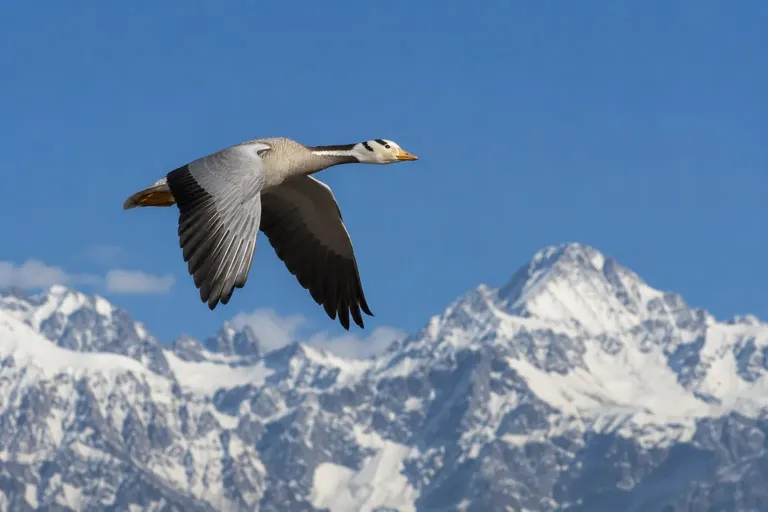
Ducks, geese and swans are the classic example because they stand and swim in freezing water all winter. Their broad, webbed feet have a large surface area, which would lose a great deal of heat if they were kept warm. Instead, countercurrent exchange keeps the feet cold, so heat loss is small. When waterfowl rest on ice, they often sit down to cover their feet with their warm, well-insulated bellies. Our article on why ducks don’t get wet explains the waterproof feathers that keep the rest of the body warm.
Waterfowl that do become frozen into ice are usually sick, injured or exhausted birds that stopped moving as the water froze around them.
How does behavior protect birds from frostbite?
Anatomy is only part of the story. Watch any backyard bird on a cold morning and you will see a set of heat-saving habits.
Tucking and crouching
Small songbirds often crouch low on a branch so their fluffed belly feathers cover their feet and toes completely. Doves and pigeons do the same, becoming round balls of feathers. Our explainer on why birds puff up covers how fluffing traps warm air.
Standing on one leg
Gulls, herons, ducks and many shorebirds stand on one leg with the other tucked into the feathers. This halves the bare skin exposed to cold air. For the science behind it, see why birds stand on one leg.
Tucking the bill
Birds often turn their head and tuck the bill into the back or shoulder feathers. This reduces heat lost from the bill and lets the bird breathe air warmed by its own plumage.
Sheltering at night
Nights are when temperatures drop lowest. Birds roost in dense evergreens, tree cavities, nest boxes, under snow or in thick brush piles. Some small birds pack together in cavities to share warmth. Our guide to where birds go at night describes common roosting habits.
Burrowing into snow
Ruffed Grouse, ptarmigan and some redpolls and buntings can burrow into soft snow on very cold nights. Snow is a surprisingly good insulator, and temperatures inside a snow burrow can be much warmer than the open air.
Which birds have special adaptations for extreme cold?
Some birds take cold-proofing further.
| Bird | Where it lives | Cold adaptation |
|---|---|---|
| Willow and Rock Ptarmigan | Arctic and alpine North America, Europe and Asia | Feathered feet and toes that act like snowshoes and insulate the skin |
| Snowy Owl | Arctic tundra, winters south into southern Canada, northern United States and Eurasia | Thick feathering down the legs and over the toes |
| Emperor Penguin | Antarctica | Rocks back on its heels and tail to reduce foot contact with ice, huddles in large groups |
| Common Redpoll | Arctic and subarctic regions | Stores seeds in a throat pouch, dense plumage, can burrow in snow |
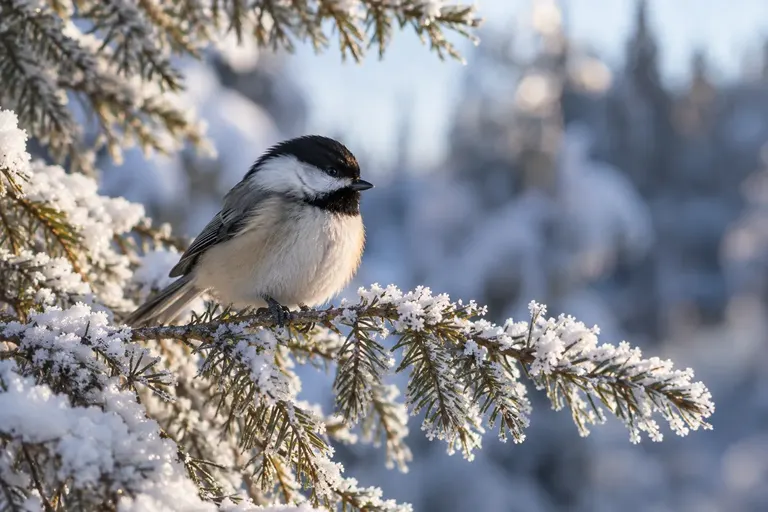
| Black-capped Chickadee | Northern North America | Adds extra plumage in winter and lowers body temperature at night to save energy |
Chickadees and some tits in Europe can drop their body temperature by several degrees at night, a controlled state called regulated hypothermia, to save energy. Hummingbirds go further and enter torpor, dropping their body temperature dramatically overnight. Both strategies save energy but depend on birds having enough food during the day.
Bills as radiators
Bills can lose heat too. Research on the Toco Toucan of South America found that its huge bill works as an adjustable radiator, dumping heat in hot conditions and cutting blood flow to conserve heat when it cools down. Studies of sparrows and other birds suggest that populations in colder climates tend to have smaller bills relative to body size, which fits a long-known pattern called Allen’s rule: animals in cold climates tend to have shorter extremities.
Why are Mourning Doves so prone to frostbite?
Mourning Doves are the backyard bird most often reported with frostbite damage, and a few factors likely combine:
- They feed on the ground. Doves spend a lot of time walking on frozen soil, snow and ice, picking up seed.
- They have bare toes. Unlike ptarmigan or owls, doves have no feathering on their feet.
- Their range has expanded north. Mourning Doves have become more common in winter in northern areas over the past century, partly because of backyard feeders and farming. Some biologists suggest they are less well adapted to extreme cold than long-established northern residents.
- They sit exposed. Doves often rest in the open on wires, fences and roofs rather than in dense cover.
If you feed doves in a cold climate, offering food on a raised platform, near evergreen shelter, can help them spend less time on frozen ground. Our Mourning Dove guide covers feeding and habitat.
Can a bird’s feet stick to metal?
This is a popular worry, but there is little evidence it happens to healthy wild birds. The famous image of a tongue stuck to a frozen pole depends on moisture: wet skin freezes to cold metal. Bird feet are dry and covered in scales, so there is nothing to freeze onto the metal. Birds routinely perch on metal feeder poles, wire fences, gutters and power lines in freezing weather.
The bigger concern is wet feet. A bird that bathes or stands in slush and then perches in a hard frost is more likely to have problems. This is one reason some people prefer shallow, heated birdbaths that stay open without deep water. Our guide on keeping a bird bath ice-free in winter explains safe options.
What does frostbite look like in birds?
Signs of frostbite in the feet can include:
- Swollen toes that look puffy or shiny.
- Dark red, purple or black discoloration of toes or parts of the foot.
- Dry, shriveled toes in later stages, as dead tissue dries out.
- Missing toes or toe tips, which may be the only sign you see weeks later.
- Limping, favoring one foot or difficulty gripping a perch.
In chickens and other domestic birds, frostbite most often shows up on combs and wattles, which turn pale or black at the tips.
Do backyard chickens and pet birds get frostbite?
Yes, and more often than wild birds. Domestic chickens, especially breeds with large single combs and long wattles, commonly get frostbite on those bare, blood-rich parts in freezing weather. Damp air is a big factor: a closed coop full of moisture from breath and droppings can make frostbite more likely than dry cold. Good ventilation without drafts, dry bedding and keeping waterers from wetting wattles all help. Breeds with small pea or rose combs are less prone.
Pet parrots and other tropical cage birds are not adapted to freezing temperatures at all and should never be left outdoors in winter weather. If you keep poultry or pet birds and suspect frostbite, a veterinarian with bird experience is the right person to see.
How can backyard birders help birds in freezing weather?
You cannot stop the cold, but you can help birds cope.
- Offer high-energy food. Suet, black oil sunflower seed, peanuts and nyjer help birds generate body heat. Our winter bird feeding guide explains what each species needs.
- Provide shelter. Evergreen shrubs, brush piles and roost boxes give birds places to escape wind and cold at night.
- Offer open water safely. A heated birdbath with shallow water, or a simple dish changed daily, lets birds drink without soaking their feet.
- Use feeders with perches or platforms. This lets ground-feeding birds avoid standing on snow and ice for long periods.
- Keep feeders clean. Weak or sick birds are the most likely to suffer frostbite, and clean feeders reduce disease spread.
- Leave injured birds to experts. If a bird with damaged feet cannot perch or fly, contact a licensed wildlife rehabilitator.
For a deeper look at how birds survive the cold overall, including feathers, shivering and fat reserves, see how birds stay warm in winter.
Common mistakes
- Warming a bird’s feet with hot water. Sudden heat can damage frozen tissue further. A rehabilitator will know how to treat it.
- Bringing healthy birds indoors. Healthy birds are equipped for winter. Handling them causes stress and can be illegal without a permit.
- Putting oils or petroleum jelly on wild birds. Oily substances ruin feather insulation and waterproofing.
- Deep water in birdbaths during hard frosts. Shallow water, 1 to 2 inches deep, is safer.
Myths and facts
Myth: “Birds’ feet stick to metal perches”
Fact: Dry, scaly feet do not freeze to metal. Healthy birds use metal perches safely all winter.
Myth: “Birds feel the cold in their feet like we do”
Fact: Bird feet have fewer nerves and less soft tissue than human feet, and they are built to operate cold. How it feels to a bird is not known for certain, but birds show no sign of distress standing on ice.
Myth: “Frostbite always kills birds”
Fact: Many birds survive losing toes. They adapt their perching and walking and continue feeding normally.
Myth: “Birds need blankets or heat lamps outdoors”
Fact: Wild birds need food, water and shelter. Artificial heat outdoors can be a fire risk and is not needed.
Quick facts
- Birds can get frostbite, but it is rare in healthy wild birds.
- Countercurrent heat exchange keeps feet cold but not frozen.
- Bird feet are mostly bone, tendon and scales, with little tissue to freeze.
- Mourning Doves are the backyard bird most often seen with frostbitten toes.
- Ptarmigan and Snowy Owls have feathered feet for extreme cold.
- Birds tuck their feet into feathers and stand on one leg to save heat.
- Many birds survive losing toes to frostbite.
Sources
- Cornell Lab of Ornithology, Willow Ptarmigan species account. https://www.allaboutbirds.org/guide/Willow_Ptarmigan/overview
- Cornell Lab of Ornithology, Black-capped Chickadee species account. https://www.allaboutbirds.org/guide/Black-capped_Chickadee/overview
- Project FeederWatch, Cornell Lab of Ornithology and Birds Canada. https://feederwatch.org
Frequently asked questions
Do birds' feet freeze in winter?
Usually not. Bird feet are mostly bone, tendon and scaly skin with very little soft tissue, and they run much colder than the body. A countercurrent heat exchange system in the legs keeps the feet just warm enough to avoid freezing while losing little heat. Birds also tuck their feet into their feathers or crouch over them in the coldest weather.
Which birds get frostbite most often?
Mourning Doves are the backyard species most often seen with missing or damaged toes in the northern part of their range, likely because they are relatively recent arrivals to cold northern winters and spend time on frozen ground. Sick, injured or wet birds are also at higher risk. Domestic chickens with large combs and wattles often get frostbite on those parts.
Can a bird's feet stick to a metal perch in winter?
There is little evidence that this happens to healthy wild birds. Bird feet are dry and scaly, so there is no moisture to freeze onto metal the way a wet tongue would. Birds commonly perch on metal feeder poles and wires in freezing weather without problems. Wet feet, from a birdbath or slush, are more of a concern than metal itself.
How do ducks stand on ice without freezing?
Ducks and geese rely on countercurrent heat exchange in their legs. Warm blood flowing down to the feet passes cooler blood returning to the body, so heat is transferred back before it reaches the feet. Their feet stay only slightly above freezing, which means very little heat is lost to the ice. They also sit down to cover their feet.
What should I do if I see a bird with frostbitten feet?
If the bird is feeding and moving normally, it may manage well on its own; many birds survive losing toes. Keep feeders clean and stocked with high-energy food. If the bird cannot perch, cannot fly or looks weak, contact a licensed wildlife rehabilitator. Do not try to warm its feet with hot water.