How Do Birds Learn Songs?
How do birds learn songs? Young songbirds memorize adult songs, then practice for weeks, babbling like infants until their song matches the memory they stored.
In this article
- Quick answer: the steps of song learning
- Which birds learn their songs?
- How did scientists discover that birds learn songs?
- How does a young bird practice its song?
- What happens in a bird’s brain during song learning?
- How do parrots and hummingbirds learn their sounds?
- How many songs can a bird learn?
- Can adult birds keep learning?
- How do brood parasites learn the right song?
- What happens when young birds have no one to learn from?
- Common myths about bird song learning
- What does song learning mean for backyard birders?
- Quick facts
- Sources
- Frequently asked questions
Most birds that sing learn their songs the way children learn to speak. A young songbird listens to adults of its own species during a sensitive window (roughly the first 2 months of life in White-crowned Sparrows), stores a memory of what the song should sound like, then practices for weeks or months. It begins with quiet, rambling babble called subsong, gradually improves, and settles on a stable adult song that matches the memory. Hearing is essential throughout: a bird that cannot hear itself cannot learn properly.
Only some birds work this way. Songbirds, parrots and hummingbirds learn their vocalizations, while many other birds are born with theirs. This guide explains how the learning process works, what happens in the brain, why birdsong has become one of the best models for studying human speech, and what all this means when you listen to birds in your yard.
Quick answer: the steps of song learning
- Listen. During a sensitive period early in life, the young bird hears adult songs and memorizes them. This is called the sensory phase.
- Babble. The bird starts producing soft, variable, unstructured sounds called subsong, similar to an infant’s babbling.
- Practice. Over weeks or months, sounds become more structured. This middle stage is called plastic song.
- Match. The bird compares its own output with the stored memory, using hearing as feedback, and adjusts.
- Crystallize. The song becomes fixed and stable. In many species this happens by the bird’s first breeding season.
Which birds learn their songs?
Scientists recognize three groups of birds that are vocal learners:
| Group | Learns vocalizations? | Examples |
|---|---|---|
| Oscine songbirds | Yes | Sparrows, thrushes, warblers, finches, wrens, crows, chickadees |
| Parrots | Yes | Budgerigars, African Grey Parrots, amazons, cockatoos |
| Hummingbirds | Yes, at least in the species studied | Anna’s Hummingbird and several tropical species |
| Suboscine passerines | Mostly no | Tyrant flycatchers such as the Eastern Phoebe, many tropical families |
| Most other birds | No | Doves, chickens, ducks, woodpeckers, gulls, owls |
The suboscines are an important comparison group. They belong to the same large order as songbirds, the passerines, but most do not need to hear adults to develop their songs. In classic experiments by Donald Kroodsma and colleagues, flycatchers such as Eastern Phoebes and Alder and Willow Flycatchers raised without hearing their species’ song still developed normal songs. A few suboscines appear to be exceptions; Kroodsma’s work on the Three-wattled Bellbird of Central America suggests that its songs are learned and change over time.
Vocal learning is rare in the animal world. Among mammals it is known in humans, some bats, whales and dolphins, seals and elephants, but not in our closest ape relatives in the same way. Birds evolved it independently at least a few times, which makes them a valuable comparison.
What is the difference between a song and a call?
Songs are usually longer, more complex and associated with territory and courtship. Calls are shorter and used for alarm, contact, begging and flight coordination. Many calls are innate even in songbirds, although some, such as certain contact calls in parrots and finches, are learned too. When scientists talk about song learning, they mean the learned, complex vocalizations.
How did scientists discover that birds learn songs?
What did the chaffinch studies show?
In the 1950s, William Thorpe at Cambridge worked with Common Chaffinches, a familiar European songbird. Using the sound spectrograph, a then-new machine that turns sound into a visual trace, he could compare songs precisely. Chaffinches raised in isolation produced songs of roughly the right length and pitch range but lacking the normal structure, including the characteristic flourish at the end. Birds that heard adult song during their first months learned it properly.
What did the White-crowned Sparrow studies show?
In the 1960s and 1970s, Peter Marler and colleagues extended this work with White-crowned Sparrows in California. Several findings from this era remain central.
- There is a sensitive period. Young sparrows learned best from recordings played during a window of roughly the first two months of life. Songs heard later had much less effect.
- Birds are predisposed to their own species. Given a choice of tutor songs, young sparrows preferentially learned White-crowned Sparrow song over the songs of other species. They seem to have an inborn “template” that helps them pick the right model.
- Isolated birds sing abnormally. Sparrows raised without any tutor developed simple, unstructured songs, recognizable as sparrow-like but lacking local detail.
Why is hearing so important?
In 1965, Masakazu Konishi showed the importance of hearing directly. Young sparrows that were deafened after hearing tutor songs, but before they started to practice, developed highly abnormal songs, even worse than birds raised in isolation. They had a memory of the right song but could not hear themselves to match it. Birds deafened after their songs had crystallized kept singing reasonably well, at least for a while.
That result established the two-part model still used today: first memorize, then practice with auditory feedback.
How does a young bird practice its song?
What is subsong?
Subsong is the bird equivalent of babbling. It is quiet, rambling and highly variable, often delivered from inside cover. Young birds may produce it for long periods. It does not sound much like the adult song, but it lets the bird explore how its sound-producing organ, the syrinx, works.
What is plastic song?
Next comes plastic song. Recognizable pieces of adult song appear, but they are unstable, in the wrong order, or mixed with sounds that will later be dropped. In many species, young birds produce more song material than they will eventually keep. They then discard some elements, a process sometimes called attrition or selective retention.
When does the song become fixed?
In the final stage, crystallization, the song becomes stereotyped and repeated in a consistent form. In the Zebra Finch, the most studied lab songbird, males typically finish learning by around three months old. In many migratory species, the process spans a longer period, with memorization in the first summer, practice through fall and winter, and crystallization the following spring when the bird sets up a territory.
Do birds learn better from live tutors than recordings?
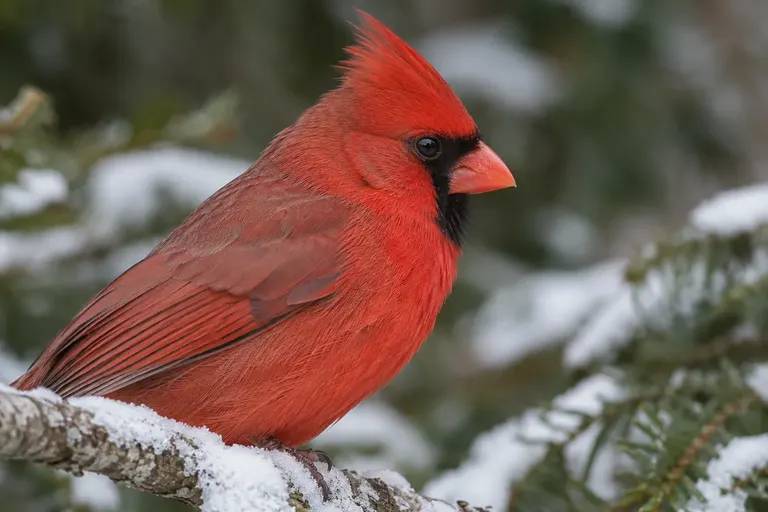
Often, yes. Several studies have found that young birds learn more readily from a live adult they can interact with than from a speaker. In some species, social interaction can even extend the sensitive period, so a bird will learn from a live tutor later than it would from a tape. This parallels research showing that human infants learn speech sounds better from live interaction than from video.
What happens in a bird’s brain during song learning?
What is the song system?
Songbirds have a dedicated network of brain regions for learning and producing song. Key parts include:
- HVC, a forebrain region involved in timing and sequencing song.
- RA, the robust nucleus of the arcopallium, which connects to the brainstem centers that control the syrinx and breathing.
- Area X, part of the basal ganglia, which is essential for learning but less so for singing an already-learned song.
- LMAN, a region that injects variability during practice, which helps young birds explore and improve.
This system has a motor pathway for producing song and a learning loop that runs through the basal ganglia. The organization has clear parallels with the circuits humans use for speech and for learning skilled movements.
Can birds grow new brain cells?
Research on song learning led to one of the major discoveries of modern neuroscience. In the 1980s, Fernando Nottebohm and colleagues showed that adult canaries add new neurons to the song system. Canaries change their song repertoire from year to year, and the size of song regions in their brains changes seasonally. This work helped overturn the long-held belief that adult vertebrate brains do not make new neurons.
Do birds and humans share genes for vocal learning?
Some. The FOXP2 gene, linked to a heritable speech and language disorder in humans, is also active in the songbird song system. Experiments that reduced FOXP2 activity in Area X of young Zebra Finches led to incomplete and inaccurate song copying. Later genomic studies found that vocal-learning birds and humans share similar patterns of gene activity in their speech and song circuits, even though the ability evolved independently. That is part of why neuroscientists describe birdsong as the best animal model for human speech learning.
How do parrots and hummingbirds learn their sounds?
Most song learning research has been done on songbirds, but the other two learner groups show the same basic ability with their own twists.
How do parrots learn calls?
Wild parrots use learned contact calls to keep track of flock mates and partners. Studies of captive Budgerigars have found that birds placed together gradually converge on shared call features, a kind of flock signature. Research on wild Green-rumped Parrotlets in Venezuela, led by Karl Berg and published in 2011, found that nestlings developed individual contact calls, and cross-fostering experiments suggested they learned these calls from the adults who raised them, something like parents giving chicks names. Parrots also keep learning throughout life, which is why pet parrots can mimic speech, doorbells and phones.
Parrot brains contain their own song-system-like regions. A notable finding is that parrots have an extra “shell” of vocal learning areas surrounding the core regions, which some researchers link to their unusual skill at imitation.
How do hummingbirds learn songs?
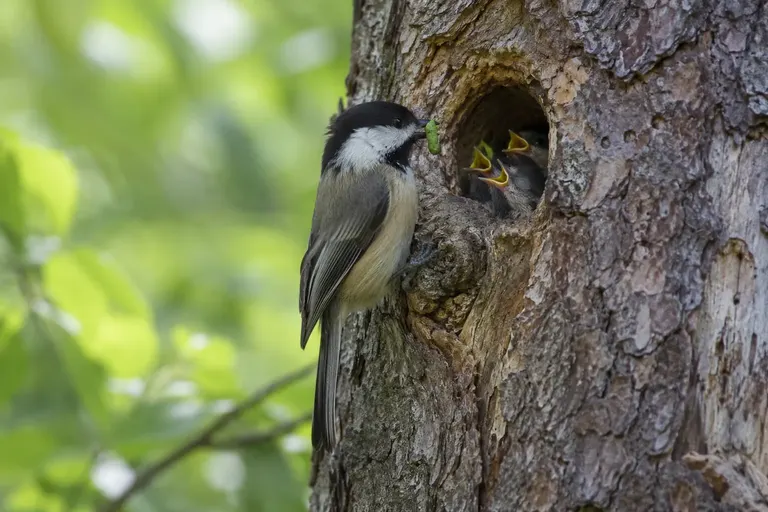
Hummingbird song is quieter and less familiar, but several species learn it. Male Anna’s Hummingbirds in western North America sing a scratchy, buzzy song from perches, and studies of young birds indicate it is learned. In some tropical hermit hummingbirds, males displaying together at leks share local song types that differ between neighboring leks, a pattern typical of learned sounds.
Because vocal learning appears in songbirds, parrots and hummingbirds but not in their closest relatives, most researchers think it evolved separately in each group, or was lost repeatedly. Either way, the similar brain solutions are a striking example of convergent evolution.
How many songs can a bird learn?
Repertoire size varies enormously.
- Some birds sing one song type. Many White-crowned Sparrow males sing essentially one song for life.
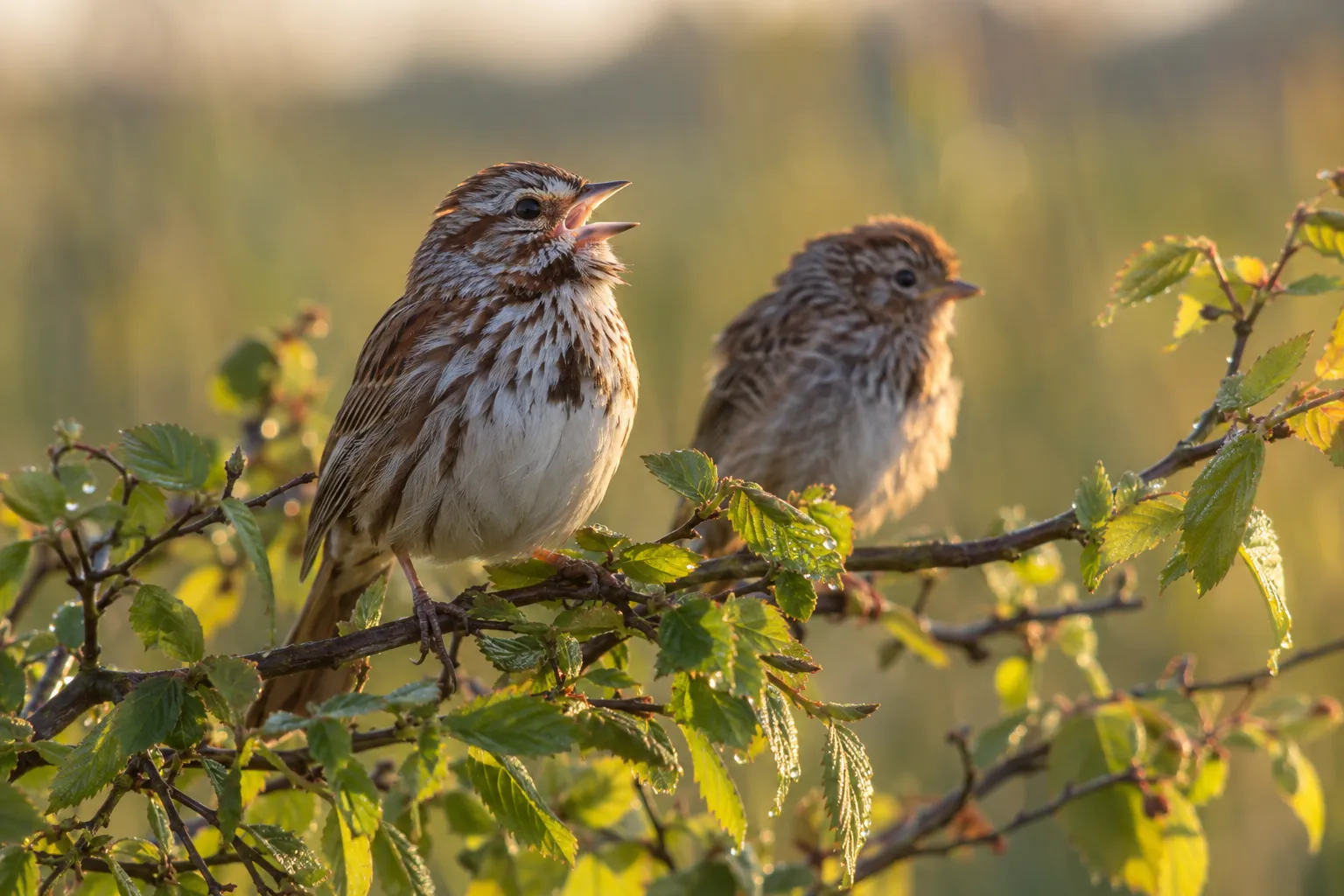
- Some have a handful to a dozen. Song Sparrows typically have a repertoire of several song types and cycle through them.
- Some have hundreds. Marsh Wrens in western North America are known for very large repertoires, and Brown Thrashers are often cited as having over a thousand song types.
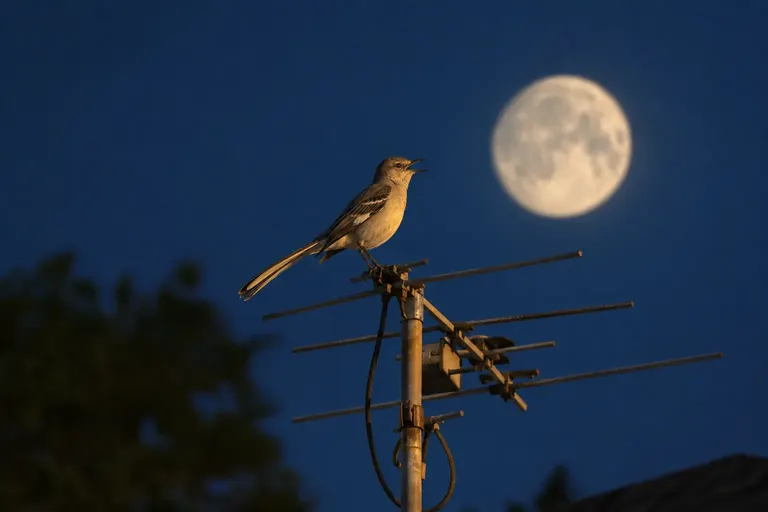
- Some copy other species. Northern Mockingbirds, European Starlings and Australia’s lyrebirds imitate many other birds and sometimes mechanical sounds. The Marsh Warbler, which breeds in Europe and winters in Africa, is famous for weaving imitations of dozens of European and African species into its song.
If you enjoy mimics, our guide to attracting Northern Mockingbirds covers one of the most accomplished in North America, and our page on Song Sparrows describes a classic repertoire singer.
Can adult birds keep learning?
Birds fall roughly into two groups.
Closed-ended learners learn in their first year, then keep a largely fixed song. Zebra Finches and White-crowned Sparrows are typical examples.
Open-ended learners keep adding or changing material as adults. Canaries rework their songs seasonally. Mockingbirds and starlings keep picking up new sounds. Many parrots learn new calls throughout life, which is why pet parrots can keep acquiring words.
Some species sit in between. They may learn in their first year but adjust their songs when they move to a new area and have to match neighbors. That leads naturally to the question of dialects, which we cover in do birds have regional accents.
How do brood parasites learn the right song?
Brown-headed Cowbirds in North America and Common Cuckoos in Europe are raised by other species. How do they end up singing like their own kind? Cuckoos have a simple, apparently innate call. Cowbirds are songbirds and do learn, but they seem to have strong inborn predispositions and learn from other cowbirds after leaving the host’s care. Research suggests social feedback, such as females responding to certain song versions, also shapes male cowbird song. Our guide on why some birds lay eggs in other birds’ nests explains the parasite side of the story.
What happens when young birds have no one to learn from?
Song learning depends on having adult tutors nearby, which creates a risk for endangered species. The Regent Honeyeater of southeastern Australia has declined to a few hundred wild birds. A 2021 study led by Ross Crates reported that many males in the wild now sing unusual songs, and some sing songs of other species, apparently because young birds rarely hear adults of their own kind. Males with atypical songs were less likely to breed successfully. Conservationists now play recordings of wild Regent Honeyeater song to captive-bred birds before release, an approach that echoes the tape-tutoring experiments of the 1960s.
Common myths about bird song learning
| Myth | Reality |
|---|---|
| All birds learn their songs. | Only songbirds, parrots and hummingbirds are known vocal learners; most other birds are born with their calls. |
| Birds sing perfectly from the start. | Young songbirds babble and practice for weeks or months first. |
| Only males sing. | Female song is widespread, especially in the tropics and Australia. |
| Birds copy any sound they hear. | Most songbirds are selective and prefer their own species’ song. Only some species are true mimics. |
| A song, once learned, never changes. | Many species keep adding, dropping or adjusting songs as adults. |
What does song learning mean for backyard birders?
Why do I hear strange songs in late summer and fall?
Young birds hatched earlier in the year practice their subsong and plastic song, often in dense shrubs. The sounds can be quiet, rambling and hard to place. Some adults also sing softer, less structured songs outside the breeding season.
Can sound ID apps get confused by young birds?
Yes. Apps are trained mostly on typical adult songs. Practice songs, mimicry and regional variations can produce odd suggestions. Our guide to using Merlin Sound ID without getting fooled explains how to double-check results.
Is it a good time to learn songs yourself?
Spring, when songs are crystallized and sung often, is the easiest time. Start with a small set of common species and learn them well, as we suggest in how to bird by ear. If you are wondering why the dawn is so noisy, why birds sing in the morning explains the dawn chorus.
Quick facts
- Songbirds, parrots and hummingbirds are vocal learners; most other birds are not.
- Young songbirds memorize songs during a sensitive period, then practice.
- Practice moves from subsong to plastic song to crystallized song.
- Hearing their own voice is essential for young birds to match their memory.
- Songbirds have a dedicated brain network for song, including HVC, RA and Area X.
- Adult canaries grow new neurons, a discovery that changed neuroscience.
- The FOXP2 gene plays a role in both human speech and songbird learning.
- Endangered birds can lose their songs when young birds lack tutors.
Sources
- Brainard, M. S. and Doupe, A. J. (2002). What songbirds teach us about learning. Nature
- Doupe, A. J. and Kuhl, P. K. (1999). Birdsong and human speech: common themes and mechanisms. Annual Review of Neuroscience
- Odom, K. J. et al. (2014). Female song is widespread and ancestral in songbirds. Nature Communications
- Crates, R. et al. (2021). Loss of vocal culture and fitness costs in a critically endangered songbird. Proceedings of the Royal Society B
Frequently asked questions
Are birds born knowing how to sing?
It depends on the group. Songbirds, parrots and hummingbirds must learn their songs by listening to adults, and young songbirds raised without hearing their species sing produce abnormal, simplified songs. Many other birds, including flycatchers, doves, chickens and woodpeckers, develop normal vocalizations without hearing others. Even learners start with an inborn bias toward their own species' sounds.
How long does it take a young bird to learn its song?
In many songbirds the process takes weeks to months. Young birds memorize songs during a sensitive period early in life, then practice through babbling-like subsong and variable plastic song. In Zebra Finches the song is typically fixed by around three months of age. In many migratory species, practice continues through the first winter and the song settles the following spring.
Do female birds sing?
Yes, in many species. Female song is common in the tropics and in many Australian birds, and a 2014 study in Nature Communications concluded that female song was likely present in the common ancestor of songbirds. In North America, female Northern Cardinals sing, often from the nest. In many temperate species, though, song is mostly or entirely a male behavior.
Can adult birds learn new songs?
Some can. Species such as canaries, Northern Mockingbirds, European Starlings and many parrots keep adding or changing sounds as adults. These are called open-ended learners. Others, such as Zebra Finches and White-crowned Sparrows, are closed-ended learners: their song is largely fixed after the first year and changes little afterward.
Why does a bird's song sound odd in late summer or fall?
Two common reasons. Young birds hatched that year are practicing, producing quiet, rambling subsong or unfinished plastic song. Adults of some species also sing softer, less structured songs outside the breeding season as hormone levels change. These sounds can confuse sound identification apps, so it pays to confirm odd songs by sight.