How to Attract Carolina Wrens to Your Yard
How to attract Carolina wrens: dense brush, suet and mealworms near cover, a sheltered wren box 3 to 6 feet up, and a messy corner left standing all winter.
In this article
- Quick answer: what Carolina wrens need
- Carolina wren at a glance
- How to identify a Carolina wren
- Where do Carolina wrens live?
- What do Carolina wrens eat?
- Best feeders for Carolina wrens
- Water for Carolina wrens
- Plants and habitat that attract Carolina wrens
- Nest boxes for Carolina wrens
- Carolina wren seasonal calendar
- Common problems and how to fix them
- Common mistakes that keep Carolina wrens away
- How to watch Carolina wrens without disturbing them
- Sources
- Frequently asked questions
When working out how to attract Carolina wrens, give them thick cover first and food second. A brush pile or tangle of shrubs and vines near the house, suet or mealworms offered low beside that cover, and a sheltered nest box 3 to 6 feet off the ground will do more than any single feeder. These wrens are year-round residents across most of the eastern United States, so a yard that suits them can host the same pair for years.
This guide is research-led. It draws on Cornell Lab of Ornithology life-history data, NestWatch nest box specifications and Audubon species accounts, plus well-established backyard feeding practice.
Quick answer: what Carolina wrens need
- Cover: dense shrubs, vines, a brush pile or an overgrown fence line. This is the one thing you cannot skip.
- Food: suet, suet dough, peanut pieces and mealworms, offered low and close to cover. Winter is when feeders matter most.
- Nesting: a sheltered wren box or open-fronted cavity 3 to 6 feet up, often on a building, porch or shed.
- Water: a shallow bath, ideally at ground level or close to shrubs, heated in cold climates.
- Patience: wrens find new food by exploring, not by scanning open lawns. Put things where a wren already travels.
Carolina wren at a glance
| Trait | Details |
|---|---|
| Size | 4.7 to 5.5 in long; 0.6 to 0.8 oz |
| Range | Year-round resident across much of the eastern and southeastern US, expanding north |
| Season in your yard | All year; no migration |
| Natural diet | Insects and spiders; small amounts of seeds and fruit |
| Feeder foods | Suet, suet dough, peanut pieces, mealworms |
| Best feeder types | Suet cage, small platform or dish, low-mounted feeders near cover |
| Nesting | Cavities and nooks 3 to 6 ft up; readily uses nest boxes and odd objects |
| Broods per year | 1 to 3 |
| Conservation status | Low concern; populations increasing since 1966 (Cornell Lab) |
How to identify a Carolina wren
Adults
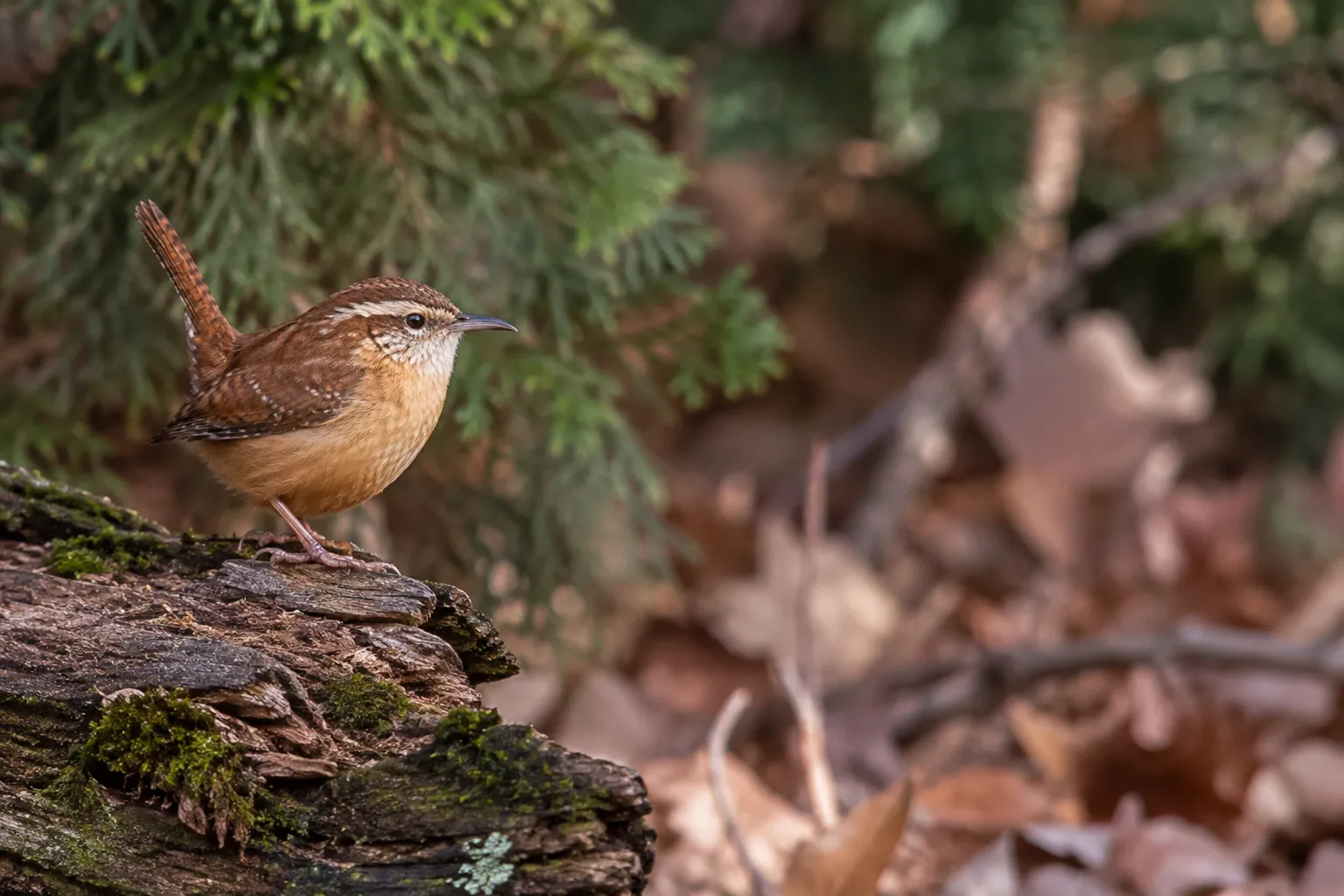
A Carolina wren is a small, round, energetic bird a little smaller than a sparrow. Cornell lists it at 4.7 to 5.5 inches long and 0.6 to 0.8 ounces. The upperparts are a rich reddish-brown and the underparts are warm buffy-orange. The best field mark is a long, bold white stripe above the eye, set off by a dark line through the eye. The chin and throat are white, the bill is long, slender and slightly downcurved, and the tail is often cocked upward while the bird forages. When a male sings, he usually holds the tail down.
Males and females look the same. You will usually see them as a pair, because Carolina wrens stay bonded year-round and forage together on their territory.
Young birds
Juveniles look much like adults, so most people cannot age them at a glance. In late spring and summer, a small group of wrens moving together through a shrub border is usually a family with recently fledged young following the parents.
Regional differences
Birds in Florida tend to be larger and darker, with deeper rusty chestnut above and richer color below. Elsewhere in the eastern US, plumage is fairly consistent.
Similar species
- House wren: smaller, plainer grayish-brown, with only a faint eyebrow. Most house wrens leave northern states in fall, so a wren at your suet in January in Ohio or Virginia is far more likely to be a Carolina. See our guide on how to attract house wrens for the full comparison.
- Bewick’s wren: grayer-brown above and whitish below, with a white eyebrow and a long tail it flicks side to side. It is now mostly a western bird and has become scarce in much of the East.
- Winter wren: tiny, dark and heavily barred, with a stubby tail. It is a secretive winter visitor on forest floors, not a porch bird.
Listen before you look
Most people hear a Carolina wren long before they see one. The male’s loud, rolling song is often written as teakettle-teakettle-teakettle, and it is remarkably loud for the bird’s size. Cornell notes one captive male sang nearly 3,000 times in a single day. Unlike many wrens, only the male gives this loud song. Pairs also trade harsh chatters and scolds. If you want help sorting wren songs from similar voices, our guide to using Merlin Sound ID without getting fooled covers the common mix-ups.
Where do Carolina wrens live?
Carolina wrens live year-round across the eastern United States, from the Gulf Coast north into the Great Lakes and southern New England, and into parts of southern Canada and northeastern Mexico. They do not migrate. Cornell notes the range has moved north in recent decades as winters have gradually warmed, though northern populations still fall back after severe winters.
Within that range, habitat is the deciding factor. Cornell describes them in brushy thickets, bottomland woods, ravines, cypress swamps, overgrown farmland and suburban yards with dense vegetation. A tidy lawn with a few clipped foundation shrubs rarely holds a pair. A yard with a tangle of vines, a hedge that has been allowed to fill in, or a wooded back edge often does.
What do Carolina wrens eat?
Natural diet
According to Cornell, Carolina wrens eat mostly insects and spiders: caterpillars, moths, beetles, grasshoppers, crickets and cockroaches among them. They occasionally take small lizards or frogs, and eat a little plant material such as bayberry and poison ivy seeds. They forage on or near the ground, hopping through leaf litter, probing crevices, climbing tree trunks and poking into woodpiles, sheds and garages.
That insect diet is why leaf litter, dead wood and native plants do more for wrens than any seed mix.
Best feeder foods for Carolina wrens
Wrens do not crack seeds the way cardinals and finches do, so a standard sunflower tube is unlikely to interest them. These foods match their diet:
- Suet and suet dough. Cornell specifically notes Carolina wrens visit suet feeders in winter. Plain rendered suet and no-melt suet dough blends with peanut or insect ingredients both work. Our roundup of the best suet cakes and suet blends compares the main styles.
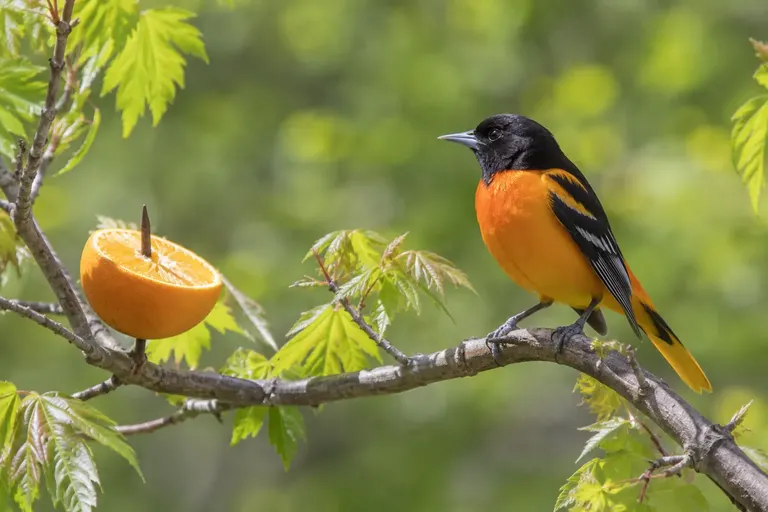
- Mealworms. Live mealworms are the closest thing to natural prey. Dried mealworms are easier to store; many owners report wrens take them more readily once softened in warm water. See our guide to dried mealworms.
- Peanut pieces and peanut butter blends. Shelled, unsalted peanut pieces or peanut hearts in a dish or a fine-mesh feeder are often taken, especially in cold weather.
- Hulled sunflower chips. Not a primary wren food, but fragments that fall from other feeders are sometimes picked up. Hulled chips are easier for a thin-billed bird than whole seed.
Avoid salted nuts, bread and seasoned kitchen scraps. Our list of what not to feed birds explains why.
When feeding matters most
Feeding makes the biggest difference from late fall through early spring. Carolina wrens are sensitive to prolonged cold and ice, and Cornell notes that northern populations drop after severe winters. A reliable supply of high-fat food during a cold snap is one of the most useful things a backyard feeder can offer this species. Our guide to winter bird feeding covers what birds need in the coldest months.
Best feeders for Carolina wrens
The feeder style matters less than where you put it. Wrens work their way through cover, so place food within a few feet of dense shrubs, a hedge or a brush pile, and keep it fairly low.
- Suet cage: a basic wire cage hung on a shrub branch or a short pole beside cover. Wrens cling well and use cages easily. Upside-down suet feeders, which make birds hang underneath, can deter starlings; wrens can usually manage them.
- Small platform or dish feeder: good for mealworms and peanut pieces. A dish with drainage holes and a small roof or baffle keeps food drier. Position it where a wren can hop out of a shrub and back again.
- Window feeder: Carolina wrens are bold around houses and will visit window-mounted dishes if cover is close.
- Mesh peanut feeder: fine mesh lets wrens pull out peanut fragments.
Placement guidance from Cornell and FeederWatch has moved away from a fixed distance rule for windows. Current advice is to use window treatments such as external screens or closely spaced markings to reduce collisions wherever feeders are placed. Our guide to where to put a bird feeder covers cover, height and window safety in detail.
Water for Carolina wrens
Carolina wrens drink and bathe regularly. A shallow basin, no more than 1 to 2 inches deep with a sloped edge, works best. Wrens prefer baths close to cover, so a ground-level dish or a low pedestal bath near shrubs will get more use than a tall bath in the middle of a lawn. In cold climates, a heated bath or de-icer keeps water open during freezes, which is when wrens are under the most stress. Scrub and refill baths every few days to prevent algae and disease.
Plants and habitat that attract Carolina wrens
Why cover beats feeders
A Carolina wren’s day revolves around dense, layered vegetation. It forages in leaf litter, hides from hawks and cats in thickets, roosts in vines and nests in sheltered nooks. If your yard lacks that structure, even the best food may go unused.
Easy habitat upgrades
- Build a brush pile. Stack larger branches at the bottom in a crisscross, then lighter prunings on top. Cornell recommends brush piles for wrens. A pile in a back corner gives shelter, roosting spots and insect-rich foraging.
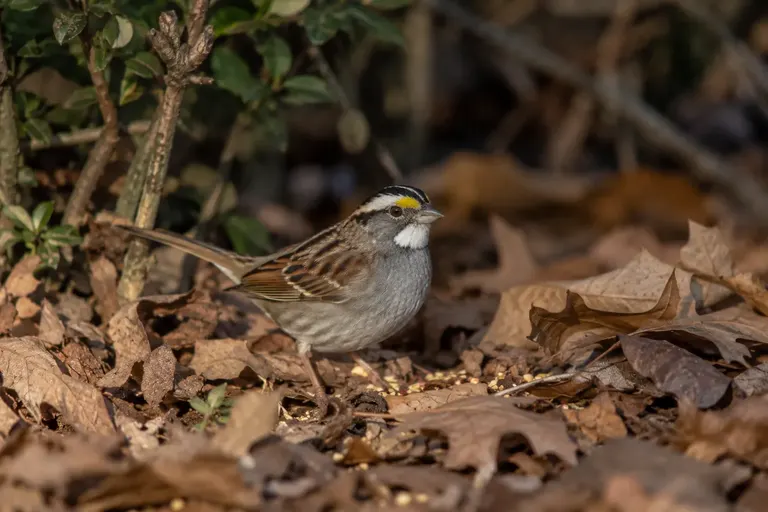
- Leave the leaves. Leaf litter under shrubs is prime hunting ground for insect-eating birds. Rake leaves off the lawn and into beds rather than bagging them.
- Let a hedge or fence line fill in. A strip of shrubs and vines that is only lightly pruned becomes wren habitat quickly.
- Keep some dead wood. Logs, stumps and snags host beetle larvae and spiders.
- Skip broad-spectrum insecticides. They remove the food wrens depend on.
Native plants for Carolina wrens by region
Choose dense, multi-stemmed natives that support insects and provide year-round cover. Check local native plant society or extension lists for species suited to your soil.
Northeast and Midwest
- Eastern redcedar (evergreen cover for winter roosting)
- Arrowwood viburnum and other native viburnums
- Northern bayberry
- Virginia creeper on a fence or trellis
- Native oaks, which support large numbers of caterpillar species
Southeast
- American holly and yaupon holly
- Wax myrtle (southern bayberry)
- American beautyberry
- Crossvine and coral honeysuckle (the native vine, not invasive Japanese honeysuckle)
- Oakleaf hydrangea for dense summer cover
Southern Plains and Texas
- Possumhaw and yaupon holly
- Rusty blackhaw viburnum
- Coralberry
- Native oaks where space allows
Evergreen shrubs and dense vines are especially valuable. They offer winter roosting shelter during the cold nights that stress this species most.
Nest boxes for Carolina wrens
Do Carolina wrens use birdhouses?
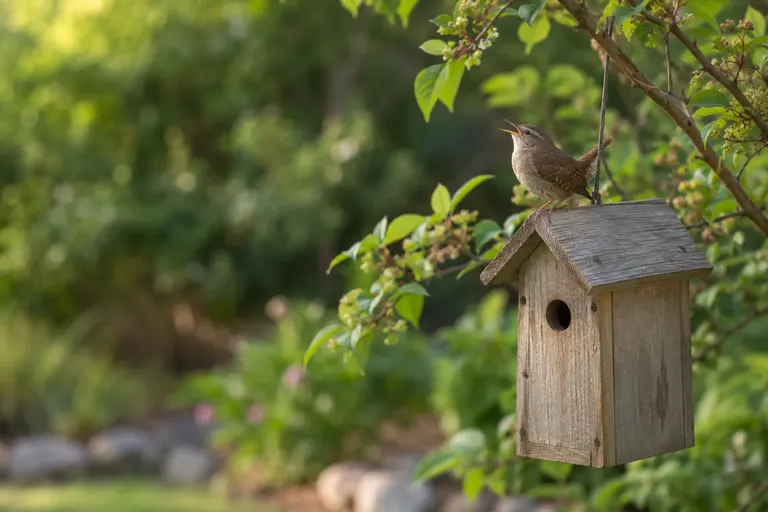
They do, but they are less predictable than bluebirds or house wrens. Cornell and NestWatch both note that near homes, Carolina wrens nest in flowerpots, hanging baskets, mailboxes, propane tank covers, old boots, shelves in open garages and sheds. They like a sheltered, partly enclosed space with cover nearby.
Carolina wren nest box specs
NestWatch publishes a Carolina Wren plan with these dimensions:
| Feature | NestWatch spec |
|---|---|
| Entrance | 2 1/2 in diameter |
| Interior depth | 7 in |
| Floor | 5 x 6 1/2 in |
| Mounting height | 3 to 6 ft |
| Mounting | Attach to buildings; any orientation |
| Spacing | About 330 ft between boxes |
| Peak nesting | April through August across most of the range |
The larger entrance is deliberate. Carolina wrens favor semi-open “pseudocavity” sites, and the design mimics that. Mounting on a building, under an eave, on a porch post or on the wall of a shed is ideal.
How to place a wren box
- Put it up before spring. Pairs begin inspecting sites early, and some roost in boxes all winter.
- Choose a shaded, sheltered spot protected from driving rain, with dense shrubs within easy reach.
- Mount it 3 to 6 feet high on a building or sturdy post.
- Add a predator guard where climbing predators are a risk. On a post, a baffle below the box helps.
- Leave it up year-round. NestWatch advises this in colder regions because wrens use boxes for winter roosting.
- Clean out old nest material after the season ends, since Carolina wrens can raise more than one brood a year.
What to expect when they nest
Males build several starter nests before the pair picks one, so you may find partial nests of leaves and grass in several spots. The finished nest is a bulky cup, often domed with a side entrance, made of bark strips, grass, leaves, pine needles, hair, feathers and sometimes shed snakeskin, string or plastic. Cornell lists 3 to 7 eggs, white or cream with rusty-brown spots, incubated for 12 to 16 days. Young leave the nest 10 to 16 days after hatching. Keep checks brief if you monitor the box, and consider joining NestWatch to record what you see.
Carolina wren seasonal calendar
| Season | What wrens are doing | What to offer |
|---|---|---|
| Winter (Dec to Feb) | Pair holds territory, roosts in boxes, sheds and vines; cold snaps are dangerous | Suet, peanut pieces, mealworms; heated water; leave roost boxes up |
| Early spring (Mar to Apr) | Singing peaks; males build starter nests | Nest boxes in place; keep suet going in the North |
| Late spring to summer (Apr to Aug) | One to three broods; parents carry caterpillars to nestlings | Mealworms help; avoid insecticides; keep cover intact |
| Fall (Sep to Nov) | Young disperse; pairs stay on territory | Build or refresh brush piles; leave leaves; restart suet as it cools |
Common problems and how to fix them
Wrens nesting in awkward places
Carolina wrens sometimes nest in a hanging plant, a grill cover or a coat pocket on a porch hook. Nesting songbirds and their eggs are protected under the federal Migratory Bird Treaty Act, so an active nest must be left alone until the young fledge. Nesting is fairly quick, roughly a month from the start of incubation to fledging. To prevent a repeat, put up a proper wren box nearby before the next season and close off tempting openings.
Wrens in the garage or house
Wrens explore constantly and can wander into open garages. Open the largest door, turn off interior lights and leave. Most find their way out toward daylight within a few minutes.
Starlings eating the suet
Starlings can empty a suet cage fast. An upside-down suet feeder or a cage inside a larger wire guard lets wrens reach the suet while slowing bigger birds. Moving suet off platform feeders and offering it only in cages also helps.
Cats and hawks
Wrens spend much of their time low, which puts them at risk from outdoor cats. Keeping cats indoors is the single most effective step. Dense cover near feeders gives wrens an escape route from hawks.
Summer suet going rancid
In hot weather, plain suet can soften and spoil. Switch to no-melt suet dough in summer, keep amounts small and replace it often.
Common mistakes that keep Carolina wrens away
- Hanging feeders in the middle of an open lawn. Wrens stay near cover. Move food within a few feet of shrubs.
- Offering only seed. Mixed seed and sunflower tubes suit cardinals and finches, not insect-eaters.
- Cleaning up every corner. Removing leaf litter, brush and dead wood removes wren food and shelter.
- Taking the nest box down in fall. Wrens use boxes to roost through winter.
- Mounting the box on an exposed pole in full sun. A sheltered spot on a building suits this species better.
- Stopping suet during a cold snap. That is when wrens need it most.
How to watch Carolina wrens without disturbing them
Carolina wrens are bold near houses, so a window near their favorite shrub often gives excellent views. Low-power binoculars that focus close help with a bird this small. Our guide to binoculars for watching birds from your window covers the specs that matter at short range. If you track what visits your yard, logging wrens on eBird or in Project FeederWatch adds useful winter data on this cold-sensitive species.
Sources

Frequently asked questions
What food attracts Carolina wrens the most?
Carolina wrens eat mostly insects and spiders, so the foods that work best at a feeder copy that diet. Suet, suet dough, peanut pieces and mealworms (live or dried) are the reliable choices, and they matter most in winter when insects are scarce. Offer them low, near dense shrubs or a brush pile, because wrens rarely cross open lawn to reach food.
Do Carolina wrens use birdhouses?
Yes, and they also nest in odd spots near houses such as flowerpots, mailboxes, hanging baskets and propane tank covers. NestWatch's Carolina Wren plan uses a larger 2 1/2 inch opening on a box mounted 3 to 6 feet up, often on a building. Put the box in a sheltered, shady place with thick cover close by.
Do Carolina wrens stay all winter?
Yes. Carolina wrens do not migrate. Pairs stay on the same territory all year and often roost in nest boxes, sheds, garages and dense vines on cold nights. Because they are sensitive to severe cold, northern populations drop after harsh winters, which is why suet and a sheltered roost spot are especially helpful from December through February.
Is it a Carolina wren or a house wren?
A Carolina wren is larger and warmer colored, with rich reddish-brown upperparts, buffy-orange underparts and a long, bold white eyebrow. A house wren is smaller, plain grayish-brown and has only a faint eyebrow. Timing helps too: Carolina wrens are year-round residents in the East, while most house wrens leave northern states for the winter.
How many times a year do Carolina wrens nest?
According to Cornell Lab of Ornithology data, Carolina wrens raise one to three broods a year, with 3 to 7 eggs per clutch. Incubation lasts about 12 to 16 days and the young leave the nest roughly 10 to 16 days after hatching. Peak nesting runs from about April through August across much of the range.