Can You Feed Birds Peanut Butter?
Can you feed birds peanut butter? Yes. Plain, unsalted, xylitol-free peanut butter is a safe, high-fat treat, best mixed with cornmeal or oats and kept fresh.
In this article
- Quick answer: peanut butter safety at a glance
- Why do birds like peanut butter?
- Is peanut butter bad for birds? The myths and the facts
- How to choose peanut butter for birds
- How to prepare peanut butter for birds
- Which birds eat peanut butter around the world?
- What are the downsides of feeding peanut butter?
- Common mistakes with peanut butter for birds
- Peanut butter vs other fat-rich foods
- How much peanut butter should I put out?
- Is peanut butter better than whole peanuts?
- Is peanut butter safe for baby birds?
- Quick facts
- The bottom line
- Sources
- Frequently asked questions
Yes, you can feed birds peanut butter. Plain peanut butter is rich in fat and protein, and chickadees, tits, nuthatches, woodpeckers, wrens and jays eat it eagerly. The rules are short: choose a product with no xylitol and little or no added salt or sugar, mix it with cornmeal or oats so it is crumbly, offer it in small amounts (above about 70°F, only what disappears in a day), and replace it before it goes rancid or moldy.
The worry that peanut butter glues birds’ beaks shut or chokes them is mostly folklore. Mixing it with a dry ingredient is still a good habit, because it makes the food easier to eat, stretches it further and keeps it off feathers.
Quick answer: peanut butter safety at a glance
| Question | Short answer |
|---|---|
| Is peanut butter safe for birds? | Yes, plain peanut butter is safe in moderation |
| Does it choke birds? | Little evidence; mixing with cornmeal or oats makes it crumbly |
| Which kind is best? | Natural, unsalted, peanuts as the only or main ingredient |
| What to avoid | Xylitol, chocolate, honey or flavored blends, heavy added sugar and salt, anything moldy |
| Best season | Autumn to spring; take care in hot weather |
| Main risks | Rancidity and mold, attracting squirrels, rats and bears |
Why do birds like peanut butter?
It is dense energy
Peanuts are roughly half fat by weight and about a quarter protein. Peanut butter concentrates that into a soft, easy food. For a small bird trying to put on fat before a long winter night, that is valuable. Birds that feed on insects and seeds, such as chickadees and tits, readily switch to fat-rich foods in cold weather.
It mimics foods birds already eat
Many peanut butter fans are birds that naturally probe bark crevices for insect eggs, larvae and spiders, or store fatty seeds and nuts. Nuthatches, woodpeckers, titmice and chickadees all fit that profile. A log drilled with holes and packed with peanut butter mix is not so different from tree bark full of hidden food. You can read more about caching behavior in our article on why birds hoard food.
It reaches birds that ignore seed
Some birds seldom eat seed but will eat soft fat. Carolina Wrens, Brown Creepers, Yellow-rumped Warblers, Northern Mockingbirds and, in Europe, European Robins and Dunnocks may all sample peanut butter mixes, especially in winter when insects are scarce.
Is peanut butter bad for birds? The myths and the facts
Myth: Peanut butter sticks to birds’ mouths and chokes them
This is the most repeated warning, and it is surprisingly weak. There is no body of evidence showing birds choking on peanut butter, and backyard feeders have offered it for generations. Birds take small bites and have a strong, muscular tongue and swallowing reflex. That said, very sticky, pure peanut butter in hot weather can smear and clump, so many conservation groups and experienced feeders still recommend mixing it with dry ingredients. It costs nothing and removes any doubt.
Myth: Birds cannot digest peanuts
False. Many birds eat peanuts in the wild where they grow, and peanuts are a long-established food at feeders in North America and Europe. The digestive challenge for birds is lactose and certain toxins, not peanuts.
Fact: Some peanut butters contain harmful additives
The real risk is in the label. Some reduced-sugar or specialty nut butters contain xylitol, a sugar alcohol that is highly toxic to dogs. Its effects on wild birds are not well studied, so the safe approach is simply to avoid it. Chocolate, which contains theobromine and caffeine, is known to be toxic to birds. Honey-roasted and flavored blends add sugar and other ingredients birds do not need.
Fact: Mold is a genuine hazard
Peanuts can carry aflatoxins, poisons produced by the molds Aspergillus flavus and Aspergillus parasiticus, particularly when nuts are stored warm and damp. Studies of aflatoxin in birds, mostly poultry and ducks, show liver damage at high doses. Peanut butter sold for human consumption in the US and Europe is tested and regulated for aflatoxin, which is one reason food-grade peanut butter is a sensible choice. The problem arises when peanut butter or peanut mixes sit outdoors in warm, wet weather and grow mold. If you see fuzz, discoloration or smell anything sour or stale, throw it out.
Fact: Salt and sugar are best kept low
Birds are small, and a food that is only mildly salty for us is a bigger dose for a 0.4-ounce chickadee. Standard peanut butter contains modest salt, and most sources treat an occasional serving as low risk, but choosing no-salt-added or natural peanut butter avoids the question.
How to choose peanut butter for birds
Read the ingredient list, not the front of the jar. The best choice:
- Lists peanuts as the first and ideally only ingredient.
- Has no added xylitol, sometimes labeled as birch sugar.
- Is unsalted or low in salt.
- Has little or no added sugar, honey or syrup.
- Contains no chocolate, flavorings or added spices.
- Is well within its best-by date and smells fresh.
Some suppliers make peanut butter specifically for birds, sometimes as jars, tubs or ready-made “peanut butter suet”. These are designed to stay firmer outdoors and usually avoid additives. Human-grade natural peanut butter works just as well when mixed with dry ingredients.
How to prepare peanut butter for birds
The basic crumbly mix
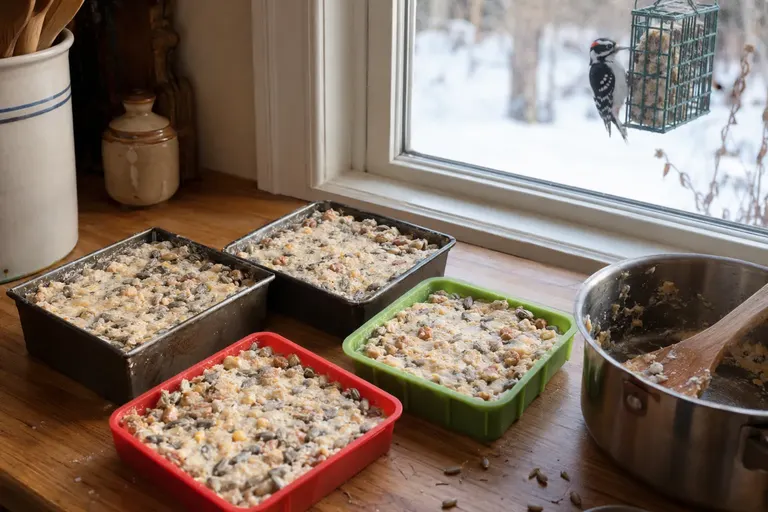
A simple ratio that many people use is roughly one part peanut butter to three to five parts dry ingredients by volume. Adjust until it holds together when pressed but crumbles easily.
- Put one cup of plain peanut butter in a bowl.
- Add three to four cups of yellow cornmeal, rolled oats or plain flour, or a combination.
- Optionally add a handful of sunflower hearts, chopped unsalted peanuts or raisins.
- Mix by hand or with a sturdy spoon until the texture is like damp cookie dough that breaks apart.
- Press into log feeders, pine cones or a suet cage, or roll into small balls for a tray.
- Store the rest in a sealed container in the refrigerator and use within a week or two.
For a firmer, weather-resistant version, blend peanut butter with rendered suet or lard. Our guide to how to make homemade suet covers melting, mixing and molding.
Ways to serve it
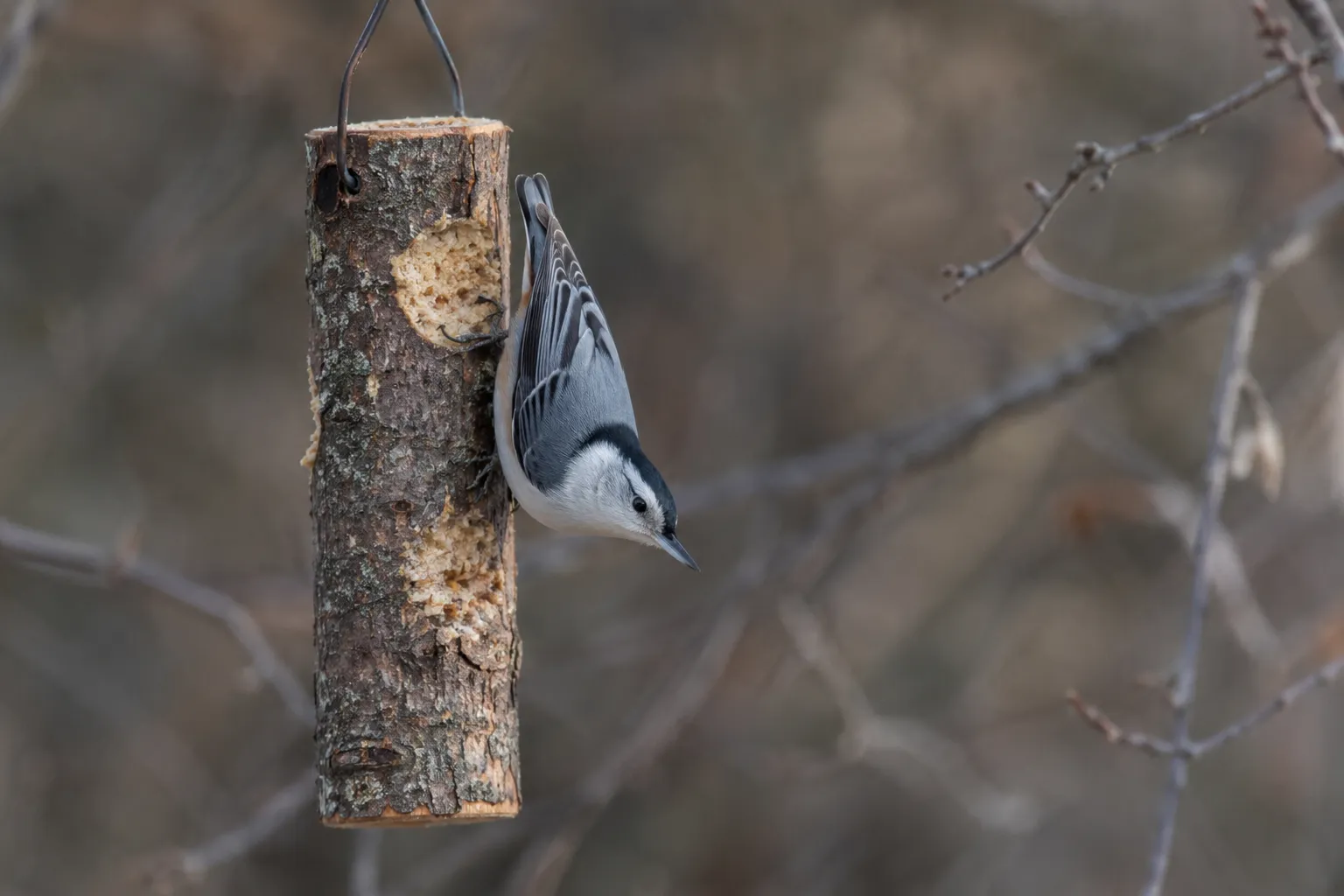
- Log feeders: A short, hanging log with holes drilled about an inch wide and deep. Woodpeckers, nuthatches and chickadees cling and probe, which mimics natural foraging.
- Pine cones: Smear the mix into the scales and roll in seed. It is a classic family project, but pine cones are one-use, so hang them where you can remove them before they spoil.
- Tree bark: Press small amounts into crevices of a rough-barked tree. Brown Creepers and nuthatches work the bark naturally.
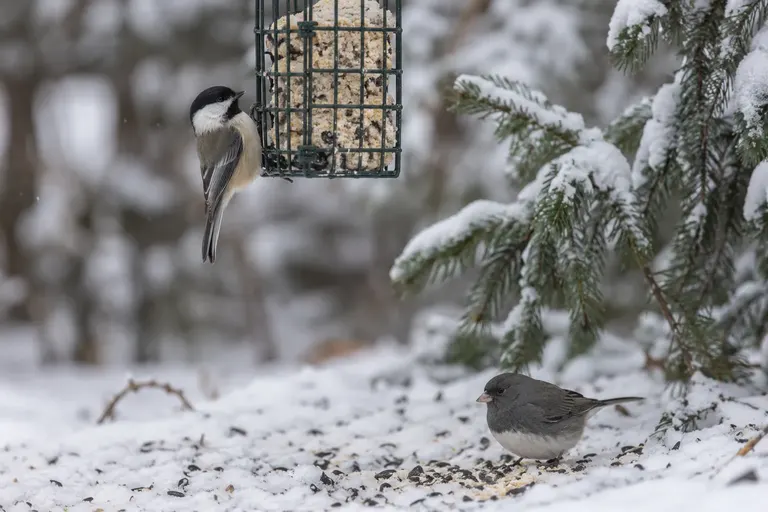
- Suet cages: Pack firm mix into a standard suet cage. See our picks of suet feeders for cage styles that suit woodpeckers.
- Trays: Crumble small pieces onto a platform for wrens, robins, mockingbirds and European Robins that prefer to feed low.
Which birds eat peanut butter around the world?
North America
Black-capped and Carolina Chickadees, Tufted Titmice, White-breasted and Red-breasted Nuthatches, Downy, Hairy and Red-bellied Woodpeckers, Northern Flickers, Blue Jays, Carolina Wrens, Northern Mockingbirds, Brown Creepers and Yellow-rumped Warblers are all known to eat peanut butter mixes. European Starlings eat it too, often in groups. Our species guide to the White-breasted Nuthatch covers its other favorite foods.
Europe and the UK
Blue Tits, Great Tits, Coal Tits and Marsh Tits take peanut butter readily, as do Eurasian Nuthatches, Great Spotted Woodpeckers and European Robins. Long-tailed Tits, which travel in family flocks, are frequent visitors to fat-based foods in cold weather. UK bird food suppliers sell peanut butter in jars designed to slot into feeders, which shows how popular it has become there.
Turkey
Great Tits, Blue Tits, Eurasian Nuthatches, Syrian and Great Spotted Woodpeckers and European Robins are the likeliest takers, particularly in wooded suburbs and parks in winter.
Brazil
Peanut butter is less traditional as a bird food in Brazil, where fruit feeders dominate. In cooler southern regions, thrushes, tanagers and woodpeckers may sample a peanut and cornmeal mix, but fruit such as banana and papaya will usually draw far more birds. Heat and humidity also shorten how long peanut butter stays fresh outdoors.
What are the downsides of feeding peanut butter?
It attracts mammals
Squirrels love peanut butter, and so do raccoons, rats, mice and, in bear country, black bears. If you live where bears are active, take all feeders down in spring, summer and autumn as local wildlife agencies advise. For rats, see our guide on keeping rats away from bird feeders.
It can attract starlings in large numbers
European Starlings in North America can empty a peanut butter log quickly. Upside-down suet feeders and cages that require clinging favor woodpeckers and nuthatches over starlings.
It spoils in warm weather
Above roughly 70 to 80°F (21 to 27°C), peanut butter softens, drips and can coat feathers. Oily feathers lose some of their insulation and waterproofing. It also turns rancid faster in heat and sun. In summer, offer only small amounts in the shade and replace them frequently, or switch to other foods.
It is costly per serving
Peanut butter is more expensive than seed. Mixing it with cornmeal or oats makes it go several times further without reducing its appeal.
Common mistakes with peanut butter for birds
- Buying a jar without reading the label. Check for xylitol, chocolate and added sugar.
- Serving it pure and thick in hot weather. Mix it with dry ingredients and keep portions small.
- Leaving old peanut butter out for weeks. Replace it when it darkens, smells stale or shows mold.
- Using it as the only food. Peanut butter is a treat and a supplement. A varied diet of seed, suet, fruit and insects is better.
- Using honey-roasted or salted peanuts in mixes. Plain, unsalted nuts only.
- Putting it where cats can ambush birds. Clinging birds focused on a log feeder are vulnerable. Place feeders within a short dash of cover but away from dense ground cover where cats hide.
- Ignoring feeder hygiene. Sticky residue collects droppings and mold. Wash log feeders and cages regularly with hot, soapy water and let them dry fully. Our routine for how to clean bird feeders works for these too.
Peanut butter vs other fat-rich foods
| Food | Fat content | Ease of use | Best season | Notes |
|---|---|---|---|---|
| Peanut butter mix | High | Easy; mix and press | Autumn to spring | Check label for xylitol and sugar |
| Suet cakes | Very high | Very easy | Winter; no-melt types in summer | Ready-made, firm, long-lasting in cold |
| Shelled peanuts | High | Easy in a mesh feeder | Year round in mesh | Must be dry and mold-free |
| Black oil sunflower | High | Very easy | Year round | Most versatile seed |
| Mealworms | Moderate fat, high protein | Easy | Year round | Good for insect eaters |
For most yards, peanut butter works best as one item on the menu, alongside sunflower and suet. Our guide to what to feed birds in winter puts all of these foods in context.
How much peanut butter should I put out?
Less than most people expect. A good starting point is a few tablespoons of mix per feeder, or one log feeder packed with mix. Watch how long it lasts. If it is gone in a day, you can offer a little more. If it is still there after three or four days in mild weather, you are offering too much, and the leftover portion is ageing in the open.
A few practical guidelines help:
- In cold weather (below freezing), a peanut butter mix can stay usable for a week or more, because low temperatures slow rancidity and mold.
- In mild weather (roughly 40 to 65°F, or 4 to 18°C), aim to replace any uneaten mix every three to four days.
- In warm weather (above about 70°F, or 21°C), offer only what disappears in a day, and put it in the shade.
- After rain, check the mix. Wet cornmeal and oats can sour and mold quickly, especially in soft, sticky pockets.
Does feeding peanut butter change bird behavior?
Rich foods can concentrate birds at one spot. That is part of the appeal for watchers, but crowding raises the risk of spreading disease at any feeder. Keeping portions modest, spreading several small feeding points around the yard and cleaning regularly all reduce contact between birds. If you see sick-looking birds, fluffed up, lethargic or with crusty eyes, take feeders down for a week or two and clean them thoroughly before rehanging.
Is peanut butter better than whole peanuts?
They do slightly different jobs.
Whole or shelled peanuts in a mesh feeder make birds work to peck off small fragments. That slows consumption, so a feeder lasts longer, and it favors agile birds such as tits, nuthatches and woodpeckers. Jays and crows will carry off whole peanuts in the shell to cache them, which is entertaining to watch but empties a tray fast.
Peanut butter mixes are easier to eat quickly, which is useful on the coldest mornings, and they reach birds with weaker bills, such as wrens, creepers and small warblers, that would struggle with a hard nut. Mixes also let you stretch the peanut content with cheaper cornmeal or oats.
Many backyard feeders use both: a mesh peanut feeder for tits, jays and woodpeckers, plus a log or cage of peanut butter mix for clinging birds. Just make sure all peanuts are sold for bird or human consumption, stored dry and discarded at the first sign of mold. Nuts stored in a damp shed are a bigger aflatoxin risk than a sealed jar of peanut butter.
Is peanut butter safe for baby birds?
Parents of some species may carry small bits of soft food, including peanut butter mix, to nestlings. There is no clear evidence this is harmful in moderation, but nestlings of most songbirds need a diet dominated by insects, which supply protein and moisture that fatty foods cannot. For that reason, many people reduce peanut butter and increase mealworms or insect-rich suet in late spring and summer. Never try to hand-feed a baby bird peanut butter; a grounded or orphaned nestling needs a licensed wildlife rehabilitator.
Quick facts
- Peanuts are about 50 percent fat and roughly 25 percent protein by weight.
- The choking myth has little evidence behind it, but crumbly mixes are still the best practice.
- Xylitol is the key ingredient to avoid.
- Aflatoxins from mold are the main food-safety concern with peanuts; food-grade products are tested for them.
- Log feeders mimic bark foraging and suit nuthatches, woodpeckers and chickadees.
- In warm weather, peanut butter softens, smears and spoils faster.
The bottom line
Peanut butter is one of the easiest and most effective ways to bring clinging birds such as chickadees, tits, nuthatches and woodpeckers close to the house. Keep it plain, keep it crumbly, keep it fresh, and use it as part of a varied menu. For foods that are genuinely risky, see our list of what not to feed birds.
Sources
- Cornell Lab of Ornithology, All About Birds: White-breasted Nuthatch
- Cornell Lab of Ornithology, All About Birds: Carolina Wren
- Cornell Lab of Ornithology and Birds Canada: Project FeederWatch
- Royal Society for the Protection of Birds: rspb.org.uk
- National Audubon Society: audubon.org
Frequently asked questions
Can peanut butter get stuck in a bird's throat?
This is a common worry, but there is little evidence that birds choke on peanut butter. Birds have been eating it at feeders for decades. Many experts still suggest mixing it with cornmeal, oats or flour so it is crumbly rather than sticky, which makes it easier to eat in small bites, stretches it further and keeps it from smearing on feathers.
Is crunchy or smooth peanut butter better for birds?
Either works. Smooth is easier to spread into log holes and pine cones, while crunchy adds small peanut pieces that birds pick out. What matters more is the ingredient list: choose a plain peanut butter made from peanuts alone, or peanuts with a little salt, and avoid products with xylitol, chocolate, honey blends or large amounts of added sugar.
Can birds eat peanut butter with salt in it?
A small amount of salt in a standard peanut butter is not usually considered dangerous in a varied diet, but unsalted is the better choice. Birds are small, and salty foods are best avoided. Look for no-salt-added or natural peanut butter, and use it as one food among several rather than the main food at your feeders.
Which birds eat peanut butter?
In North America, chickadees, titmice, nuthatches, woodpeckers, Carolina Wrens, jays, Northern Mockingbirds and Yellow-rumped Warblers readily eat it. In Europe, Blue Tits, Great Tits, Coal Tits, Eurasian Nuthatches, Great Spotted Woodpeckers and European Robins take peanut butter mixes and peanut-flavored fat cakes. Starlings and squirrels will eat it too.
Can I feed birds peanut butter in summer?
You can, but with care. Peanut butter softens in heat, smears onto feathers and goes rancid faster. In warm weather, offer small amounts mixed with cornmeal or oats, place it in the shade, and replace it every day or two. Many people switch to peanut butter only in cooler months and use seed or mealworms in summer.