How to Attract House Finches (and Keep Them Healthy)
How to attract House Finches: black oil sunflower in a tube or hopper feeder, clean feeders to prevent eye disease, and shrubs or ledges nearby for nesting.
In this article
- House Finch at a glance
- How to identify a House Finch
- Where House Finches came from
- What do House Finches eat?
- Best feeders for House Finches
- House Finch eye disease: how to keep your flock healthy
- Nesting: where House Finches build
- Step by step: attract House Finches in the first few weeks
- How House Finches behave at feeders
- Plants and habitat for House Finches
- Seasonal calendar for House Finches
- Common problems with House Finches
- Common mistakes
- Sources
- Frequently asked questions
Here is how to attract House Finches: hang a tube or hopper feeder filled with black oil sunflower seed near shrubs or small trees, and keep it clean. That is all it takes; House Finches are social, adaptable birds that live comfortably in towns and suburbs, and once a flock finds a reliable feeder it visits every day. The harder part is hosting them responsibly, because a crowded, dirty feeder can spread a serious eye disease that has caused steep declines in some populations since 1994.
House Finches are among the most common feeder birds in North America. The rosy-headed males sing a long, cheerful, warbling song from rooftops and wires much of the year, and pairs nest in places most birds would never consider, from hanging baskets to porch lights.
House Finch at a glance
| Trait | Details |
|---|---|
| Size | 5.1 to 5.5 in long, 0.6 to 0.9 oz, wingspan 7.9 to 9.8 in (sparrow-sized, slimmer than a House Sparrow) |
| Range | Across the US and southern Canada, into Mexico; native in the West, introduced in the East |
| Season | Year-round residents in most of their range |
| Diet | Almost entirely plant food: seeds, buds and fruit |
| Feeder type | Tube, hopper and platform feeders; also nyjer feeders |
| Food | Black oil sunflower, hulled sunflower, nyjer, small seeds |
| Nesting | Cup nests in trees, shrubs, cacti, ledges, vents, hanging planters |
| Conservation | Low concern; about 40 million breeding birds |
How to identify a House Finch
House Finches are small, with a large stout bill, a somewhat long, flat head and short wings that make the tail look long. The tail has only a shallow notch. They tend to sit still on a feeder, crushing seeds with rapid bites, and fly with a bouncy, undulating flight.
Male, female and juvenile
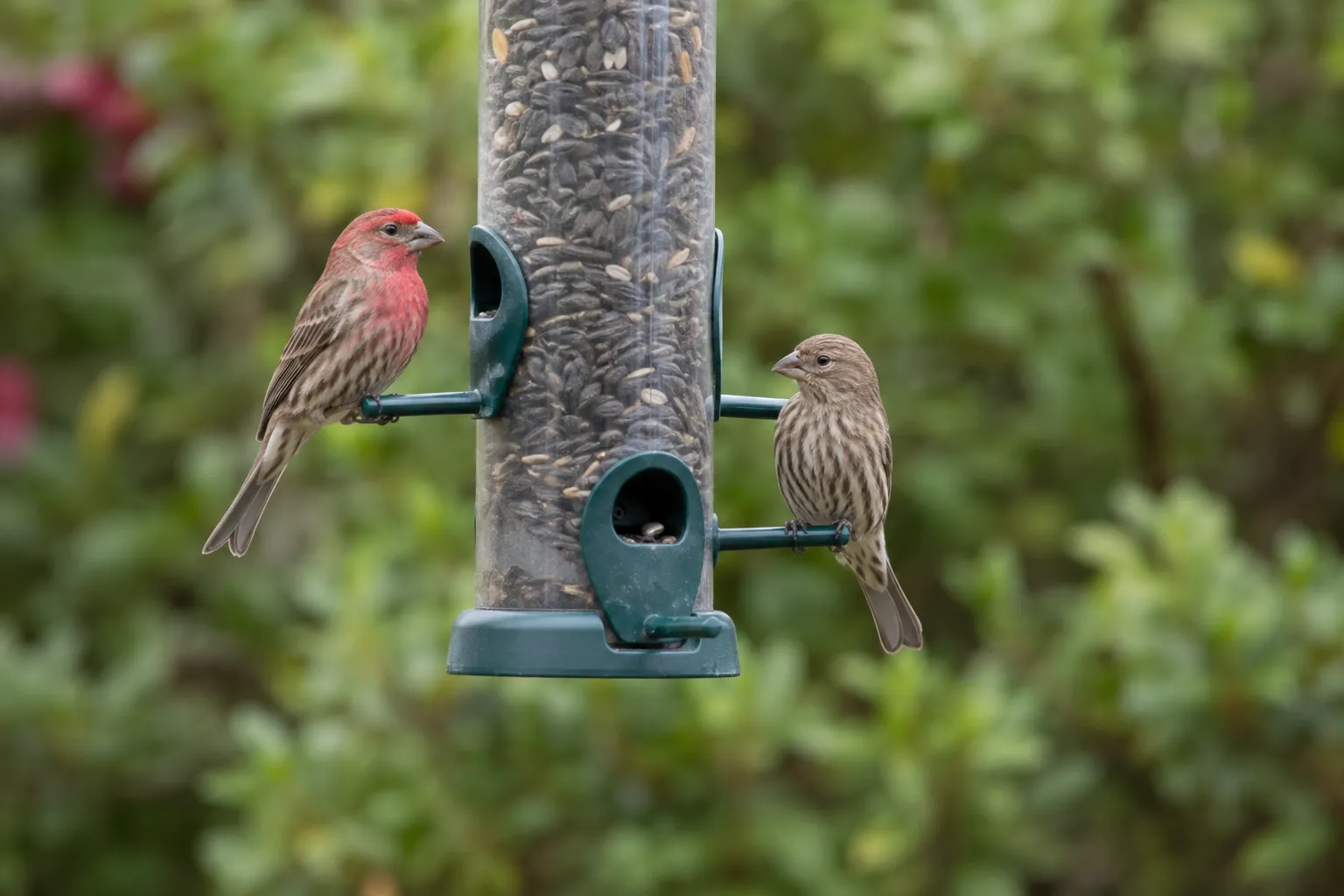
- Adult male: rosy red on the forehead, eyebrow, throat and upper breast, with a red rump that shows in flight. The back, belly and tail are brown with blurry streaks. The red is strongest on the head and breast and fades into streaked flanks.
- Female: plain grayish-brown overall with thick, blurry streaks on the underparts and an indistinct face pattern. No red at all.
- Juvenile: similar to the female, with fresher, softer-looking plumage in summer and fall.
Why some males are orange or yellow
The red color comes from carotenoid pigments in the food a male eats while molting. The Cornell Lab notes that the more carotenoid-rich food a bird eats, the redder it becomes, so males range from bright red through orange to yellow. Research on House Finches has found that females tend to prefer the reddest males, which makes plumage color a signal of how well a male finds food. A yellow House Finch at your feeder is not a different species.
House Finch vs Purple Finch vs Cassin’s Finch
| Feature | House Finch | Purple Finch | Cassin’s Finch |
|---|---|---|---|
| Male color | Red on head, breast and rump | Raspberry wash over head, back and breast | Bright red crown contrasting with paler face |
| Belly and flanks | Brown streaks | Little streaking, mostly clean | Fine streaking |
| Female face | Plain, no strong pattern | Bold pale eyebrow and dark cheek | Crisp fine streaks, subtle face pattern |
| Where | Towns and suburbs across US | Northern and eastern forests; winter at feeders | Western mountain conifer forests |
The Cornell Lab sums up the main differences: Purple Finches show less streaking on the belly and more saturated color, while Cassin’s Finches have a distinctive red crown rather than an all-red face. Pine Siskins can resemble female House Finches, but siskins are smaller, with a thin pointed bill and yellow edging on the wings and tail. If a streaky brown bird has no yellow at all and a thick bill, it is more likely a female House Finch. Bill shape, streaking and face pattern are the three clues to check first.
House Finch vs House Sparrow
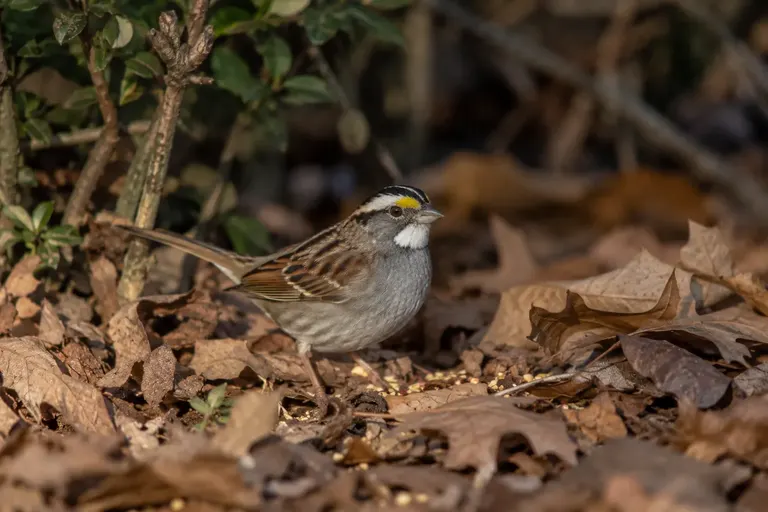
The two often share feeders. Male House Sparrows have a gray crown, a black bib and chestnut on the head, with no red. Female House Sparrows are plain buff-brown with a pale eyebrow and unstreaked breast, while female House Finches are streaked below.
House Finch song and calls
The male’s song is a long, jumbled, warbling phrase that often ends in a rising or slurred note, and males sing through much of the year from rooftops, antennas and treetops. Females sometimes sing too, more briefly. The common call is a sharp, chirping “cheep,” given in flight and around feeders. Because the song is loud and familiar around homes, it is often the first clue that House Finches are nearby before any come to a feeder.
Where House Finches came from
House Finches are native to the western United States and Mexico, where they live in deserts, grasslands, chaparral, oak savannah, streamsides and open forests below about 6,000 feet. The eastern population has a stranger history. The Cornell Lab reports that birds shipped east for the cage-bird trade were released on Long Island, New York, in 1940, after they failed to sell. They began breeding and within about 50 years had spread across almost all of the eastern US and southern Canada. They were also introduced to Hawaii before 1870 and were abundant on all the major islands by 1901.
Because they are a native North American species, House Finches are protected under the Migratory Bird Treaty Act, unlike the introduced House Sparrow and European Starling.
What do House Finches eat?
The Cornell Lab describes House Finches as nearly herbivorous. They eat seeds, buds and fruits, both wild and cultivated. In the wild that includes weed seeds such as dandelion, thistle and mustard, plus buds and flowers in spring. They also eat orchard fruit such as cherries, peaches and plums.
A notable fact from the Cornell Lab: House Finches feed their nestlings exclusively plant food, which is rare among songbirds. Most seed-eaters switch to insects for their young.
Best foods for House Finches
- Black oil sunflower seed. The top choice. Thin shells, high fat and easy to crack. Our guide to black oil sunflower seed explains why it is the one seed to start with.
- Hulled sunflower (chips or hearts). No shells to clean up, and eaten readily. Useful on patios.
- Nyjer. House Finches share nyjer feeders with goldfinches and siskins.
- Small seeds and blends. White proso millet and quality mixes built around sunflower are eaten, especially from platform feeders.
- Fruit. They will sample soft fruit, but seed is far more important.
Cheap mixes packed with milo, wheat and red millet are mostly left uneaten. See our list of the best bird seed for blends that avoid filler.
Best feeders for House Finches
House Finches are comfortable on almost any feeder with a perch or ledge.
- Tube feeders: a sunflower tube with multiple ports suits them well and limits access for larger birds.
- Hopper feeders: hold plenty of seed for a hungry flock, and protect it from rain.
- Platform feeders: easy access, but seed gets wet and dirty faster, which matters for disease risk.
- Nyjer feeders: our roundup of finch feeders for nyjer seed covers mesh and tube styles that goldfinches and House Finches both use.
For a broader comparison of styles, see our guide to the best bird feeders.
Where to put a House Finch feeder
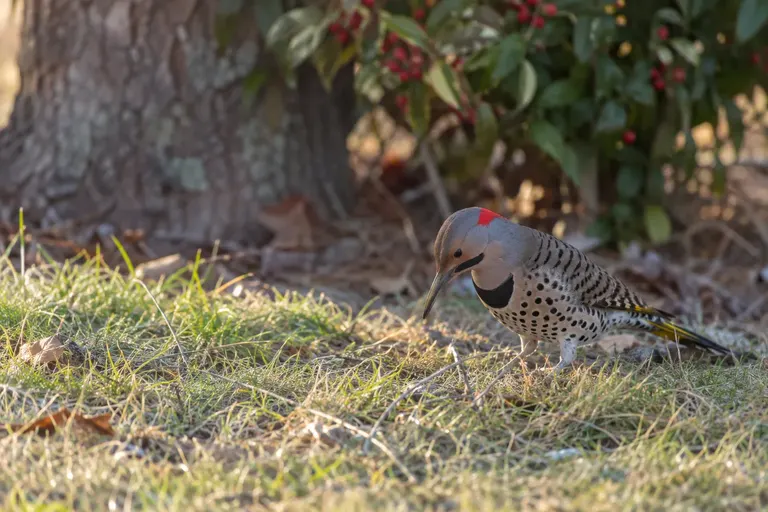
House Finches like to perch in nearby shrubs or small trees before coming to a feeder. Place feeders within a short hop of cover, and in view of a window you actually look out of. They are not shy about decks, patios or small city yards, which makes them one of the best species for balcony feeders.
House Finch eye disease: how to keep your flock healthy
This is the most important part of hosting House Finches. Mycoplasmal conjunctivitis is caused by a strain of the bacterium Mycoplasma gallisepticum. According to Project FeederWatch, it was first documented in winter 1993 to 1994 in Virginia and Maryland and then spread across North America. The Cornell Lab notes it has caused steep declines in some House Finch populations since 1994.
Symptoms
Infected birds have red, swollen, runny or crusty eyes. In severe cases the eyes swell shut and birds cannot see, which leaves them vulnerable to starvation and predators. Sick birds often sit fluffed up and lethargic on or near the feeder.
The disease has also been confirmed in American Goldfinches, Purple Finches, Evening Grosbeaks and Pine Grosbeaks. FeederWatch reports it poses no known health threat to humans.
How to reduce the spread
- Clean feeders regularly. FeederWatch recommends a 10 percent bleach solution, 1 part bleach to 9 parts water. Scrub, soak, rinse thoroughly and let the feeder dry before refilling. Our guide on how to clean bird feeders walks through the process.
- Space feeders apart. Crowding brings birds face to face at ports, where the bacteria spread.
- Clean up underneath. Rake or remove old seed and droppings below feeders.
- If you see sick birds, act. Take feeders down for a while and clean them thoroughly, which encourages the flock to disperse. Our guide to sick birds at the feeder explains when and how long to pause feeding.
Nesting: where House Finches build
House Finches are famous for choosing odd nest sites. The Cornell Lab lists trees, cacti, rock ledges and building structures such as vents, ledges and planters. Owners commonly report nests in hanging flower baskets, porch light fixtures and front-door wreaths.
| Stage | Details (Cornell Lab) |
|---|---|
| Nest | Cup of fine stems, leaves, rootlets, thin twigs, string, wool and feathers, 3 to 7 in across |
| Clutch | 2 to 6 eggs |
| Eggs | Pale blue to white, lightly speckled with black and purple |
| Incubation | 13 to 14 days |
| Nestling period | 12 to 19 days |
| Broods | 1 to 6 per season |
House Finches rarely use enclosed nest boxes. They prefer an open cup on a ledge or in dense branches. A dense shrub, small conifer or a climbing vine on a trellis gives them natural sites.
A nest in your hanging basket or wreath
Once eggs are laid, the nest is protected, so leave it in place. Water the basket carefully at the edge, or pause watering briefly, and use a different door if the wreath is on your main entrance. The young fledge within a few weeks. After they leave, you can remove the old nest.
Step by step: attract House Finches in the first few weeks
If you have never had House Finches in your yard, this sequence gives you the best odds.
- Choose one good feeder. A tube or hopper feeder that holds black oil sunflower and comes apart for cleaning.
- Put it near cover. Within a short flight of a shrub, hedge or small tree, where finches can perch and look before landing.
- Fill it with fresh seed. Stale or damp seed is a common reason new feeders are ignored.
- Scatter a small handful on the ground or a tray. Visible seed helps birds notice the station. Only put out what will be eaten in a day.
- Add water. A shallow, clean birdbath nearby brings finches that may then notice the feeder.
- Keep it filled. House Finches travel in flocks and remember reliable food. An empty feeder for a week can send a flock elsewhere.
- Start a cleaning routine. Clean the feeder every week or two, more often in wet weather or when crowds are large.
Most yards in towns and suburbs sit within range of a House Finch flock, so many owners see them within days or weeks. If nothing happens, our guide to why birds are not coming to a new feeder covers the usual causes.
How House Finches behave at feeders
The Cornell Lab describes House Finches as highly social. Outside the breeding season they are rarely alone, and winter flocks can number in the hundreds. At a feeder they tend to settle in and eat steadily, crushing seed after seed, rather than grabbing one and flying off the way chickadees and titmice do. That habit is one reason a flock of House Finches can empty a tube quickly.
In late winter and spring you may see courtship feeding: a male passes food to a female, sometimes after she begs with fluttering wings like a fledgling. Pairs form well before nesting starts, so seeing birds in twos at the feeder is a sign that nesting is not far off.
House Finches also bring their young to feeders. Fledglings follow adults, and beg with quivering wings for food. Because pairs can raise several broods a season, adults may already be starting another nest while the last family is still visiting. Watching a family group is one of the easiest ways to see breeding behavior up close.
Plants and habitat for House Finches
House Finches like open, settled landscapes with scattered trees and shrubs, which describes most suburbs. To add natural food:
- Let seed heads stand. Sunflowers, coneflowers, black-eyed Susans, asters and native grasses supply seed into fall and winter.
- Grow fruiting trees and shrubs. Serviceberry, native cherries and elderberry provide fruit in summer.
- Offer dense cover. Small evergreens and thick shrubs give roosting and nesting sites.
- Provide water. A clean birdbath draws finches year-round and especially in dry summers.
Seasonal calendar for House Finches
| Season | Behavior | What to offer |
|---|---|---|
| Winter | Flocks at feeders, sometimes large; the Cornell Lab notes flocks can reach several hundred | Sunflower, hulled seed, open water; clean feeders often |
| Early spring | Males sing, courtship feeding, nest building | Sunflower, nest sites in shrubs and ledges |
| Spring to summer | Multiple broods; families bring young to feeders | Sunflower, water, seed heads |
| Late summer to fall | Molt; males regain color from their diet | Sunflower, native seed and fruit plants |
Common problems with House Finches
Too many House Finches crowding out other birds
A large flock can empty a feeder fast. Offering food at several separate stations reduces crowding (which also helps with disease). Switching one feeder to safflower may shift the mix, since some owners report House Finches eat it less eagerly than sunflower, though results vary.
House Finches eating garden fruit and buds
They sometimes take cherries, plums and flower buds. Netting protects small fruit trees.
Birds hitting windows
Flocks that flush suddenly from a feeder near the house can strike reflective glass. Treating the outside of nearby windows with screens, film or dot patterns is the most reliable fix, and our guide to where to put a bird feeder covers placement in more detail.
Common mistakes
- Letting feeders go weeks without cleaning. This is the single biggest risk to House Finches.
- Crowding many ports into one spot. Spread feeders out.
- Buying filler-heavy seed mixes. Most of it ends up on the ground.
- Removing a nest with eggs. Wait until the young fledge.
- Ignoring a sick bird. Take feeders down and clean them when you see swollen eyes.
Sources
Frequently asked questions
What is the best food to attract House Finches?
Black oil sunflower seed. The Cornell Lab notes House Finches prefer it at feeders, and it also draws chickadees, titmice, cardinals and nuthatches. They also eat hulled sunflower chips, nyjer and other small seeds. Once a flock finds a well-stocked feeder, the Cornell Lab says it may bring 50 or more birds.
Why do some House Finches have swollen, crusty eyes?
That is usually mycoplasmal conjunctivitis, a bacterial disease first seen in House Finches in winter 1993 to 1994 in Virginia and Maryland. Birds show red, swollen, runny or crusty eyes. Project FeederWatch advises cleaning feeders with a solution of 1 part bleach to 9 parts water, spacing feeders apart and removing old seed below them. It poses no known threat to humans.
How do I tell a House Finch from a Purple Finch?
Male House Finches show red mainly on the head, breast and rump, with brown streaks on the belly and flanks. Male Purple Finches look more evenly raspberry-washed, as if dipped in color, with less streaking on the belly. Female Purple Finches have a bold face pattern with a pale eyebrow, while female House Finches have a plain face.
Are House Finches native?
They are native to the western United States and Mexico. In the East they descend from birds released on Long Island, New York, in 1940 after failing to sell as cage birds. Within about 50 years they spread across almost all of the eastern US and southern Canada. They are a native North American species and are federally protected.
Where do House Finches nest?
Almost anywhere with a ledge or cup-shaped space: trees, shrubs, cacti, rock ledges, building vents, porch light fixtures, hanging planters and door wreaths. The female builds a cup of fine stems, twigs, string and feathers and lays 2 to 6 pale blue, speckled eggs. Pairs may raise several broods a year.