Brown Creeper: How to Attract Them to Your Yard
Brown Creeper guide: this bark-colored bird eats insects, so attract it with big trees, suet or peanut butter on trunks, no pesticides and loose-barked snags.
In this article
- Brown Creeper at a glance
- What does a Brown Creeper look like?
- How do you tell a Brown Creeper from a nuthatch?
- What do Brown Creepers eat?
- Do Brown Creepers come to bird feeders?
- How do you make your yard creeper-friendly?
- How do you find a Brown Creeper?
- When will you see Brown Creepers?
- Where do Brown Creepers nest?
- Are Brown Creepers declining?
- Is there a Brown Creeper in Europe?
- Is it worth trying to attract them?
- Sources
- Frequently asked questions
To attract a Brown Creeper, give it big trees first and food second. This tiny bark-colored bird eats insects and spiders it probes from tree bark, so keep large old trees, skip pesticides, and in winter smear suet or peanut butter directly onto a rough trunk. Expect visits mostly from fall through early spring.
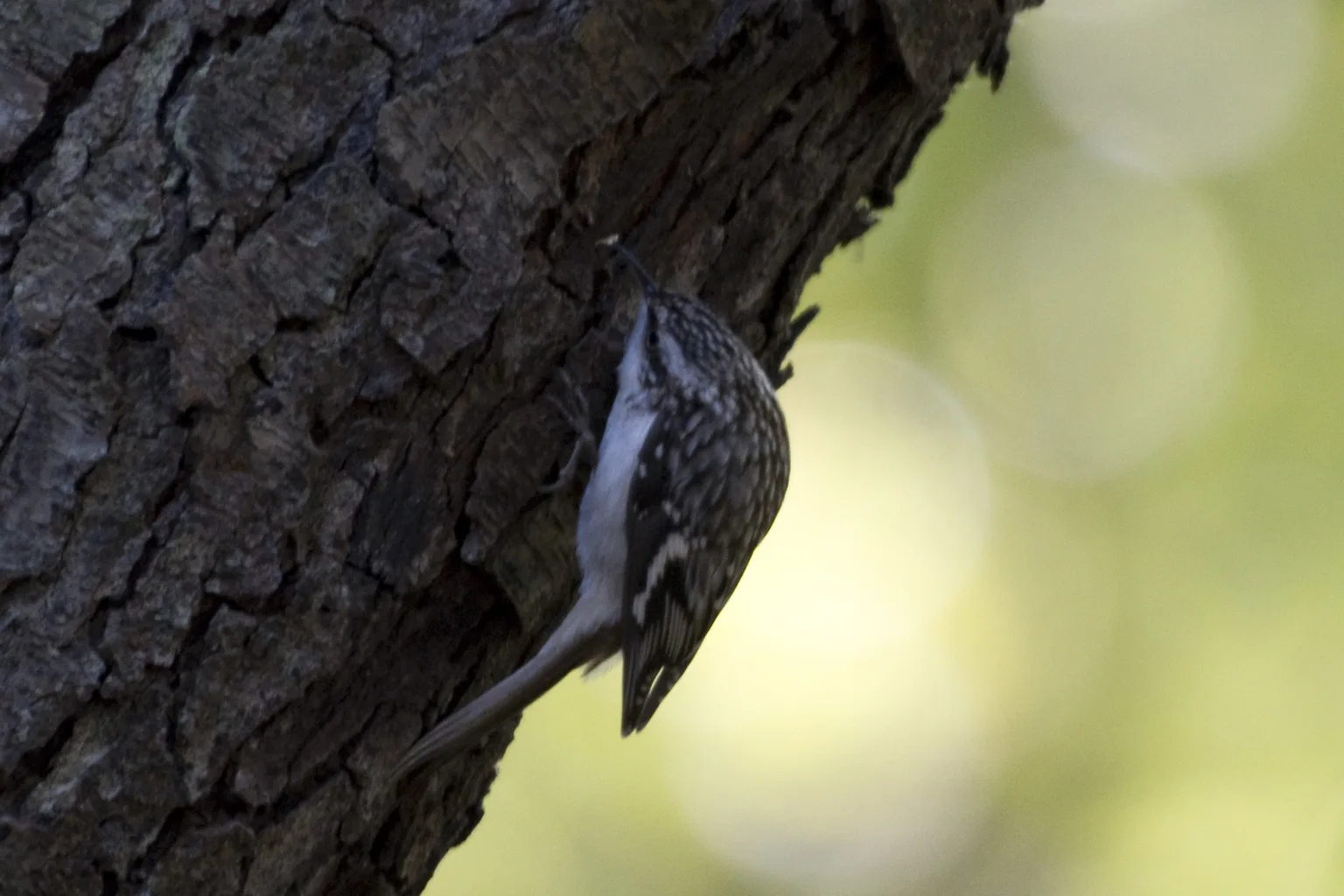
The Brown Creeper (Certhia americana) is easy to miss. It looks like a scrap of bark that suddenly starts moving, and it almost never sits on a feeder perch. Plan your yard around the trunk, not the feeder.
Brown Creeper at a glance
| Feature | Details |
|---|---|
| Length | 4.7 to 5.5 in (12 to 14 cm) |
| Weight | 0.2 to 0.3 oz (5 to 10 g) |
| Wingspan | 6.7 to 7.9 in (17 to 20 cm) |
| Key marks | Streaked brown and buff back, white underparts, pale stripe over the eye, long stiff tail, thin curved bill |
| Diet | Insects, larvae and spiders from bark; some seeds in winter |
| Best yard foods | Suet, peanut butter, hulled sunflower |
| Habitat | Mature forests with large trees; in winter also suburbs, parks and orchards |
| Nest | Hammock-shaped nest behind loose bark, not a standard nest box |
| Conservation | Low Concern (Cornell Lab) |
Measurements from the Cornell Lab’s All About Birds identification page.
What does a Brown Creeper look like?
It’s a tiny, slim songbird that is streaked brown and buff above with white underparts. The Cornell Lab describes a long, spine-tipped tail, a slim body and a slender, downcurved bill, plus a broad buffy stripe over the eye.
Size helps you place it. The Cornell Lab says it’s smaller than a White-breasted Nuthatch but larger than a Golden-crowned Kinglet. Audubon adds a whitish throat and a rusty base to the tail, and sums the bird up as looking “like a piece of bark come to life.”
Because the white belly is usually pressed against the trunk, what you mostly see is a moving patch of streaky brown. Look for motion low on a big trunk, then follow it upward.
How do you tell a Brown Creeper from a nuthatch?
Watch which way it climbs. A Brown Creeper hitches upward in a spiral and flies down to the base of the next tree, while nuthatches often climb headfirst down trunks.
| Look at | Brown Creeper | White-breasted Nuthatch |
|---|---|---|
| Direction | Climbs up, rarely down | Often climbs headfirst down |
| Tail | Long and stiff, used as a brace | Short, not used as a prop |
| Bill | Thin and downcurved | Straight, slightly upturned |
| Colors | Streaked brown above, white below | Blue-gray above, white face and belly |
| At feeders | Rarely perches; feeds on trunks | Comes readily to seed and suet feeders |
Behavior from the Cornell Lab and Birds and Blooms. If nuthatches already visit you, our White-breasted Nuthatch guide shows how they use the same trees in a different way.
What do Brown Creepers eat?
Mostly insects and spiders hidden in bark. The Cornell Lab lists stinkbugs, fruit flies, beetles, weevils, moths, ants, spiders and pseudoscorpions, gleaned and probed from bark with that long curved bill.
Audubon highlights insect eggs and pupae tucked into bark crevices, along with leafhoppers, scale insects, aphids and caterpillars. Winter food is still mainly arthropods, but the Cornell Lab says it may include seeds and plant material, and the bird occasionally visits feeders.
The Cornell Lab notes a striking energy fact: a creeper burns only about 4 to 10 calories a day, and a single spider gives it enough energy to climb roughly 200 feet up a trunk. Every insect hiding in your bark counts.
Do Brown Creepers come to bird feeders?
Sometimes, in winter, if the food is on or near a trunk. The Cornell Lab’s backyard tips say winter diets may include suet, peanut butter, sunflower seeds, pine seeds, grass seeds and corn.
The trick is placement. A creeper feeds by climbing bark, so it rarely lands on a tube perch. Birds and Blooms suggests offering suet or peanut butter smeared on tree trunks in winter, along with hulled sunflower seeds. Here’s how to set that up:
- Smear it on the bark. Press a little suet or peanut butter into the crevices of a rough-barked trunk. Our guide on feeding birds peanut butter covers which kinds are safe.
- Hang a suet cage flat against a trunk. A cage mounted tight to the bark lets a creeper hitch up and feed without perching. See our suet feeder guide for cage styles and the suet guide for which cakes to buy.
- Make your own soft mix. Crumbly homemade suet presses into bark better than a hard block. A homemade mix works well here.
- Add hulled sunflower nearby. Birds and Blooms lists them as a creeper option, and they keep the chickadees and nuthatches creepers travel with coming back.
Keep expectations realistic. A creeper at the suet is a bonus. Most of its food will still come from the bark around it.
How do you make your yard creeper-friendly?
Keep big trees, keep insects alive and leave some loose bark. These steps match what the Cornell Lab and Birds and Blooms say creepers need.
| Step | Why it helps creepers | Source |
|---|---|---|
| Keep large, old trees | Creepers seek out the biggest trees for foraging | Cornell Lab |
| Leave safe dead trees with loose bark | Nests sit behind peeling bark on dead or dying trees | Cornell Lab |
| Stop using pesticides | More insects means a better chance of a creeper | Birds and Blooms |
| Let a patch go wild | Unmowed areas raise insect numbers | Birds and Blooms |
| Offer suet on trunks in winter | Matches how creepers feed | Birds and Blooms, Cornell Lab |
1. Keep the biggest trees you have
The Cornell Lab describes Brown Creepers as tiny woodland birds with an affinity for the biggest trees they can find, and says large, old trees raise your odds of seeing one. In summer the Cornell Lab says they favor mature conifer forests with trees such as Douglas-fir, ponderosa pine, spruce and hemlock, and in winter they also use deciduous woods, suburbs, parks and orchards. Rough, deeply furrowed bark gives insects more places to hide.
2. Leave loose bark and safe snags
Creepers nest between a trunk and a slab of loose bark, usually on large dead or dying trees, according to the Cornell Lab. If a dead tree stands where it can’t fall on a house, path or car, consider leaving it. Ask a tree professional if you’re unsure.
3. Stop spraying and let things get a little wild
Cornell Lab biologist Emma Greig told Birds and Blooms not to use pesticides and to let a patch of lawn go “feral,” because more insects mean more chance of a creeper. Fallen leaves help too; read why you should leave the leaves in fall.
4. Feed the winter flock
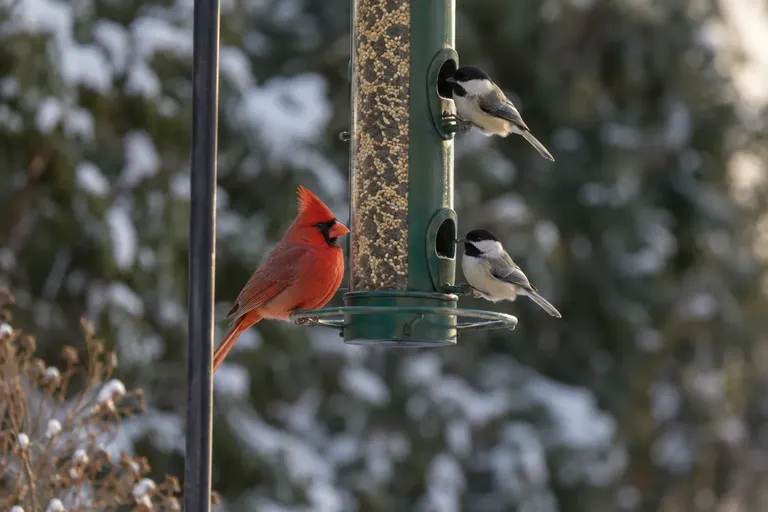
The Cornell Lab notes that creepers join mixed-species flocks and roost communally in winter. A yard that suits Black-capped Chickadees and nuthatches gives a passing creeper a reason to stop.
5. Keep cats indoors
The Cornell Lab lists domestic cats among the creeper’s predators. A bird that feeds low on trunks is exposed, so see our guide to keeping cats and birds safe.
How do you find a Brown Creeper?
Listen and watch the trunks. Creepers are hard to spot by sight alone, and their calls and song are very high and thin, so many people walk right past them.
Emma Greig of the Cornell Lab told Birds and Blooms that creepers scuttle along trees and look a lot like mice. On a quiet winter morning, stop near a large tree when a chickadee flock moves through and listen for thin, high notes. A sound app helps; our guide to Merlin Sound ID explains how to get reliable results. Then scan the lower trunks for a brown shape spiraling upward.
When will you see Brown Creepers?
For most backyards, fall through early spring. The Cornell Lab calls the species a resident to short-distance migrant: northern and high-elevation birds move south or downhill in winter.
| Season | What creepers are doing | What helps |
|---|---|---|
| Fall | Migration peaks late September to early October | Large trees, leaf litter left in place |
| Winter | In deciduous woods, suburbs and parks, often with mixed flocks | Suet or peanut butter on trunks |
| Spring | Migration peaks in April | Pesticide-free trees full of insects |
| Summer | Breeding mostly in mature conifer and mixed forests | Old trees and safe dead trees |
Migration timing from Audubon. The Cornell Lab adds that banding records show some Canadian creepers wintering as far south as North Carolina and Arkansas.
Where do Brown Creepers nest?
Behind loose bark. The Cornell Lab says the female builds a hammock-shaped cup between the trunk and a peeling flap of bark, usually on a large dead or dying tree, from a few feet to 40 feet up.
| Detail | Brown Creeper |
|---|---|
| Nest site | Behind loose bark on a large dead or dying tree |
| Nest materials | Twigs and bark strips held with insect cocoons and spider egg cases, lined with wood fibers, hair, feathers and moss |
| Clutch size | 5 to 6 eggs |
| Incubation | 13 to 17 days |
| Nestling period | 14 to 20 days |
| Broods per year | 1 |
Data from the Cornell Lab’s life history page. The Cornell Lab also notes that creepers sometimes nest in odd spots such as window shutters, roofs and fenceposts, and Birds and Blooms mentions gutters. Standard round-hole birdhouses don’t fit their habit, so keeping old trees does more than any box.
Are Brown Creepers declining?
Not overall. The Cornell Lab rates the species Low Concern, with populations stable to slightly increasing between 1966 and 2019. Partners in Flight estimates about 11 million breeding birds.
Local losses still matter. The Cornell Lab names timber harvesting and forest fragmentation as threats and notes that wildlife managers use the creeper as an indicator of logging impact. Audubon says creepers have declined as breeding birds in some eastern areas because of forest loss, since they nest mainly in mature forest rather than young second growth.
Is there a Brown Creeper in Europe?
No. The Brown Creeper lives in North America. In Europe the Eurasian Treecreeper (Certhia familiaris) and the Short-toed Treecreeper (Certhia brachydactyla) fill the same role, climbing trunks and probing bark for insects.
NABU, the German bird conservation society, says the two European species are best told apart by voice. The same yard advice works for them: keep old trees with rough bark, and in hard winters offer food on or below the trunks, since the French garden-bird survey Oiseaux des Jardins calls the Short-toed Treecreeper a rare feeder visitor.
Is it worth trying to attract them?
Yes, if you have or can keep large trees. A yard of open lawn and young saplings is unlikely to hold a creeper, however good the suet is.
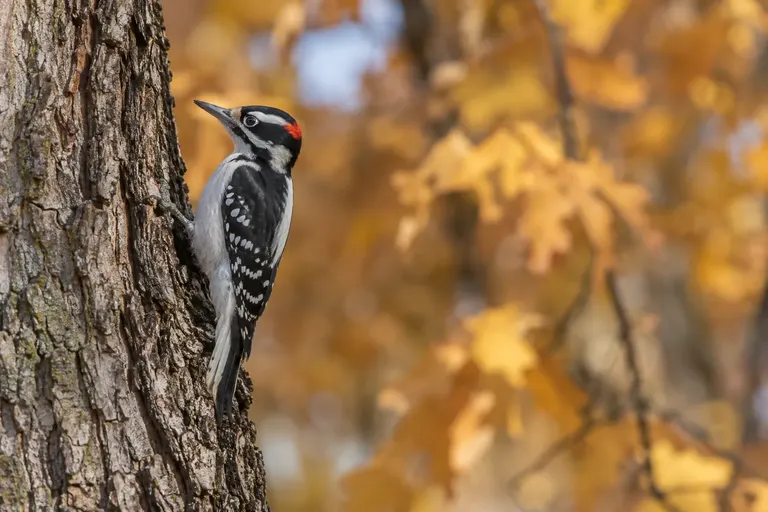
The good news is that every step here also helps woodpeckers like the Downy Woodpecker, plus chickadees and nuthatches. Keep the big trees, stop spraying, press a little suet into the bark on cold days, and watch the trunks for a piece of bark that climbs.
Sources
- Cornell Lab of Ornithology, All About Birds: Brown Creeper Overview
- Cornell Lab of Ornithology, All About Birds: Brown Creeper Identification
- Cornell Lab of Ornithology, All About Birds: Brown Creeper Life History
- Audubon Guide to North American Birds: Brown Creeper
- Birds and Blooms: Brown Creeper
- NABU: Gartenbaumläufer

Frequently asked questions
What do Brown Creepers eat at feeders?
Mostly suet and peanut butter. The Cornell Lab of Ornithology says Brown Creepers eat insects and spiders for most of the year, but in winter they may take suet, peanut butter, sunflower seeds and other seeds. Birds and Blooms suggests smearing suet or peanut butter right onto a tree trunk, because creepers feed by climbing bark and rarely perch on a feeder the way finches do.
Why do Brown Creepers only climb up trees?
That's simply how they forage. The Cornell Lab explains that Brown Creepers hitch upward in a spiral around a trunk, bracing on their long, stiff tail and probing bark with a thin, curved bill. They rarely climb down. At the top they fly to the base of the next tree and start again. Nuthatches are the birds that walk headfirst down trunks.
When can I see Brown Creepers in my yard?
In much of the United States, fall and winter are your best chance. The Cornell Lab describes the species as a resident to short-distance migrant, with northern and mountain birds moving south or downhill for winter. Audubon notes migration peaks in April and from late September to early October. In winter creepers turn up in deciduous woods, suburbs, parks and orchards with large trees.
Do Brown Creepers use birdhouses?
Not normally. The Cornell Lab says they build a hammock-shaped nest tucked between a trunk and a loose flap of bark, usually on a large dead or dying tree. A standard box with a round hole doesn't match that habit. The most useful thing you can do is keep big old trees and, where it's safe, standing dead trees with peeling bark.
Are Brown Creepers rare?
No, they're common but easy to overlook. The Cornell Lab rates them Low Concern, with populations stable to slightly increasing from 1966 to 2019 and an estimated 11 million breeding birds worldwide according to Partners in Flight. Their bark-colored plumage, quiet habits and very high, thin calls are why many people never notice the creeper living in their trees.