How Do Birds Know Where to Migrate?
How do birds know where to migrate? They inherit a direction and schedule, then steer by sun, star and magnetic compasses plus learned maps. Here is how.
In this article
- Quick facts
- Is migration instinct or learned?
- What compasses do birds use?
- Do birds have a map?
- Do young birds follow their parents?
- How do birds know when to go?
- Why do so many birds migrate at night?
- Do birds in the Southern Hemisphere migrate too?
- How do birds find the same yard every year?
- Examples of remarkable navigation
- Why do some birds get lost?
- Myths vs facts about bird navigation
- What this means for backyard birders
- Sources
- Frequently asked questions
Birds know where to migrate through a combination of inherited instructions and learned information. Most are born with a built-in sense of which direction to fly and for roughly how long. To hold that course, they use the sun, the star patterns around the pole and the Earth’s magnetic field. With experience they build a mental map of landmarks and, in some species, smells. Cranes and geese also learn routes from older birds: a 2013 study in Science found young cranes migrated more accurately with experienced birds in the group.
No single sense does all the work. Migration is backed up by redundant systems, and different species rely on them in different mixes. Here is what decades of experiments have shown about each piece.
Quick facts
- Many young songbirds migrate alone on their first trip, guided by an inherited direction and schedule.
- Birds use at least three compasses: the sun, the stars and the Earth’s magnetic field.
- Adults also use a learned map to correct their route. Young birds often cannot.
- Day length and an internal yearly clock trigger migration timing.
- Most small songbirds migrate at night; soaring birds such as storks and hawks migrate by day.
- Some seabirds appear to use smell to navigate over open ocean.
Is migration instinct or learned?
Both. Scientists often describe first-time migration as a “clock and compass” program: an inherited sense of which direction to go (the compass) and for how long (the clock). A young bird does not need to know where its wintering area is. It only needs to fly in the right direction for the right amount of time.
How do we know it is inherited?
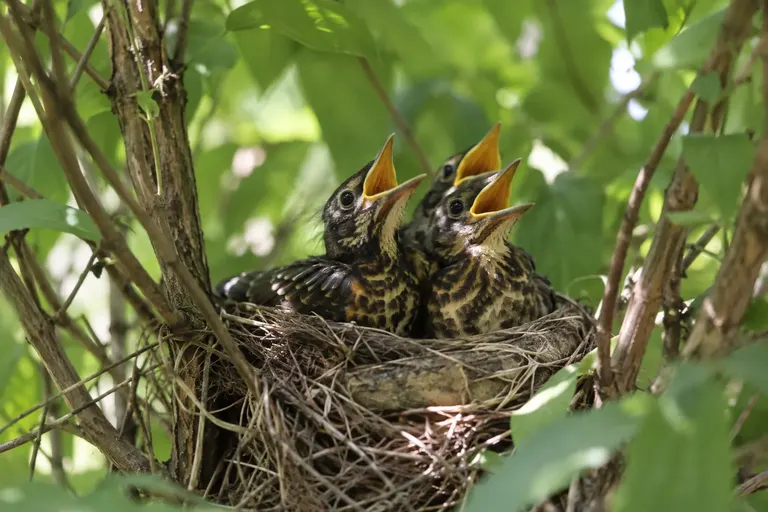
Some of the clearest evidence comes from caged birds. In the migration season, captive migrants become restless at night, hopping and fluttering in a particular direction. This is called Zugunruhe, a German word meaning migratory restlessness. Hand-raised birds that have never migrated or seen another bird do so still show it, pointed roughly the way wild birds of their population fly, and for about as many weeks as the real journey would take.
Research on Blackcaps, a common European warbler, went further. Starting in the late twentieth century, a population of Blackcaps from central Europe began wintering in Britain and Ireland, flying northwest instead of the traditional southwest route toward Spain. Peter Berthold and colleagues raised young from these birds in captivity and found they inherited the new northwest direction. When birds from populations with different directions were crossbred, the young oriented in an intermediate direction. That showed migratory direction is heavily genetic and can evolve within a few decades.
What happens when birds are moved?
A famous experiment in the 1950s by the Dutch biologist A. C. Perdeck tagged thousands of European Starlings caught during fall migration in the Netherlands and transported them to Switzerland before release. Adults, which had migrated before, corrected their course and many headed toward their usual wintering areas in northwestern Europe. Young starlings kept flying in their original inherited direction and ended up far off target, in places such as Spain and southern France.
The lesson: young birds follow a compass. Experienced adults have something more, a map that lets them work out where they are and correct.

What compasses do birds use?
Do birds use the sun?
Yes. In the 1950s, Gustav Kramer showed that caged European Starlings oriented in their migratory direction on sunny days and lost their bearing under overcast skies. When he used mirrors to shift the apparent position of the sun, the birds shifted their direction by the same angle.
The sun moves across the sky, so a sun compass only works if the bird knows the time of day. Birds do this with their internal circadian clock. Experiments that shift a bird’s clock by holding it on an altered light schedule cause predictable errors in its direction, proving the link.
Many birds may also use polarized light patterns in the sky around sunset, which remain visible even when the sun itself is below the horizon. Researchers think this sunset information may help nocturnal migrants calibrate their other compasses before they take off, though the details are still debated.
Do birds navigate by the stars?
Many night migrants do. In classic work in the 1960s and 1970s, Stephen Emlen placed Indigo Buntings in a planetarium and tested their direction under different star patterns. He found they did not rely on a single star. Instead, they learned the center of rotation of the night sky, which in the Northern Hemisphere is near the North Star. Young buntings raised under an artificial sky rotating around a different star treated that new point as north.
This means the star compass is learned during a bird’s early life, by watching which part of the sky stays still. It is a clever solution: the exact positions of stars change over thousands of years, but the pole of rotation remains a reliable reference.
How does the magnetic compass work?
In the 1960s and 1970s, Wolfgang and Roswitha Wiltschko showed that European Robins in cages oriented using the Earth’s magnetic field, and that changing the field with coils changed their direction. Surprisingly, the robins did not sense which end was north or south, as a human compass does. They sensed the tilt, or inclination, of field lines relative to the ground. Field lines point steeply downward near the poles and run level near the equator, so a bird can tell “poleward” from “equatorward.”
The mechanism is still under study. The leading hypothesis involves proteins called cryptochromes in the retina of the eye. When light hits them, they form pairs of molecules with linked electron spins, known as radical pairs, whose chemical behavior can be affected by the direction of a weak magnetic field. A 2021 study in Nature reported that a cryptochrome from European Robins is magnetically sensitive in the laboratory. This supports the idea, but a complete chain from molecule to behavior has not yet been demonstrated.
Weak radio-frequency noise from electronic equipment has been shown in some experiments to disrupt robins’ magnetic orientation, which is consistent with the radical pair idea. For more detail, see our article on whether birds use the Earth’s magnetic field.
How do birds combine the compasses?
Birds seem to calibrate one compass against another, especially around sunset and sunrise. Which cue takes priority can vary with species, age and conditions. This redundancy is useful: if clouds hide the sun and stars, the magnetic compass still works.
Do birds have a map?
A compass tells a bird which way is south. A map tells it where it is. Adult migrants and homing birds clearly have some kind of map, since they correct for displacement, but how it works is one of the least settled parts of the science.
Proposed map cues include:
- Magnetic intensity and inclination, which vary across the Earth’s surface and could, in principle, give a rough position grid.
- Smell. Homing pigeons deprived of smell navigate poorly from unfamiliar places. Studies on shearwaters, seabirds that cross vast stretches of open ocean, found that birds with an impaired sense of smell had trouble navigating over the sea but still did fine near the coast.
- Low-frequency sound (infrasound), which travels long distances and has been proposed as a cue for pigeons, though evidence is limited.
- Familiar landmarks, such as coastlines, rivers and mountain ranges, especially in the final stages of a journey and for day migrants.
An older idea that iron-rich cells in pigeons’ beaks detect magnetism lost support after a 2012 study found those cells were largely immune cells called macrophages, not sensory neurons. The magnetic map question remains open.
Do young birds follow their parents?
For some species, yes, and learning is essential.
- Cranes, geese and swans migrate in family groups, and young birds learn routes and stopover sites from adults. In conservation work with endangered Whooping Cranes, young birds were once led south by ultralight aircraft. A 2013 study in Science found that young cranes migrated more accurately when older, experienced birds were in the group, and that accuracy improved with the age of the oldest bird.
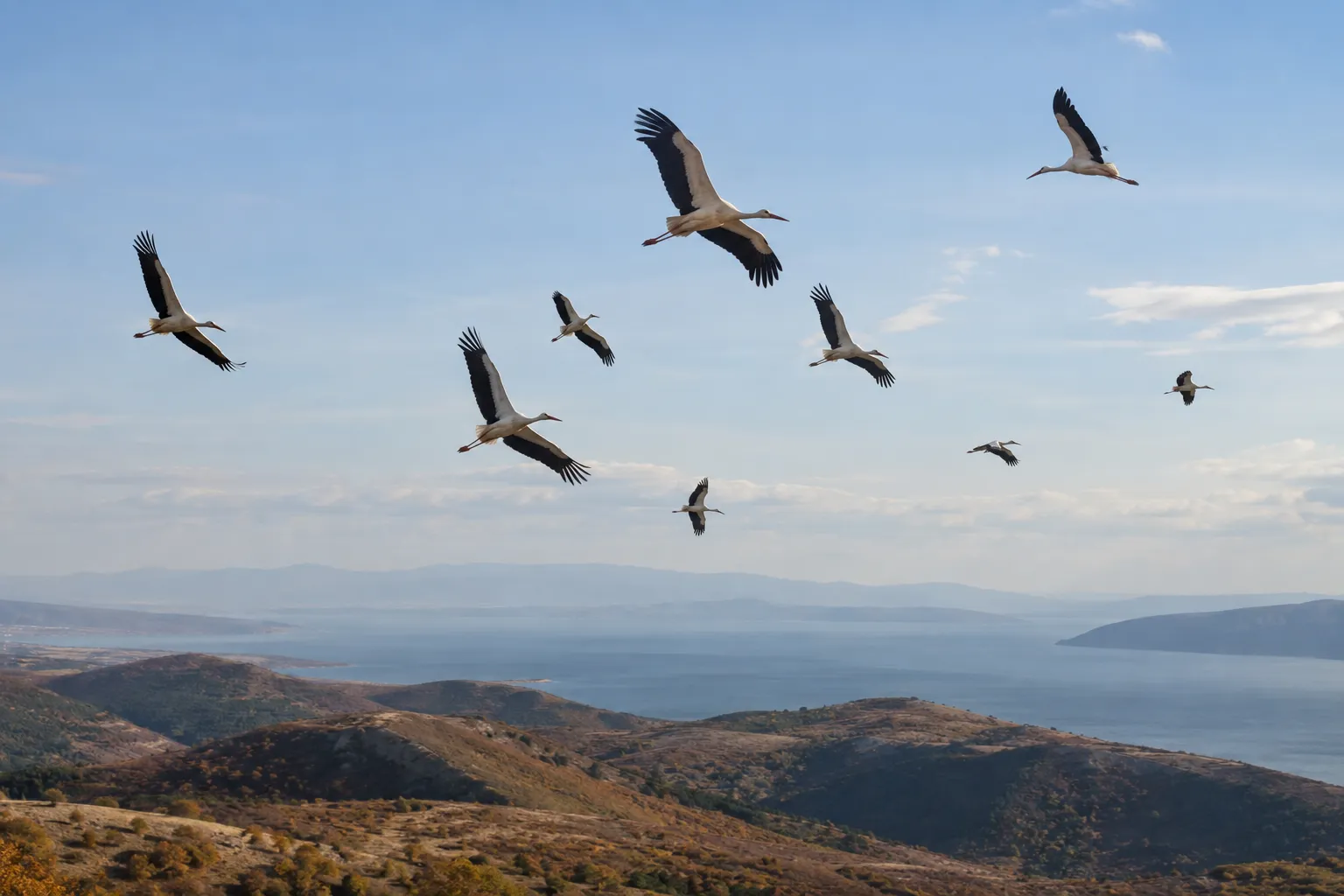
- White Storks often migrate in flocks, and young storks may learn from others. Storks from western Europe tend to cross into Africa at Gibraltar, while those from eastern Europe travel through Turkey, crossing the Bosphorus near Istanbul. Both routes avoid long sea crossings, because storks rely on rising warm air, which forms over land, to soar.
- Many songbirds and cuckoos travel alone. The Common Cuckoo is a striking example: young cuckoos are raised by other species, never meet their own parents, and still migrate from Europe to Africa on their own.
How do birds know when to go?
Timing is controlled by an internal yearly rhythm, called a circannual clock, that is set by day length. In long-term experiments, Eberhard Gwinner kept warblers under constant day length and found they still went through cycles of fattening, restlessness and molt at roughly yearly intervals.
In the wild, lengthening spring days and shortening fall days synchronize this clock. The bird eats more and builds fat, sometimes gaining a large fraction of its body weight before a long flight. Weather then decides the exact night of departure. In North America and Europe, fall songbird migration often surges on clear nights after a cold front brings winds from the north.

Why do so many birds migrate at night?
Most small songbirds, including many warblers, thrushes, vireos, sparrows and flycatchers, do most of their migratory flying after dark. Weather radar regularly picks up huge pulses of birds taking off shortly after sunset on good migration nights. Researchers have proposed several advantages, and they probably act together:
- Cooler, calmer air. Flapping flight generates heat and uses water. Night air is cooler, and the atmosphere is often more stable, which may reduce energy and water loss.
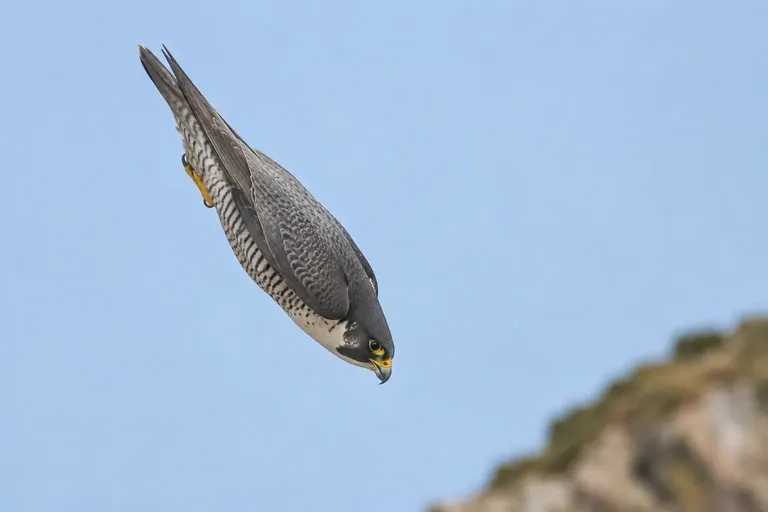
- Fewer predators. Many hawks and falcons hunt by day, so night flight may be safer for small birds.
- Daytime for refueling. Flying at night leaves daylight hours for finding food at stopover sites, which is when songbirds forage best.
- Access to star and sunset cues. Night migrants can calibrate compasses at sunset and use the star compass in flight.
Big soaring birds are the opposite. Storks, eagles, vultures, many hawks and pelicans migrate by day because they depend on thermals, columns of warm rising air that form when the sun heats the ground. They circle up in a thermal, glide to the next one, and repeat, spending little energy on flapping. That is why raptor and stork migration concentrates at places where land bridges avoid wide water, such as the Bosphorus in Turkey, the Strait of Gibraltar and the narrow isthmus of Central America.
Do birds in the Southern Hemisphere migrate too?
Yes, although it gets less attention. In South America, many birds are austral migrants: they breed in the temperate south, in places such as southern Brazil, Argentina and Chile, then move north toward the tropics for the southern winter. Several tyrant flycatchers, including the Fork-tailed Flycatcher, are well-known examples. Other species migrate up and down mountains rather than across latitudes.
The same navigation tools apply. There is no bright pole star in the southern sky, but the star compass does not need one: birds learn the center of the sky’s rotation, whatever stars surround it. The magnetic inclination compass works in both hemispheres too, because it senses the angle of field lines relative to the ground, pointing toward the nearest pole either way.
How do birds find the same yard every year?
Many migrants show strong site fidelity. Banding studies across North America and Europe have recorded individual birds returning to the same breeding territory, and even the same wintering patch, year after year. Some backyard birders notice the same feeder being visited on nearly the same date each spring, and banded birds have confirmed that this can be the same individual.
This precision seems to come from the map and landmark systems. A bird uses its compasses to get into the right region, then switches to familiar features such as coastlines, rivers, forest edges and eventually specific trees and buildings to home in. That final stage is learned, which is why it is mostly adults that show this pinpoint return.

Examples of remarkable navigation
| Species | Region | What makes it impressive |
|---|---|---|
| Bar-tailed Godwit | Alaska to New Zealand | Nonstop flights of roughly 7,000 miles or more across the Pacific, with no chance to land and feed |
| Arctic Tern | Arctic to Antarctic | Among the longest yearly round trips of any animal |
| Common Cuckoo | Europe to Africa | Young migrate alone without ever meeting their parents |
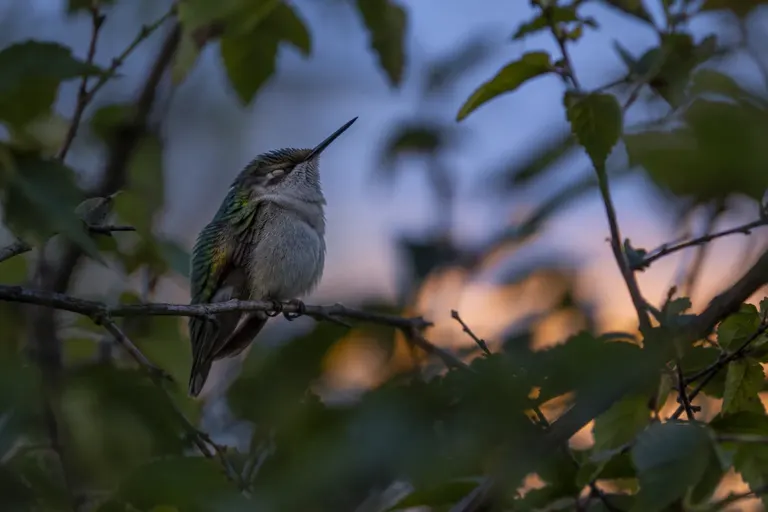
| Ruby-throated Hummingbird | Eastern North America to Central America | Many cross the Gulf of Mexico despite weighing only a few grams |
| White Stork | Europe to Africa via Gibraltar or Turkey | Follows routes that avoid long sea crossings |
| Blackcap | Central Europe | New migration route to Britain evolved within decades |
Read more in our articles on how far birds migrate and which bird migrates the farthest.
Why do some birds get lost?
Despite all this equipment, mistakes happen:
- Reverse or mirror-image migration. Young birds sometimes fly in the opposite or mirror direction of what they should, possibly because of errors in how the inherited program is expressed. This is one explanation for rare vagrants that turn up far from their normal range.
- Storms and winds. Birds can be carried far off course by strong weather, especially over water.
- Artificial light. Night migrants are attracted to and disoriented by bright lights, which can pull them into cities and toward lit buildings. This contributes to large numbers of window collisions during migration. Our guide on how to stop birds hitting windows covers practical fixes.
Myths vs facts about bird navigation
Myth: Birds follow the same exact path every year like a road. Fact: Many adults are faithful to broad routes, stopover sites and wintering areas, but their precise path varies with wind and weather.
Myth: Young birds always follow their parents south. Fact: Many songbirds make the first trip alone, guided by inherited direction and timing.
Myth: Birds use a magnetic compass like ours. Fact: Their compass senses the tilt of the field lines, not north versus south polarity.
Myth: Migration is triggered by cold weather. Fact: Day length and internal clocks are the main triggers. Weather affects the exact timing of departure.
What this means for backyard birders
You can watch many of these ideas in action from home.
- Turn off unneeded outdoor lights during spring and fall migration. Many cities run Lights Out programs to reduce collisions.
- Keep feeders and water clean for stopover visitors. Migrants need to refuel fast. See how to clean a bird feeder.
- Plant native shrubs and trees. Insects and berries on native plants feed passing warblers and thrushes. Our guide to berry shrubs that feed birds is a good starting point.
- Log what you see. Sightings submitted through eBird help scientists map migration timing. Our guide to using eBird explains how.
- Watch weather maps. In fall, a clear night after a cold front is often followed by a morning full of new birds.
Sources


Frequently asked questions
Do baby birds learn migration routes from their parents?
It depends on the species. Many songbirds, such as warblers and cuckoos, make their first migration alone, guided by an inherited direction and schedule. Birds that travel in family groups, such as cranes, geese and swans, learn routes and stopover sites from older birds. Experiments with Whooping Cranes showed young birds migrated more accurately when older, experienced birds were present.
How do birds know when to migrate?
Changing day length is the main trigger in many species, acting on an internal yearly clock. Birds kept under constant conditions in laboratories still show seasonal restlessness and fattening at roughly the right times. Weather then fine-tunes departure: many songbirds leave on nights with favorable tailwinds, often after a cold front passes in fall.
Can birds really sense the Earth's magnetic field?
Yes. Experiments since the 1960s, especially with European Robins, show that many birds use a magnetic compass that senses the angle of field lines rather than their polarity. The leading explanation involves light-sensitive proteins called cryptochromes in the eye, but the exact mechanism is still being studied and is not fully proven.
Do birds migrate at night?
Many do. Most small songbirds, including many warblers, thrushes, sparrows and flycatchers, migrate mainly at night. Night travel may offer cooler air, calmer conditions, fewer predators and daytime for feeding. Many larger soaring birds, such as hawks, storks and pelicans, migrate by day because they need rising warm air to glide.
Why do migrating birds get lost?
Young birds are the most likely to go astray, sometimes flying in a mirror-image or reversed direction, possibly because of errors in their inherited program. Storms can blow birds far off course, and artificial light at night can disorient nocturnal migrants, drawing them into cities where many hit windows.