Do Birds Hibernate? Torpor, the Poorwill and Winter Myths
Do birds hibernate? Almost never. One bird, the Common Poorwill, can stay torpid for weeks. How torpor works, which birds use it and how garden birds cope.
In this article
- Quick answer: how birds get through winter
- Do any birds hibernate?
- What is torpor, and how is it different from hibernation?
- Which birds use torpor?
- Do small garden birds cool down at night?
- Why don’t more birds hibernate?
- The old belief that swallows slept in mud
- Myths vs facts about birds in winter
- What this means for your garden
- Sources
- Frequently asked questions
No, birds do not really hibernate. Almost all birds stay awake and active all winter or migrate to warmer places. The one exception is the Common Poorwill, a nightjar of western North America that can stay in deep torpor for weeks. Many other birds use shorter torpor or let their body temperature drop a few degrees at night.
So the honest answer has two parts. True hibernation, the months-long shutdown that hedgehogs, dormice and bats use, is almost unknown in birds. But the tools behind it, slowing the heart, cooling the body and cutting energy use, are widespread. Birds just use them for hours instead of months.
Quick answer: how birds get through winter
| Strategy | What happens | Typical birds |
|---|---|---|
| Migration | Fly to regions with food | Swallows, swifts, most warblers, many waders |
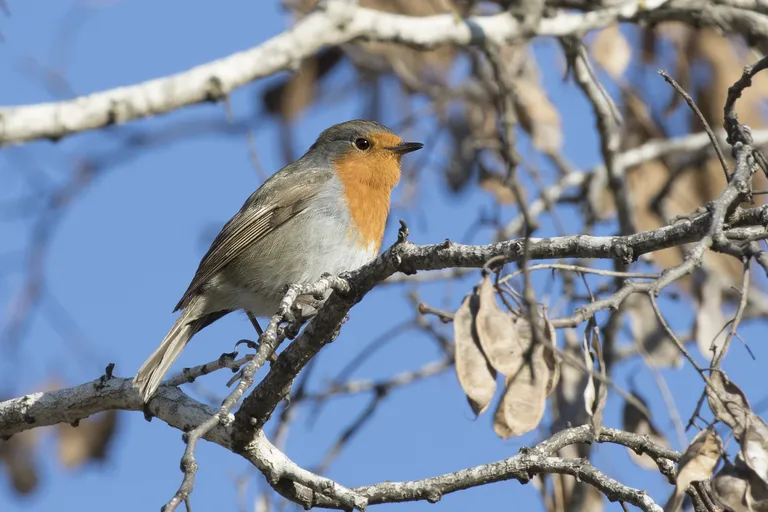
| Staying active | Feed all day, burn fat at night | Tits, chickadees, robins, finches, woodpeckers |
| Nightly cooling (regulated hypothermia) | Body temperature drops a few degrees overnight | Chickadees, great tits and other small songbirds |
| Short torpor | Deep cooling for one night or a few hours | Hummingbirds, some doves, nightjars |
| Long torpor (hibernation-like) | Days to months of torpor | Common Poorwill only |
Do any birds hibernate?
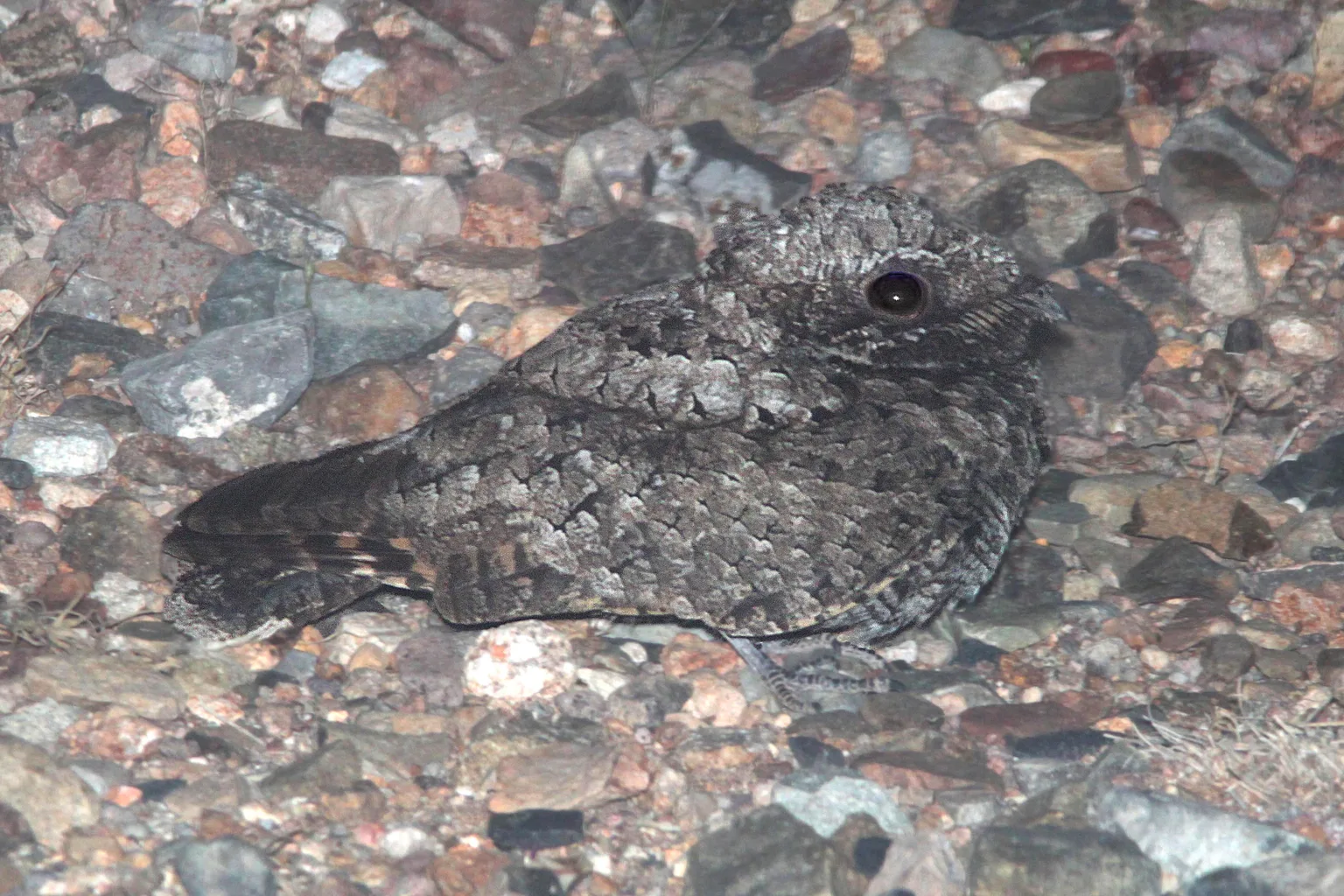
Only one bird is known to come close: the Common Poorwill (Phalaenoptilus nuttallii). Audubon describes its winter state as hibernation-like, with heart rate, breathing and body temperature all slowing, and notes that a poorwill can stay in torpor for hours or even weeks.
The poorwill is a small nightjar of about 18 cm and 36 to 58 grams that lives from British Columbia through the western United States to northern Mexico. On the southern edge of its range, some birds spend much of the winter inactive, tucked into rock piles. They wake as temperatures rise, days lengthen and the flying insects they eat return.
Scientists were slow to accept this. Meriwether Lewis recorded a torpid poorwill in 1804, but nobody recognised what it meant. In 1946 a torpid poorwill was found in the Chuckwalla Mountains of California, and Edmund Jaeger described the behaviour in 1948. It remains the only known case of a bird staying torpid for weeks or months at a time.
What is torpor, and how is it different from hibernation?
Torpor is a controlled drop in body temperature and metabolism that saves energy. Hibernation is essentially long torpor: weeks or months of it, broken by short arousals. The difference is mainly about duration.
| Normal sleep | Nightly cooling | Torpor | Hibernation | |
|---|---|---|---|---|
| Body temperature | Close to normal | A few degrees lower | Far lower, sometimes near air temperature | Far lower |
| Duration | One night | One night | Hours, usually one night | Weeks to months |
| Can the bird react quickly? | Yes | Yes, more slowly | No, it needs time to rewarm | No |
| Example | Most birds | Chickadees, great tits | Hummingbirds | Common Poorwill (closest bird case) |
Birds normally run hot. NABU puts their body temperature at about 38 to 42 °C, several degrees warmer than ours. Keeping that furnace going on a frosty night costs a lot of fuel, which is why lowering the setting, even a little, pays off.
Which birds use torpor?
Torpor is more common than many people think, but it is short-lived in almost every species that uses it.
- Hummingbirds enter torpor on many nights. In a 2020 study in the Peruvian Andes, published in Biology Letters, 24 of 26 hummingbirds from six species went into torpor. One Black Metaltail cooled to 3.3 °C, the lowest body temperature ever recorded in a bird, according to the Cornell Lab of Ornithology. Our guide on whether hummingbirds sleep explains what a torpid hummingbird looks like.
- Nightjars, the poorwill’s family, are the group most strongly linked with long torpor. Audubon notes that the Eastern Whip-poor-will, a close relative, also uses brief torpor.
- Doves can enter brief torpor too, according to Audubon.
In all of these, torpor is a way to survive a cold night or a short spell without food. The bird rewarms, usually by shivering, and gets back to feeding.
Do small garden birds cool down at night?
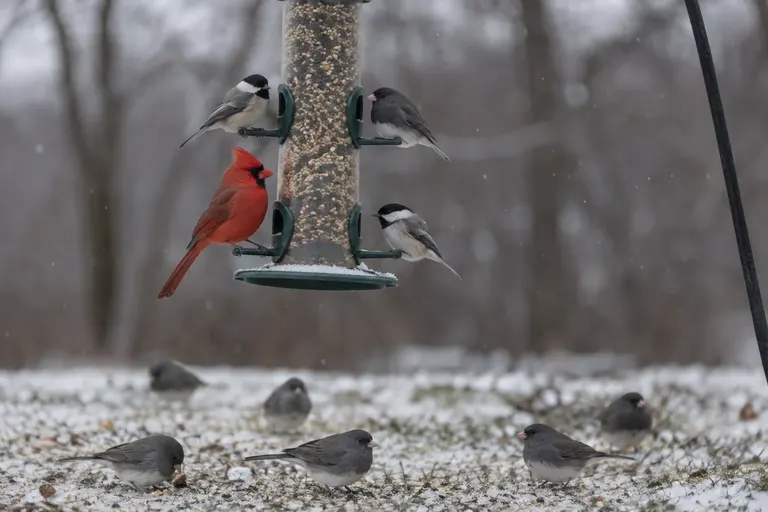
Yes, many do, but they stay well short of torpor. Biologists call this regulated or nocturnal hypothermia: the bird lets its body temperature fall a few degrees and holds it there.
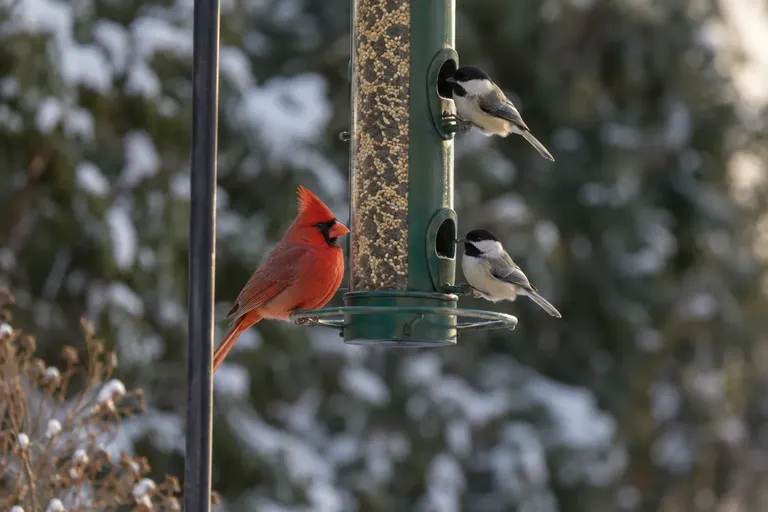
The National Wildlife Federation reports that chickadees lower their body temperature by about 12 to 15 °F (about 7 to 8 °C) at night from a daytime level of around 108 °F (about 42 °C). At freezing air temperatures, that saves almost 25 percent of the energy the bird would otherwise burn each hour. In Alaska, chickadees gain 10 percent or more of their body weight each day in fat, then burn it through 18-hour winter nights.
European birds do the same. A 2020 study of great tits near Lund in southern Sweden, published in Biology Letters by Nilsson and colleagues, found that females given an unpredictable food supply let their body temperature drop further at night than birds with a reliable supply. The authors estimate the saving at about 2.7 percent of energy per night at the temperatures in their study, and cite about 12 percent for mountain chickadees at 0 °C. In other words, birds that are unsure of breakfast turn the heating down further.
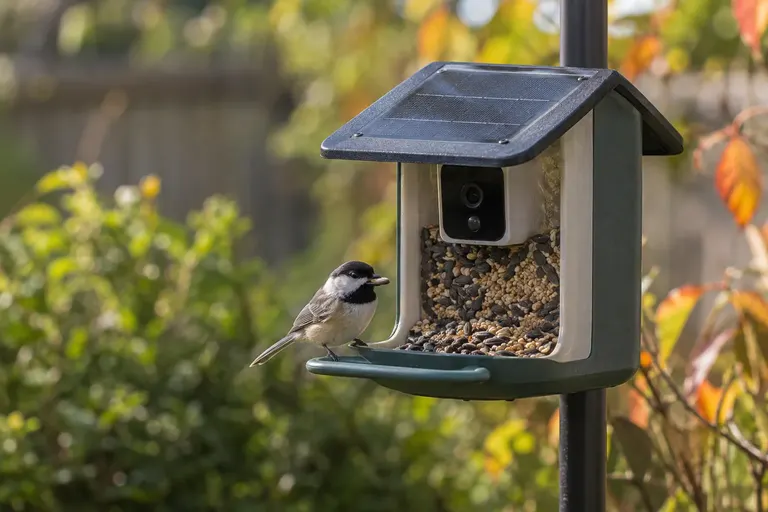
This is also why your feeders matter most late in the day. A small bird needs to go to roost with enough fat to fuel the night, and a reliable feeding station helps it do that. Our guide on how birds stay warm in winter covers feathers, shivering and roosting in more detail.
Why don’t more birds hibernate?
Hibernation works best for animals that can hide somewhere safe and live off stored fat for months. Most birds are built the other way around.
- Flight limits fat. Carrying months of fuel would make a bird too heavy to fly well, and flight is how birds escape predators and find food.
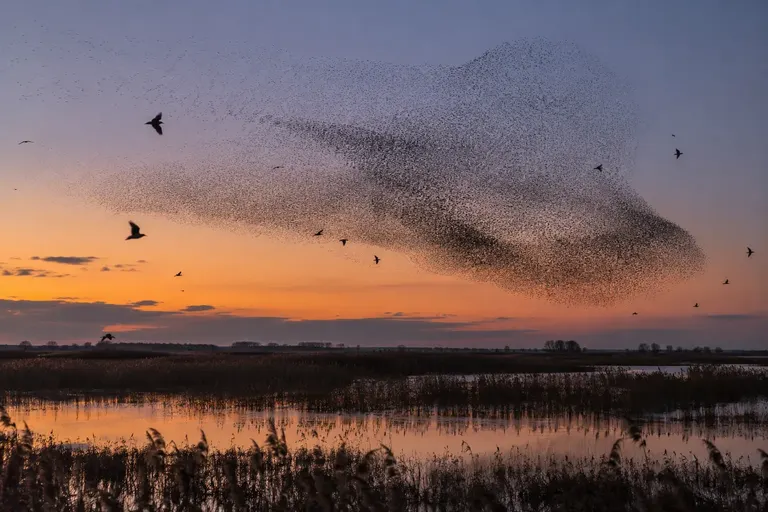
- Migration is an option. Many birds can simply leave. Swallows and swifts, which feed on flying insects, fly to Africa instead of waiting out the winter.
- Many winter foods stay available. NABU points out that insect-eaters switch to fat-rich seeds and nuts, and still find insects, spiders and their eggs under bark and in leaf litter. Jays bury acorns, and marsh, willow and crested tits hide seeds in bark crevices for later.
- Waking up is slow. A deeply torpid bird cannot fly away. Short torpor at night, when the bird is hidden on a roost, keeps that risk small.
The poorwill is the exception that fits the rule: it eats flying insects, which vanish in cold weather, and it can hide in rock crevices where few predators find it.
The old belief that swallows slept in mud
For centuries, many Europeans believed swallows hibernated. According to History Today, Aristotle thought some swallows wintered in hollow trees. In 1555 the Swedish writer Olaus Magnus claimed that swallows gathered over lakes in autumn, sank to the bottom and stayed in the mud until spring. Linnaeus repeated the idea in his Systema Naturae in 1758, and Samuel Johnson declared that swallows certainly slept all winter in a river bed. Even Gilbert White, writing about Selborne in 1789, struggled to believe they left England.
Doubters pushed back. Francis Willughby argued in 1676 that swallows migrate to warmer regions. In the late 18th century the surgeon John Hunter released 20 swallows into an icehouse with an artificial pond, and none survived, which undercut the mud theory. A famous piece of evidence arrived in 1822, when a white stork landed in Klütz on Germany’s Baltic coast with an African spear through its neck. Stuffed with the spear still in place, it is kept in the zoological collection of the University of Rostock and is known as the Pfeilstorch, or arrow stork.
Today ringing and tracking have shown exactly where swallows go. If you are curious about the timing, see when birds migrate and where birds go in winter.
Myths vs facts about birds in winter
| Myth | Fact |
|---|---|
| Birds hibernate like hedgehogs | Only the Common Poorwill comes close; other birds stay active or migrate |
| Swallows sleep in mud at the bottom of ponds | Swallows migrate; the mud story was disproved centuries ago |
| A motionless hummingbird at dawn is dead | It is most likely in torpor and will rewarm on its own |
| Birds that stay are fine without help | Small birds can lose much of their fat reserve in one long, cold night |
| Fluffed-up birds are always sick | Fluffing traps warm air; it is normal in cold weather, though a bird that stays fluffed and sluggish all day may be unwell |
What this means for your garden
Because garden birds do not hibernate, they need food every single day of winter, and cold nights drain their reserves fast. A few simple habits help:
- Feed high-energy food. Sunflower hearts, peanuts and fat balls give a lot of energy per bite. Our guide on what to feed birds in winter lists the best options by bird.
- Top up before dusk. Birds feed hard in the last hours of daylight to build fat for the night.
- Keep feeding steady. The great tit study suggests that birds with a predictable supply do not need to cool as much at night.
- Offer unfrozen water. Birds need to drink and keep feathers clean in winter too.
- Leave shelter. Dense hedges, ivy, evergreens and empty nest boxes give roosting spots out of the wind. Small birds sometimes roost in nest boxes on cold nights.
Sources
- Audubon: Some birds enter a hibernation-like state called torpor to survive winter’s chill
- Cornell Lab of Ornithology, All About Birds: The coolest hummingbird, as measured by an actual thermometer
- National Wildlife Federation: How chickadees weather winter
- Nilsson et al. 2020, Biology Letters: Predictability of food supply modulates nocturnal hypothermia in a small passerine
- NABU: So überleben Vögel im Winter
- History Today: The great migration mystery

Frequently asked questions
Do any birds hibernate?
Only one bird comes close. The Common Poorwill, a small nightjar of western North America, can stay in deep torpor for weeks to months in winter, hidden in rock piles. Its heart rate, breathing and body temperature slow right down. Every other bird stays active through winter, migrates, or uses short torpor for a night or a few hours at most.
What is the difference between torpor and hibernation?
Both are controlled drops in body temperature and metabolism that save energy. Torpor is usually short: a few hours, often a single night, and the animal wakes each day. Hibernation is long torpor that lasts for weeks or months, broken by occasional arousals. Many birds use short torpor or a milder nightly cooling, but only the Common Poorwill keeps it up for weeks.
Where do garden birds go in winter if they do not hibernate?
Many insect-eaters, such as swallows and most warblers, migrate south. Resident birds such as tits, chickadees, robins and finches stay put. They switch to seeds and fat, fluff up their feathers, roost in sheltered spots and burn fat reserves built up during the day. Some cool their bodies by a few degrees at night to save energy.
Do swallows hibernate in mud?
No. This was a widely held belief for centuries. Olaus Magnus wrote in 1555 that swallows sank into lakes in autumn and slept in the mud, and Linnaeus repeated it in 1758. Swallows actually migrate to Africa or Central and South America. Experiments and, later, ringing and tracking studies settled the question for good.
How can I help birds that stay all winter?
Offer high-energy food, such as sunflower hearts, fat balls and suet, and keep feeders filled before dusk, when birds need fuel for the long night. Provide unfrozen water every day, keep feeders clean and leave dense shrubs, hedges and nest boxes in place for roosting. Consistent feeding through cold spells matters more than the amount you put out.