Why Are Robins Associated With Christmas? The Real Story
Why are robins associated with Christmas? Victorian postmen in red were nicknamed robins, and the birds sing and hold territories all winter long.
In this article
- Why are robins on Christmas cards?
- Why do robins seem to show up at Christmas?
- Do both male and female robins sing in winter?
- Why are robins so aggressive?
- Is the Christmas robin the same bird as the American robin?
- Is the robin in your garden the same one all year?
- How did the robin become Britain’s favorite bird?
- How can you help robins over Christmas?
- Sources
- Frequently asked questions
Why are robins associated with Christmas? The short answer is Victorian postmen. Britain’s early postmen wore red and were nicknamed “robins” or “robin redbreasts”, so the bird turned up on Christmas cards as a joke about the people delivering them. It stuck because real robins sing and defend territories all winter, which makes them the most visible garden bird in December.
That’s the version wildlife trusts and museums repeat, with a fair caveat: nobody has found a document that proves the postman link. What is certain is the timing. Christmas cards took off in Victorian Britain, robins took over the cards, and the bird’s own winter behavior kept the image believable. Here’s what we know, what’s folklore, and what the robin in your garden is actually doing in December.
Why are robins on Christmas cards?
Because of a Victorian pun on postmen, most sources agree. The red uniforms of early postmen earned them the nickname robin redbreasts, and card illustrators drew the bird as a stand-in for the postman.
Two pieces of history line up here:
- Cards became a habit. The first commercial Christmas card was commissioned by Henry Cole in 1843 and printed in an edition of 1,000, according to the University of Cambridge’s English faculty. Cole had helped create the penny post a few years earlier, so cheap postage and cards grew up together.
- Postmen were “robins”. The Lancashire Wildlife Trust says Victorian postmen were called robin redbreasts because of their red waistcoats and that this is thought to have inspired the robins on cards. It also says, honestly, that this may or may not be true.
London’s Horniman Museum goes a step further in caution. It notes that some people think the nickname is older than the red coats, and it calls the postman link “somewhat tenuous”. So the fairest summary is this: the postman story is the best explanation on offer, and it fits the dates, but it’s a likely story rather than a proven one.
Why do robins seem to show up at Christmas?
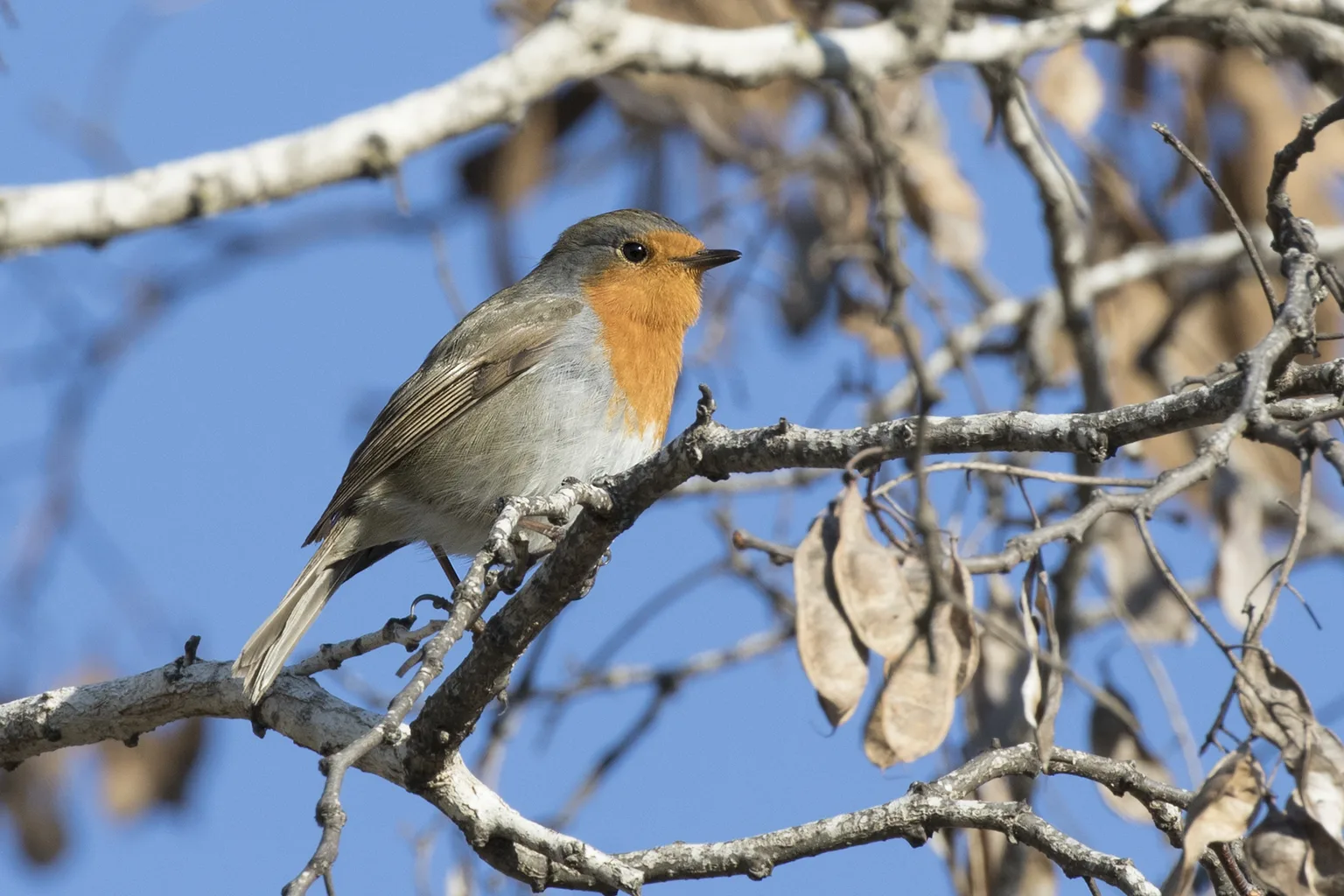
They don’t arrive for Christmas, they just become impossible to miss. In winter most garden birds go quiet, trees are bare, and the robin keeps singing from an open perch with its orange breast facing out.
The RSPB says the robin is one of only a few birds in the UK that sing throughout the year. It goes quiet mainly in July and August while it moults after breeding. By December it is back in full voice, and the Horniman notes that winter robins are among the first birds to sing in the morning and the last to stop at night. If you hear a thin, wistful song from a streetlight on a dark afternoon, it’s very likely a robin.
Robins also come close. The RSPB describes them following gardeners to grab worms and grubs from freshly turned soil. In cold weather, when insects are hard to find, that boldness brings them right up to doors, sheds and patios, exactly where people decorate and take photos at Christmas.
Do both male and female robins sing in winter?
Yes, and that’s unusual. In most songbirds only the male sings, but European robins of both sexes defend their own territory in winter, and they use song to do it.
The Lancashire Wildlife Trust says both males and females hold territories in winter. The Swiss Ornithological Institute, quoted by the Swiss magazine Beobachter, says each male and each female claims its own patch, which it calls unusual among birds and links to food being scarce in winter. NABU in Germany notes that females sometimes sing the typical robin song in winter, which they otherwise leave to the males, and Vogelbescherming Nederland says plainly that both sexes sing.
A winter territory is not small. The LPO in France puts a robin’s territory at about 1,600 to 15,000 square meters, held year-round except in very hard winters, when the urge to defend it weakens.
Why are robins so aggressive?
Because a winter territory can decide whether a robin survives until spring. A patch with reliable insects, berries and a feeder is worth fighting for.
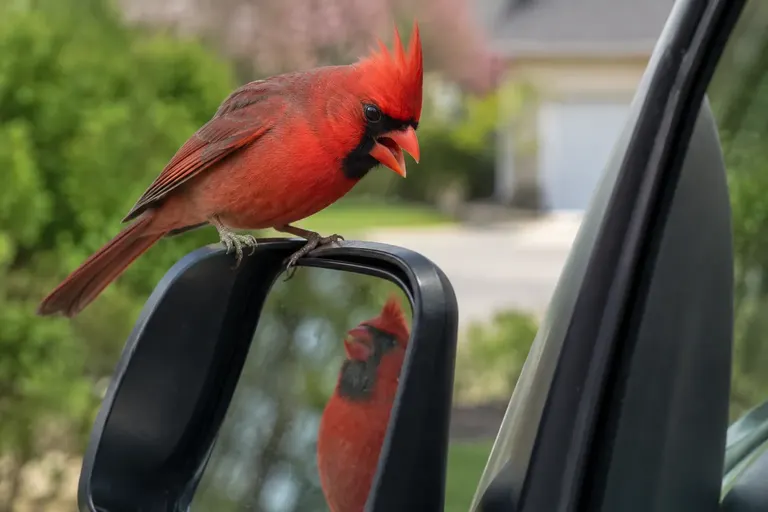
The Lancashire Wildlife Trust and the RSPB both describe robins as fiercely territorial, sometimes fighting other robins to the death. Vogelbescherming Nederland explains that robins react to red, including other robins and even red objects, and that a robin tapping at your window is attacking its own reflection as if it were a rival. It also points out that young robins are brown, without the red breast, so their parents don’t attack them.
So the cheerful little bird on the card is, in real life, a determined landlord. That contrast is part of its charm.
Is the Christmas robin the same bird as the American robin?
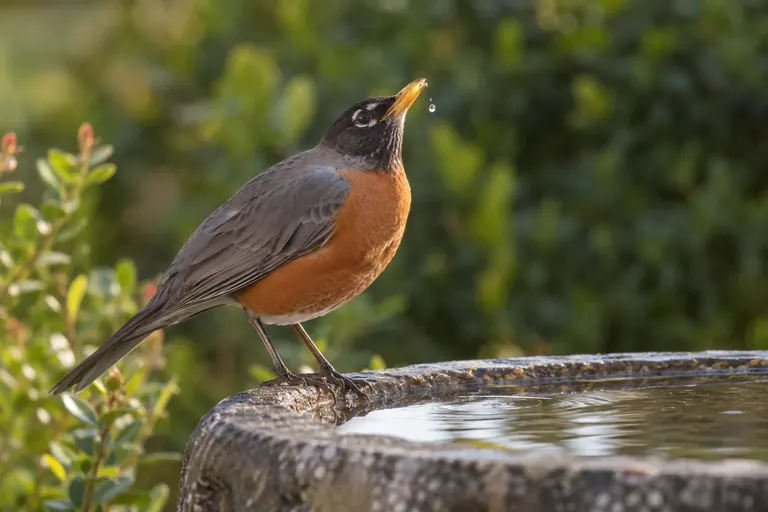
No. The robin on Christmas cards is the European robin, Erithacus rubecula, a small chat. The American robin is a larger thrush that settlers named after the familiar bird from home because of its red breast.
| European robin | American robin | |
|---|---|---|
| Scientific name | Erithacus rubecula | Turdus migratorius |
| Family | Old World flycatchers and chats | Thrushes |
| Size | 13 to 14 cm, about 16 g (LPO) | Much larger, thrush-sized |
| Breast color | Orange-red face and breast | Brick red breast |
| On Christmas cards | Yes, the original card robin | Rarely |
If you live in North America and see robins in winter, they are American robins. The Christmas card tradition is British, so the bird on the card is the European one.
Is the robin in your garden the same one all year?
Not always. Robins are partial migrants, and the bird in your December garden may have arrived from the north in autumn.
How it works depends on where you live:
| Where | What winter robins are | Source |
|---|---|---|
| Britain | Many stay all year; the RSPB calls them year-round residents | RSPB |
| Netherlands | Many local robins move south, and Scandinavian robins take over territories; a December robin often arrived in October and leaves in March | Vogelbescherming Nederland |
| Switzerland | Most robins seen from November to February are winter guests from northern Europe; only 5 to 10 percent of local breeders stay | Swiss Ornithological Institute |
| France | A partial migrant; northern and central European robins winter in the west and south, so France gets extra robins in winter | LPO |
Vogelbescherming Nederland says hundreds of thousands of robins breed in Scandinavia and Russia, and many pass through Dutch gardens in September on their way to France, Spain or Portugal. Some come back to the same garden winter after winter. The Swiss Ornithological Institute adds a nice detail: northern winter guests tend to be less shy of people than local breeders, probably because they come from sparsely populated forests. That tameness only adds to the robin’s reputation as a friendly Christmas visitor.
How did the robin become Britain’s favorite bird?
Through Christmas cards, gardens and a public vote. In 2015 a national bird campaign organised by birder David Lindo drew 224,438 votes, and the robin won with 34 percent, according to BBC Countryfile. The barn owl came second with 12 percent and the blackbird third with 11 percent.
The RSPB calls the robin the UK’s favorite bird and a Christmas staple. It’s also doing well: it’s on the green list of the UK Birds of Conservation Concern. In Germany the robin was chosen as Bird of the Year in 2021, and NABU’s winter count that year found robins in about 69 percent of gardens, usually in small numbers because each bird defends its own patch.
How can you help robins over Christmas?
Give them soft food, low down, in a sheltered spot. Robins are not seed specialists like finches, so the menu is different from a tit or finch feeder.
- Soft food. Vogelbescherming Nederland lists mealworms, uncooked oats, a few breadcrumbs and a good table mix for robins. Our guide to mealworms for birds covers dried versus live and how much to put out.
- Low and sheltered. Robins like to feed near cover. A ground tray or a low table near a hedge works better than a high hanging feeder. See our tips on a feeding station.
- Berries. The LPO notes that in winter robins eat more berries, such as blackberry, elder, yew, ivy and hawthorn. Planting berry shrubs that feed birds all winter gives them food that doesn’t depend on you.
- Fat in cold snaps. Soft suet and crumbled fat balls without nets help in hard frost, when insects disappear.
- No salty leftovers. Gravy, salty meat, stuffing and rich cake are not good bird food. Our guide on what to feed birds in winter has a fuller list.
- Water. A shallow dish kept free of ice matters as much as food on frosty days. Here’s how to keep a bird bath ice-free.
And if you’re curious why your robin sings in October and November too, our guide to why birds sing in fall explains the autumn song.
Sources
- Lancashire Wildlife Trust: Why are robins associated with Christmas?
- Horniman Museum and Gardens: Specimen of the month, the robin
- University of Cambridge, Faculty of English: The world’s first Christmas card
- RSPB: Robin facts
- Vogelbescherming Nederland: Buitenlandse roodborsten in de tuin
- LPO: Rougegorge familier

Frequently asked questions
Why are robins on Christmas cards?
The most cited explanation goes back to Victorian Britain. Early postmen wore red uniforms and were nicknamed robins or robin redbreasts, and illustrators put the bird on cards as a playful nod to the people delivering them. The first commercial Christmas card appeared in 1843. Wildlife trusts and museums repeat the postman link but call it likely rather than proven.
Do robins really appear more at Christmas?
They don't arrive for Christmas, but they are easier to notice. The robin is one of only a few UK birds that sing through the winter, and both males and females hold their own winter territories. Many robins also come close to houses for food when the ground is hard. A loud, bright bird in a bare December garden is hard to miss.
Is the Christmas robin the same as the American robin?
No. The robin on Christmas cards is the European robin, Erithacus rubecula, a small chat about 13 to 14 cm long. The American robin is a larger thrush with a red breast that got its name from settlers who were reminded of the bird from home. The Christmas card tradition started in Britain, so the European bird is the one on the cards.
Is the robin in my garden in winter the same one I saw in summer?
Not always. Vogelbescherming Nederland notes that when a local robin leaves, a robin from Scandinavia often takes over its territory. In Switzerland, the Swiss Ornithological Institute says most robins seen from November to February are winter guests from the north. In Britain many robins stay all year, but some continental birds join them in winter.
What can I feed robins at Christmas?
Robins like soft food served low and in shelter. Vogelbescherming Nederland lists mealworms, uncooked oats, a few breadcrumbs and a good table mix for robins and recommends a sheltered spot free of snow. The LPO notes that robins also eat berries such as blackberry, elder, ivy and hawthorn in winter, so berry shrubs help too. Skip salty Christmas leftovers.