When Do Birds Migrate? A Fall and Spring Calendar
When do birds migrate? In the US, fall migration peaks mid-September to mid-October and spring mid-April to mid-May. Month-by-month calendar inside.
In this article
- When does fall migration happen?
- When does spring migration happen?
- The migration calendar: who leaves and arrives when
- What triggers birds to start migrating?
- Why do so many birds migrate at night?
- Is migration timing fixed?
- How can you watch migration as it happens?
- The bottom line
- Sources
- Frequently asked questions
Birds migrate mainly in two windows: fall, roughly August to November, and spring, roughly March to June. In the contiguous US, BirdCast’s radar data put the fall peak from mid-September through mid-October and the spring peak from mid-April to mid-May. Most species fly at night, and each one keeps its own departure date.
That’s the short answer. The useful part is the detail: which birds go when, what tells them it’s time, and how to catch a big migration night where you live. This guide is about timing. If you want the other half of the story, see how birds know where to migrate and how far birds migrate.
When does fall migration happen?
Fall migration in North America runs from about mid-August to mid-November, and in the contiguous US half of all nocturnal migration usually passes between mid-September and mid-October. In Europe the departure season of breeding birds stretches from mid-July to December, with the most visible migration in the first week of October.
That long window exists because species leave in waves. Adult Eurasian Curlews can leave as early as June, insect-eaters like swifts and cuckoos leave in August, and seed-eaters, thrushes, waterfowl and cranes keep moving well into November.
BirdCast, a project of the Cornell Lab of Ornithology and partners, calculates a “peak window” for every US county: the shortest stretch of the season in which 50 percent of nocturnal migration traffic has historically passed. These windows are based on more than two decades of weather radar data, and they differ a lot by place.
When does spring migration happen?
Spring migration across North America runs from about mid-March to mid-June, and in the contiguous US it peaks from mid-April to mid-May. Short-distance migrants come back first, and long-distance migrants from the tropics arrive last.
BirdCast’s spring maps show western areas peaking in late April and the first week of May, while the Northeast and Upper Midwest peak several weeks later. At any one place, about half the season’s migrants pass in a window of roughly three weeks. In Germany, NABU notes that short-distance migrants start returning from February, while long-distance migrants are back from around April.
The migration calendar: who leaves and arrives when
Here’s the calendar in one place. Dates are typical, not fixed: a cold snap, a late spring or a run of headwinds can move them by days or weeks.
North America (contiguous US), based on BirdCast radar analysis
| Period | What’s happening | Example peak windows |
|---|---|---|
| Mid-March to early April | Spring migration begins | The Southeast peaks earlier, helped by short-distance migrants that winter there |
| Mid-April to mid-May | Spring peak for most of the country | Houston County, Alabama: April 11 to May 4; Cook County, Illinois: May 2 to 22 |
| Late May to mid-June | Last spring migrants pass the far north | BirdCast tools run until June 15 |
| Mid-August to mid-September | Fall migration builds, earliest in the West | Phoenix: August 23 to September 25 |
| Mid-September to mid-October | Fall peak for most of the contiguous US | Houston, Texas: September 6 to October 11 |
| October to mid-November | Latest peaks, in the Northeast | Boston: October 5 to November 1 |
Europe and the UK, based on NABU, RSPB, Vogelbescherming Nederland and LPO
| Bird | Leaves in fall | Back in spring |
|---|---|---|
| Common Swift | Late July or early August (Germany); from early August (UK) | Late April, most in May (UK) |
| Common Cuckoo | From early August | Second half of April |
| White Stork | Mid to late August | From February (Netherlands) |
| Barn Swallow | September and early October | Late March to early June, peak in May (Netherlands) |
| Willow Warbler | September | Early to mid-April |
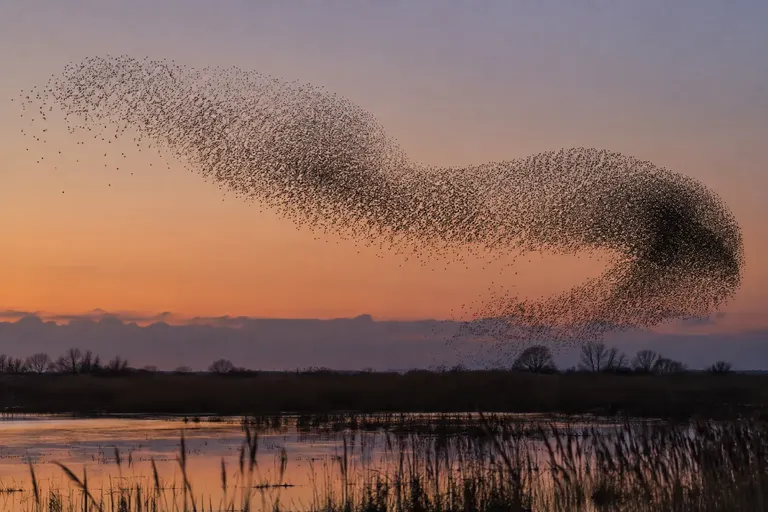
| Common Starling | Early September to late November | From February, like other short-distance migrants |
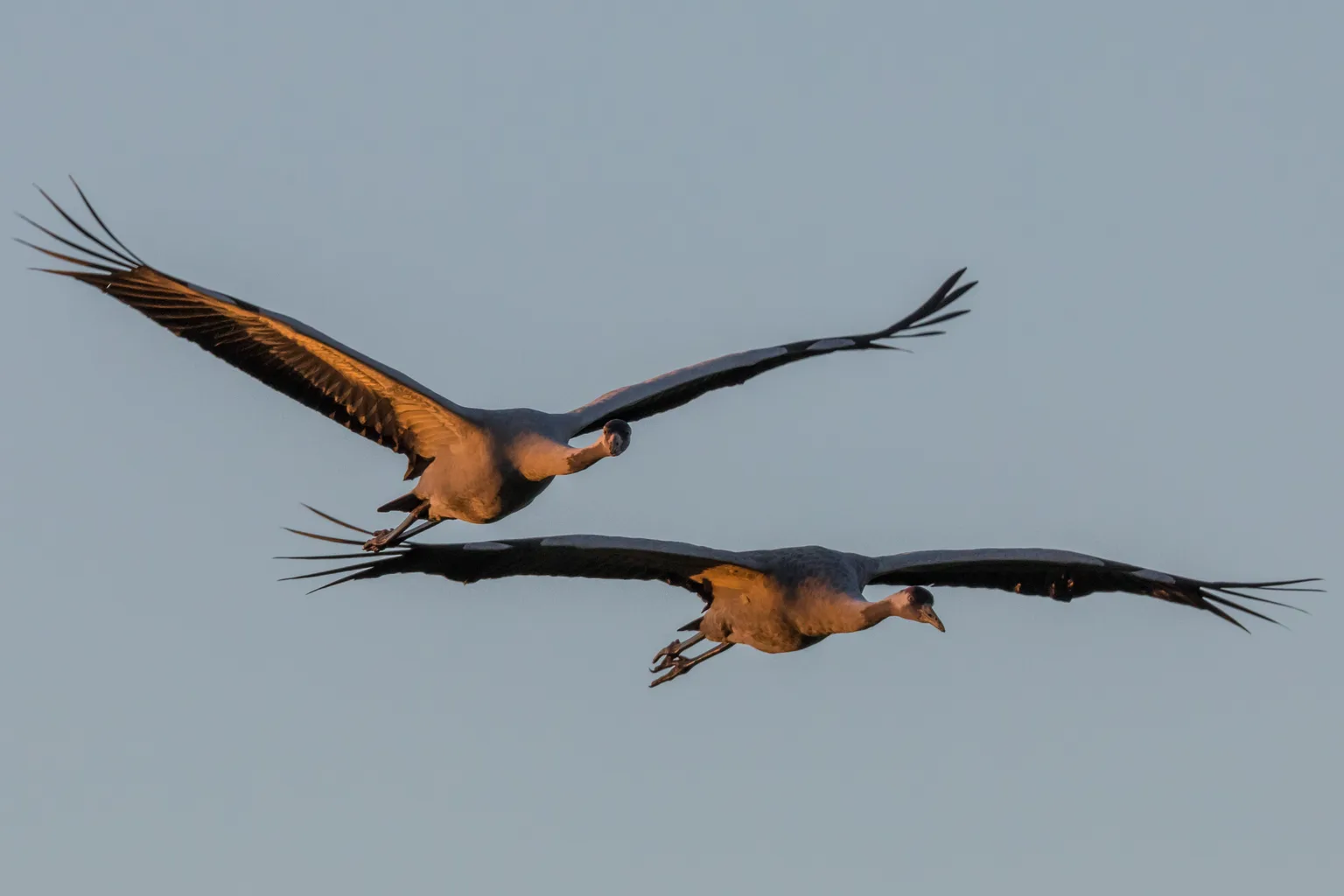
| Common Crane | From mid-September; main passage October and November | Late February and early March (Netherlands) |
| Redwing (arrives from the north) | Arrives September, mass arrivals in October with north winds | Leaves in March and April |
| Greater White-fronted Goose (arrives) | Arrives in the Netherlands from early October | Stays until March |
Cranes show how late the season can run. At Lac du Der in eastern France, the LPO counted at least 93,600 cranes on November 19, 2023, the maximum of that season, and over 100,000 passed in a single day two days earlier. For the winter visitors arriving at feeders as summer birds leave, see our list of winter birds arriving at your feeder.

What triggers birds to start migrating?
The main trigger is changing day length. Birds can sense very small changes in daylight, and that shift sets off hormonal changes that lead to migratory restlessness, which German researchers named Zugunruhe.
Other factors fine-tune the date:
- An inherited schedule. NABU notes that departure time, direction and distance are genetically set for most migratory species, so young birds keep to the schedule on their first trip.
- Food, not cold. According to NABU, the real reason birds leave is a shortage of reachable food, not winter cold itself. That’s one reason insect-eaters like swifts and cuckoos are among the first to go.
- Cold snaps. In fall, a blast of cold air can make short-distance migrants leave earlier.
- Wind and rain. Birds prefer to fly with a tailwind. Vogelbescherming Nederland describes the best autumn conditions there as clearing skies with a tailwind from the north or east, while rain fronts can force birds to land, as BirdCast’s forecasters note.
In North America, big fall nights often follow cold fronts that bring north winds. On a single autumn night with favorable winds, the Cornell Lab estimates more than 1 billion birds can be in the air over the United States.
Why do so many birds migrate at night?
At least 80 percent of North American migratory bird species migrate at night, according to BirdCast, and the most birds are aloft two to four hours after local sunset. The Cornell Lab points to fewer predators at night, and to birds’ ability to sense Earth’s magnetic field to steer in the dark.
Not everyone flies in the dark. NABU separates the strategies clearly:
- Night flyers: most long-distance songbird migrants, which travel alone. Cuckoos and nightingales are typical.
- Day flyers: large soaring birds such as White Storks, which need rising warm air over land, and Common Cranes, which travel by day in big flocks.
- Morning flyers: many short-distance and partial migrants, like finches and larks, move mostly in the first hours after sunrise.
Geese and cranes often fly in V-shaped formations, which saves energy. We explain the science in why birds fly in a V.
Is migration timing fixed?
No. NABU’s Baden-Württemberg branch puts most fall departures between July and October and stresses that the exact timing depends on the species, the weather and food supply. NABU also notes that climate change, habitat loss and the loss of stopover sites affect migration routes and survival. Not every bird of a migratory species leaves, either: Vogelbescherming Nederland reports that at least a fifth of Dutch White Storks spend the winter in the Netherlands. Treat any calendar, including ours, as typical dates rather than fixed ones.
How can you watch migration as it happens?
You can follow migration live from home and then step outside on the right night or morning.
In the US:
- BirdCast live migration maps show, from sunset to sunrise, how many birds are flying and in which direction, based on the US weather radar network.
- BirdCast forecast maps predict migration intensity for the coming nights, updated every six hours, and local alerts flag big nights for cities across the contiguous US.
- The migration dashboard breaks down nocturnal migration for your county and state, including estimates of how many birds crossed overnight.
- Lights out. On heavy nights, turning off unneeded outdoor lights helps night migrants, which are drawn off course by artificial light. Our guide to preventing window collisions covers the glass side of the problem.
In Europe and the UK:
- EuroBirdwatch takes place on the first weekend of October each year, coordinated by BirdLife International partners such as NABU and LBV in Germany, LPO in France and Vogelbescherming in the Netherlands. In 2026 it was held on October 3 and 4.
- Trektellen collects counts from migration watch sites across Europe, so you can see what’s passing a nearby site today.
- Migraction in France publishes live counts from watch sites such as Organbidexka in the Pyrenees.
- EuroBirdPortal combines data from about 20 online bird portals, including BirdTrack, eBird and Ornitho, into maps of where species are being reported.
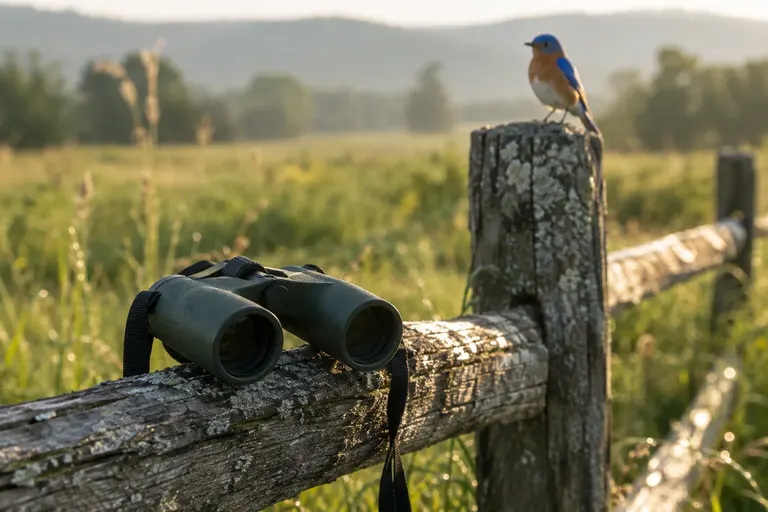
Wherever you are, early morning after a clear night is the best time to look for tired migrants feeding in trees and shrubs. Adding your sightings to eBird helps scientists track timing; our eBird guide walks you through it. A pair of binoculars for backyard birding makes the high flocks much easier to sort out.
The bottom line
Birds migrate in spring and fall, but each species keeps its own calendar. In the contiguous US, expect the biggest fall nights from mid-September to mid-October and the spring peak from mid-April to mid-May. In Europe, swifts are gone by mid-August, swallows leave in September, and cranes and geese fill October and November skies. Day length starts the clock, food and weather fine-tune it, and most of the traveling happens at night. For the record-breakers, see which bird migrates the farthest.
Sources

Frequently asked questions
What month do birds migrate south?
There isn't one month. In the contiguous US, BirdCast's radar data show fall migration peaking from mid-September through mid-October, but it starts in August and runs into November. In Europe, swifts leave from late July or early August, swallows in September and early October, and cranes mostly in October and November. Each species and region keeps its own schedule.
What time of day do birds migrate?
Most migrate at night. BirdCast reports that at least 80 percent of North American migratory species travel after dark, with the most birds aloft two to four hours after local sunset. Large soaring birds like storks and cranes fly by day, and many short-distance migrants such as finches move in the first hours after sunrise.
When does spring migration start?
Short-distance migrants start first. In Central Europe some return from February, and cranes pass the Netherlands in late February and early March. Long-distance migrants come later: cuckoos and swifts in late April and May. In the contiguous US, BirdCast places the spring peak from mid-April to mid-May, with western areas peaking before the Northeast and Upper Midwest.
Do birds migrate because it gets cold?
Not directly. The main trigger is changing day length, which shifts a bird's hormones and brings on migratory restlessness. NABU, Germany's BirdLife partner, notes that the real driver of departure is a shortage of reachable food rather than cold itself. Weather still matters for timing: cold snaps can push short-distance migrants south earlier, and birds wait for good winds.
How can I see bird migration tonight?
In the US, open BirdCast's live migration maps after sunset to see radar estimates of birds in flight, or check its forecast maps and local alerts in advance. In Europe, Trektellen and Migraction post daily counts from migration watch sites, and EuroBirdwatch on the first weekend of October offers free guided events run by BirdLife partners.