Do Birds Grieve?
Do birds grieve? No one can know a bird's feelings, but crows, jays, geese and paired birds show striking responses to death. Here is what science says.
In this article
- Quick answer: what we know about birds and loss
- Can science tell whether a bird feels grief?
- Do crows really hold funerals?
- Do birds understand that another bird is dead?
- Which birds show the strongest responses to death?
- Do birds mourn when a mate dies?
- What happens in a bird’s body after losing a partner?
- Do parent birds grieve lost chicks or eggs?
- What you might see in your own yard
- How do pet birds react when a companion dies?
- Why would grief evolve at all?
- Does losing a mate affect a bird’s survival or breeding?
- Myths and facts about birds and grief
- Quick facts
- Sources
- Frequently asked questions
No one knows for sure whether birds grieve, because we cannot measure what a bird feels. What science can show is that many birds react strongly to death and loss: crows and jays gather noisily around dead birds, paired geese and swans may call and search for a lost mate, and stress hormones rise in some birds separated from their partners. Whether those responses add up to grief as humans know it remains an open question.
This is a topic where careful language matters. It is easy to overstate what birds feel, and just as easy to dismiss behavior that is genuinely striking. This guide lays out what researchers have observed, what the evidence suggests and what you might see in your own yard.
Quick answer: what we know about birds and loss
| Observation | What it shows | Confidence |
|---|---|---|
| Crows and jays gather around dead birds | Birds pay close attention to death and learn danger from it | Well documented |
| Paired geese, swans and cranes search for lost mates | Strong bonds and disrupted behavior after loss | Many observations, fewer controlled studies |
| Stress hormones rise when mates are separated | Separation is physiologically stressful for some birds | Supported in lab studies |
| Albatrosses slow to re-pair after a mate dies | Loss of a partner has lasting effects on breeding | Supported by long-term field studies |
| Birds “cry” or hold rituals like humans | Not supported | Anthropomorphic interpretation |
Can science tell whether a bird feels grief?
Not directly. Grief in humans is a subjective experience, and subjective experience is exactly what we cannot measure in another species. What scientists can study are three things: behavior, physiology and brain structure.
- Behavior. Does a bird change what it does after a loss, for instance searching, calling, staying near a body, eating less or losing interest in breeding?
- Physiology. Do stress hormones such as corticosterone rise? Does body condition change?
- Brain. Do birds have the brain systems associated with emotion in other animals?
On the last point, birds do share with mammals many of the brain structures and chemical messengers linked to emotion, including systems involving dopamine, serotonin and oxytocin-like hormones. Bird brains are organized differently from ours, but researchers increasingly regard birds as capable of emotional states in a basic sense, such as fear, stress and positive arousal. Whether that extends to something like sorrow is where evidence becomes thin.
Ethologists generally try to avoid two errors. One is anthropomorphism, assuming a bird feels exactly what a person would. The other is sometimes called anthropodenial, assuming animals feel nothing because they are not human. The honest position lies between.
Do crows really hold funerals?
Crows and their relatives do something that looks remarkably like a funeral, and it has been studied carefully.
What happens
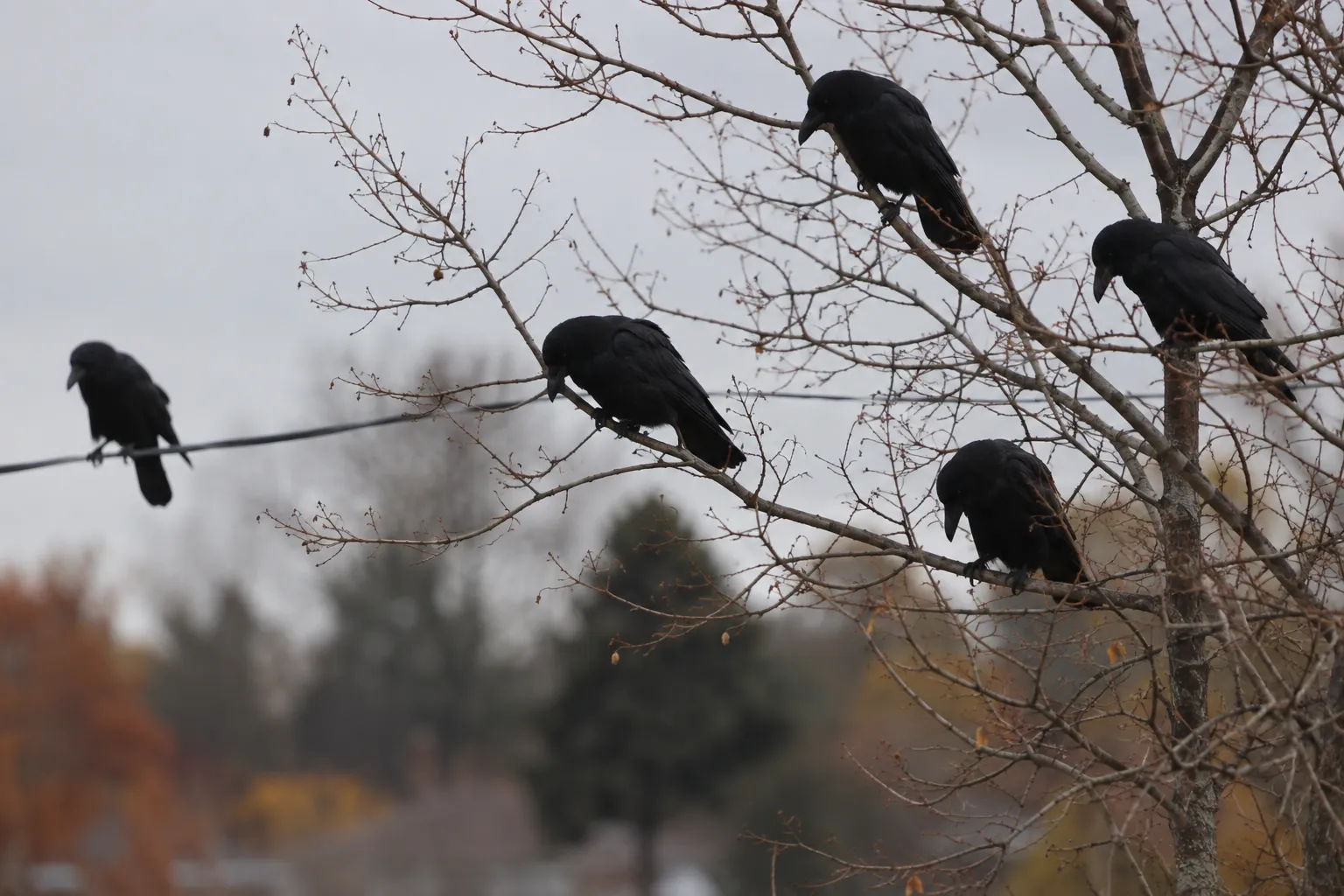
When an American Crow finds a dead crow, it often calls loudly. Other crows arrive, sometimes dozens of them, perching around the body and calling for several minutes before dispersing. Similar gatherings are known in Common Ravens, magpies, rooks and jays.
What the research shows
Two sets of studies are especially informative.
In California, researchers led by Teresa Iglesias placed dead Western Scrub-Jays (now split, with the local birds called California Scrub-Jays) in residential yards and recorded the response. Jays that found a dead jay gave alarm calls, gathered and stopped feeding at nearby feeders for a day or more. Their reaction resembled their response to a predator. The researchers described these as “cacophonous aggregations” and interpreted them mainly as a way of sharing information about danger.
In Seattle, Kaeli Swift and John Marzluff studied American Crows responding to a person holding a dead crow. Crows mobbed the person, scolded and later avoided the area, and some became wary of that individual person for weeks. The takeaway: crows use a dead crow as a signal of risk, and they learn who or what was associated with the death.
So is it grief?
The research supports a practical function: learning about threats. That does not rule out emotion, but it does not require it. Crows are highly social and intelligent, as our guide on whether crows are really that smart explains, so it is plausible that the experience is emotionally charged for them. Scientists simply cannot confirm what that feeling is.
Swift’s later work also documented a small number of crows touching, pecking or even attempting to mate with dead crows. These rare behaviors are a reminder that bird responses to death are complex and not always what people expect.
Do birds understand that another bird is dead?
Probably not in the way people understand death, but they clearly distinguish a dead bird from a living one and from an ordinary object. In the scrub-jay experiments, jays responded to a dead jay far more strongly than to a colored wooden block placed in the same spot. Their reaction to the dead jay also resembled their response to a mounted predator, with alarm calls and mobbing. That suggests the birds treated the body as a meaningful signal, not just an unusual shape on the lawn.
What they seem to grasp is that something is wrong: a familiar kind of bird is lying still, in the open, where it should not be. That is enough to trigger caution, recruit others and change behavior. Whether a bird has any concept of death as permanent is unknown, and it would be very hard to test.
Which birds show the strongest responses to death?
Across the world, the most notable reactions come from social, long-lived and intelligent species.
- Corvids. American Crows, Common Ravens, Eurasian Magpies, Black-billed Magpies and Rooks all gather around dead birds. The late behavioral scientist Marc Bekoff described Black-billed Magpies in Colorado approaching a dead magpie, pecking it gently and laying grass beside it. It is a single anecdote, often retold, and should be read that way.
- Parrots. Wild parrots such as macaws in Brazil, including Blue-and-yellow Macaws and Hyacinth Macaws, usually fly in pairs within larger flocks, and pairs stay close year-round. Owners of pet parrots, including African Grey Parrots and cockatoos, frequently report changes in behavior after a companion bird dies, such as calling, reduced appetite or feather damage. These reports are consistent but anecdotal, and vets note that the same signs can reflect illness or stress from changes in routine.
- Waterfowl and cranes. Geese, swans and cranes, discussed below, provide some of the most frequently described cases.
- Storks. White Storks nest in towns and villages from Spain and Poland to Turkey, where people follow individual pairs closely. Observers often report returning storks waiting at the nest and calling when a partner fails to arrive, though many eventually pair with a new bird. In storks, attachment appears to be partly to the nest site as well as to the mate.
Do birds mourn when a mate dies?
The strongest cases for something like grief come from birds with long, stable pair bonds.
Geese and swans
Konrad Lorenz, the Austrian ethologist, described Greylag Geese that lost a partner searching restlessly, calling and losing social standing within the flock. His accounts were detailed but anecdotal, and later researchers have treated them with some caution. Still, many observers since have reported similar behavior in Canada Geese, Mute Swans and other waterfowl, including birds that stay beside a partner killed by a car or power line for hours or days.
Cranes
Cranes, including Sandhill Cranes in North America, Common Cranes across Europe and Turkey and Red-crowned Cranes in East Asia, form long-term pairs with elaborate duets and dances. Observers have described surviving birds lingering near a dead mate and calling. Such reports are compelling but hard to study systematically.
Albatrosses
Long-lived seabirds offer some of the best data. Laysan Albatrosses and Wandering Albatrosses can live for decades and usually keep the same mate for life. Long-term studies show that when one partner dies, the survivor often skips one or more breeding seasons before pairing again. Part of that delay reflects the time needed to court and form a new bond, but it also shows how deeply a partner’s loss disrupts the bird’s life.
Songbirds: a different pattern
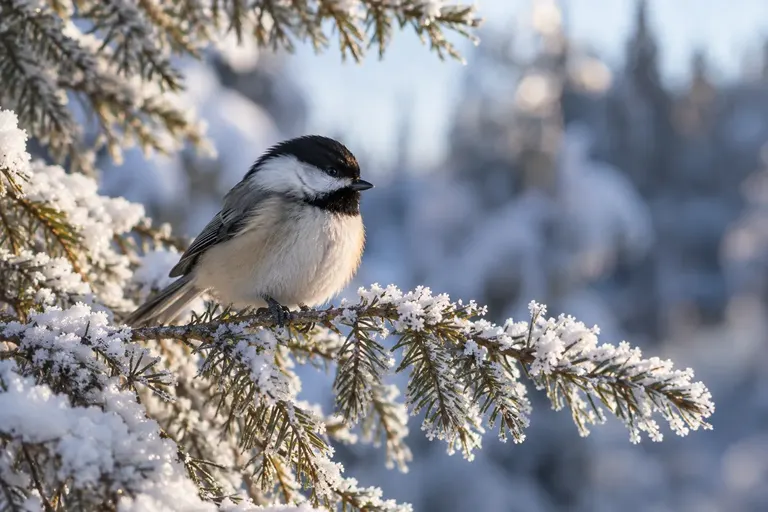
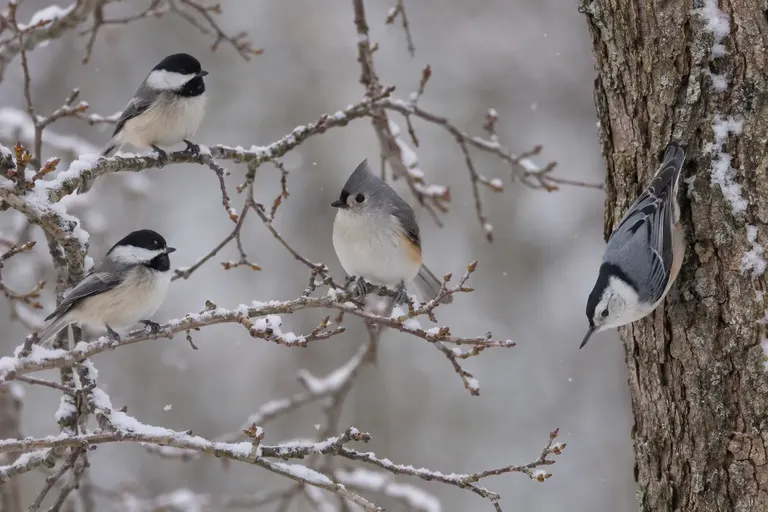
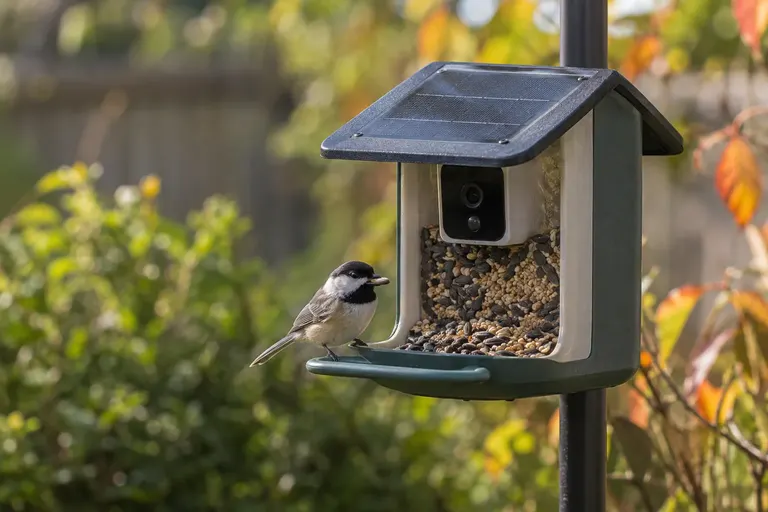
Many small songbirds behave very differently. Black-capped Chickadees, House Sparrows and European Robins often re-pair within days when a mate disappears. For a bird that may live only two or three years, waiting would be costly. This does not mean the loss has no effect, only that the evolutionary pressures differ. Our guide to whether birds mate for life covers how pair bonds vary across species.
What happens in a bird’s body after losing a partner?
Laboratory studies give a more measurable picture. In Zebra Finches, a small Australian species that forms lasting pair bonds, research suggests that separating mates raises levels of corticosterone, the main stress hormone in birds. Some studies also report changes in behavior, such as increased calling and reduced activity, which ease when partners are reunited. Similar findings appear in some parrots and other pair-bonded species.
Stress hormones are not the same as grief. But they do show that the loss of a partner is not neutral for these birds. Their bodies register it.
Do parent birds grieve lost chicks or eggs?
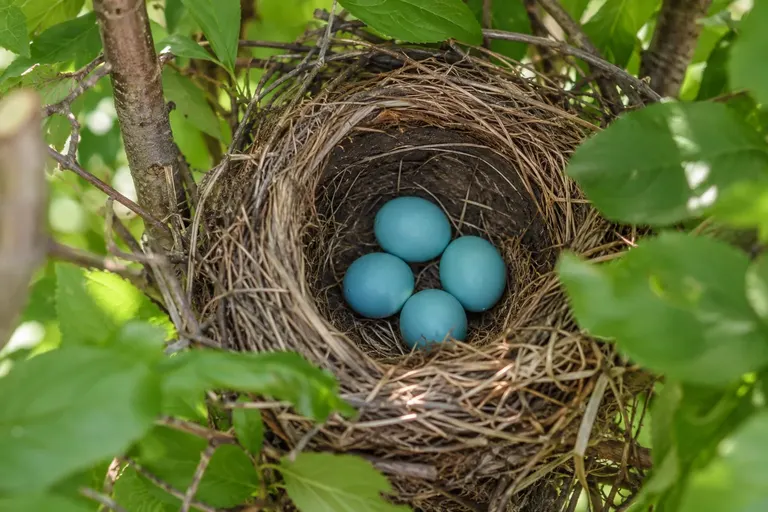
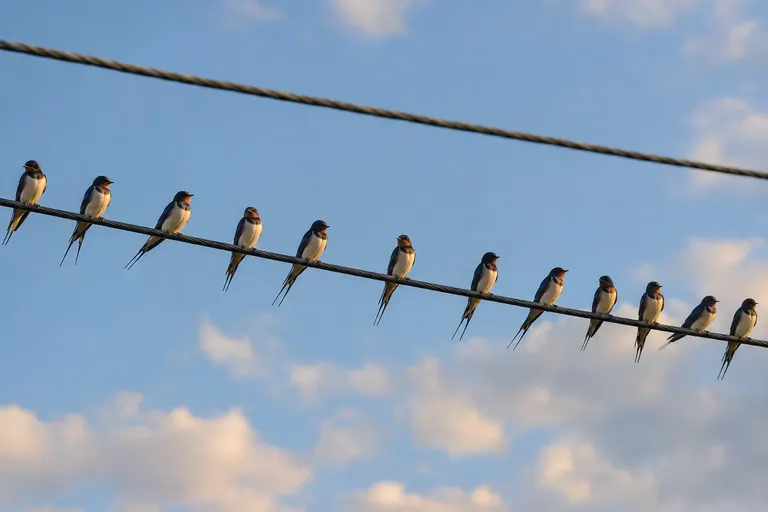
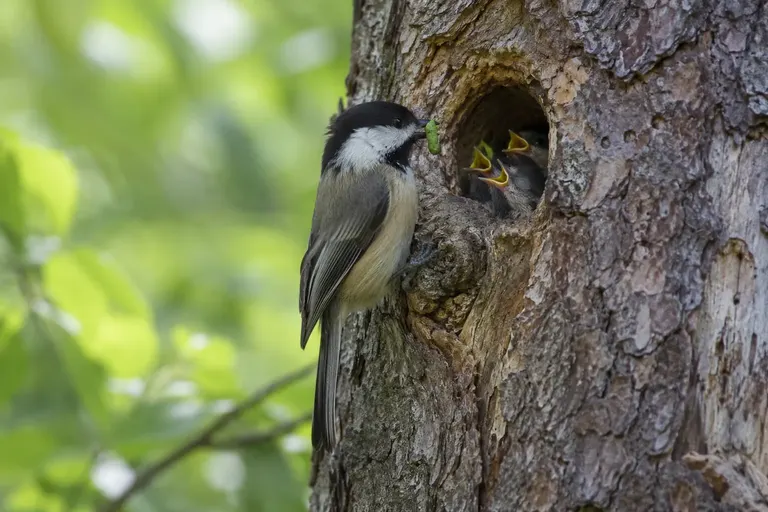
Parent birds often return repeatedly to an empty or destroyed nest, calling or looking inside. American Robins, Northern Cardinals, Barn Swallows and many others do this after predators take eggs or young. Most songbirds, though, begin a new nest within days to a couple of weeks if the season allows.
This rapid renesting makes sense. A bird’s lifetime breeding success depends on trying again quickly. It says little about whether the parents feel anything, only that their behavior is strongly driven by the breeding cycle.
If you have found a nestling or fledgling, our guides on what to do if you find a baby bird and whether mother birds reject babies touched by humans explain what actually helps.
What you might see in your own yard
Backyard birders sometimes witness moments that feel like mourning. Common examples include:
- A bird next to a window-strike victim. A mate or companion may stay near a stunned or dead bird, calling or even nudging it. Many stunned birds recover on their own if left in a safe, quiet place. See our guides on how to stop birds hitting windows and what to do with an injured bird.
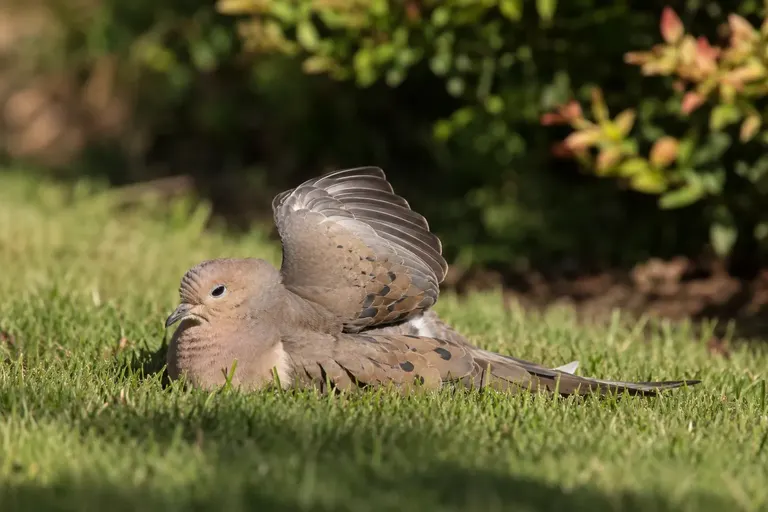
- A dove on the road. Mourning Doves and Eurasian Collared Doves often travel in pairs, and a surviving bird may sit near a partner killed by traffic. The name “mourning” comes from the dove’s soft, sad-sounding call, not from any known behavior. Our Mourning Dove guide explains more.
- Crows or jays gathering and calling. If a noisy group gathers suddenly and stares at one spot, there may be a dead bird, a predator or both. The birds may avoid your feeder for a day or two.
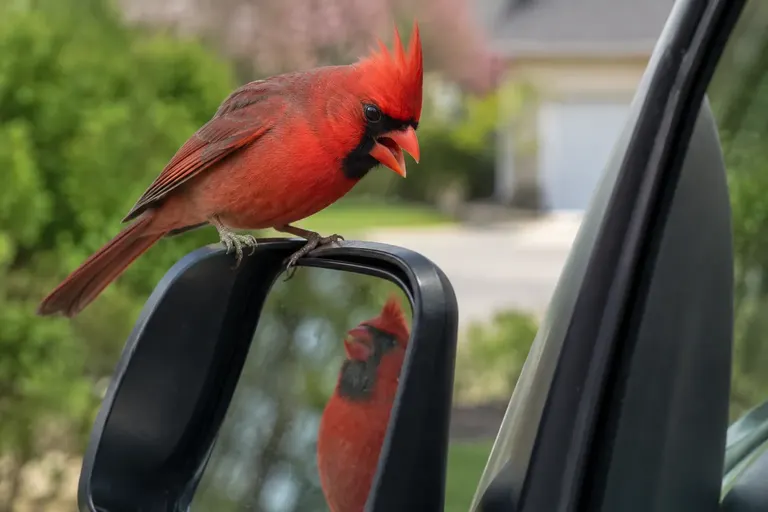
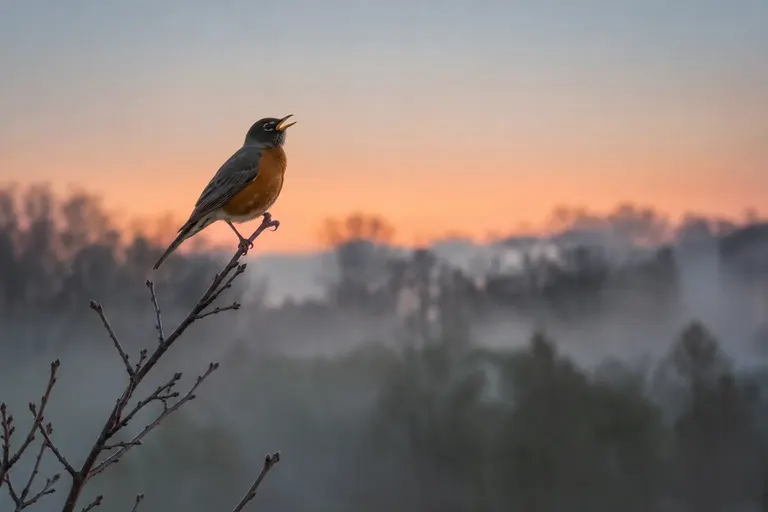
- A pair bird calling repeatedly. Cardinals, robins and other songbirds sometimes call persistently after a mate vanishes, then go quiet or re-pair.
What should you do?
Usually, nothing. Give birds space. If a dead bird is in an accessible place, wear gloves or use a bag to remove it, especially during outbreaks of avian influenza, and follow local wildlife guidance. Our page on bird flu and backyard feeders has current advice.
How do pet birds react when a companion dies?
People who keep budgerigars, cockatiels, lovebirds, canaries or larger parrots often ask this. Owners commonly report a surviving bird calling more, searching the cage, eating less or becoming quieter for days or weeks. Some birds become more attached to their human caretakers. Avian vets generally treat these changes seriously, because they can signal stress, and stress can weaken a small bird’s health.
If you care for a pet bird that has lost a companion, avian vets and welfare organizations commonly suggest:
- Keep the routine steady. Regular feeding times, light cycles and cage placement reduce stress.
- Watch appetite and droppings. A bird that stops eating needs a vet check, since small birds decline quickly.
- Offer extra attention and enrichment. New toys, foraging tasks and time out of the cage can help.
- Consider the source of the death. If the companion died from illness, have the survivor checked, because some infections spread between cagemates.
- Introduce a new companion slowly, if at all. Quarantine new birds and let the survivor adjust first.
Why would grief evolve at all?
If birds do experience something like grief, biologists would expect it to be linked to the value of bonds. A partner in a long-lived species represents years of coordinated breeding, shared territory and learned teamwork. Behaviors that keep a bird close to its partner, and responses that make separation unpleasant, would help maintain those bonds. In that view, distress at loss could be a side effect of attachment, which is itself useful.
A second idea, supported by the crow and jay studies, is that paying attention to death protects the living. A dead flockmate is information: something dangerous happened here. Birds that react strongly, remember the place and avoid it are more likely to survive.
Does losing a mate affect a bird’s survival or breeding?
In some species it clearly does. Long-term studies of seabirds, geese and swans suggest that birds that keep the same partner across years often breed earlier and raise more young than newly formed pairs. Experienced partners coordinate better: they share incubation smoothly, defend territory together and waste less time on courtship. When a mate dies, the survivor loses that advantage. In albatrosses, it can mean a gap of one or more seasons without breeding. In geese, a widowed bird may lose rank within the flock, which can reduce access to the best feeding spots.
In short-lived songbirds, the effect is smaller, mostly because re-pairing is fast. A widowed male robin or chickadee in spring may simply find a new partner and carry on, sometimes in the same territory. These differences are a useful reminder that “birds” is not one category. The response to loss is shaped by how long a species lives, how long pairs stay together and how much they depend on each other.
Myths and facts about birds and grief
Myth: Birds cry tears of sadness. Fact: Birds have tear glands that keep the eyes moist, but there is no evidence of emotional crying.
Myth: Crow funerals are ceremonies for the dead. Fact: Research suggests they are mainly about recognizing and learning about danger.
Myth: All birds that mate for life will die of a broken heart. Fact: Most widowed birds, even in long-lived species, eventually re-pair. Heartbreak deaths are not documented.
Myth: Birds feel nothing because their brains are small. Fact: Bird brains are dense with neurons, and birds show clear signs of stress, fear and social attachment.
Myth: Mourning Doves are named for grieving. Fact: The name refers to their soft, mournful-sounding coo.
Quick facts
- Scientists cannot measure a bird’s feelings directly, so grief is not proven.
- Crows and jays gather around dead birds and learn to avoid danger linked to the death.
- Pair-bonded birds such as geese, swans, cranes and albatrosses show strong responses to losing a mate.
- Separating mates raises stress hormones in some species.
- Many songbirds re-pair within days after losing a partner.
- Parent birds often revisit a lost nest, then renest quickly.
- If you see a bird beside a dead one, give it space and look for causes such as windows.
Sources
Frequently asked questions
Do birds grieve?
Science cannot measure what a bird feels, so no one can say for certain. What researchers can show is that many birds respond strongly to death and loss. Crows and jays gather noisily around dead birds, paired geese and swans may search and call after losing a mate, and stress hormones rise in some birds separated from partners.
Do crows hold funerals?
Crows and jays often gather and call loudly around a dead member of their species, and people call these gatherings funerals. Studies of American Crows and scrub-jays suggest the main function is learning about danger. Birds avoid the area afterward and become wary of people or predators linked to the dead bird. Whether they also feel loss is unknown.
Do birds mourn a dead mate?
Some appear to. Geese, swans and cranes with long pair bonds have been seen staying near a dead partner, calling and searching. Long-lived seabirds such as albatrosses may take years to form a new pair. Many songbirds, by contrast, find a new mate within days, which fits their short lives and brief breeding seasons.
Why is a bird standing next to a dead bird?
It may be a mate or family member staying close, a territorial bird checking an intruder, or a curious bird investigating. Crows and jays may call to alert others. Occasionally the behavior is predatory or sexual, which can be startling to watch. Give the bird space and, if a window strike is involved, take steps to prevent more collisions.
Do birds miss the people who fed them?
Birds can learn to recognize people who feed them, and some, like crows and jays, remember faces for years. They adjust their routines quickly when a food source stops, moving to other feeders or natural food. There is no evidence that they miss a person in the emotional sense we mean, although they do notice changes.