Can Birds Taste Spicy Food?
Can birds taste spicy food? Not the burn: bird pain receptors ignore capsaicin, so birds eat hot chilies that deter mammals. The science, plus feeder tips.
In this article
- Quick answer: can birds taste spicy food?
- Why can’t birds feel the heat of chili peppers?
- Why did chili peppers become spicy?
- Which birds eat chili peppers?
- How good is bird taste in general?
- How does smell fit in?
- How hot is too hot for a bird?
- Do all birds share this trait?
- Does capsaicin do anything useful for birds?
- Myths and facts about birds and spicy food
- What does this mean for backyard birders?
- Can birds eat other spicy foods?
- Quick facts
- Sources
- Frequently asked questions
Birds can eat spicy food, but they do not feel its burn. The heat of chili peppers comes from capsaicin, which triggers a pain receptor called TRPV1 in mammals. The bird version of that receptor does not respond to capsaicin, so birds can eat even very hot peppers without any apparent discomfort. That quirk shapes how chili plants spread their seeds, and it is the reason hot pepper bird seed can deter squirrels without putting off birds.
To be precise, “spicy” is not really a taste at all. It is a pain and heat sensation, so the better question is whether birds feel the burn. The answer, as far as the evidence shows, is no.
Quick answer: can birds taste spicy food?
- They can eat it, but they do not feel the heat. Capsaicin does not activate the bird version of the TRPV1 pain receptor.
- Spiciness is pain, not taste. Capsaicin acts on pain and heat nerves, not on taste buds.
- Birds eat wild chilies. Many species eat chili fruits and spread their seeds.
- Mammals are deterred. Squirrels, rodents and people feel the burn, which is why capsaicin is used in squirrel-resistant bird foods.
- Birds do taste other things. They have taste buds for bitter, salty, sour and savory, and many can taste sweet.
Why can’t birds feel the heat of chili peppers?
What makes chili peppers spicy?
Chili peppers, plants in the genus Capsicum, produce a family of compounds called capsaicinoids, the best known being capsaicin. These compounds are concentrated mainly in the pale tissue that holds the seeds inside the fruit. When a mammal eats a chili, capsaicin binds to TRPV1, a protein on the surface of certain nerve cells. TRPV1 normally responds to painful heat, above about 43 degrees Celsius (about 109 degrees Fahrenheit), and to acid. Capsaicin switches it on chemically, so the brain interprets the signal as burning, even though no real heat is present.
What is different about the bird receptor?
Birds have a TRPV1 receptor too. It still responds to heat and acid, as you would expect of a pain sensor. But it largely ignores capsaicin.
The key study was published in 2002 in the journal Cell by Sven-Eric Jordt and David Julius, whose lab first identified the TRPV1 receptor in 1997. They compared the rat and chicken versions of TRPV1 and found that the chicken receptor was essentially insensitive to capsaicin, while it still responded to heat and protons (acid). By swapping parts of the two proteins, they identified the region responsible for capsaicin sensitivity. David Julius later shared the 2021 Nobel Prize in Physiology or Medicine for discoveries of receptors for temperature and touch, including this line of work on TRPV1.
Most of the detailed receptor work has been done on chickens, but behavioral evidence from many wild bird species, which eat hot chilies readily, fits the same picture.
Do birds have any spicy sensation at all?
The evidence suggests they are not bothered by capsaicin, but that does not mean birds lack chemical pain entirely. Birds do react to some irritants. Methyl anthranilate, a compound that gives grape flavor, is an effective bird repellent and has been used on crops, turf and airfields. Birds find it aversive even though it is harmless to people in food amounts. So birds and mammals simply have different sets of chemical irritants that bother them.
Why did chili peppers become spicy?
What is directed deterrence?
Plants that make fleshy fruit usually “want” animals to eat it and carry the seeds elsewhere. But not every animal is a good partner. Some chew or digest the seeds, destroying them. The directed deterrence hypothesis suggests that fruit chemicals can filter the animals that eat the fruit, discouraging seed destroyers while leaving good dispersers unaffected.
What did the chiltepin study find?
A 2001 study in Nature by Joshua Tewksbury and Gary Nabhan tested this idea with wild chiltepin peppers in the southwestern United States. Chiltepin is a wild form of Capsicum annuum, the same species that gave rise to jalapeños, bell peppers and cayenne. In their experiments:
- Rodents, including cactus mice and packrats, avoided hot chiltepin fruits but readily ate a non-pungent variety.
- Birds, especially Curve-billed Thrashers, ate the hot fruits readily.
- Seeds that passed through the rodents’ guts did not germinate, while seeds passed by birds did.
The conclusion: capsaicin appears to keep seed-destroying mammals away while allowing birds, which swallow the seeds whole and deposit them intact, to disperse them. Later research by Tewksbury and colleagues suggested capsaicin may also protect chili fruits from a fungus that attacks seeds, which means more than one pressure may have shaped pungency.
Why are some wild chilies called “bird peppers”?
Chiltepin and similar small wild chilies are widely known as “bird peppers.” The name reflects the long-observed fact that birds eat them and spread their seeds. Many of these wild plants grow under shrubs and trees, often where birds perch and drop seeds.
Which birds eat chili peppers?
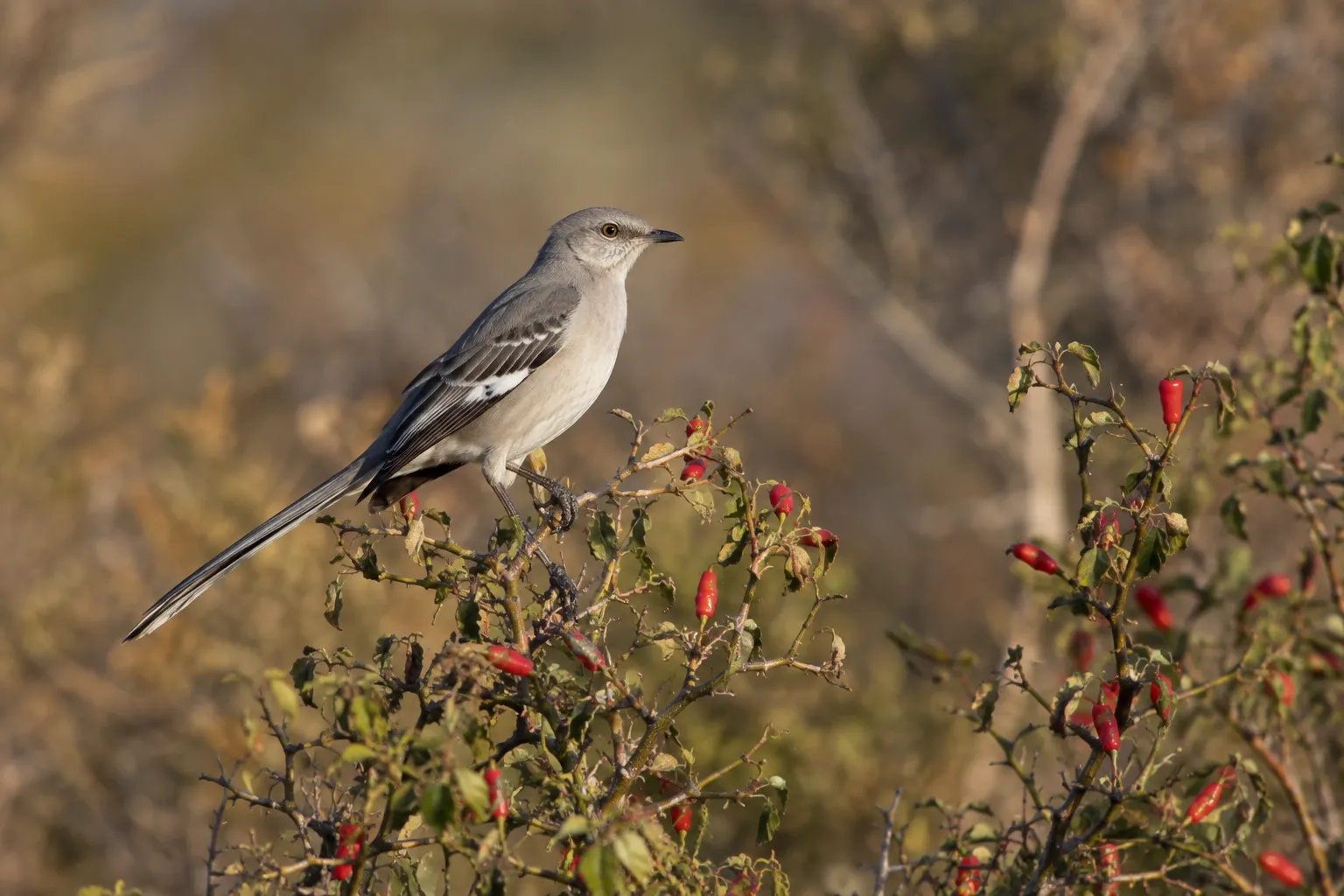
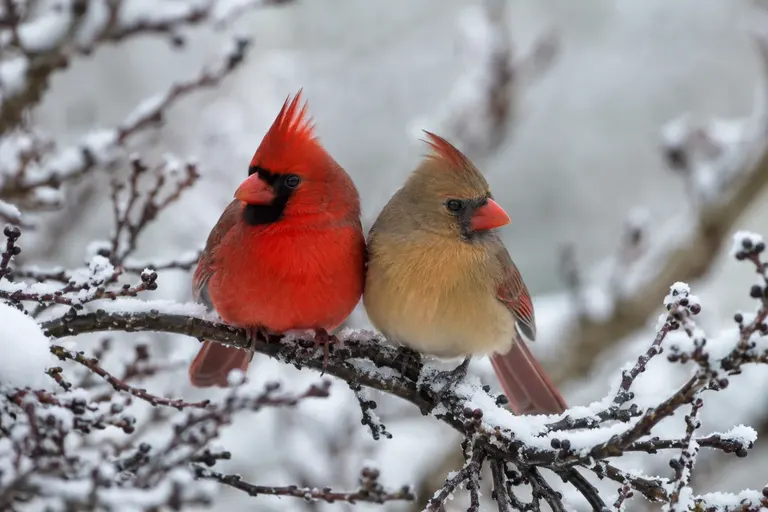
Many fruit-eating birds eat chilies wherever wild or cultivated peppers grow. In the Americas, where Capsicum originated, reported chili eaters include thrashers, mockingbirds, cardinals and other songbirds, as well as some doves and parrots. Chili plants have since been cultivated around the world, and birds in Asia, Africa and Europe also take ripe peppers from gardens and farms where they are available.
Pet parrots are famous for enjoying hot peppers. Keepers commonly offer fresh chilies, and many parrots eat them seed and all.
How good is bird taste in general?
How many taste buds do birds have?
Birds have far fewer taste buds than people. Estimates for chickens are in the hundreds, compared with thousands in humans, and many small songbirds have fewer still. Bird taste buds are located mostly at the back of the tongue, the floor of the mouth and the roof of the mouth, rather than on the tongue tip. Because many birds swallow food quickly, often without chewing, taste is thought to act mainly as a last-minute check.
Fewer taste buds does not mean no sense of taste. Birds reliably reject bitter or toxic foods. The classic example comes from studies of Blue Jays that vomited after eating Monarch butterflies containing toxic compounds from milkweed and then avoided Monarchs afterward.
Can birds taste sweet?
This is one of the most interesting recent stories in bird biology. Most birds lack a working version of the gene for one part of the mammalian sweet receptor. Yet hummingbirds clearly love sugar. A 2014 study in Science by Maude Baldwin and colleagues found that hummingbirds had repurposed their savory, or umami, receptor so that it responds to sugars. Later work, published in Science in 2021, reported that songbirds also evolved sweet perception through changes in the same receptor, early in their evolution.
That explains why nectar feeders work so well and why many songbirds eagerly eat ripe fruit. For more on offering sugar water safely, see our hummingbird nectar recipe.
Can birds taste salt and sour?
Birds can detect salt and acid, and many avoid high concentrations. Some species actively seek out salt, which is why finches and crossbills are sometimes seen at road salt in winter. Salt in human foods is still a concern for backyard feeding, as explained in what not to feed birds.
How does smell fit in?
Flavor in humans is largely smell, and the same is probably true to some degree for birds. For a long time, birds were thought to have a poor sense of smell, but research has shown that many species, including vultures, seabirds such as petrels and albatrosses, and some songbirds, use smell to find food, recognize nests or navigate. Capsaicin itself has little odor for birds to detect. Our guide can birds smell covers the details.
How hot is too hot for a bird?
Chili heat is often measured in Scoville heat units, a scale based on how much a pepper extract must be diluted before its heat can no longer be detected by human tasters. Bell peppers score zero, jalapeños a few thousand, and the hottest cultivated peppers exceed a million. Pure capsaicin sits far higher still, in the millions.
For birds, the scale is largely irrelevant, because it measures a sensation their receptors do not register in the same way. Wild birds eat chiltepin, which is considerably hotter than a jalapeño, with no sign of distress. Commercial hot pepper bird foods are treated at levels meant to be strongly unpleasant for mammals, and birds generally continue to feed on them. That said, very few studies have tested extremely high doses across many bird species, so “no burn at any level” is an inference rather than a measured fact for every bird.
Do all birds share this trait?
Probably most do, but the evidence is uneven. The detailed receptor work was done mainly on chickens, and behavioral evidence comes from a range of wild fruit-eating birds, parrots and feeder birds that eat hot peppers or treated seed. There are more than 10,000 bird species, and no one has tested each one. Given how deeply the trait seems to run in the bird lineage, and the lack of reports of birds avoiding capsaicin, the general statement is reasonable, but it is worth holding with a little humility.

Does capsaicin do anything useful for birds?
Capsaicin is not a nutrient, and birds do not need it. Peppers do contain other useful compounds. Red peppers are rich in carotenoid pigments, which many birds use to color their feathers and egg yolks. The poultry industry has long used paprika and other pepper extracts in feed, mainly to deepen yolk color, and research has explored whether capsaicin affects gut health or growth in chickens, with mixed results.
For wild birds, a ripe chili is simply fruit: water, sugars, some fat and pigments, wrapped around seeds. Any benefit comes from those nutrients, not from the heat. The claim, sometimes seen online, that hot peppers “cure” or prevent disease in wild birds has no good evidence behind it.
Myths and facts about birds and spicy food
| Claim | What the evidence says |
|---|---|
| Spicy food burns birds’ mouths. | False. Capsaicin does not activate the bird TRPV1 receptor. |
| Birds cannot taste anything. | False. Birds have taste buds and detect several tastes. |
| Birds avoid chili peppers. | False. Many birds eat wild chilies and spread their seeds. |
| Chili peppers are spicy to deter birds. | False. The evidence suggests they deter mammals, not birds. |
| Hot pepper seed harms birds. | No evidence of harm at typical levels; eye irritation from loose powder is poorly studied. |
| Squirrels can never get used to hot seed. | Not reliable. Some squirrels keep eating, especially when hungry. |
| Birds lack teeth, so they cannot taste. | False. Taste and teeth are unrelated; see do birds have teeth. |
What does this mean for backyard birders?
The bird and mammal difference in capsaicin sensing is the reason “hot pepper” bird foods exist. Understanding it helps you use them well.
Does hot pepper bird seed work against squirrels?
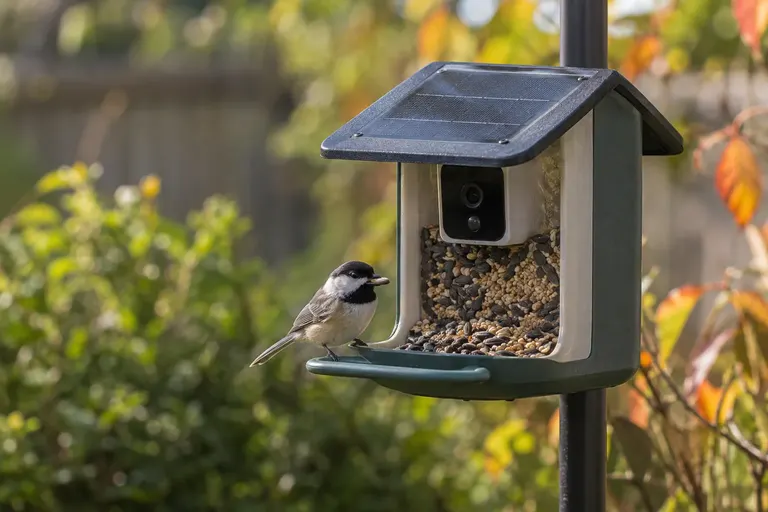
Squirrels feel capsaicin just as people do, so seed and suet treated with capsaicin can discourage them. Owners commonly report fewer squirrel visits once they switch. Results vary, though. Hungry squirrels sometimes keep eating treated food, and some individuals seem to tolerate it better than others. Treated food works best as one layer of defense alongside a baffle and good feeder placement. See how to keep squirrels off bird feeders and bird food squirrels won’t eat for other options, such as safflower seed, which many squirrels dislike.
Is it safe to add chili powder to bird food yourself?
Birds are not bothered by capsaicin when they eat it, but a few cautions make sense:
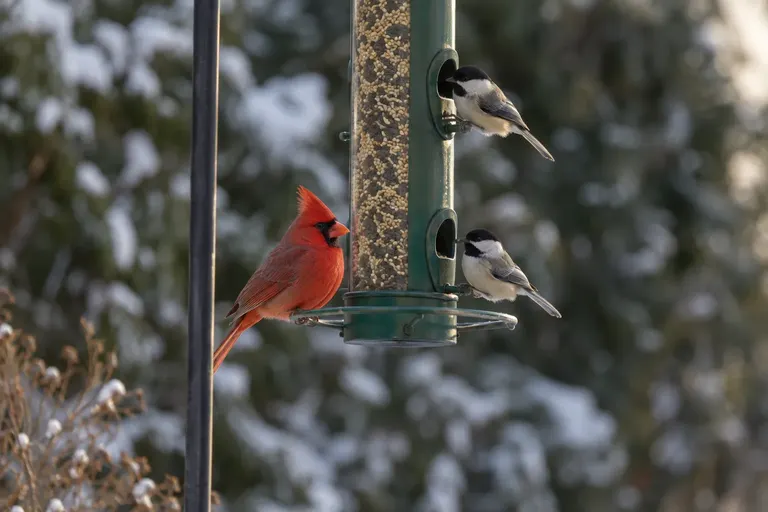
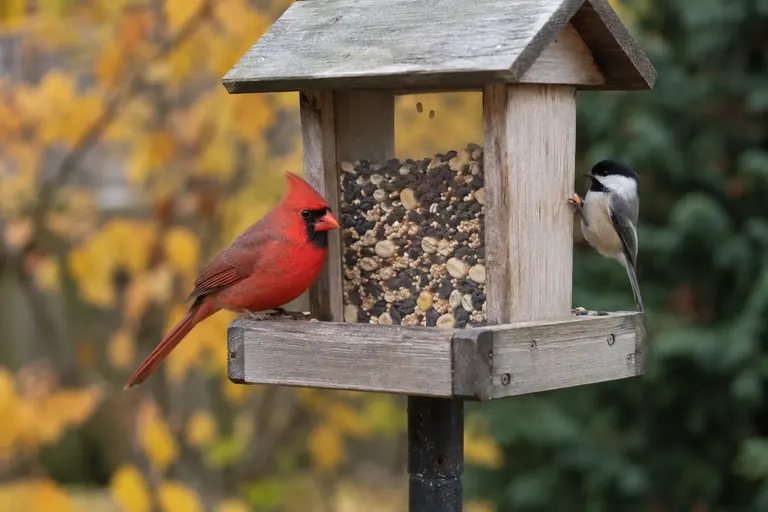
- Prefer pre-treated products. Commercial hot pepper seed and suet bind the capsaicin to the food, which reduces loose dust.
- Protect yourself. Wear gloves when handling treated seed or powder, and avoid touching your eyes or face. Capsaicin is intensely irritating to human skin and eyes.
- Avoid loose powder where birds bathe or preen. Whether capsaicin dust irritates birds’ eyes has not been well studied, so it is sensible to avoid clouds of loose powder.
- Do not use leftover spicy dishes. Human spicy foods often contain salt, fats, onion and garlic, which are not good for birds.
- Keep it dry. Treated seed can still mold if it gets wet. Store it properly, as covered in how to store bird seed.
Does hot pepper deter other mammals?
In principle, capsaicin should deter any mammal that eats it, including rats, mice, raccoons and deer. In practice, the effect depends on how hungry the animal is and what else is available. Treated food is no substitute for cleaning up spilled seed, which draws rodents to feeders.
Should you grow chili peppers for birds?
Wild-type chilies, such as chiltepin in warm climates, can be a good addition to a bird-friendly garden where they grow naturally. Birds eat the ripe red fruits and spread seeds. In most of the United States and Europe, where chilies are grown as annuals, garden peppers may attract some birds but are not a major food source. Native berry shrubs usually do more for birds.
Can birds eat other spicy foods?
The capsaicin story applies to chili peppers. Other “hot” foods act through different compounds:
- Black pepper gets its bite from piperine, which also acts on TRPV1 in mammals. Whether birds are bothered by piperine has not been well studied.
- Mustard, wasabi and horseradish get their sharpness from compounds called isothiocyanates, which act on a different receptor, TRPA1. How birds respond to these is less clear, so it is wise not to assume they are tolerated.
- Ginger contains gingerols, another group of irritant compounds, with limited research in birds.
The safe rule: plain fresh chilies are fine for birds; other spicy seasonings and prepared foods are best kept away from feeders.
Quick facts
- Spiciness is a pain sensation, not a taste.
- Capsaicin activates the TRPV1 pain receptor in mammals but not in birds.
- The key receptor study, in chickens, was published in Cell in 2002.
- Chilies likely evolved capsaicin to deter seed-destroying mammals while leaving birds free to disperse seeds.
- Curve-billed Thrashers eat hot chiltepin peppers and pass viable seeds.
- Birds have fewer taste buds than people but detect bitter, salty, sour and savory, and many detect sweet.
- Hummingbirds and songbirds evolved sweet taste by modifying their savory receptor.
- Hot pepper bird foods can deter squirrels, but results vary.
Sources
- Jordt and Julius (2002), Molecular basis for species-specific sensitivity to hot chili peppers, Cell
- Tewksbury and Nabhan (2001), Directed deterrence by capsaicin in chillies, Nature
- Baldwin et al. (2014), Evolution of sweet taste perception in hummingbirds by transformation of the ancestral umami receptor, Science
- The Nobel Prize in Physiology or Medicine 2021, press release
- Cornell Lab of Ornithology, All About Birds: Curve-billed Thrasher
Frequently asked questions
Does hot pepper bird seed hurt birds?
Current evidence suggests birds are not bothered by capsaicin, because their version of the pain receptor it targets does not respond to it. Birds eat wild chilies and capsaicin-treated seed readily. What is not well studied is whether concentrated powder can irritate a bird's eyes, so choose pre-treated seed or suet rather than dusting on loose powder, and keep feeders clean.
Does hot pepper seed really stop squirrels?
Owners commonly report that capsaicin-treated seed and suet reduce squirrel feeding, because mammals feel capsaicin's burn and learn to avoid it. Results vary: some squirrels keep eating, especially when hungry, and treated food costs more. It works best combined with a baffle and good feeder placement, rather than as the only defense.
Can birds taste anything at all?
Yes. Birds have taste buds, though far fewer than humans, and most sit at the back of the tongue and on the roof of the mouth rather than on the tongue tip. They can detect bitter, salty, sour and savory tastes, and many can detect sweetness too. Taste helps them reject toxic insects and choose ripe fruit.
Why did chili peppers evolve to be spicy?
The leading explanation is directed deterrence. Capsaicin deters mammals such as rodents, which chew and destroy chili seeds, while birds, which swallow seeds whole and pass them intact, are unaffected. A 2001 study in Nature on wild chiltepin peppers in Arizona supported this idea, finding that birds ate and dispersed the fruits while rodents avoided them.
Can parrots eat hot peppers?
Pet parrots commonly eat fresh chili peppers, including hot varieties, and avian vets generally consider plain peppers a safe treat in moderation. Birds do not seem to feel the burn. Avoid seasoned, salted, oily or cooked spicy foods from your plate, which can contain onion, garlic, salt and fats that are unhealthy for birds.