Why Don't Ducks Get Wet? How Their Feathers Shed Water
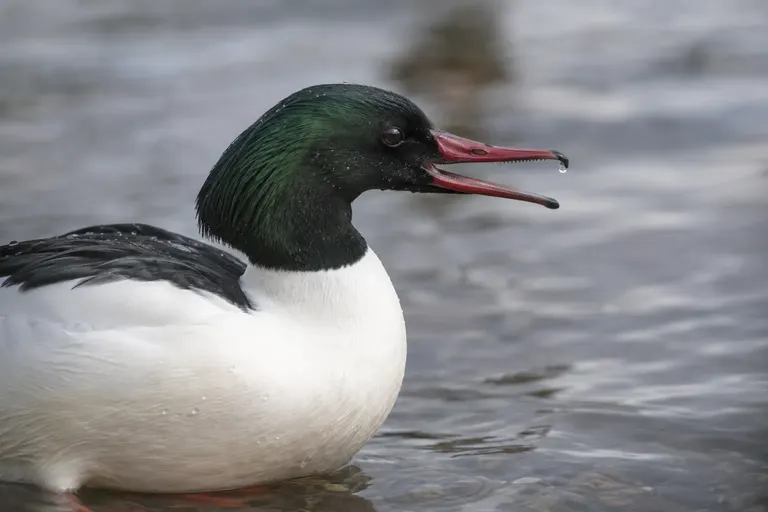
Why don't ducks get wet? Their tightly interlocked feathers trap air that water can't push through, and constant preening keeps that barrier in working order.
In this article
- Quick answer: how ducks stay dry
- How does a feather keep water out?
- Is it the oil that keeps ducks dry?
- Why do ducks preen so much?
- Do ducks ever get wet?
- Why do ducklings sometimes get waterlogged?
- What can break a duck’s waterproofing?
- Are all water birds waterproof?
- Myths vs facts about ducks and water
- How do songbirds stay dry in the rain?
- What does this mean for backyard birders?
- Examples from around the world
- Quick facts
- Sources
- Frequently asked questions
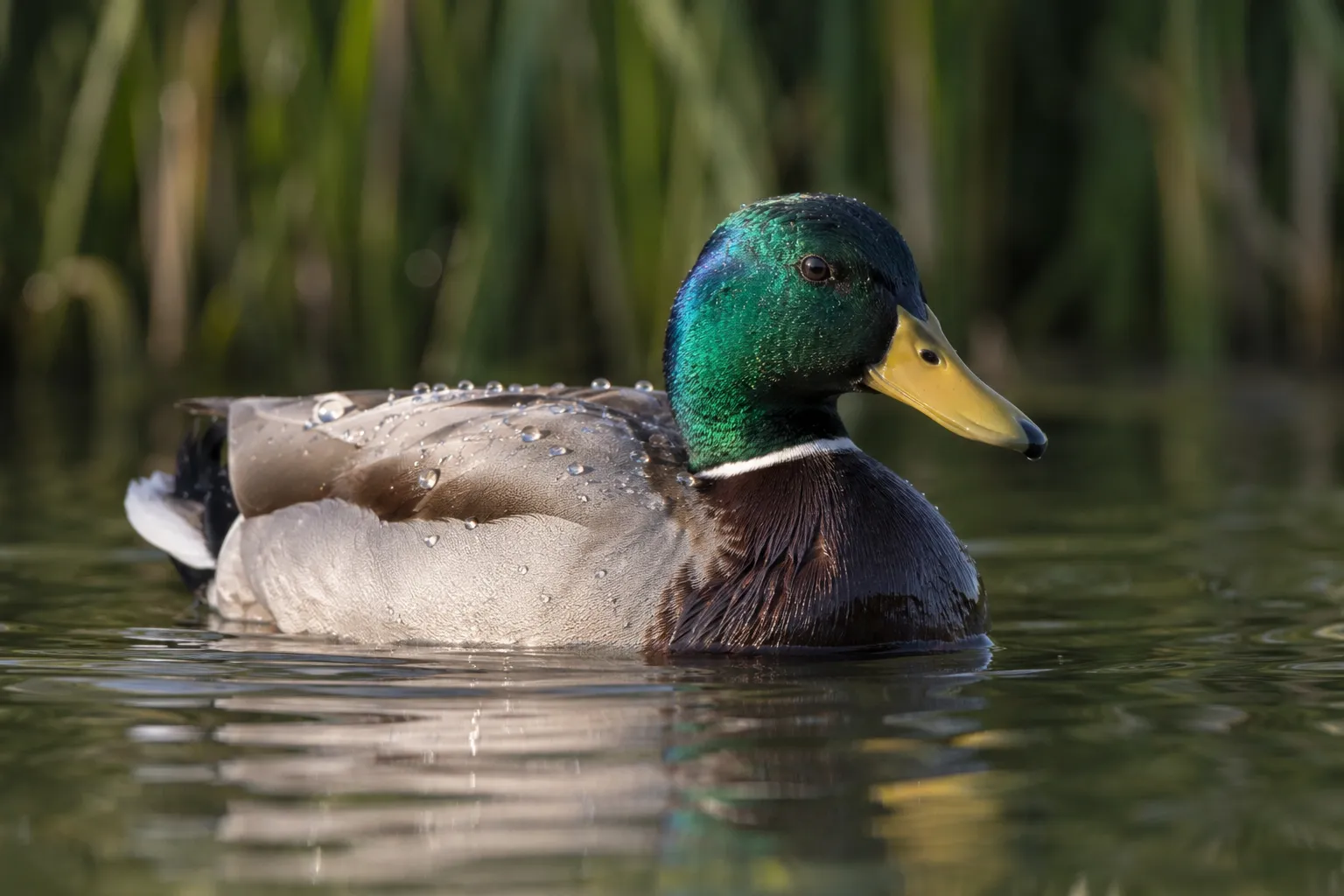
Why don’t ducks get wet? Because their feathers are built to hold water out. Each feather is a fine mesh of barbs and hook-linked barbules, and the overlapping outer feathers form a surface full of tiny air gaps that water droplets cannot push through. Underneath, fluffy down traps a layer of warm air against the skin. Oil from a gland near the tail helps keep this system in good shape, but the structure of the feathers does most of the work.
“Like water off a duck’s back” is a real piece of physics. Here is how it works, what can break it, and why some water birds do get soaked on purpose.
Quick answer: how ducks stay dry
- Feather structure. Tightly spaced barbs and barbules create a surface that water beads on rather than soaks into.
- Overlapping layers. Contour feathers overlap like roof shingles, shedding water outward and down.
- Trapped air. Down feathers underneath hold a layer of air that insulates and adds buoyancy.
- Preening. Ducks spend a lot of time zipping feathers back together and spreading preen oil, which keeps the barrier intact.
- Behavior. Shaking, wing-flapping and bathing all help reset feathers so they stay waterproof.
How does a feather keep water out?
To understand why ducks stay dry, look closely at a single feather.
What is a feather made of?
A typical contour feather, the kind that covers a duck’s body, has a central shaft called the rachis. Branching off each side are hundreds of barbs. Branching off each barb are even smaller barbules. On one side, the barbules carry tiny hooks. On the other side, they have grooves or ridges. The hooks catch on the neighboring barbules like the teeth of a zipper or the loops of hook-and-loop fastener, locking the barbs together into a flat, flexible vane.
The result is not a solid sheet. It is a very fine lattice with regular gaps between the barbs and barbules.
Why doesn’t water go through the gaps?
Water has surface tension. Its molecules cling to each other, so a drop resists being stretched thin enough to squeeze into a narrow gap, especially when the material it is sitting on does not attract water strongly. Feather keratin is fairly water-repellent, and the gaps in a duck feather are small and evenly spaced. A drop landing on the feather ends up resting on a mix of feather material and pockets of air, rather than wetting the whole surface. Physicists call this kind of partial contact a Cassie-Baxter state, and it is the same principle behind water beading on a lotus leaf or on waterproof, breathable fabrics.
Researchers have studied this since at least the 1960s. Work by Adrian Rijke compared the spacing and thickness of feather barbs across water birds and found that the geometry predicts how water-repellent the plumage is. More recent lab studies have confirmed that the size and spacing of barbs and barbules matter a great deal, and that repeated wetting or pressure can push water in if the structure is disturbed.
How do layers of feathers help?
A duck is covered in overlapping contour feathers that lie like roof shingles, each one covering the base of the next. Water that does not bead off simply runs over the top, away from the body. Beneath those outer feathers are down feathers, which lack the zipper-like hooks. Their loose, fluffy barbs trap air, a superb insulator. This air layer is why a duck can sit on near-freezing water in winter and stay warm, and why ducks float so high.
Diving ducks can press their feathers against the body to squeeze out some of that air before a dive, which reduces buoyancy and makes it easier to swim underwater.
Is it the oil that keeps ducks dry?
This is the most common explanation, and it is only partly right.
Most birds, including ducks, have a uropygial gland, also called the preen gland or oil gland, at the base of the tail on top of the rump. It produces a waxy, oily secretion. When a duck preens, you will often see it rub its bill or head on this spot and then work the oil through its feathers.
Preen oil appears to do several useful jobs:
- It keeps feathers flexible so they do not dry out and crack.
- It may help protect feathers from bacteria, fungi and feather-degrading microbes.
- In some species it may affect feather color or smell.
- It probably adds some water resistance to the feather surface.
But experiments suggest that the oil is not the main reason ducks stay dry. When researchers have compared clean feathers, oiled feathers and feathers stripped of their oil, the structure of the feather usually predicts water repellency better than whether oil is present. A duck with perfectly oiled but damaged, disordered feathers would get wet. A duck with intact, well-aligned feathers stays dry even with less oil.
So the fairest summary is this: the design of the feather does most of the work, and preening, including oiling, keeps that design working.
Why do ducks preen so much?
Watch ducks on any pond and you will see them preening, shaking and stretching for long stretches of the day. That is maintenance, and it is essential.
Every time a duck dives, dabbles, flies or squabbles, some barbs come unzipped. Preening does three things:
- Re-zips the barbs. Drawing a feather through the bill hooks the barbules back together, restoring the water-shedding surface.
- Removes dirt and parasites. Mud, algae and feather lice interfere with the structure.
- Spreads oil. Keeps the feathers supple and conditioned.
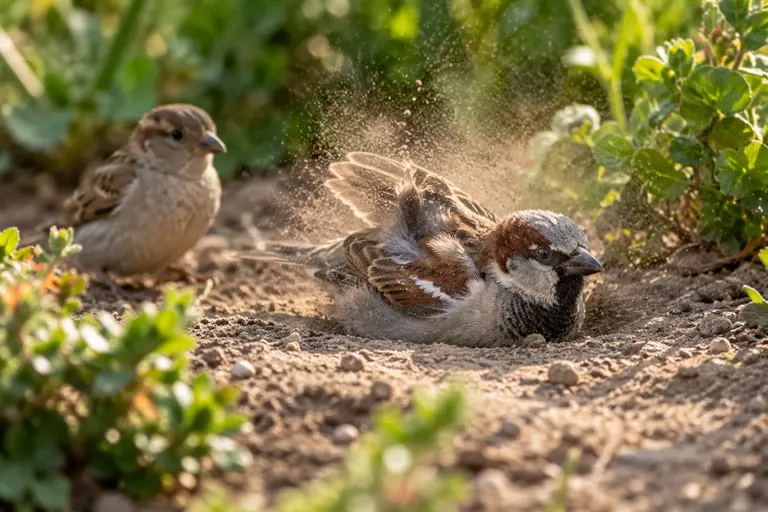
Ducks also bathe vigorously, flapping, rolling and splashing, then shake off and preen. Bathing may seem odd for a bird that is trying to stay dry, but it helps clean the plumage so it works better afterward. Many songbirds do the same thing in a bird bath, and some take dust baths or sunbathe as part of feather care. See why birds take dust baths and why birds sunbathe.
Do ducks ever get wet?
Yes, in several ways:
- Surface water. Outer feathers get wet on top; the key is that water does not penetrate to the skin.
- Feet, legs and bill. These have no feathers. Ducks’ feet are in cold water constantly. They manage heat loss through a countercurrent heat exchange system in the legs, where warm arteries pass right next to cold veins, so heat is transferred back into the body before it reaches the feet. For more on this, see how birds stay warm in winter.
- Damaged or dirty plumage. Worn, broken or contaminated feathers let water in.
- During molt. Ducks replace their feathers regularly. Many ducks lose all their flight feathers at once after breeding and are flightless for a few weeks. They stay close to water and cover to avoid predators while the new feathers grow. See why birds molt.
Why do ducklings sometimes get waterlogged?
Newly hatched ducklings are covered in down, not the mature, zippered contour feathers of adults. They can swim within a day of hatching, but their plumage is less water-resistant, and their preening skills and preen glands are still developing.
In the wild, ducklings stay close to their mother. They swim for short periods, climb out to rest and warm up under her, and she leads them to shallow edges with cover. A popular belief is that the mother’s preen oil is what waterproofs her ducklings. There is no strong evidence for that; the more likely explanation is that brooding keeps them warm and dry between swims while their own feathers develop.
Wildlife rehabilitators do warn that orphaned ducklings placed in deep water, especially without a way to climb out, can become chilled or waterlogged. If you find a lone duckling, contact a licensed wildlife rehabilitator rather than setting it in a pond. Our guide found a baby bird? what to do explains how to find help.
What can break a duck’s waterproofing?
Because waterproofing depends on a delicate structure and on surface tension, several things can break it.
Oil spills
Crude oil is one of the worst threats to water birds. Oil sticks to feathers and mats the barbs together. The fine air-filled structure collapses, water reaches the skin, and the bird loses its insulation and some of its buoyancy. In cold water, hypothermia can set in quickly. Birds also swallow oil as they try to preen it off, which damages internal organs.
Rescue organizations clean oiled birds with dilute dishwashing detergent and warm water, then rinse them thoroughly. Afterward the birds need time in clean pools to preen and restore their feather structure before they can be released. Waterproofing is tested before release, because a bird that is released while still wettable can die of cold.
Detergents and surfactants
Detergents lower the surface tension of water. That is why they are good at getting into fabrics, and it is also why soapy water can soak into feathers that would normally shed it. A popular classroom demonstration shows a feather or a duck model sinking in detergent water. Pollution from surfactants can reduce waterproofing in real birds too, although the impact depends on concentration.
Poor diet and captivity
Birds that are malnourished or kept in dirty, crowded conditions may grow weaker feathers and preen less, both of which affect waterproofing. This is one reason feeding ducks large amounts of bread is discouraged: it fills them up without the nutrients they need and can foul the water. See is bread bad for birds.
Are all water birds waterproof?
No, and the exceptions are just as interesting.
| Bird | How waterproof is the plumage? | Why |
|---|---|---|
| Ducks, geese, swans | Very water-repellent | Float high, rest on water, need insulation |
| Grebes and loons | Highly water-repellent, dense | Dive a lot but also spend nearly all their lives on water |
| Penguins | Dense, short feathers with an air layer | Insulation in cold seas; dive deep |
| Cormorants and shags | Partly wettable | Reduced buoyancy helps them dive and chase fish |
| Anhingas and darters | Very wettable | Swim low in the water, often with only the neck showing |
| Frigatebirds | Poorly waterproof | Rarely land on water; they snatch food from the surface in flight |
Why do cormorants hold their wings out?
Cormorants are often seen perched with wings spread after fishing. Their outer feathers are structured to let some water in, which cuts buoyancy and makes diving cheaper in energy. Research on Great Cormorants suggests they still keep an insulating layer of air close to the skin, so they are not soaked through, but their outer plumage does get wet. Spreading the wings helps it dry. Anhingas in the Americas and darters in Africa, Asia and Australia do the same.
Myths vs facts about ducks and water
Myth: ducks stay dry only because they are oily. Fact: feather structure is the main reason; preen oil helps keep feathers in good condition.
Myth: ducks never get wet. Fact: their outer surface gets wet, and their feet, legs and bill are wet all the time. What stays dry is the skin under the feathers.
Myth: you should rub oil on a rescued duck to help it. Fact: never do this. Adding oil or lotion damages feathers. Contact a wildlife rehabilitator.
Myth: ducklings are waterproofed by their mother’s oil. Fact: this is widely repeated but not well supported. Brooding by the mother keeps ducklings warm while their own feathers and preening develop.
Myth: all water birds are equally waterproof. Fact: cormorants, anhingas and frigatebirds have plumage that gets wet more easily, and each has a reason for it.
How do songbirds stay dry in the rain?
Songbirds use the same basic feather design as ducks, just less of it. Their contour feathers overlap and their barbs zip together, so light rain beads and runs off. What they lack is the extremely dense, highly water-repellent plumage that lets a duck sit on a lake all day.
In a heavy or long downpour, small birds change their behavior rather than rely on feathers alone:
- They take shelter. Dense evergreens, thick shrubs, hedges and the lee side of buildings cut rain and wind. This is one reason native shrubs and conifers are so valuable in a bird-friendly yard.
- They hunch and point into the wind. Sitting with the bill facing the rain keeps water flowing along the feathers from front to back instead of lifting them up.
- They sleek their feathers down. Pressing feathers flat helps water run off. Once the rain stops, they fluff up again to restore insulation.
- They preen afterward. A wet songbird will shake, then spend time re-zipping and arranging its feathers, often in the first sunny break.
Prolonged cold rain is genuinely hard on small birds, especially nestlings and fledglings whose feathers are still growing. It chills them and makes insect prey harder to find. A well-stocked feeder and good cover can help adults get through these spells.
What does this mean for backyard birders?
Even if you do not have ducks, the same principles apply to songbirds at your feeders and baths.
- Bird baths matter for feather care. Songbirds bathe regularly to keep feathers clean, then preen to restore structure. A shallow bath, about 1 to 2 inches deep with a gentle slope, is ideal. See where to put a bird bath.
- Keep water clean. Dirty water can spread disease and does not help feather maintenance.
- Winter water is valuable. In freezing weather, birds need water for drinking and feather care. A heated bath can be a lifeline.
- Watch for fluffing. Birds fluff their feathers to trap air for warmth, the same principle a duck’s down uses. Here is why birds puff up.
- Do not feed bread to ducks. It offers little nutrition and pollutes ponds.
Examples from around the world
- Mallard. Found across North America, Europe, Asia and introduced elsewhere, it is the classic “water off a duck’s back” bird.
- Common Eider. A sea duck of the North Atlantic and Arctic whose down is so insulating that it has been harvested for centuries from nests.
- Muscovy Duck. Native to Central and South America, including Brazil, and domesticated widely. It perches in trees and has strong, water-repellent plumage.
- Ruddy Shelduck. Common in Turkey and across Central Asia, spends time on land and water with typical duck waterproofing.
- Great Crested Grebe. Found in Europe, Asia, Africa and Australasia; dense plumage keeps it dry while diving.
- Great Cormorant. Found on every inhabited continent; its wing-spreading behavior shows a different strategy.
Quick facts
- Duck feathers are built from barbs and hook-linked barbules that form a water-repellent lattice.
- Water beads on the surface because of surface tension and trapped air.
- Down feathers under the outer layer trap air for insulation and buoyancy.
- The preen gland at the base of the tail produces oil used in feather care.
- Feather structure matters more than oil for waterproofing, based on lab studies.
- Ducks’ feet stay warm enough through countercurrent heat exchange.
- Oil spills and detergents destroy waterproofing by disrupting feather structure or surface tension.
- Cormorants and anhingas have partly wettable feathers that help them dive.
Sources
Frequently asked questions
Is it the oil that keeps ducks dry?
Only partly. Ducks do spread oil from a preen gland near the tail, and it helps keep feathers flexible and in good condition. But the main waterproofing comes from the structure of the feathers themselves: tightly spaced barbs and barbules that trap air so water cannot soak in. Laboratory studies suggest feather geometry matters more than the oil for repelling water.
Do ducks ever get wet?
Their outer feathers get wet on the surface, and water can reach the skin if feathers are damaged, dirty or out of place. Ducks shake, preen and realign their feathers constantly to keep the barrier intact. Their feet, legs and bill have no feathers at all, so those parts get wet every time the duck swims.
Why do ducklings sometimes get waterlogged?
Young ducklings are covered in down rather than mature contour feathers, and their preen glands and preening skills are still developing. Wildlife rehabilitators warn that orphaned ducklings kept in deep water without a parent can become chilled or waterlogged. In the wild, ducklings stay close to their mother and warm up under her, which helps protect them.
Why do oil spills harm ducks so badly?
Crude oil mats feathers together and destroys the tiny air-trapping structure that keeps water out. Cold water then reaches the skin, and a bird can quickly lose body heat and buoyancy. Birds also swallow oil while trying to preen it off, which can poison them. Even a small patch of oil can be dangerous in cold water.
Why do cormorants hold their wings out to dry if ducks don't need to?
Cormorant feathers are built to let some water in. That makes the birds less buoyant, which helps them dive and chase fish underwater. Studies suggest they still keep an air layer close to the skin, but their outer plumage gets wet, so they often spread their wings after fishing. Anhingas and darters do the same.