Can Birds See Ultraviolet Light?
Can birds see ultraviolet light? Yes. Most birds have a fourth cone tuned to UV or violet light, so plumage, berries and eggs look different to them than to us.
In this article
- Quick answer: what you need to know
- How do birds see ultraviolet light?
- What does the world look like to a bird with UV vision?
- What do birds use ultraviolet vision for?
- Which birds see ultraviolet best?
- Myths vs facts about bird UV vision
- What does UV vision mean for backyard birders?
- How do scientists know what birds can see?
- Why did birds evolve UV vision in the first place?
- Quick facts
- Sources
- Frequently asked questions
Yes, most birds can see ultraviolet light. Nearly all birds studied so far have four types of color-sensing cone cells instead of our three, and the extra one is tuned to ultraviolet or violet wavelengths. Many birds also have eyes whose lens lets near-UV light reach the retina, while the adult human lens absorbs most light below about 400 nanometers. The result is that feathers, berries, flowers and eggs carry colors that birds see and we cannot.
Some birds see deep into the ultraviolet, others only a little way. This guide explains how UV vision works, which birds have it, what they use it for, where popular claims go too far, and what it means for the birds at your feeder.
Quick answer: what you need to know
- Ultraviolet (UV) light is shorter in wavelength than violet, below roughly 400 nanometers (nm). Human eyes block and ignore most of it.
- Most birds are tetrachromats. They have four single-cone types for color, sensitive to long (red), medium (green), short (blue) and very short (violet or UV) wavelengths.
- Two main “flavors” exist. Ultraviolet-sensitive (UVS) birds have their fourth cone peaking in the UV, around the mid-300s nm. Violet-sensitive (VS) birds peak around 400 to 420 nm, but still pick up some near UV.
- UV matters in real life. It shows up in mate choice, plumage signals, finding fruit, recognizing eggs and possibly spotting prey.
- Some famous claims are shaky. The idea that kestrels hunt by following UV-glowing vole urine is now debated.
How do birds see ultraviolet light?
Color vision starts with cone cells in the retina. Each cone type carries a light-sensitive protein, called an opsin, that responds best to a particular band of wavelengths. The brain compares signals from the different cone types to work out color.
Humans have three cone types, tuned roughly to red, green and blue. Most birds have four single-cone types, plus a double cone that is thought to handle brightness and motion rather than color. The fourth single cone, built around an opsin known as SWS1, is the one that reaches into short wavelengths.
What is the difference between UVS and VS birds?
The SWS1 opsin comes in two main versions across the bird family tree:
| Type | Peak sensitivity of the fourth cone | Groups that typically have it |
|---|---|---|
| UVS (ultraviolet-sensitive) | Roughly 355 to 380 nm, true UV | Many songbirds (passerines), parrots, gulls, some others |
| VS (violet-sensitive) | Roughly 400 to 420 nm, violet with a tail into UV | Pigeons and doves, chickens and other gamebirds, ducks and geese, most birds of prey, many seabirds |
The distinction is not a clean split along family lines. Genetic studies of the SWS1 gene, notably work by Anders Ödeen and Olle Håstad in the early 2000s, found that birds have switched between the two types several times during their evolution. Even within songbirds there are exceptions. A small change in the opsin’s amino acid sequence can shift its peak by tens of nanometers.
The practical point is that “birds see UV” is true in a graded way. A Blue Tit or a budgerigar has a cone built to catch UV. A pigeon or a hawk sees mostly violet with some UV at the edge.
Why can’t humans see UV?
Our retina is not the main obstacle. The adult human lens absorbs most light below about 400 nm, a feature thought to protect the retina from damage. People who have had a lens removed and not replaced, a condition called aphakia, have reported seeing some near-UV light as a whitish-violet color. That tells us our blue cones can respond a little to UV if it gets through.
Many birds, especially small songbirds, have lenses and corneas that transmit near-UV light well. Birds that are larger or that live in very bright habitats tend to filter more of it, which may be one reason raptors and some seabirds fit the VS pattern.
What do oil droplets do in bird eyes?
Bird cones contain tiny colored oil droplets that sit in the light path, like filters placed in front of each sensor. They narrow the band of wavelengths each cone responds to, which reduces overlap between cone types. Less overlap means finer discrimination between similar colors.
The cone that handles UV or violet has a clear, transparent droplet, so it does not block the short wavelengths it is meant to catch. The other cones have droplets tinted yellow, orange or red. The tradeoff is sensitivity: filters cut out some light, which is one reason birds are thought to see color less well in dim light than in daylight.
What does the world look like to a bird with UV vision?
Nobody can see through a bird’s eyes, and we have no name for colors we cannot perceive. What scientists can do is measure how surfaces reflect light across the full spectrum and model what a bird’s cones would register.
Those models suggest three things.
- Colors we lump together, birds may split. Two feathers that look the same shade of blue to us can differ strongly in UV reflectance, so a bird would see them as distinct.
- Birds see more color combinations. With four cone types, birds can in principle perceive mixtures that have no human equivalent, such as UV plus red or UV plus green.
- White and black are not always the same to a bird. Many white feathers reflect UV, and some do not. A bird may see several “whites” where we see one.
Do birds see colors that humans cannot even imagine?
A study led by Mary Caswell Stoddard of Princeton University, published in PNAS in 2020, tested this directly in the wild. Her team trained Broad-tailed Hummingbirds in the Rocky Mountains of Colorado to visit feeders marked by lights of different colors. The birds learned to tell apart “nonspectral” colors, such as ultraviolet mixed with green or with red, from similar single colors. These are combinations of widely separated wavelengths, analogous to the way purple is a mix of red and blue for us.
The researchers also analyzed large sets of plumage and plant colors and reported that a substantial share, on the order of a third, would look like nonspectral colors to a bird. That result suggests birds live in a much richer color world than ours, not just a world with one extra shade tacked on. For more on how birds process color in general, see our guide can birds see color.
What do birds use ultraviolet vision for?
Do birds use UV to choose mates?
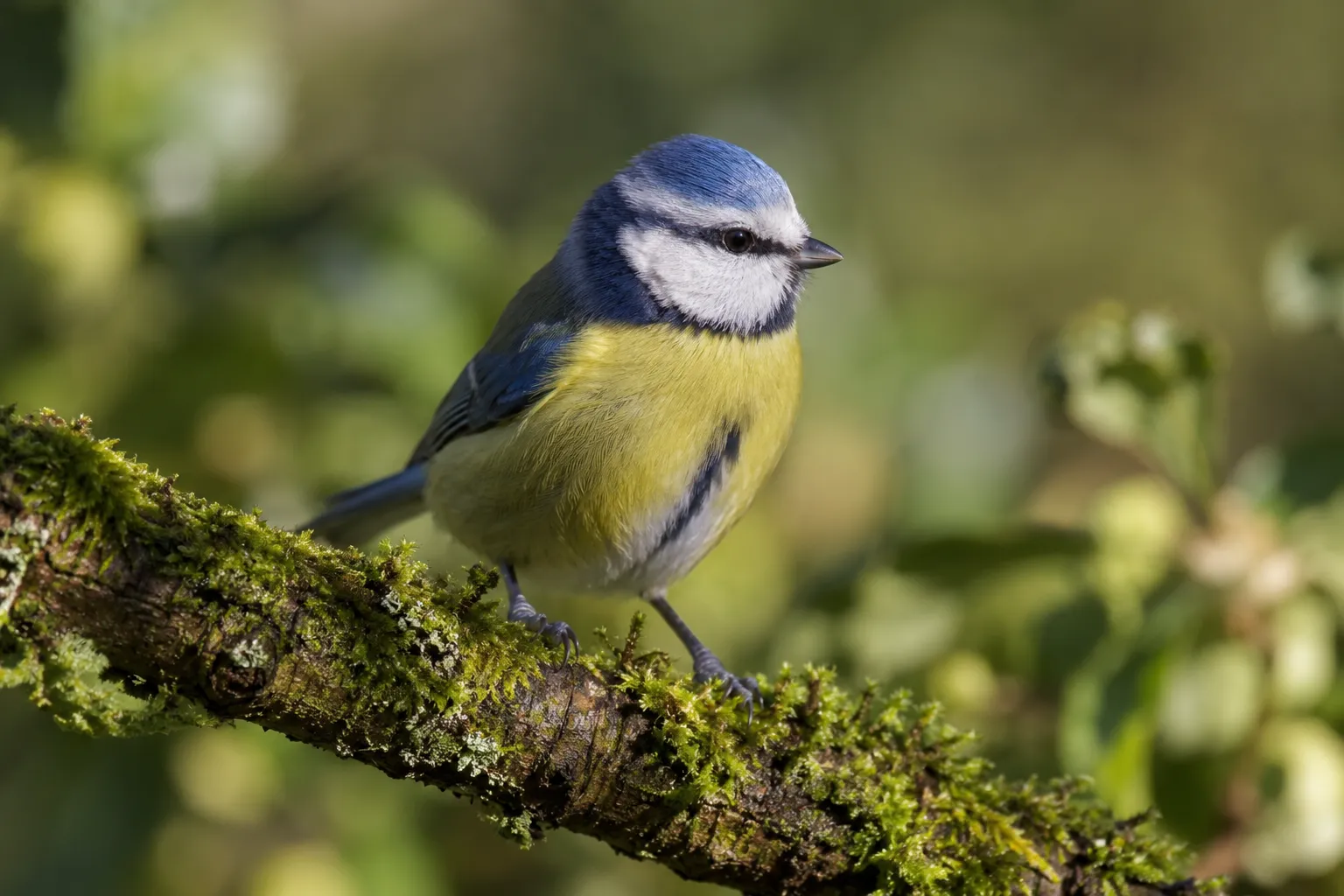
This is the best-studied use. The classic example is the Eurasian Blue Tit, a small European relative of chickadees. To human eyes, males and females look nearly identical. Measured with a spectrometer, males have a crown that reflects more ultraviolet than females do. In 1998, two independent research teams, one in Britain led by Sarah Hunt and one in Sweden led by Staffan Andersson, reported this hidden sexual difference, and experiments showed that females preferred males with brighter UV crowns. One of the papers was titled, fittingly, “Blue tits are ultraviolet tits.”
Similar results have come from other species:
- European Starlings have glossy plumage with UV components, and 1990s experiments that filtered out UV changed how starlings chose between potential mates.
- Zebra Finches in laboratory mate-choice trials also showed preferences that shifted when UV was removed from the light.
- Budgerigars have cheek patches that reflect UV, and their yellow crown feathers fluoresce under UV light. A 2002 study in Science by Kathryn Arnold and colleagues reported that this fluorescence made birds more attractive to potential mates in trials.
The general lesson is that UV is part of the ordinary color signal of many birds. It is not a secret code layered on top. It is simply a portion of the color we cannot see.
Do birds use UV to find food?
Several lines of evidence point that way, with some caveats.
- Fruit. Many berries, such as blueberries, sloes and juniper, have a waxy bloom that reflects ultraviolet. Researchers have suggested this helps fruit-eating birds spot ripe fruit against leaves, which generally reflect little UV. Experimental results are mixed, and the bloom may also serve other purposes such as waterproofing.
- Insects. Some insects reflect or absorb UV in patterns that could make them stand out to birds. Experiments with foraging songbirds suggest UV contrast can improve detection of prey in some settings.
- Flowers. Many flowers carry UV “nectar guides” that bees see. Hummingbirds, as the Stoddard study showed, can see UV combinations, but how much they rely on UV when choosing flowers in the wild is not settled.
Can kestrels really track voles by UV-reflecting urine?
In 1995, Finnish researcher Jussi Viitala and colleagues published a study in Nature showing that Eurasian Kestrels were drawn to areas marked with vole urine and droppings, and that the marks reflect ultraviolet. The idea that a hovering kestrel could see glowing trails across a field became one of the most repeated bird facts in the world.
The story is more complicated now. Raptors turned out to be VS birds, with violet-tuned rather than UV-tuned cones. A 2013 study in the Journal of Experimental Biology by Olle Lind and colleagues measured light transmission in raptor eyes and concluded that UV sensitivity in kestrels and similar hawks is relatively low. They argued that vole trails would offer little UV contrast to a raptor at hunting distance. The original behavioral observations were real, but the explanation is disputed. The fair summary is that the kestrel UV story is possible but unproven.
Do birds use UV to recognize their eggs?
Eggshells reflect varying amounts of UV. Some studies of brood parasites, such as the Common Cuckoo in Europe, suggest that host birds may use UV as one cue when deciding whether an egg in the nest belongs to them. Results vary by species, and visible color and pattern are clearly important too. If you are curious about the parasites themselves, our article on why some birds lay eggs in other birds’ nests covers cuckoos and cowbirds.
Do nestlings use UV?
The gapes and mouth linings of some nestlings reflect UV, and experiments have suggested that parents in some species respond to that contrast when deciding which chick to feed, especially in dark nest cavities. This area of research is active and results differ between species.
Which birds see ultraviolet best?
Based on current evidence, the strongest UV sensitivity is found in many small songbirds, parrots and gulls, the UVS birds. That includes species many backyard birders know: tits and chickadees, finches, starlings, and many others. The songbird group is huge and not every species has been tested, so it is safest to say “many” rather than “all.”
Birds with VS vision still see into the near UV, but with less sensitivity there. This group includes:
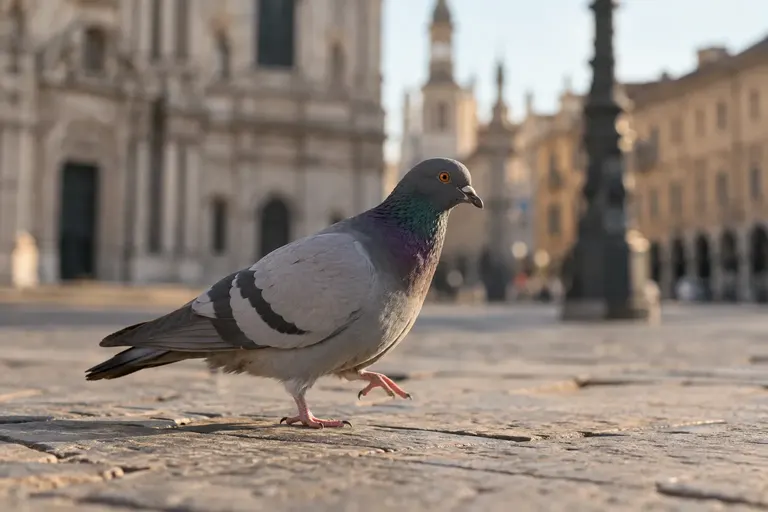
- Pigeons and doves, including the Rock Pigeon and Mourning Dove
- Chickens, turkeys and other gamebirds
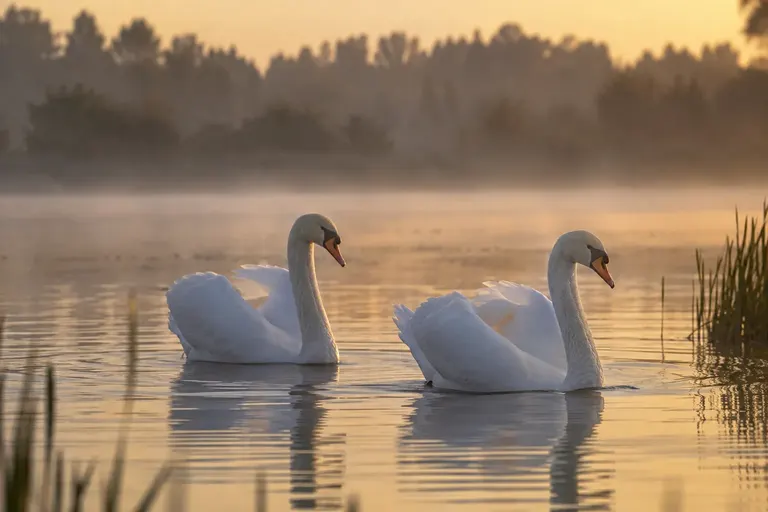
- Ducks, geese and swans
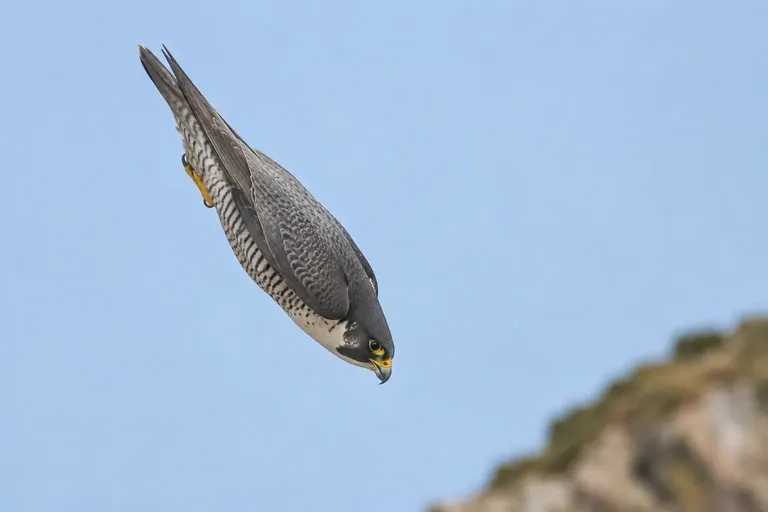
- Most hawks, eagles and falcons
- Many shorebirds and seabirds
Owls and other nocturnal birds are a special case. Their eyes are built for sensitivity in dim light, and there is little UV at night, so UV vision is expected to matter less for them. Research on owl color vision is limited.
Myths vs facts about bird UV vision
| Claim | Verdict | What the evidence says |
|---|---|---|
| “Birds see in ultraviolet instead of normal color.” | False | Birds see the visible colors we see plus UV or violet. UV adds to their range, it does not replace anything. |
| “All birds see UV equally well.” | False | Many songbirds and parrots have UV-tuned cones; pigeons, waterfowl and raptors have violet-tuned cones with weaker UV sensitivity. |
| “Male and female Blue Tits look the same.” | Only to humans | They differ in UV crown reflectance, which Blue Tits can see. |
| “Kestrels hunt by seeing vole urine.” | Unresolved | A 1995 study supported it; later eye measurements questioned how much UV raptors detect. |
| “UV decals are an invisible fix for window strikes.” | Weak evidence | Visible markings on the outside of glass are the reliable approach. |
| “Birds see the world as a single UV-tinted scene.” | Misleading | Birds perceive UV as part of a four-dimensional color space, likely with color mixtures we cannot imagine. |
What does UV vision mean for backyard birders?
Should I use UV window decals?
This is the most practical question for most readers. Windows reflect sky and vegetation, and birds fly into them. Some window products use UV-reflective patterns that people barely see but birds are supposed to notice.
The idea makes sense on paper, but the evidence is weaker than for visible patterns. Many common window-strike victims have VS vision, UV light is weaker in shade and on cloudy days, and UV coatings can degrade over time. Groups that test window treatments generally favor visible dots, tape or cords applied to the outside of the glass at tight spacing. Our guide on how to stop birds hitting windows explains the 2-inch spacing rule, and why birds fly into windows covers the reflection problem in depth.
A reasonable position: UV-reflective glass or film may help some species, but do not rely on it alone.
Does UV vision affect what birds eat at my feeder?
There is no good evidence that birds choose between seed types by UV color. Seed choice depends mostly on size, shell hardness, fat content and bill shape. If you want to know which foods attract the widest range of species, start with black oil sunflower seed.
UV may matter more in a bird-friendly garden. Many native fruiting shrubs have UV-reflecting berries, and planting them offers food that birds are well equipped to find. Our list of berry shrubs that feed birds all winter is a good place to start.
Does UV vision affect bird photography?
Camera sensors and lenses are built for human vision and usually filter UV, so a photo never shows what a bird sees. Two birds that look dull and identical in your pictures may be quite distinct to each other. It is a useful reminder when you look at species that seem to have plain plumage: they may not be plain at all to their own kind.
How do scientists know what birds can see?
It helps to understand the methods, because they explain why some claims are firmer than others.
- Microspectrophotometry. Researchers shine tiny beams of light through individual cone cells from retinal samples and record which wavelengths each cone absorbs. This gives peak sensitivities for each cone type.
- Opsin gene sequencing. Scientists read the SWS1 gene from DNA, often from a feather or blood sample, and predict whether a species is UVS or VS from key amino acids. This allowed surveys of hundreds of species without eye tissue.
- Eye media measurements. Measuring how much UV the cornea and lens let through shows whether light actually reaches the cones.
- Behavioral tests. Training birds to choose between colors, as in the hummingbird study, or running mate-choice trials under UV-filtered and full-spectrum light, shows whether the birds use UV information.
- Visual modeling. Combining cone data with reflectance measurements lets researchers estimate how different two colors look to a given species.
When all five lines of evidence agree, as they do for Blue Tit plumage, we can be confident. When physiology and behavior point in different directions, as with kestrels and vole trails, the question stays open.
Why did birds evolve UV vision in the first place?
Birds inherited four cone types from distant reptile ancestors. Mammals lost two of their ancestral cone types during a long period of nocturnal living early in their history, which is why most mammals have only two cone types. Primates like us later regained a third through a gene duplication.
Birds never went through that bottleneck, so they kept a four-cone system. Seen that way, the more useful question is not why birds see UV but why humans do not. Once the cones were there, natural and sexual selection shaped how birds used them, from plumage signals to fruit finding.
Quick facts
- Most birds have four color cone types; humans have three.
- UVS birds have a cone that peaks in true ultraviolet, around 355 to 380 nm.
- VS birds peak around 400 to 420 nm but still detect some near UV.
- Many songbirds, parrots and gulls are UVS; pigeons, waterfowl and raptors are typically VS.
- Blue Tit males and females differ in UV crown color, invisible to people.
- Budgerigar crown feathers fluoresce under UV, and this appears to play a role in mate choice.
- A 2020 study showed hummingbirds can distinguish nonspectral colors involving UV.
- The kestrel and vole-urine story is disputed.
- Visible exterior window markings are more reliable than UV-only products.
Sources
- Hunt, S. et al. (1998). Blue tits are ultraviolet tits. Proceedings of the Royal Society B
- Stoddard, M. C. et al. (2020). Wild hummingbirds discriminate nonspectral colors. PNAS
- Viitala, J. et al. (1995). Attraction of kestrels to vole scent marks visible in ultraviolet light. Nature
- Lind, O. et al. (2013). Ultraviolet sensitivity and colour vision in raptor foraging. Journal of Experimental Biology
- Ödeen, A. and Håstad, O. (2003). Complex distribution of avian color vision systems revealed by sequencing the SWS1 opsin from total DNA. Molecular Biology and Evolution
- Arnold, K. E. et al. (2002). Fluorescent signaling in parrots. Science
- Cuthill, I. C. et al. (2017). The biology of color. Science
Frequently asked questions
Can all birds see ultraviolet light?
Most birds studied so far can detect at least near-ultraviolet light, but not equally. Many songbirds, parrots and gulls have a cone that is most sensitive in the ultraviolet itself. Many other groups, including pigeons, chickens, waterfowl and most birds of prey, have a violet-sensitive cone instead, which still reaches a little way into the near UV. So UV vision in birds is common but varies in strength.
Why can birds see UV when humans cannot?
Two things differ. Most birds have a fourth type of color cone, tuned to ultraviolet or violet light, while humans have three. The lens and cornea of many birds also let near-UV light through to the retina, while the adult human lens absorbs most light below about 400 nanometers. Our retina is not the main barrier; our lens filters UV out before it arrives.
Do birds see UV patterns in their feathers?
Yes, in many species. Blue Tits, European Starlings and many parrots have plumage that reflects ultraviolet strongly. In the Blue Tit, males and females look alike to people but differ in UV reflectance on the crown, and experiments in the late 1990s showed that females pay attention to this difference when choosing mates. UV is part of the plumage signal, not a hidden extra.
Do UV window decals stop birds hitting windows?
Evidence for UV-only products is weaker than for visible markings. Many birds have violet-sensitive rather than ultraviolet-sensitive vision, and UV patterns fade in shade or on overcast days. Conservation groups recommend visible exterior markings spaced about 2 inches apart, or screens and netting, as the reliable fix. UV products may help some species but should not be your only treatment.
Can kestrels really see vole urine trails in UV light?
A 1995 study in Nature reported that Eurasian Kestrels were attracted to vole scent marks that reflect ultraviolet light, and the idea became famous. Later measurements of raptor eyes found that kestrels and other hawks are relatively poor at detecting UV, which casts doubt on how much the trails help in the wild. The claim is best treated as unresolved.