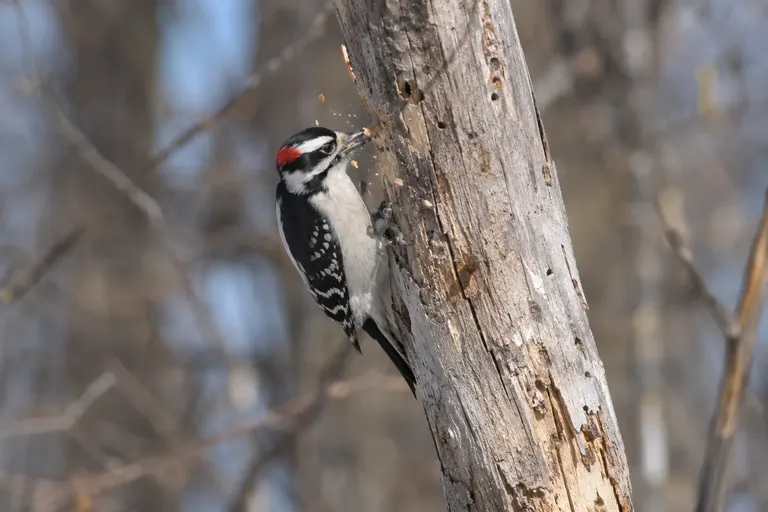
Do Birds Have Ears?
Do birds have ears? Yes, hidden openings behind the eyes, covered by special feathers. Here is how bird hearing works, what birds hear and how owls hunt.
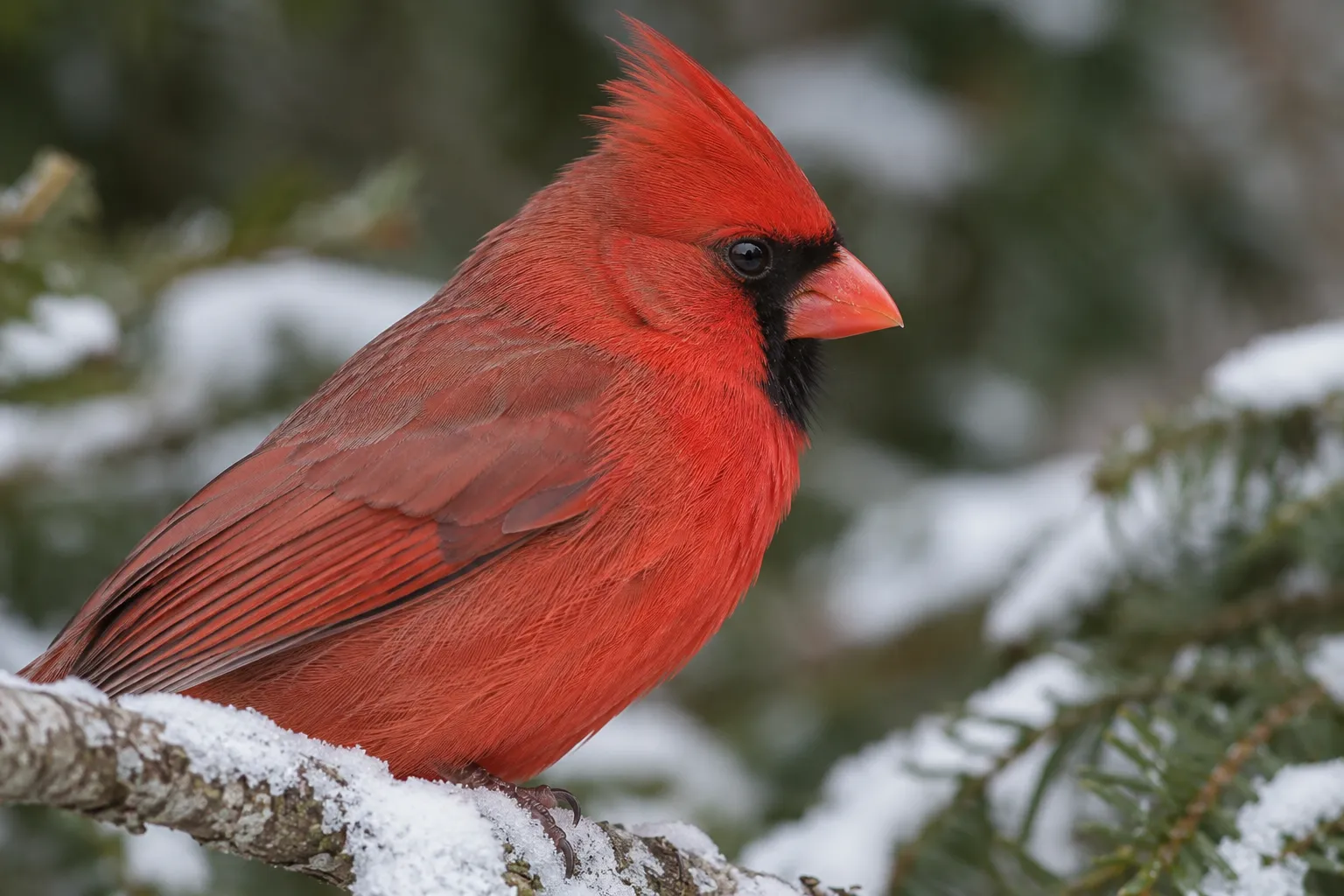
In this article
- Quick answer: bird ears at a glance
- Where are a bird’s ears?
- Why don’t birds have outer ears?
- How does a bird’s ear work?
- What can birds hear?
- How do owls hunt by sound?
- Do any birds use echolocation?
- Can birds regrow their hearing?
- Why is hearing so important for songbirds learning to sing?
- Do different birds have different ears?
- Does noise affect wild birds?
- Myths and facts about bird ears
- What bird hearing means for backyard birders
- Quick facts about bird ears
- Sources
- Frequently asked questions
Yes, birds have ears. They just don’t have the fleshy outer ear that mammals have. Each ear is an opening on the side of the head, slightly behind and below the eye, hidden under a patch of specialized feathers called the ear coverts or auriculars. Inside, a bird’s ear has the same basic parts as ours: an ear canal, an eardrum, a middle ear and an inner ear that turns sound into nerve signals. Most birds hear best between about 1 and 4 kHz.
Birds hear well within the range that matters to them, mostly the frequencies of their own songs and calls, and some, like owls, can locate a mouse in total darkness by sound alone. They also have one ability that people would dearly love to have: they can regrow damaged hearing cells.
Quick answer: bird ears at a glance
| Feature | Birds | Humans |
|---|---|---|
| Outer ear flap | None; opening hidden under feathers | Fleshy pinna |
| Middle-ear bones | One (the columella) | Three (hammer, anvil, stirrup) |
| Inner-ear hearing organ | Short, slightly curved basilar papilla | Long, coiled cochlea |
| Typical hearing range | Roughly a few hundred Hz to about 8-10 kHz | Roughly 20 Hz to 20 kHz |
| Best sensitivity | Roughly 1-4 kHz in most species | Roughly 2-5 kHz |
| Regrow hair cells after damage | Yes | No |
Where are a bird’s ears?
Look at the side of a bird’s head, just behind the eye and a little lower, and you are looking at the ear, even though you cannot see it. The opening is covered by the ear coverts, a patch of feathers that often looks slightly different in texture or color from the rest of the face. In many species this patch is a field mark. The “cheek” patch on a chickadee, the dark ear patch on a House Sparrow and the ear spot on a Mourning Dove all sit over the ear.
You can sometimes see the opening itself:
- On nestlings, before the feathers grow in, the ear holes are obvious.
- On wet birds, after a heavy bath, the feathers part and the opening can show.
- On bare-headed birds such as vultures and some storks, the ear hole is plainly visible.
Why don’t birds have outer ears?
A fleshy ear flap would add drag in flight, catch the wind and need extra muscle and blood supply. Birds solved the problems an outer ear solves in other ways.
The ear coverts are the key. Unlike most body feathers, they have loose, open barbs without the tiny hooks that zip normal feathers into a solid vane. That open structure lets sound pass through while cutting wind noise and keeping out dust, water and insects. It is a little like the foam cover on a microphone.
Some birds do shape sound on the way in. Owls are the clearest example: the dish-shaped facial disc collects sound and funnels it toward the ears, working like an outer ear built from feathers. More on that below.

How does a bird’s ear work?
The path of sound through a bird’s ear is broadly similar to ours, with some simplifications.
- Sound enters the ear canal through the opening under the ear coverts.
- The eardrum vibrates. The tympanic membrane sits at the end of a short canal.
- One bone carries the vibration. Instead of our chain of three tiny bones, birds have a single rod-like bone, the columella, which is the equivalent of our stirrup (stapes). It transfers vibrations from the eardrum to the inner ear.
- The inner ear converts vibration into nerve signals. The hearing organ is the basilar papilla, a short, slightly curved tube rather than the long snail-shaped cochlea of mammals. It is lined with sensory hair cells tuned to different frequencies along its length.
- The brain decodes the signal. Birds devote substantial brain areas to processing sound, especially songbirds and owls.
In many birds, air spaces in the skull connect the two middle ears. Researchers think this can make each eardrum respond to sound pressure on both sides of the head, which may help small-headed birds judge the direction of a sound. How much this matters varies between species and is still being studied.
The inner ear also contains the balance organs, the semicircular canals and related structures, just as in mammals. These are critical for a flying animal and for keeping the head steady, which you can see in the way a bird holds its head still while its body moves. Our article on why pigeons bob their heads covers one visible result.
What can birds hear?
Frequency range
Most birds hear a narrower band of frequencies than people do. Across the species that have been tested, hearing typically runs from a few hundred hertz up to somewhere around 8 to 10 kHz, with the best sensitivity in roughly the 1 to 4 kHz range. That is where most bird songs and calls sit, which is no coincidence: hearing and vocal signals evolved together.
Humans, by contrast, hear roughly 20 Hz to 20 kHz when young, losing the top end with age. That is why many older birders stop hearing very high-pitched songs such as those of the Golden-crowned Kinglet, Cedar Waxwing or Blackpoll Warbler, which the birds themselves hear perfectly well. If that sounds familiar, our guide to birding by ear can help fill the gap.
Sensitivity
Within their best range, many birds hear about as well as people, and owls hear much better. Barn Owls are among the most sensitive hearers measured in any bird, able to detect very faint sounds in their best frequency range.
Timing
Birds may beat us at timing. Some laboratory studies suggest that birds can follow rapid changes in the fine structure of sounds that people hear as a single blurred note. This could help explain how birds pick out details in songs that sound simple to us. The research is ongoing and results vary between species and methods, so it is best described as a likely advantage rather than a settled fact.

Very low sounds
Pigeons are the most famous claimed exception to the normal range. Laboratory experiments in the 1970s reported that Rock Pigeons could detect infrasound, very low-frequency sound well below the range of human hearing. Some researchers have suggested this might play a role in navigation, but that idea remains speculative. For the broader picture, see how birds know where to migrate.
Ultrasound
There is no good evidence that birds hear ultrasound, meaning sound above about 20 kHz. That has a practical consequence: ultrasonic “bird repeller” gadgets are widely considered ineffective, because the birds most likely cannot hear them.
How do owls hunt by sound?
Owls are the champions of bird hearing, and several features work together.
The facial disc
The round face of an owl is a sound collector. Rows of stiff, dense feathers form a dish that funnels sound toward the ear openings, which sit behind the edges of the disc. Owls can adjust the shape of the disc slightly with facial muscles.
Asymmetric ears
In some owls, including the Barn Owl, Boreal Owl (called Tengmalm’s Owl in Europe), Long-eared Owl and Great Gray Owl, the left and right ear openings sit at different heights on the head. In the Barn Owl, one ear points slightly up and the other slightly down. Sound from above arrives a little louder in the upward-facing ear, and sound from below is louder in the other.
The owl’s brain compares both timing and loudness between the two ears. Differences in arrival time tell it how far left or right a sound is. Differences in loudness, created by the asymmetry, tell it how far up or down. Together they give a precise fix in two dimensions.
Hunting in the dark
Classic laboratory experiments with Barn Owls showed they could catch mice in complete darkness using hearing alone. They strike with their feet spread and aligned with the direction the prey is moving. In the wild, Great Gray Owls are known for plunging into deep snow to catch voles they cannot see, located purely by the rustling underneath.
Owls also need to hear while flying, which is one reason their flight is so quiet. See why owls are silent in flight for how their feathers achieve it, and how owls turn their heads so far for how they point that sound-gathering face.
Are ear tufts ears?
No. The “horns” of Great Horned Owls, Eurasian Eagle-Owls and Long-eared Owls are simply feather tufts. They play no part in hearing and probably help with camouflage and signaling.
Do any birds use echolocation?
A few do, though far more crudely than bats. The Oilbird of northern South America, which nests in dark caves, produces audible clicks and uses the echoes to navigate in darkness. Several species of cave swiftlets in Southeast Asia and Australasia do the same. Because their clicks are within the human hearing range, their echolocation is coarser than a bat’s ultrasonic system, and they are thought to use it for getting around caves, not for catching insects.

Can birds regrow their hearing?
Yes, and this discovery changed hearing research.
In the late 1980s, independent research groups showed that when sensory hair cells in a bird’s inner ear are killed by loud noise or certain drugs, supporting cells nearby divide and form new hair cells, and hearing recovers. In mammals, including humans, lost cochlear hair cells do not come back, which is the main reason noise-induced and age-related hearing loss is permanent.
That makes birds, especially chickens and some songbirds, important models in the search for treatments for human deafness. Scientists study which genes and signals switch on regeneration in birds in the hope of eventually triggering something similar in people.
Why is hearing so important for songbirds learning to sing?
For songbirds, hearing is not only about detecting predators or prey. It is how they learn to sing at all.
Songbirds, the large group of perching birds that includes sparrows, finches, thrushes and warblers, learn their songs in a way that resembles how human babies learn to speak. A young male listens to adult tutors, usually during a sensitive period early in life, and stores a memory of what the song should sound like. Later he starts to practice, producing rambling “subsong” that gradually improves as he compares his own output to that stored memory.
Both steps depend on hearing. Classic experiments from the 1960s showed that young songbirds deafened before they began to practice developed highly abnormal songs, even if they had heard adult song earlier. They needed to hear themselves to match the template. Birds raised in isolation, which could hear themselves but never heard a tutor, developed simpler songs that still carried some features typical of their species.
This is why songbirds are one of the main animal models for studying vocal learning, and why regional song dialects exist. Our guide on how birds learn songs goes deeper, including how local dialects form.
Not all birds learn their vocalizations. In groups such as pigeons, chickens and most flycatchers, calls and songs develop largely without copying. Parrots and hummingbirds, on the other hand, are vocal learners like songbirds, which is why parrots can mimic speech.
Do different birds have different ears?
The basic plan is shared, but the details vary with lifestyle.
- Nocturnal hunters such as owls have large ear openings, and in some species a skin flap in front of the opening that can be moved. Their inner ears have an unusually long hearing organ packed with hair cells, which is thought to help fine frequency analysis.
- Songbirds have hearing tuned closely to the frequencies of their own species’ songs and calls.
- Low-voiced birds such as some pigeons, grouse and bitterns produce and are thought to be more attentive to low-frequency sounds, which carry well through dense vegetation.
- Diving birds have to cope with pressure changes and water. How they protect their ears underwater is less studied, and details vary.
These differences are a good reminder that “bird hearing” is not one thing. A Barn Owl and a House Sparrow share the same parts, but they are listening to very different worlds.
Does noise affect wild birds?
Birds live in a world of sound, so human noise matters.
- Songs shift upward in noisy places. Research on Great Tits in European cities found that birds in noisy areas sang at higher minimum frequencies, above the low rumble of traffic. Similar patterns have been reported in other species on several continents.
- Noise can mask alarm calls and songs. Birds may miss warnings from other birds or struggle to find mates.
- Some birds avoid noisy areas. Studies around roads and gas compressor sites have found fewer or different species where noise is constant.
- Timing can change. Some urban birds sing earlier or at night, possibly to avoid daytime noise. See why birds chirp at night.
Myths and facts about bird ears
| Claim | Reality |
|---|---|
| “Birds don’t have ears.” | False. They have ears; they just lack the outer flap. |
| “Owl ear tufts are ears.” | False. They are feathers only. |
| “Birds hear a wider range than people.” | Usually false. Most birds hear a narrower range, focused on the frequencies of their own calls. |
| “Ultrasonic devices scare birds away.” | Unlikely. Birds are not known to hear ultrasound. |
| “Robins find worms by listening.” | Partly. Experiments suggest robins can use sound cues, but they also rely heavily on sight. |
| “Hearing loss is permanent in all animals.” | False for birds. They can regrow inner-ear hair cells. |
What bird hearing means for backyard birders
- Birds hear you. Loud talking and banging doors flush birds from feeders. Quiet, slow movement near windows keeps them around.
- Pishing and playback work because birds listen closely. Use them sparingly; our guide to pishing covers the ethics.
- Ultrasonic deterrents are unlikely to help against starlings, pigeons or woodpeckers. Physical and habitat solutions work better.
- High-pitched songs may fade for you first. A sound ID app can confirm what you can no longer hear.
Quick facts about bird ears
- Birds have ears on the sides of the head, behind and below the eyes.
- The openings are covered by ear coverts, feathers with open barbs.
- Birds have one middle-ear bone, the columella, instead of three.
- Most birds hear best between about 1 and 4 kHz.
- Few birds hear much above about 10 kHz, and none are known to hear ultrasound.
- Some owls have ear openings at different heights to pinpoint sound in three dimensions.
- Owl ear tufts are feathers, not ears.
- Oilbirds and some swiftlets use simple echolocation.
- Birds can regrow damaged inner-ear hair cells; mammals cannot.
Sources
- Cornell Lab of Ornithology: All About Birds, Barn Owl species account
- Cornell Lab of Ornithology: All About Birds, Great Gray Owl species account
- Cornell Lab of Ornithology: All About Birds, Great Horned Owl species account
- Audubon Guide to North American Birds
- Corwin, J. T. and Cotanche, D. A. (1988). Regeneration of sensory hair cells after acoustic trauma. Science 240: 1772-1774.
- Slabbekoorn, H. and Peet, M. (2003). Birds sing at a higher pitch in urban noise. Nature 424: 267.

Frequently asked questions
Do birds have ears?
Yes. Birds have ears on each side of the head, slightly behind and below the eyes. They lack the fleshy outer ear that mammals have, so the openings are covered by a patch of specialized feathers called the ear coverts or auriculars. Inside there is an eardrum, a single middle-ear bone and an inner ear that turns sound into nerve signals.
Where are a bird's ears located?
A bird's ears sit on the sides of its head, a little behind and usually slightly below the eyes. You rarely see them because they are hidden under the ear coverts, a patch of loosely structured feathers. On a wet bird, a nestling, or a bald-headed bird such as a vulture, the round ear opening is often visible.
Can birds hear better than humans?
In most ways, no. Most birds hear a narrower frequency range than people, with best sensitivity roughly between 1 and 4 kHz, and few hear much above about 10 kHz. Some birds, especially owls, are more sensitive than humans within their best range, and birds may be better at following very rapid changes in sound.
Are owl ear tufts actually ears?
No. The feather tufts on owls such as the Great Horned Owl and Long-eared Owl are just feathers and have nothing to do with hearing. They probably help with camouflage and communication. An owl's real ears are openings on the sides of its head, hidden behind the facial disc, and in some species they are set at different heights.
Can birds hear ultrasonic sound?
There is no good evidence that birds hear ultrasound, meaning frequencies above about 20 kHz. Most species stop hearing well somewhere below about 10 to 12 kHz. That is why ultrasonic devices sold to repel birds are widely considered ineffective: the birds most likely cannot hear them at all.
Can birds regrow damaged hearing?
Yes, and this is one of the most important discoveries in hearing science. In the late 1980s, researchers showed that birds can regenerate the sensory hair cells of the inner ear after they are destroyed by noise or drugs, and recover hearing. Mammals, including humans, cannot do this, which is why birds are studied in hearing-loss research.