Can Birds Smell?
Can birds smell? Yes. Vultures, kiwis and seabirds track food by scent, and songbirds use smell more than once thought. Here is what the science shows.
In this article
- Quick answer: how good is a bird’s sense of smell?
- Why did people think birds couldn’t smell?
- How does a bird’s nose work?
- Which birds have the best sense of smell?
- Can songbirds and backyard birds smell?
- How does a bird’s sense of smell compare with its other senses?
- Myths vs facts about birds and smell
- What does this mean for backyard birders?
- Quick facts
- Sources
- Frequently asked questions
Yes, birds can smell. Every bird studied so far has a working olfactory system, including well over 100 species dissected by anatomist Betsy Bang in the 1960s, and some species rely on scent: Turkey Vultures find carrion hidden under trees by smell, kiwis probe the forest floor with nostrils at the tip of the bill, and albatrosses and petrels track the odor of feeding hotspots at sea. Even songbirds, long assumed to be scent-blind, use smell to choose nest material, recognize individuals and avoid danger.
For more than a century, textbooks said the opposite. Understanding how that mistake happened, and how the science changed, is a good way to understand what birds can and cannot smell today.
Quick answer: how good is a bird’s sense of smell?
- All birds have the equipment. Nostrils, a nasal cavity with an olfactory lining, olfactory nerves and an olfactory bulb in the brain.
- Ability varies hugely by species. Some birds have large olfactory bulbs and clear scent-based behavior. Others have much smaller ones and seem to rely mostly on sight and hearing.
- Stars of the bird world for smell: Turkey Vultures, kiwis and tube-nosed seabirds (albatrosses, petrels, shearwaters and storm-petrels).
- Songbirds can smell too, though usually less acutely, and they use it in subtler ways.
- The “touched baby bird” myth is false. Parents do not abandon young because of human scent.
Why did people think birds couldn’t smell?
The idea has a long history and a famous name attached. In the 1820s, John James Audubon, the bird painter, reported experiments in which vultures ignored a hidden, rotting carcass but approached a stuffed deer skin or a painting of a carcass. He concluded that vultures hunted by sight alone. His conclusion was widely accepted, and it was easy to extend to birds in general.
Later analysis suggested that Audubon’s vultures were probably Black Vultures, a species that relies more heavily on sight than its relative the Turkey Vulture, and that very rotten meat may simply be less attractive to vultures than fresher carrion. But the belief had already taken hold.
Anatomy seemed to support it. Most birds have small, slit-like external nostrils, and in many songbirds the parts of the brain devoted to smell are small compared with those of mammals. Birds are also obviously visual animals: bright plumage, elaborate displays and superb eyesight all point to a sense-world dominated by sight and sound. It was a reasonable assumption. It just turned out to be incomplete.
Who changed the story?
In the mid 1900s, researchers started measuring bird noses and brains systematically. The best-known work came from Betsy Bang, a medical illustrator and anatomist, who dissected the nasal passages and olfactory bulbs of well over 100 species in the 1960s. Her comparisons, published with colleagues, showed that olfactory bulb size relative to the brain varied a great deal between groups, and that some birds, including kiwis, vultures and tube-nosed seabirds, had impressively large ones. That gave researchers a map of which species were worth testing, and behavioral experiments followed.
Since then, genetic studies have added another line of evidence. Birds carry many genes for olfactory receptors, the proteins that detect odor molecules, and the number and variety differ between species. That research is still developing, but it fits the broader picture: smell matters to birds, more to some than others.
How does a bird’s nose work?
A bird’s nose is built on the same basic plan as ours, with a few differences.
- Nostrils (nares). Usually openings near the base of the upper bill. In some birds they sit under a fleshy covering or bristles. In tube-nosed seabirds they lie in tubes on top of or along the bill.
- Nasal cavity and conchae. Inside, air passes over scroll-like structures called conchae. Most birds have three. The first ones mainly warm, humidify and filter air.
- Olfactory lining. The rearmost concha is typically covered with olfactory epithelium, where receptor cells detect odor molecules.
- Olfactory bulb. Signals travel along the olfactory nerve to the olfactory bulb at the front of the brain, which processes scent information.
Researchers often compare species by the size of the olfactory bulb relative to the rest of the brain. It is an imperfect measure, since a small bulb does not mean no sense of smell, but it gives a useful rough guide to how much a species invests in scent.
How do scientists test whether a bird can smell?
Because birds cannot tell us what they smell, researchers use several indirect methods, and the strongest conclusions come when they agree:
- Choice tests. A bird is offered two paths or two containers, one scented and one not, and researchers record which it approaches. Y-shaped mazes are a common setup for small birds.
- Training experiments. Birds learn to link an odor with a food reward. If they can learn the association, they can detect the smell.
- Nerve recordings. In laboratory studies, scientists have measured electrical activity in the olfactory nerve when odors are puffed into the nasal cavity.
- Field experiments. At sea, researchers release scent slicks or odor plumes and count which seabirds arrive and how they approach, usually flying upwind in a zigzag, the classic pattern of an animal following a smell.
Which birds have the best sense of smell?
Turkey Vultures: the carrion detectives
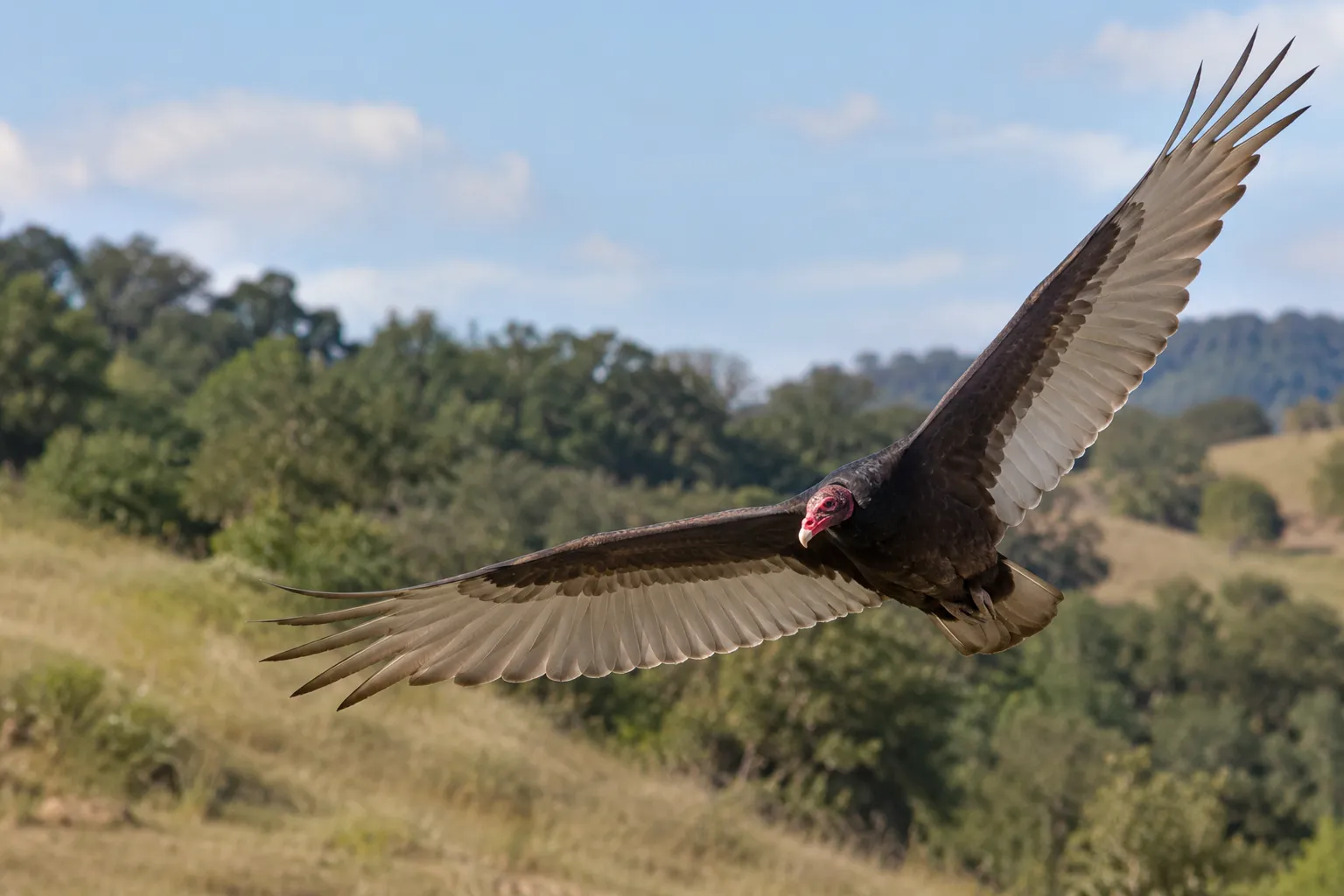
The Turkey Vulture of the Americas is the classic example. It glides low over woodland and fields and can find carcasses hidden under forest canopy, where no amount of eyesight would help. It has one of the largest olfactory bulbs, relative to brain size, known among birds.
A well-known story links this to industry. In the mid 1900s, gas companies in the United States noticed Turkey Vultures gathering over leaks in pipelines. Natural gas had been scented with ethyl mercaptan, a sulfur compound that smells like rotting food and is also released by decaying carcasses. Researchers later confirmed that Turkey Vultures are attracted to this compound. Black Vultures, which have a weaker sense of smell, often find food by watching Turkey Vultures and following them down.
Old World vultures in Africa, Europe and Asia, such as the Griffon Vulture, belong to a different family and appear to rely more on sight and on watching other scavengers. Their similar lifestyle evolved separately, which is a reminder that “vulture” does not mean “good nose.”
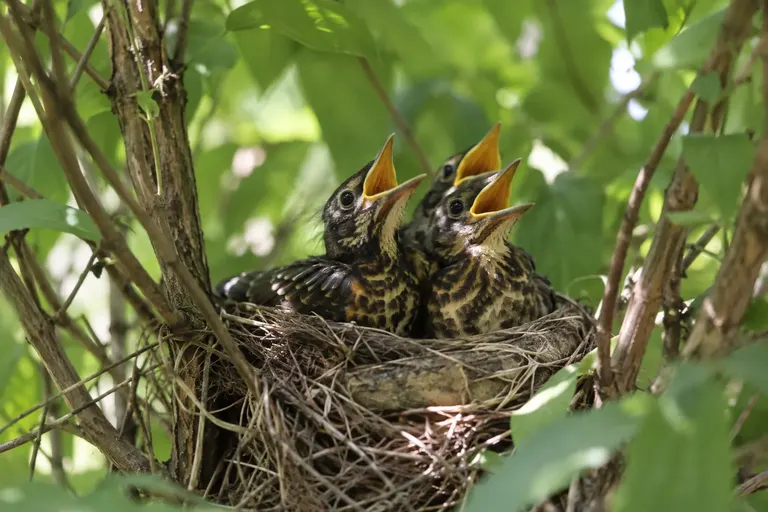
Kiwis: nostrils at the tip of the bill
New Zealand’s kiwis are unique among living birds: their nostrils are at the very end of their long bill. They forage at night, probing soil and leaf litter for worms and insect larvae, and they have large olfactory bulbs. Experiments with captive kiwis have shown they can find buried food by scent. Kiwis also sniff and snuffle audibly while foraging, which is a rare case of a bird that sounds like it is smelling.
Albatrosses, petrels and shearwaters: following the scent of the sea
The tube-nosed seabirds, known as Procellariiformes, include albatrosses, petrels, shearwaters, fulmars and storm-petrels. They get their name from the tubular nostrils on the bill, and many have large olfactory bulbs.
These birds forage over huge stretches of ocean where food is patchy. Research, notably by Gabrielle Nevitt and colleagues, has shown that many of them are attracted to dimethyl sulfide (DMS). This compound is released when phytoplankton are damaged, for example when they are grazed by krill and other tiny animals. A plume of DMS works like a smell map pointing toward places where prey is likely to be. Some species also respond strongly to the fishy odors of oily prey.
Smell helps some of these birds at home too. Several burrow-nesting petrels and storm-petrels return to their colonies at night, and studies suggest they use scent to find their own burrow among thousands. Some can apparently recognize their own odor or their partner’s.
Can smell lead seabirds into trouble?
Unfortunately, yes. A 2016 study in Science Advances found that plastic debris floating in the ocean picks up a coating of algae and other organisms that can give off DMS. That means plastic can smell like food to seabirds that forage by scent, which may help explain why tube-nosed seabirds are among the groups most likely to swallow plastic.
Other birds with a good nose
- Oilbirds and some nightjars. The Oilbird of South America, which feeds on fruit at night, has a relatively large olfactory bulb. Researchers think smell may help it locate aromatic fruit, although this is less thoroughly tested.
- Honeyguides. African honeyguides feed on beeswax. Some researchers have suggested scent helps them find bee nests, but this is not firmly established.
- Ducks and some waterbirds. Several waterfowl have moderately sized olfactory bulbs, and some experiments show ducks can learn to respond to odors.
Can songbirds and backyard birds smell?
Yes, although usually less acutely than vultures or petrels. For decades it was assumed that songbirds were effectively scent-blind. Research since the 1980s has shown they use smell in several ways.
Choosing aromatic nest material
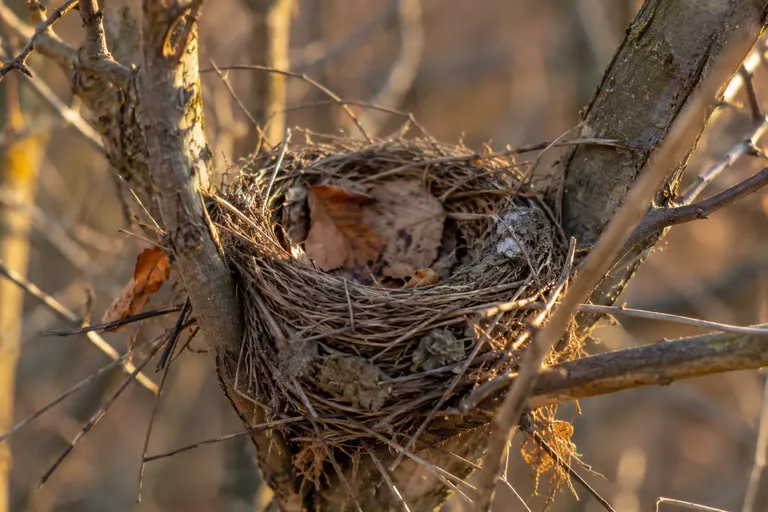
Some cavity-nesting songbirds bring fresh aromatic plants into their nests. European Starlings are known to select certain green plants, and in studies on the Mediterranean island of Corsica, Blue Tits added aromatic herbs such as lavender and mint to their nests during the breeding season, replacing them as they wilted. Researchers have suggested these plants may reduce parasites or bacteria in the nest, although results vary between studies. Either way, choosing a particular plant by its scent requires a sense of smell. Our explainer on how birds build nests covers other nest materials.
Recognizing each other and their home
Studies on Zebra Finches found that chicks can recognize the odor of their own nest. Research on Dark-eyed Juncos in North America suggests that the chemical makeup of preen oil, which birds spread on their feathers, carries information about sex and individual identity. Some seabirds, such as the Crested Auklet of the North Pacific, give off a strong citrus-like scent in the breeding season that may play a role in courtship. These findings suggest bird social life has a chemical dimension that scientists are only beginning to understand.
Sensing danger
Some experiments suggest that songbirds such as Great Tits and Blue Tits are more cautious around nest boxes treated with the scent of predators like mustelids, while other studies have found little or no response. This area is still debated, and results seem to depend on species and context.
Homing pigeons and smell
One of the more surprising ideas in bird navigation is that homing pigeons may use smell to find their way. Starting in the 1970s, Italian researchers found that pigeons deprived of smell often had trouble homing from unfamiliar sites. The “olfactory navigation” hypothesis proposes that pigeons learn the pattern of airborne odors carried by winds around their loft and use it as a kind of map. It remains debated, and pigeons clearly also use the sun and possibly magnetic cues, but the evidence that smell plays a role is substantial. Our article on whether birds use the Earth’s magnetic field explains the other navigation senses.
How does a bird’s sense of smell compare with its other senses?
| Sense | Typical strength in birds | Notes |
|---|---|---|
| Vision | Excellent | Many species see ultraviolet light and detect fast motion |
| Hearing | Very good | Owls can locate prey by sound alone |
| Smell | Ranges from weak to excellent | Best in vultures, kiwis and tube-nosed seabirds |
| Taste | Generally limited | Birds have fewer taste buds than mammals and do not feel capsaicin heat |
| Touch | Varies | Sensitive bill tips in probing birds such as shorebirds and kiwis |
For most garden birds, sight and hearing are the leading senses, and smell plays a supporting role. Our explainers on whether birds can see color and whether birds have ears cover the senses that do most of the work.
Is smell the same as taste in birds?
No, but the two are linked, as in people. Birds have relatively few taste buds, spread over the back of the tongue and the roof and floor of the mouth. A well-known consequence is that birds do not feel the burn of capsaicin, the compound in hot peppers, while mammals such as squirrels do. That is why hot pepper seed treatments exist. Our article on whether birds can taste spicy food explains the chemistry.
Myths vs facts about birds and smell
Myth: Birds have no sense of smell. Fact: all birds studied have functional olfactory systems, and some rely heavily on scent.
Myth: A mother bird will abandon a chick a person has touched. Fact: songbird parents do not reject young because of human scent. If you find a fallen nestling, it is fine to put it back in the nest. See our article on whether mother birds reject babies touched by humans for more detail.
Myth: All vultures find food by smell. Fact: Turkey Vultures do, but Black Vultures and most Old World vultures rely more on sight and on watching other birds.
Myth: Big nostrils mean a good sense of smell. Fact: external nostrils say little. What matters more is the olfactory lining inside and the olfactory bulb in the brain.
Myth: Birds cannot smell because they are “too visual.” Fact: being visual and having a useful sense of smell are not mutually exclusive. Many animals combine strong senses.
What does this mean for backyard birders?
For most people who feed birds, smell does not change much in daily practice, but it does clear up a few questions.
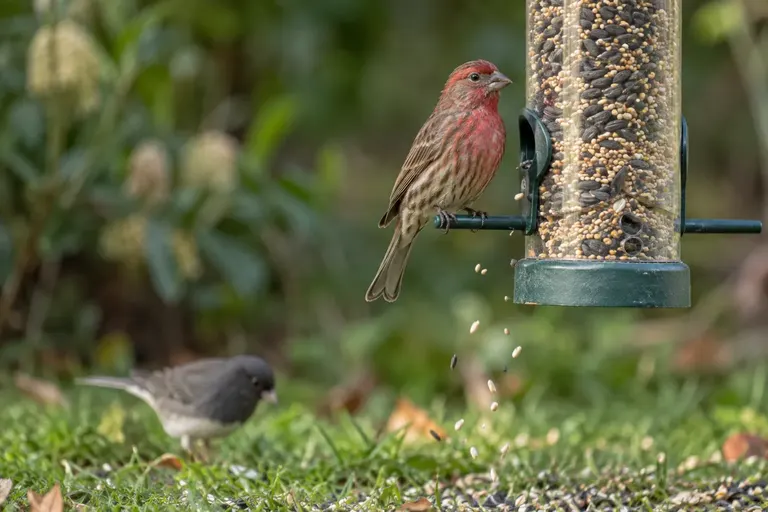
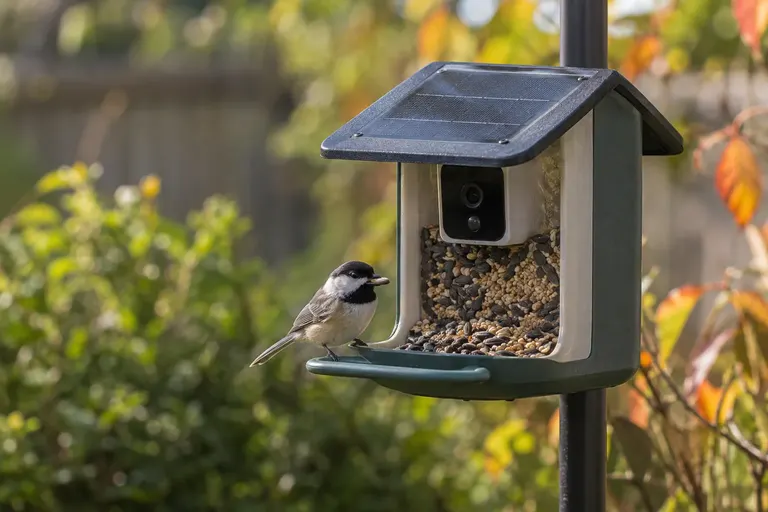
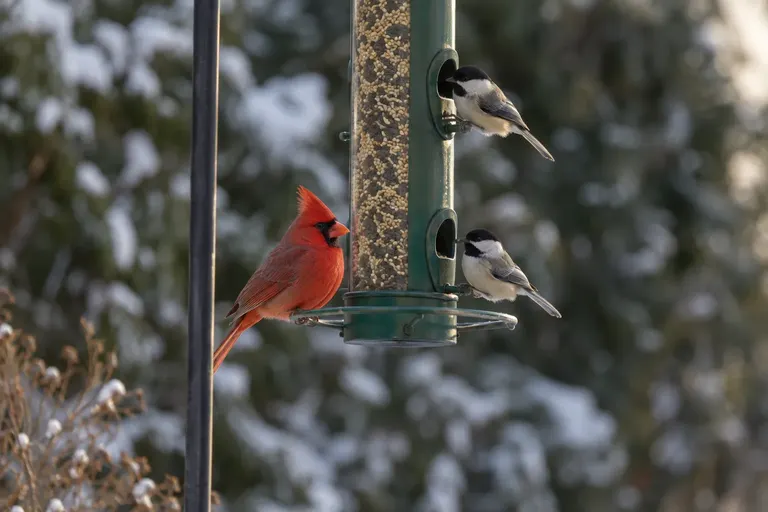
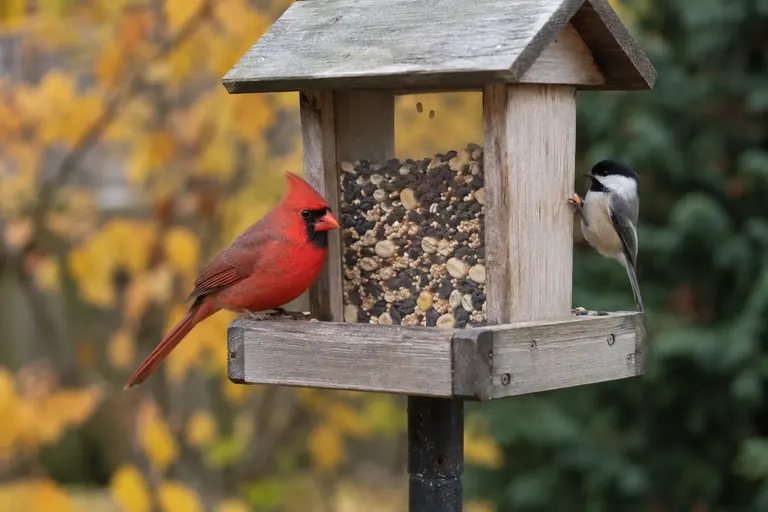
- Feeders are found by sight and by following other birds. If birds are not visiting a new feeder, scented seed is unlikely to help. Visibility, cover and patience matter more. Our guide on why birds aren’t coming to a new feeder explains what does.
- Moldy or spoiled seed matters for bird health, not because birds smell it. Birds may eat seed that has gone off, so it is worth checking and storing seed properly. Our guide on whether bird seed goes bad covers the signs.
- Human scent on nests or chicks is not a problem, although disturbing active nests is still best avoided because predators may follow your trail and parents may be stressed.
- Strong scents in nest boxes are unnecessary. There is no need to add perfumes, essential oils or insecticide-scented products to boxes, and some can harm birds.
Common mistakes
- Refusing to return a healthy nestling to its nest because of fears about human scent.
- Adding perfumed or oily products to feeders or boxes in the hope of attracting birds.
- Assuming birds will “smell” a new feeder quickly, and moving it too soon.
Quick facts
- All birds studied have a working sense of smell, though its strength varies widely.
- The idea that birds cannot smell traces back partly to John James Audubon’s vulture experiments in the 1820s.
- Turkey Vultures can find carrion hidden under trees by scent, and are attracted to ethyl mercaptan, a compound added to natural gas.
- Kiwis are the only living birds with nostrils at the tip of the bill.
- Albatrosses, petrels and shearwaters track dimethyl sulfide, a scent linked to plankton feeding hotspots.
- Floating plastic can give off the same scent, which may help explain why seabirds swallow it.
- Some songbirds, such as Blue Tits, add aromatic herbs to their nests.
- Human scent does not make parent birds abandon their young.
Sources
Frequently asked questions
Can birds smell at all?
Yes. All birds studied so far have a working olfactory system, with a nasal cavity, olfactory nerves and an olfactory bulb in the brain. The old belief that birds have no sense of smell grew from early experiments on vultures and has been overturned by decades of research. How much different species rely on smell varies enormously, from kiwis and vultures to songbirds.
Which bird has the best sense of smell?
There is no single agreed winner, because species use smell for different tasks. Turkey Vultures, kiwis and tube-nosed seabirds such as albatrosses, petrels and shearwaters all have large olfactory bulbs relative to brain size and strong evidence that they find food by scent. Kiwis are unusual in having nostrils at the very tip of the bill.
Will a mother bird reject a baby that a human touched?
No. This is a myth. Most songbirds do not appear to rely on smell to recognize their young, and parents are strongly attached to their nest and chicks. If you find a healthy nestling that has fallen out, it is fine to gently put it back. Human scent will not make the parents abandon it.
Can birds smell bird seed in a feeder?
Most backyard birds probably find feeders mainly by sight, by watching other birds and by learning locations. Smell may play a small part for some species, but there is no strong evidence that feeder birds sniff out seed the way a dog would. A new feeder usually needs time to be noticed visually, not a stronger scent.
Why did people think birds could not smell?
In the 1820s, John James Audubon ran experiments suggesting vultures found food by sight rather than smell, and the idea spread. Birds also have small external nostrils and, in many species, small olfactory bulbs, which reinforced the belief. Later research, starting in earnest in the mid 1900s, showed that many birds have a useful sense of smell.