How to Attract Dark-eyed Juncos: Ground Feeding Guide
How to attract Dark-eyed Juncos: scatter white millet on the ground or a low tray near shrubs and brush piles, add open water, and leave seed heads for winter.
In this article
- Dark-eyed Junco at a glance
- How to identify a Dark-eyed Junco
- Where Dark-eyed Juncos live and when they move
- What do Dark-eyed Juncos eat?
- Best feeders for juncos
- Water in winter
- Plants, habitat and brush piles
- Nesting: do juncos nest in backyards?
- Junco behavior worth watching
- Step by step: set up a junco feeding area
- Feeding juncos during snowstorms
- Are Dark-eyed Juncos declining?
- Seasonal calendar for juncos
- Common problems attracting juncos
- Common mistakes
- Sources
- Frequently asked questions
Here is how to attract Dark-eyed Juncos: feed them where they naturally eat, on the ground, since seeds make up about 75 percent of their diet (Cornell Lab). Scatter white proso millet on a cleared patch of ground or a low platform tray within a short hop of dense shrubs or a brush pile, keep water open in winter, and leave seed heads standing in your garden. Juncos rarely use hanging feeders, so a yard with only tube feeders may never see them even when they are flocking nearby.
Juncos are one of the most widespread and abundant birds in North America, and for much of the country they are the classic winter feeder bird. When they arrive in fall, small flocks settle into a yard and stay for months if the food and cover are right.
Dark-eyed Junco at a glance
| Trait | Details |
|---|---|
| Size | 5.5 to 6.3 in long, 0.6 to 1.1 oz, wingspan 7.1 to 9.8 in (slightly larger than a Chipping Sparrow) |
| Range | Across North America, from Alaska to Mexico and coast to coast |
| Season | Winter visitor in much of the US; year-round in parts of the West, Appalachians and Pacific Coast; breeds in Canada and mountains |
| Diet | Seeds (about 75 percent of the diet); insects in the breeding season |
| Feeder type | Ground feeding, low platform or tray |
| Food | White proso millet, hulled sunflower, cracked corn |
| Nesting | On the ground, hidden under vegetation, roots or banks |
| Conservation | Low concern; breeding numbers fell about 31 percent from 1966 to 2019 |
How to identify a Dark-eyed Junco
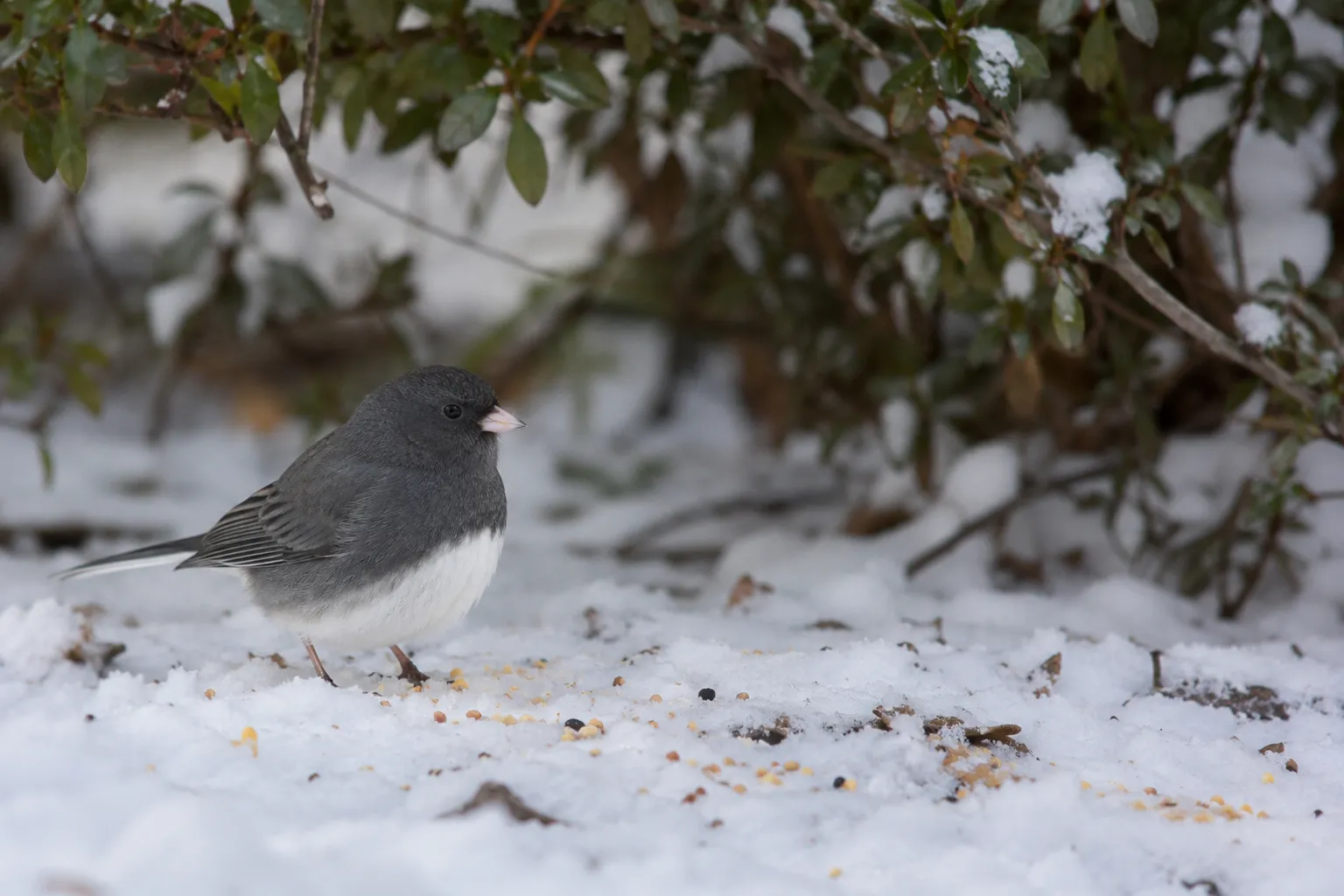
All juncos are medium-sized sparrows with a rounded head, a short, stout, pinkish bill and a fairly long tail. The key mark is the white outer tail feathers, which flash open when a junco flies or hops. They produce high chip notes while foraging and a musical trill for a song.
The regional forms
Dark-eyed Juncos vary more by region than almost any other common bird. The Cornell Lab describes several distinct forms:
| Form | Where you see it | Key marks |
|---|---|---|
| Slate-colored | East and across Canada; winter across much of the US | Gray head, back and breast sharply contrasting with a white belly |
| Oregon | West | Dark hood, warm brown back, rufous flanks |
| Pink-sided | Rockies | Slate-gray head, brown back, pinkish-brown sides |
| Gray-headed | Southwest interior | Gray head and body, reddish-brown back, all-pale bill |
| Red-backed | Southwest mountains | Gray head, dark face, bright reddish-brown back, darker upper bill |
| White-winged | Black Hills and nearby Great Plains | Paler than Slate-colored, faint white wing bars |
In winter, mixed flocks in the West can include several forms at once, which makes junco-watching surprisingly interesting.
Male, female and juvenile
- Males show the brightest, most contrasting plumage within each form.
- Females and first-year birds are duller, browner and less crisp. A brownish Slate-colored junco in winter is usually a female or young bird.
- Juveniles in summer are heavily streaked, which can make them look like a different sparrow, but they still flash white outer tail feathers.
Similar species
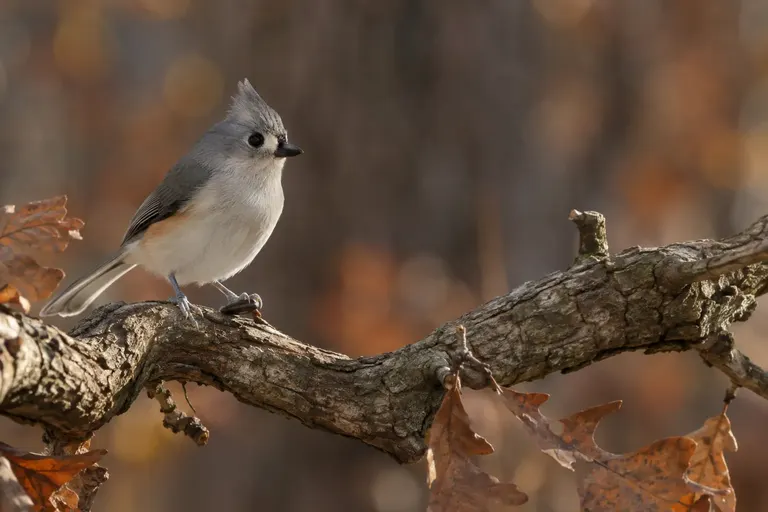
- Spotted and Eastern Towhees: larger, with rufous sides and a longer tail. The Oregon junco’s dark hood and rufous flanks can suggest a small towhee, but juncos have a pink bill and white outer tail feathers only.
- Black Phoebe: a western flycatcher, dark with a white belly, but it perches upright and sallies after insects instead of hopping on the ground.
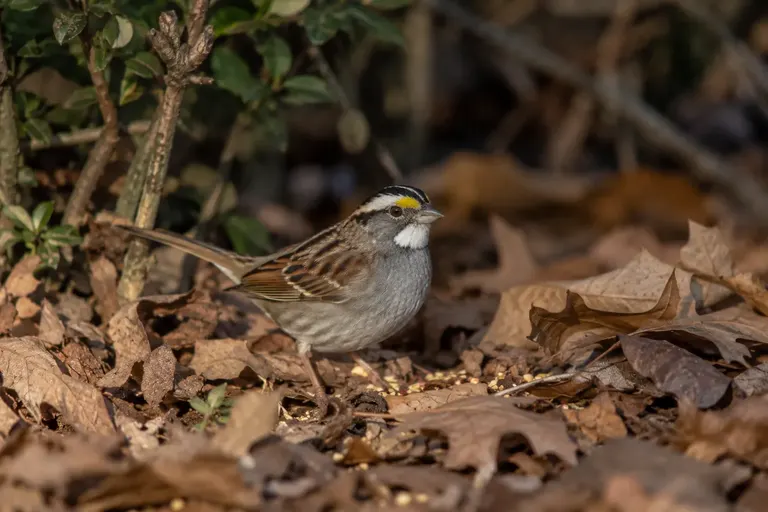
- Other winter sparrows: our guide to White-throated Sparrows covers one of the brown, streaky sparrows that often feed alongside juncos.
Where Dark-eyed Juncos live and when they move
Juncos breed in coniferous and mixed forests across Canada, Alaska, the western mountains and the Appalachians, from sea level to more than 11,000 feet. In winter they use open woodland, fields, roadsides, parks and backyards.
Migration varies:
- In much of the East, Midwest and South, juncos are winter visitors, arriving in fall and leaving in spring.
- In the Appalachians, the Rockies and the Pacific Coast, some birds stay year-round, sometimes simply moving downslope in winter.
- Audubon notes that males typically winter farther north than females, so flocks in the far South tend to hold more females.
Why juncos are called snowbirds
Across much of the country, juncos show up in fall just as the weather turns cold and vanish in spring as it warms, so their arrival seems to announce winter. The Cornell Lab notes this is why they are often called snowbirds.
To see when juncos typically arrive and leave near you, look at recent sightings in eBird. Timing varies with latitude and elevation.
What do Dark-eyed Juncos eat?
The Cornell Lab estimates seeds make up about 75 percent of a junco’s diet across the year. In winter they eat weed and grass seeds such as those of ragweed, chickweed and native grasses. In the breeding season, Audubon notes about half the diet is insects, including beetles, moths, caterpillars, ants and flies, which they also feed to their young.
At feeders, the Cornell Lab says juncos prefer millet over sunflower seeds.
Best foods for juncos
- White proso millet. The top pick. Small, round and cheap, it matches the seed size juncos eat in the wild.
- Hulled sunflower chips. Easy for a small bill, no shells to clean up.
- Cracked corn. Readily taken, but also attracts doves, starlings and squirrels, so use it sparingly.
- Fine mixes. A blend of millet, hulled sunflower and small seeds works well on a tray.
- Suet crumbles. In hard cold, some juncos pick up suet bits dropped by woodpeckers; offering a few crumbles on the ground can help.
Our roundup of the best bird seed explains which blends carry real millet and sunflower rather than filler.
Best feeders for juncos
Ground feeding
Juncos forage by hopping and pecking or scratching in leaf litter. Audubon notes they prefer seed scattered beneath feeders rather than on raised trays. The simplest junco feeder is a cleared patch of ground or lawn near shrubs, with a handful of millet scattered each morning.
To keep ground feeding sanitary:
- Scatter only what juncos will eat in a day.
- Move the feeding spot occasionally so seed and droppings do not build up.
- Rake up hulls and wet seed.
Low platform and tray feeders
A platform feeder a few inches off the ground keeps seed drier and cleaner than bare soil while still letting juncos feed the way they prefer. Screened bottoms drain water. See our comparison of platform and tray feeders for low and ground-level models.
Hopper feeders with wide ledges
Some juncos learn to perch on the ledges of hopper feeders, and many will clean up whatever other birds drop. Placing a tray under a hanging feeder catches that spill for them.
Where to place ground feeding spots
Juncos feed in the open but stay close to cover, and they are vulnerable to hawks and cats. Put the feeding area within a quick hop of dense shrubs, evergreens or a brush pile, but not so close that a cat can hide right next to it. If hawks are a recurring problem, our guide on hawks at feeders covers how cover and placement reduce the risk.
Water in winter
Juncos drink and bathe year-round, and in freezing weather open water can be harder to find than food. A heated birdbath or a bath de-icer keeps water available. Place it near cover and keep it shallow. Our guide to winter bird feeding explains what else birds need in cold snaps.
Plants, habitat and brush piles
Feeders help, but a yard with the right structure keeps juncos around all winter.
Leave seed heads standing
The single easiest junco habitat improvement is to skip the fall garden cleanup. Coneflowers, black-eyed Susans, asters, goldenrods, sunflowers and native grasses such as little bluestem and switchgrass hold seed into winter. Juncos and sparrows forage in and under them all season.
Dense shrubs and evergreens
Juncos roost and shelter in dense cover. Native evergreens such as eastern red cedar, junipers, American holly, and spruces or firs in colder regions give protection from wind, snow and predators. Dense deciduous shrubs such as dogwoods, viburnums and native roses also work.
Build a brush pile
A loose pile of branches and prunings, stacked with larger limbs on the bottom and smaller twigs on top, creates instant cover. Juncos dart into it when a hawk passes and forage around its edges. Place it near your ground feeding area.
Leaf litter
Leaving fallen leaves under shrubs gives juncos a place to scratch for seeds and insects, just as they do on the forest floor.
For a broader plan, our guide to backyard birding and habitat covers layering trees, shrubs and ground cover.
Nesting: do juncos nest in backyards?
Only where they breed, which means northern states, Canada, the western mountains and the Appalachians. In those areas juncos can and do nest near homes.
| Stage | Details (Cornell Lab) |
|---|---|
| Site | Usually on the ground, in a depression hidden under grass, roots, rocks or banks; sometimes on ledges or in hanging planters |
| Builder | Female, over 3 to 7 days |
| Nest | Cup of grass, pine needles, twigs, leaves and moss, lined with fine grass, hair or feathers |
| Clutch | 3 to 6 eggs |
| Eggs | White, gray, pale bluish white or pale greenish white, speckled with brown |
| Incubation | 12 to 13 days |
| Nestling period | 10 to 13 days |
| Broods | 1 to 3 per season |
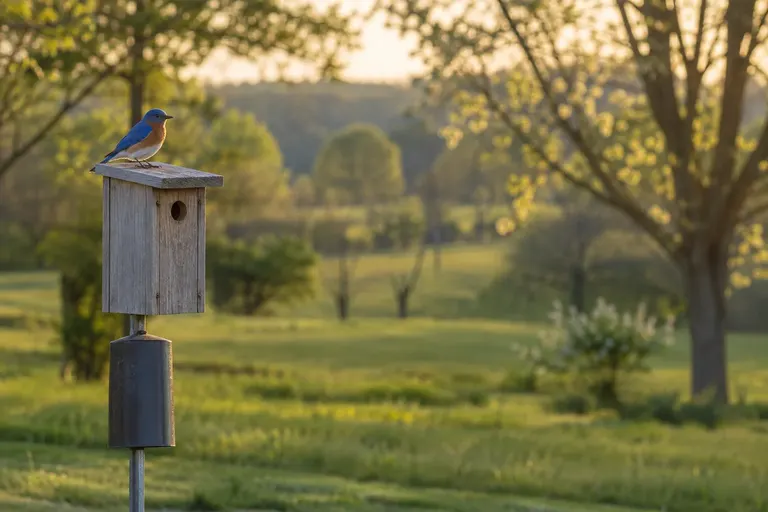
Juncos do not use nest boxes. Where they breed, the best help is leaving brushy, uncut edges, sloped banks with overhanging vegetation and leaf litter, and keeping cats indoors, since ground nests are especially exposed.
Junco behavior worth watching
- Tail flashing. Juncos pump and flick their tails, flashing the white outer feathers. The Cornell Lab notes females prefer males showing more white in the tail.
- Pecking order. Winter flocks form hierarchies, and the Cornell Lab notes earlier arrivals tend to rank higher. Watch for birds chasing others off the best seed.
- Double-scratch. Juncos often hop forward and back with both feet to scratch leaf litter, uncovering seed.
- Mixed flocks. Juncos forage with other sparrows and sometimes bluebirds in winter.
Step by step: set up a junco feeding area
This takes about 20 minutes and works in most yards within the junco’s winter range.
- Pick a spot near cover. Choose a patch of ground or lawn within a short hop of dense shrubs, an evergreen or a brush pile, visible from a window.
- Clear a small area. A few square feet of bare or short ground is enough. In snow, stamp or shovel a patch down to a firm surface.
- Add a low tray if the ground is wet. A screened platform a few inches high keeps millet dry.
- Scatter white proso millet. Start with a small handful or two and watch how much disappears by evening.
- Adjust daily. Put out a little more if it is gone by midday, less if seed is left the next morning.
- Add water nearby. A shallow bath, heated in freezing weather.
- Build or enlarge a brush pile. Place it within a few yards of the feeding area.
- Be patient in early fall. Juncos often find established feeding areas first. Once a flock discovers yours, it may return daily for the rest of the winter.
Feeding juncos during snowstorms
Heavy snow buries the seed heads and leaf litter juncos depend on, which is when a feeder matters most. Before a storm, clear or cover a feeding patch so you can reach it afterward. A piece of plywood leaned against a shrub, or a covered platform, creates a sheltered spot that stays snow-free. After the snow stops, sweep a patch clear and scatter millet there first thing in the morning, since small birds burn through their fat reserves overnight in cold weather.
Juncos also tuck into dense evergreens to shelter from wind and snow. If you have a conifer near the feeding area, scatter seed on the ground beneath its lower branches, where snow is thinner and the birds are protected from above.
Are Dark-eyed Juncos declining?
Juncos remain one of the most numerous birds on the continent, and the Cornell Lab rates them as low conservation concern. Its data also show breeding populations fell about 0.7 percent a year between 1966 and 2019, a cumulative decline of about 31 percent. A slow, steady decline in an abundant bird is still a real loss of birds.
Backyard hosts can help in simple ways: keep cats indoors, since ground-feeding and ground-nesting birds are especially exposed; leave seed heads and leaf litter; and make windows near feeders safer. Our guide to stopping birds hitting windows covers the methods that work.
Juncos can also be long-lived. The Cornell Lab reports the oldest known Dark-eyed Junco was at least 11 years, 4 months old.
Seasonal calendar for juncos
| Season | In winter-visitor areas | In year-round or breeding areas | What to offer |
|---|---|---|---|
| Fall (Oct to Nov) | Flocks arrive | Birds move downslope, flock up | Start millet on the ground, stop garden cleanup |
| Winter (Dec to Feb) | Peak numbers at feeders | Flocks at feeders | Millet, hulled sunflower, open water, brush pile |
| Spring (Mar to Apr) | Males sing, flocks depart north | Pairs form, territories set | Keep feeding until they leave |
| Summer | Absent | Ground nests, insect feeding | Leaf litter, dense cover, water |
Common problems attracting juncos
Juncos are in the neighborhood but not in my yard
This almost always means there is no ground feeding and no cover. Add a millet patch near shrubs, a brush pile, and stop tidying fall seed heads.
Doves, starlings and squirrels take the ground seed
Mourning Doves love millet too, so expect to share. Offering millet rather than cracked corn and scattering smaller amounts reduces waste. For squirrels, see our guide to keeping them off feeders, and if large flocks of starlings arrive, switch to plain millet on a tray, which they eat less than suet or corn.
Seed piles turn moldy
Wet seed on the ground spoils quickly and can harm birds. Scatter less, use a tray with drainage in wet climates, and clear old seed regularly.
Hawks and cats
Ground-feeding birds are easy targets. Keep feeding areas near cover, keep cats indoors, and do not place the ground feeding spot in the middle of an open lawn.
Common mistakes
- Offering only hanging tube feeders. Juncos feed on the ground.
- Cutting back all perennials in fall. It removes their natural winter food and cover.
- Scattering too much seed. Leftovers get wet, moldy and attract rodents.
- Feeding in the open, far from shrubs. Juncos stay close to cover.
- Putting up nest boxes for juncos. They nest on the ground.
Sources
Frequently asked questions
What do Dark-eyed Juncos eat at feeders?
Juncos are mainly seed-eaters, and the Cornell Lab notes they prefer millet over sunflower at feeders. White proso millet scattered on the ground or on a low platform is the best choice. They also take hulled sunflower chips, cracked corn and fine seed mixes. Seeds make up about 75 percent of their diet year-round.
Why are juncos called snowbirds?
In much of the eastern and southern US, juncos appear in fall and leave in spring, so their arrival seems to bring winter with it. They breed in northern and mountain forests and move south or downslope for winter. Their slate-gray backs and white bellies are sometimes described as gray skies above, snow below.
Do juncos eat from hanging feeders?
Occasionally, but they prefer to feed on the ground, hopping and scratching for fallen seed. Audubon notes they prefer seed scattered beneath feeders rather than raised trays. A ground tray, low platform or simply a cleared patch of ground under your other feeders suits them best.
When do juncos arrive and leave?
Where juncos are winter visitors, they typically arrive in fall, often October or November, and depart in spring, often March or April, heading north or upslope to breed. Timing varies by latitude and elevation. In the Appalachians, the West's mountains and the Pacific Coast, some populations stay year-round.
Are male and female juncos different?
Yes, subtly. In the eastern Slate-colored form, males are smooth dark gray above with a sharp line against the white belly. Females and young birds are browner and softer gray with less contrast. Juveniles in summer are streaky all over but still show the white outer tail feathers.
Do juncos use birdhouses?
No. Dark-eyed Juncos nest almost always on the ground, well hidden under overhanging grass, roots, rocks or banks, and occasionally on ledges or in hanging planters near buildings. They do not use enclosed nest boxes. Where they breed, leaving brushy, uncut edges and leaf litter helps them.