How to Attract Cedar Waxwings With Native Berries
How to attract cedar waxwings: plant native berry shrubs like serviceberry, dogwood, juniper and winterberry, add moving water, and skip the seed feeder.
In this article
- Cedar Waxwing at a glance
- How do you identify a Cedar Waxwing?
- What do Cedar Waxwings eat?
- What plants attract Cedar Waxwings?
- Do Cedar Waxwings use bird baths?
- Do Cedar Waxwings nest in backyards?
- When will Cedar Waxwings visit your yard?
- Common problems with Cedar Waxwings
- Common mistakes when trying to attract Cedar Waxwings
- How long will Cedar Waxwings stay in your yard?
- Quick checklist: how to attract Cedar Waxwings
- Sources
- Frequently asked questions
Here is how to attract Cedar Waxwings: plant native trees and shrubs that carry small berries, ideally several kinds that ripen from early summer into winter, and add a bird bath 1 to 2 inches deep with moving water. That is nearly the whole recipe. Waxwings are fruit eaters, not seed eaters, so a feeder full of sunflower seed will not bring them in. What brings them in is a yard that looks like a buffet from the air.
Expect them to arrive suddenly, often as a flock, strip a tree over a day or two, and move on. With the right plantings, they come back.
Cedar Waxwing at a glance
| Trait | Details |
|---|---|
| Size | 5.5 to 6.7 in long, wingspan 8.7 to 11.8 in, about 1.1 oz (Cornell Lab) |
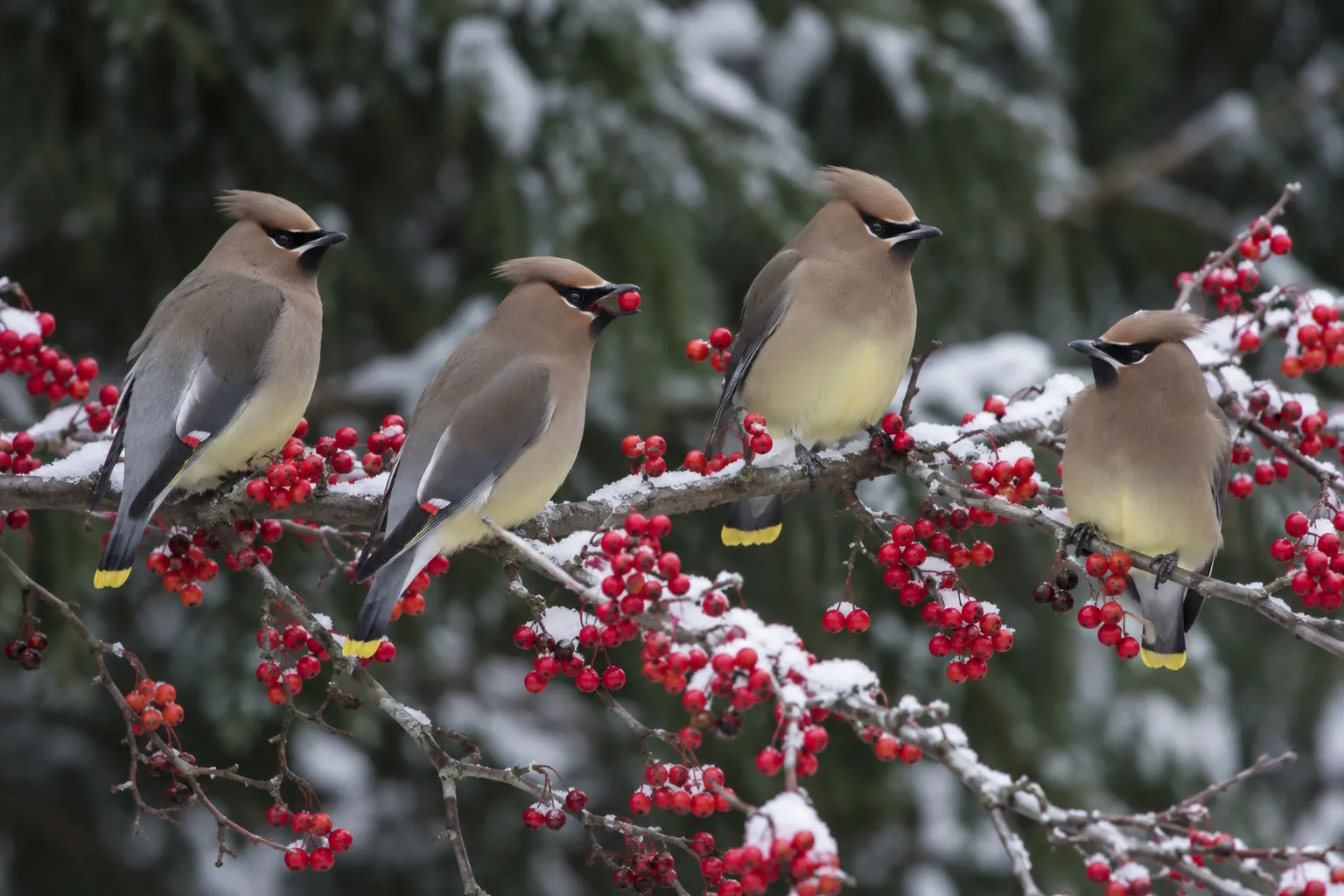
| Look | Sleek brown-gray bird with a short crest, black mask, yellow tail tip, red waxy wing tips |
| Range | Across most of North America; breeds in the northern half, winters widely across the US and south into Central America |
| Season in your yard | Year-round in much of the northern and central US; mainly fall through spring in the South |
| Diet | Mostly fruit year-round; flying and gleaned insects in summer |
| Feeder type | Rarely uses feeders; fruit plants and water are the draw |
| Nesting | Open cup on a horizontal branch, usually in a tree; does not use nest boxes |
| Conservation | Low concern; population stable to increasing since 1966 (Cornell Lab) |
How do you identify a Cedar Waxwing?
A Cedar Waxwing is slightly smaller than an American Robin and a little larger than a sparrow. The Cornell Lab describes the plumage as a silky mix of brown, gray and lemon-yellow. Once you have seen one well, it is hard to confuse with anything else in a backyard.
Adult field marks
- Crest: a short, swept-back crest that the bird raises and lowers.
- Mask: a narrow black mask through the eye, neatly outlined in white.
- Body: pale brown head and chest fading to soft gray on the wings, with a pale yellow belly.
- Tail: gray with a bright yellow band at the tip. Some birds, especially in the Northeast, show an orange tip instead.
- Wings: small red, waxy-looking tips on some wing feathers. These give the bird its name. Not every bird shows them, and they can be hard to see at a distance.
Males and females look nearly identical. Field guides note that males tend to have a larger, deeper black chin patch, but this is subtle and not reliable at backyard distances.
Juveniles
Young waxwings in late summer can be confusing. The Cornell Lab describes them as grayish-brown above with coarsely streaked underparts, a fainter mask and no crest or red wing tips. The yellow tail tip is usually present, which is the quickest clue.
Similar species
- Bohemian Waxwing: larger and grayer, with rusty undertail feathers and white and yellow marks on the wings. It lives mainly in the far north and West and wanders south in some winters. A Cedar Waxwing has whitish undertail feathers.
- European Starling: similar size and shape in flight, and both travel in tight flocks. Starlings are dark and glossy, with a longer, pointed bill and a short tail with no yellow tip.
Sounds
Cedar Waxwings do not have a real song. Listen instead for very high, thin whistles, often written as “sree” or “bzeee”. A flock calling together sounds like a soft, high hiss. Many people hear waxwings long before they see them, and the calls are high enough that some older listeners cannot hear them at all. The Sound ID feature in Merlin is useful here; see our guide on how to use Merlin Sound ID without getting fooled.
What do Cedar Waxwings eat?
Cedar Waxwings eat fruit year-round. The Cornell Lab notes they can live on fruit alone for months, which is unusual among North American songbirds. They pluck berries one at a time and swallow each one whole, either while perched or while hovering briefly at the tip of a branch.
Summer fruits listed by the Cornell Lab include serviceberry, strawberry, mulberry, dogwood and raspberries. Winter fruits include cedar and juniper berries (which give the species its name), mistletoe, mountain ash and honeysuckle.
In summer they also catch insects. They sally out from treetops over rivers and ponds to snap up mayflies, dragonflies and stoneflies in flight, and they glean scale insects and leaf beetles from leaves. Audubon notes that nestlings are fed mostly insects at first before switching to fruit.
Why a seed feeder will not work
Waxwings have no interest in sunflower, safflower, millet or nyjer. If you want them, the budget that would go into a new seed feeder is better spent on one well-chosen native shrub. Your seed feeders will still help other species, of course. For those birds, our guide to the best bird seed to attract the most species covers what to buy.
Can you feed Cedar Waxwings fruit?
Some backyard hosts report waxwings taking chopped apple, soaked raisins or dried cranberries from a platform feeder, but this is occasional rather than dependable. Waxwings strongly prefer fruit still on the branch. If you try it, put a small amount on a platform or tray feeder, replace it daily so it does not spoil, and do not expect a flock to settle in the way it would on a loaded winterberry.
What plants attract Cedar Waxwings?
This is the section that matters most. The Cornell Lab’s own backyard advice is to plant native berry-producing trees and shrubs such as mountain ash, dogwood and serviceberry. The goal is a sequence of fruit across the seasons, because a flock that finds nothing in your yard in February will not remember it in June.
Plant for a fruit calendar
Aim for at least one plant in each of these windows:
- Early summer: serviceberry (Amelanchier), red mulberry, wild strawberry, raspberry and blackberry.
- Late summer: elderberry, chokecherry and black cherry, gray dogwood and other shrub dogwoods.
- Fall: flowering dogwood, hawthorn, American mountain ash, Virginia creeper and wild grape.
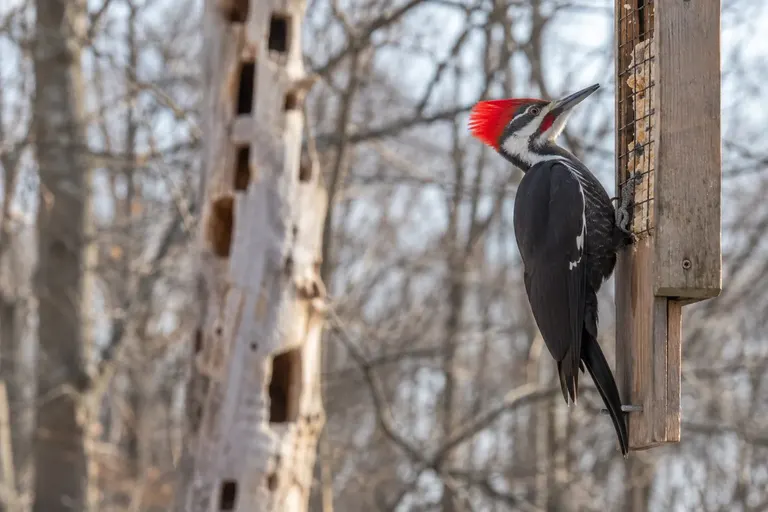
- Winter: eastern redcedar and other junipers, winterberry holly, American holly, hawthorns that hold fruit, and crabapples with small fruit.
Winter is where many yards fall short. Fruits that hang on the branch into January and February, such as juniper, winterberry and some hawthorns, are exactly what waxwing flocks wander in search of.
Native plants by region
Choose species native to your area. Your state native plant society, cooperative extension service or the Audubon native plants database can confirm what grows locally.
| Region | Good waxwing plants |
|---|---|
| Northeast and Great Lakes | Serviceberry, winterberry holly, gray dogwood, flowering dogwood (southern parts), eastern redcedar, American mountain ash, chokecherry, elderberry |
| Southeast | Flowering dogwood, eastern redcedar, American holly, yaupon holly, red mulberry, serviceberry, hawthorns |
| Midwest and Plains | Eastern redcedar, serviceberry, chokecherry, hackberry, hawthorns, gray and roughleaf dogwood, elderberry |
| Mountain West | Rocky Mountain juniper, western serviceberry, chokecherry, red-osier dogwood, hawthorns |
| Pacific Coast | Toyon, Pacific madrone, western serviceberry, red-osier dogwood, elderberry, western junipers inland |
A note on non-native honeysuckles and ornamental fruit
Waxwings will happily eat the berries of introduced bush honeysuckles, Callery pear and other invasive ornamentals. That is how the orange tail tips appear in the Northeast. These plants spread into woodlands and crowd out native species, so do not plant them. If you already have them, replacing them gradually with native fruiting shrubs gives waxwings the same food without the ecological cost.
Size and structure
Waxwings like to perch high and drop down to feed. A tall tree near your fruiting shrubs, even a neighbor’s, gives them a lookout. They also like edges: the boundary between lawn and woodland, a hedgerow, or a line of trees along a stream. A single berry shrub in the middle of an open lawn is less inviting than the same shrub at the edge of a planting.
Do Cedar Waxwings use bird baths?
Yes, and water is the second-best way to draw them in, especially in dry weather and in winter when natural water is frozen. Waxwings drink often, and a flock will sometimes line the rim of a bath and take turns.
- Keep it shallow. A bath 1 to 2 inches deep with a gently sloping edge suits songbirds.
- Add movement. A dripper, bubbler or small solar fountain makes the water visible and audible from the air.
- Keep it clean. Scrub and refill every few days, more often in hot weather.
- Heat it in winter. In cold regions, a heated bath can attract waxwings when little other open water exists.
- Place it near cover. A few feet from a shrub or tree gives birds a place to perch and preen after bathing.
Do Cedar Waxwings nest in backyards?
They can, particularly in suburbs with mature trees and fruiting plants. The Cornell Lab notes that waxwings have expanded into suburban areas partly because of ornamental berry plantings. They do not use nest boxes.
Nesting facts
According to the Cornell Lab:
- Nest site: the female picks a horizontal branch fork, usually 3 to 50 feet up, in maples, pines, cedars, apples, oaks and similar trees.
- Nest: a bulky cup about 5 inches across made of twigs, grasses and down, lined with fine roots and pine needles. Building can take 5 to 6 days and more than 2,500 trips.
- Eggs: 2 to 6, pale blue or blue-gray, sometimes spotted.
- Incubation: 11 to 13 days.
- Nestling period: 14 to 18 days.
- Broods: 1 to 2 per year.
Waxwings are social even when breeding and often nest in loose clusters rather than defending large territories. They are also among the latest-nesting songbirds on the continent, with most nesting in summer as fruit ripens.
How to help nesting waxwings
- Keep mature trees, especially conifers and fruit trees, rather than removing them.
- Delay heavy pruning of trees and large shrubs until after late summer.
- Avoid insecticide sprays, which remove the insects nestlings depend on.
- Offer short natural nesting fibers, such as small tufts of untreated wool or cotton, in a suet cage in spring. Avoid dryer lint, long strings and synthetic yarn, which can tangle birds.
When will Cedar Waxwings visit your yard?
Cedar Waxwings are nomadic. Audubon notes that flocks begin forming in August and move south irregularly depending on food, and that breeding and wintering areas change from year to year. This makes them unpredictable, and it is part of their appeal.
| Season | What to expect |
|---|---|
| Spring (Mar to May) | Flocks roam widely, feeding on leftover winter fruit and early flowers; numbers can peak in late spring in many areas |
| Summer (Jun to Aug) | Pairs nest; birds feed on early fruit and hawk insects over water |
| Fall (Sep to Nov) | Large flocks gather on ripening berries; this is prime time to see them |
| Winter (Dec to Feb) | Flocks wander in search of persistent fruit like juniper, holly and winterberry |
In the northern states and much of the central US, you can see them in any month. In the Deep South they are mainly a fall to spring visitor. A good plan is to log your sightings in eBird so you can see patterns over several years; our guide on how to use eBird explains checklists and alerts.
Common problems with Cedar Waxwings
Window strikes
The Cornell Lab lists window collisions as a threat to this species. Waxwings travel in fast, tight flocks and often feed in fruiting trees planted right next to houses. When a flock flushes, several birds can hit glass at once.
- Plant new fruiting shrubs away from large windows where you can.
- Treat windows that face fruit trees with external markings, such as dot patterns, tape strips or screens, spaced closely enough that birds read the glass as a barrier.
- Our guide on how to stop birds hitting windows covers which treatments work.
Fermented berries
In late winter and early spring, fruit that has frozen and thawed can ferment. Waxwings eat many berries quickly, and there are documented cases of intoxicated birds flying poorly and dying from collisions. You cannot control fermentation, but window treatments and keeping birds away from roads help.
Flocks stripping a tree
A flock can clean out a heavily fruited tree in a day or two. That is the point of planting for them, but if you also want fruit for yourself, plant extra, or accept sharing. Netting fruit is risky, because birds can become tangled in loose mesh.
Roads
The Cornell Lab also mentions vehicle strikes near roadside fruit trees. Where possible, plant fruiting shrubs away from the street rather than right along it.
Common mistakes when trying to attract Cedar Waxwings
Planting only one fruit tree. A single serviceberry may fruit for two or three weeks. Flocks that find it will return next year at the same time, but your yard will be empty the rest of the year. A small group of species with staggered ripening does far more.
Choosing cultivars bred for big fruit or no fruit. Some ornamental crabapples and hollies are sold as fruitless or with fruit too large for a waxwing to swallow. Waxwings swallow each fruit whole, so smaller is better. Check the plant tag or ask the nursery about fruit size, and remember that most hollies need a male plant nearby for the female plants to set berries.
Pruning off the fruit. Heavy fall pruning of dogwoods, hollies and junipers removes next winter’s food. Prune lightly, and time major pruning for late winter after the fruit is gone, or just after flowering for spring bloomers.
Expecting them at the feeder. People who put out a new feeder and wait for waxwings are usually disappointed. Watch the tops of fruiting trees and listen for thin, high calls instead.
Keeping the yard too tidy. Insects are a big part of the summer diet and of what nestlings eat. Leaving some leaf litter, avoiding pesticides and keeping a mix of plant heights all help insect populations, which in turn feed waxwings and nearly every other songbird.
How long will Cedar Waxwings stay in your yard?
Usually not long at a time. A flock may spend a morning, a day or a few days working through a fruiting tree, then move on once the easy fruit is gone. The Cornell Lab notes that in fall they can gather by the hundreds on berries, and a flock that size empties a shrub quickly.
The way to get longer visits is more fruit, spread across more plants, plus water. The way to get repeat visits is fruit at several times of year. Nesting pairs in summer are the exception: if waxwings nest nearby, you may see the same birds daily for several weeks while they raise young.
Quick checklist: how to attract Cedar Waxwings
- Plant two or three native fruiting shrubs or small trees suited to your region.
- Make sure at least one holds fruit into winter, such as juniper, winterberry or holly.
- Add a shallow bird bath with a dripper or bubbler, heated in cold climates.
- Keep tall trees nearby for perching and nesting.
- Stop spraying insecticides.
- Treat windows that face your fruiting plants.
- Be patient. Waxwings are nomadic, and a new planting may take a season or two to be found.
If you are building a bird-friendly yard more broadly, our guide to backyard birding covers layout, cover and feeding for other species, and a pair of 8x binoculars makes it much easier to see the red wax tips; see our best binoculars for watching birds from your window.
Sources
Frequently asked questions
Do Cedar Waxwings eat bird seed?
Almost never. Cedar Waxwings are fruit specialists that the Cornell Lab says can survive on fruit alone for months, and they add insects in summer. They ignore sunflower, millet and nyjer. To attract them, plant native berry-producing trees and shrubs and offer clean, moving water rather than filling a seed feeder.
What berries attract Cedar Waxwings?
The Cornell Lab lists serviceberry, dogwood, eastern redcedar and other junipers, hawthorn, winterberry, mountain ash, mulberry, wild cherry and raspberry among their foods. Small fruits they can swallow whole work best. Planting several species that ripen at different times, from early summer through winter, gives waxwings a reason to return across the year.
Why do some Cedar Waxwings have orange tail tips?
The normal tail tip is bright yellow. Some birds, mostly in the Northeast, show orange tips because they ate the berries of introduced honeysuckles while their tail feathers were growing. A pigment in those berries changes the color of the new feathers. It is a diet effect, not a separate species or subspecies.
When do Cedar Waxwings nest?
Cedar Waxwings are among the later nesters in North America, typically starting in early to mid summer when fruit begins to ripen. The female builds a bulky cup on a horizontal branch, usually in a tree or tall shrub, and lays 2 to 6 pale blue or blue-gray eggs. Pairs raise one or two broods a year.
Can Cedar Waxwings get drunk on berries?
Yes, this is documented. Late-winter berries that have fermented can contain enough alcohol to intoxicate waxwings, which eat large numbers of fruits in a short time. Affected birds can fly poorly and are more likely to hit windows or vehicles. Treating nearby windows with bird-safe markings helps reduce the risk.