How Do Birds Drink Water?
How do birds drink water? Most scoop a sip and tip their heads back, but pigeons suck water up like a straw and hummingbirds lick it with a pump-like tongue.
In this article
- Quick answer: the main ways birds drink
- Why do most birds tilt their heads back to drink?
- How do pigeons and doves drink differently?
- How do hummingbirds drink?
- Do birds drink while flying?
- How do seabirds drink salt water?
- Do some birds never drink?
- How do sandgrouse carry water to their chicks?
- How much water do birds need?
- Do baby birds drink water?
- Why do birds bathe as well as drink?
- Myths vs facts about how birds drink
- What does this mean for backyard birders?
- Examples from around the world
- Quick facts
- Sources
- Frequently asked questions
Most birds drink by scooping a small sip of water into the bill and then tipping the head back so gravity carries it down the throat. There are important exceptions: pigeons and doves drink with their bills submerged, drawing water up continuously, and hummingbirds lick with a forked tongue that works like a tiny elastic pump, as high-speed video studies published in 2011 and 2015 showed. Seabirds can drink salt water thanks to special glands that remove the salt.
Here is how each method works, why birds drink the way they do, and how to set up water in your yard so birds use it safely.
Quick answer: the main ways birds drink
| Method | How it works | Examples |
|---|---|---|
| Scoop and tilt | Dip bill, take a sip, raise head so water flows down | Robins, sparrows, finches, chickens, most songbirds |
| Continuous suction | Bill stays in water; water drawn up without lifting the head | Pigeons and doves, sandgrouse, some estrildid finches |
| Tongue pumping | Rapid licks with a grooved, elastic tongue | Hummingbirds, some nectar-feeding birds |
| Skimming in flight | Dip bill into the surface while flying low | Swallows, swifts, nighthawks, some terns |
| Drinking salt water | Salt glands remove excess salt | Albatrosses, gulls, penguins, sea ducks |
| Water from food | Rely on moisture in food and metabolic water | Many raptors, some desert birds |
Why do most birds tilt their heads back to drink?
Mammals drink by creating suction. Our lips seal around a cup or straw, and our cheeks and tongue lower the pressure in the mouth so liquid flows in. Birds have hard, rigid bills and no fleshy cheeks. Most species cannot seal the bill tightly enough or create enough suction to pull water up against gravity.
So they use a two-step method:
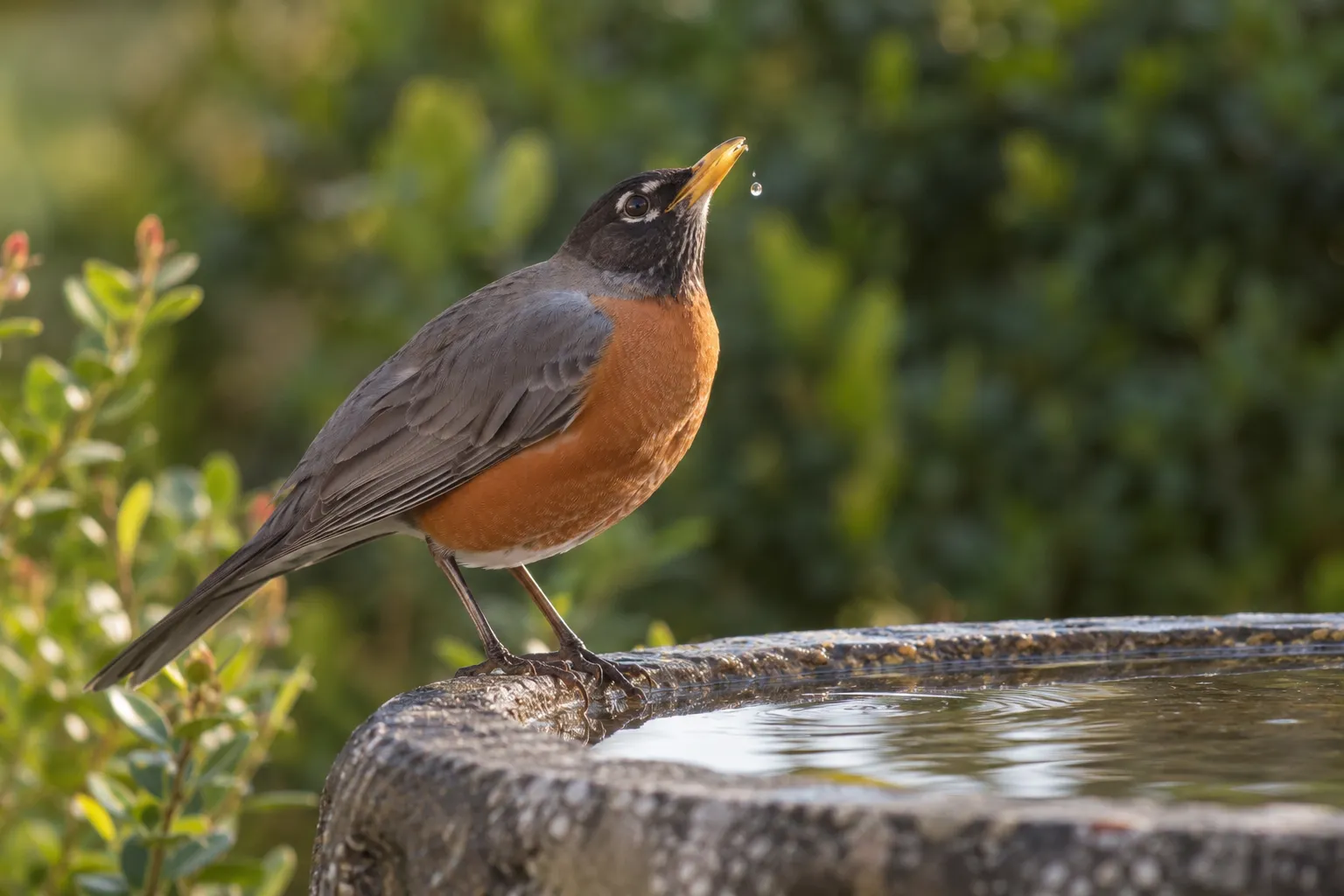
- Dip. The bird lowers its bill into the water and lets the lower mandible fill, often helped by small movements of the tongue.
- Tilt. It raises its head, sometimes quite high, so the water runs back into the throat. The tongue and throat muscles help move it along.
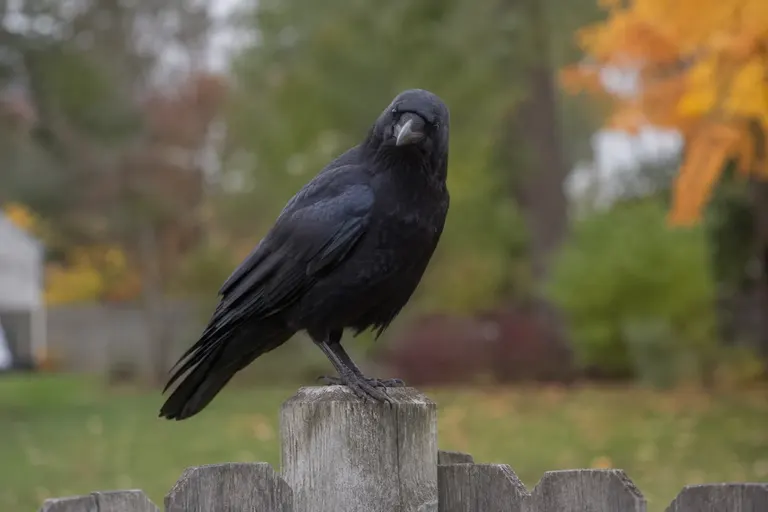
The bird repeats this over and over. You can see it clearly in American Robins, House Sparrows, European Starlings, Blue Tits and domestic chickens.
This method takes time and leaves birds exposed. While a bird’s head is tilted up, it is watching the sky, which may be useful, but it is also standing at open water where predators know to wait. That is one reason small birds visit bird baths quickly and nervously, and why placing water near cover helps.
How do pigeons and doves drink differently?
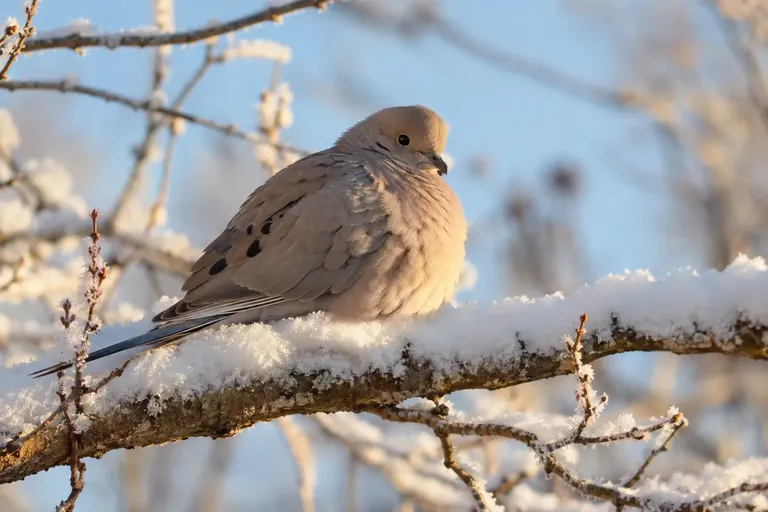
Pigeons and doves are the classic exception. A Rock Pigeon or Mourning Dove puts its bill into the water and keeps it there, drawing water up continuously without lifting its head. It looks like drinking through a straw.
Exactly how they do it has been studied for decades. The explanation usually given is that they combine a good seal of the bill with pumping movements of the tongue and throat to move water in a steady stream. The practical effect is that they can take in a lot of water fast.
This matters because doves and pigeons eat mostly dry seeds, which contain little water. They need to drink a lot, often at open waterholes where predators gather. Drinking quickly reduces the time they are vulnerable.
Several other seed-eating birds share this ability:
- Sandgrouse in the deserts of Africa, the Middle East and Asia.
- Some estrildid finches, including the Zebra Finch of Australia.
- Mousebirds of Africa.
The trait seems to have evolved more than once in dry-country seed eaters, which makes sense given how much they depend on drinking.
How do hummingbirds drink?
Hummingbirds drink nectar and water with a long tongue that extends well beyond the bill tip. The tongue is forked at the end, and each half is rolled into a groove along its length, with fringed edges.
For a long time, textbooks said the grooves filled by capillary action, the way water creeps up a narrow tube. Research led by Alejandro Rico-Guevara and Margaret Rubega, published in 2011 and 2015, used high-speed video on live birds and showed something more dynamic:
- The tongue is squeezed flat as it passes between the tips of the bill.
- When the tip enters the nectar, it springs open, and the grooves fill very quickly, a bit like an elastic pump.
- The fringed edges curl in around the liquid and help trap it as the tongue is pulled back.
Hummingbirds lick many times per second while feeding, and they drink plain water with the same tongue. They also bathe and sip from dripping leaves and misters. If you offer sugar water, use the standard 4:1 ratio and no dye; our hummingbird nectar recipe explains why. For more on how these birds power their feeding, see how hummingbirds hover.
Do birds drink while flying?
Some do. Swallows, martins, swifts and nighthawks often drink on the wing by skimming low over a pond or river and dipping the lower bill into the surface. The move is quick and precise, and a swallow can repeat it several times in a single pass.
Swifts are especially dependent on in-flight drinking because they so rarely land. Tracking studies of Common Swifts have shown that some individuals stay aloft for most of their ten months away from breeding colonies, which means they must drink, feed and even sleep in the air. Terns and some other seabirds also snatch water or food from the surface without landing.
How do seabirds drink salt water?
Salt water would dehydrate most animals, because the kidneys cannot remove salt fast enough without losing even more water. Seabirds solve this problem with salt glands, also called supraorbital or nasal glands, located above the eyes.
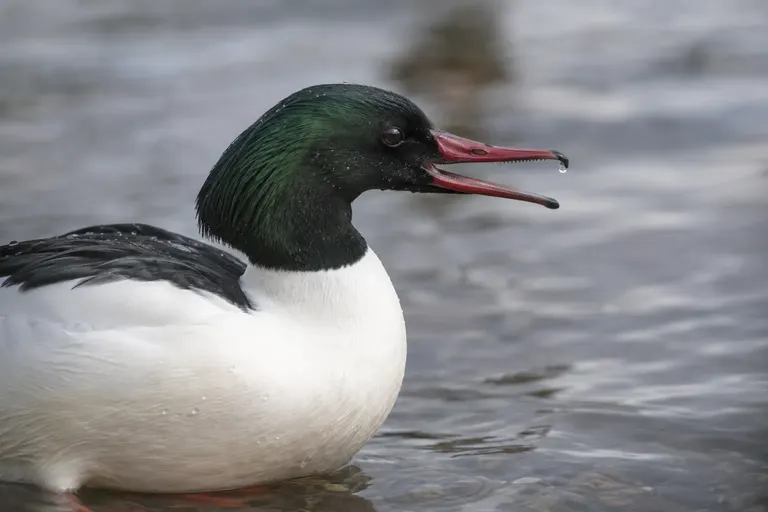
When a seabird drinks sea water or eats salty prey, these glands pull excess salt from the blood and release a concentrated salty fluid. In many species it drips from the tip of the bill. Tubenoses such as albatrosses, petrels and shearwaters can shoot it out of their tube-shaped nostrils.
Birds with active salt glands include:
- Albatrosses, petrels and shearwaters
- Gulls and terns
- Penguins
- Pelicans, cormorants and boobies
- Sea ducks such as eiders and scoters
- Flamingos, some of which live on very salty lakes
The glands of some species can enlarge when birds live in salty conditions and shrink when they move to fresh water. Many ducks and gulls have functional salt glands, which helps them use coastal and inland waters of different saltiness.
Do some birds never drink?
A few species rarely drink at all, and many get a large share of their water from food.
Water from food
Insects, fruit, nectar, worms and prey animals all contain a lot of water. A thrush eating berries or an owl eating mice takes in much of the moisture it needs with its meal. Many birds of prey are seldom seen drinking, although most will drink and bathe when water is available.
Metabolic water
When animals break down fat, sugar and protein for energy, water is one of the by-products. This metabolic water can meet a meaningful share of a bird’s needs, especially in small seed-eaters that burn fat quickly. Some desert finches and sparrows are thought to survive long periods with little or no drinking thanks to metabolic water and very efficient water conservation.
Why birds lose less water than mammals
Birds excrete nitrogen waste mainly as uric acid, which forms a paste rather than a dilute liquid. That is the white part of a bird dropping. Producing uric acid instead of urine saves water. Birds also have no sweat glands; they cool themselves by panting and by a rapid throat flutter called gular fluttering, which does cost water in hot weather.
How do sandgrouse carry water to their chicks?
One of the most remarkable drinking behaviors belongs to the sandgrouse of Africa, the Middle East and Central Asia. Sandgrouse nest in deserts, sometimes far from water. The chicks cannot fly to waterholes, so the males bring water to them.
A male sandgrouse wades into a waterhole and soaks his belly feathers. These feathers have a special structure with coiled barbules that uncoil and hold water in a dense mat, a bit like a sponge. He then flies back to the nest, and the chicks drink by stripping water from his belly feathers with their bills. Studies of the feathers show they can hold several times their own weight in water. Reports suggest males may fly many miles each way, although distances vary by species and site.
How much water do birds need?
It depends on body size, diet and weather. As a general pattern:
- Small birds need more water relative to their weight. Their small bodies lose water faster through breathing and skin.
- Seed-eaters need to drink more than birds eating insects, fruit or nectar.
- Hot weather sharply increases water needs because panting and gular fluttering evaporate water to cool the body.
- Cold weather does not remove the need. Birds can eat snow, but melting it costs body heat and energy. Open water in winter is a real help.
Exact figures vary a lot by species and conditions, so treat any single “percent of body weight” number with caution.
Do baby birds drink water?
Most nestlings never drink on their own while they are in the nest. They get the water they need from the food their parents bring. Caterpillars, spiders and other soft insects are mostly water, which is one reason so many seed-eating songbirds switch to feeding their young insects. See what baby birds eat for more.
Pigeons and doves are again the exception in an interesting way. Both parents produce crop milk, a nutritious secretion from the lining of the crop, and feed it to their young in the first days after hatching. Later they feed the young softened seeds from the crop. In some hot-climate birds, such as the Egyptian Plover of Africa, adults soak their belly feathers to cool their eggs and chicks, a simpler version of the sandgrouse trick described above.
Once young birds leave the nest, they learn to drink by watching and copying adults. Fledglings at a bird bath often look clumsy at first, dipping too deep or spilling most of the sip.
This is also why you should never give water to a baby bird you find. Young birds can easily inhale water into their airways. If a young bird needs help, contact a licensed wildlife rehabilitator.
Why do birds bathe as well as drink?
Birds use water for feather care as much as for drinking. Bathing loosens dirt and parasites and helps birds reset their feathers before a long preening session. Watch a bath on a warm day and you will see a sequence: a few sips, then wading in, fluffing, dipping the breast and flicking the wings to throw water over the back, followed by a shake and a move to a nearby perch to preen.
Different birds bathe differently. Songbirds usually stand in shallow water and splash. Swallows and swifts may dip into water in flight. Some birds prefer dust or sun instead of, or as well as, water. A good bath gives birds a shallow edge for drinking and a slightly deeper area, still only a couple of inches, for bathing.
Myths vs facts about how birds drink
Myth: all birds suck water like we do. Fact: most birds cannot create suction and must tilt their heads to swallow. Pigeons, doves and a few others are the exceptions.
Myth: hummingbirds drink through their bills like a straw. Fact: they lick nectar with a forked tongue that works like an elastic pump.
Myth: birds do not need water in winter because they eat snow. Fact: eating snow costs energy, and liquid water for drinking and bathing is scarce when everything freezes.
Myth: seabirds do not drink. Fact: many drink sea water and remove the salt with specialized glands.
Myth: birds get all the water they need from feeders. Fact: seed is dry. Birds that eat mostly seed need to drink regularly.
What does this mean for backyard birders?
A reliable, clean water source attracts many birds that never visit seed feeders, including warblers, thrushes, waxwings and robins. Here is how to make it work:
- Keep it shallow. Most songbirds prefer water no deeper than about 1 to 2 inches, with a gently sloping edge. Add a flat stone if your bath is deeper.
- Place it near cover, not in it. A spot within flying distance of shrubs or trees, but with a clear view around the bath, lets birds escape predators without letting cats ambush them. See where to put a bird bath.
- Keep it clean. Change the water every couple of days and scrub the basin regularly to prevent algae and disease. Here is how to clean a bird bath.
- Add movement. Dripping or gently moving water catches birds’ attention and is especially attractive to migrants.
- Keep it open in winter. A heated bath or a daily refill with warm water can be a lifeline. See keeping a bird bath ice-free in winter.
- Keep water available in summer heat. Birds drink and bathe more when it is hot. Our guide on whether to feed birds in summer covers other ways to help.
When you watch your bath, see how different birds drink. Robins and sparrows dip and tilt. Mourning Doves in North America, and Collared Doves and Wood Pigeons in Europe and Turkey, keep their heads down and drink in one long draw. In Brazil, Ruddy Ground Doves and Picazuro Pigeons show the same straw-like drinking.
Examples from around the world
- American Robin (North America): a classic dip-and-tilt drinker and frequent bath visitor.
- Eurasian Blue Tit (Europe and Turkey): sips quickly and tilts back, often visiting baths in small groups.
- Rock Pigeon (worldwide): drinks by continuous suction without lifting its head.
- Zebra Finch (Australia): a seed-eating songbird that can suck water, well adapted to dry country.
- Pin-tailed Sandgrouse (Iberia, North Africa, Middle East, Central Asia): males carry water to chicks in their belly feathers.
- Wandering Albatross (Southern Ocean): drinks sea water and removes salt through its salt glands.
- Barn Swallow (worldwide): drinks by skimming the water surface in flight.
Quick facts
- Most birds cannot suck water; they scoop and tilt their heads back.
- Pigeons and doves draw water up continuously without lifting their heads.
- Hummingbird tongues act like tiny elastic pumps, not simple straws.
- Swallows and swifts drink on the wing by skimming the surface.
- Seabirds remove salt from sea water through glands above the eyes.
- Male sandgrouse carry water to chicks in specially structured belly feathers.
- Birds excrete uric acid, which saves water compared with urine.
- Shallow, clean, moving water is the most effective way to attract drinking birds.
Sources
Frequently asked questions
Why do birds tilt their heads back to drink?
Most birds cannot create strong suction with their bills the way mammals do with lips and cheeks. Instead they scoop water into the lower bill and then raise their heads so gravity helps it run down the throat, with tongue movements assisting. Watch a sparrow, robin or chicken at a puddle and you will see this dip-and-tilt rhythm repeated sip after sip.
Can pigeons drink without lifting their heads?
Yes. Pigeons and doves keep their bills in the water and draw it up continuously, somewhat like drinking through a straw. This lets them take in a lot of water quickly and spend less time exposed at a waterhole. Sandgrouse and some seed-eating finches, including the Zebra Finch, can also drink this way.
How do hummingbirds drink nectar and water?
A hummingbird's tongue is long and forked at the tip, with two grooves. Studies suggest the tongue works like a tiny elastic pump: it is flattened as it passes between the bill tips, then springs open in the liquid and fills rapidly. Fringes along the edges also help trap nectar. Hummingbirds lick many times per second and drink water the same way.
Can birds drink salt water?
Many seabirds can. Albatrosses, petrels, gulls, penguins, sea ducks and others have salt glands above the eyes that remove excess salt from the blood and release a concentrated salty fluid through the nostrils. Most garden songbirds lack efficient salt glands and need fresh water, which is why a clean bird bath helps them.
Do some birds never drink water?
Some desert birds and many birds of prey drink rarely and get most of their water from food. Insects, fruit, nectar and prey all contain water, and birds also make metabolic water when they break down fat and sugar. Because they excrete waste as concentrated uric acid rather than urine, birds lose less water than mammals do.