Do Birds Eat Mosquitoes?
Do birds eat mosquitoes? Yes, many do, from swallows to warblers, but mosquitoes are a small part of most diets and birds alone won't clear them from your yard.
In this article
- Quick answer: birds and mosquitoes
- Which birds eat mosquitoes?
- Why aren’t mosquitoes a bigger part of birds’ diets?
- Do Purple Martins really eat thousands of mosquitoes?
- Do bats eat more mosquitoes than birds?
- What eats mosquitoes most effectively?
- How can I reduce mosquitoes without harming birds?
- Why are insects so important for birds?
- How do birds catch something as small as a mosquito?
- Do mosquitoes bite birds?
- Can mosquitoes make birds sick?
- Myths vs facts about birds and mosquitoes
- What does this mean for backyard birders?
- Examples from around the world
- Quick facts
- Sources
- Frequently asked questions
Yes, many birds eat mosquitoes. Swallows, swifts, nighthawks, flycatchers, warblers, wrens and hummingbirds catch adult mosquitoes, and ducks and shorebirds eat their aquatic larvae. But mosquitoes are a small part of most birds’ diets, because they are tiny and scattered compared with other insects. Birds help keep mosquito numbers in check alongside bats, dragonflies and fish, but no bird will clear mosquitoes from your yard on its own.
The claim that one bird eats thousands of mosquitoes a day is a myth. Here is what birds really eat, which species catch mosquitoes, and what actually works if you want fewer bites and more birds.
Quick answer: birds and mosquitoes
- Many birds eat mosquitoes, but usually opportunistically, as part of a broad insect diet.
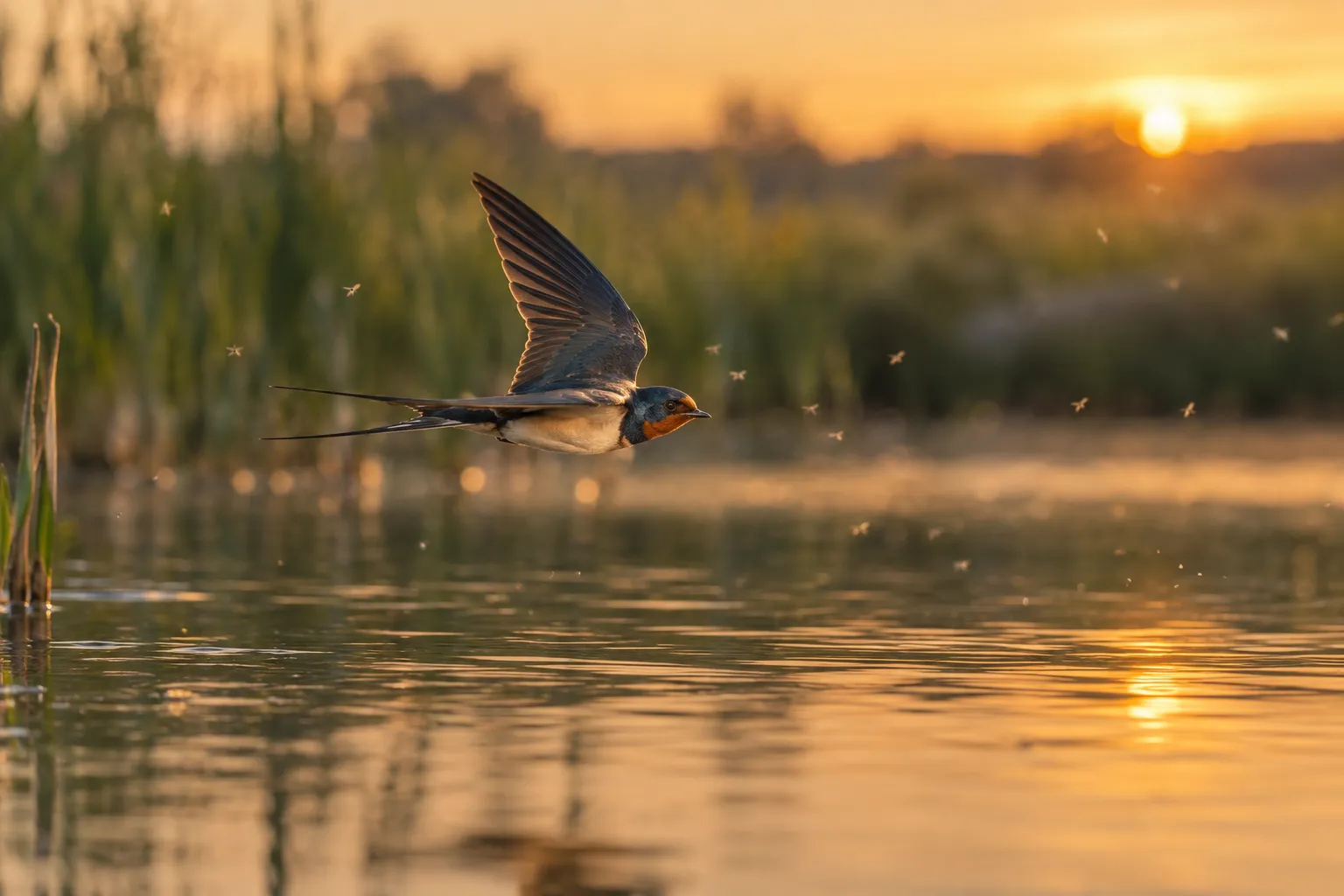
- Aerial insectivores such as swallows, swifts and nighthawks catch adult mosquitoes in flight.
- Gleaners and flycatchers such as warblers, vireos, wrens, phoebes and hummingbirds snap them up around vegetation.
- Water birds such as ducks and shorebirds eat larvae and pupae in shallow water.
- Purple Martins are not mosquito specialists, despite popular claims.
- Removing standing water does far more to reduce mosquitoes than attracting birds.
Which birds eat mosquitoes?
Almost any small insect-eating bird will eat a mosquito if it gets the chance. The ones most likely to do so share habits that put them in the right place at the right time.
Aerial insect-eaters
These birds feed on flying insects caught in the air:
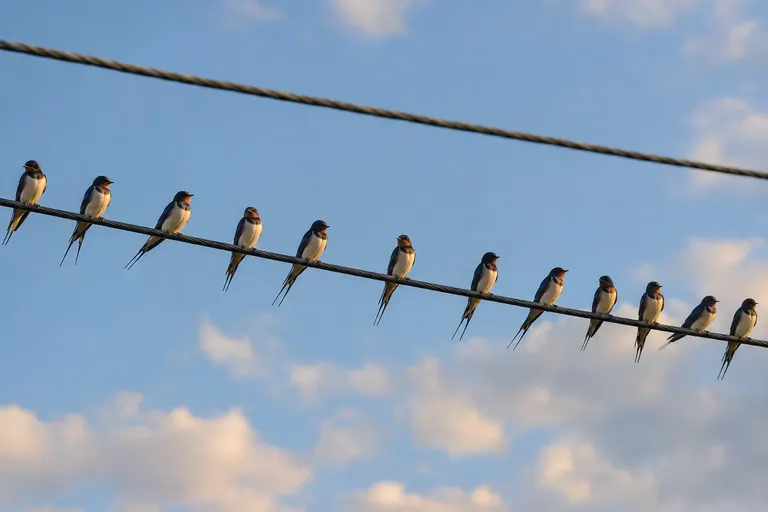
- Swallows and martins. Barn Swallows, Tree Swallows and Cliff Swallows in North America, and Barn Swallows and House Martins in Europe, Turkey and many other regions, hunt low over water and fields. They catch a wide range of flying insects, including small flies. Barn Swallows breed or winter on every continent except Antarctica, and many North American birds spend the northern winter in South America, including Brazil.
- Swifts. Chimney Swifts in the Americas and Common Swifts across Europe and Asia sweep the sky for aerial insects and drifting spiders. They mostly feed higher than mosquitoes usually fly, but will take small insects at many heights.
- Nightjars and nighthawks. Common Nighthawks in the Americas and European Nightjars feed at dusk and dawn, when many mosquitoes are active, but their prey is dominated by moths, beetles and other larger insects.
Flycatchers and gleaners
- Flycatchers. Eastern Phoebes, pewees and other tyrant flycatchers sally out from a perch to catch passing insects.
- Warblers and vireos. These small songbirds pick insects from leaves and twigs and sometimes catch them in the air.
- Wrens and chickadees. Mostly gleaners, they take small insects and spiders from bark and vegetation.
- Hummingbirds. Though famous for nectar, hummingbirds rely on small insects and spiders for protein. They catch gnats, midges and other small flies, including mosquitoes, in quick aerial darts.
Water birds that eat mosquito larvae
Mosquito larvae and pupae live in still water. Some of their bird predators include:
- Dabbling ducks, such as Mallards and teal, which filter food from the surface and shallows.
- Shorebirds, such as sandpipers and phalaropes, which probe and pick in shallow water and mud.
- Some songbirds, which pick larvae from the edges of puddles and ponds.
Fish, especially small native species that feed at the surface, are usually far more important larval predators than birds.
Why aren’t mosquitoes a bigger part of birds’ diets?
It comes down to energy. A bird’s goal when feeding is to take in as many calories as possible for the effort it spends. A mosquito is tiny, weighing only a few milligrams. A moth, beetle, dragonfly or caterpillar can deliver many times as much food for a similar amount of chasing. Given the choice, most birds go for larger prey.
Timing and location also matter:
- Many mosquitoes are most active at dusk, at night and at dawn, and often rest in shady vegetation during the day. Many daytime aerial insectivores forage when and where mosquitoes are less abundant.
- Mosquitoes often fly low, close to vegetation and around hosts. Swallows and swifts may feed much higher.
- Mosquito abundance can be patchy. Other insects, such as midges and small flies, can be far more common over water.
So mosquitoes show up in bird diets, but usually as a small percentage alongside many other insects.
Do Purple Martins really eat thousands of mosquitoes?
This is one of the best-known myths in backyard birding. For decades, martin house advertisements claimed that a single Purple Martin eats thousands of mosquitoes a day. The claim spread widely and is still repeated.
Diet studies do not support it. The Purple Martin Conservation Association and ornithologists who have examined martin diets report that mosquitoes make up only a very small share of their food, often none at all. Martins are large swallows that forage high in the air during the day, taking dragonflies, damselflies, flies, beetles, bees, wasps, moths and butterflies. Mosquitoes, which are mostly active closer to the ground at dusk and night, are just not a major part of that menu.
Purple Martins are wonderful birds to host, and communities of martins in the eastern United States depend almost entirely on human-provided housing. Just host them for the joy of it, not as mosquito control.
Do bats eat more mosquitoes than birds?
Bats are often held up as the true mosquito eaters. They are night hunters, and some species do eat mosquitoes. But bat diet studies show a similar pattern to birds: mosquitoes are usually a small part of the diet, with moths, beetles and other insects making up most of the food. Recent DNA-based studies of bat droppings have found mosquitoes in the diets of several bat species, so they are eaten, but claims of bats eating hundreds or thousands of mosquitoes an hour usually trace back to early lab experiments rather than wild feeding.
The fair conclusion: birds and bats both help, and neither is a magic fix.
What eats mosquitoes most effectively?
If birds and bats are not the main controls, what is? A mix of predators works together, mostly in the water:
| Predator | Life stage eaten | How important? |
|---|---|---|
| Small fish (e.g., native minnows, mosquitofish where native) | Larvae, pupae | Can be very effective in permanent ponds |
| Dragonfly and damselfly nymphs | Larvae | Important in ponds and wetlands |
| Adult dragonflies and damselflies | Adults | Catch many small flying insects |
| Predatory aquatic insects (backswimmers, diving beetles) | Larvae | Important in natural ponds |
| Birds | Adults and larvae | Helpful but opportunistic |
| Bats | Adults | Helpful but opportunistic |
| Spiders | Adults | Many mosquitoes end up in webs |
Some mosquito species breed in tiny containers, such as tires, buckets, clogged gutters and plant saucers, where few predators reach them. That is why removing standing water is so effective.
How can I reduce mosquitoes without harming birds?
- Empty standing water weekly. Check buckets, toys, plant saucers, tarps, gutters and old tires. In warm weather some mosquitoes can go from egg to adult in about a week, sometimes less.
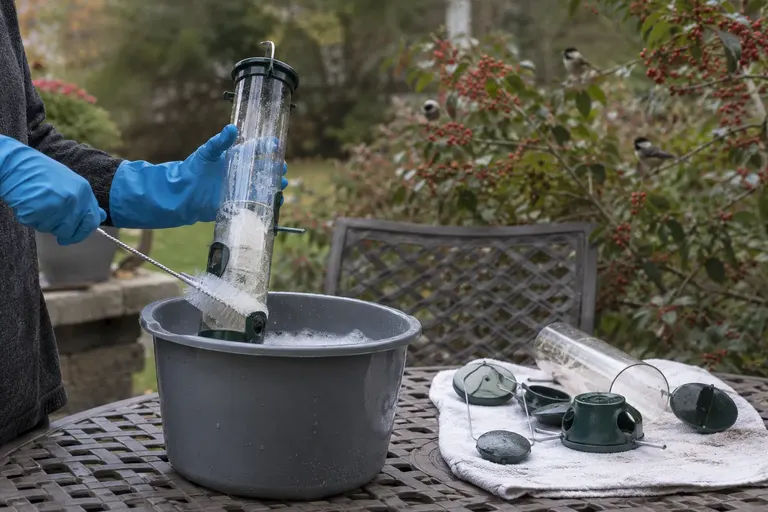
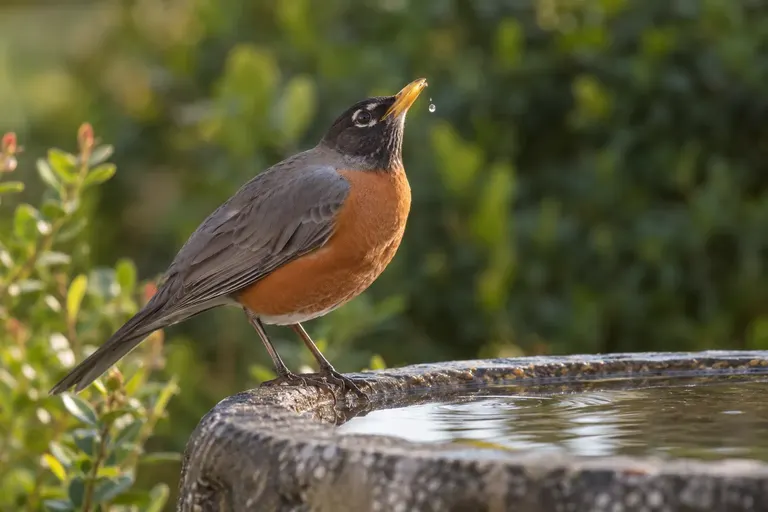
- Change bird bath water at least twice a week. Dumping and refilling the bath breaks the mosquito cycle before larvae mature. Scrubbing it also keeps it clean. See how to clean a bird bath.
- Keep water moving. A dripper or small pump in a bird bath makes it less suitable for mosquito egg-laying and more attractive to birds.
- Use Bti for water you cannot empty. Bti (Bacillus thuringiensis israelensis) is a bacterium that kills mosquito and some fly larvae. US regulators consider it low-risk to birds, fish and mammals. Follow label directions and do not use it in water where you are raising other aquatic insects you want.
- Avoid broad-spectrum sprays. Yard fogging and spraying often kill many non-target insects, including the caterpillars and other insects birds rely on to feed their young. It can also reduce predators such as dragonflies and spiders.
- Skip bug zappers. Studies of electric insect traps have found that mosquitoes and other biting insects make up only a tiny fraction of what they kill. Most victims are harmless or beneficial insects that birds eat.
- Protect yourself directly. Screens, fans on the patio, long sleeves and EPA-registered repellents work far better at preventing bites than any bird.
Why are insects so important for birds?
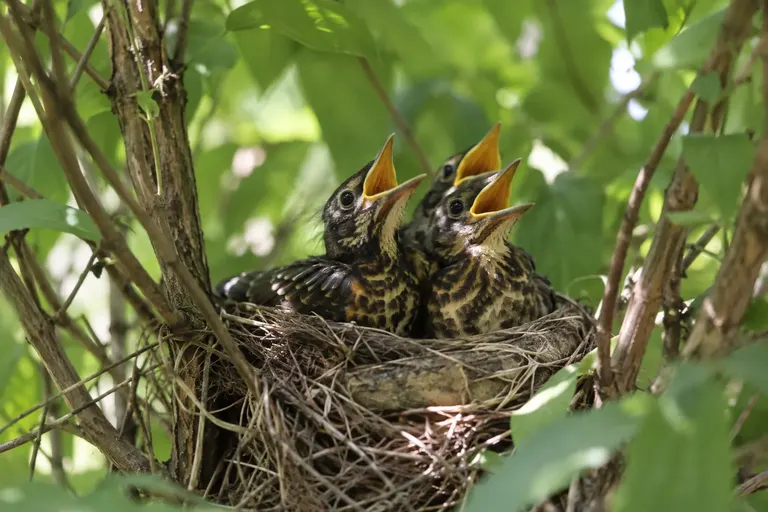
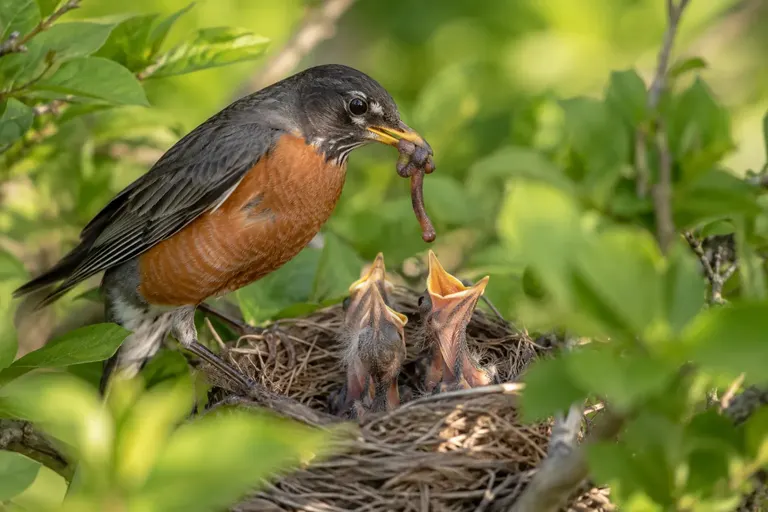
Even if birds do not control mosquitoes, insects are vital for birds. Most land birds in North America feed their young on insects, even species that eat seeds as adults. Caterpillars are especially important because they are soft, nutritious and abundant on native plants.
Research led by Doug Tallamy at the University of Delaware found that Carolina Chickadees need thousands of caterpillars to raise a single brood, and that yards with more native plants support more caterpillars and more chickadee breeding success. That is why pesticide use in yards can hurt birds even when it targets pests. See what baby birds eat for more.
Aerial insectivores, including swallows, swifts and nighthawks, have declined more than most other bird groups in North America and Europe in recent decades. Researchers suspect several causes, including declines in flying insects, habitat changes and pesticides. Our overview of why bird populations are declining looks at the bigger picture.
How do birds catch something as small as a mosquito?
Catching a tiny insect in midair is harder than it looks, and aerial insect-eaters have several adaptations that help.
- A wide gape. Swallows, swifts and nighthawks have small bills but very wide mouths. The gape works like a scoop, so the bird does not need perfect aim. Nighthawks and nightjars have especially huge mouths for their size.
- Bristles around the bill. Many flycatchers and nightjars have stiff, hair-like rictal bristles at the corners of the mouth. They are often said to funnel insects into the mouth; studies suggest they may be more important for protecting the eyes or sensing touch, so their exact role is still debated.
- Fast vision. Birds generally process visual changes faster than people do. Tests on small flycatchers have found they can detect flicker at rates far above human limits, which helps them track small, erratic insects.
- Agile flight. Long, pointed wings in swallows and swifts, and short sallies from a perch in flycatchers, let birds change direction quickly as prey dodges.
- Hunting where insects gather. Swallows follow swarms over water, around livestock and along hedges, and many birds feed where insects are concentrated at dusk or after rain.
Some birds also exploit other animals. Cattle Egrets and some swallows follow grazing livestock or people mowing to catch insects flushed into the air.
Do mosquitoes bite birds?
Yes. Many mosquito species feed on birds, and some, including many Culex mosquitoes, prefer them. Mosquitoes usually bite exposed skin around the eyes, bill, legs and feet, where feathers are thin or absent. Nestlings, which are partly bare and cannot move away, are especially exposed, and mosquitoes and other biting flies can reach them in the nest.
Birds have some defenses. They preen, shake their heads, tuck their bills and legs into their feathers while roosting, and move to breezy perches. Dense feathers block most bites on the body. But they cannot avoid mosquitoes entirely, which is how mosquito-borne diseases pass between birds, and sometimes from birds to people.
Can mosquitoes make birds sick?
Yes. Mosquitoes are not just prey for birds; they are also disease vectors.
- West Nile virus. First detected in North America in 1999, West Nile virus is spread mainly by Culex mosquitoes, which often feed on birds. Birds act as key hosts in the virus cycle. American Crows, Blue Jays, magpies and other corvids are particularly vulnerable, and the virus has caused sharp population declines in some species and regions.
- Avian malaria. Caused by Plasmodium parasites and spread by mosquitoes, avian malaria has had devastating effects on native Hawaiian honeycreepers, which evolved without mosquitoes. Many surviving species live mainly at high elevations, where colder temperatures limit mosquitoes, and climate warming is a serious threat.
- Other mosquito-borne viruses. Eastern equine encephalitis and other viruses also circulate between mosquitoes and birds.
For backyard birders, the takeaway is that reducing standing water helps birds as well as people. See also can you get sick from bird feeders for other health questions.
Myths vs facts about birds and mosquitoes
Myth: a single Purple Martin eats thousands of mosquitoes a day. Fact: mosquitoes are a very small part of martin diets.
Myth: bird baths breed mosquitoes, so you should not have one. Fact: a bird bath that is emptied and refilled at least twice a week will not produce mosquitoes. It will help birds.
Myth: attracting birds will get rid of mosquitoes. Fact: birds help modestly. Removing standing water is far more effective.
Myth: bats eat all the mosquitoes birds miss. Fact: bats eat mosquitoes, but they too eat mostly larger insects.
Myth: spraying insecticide helps birds by reducing pests. Fact: broad-spectrum sprays often reduce the insects birds need, especially for feeding nestlings.
What does this mean for backyard birders?
A bird-friendly yard and a mosquito-conscious yard work together:
- Plant native plants. They support the caterpillars and other insects birds need. See designing a small bird-friendly garden.
- Leave some leaf litter. Leaves shelter insects, spiders and other invertebrates birds eat. Here is why fall cleanup hurts birds.
- Keep water clean and fresh. Place baths near cover and refresh them often. Our guide on how birds drink water explains which setups birds prefer.
- Avoid broad insecticides. Target mosquitoes where they breed.
- Enjoy the dusk show. Watch for swallows over ponds, nighthawks over towns and swifts over rooftops. They are eating insects, some of them mosquitoes.
Examples from around the world
- Barn Swallow (worldwide): hunts small flying insects low over fields and water.
- Common Swift (Europe, Turkey, Asia, wintering in Africa): feeds on aerial insects high above towns.
- Common Nighthawk (Americas, wintering in South America including Brazil): hunts at dusk, mostly larger insects.
- Eastern Phoebe (North America): sallies from perches to catch flying insects.
- Mallard (worldwide): filters invertebrates, including mosquito larvae, from shallow water.
- Hawaiian honeycreepers (Hawaii): a sobering example of how mosquitoes can harm birds.
Quick facts
- Many birds eat mosquitoes, but usually as a small part of a varied insect diet.
- Swallows, swifts, nighthawks, flycatchers, warblers, wrens and hummingbirds catch adults.
- Ducks and shorebirds eat larvae and pupae.
- The Purple Martin mosquito claim is a myth.
- Bats eat some mosquitoes, but mostly larger insects.
- Removing standing water is the most effective mosquito control.
- Change bird bath water at least twice a week.
- Mosquitoes spread West Nile virus and avian malaria to birds.
Sources
Frequently asked questions
Which birds eat the most mosquitoes?
Aerial insect-eaters such as swallows, martins, swifts and nighthawks catch mosquitoes in flight, and small songbirds such as warblers, vireos, flycatchers, wrens and hummingbirds pick them off vegetation or out of the air. Ducks, shorebirds and some other water birds eat mosquito larvae and pupae. No bird is known to eat mainly mosquitoes; they are one small prey among many.
Do Purple Martins eat thousands of mosquitoes a day?
No. This is a long-running marketing myth. Diet studies of Purple Martins have found that mosquitoes make up a very small share of their food, often none at all. Martins mostly hunt larger flying insects, such as dragonflies, beetles, flies, bees, wasps and moths, high in the air during the day, when and where most mosquitoes are not flying.
Will attracting birds get rid of mosquitoes in my yard?
Birds help a little, but they will not solve a mosquito problem. Mosquitoes are small and scattered, and most birds get more food from larger insects. The most effective step is removing standing water where mosquitoes breed, including changing bird bath water at least twice a week. Bats, dragonflies, fish and other predators also help.
Do hummingbirds eat mosquitoes?
Hummingbirds eat many small flying insects, such as gnats, midges and small flies, along with spiders, and mosquitoes are among the insects they can catch. They need this protein, especially when feeding nestlings. Mosquitoes are not a special favorite, though, and hummingbirds do not meaningfully reduce mosquito numbers in a yard.
Can mosquitoes make birds sick?
Yes. Mosquitoes transmit diseases to birds, including West Nile virus and avian malaria. American Crows, Blue Jays and some other corvids are especially vulnerable to West Nile virus. Birds are also an important part of how West Nile virus circulates, since many Culex mosquitoes feed on birds before biting people and other animals.