How to Attract Redpolls: Nyjer, Birches and Timing
How to attract redpolls: hang a nyjer tube or mesh feeder, add hulled sunflower and millet, keep birches nearby, and watch for irruption winters.
In this article
- Is it “Common Redpoll” or just “Redpoll”?
- Redpoll at a glance
- What do redpolls eat at feeders?
- Which feeder works best for redpolls?
- When do redpolls show up?
- Where should you put a redpoll feeder?
- How do redpolls survive the cold?
- How do you keep a redpoll flock healthy?
- How do you tell a redpoll from a House Finch or Pine Siskin?
- Step by step: your first redpoll season
- Common mistakes
- Sources
- Frequently asked questions
To attract redpolls, hang a tube or mesh feeder filled with fresh nyjer (thistle) seed, add hulled sunflower chips and a little millet, and place the feeder near birches or shrubby cover. Redpolls only come south in some winters, so the other half of the job is watching the forecast and keeping feeders clean when a flock arrives.
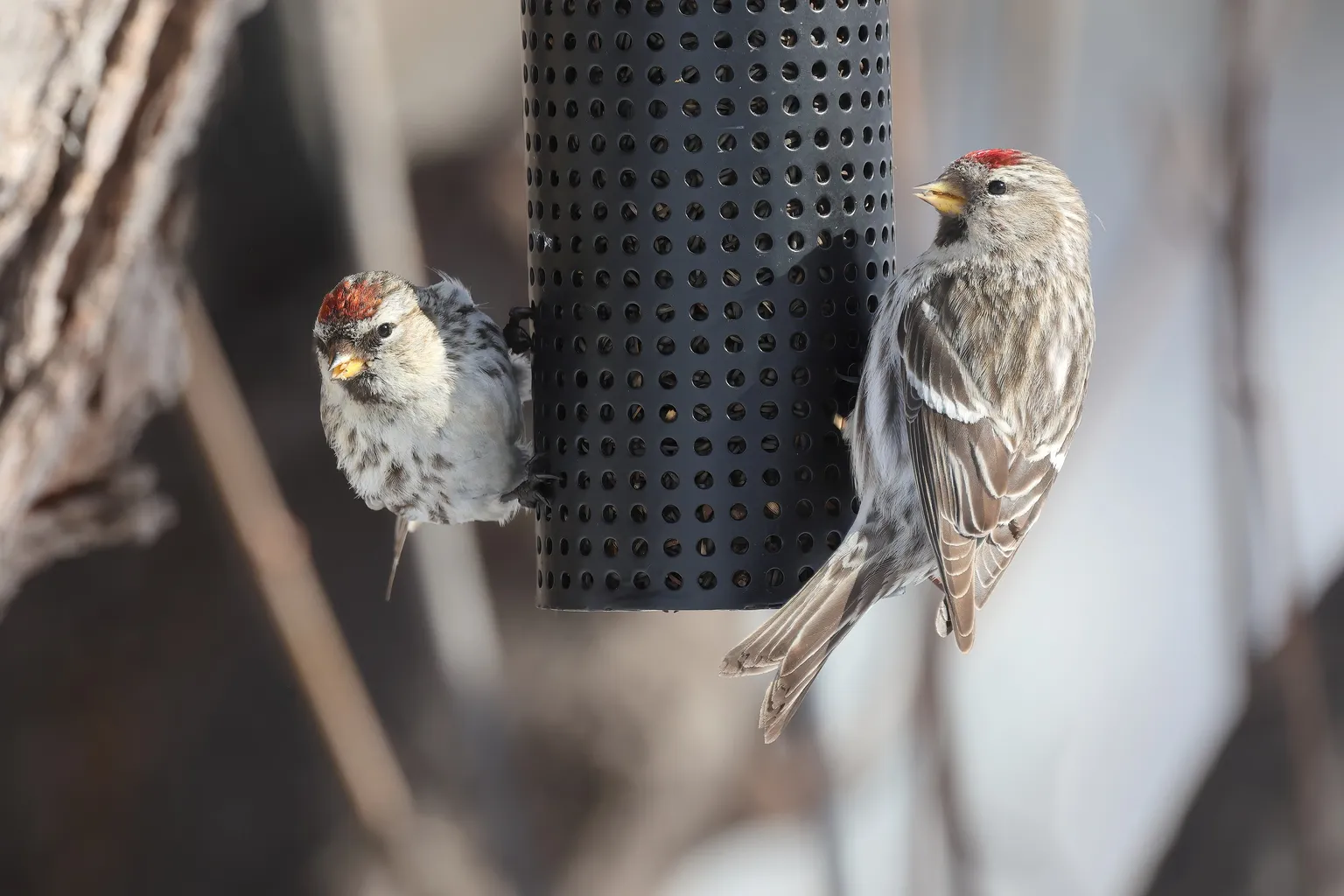
Redpolls are small, streaky finches with a red cap and a black chin. They breed in the Arctic and the far north, and in “irruption” winters flocks spill south across Canada and the northern US, sometimes as far as the central states. When a flock finds a good feeder, dozens of birds can turn up at once, chattering and hanging upside down on every perch.
Is it “Common Redpoll” or just “Redpoll”?
It’s just “Redpoll” now. In July 2024 the American Ornithological Society (AOS) merged Common Redpoll, Hoary Redpoll and the European Lesser Redpoll into one species, called Redpoll (Acanthis flammea). The International Ornithological Committee, whose list the British Ornithologists’ Union follows, made the same lump in 2024.
The reason is genetic. Researchers found that Common and Hoary Redpolls are nearly identical in their DNA. A single chromosomal inversion, sometimes called a supergene, explains the paler, frostier look of the birds once called Hoary Redpolls, and the forms interbreed freely. So a pale bird in your flock is the same species as its streakier neighbors.
Older field guides, apps and feeder packaging still say “Common Redpoll”, and so do most people searching, which is why this guide uses both names.
Redpoll at a glance
| Trait | Details |
|---|---|
| Size | 4.5 to 5.5 in long, 0.3 to 0.7 oz, about the size of an American Goldfinch |
| Key marks | Small red forehead patch, black around a small yellow bill, two white wing bars, streaky sides |
| Males | Rosy-red wash on the breast and upper flanks |
| Pale “Hoary” form | Frostier, whiter overall with fewer streaks |
| Breeding range | Arctic tundra and northern forest all around the top of the world |
| Winter range | Southern Canada and the northern US, farther south in irruption years |
| Wild food | Small seeds of birch, willow, alder, spruce and pine, plus grasses, sedges and wildflowers |
| Feeder foods | Nyjer, millet, black oil sunflower |
| Status | Hundreds of millions worldwide, but listed by the Cornell Lab as a common bird in steep decline |
What do redpolls eat at feeders?
Redpolls eat small seeds, so nyjer is the best single food. The Cornell Lab lists millet and thistle or nyjer as their feeder favorites, and notes they’ll also eat black oil sunflower seed or pick up bits dropped by bigger birds. In the wild they feed on seeds of birches, willows, alders, spruces and pines, plus grasses, sedges and wildflowers, and they add insects and spiders in summer.
| Food | How much they like it | Notes |
|---|---|---|
| Nyjer (thistle) | High | The classic redpoll food. Buy fresh; old nyjer dries out and birds ignore it. |
| Hulled sunflower chips | High | No shells to crack, and every finch at the feeder will eat them. |
| White proso millet | Medium | Scatter a little on a platform or on packed snow. |
| Black oil sunflower | Medium | They’ll take it, and they pick up fragments dropped by larger birds. |
| Suet | Low | Not a redpoll food; save it for woodpeckers and nuthatches. |
For help choosing a blend, see our guide to the best bird seed.
Which feeder works best for redpolls?
A tube feeder with small nyjer ports, or a mesh “finch sock”, works best, because redpolls like to cling and feed in a crowd. The Cornell Lab’s advice for catching a redpoll irruption is simple: hang a thistle or nyjer feeder, either a plastic tube or a mesh sock. Pick one with plenty of perches or all-over mesh so a big flock can feed at once.
- Nyjer tube: tidy, keeps seed drier, easy to clean. Metal ports stand up to squirrels.
- Mesh sock: redpolls love to cling to it, but it gets soggy in wet snow and is hard to clean. Replace it often.
- Platform: good for millet and sunflower chips; sweep it daily.
Our finch feeder guide compares the main designs.
When do redpolls show up?
Redpolls usually arrive between November and March, and only in some winters. Most years they stay in the far north. When the seed crop of northern conifers and the catkins of birch and alder fail, they move south in large numbers, an event called an irruption. The Cornell Lab says this happens about every other year, though some winters are much bigger than others.
How to tell if this is a redpoll winter where you live:
- Read the Winter Finch Forecast from the Finch Research Network, published each fall. It predicts which northern finches are likely to move south, based on tree seed crops.
- Check eBird for recent Redpoll sightings in your county from late October on. Our guide to using eBird shows how to set up alerts.
- Keep a nyjer feeder up from November even if you haven’t seen them yet. Redpolls often find feeders other finches are already using.
Where should you put a redpoll feeder?
Put the feeder where redpolls can drop in from cover and still see around them, with shrubs or small trees a short hop away. Birch trees nearby are a bonus, because redpolls feed on birch seeds and will move between the tree and the feeder all day.
Redpolls also feed on the ground, hopping around to pick up windblown seeds. In deep snow, keep a patch under the feeder clear or lay down a board so fallen seed stays within reach. Our guide on where to put a bird feeder covers distances from windows and cover.
How do redpolls survive the cold?
Redpolls are built for extreme cold. The Cornell Lab reports they can survive temperatures as low as -65°F. They store extra seed in a pouch in the throat to eat later, and some roost overnight in tunnels they dig in the snow. These tunnels can be more than a foot long and about 4 inches below the surface, where the snowpack stays much warmer than the night air.
That’s why a reliable food source late in the day matters. If you only fill feeders once a day, fill them in the afternoon during cold snaps so birds can load up before a long night. Read more in how birds stay warm in winter.
How do you keep a redpoll flock healthy?
Clean feeders regularly, because big redpoll flocks mean crowded feeders, and crowded feeders spread disease. The Cornell Lab warns that redpolls can catch salmonella infections at feeders. Sick birds look fluffed up, sluggish and unusually easy to approach.
- Clean feeders often, even when birds look healthy. A Project FeederWatch study found that methods using a 10-minute soak in a dilute bleach solution cut Salmonella more than scrubbing with soap and water alone. Rinse well and let feeders dry before refilling.
- Rake up or sweep old seed and droppings under the feeders.
- Swap mesh socks for clean ones rather than trying to wash them.
- If you see sick or dead finches, take feeders down for a while, clean everything, and report it to Project FeederWatch or your state wildlife agency.
Our step-by-step guide to cleaning bird feeders has the details.
How do you tell a redpoll from a House Finch or Pine Siskin?
Look for the small red forehead patch, the black chin and the tiny yellow bill. These three finches often share a feeder, and at a glance they’re all small and streaky.
| Redpoll | House Finch | Pine Siskin | |
|---|---|---|---|
| Red | Small red cap on the forehead only (plus a rosy breast on males) | Red head, breast and rump on males | None |
| Face | Black around the bill | No black | No black |
| Bill | Tiny, yellow | Stubby, curved | Thin, pointed |
| Wings | Two white wing bars | Plain brown | Yellow wing stripe |
| When | Winter, some years | All year | Irregular, often winter |
For more ID detail, see our House Finch guide.
Step by step: your first redpoll season
- Early November: hang a clean nyjer tube or mesh sock with fresh seed.
- Add chips: put hulled sunflower in a second feeder or on a platform.
- Watch the forecast: check the Winter Finch Forecast and eBird for your area.
- Clear the ground: after snow, clear a patch under the feeder and scatter a little millet.
- When they arrive: fill feeders every afternoon, add a second nyjer feeder if the flock is big, and start a weekly cleaning routine.
Common mistakes
- Stale nyjer. It dries out and loses its appeal. Buy smaller bags and store them sealed.
- One small feeder for a big flock. Redpolls squabble over space. Add feeders instead of refilling one over and over.
- Giving up in October. Redpolls often arrive later. Keep nyjer up through March.
- Skipping cleaning. A dirty feeder in an irruption winter can do more harm than good.
For the wider season, see our guide to winter bird feeding.
Sources
- Cornell Lab of Ornithology, All About Birds: Redpoll overview
- Cornell Lab of Ornithology, All About Birds: Redpoll life history
- Cornell Lab of Ornithology: Redpolls United! Highlights from the 2024 AOS Checklist Update
- American Ornithological Society: 65th Supplement to the Check-list of North American Birds
- Project FeederWatch: What’s the best way to clean your bird feeders?
- Finch Research Network: Winter Finch Forecast

Frequently asked questions
What is the best food to attract redpolls?
Nyjer seed, often sold as thistle, is the best single food for redpolls. The Cornell Lab says they are especially likely to visit thistle or nyjer feeders, and they also eat millet and black oil sunflower seed. Hulled sunflower chips are easy for their tiny bills. A little millet on a platform or on cleared snow feeds the birds waiting for a perch.
Are Common Redpoll and Hoary Redpoll the same bird now?
Yes. In July 2024 the American Ornithological Society merged Common Redpoll, Hoary Redpoll and Lesser Redpoll into one species, simply called Redpoll, Acanthis flammea. The International Ornithological Committee made the same change in 2024. Genetic work found the forms are almost identical, with a single chromosomal inversion behind the pale Hoary look. Pale birds in a flock are the same species.
Why do redpolls come to my feeders some winters and not others?
Redpolls are irruptive. They move south in big numbers when the seed crops of northern birches, alders, spruces and pines fail. The Cornell Lab says this happens about every other year. In good seed years most redpolls stay far north. The Finch Research Network publishes a Winter Finch Forecast each fall that predicts how likely a redpoll winter is.
How do redpolls survive such cold winters?
The Cornell Lab reports that redpolls can survive temperatures as low as minus 65 degrees Fahrenheit. They store extra seed in a pouch in the throat to eat later, and some dig tunnels into the snow to roost at night. These tunnels can be more than a foot long and about 4 inches below the surface, where the snow insulates them.
Do redpolls live in Europe too?
Yes. Redpolls breed around the whole Arctic and in parts of Europe, including Britain, Scandinavia and the Alps. European birders have long called the forms Mealy, Lesser and Arctic Redpoll. Since the 2024 lump, the IOC and the British list treat all of them as one species, Redpoll. Northern birds also move south in Europe in poor seed years.