Why Are Blue Feathers Not Actually Blue?
Why are blue feathers not actually blue? Birds lack blue pigment. Tiny air-and-keratin structures inside each feather barb scatter blue light instead.
In this article
- Quick facts about blue feathers
- How do feathers make color without pigment?
- What is inside a blue feather?
- How can you prove a blue feather is not really blue?
- Why does the dark melanin layer matter?
- How is blue different from iridescent color?
- Why are so many green birds really blue and yellow?
- What about birds with blue skin or blue eggs?
- Why do birds see blue feathers differently from us?
- Why did birds evolve structural blue instead of a blue pigment?
- Does blue fade as a feather gets older?
- Common mistakes when identifying blue birds
- Which common birds get their color from structure?
- Myths and facts about blue feathers
- What this means for backyard birders
- The bottom line
- Sources
- Frequently asked questions
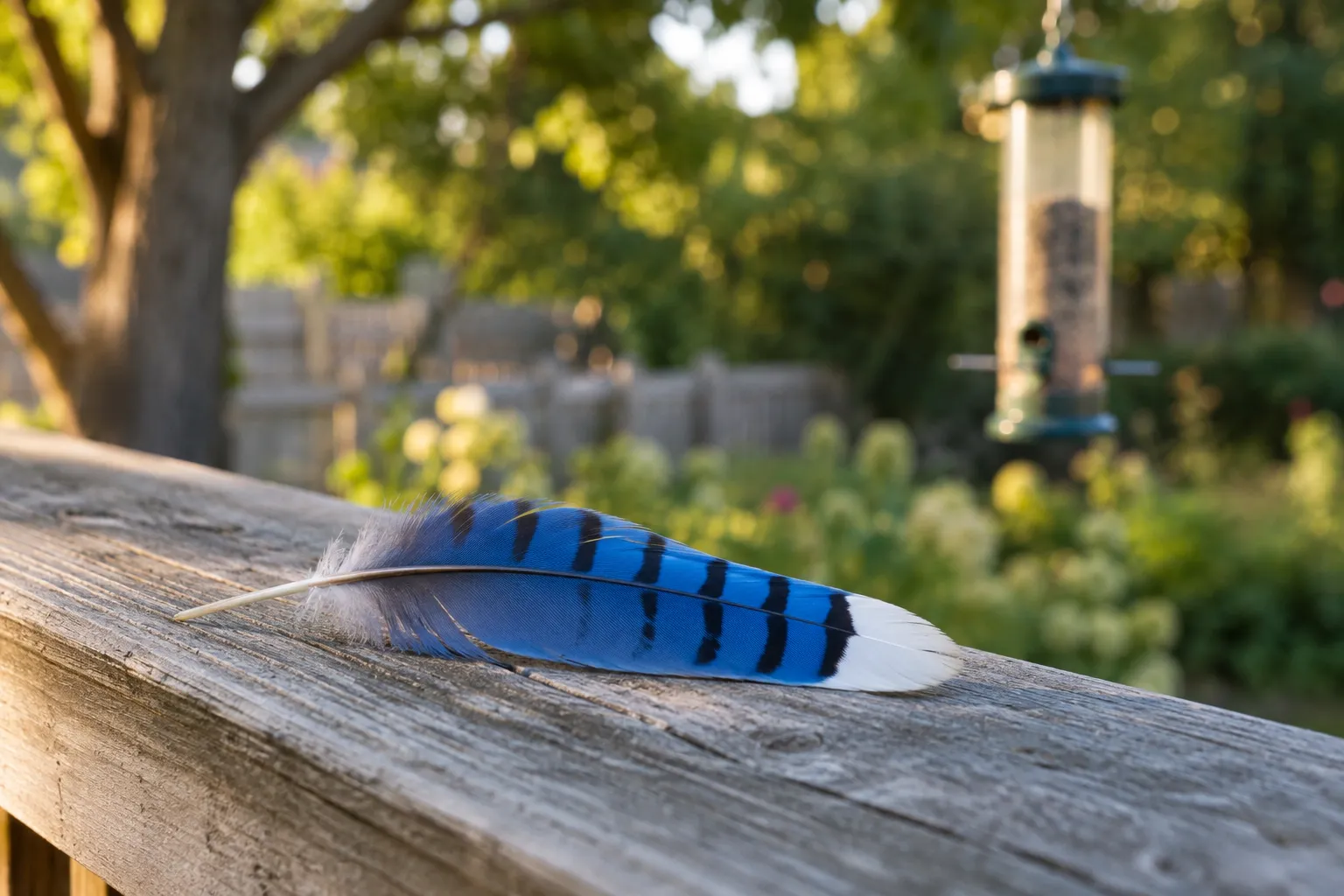
Why are blue feathers not actually blue? Because birds, as far as scientists know, do not make a blue pigment for their feathers. Instead, the blue you see on a Blue Jay, bluebird or kingfisher is a structural color: microscopic pockets of air and keratin inside each feather barb, spaced on the order of 100 to 200 nanometers apart, scatter blue wavelengths of light back toward your eye while a layer of dark melanin absorbs most of the rest.
The feather is real. The blue is real too, in the sense that the light reaching your eye is genuinely blue. But the color is created by the feather’s architecture rather than by a chemical dye. Change the structure, or change how light hits it, and the blue vanishes.
Quick facts about blue feathers
- No blue pigment: birds are not known to use a blue pigment in feathers.
- Structural color: blue comes from nanoscale structures of keratin and air in the feather barbs.
- Melanin helps: a dark pigment layer beneath the structure absorbs stray light and deepens the blue.
- Test it yourself: a blue feather looks brown or gray when light shines through it from behind.
- Crush it and it fades: grinding a blue feather destroys the structure and the blue.
- Green is often blue plus yellow: many green birds combine structural blue with yellow pigment.
- Not the same as iridescence: blue jays and bluebirds look blue from most angles; hummingbird throats change with angle.
How do feathers make color without pigment?
Feathers get color in two broad ways.
Pigments absorb some wavelengths of light and reflect others. Melanins, which birds make themselves, produce blacks, browns, grays and rusty tones. Carotenoids, which birds get from their diet, produce reds, oranges and yellows. A few groups have special pigments, such as the psittacofulvins that give parrots their reds and yellows.
Structural colors come from the physical arrangement of materials at a scale close to the wavelength of visible light, a few hundred nanometers. When light enters those structures, some wavelengths are reinforced as they bounce back and others cancel out. The result is color with no colored chemical involved.
Butterfly wings, beetle shells and soap bubbles all show structural color. In birds, it produces almost all blues and violets, many greens, and the shifting metallic shine of iridescent feathers.
What is inside a blue feather?
A typical contour feather has a central shaft with rows of branches called barbs. Each barb has smaller branches called barbules. In blue feathers, the color-producing machinery sits inside the barbs.
Look at a cross-section of a blue barb under an electron microscope, and you would typically see three layers:
- An outer keratin cortex, a thin, clear skin around the barb.
- A spongy medullary layer, made of keratin laced with tiny air pockets or channels. This is the part that produces the blue.
- A core of melanin-containing cells, which absorbs light that passes through the spongy layer.
The spongy layer is the key. The spacing between keratin and air is remarkably consistent, on the order of 100 to 200 nanometers in many blue feathers. At that spacing, light waves reflected from different parts of the structure line up for blue wavelengths and reinforce each other, sending strong blue light back out. Other wavelengths are scattered weakly or pass through to be absorbed by the melanin below.
Is blue feather color the same as why the sky is blue?
For much of the 20th century, many scientists thought so. The sky is blue because of Rayleigh scattering, in which tiny, randomly spaced particles scatter short blue wavelengths more strongly than longer red ones. Early researchers assumed feathers worked in a similar way, often calling it “Tyndall scattering.”
In the late 1990s, work led by Richard Prum and colleagues showed that this explanation does not fit. When they analyzed the spongy keratin in blue feathers, they found that the air pockets are not randomly spaced. They form a quasi-ordered pattern, with a consistent spacing but no perfect crystal-like order. Light scattered by such a structure interferes in an organized way, a process called coherent scattering. That explains why feather blues are so saturated and why the structure can produce specific hues, not just a pale sky blue.
Later research showed that these nanostructures form by a self-assembly process as keratin separates from the watery fluid inside developing feather cells, somewhat like oil separating from vinegar. Two main types have been described: one with twisting channels of air and one with more rounded air spheres.
How can you prove a blue feather is not really blue?
You can see this for yourself with a naturally shed blue feather. In the United States, it is generally illegal to collect or keep feathers of native wild birds without a permit, so do these tests where the feather lies, or use feathers from domestic birds such as budgerigars or peafowl.
The backlight test
- Hold a blue feather so that light hits it from your side. It looks blue.
- Now hold it up so that the light source is behind it, shining through the feather toward you.
- The blue disappears and the feather looks dull brown or gray.
In reflected light, you see the blue scattered back from the spongy layer. In transmitted light, you mostly see what passes through, which is filtered by the melanin.
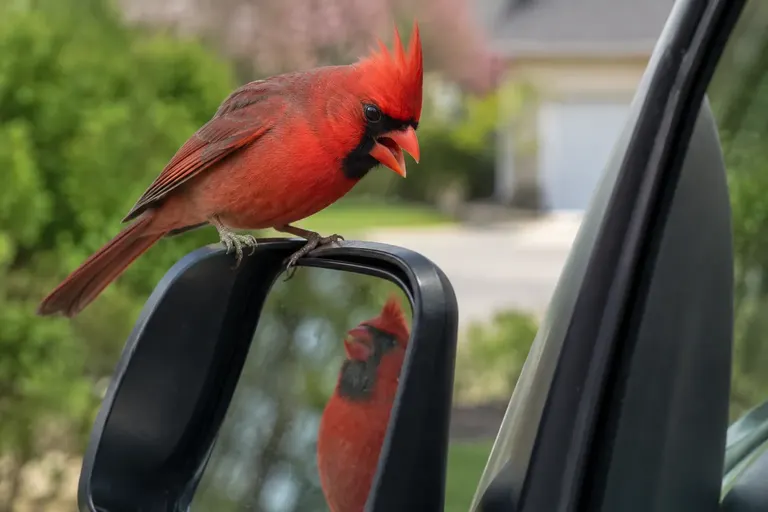
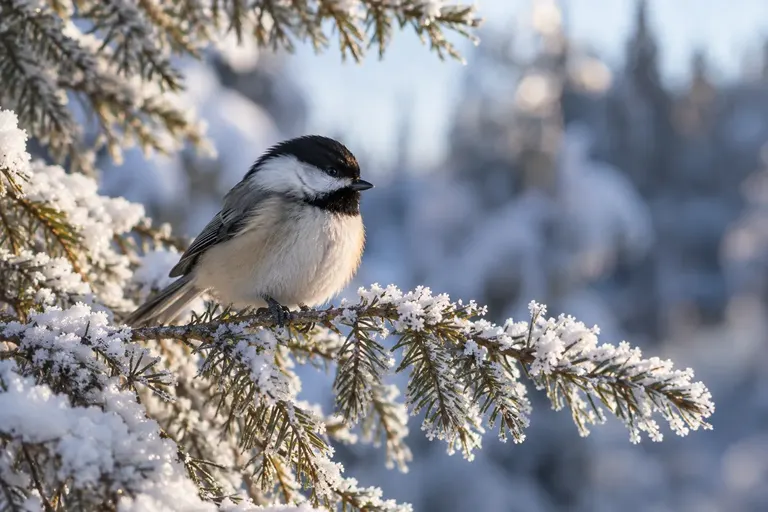
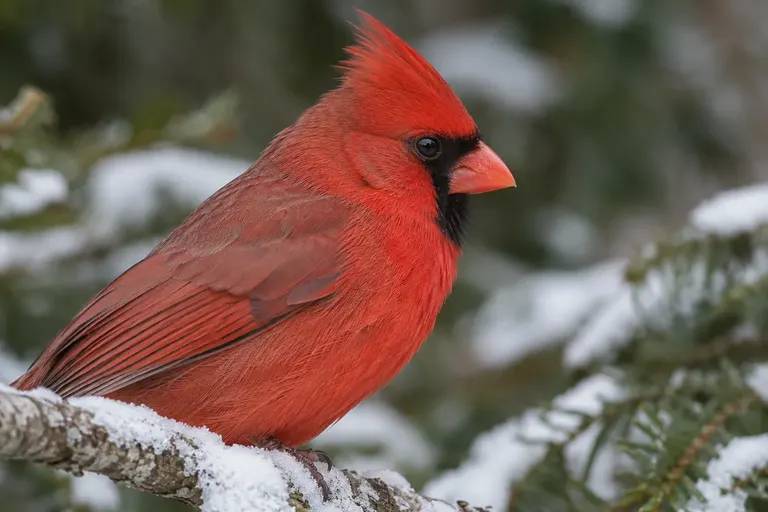
Try the same thing with a red cardinal feather and it stays red either way, because its color comes from a pigment that absorbs other colors whatever direction the light comes from.
The crush test
If you grind a blue feather into powder, the blue fades and you are left with a gray or brown dust. Destroying the microscopic structure destroys the color. A pigmented red, yellow or brown feather keeps much of its color when crushed.
The wet test
Soaking a blue feather in some liquids can dull or shift the color, because filling the air pockets changes how the structure interacts with light. As the feather dries, the blue returns. This is a laboratory-style experiment and not something to try on a living bird.
Why does the dark melanin layer matter?
Melanin might seem like it would spoil a blue color, but it is essential. Without a dark background, much of the light that passes through the spongy layer would be scattered randomly and bounce back as white, washing out the blue. The melanin soaks up that stray light, so the eye receives mostly the blue that the structure reflects.
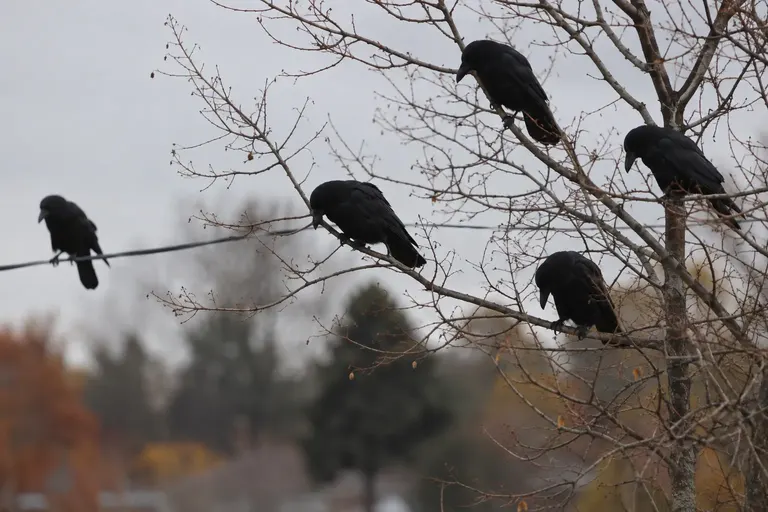
This is why some blue birds look almost black in poor light. The Indigo Bunting is a well-known example: in shade or against the light, a male can look dark and colorless, then glow deep blue when sunlight hits it at the right angle. Steller’s Jays in dark conifer forests do the same.
How is blue different from iridescent color?
Both are structural, but they work differently.
| Feature | Non-iridescent blue | Iridescent color |
|---|---|---|
| Where it forms | Spongy keratin inside the barbs | Layered melanin structures in the barbules |
| How it looks | Much the same from most viewing angles | Changes color or brightness with angle |
| Typical colors | Blue, violet, ultraviolet | Green, purple, copper, magenta, blue |
| Examples | Blue Jay, bluebirds, Indigo Bunting, Common Kingfisher, Blue Tit | Hummingbird throats, Mallard head, grackles, starlings, peacock train |
A male Ruby-throated Hummingbird’s throat can look black one moment and blazing red the next, because the thin, stacked layers in its barbules reflect strongly only at certain angles. A Blue Jay’s back, by contrast, stays blue as it turns. Our Blue Jay guide covers how to recognize that bird by more than color.
Why are so many green birds really blue and yellow?
Green feathers often combine two color systems. A structural blue layer sits beneath or alongside a yellow pigment. Blue light passes through yellow pigment and mixes with it, and the eye sees green.
Budgerigars, the small Australian parakeets kept as pets worldwide, show this neatly. Wild budgies are green. The common pet color forms include blue budgies, which lack the yellow pigment, and yellow budgies, which lack the blue structural color. Breeders have produced these colors by selecting birds with specific genetic changes.
Many wild parrots, bee-eaters and other green birds use a similar combination. The turacos of Africa are a famous exception: they have a genuine green pigment, turacoverdin, as well as a red copper-containing pigment called turacin.
What about birds with blue skin or blue eggs?
Birds can be blue in other places, and not always by the same method.
- Blue skin. Bare blue skin on some birds’ faces and legs is also usually structural, but created by arrays of collagen fibers in the skin rather than keratin in feathers.
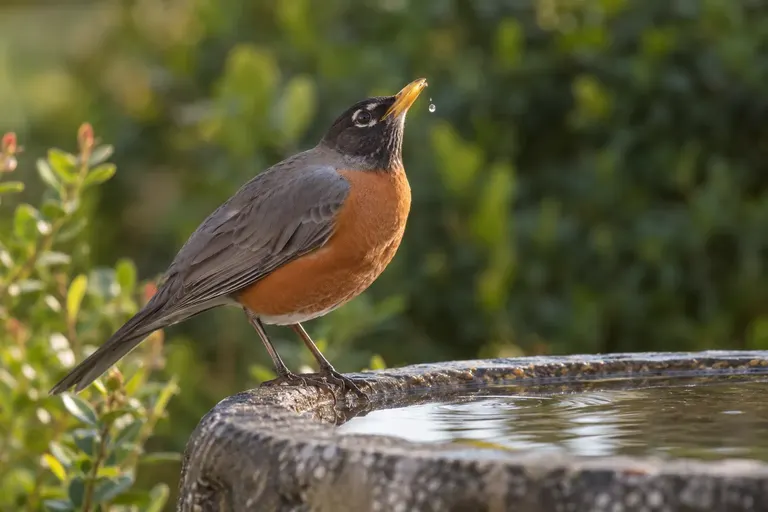
- Blue eggs. The blue-green of American Robin eggs, and of many thrush and starling eggs, comes from a pigment called biliverdin that the female deposits in the shell as it forms. So a robin lays truly pigmented blue eggs even though no bird is known to grow blue-pigmented feathers.
Why do birds see blue feathers differently from us?
Most birds have four types of color-sensitive cone cells, including one tuned to violet or ultraviolet light. Many structural blues reflect strongly into the ultraviolet, a part of the spectrum invisible to people. Our guides to whether birds can see color and ultraviolet vision explain the biology.
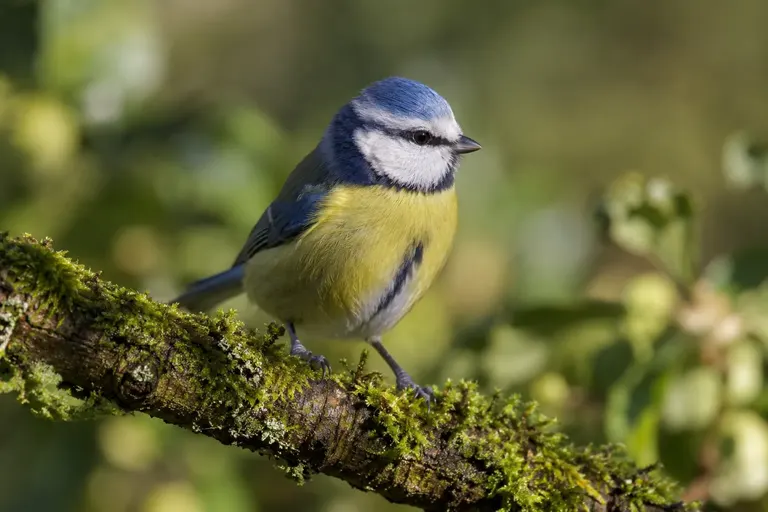
That matters because blue plumage often works as a signal. In the Blue Tit of Europe, males have crowns that reflect more ultraviolet than females, a difference birds can see but we cannot. In bluebirds, several studies have linked the brightness and hue of structural blue to male condition and breeding success. The precision of a feather’s nanostructure may reflect how well a bird was doing when it grew that feather, which ties blue color into the wider story of why male birds have brighter colors.
Why did birds evolve structural blue instead of a blue pigment?
Nobody knows the full answer, but several ideas help explain it.
First, blue pigments are chemically unusual in animals. Many of the blues we see in nature, from butterflies to fish to birds, turn out to be structural. Building a stable blue pigment appears to be difficult for animal biochemistry, while bending light with structure uses materials birds already have: keratin, air and melanin.
Second, the structure is flexible. Small changes in the size and spacing of air pockets shift the hue from violet to blue to turquoise, and into the ultraviolet. That gives evolution a simple dial to turn. Comparative studies suggest structural blue has evolved independently many times in different bird families.
Third, structural color may be relatively cheap in raw materials. Unlike carotenoid reds, which depend on finding the right foods, structural blue relies mainly on the bird’s ability to grow a well-organized feather. That does not make it free: a poorly nourished or stressed bird may grow a less precise structure and a duller blue. But it frees blue birds from depending on one specific pigment source in their diet.
Does blue fade as a feather gets older?
Yes, to a degree. Feathers are dead once fully grown, and wear breaks down their surface over the months after molt. Abrasion, sunlight and feather-degrading bacteria can damage the outer cortex and the spongy layer beneath it, and dirt on the surface scatters light in ways that dull the color.
Many birders notice that blue birds look their richest after the late-summer molt and slightly duller by the next summer. The difference is usually subtle compared with the dramatic spring changes of some species, which come from partial molts and wear of feather tips rather than a change in the blue itself. Our guide to why birds molt explains that cycle.
Common mistakes when identifying blue birds
- Calling a backlit bird black. Grackles, cowbirds and dark buntings can confuse matters, so check shape and bill before deciding a bird is not blue.
- Expecting females to be blue. Many female blue birds are mostly brown or gray, with only a wash of blue on wings or tail, as in female Indigo Buntings and bluebirds.
- Relying on photo color. Camera white balance and angle can shift structural blue toward purple or teal. Use several photos and field marks.
- Assuming the same blue across species. Hues differ from the sky blue of a Mountain Bluebird to the deep indigo of a bunting, reflecting differences in nanostructure.
Which common birds get their color from structure?
Blue is widespread across bird families and continents. A few familiar examples:
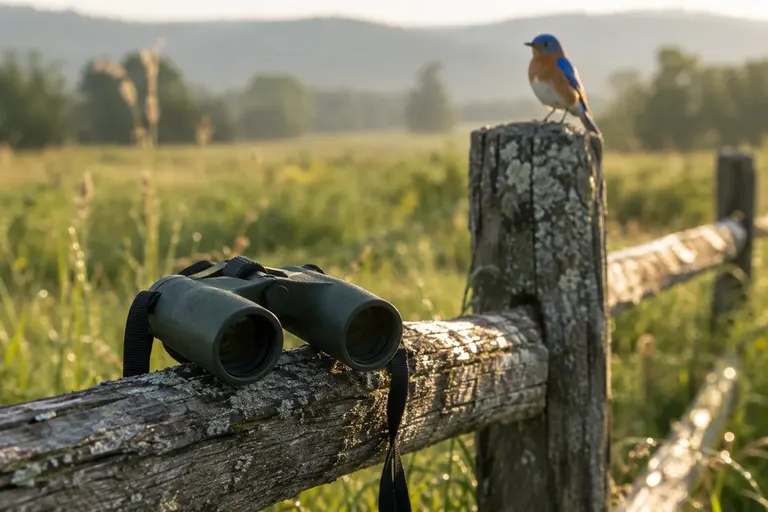
- North America: Blue Jay, Steller’s Jay, Eastern, Western and Mountain Bluebirds, Indigo Bunting, Lazuli Bunting, Blue Grosbeak, Belted Kingfisher, Tree Swallow (iridescent blue-green).
- Europe: Blue Tit, Common Kingfisher, Eurasian Jay (blue wing patch), European Roller.
- South America: Hyacinth Macaw, Blue-and-yellow Macaw, many tanagers and cotingas.
- Asia and Africa: Indian Roller, many kingfishers, starlings with glossy blue plumage.
If you want to compare two blue backyard birds, our Eastern Bluebird and Blue Jay guides are a good place to start.
Myths and facts about blue feathers
Myth: Blue birds contain blue dye. Fact: As far as science knows, feather blue is structural, produced by nanoscale keratin and air.
Myth: Feathers are blue for the same reason the sky is blue. Fact: Early scientists thought so, but research since the 1990s shows feathers use coherent scattering from quasi-ordered structures, not random scattering like the sky.
Myth: A blue feather is fake or dyed if it looks brown from behind. Fact: That is exactly how real structural blue behaves.
Myth: All blue in nature is structural. Fact: Some blues are pigments, such as the biliverdin in robin eggs and blue pigments in some plants.
What this means for backyard birders
- Light changes everything. Blue birds can look black or gray in shade or when backlit. Try to view them with the sun behind you.
- Don’t rely on color alone. Use shape, size, bill and behavior to confirm what you are seeing.
- Photography tip. Front light and soft sunlight bring out structural blue; harsh backlight makes it muddy.
- Found a blue feather? Try the backlight test where it lies, then leave it. It is a simple way to show children how structural color works.
- Clean baths help. Birds keep their plumage in good order by bathing and preening, and dirt dulls structural color. A clean bird bath supports that routine.
- Watch the molt. Young bluebirds and buntings grow their first blue feathers in patches, so late summer is a good time to see blue appear feather by feather.
- Enjoy the physics. Every blue bird at your feeder is a working piece of nanotechnology, grown fresh with each molt.
The bottom line
Blue feathers are not blue in the way a painted fence is blue. The color comes from a precise, self-assembled sponge of keratin and air inside each barb, backed by dark melanin, which together send blue light to your eye. That is why blue vanishes when a feather is backlit or crushed, why blue birds can look black in shade, and why so many green birds are really combining blue structure with yellow pigment.
Sources
Frequently asked questions
Is a blue jay feather really blue?
Not in the way paint is blue. The feather contains brown-black melanin pigment and a spongy layer of keratin and air. That microscopic structure scatters blue light back toward your eye, so the feather looks blue in reflected light. Hold it up with light shining through from behind and it looks dull gray or brown, because you are seeing the pigment rather than the reflected blue.
Do any birds have blue pigment?
As far as scientists know, birds do not use a blue pigment to color their feathers. Blue plumage in jays, bluebirds, buntings, kingfishers, macaws and other birds comes from structural color. Birds can produce blue in other ways, though: the blue-green of American Robin eggs comes from a pigment called biliverdin laid down in the eggshell, not in feathers.
What happens if you crush a blue feather?
If you grind a blue feather into powder, the blue largely disappears and you are left with a grayish or brownish dust. Crushing destroys the nanostructure that scatters blue light, leaving only the melanin and keratin. A red cardinal feather ground the same way stays reddish, because its color comes from carotenoid pigment rather than structure.
Why does a blue feather look brown when light shines through it?
Blue in a feather is produced by light scattering back from tiny structures toward the viewer. When the light comes from behind, you mainly see what is transmitted through the feather, which is filtered by the dark melanin pigment inside. So the feather looks brown or gray in transmitted light and blue in reflected light.
Are green feathers also structural?
Often, yes. In many parrots and other birds, green is created by combining a blue structural color with a yellow pigment layer. Budgerigars show this: wild-type birds are green, and blue budgies are birds that lack the yellow pigment. Turacos in Africa are an exception, because they have a true green pigment called turacoverdin.
Why do some blue birds look black in poor light?
Structural blue depends on light striking the feather. In shade or dull, overcast conditions, less light is scattered back, and the dark melanin underneath dominates. That is why an Indigo Bunting or Steller's Jay can look almost black in deep shade and then flash brilliant blue when it moves into sunlight.