Why Do Birds Flock Together?
Why do birds flock together? Mainly for safety from predators, plus better foraging, shared information and warmth. Here is the science, with backyard examples.
In this article
- Quick answer: the main reasons birds flock
- How does flocking protect birds from predators?
- How does flocking help birds find food?
- Why do different species flock together?
- Does flying in a flock save energy?
- Do birds flock to stay warm?
- Why do some birds flock only in winter?
- How big can bird flocks get?
- Why don’t all birds flock?
- Do flocks have a pecking order?
- How do flocks move without colliding?
- Myths and facts about flocking
- What does this mean for backyard birders?
- Quick facts
- Sources
- Frequently asked questions
Birds flock together mainly because it makes them safer from predators, and it often helps them find food. In a group, more eyes watch for hawks, a sparrow in a flock of 20 is far less likely to be caught than a sparrow alone, and a swirling crowd confuses attackers. Flocking also spreads information about where food is, saves energy for some species and helps birds keep warm at night. The trade-off is competition, which is why many birds flock outside the breeding season and defend territories during it.
That balance of costs and benefits explains almost every flock you see, from chickadees working through winter woods to starlings over a marsh and geese in a V across the sky.
Quick answer: the main reasons birds flock
- Predator detection: many eyes spot danger sooner, so each bird can spend more time feeding.
- Dilution: in a group, any one bird is less likely to be the victim.
- Confusion: a moving crowd makes it hard for a predator to pick a target.
- Foraging: flock mates reveal food patches and can flush insects for one another.
- Information: alarm calls and behavior pass knowledge between birds, even across species.
- Energy savings: some birds fly in formation to save effort, and many huddle or roost together for warmth.
- Social learning: young birds learn routes, foods and dangers from experienced adults.
How does flocking protect birds from predators?
Predation is the biggest single driver of flocking in most species studied. It works through several distinct mechanisms, and biologists treat them separately because each makes different predictions.
What is the “many eyes” effect?
A lone bird has to split its time between feeding and looking up for danger. In a group, the job is shared. Studies across many species have found that individual birds scan less often as group size rises, yet the group as a whole still detects approaching predators sooner. That frees each bird to spend more time eating, which matters a lot on a short winter day.
What is the dilution effect?
If a hawk attacks a flock and catches one bird, each member’s risk is roughly divided by the number of birds present. A sparrow in a flock of 20 is, on average, far less likely to be the victim than a sparrow alone. This effect is strongest when predators can only take one prey item per attack, which is true for most raptors.
What is the confusion effect?
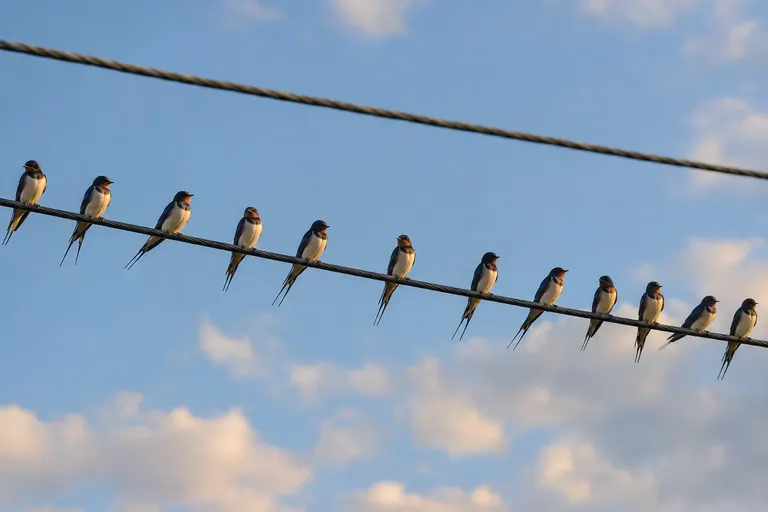
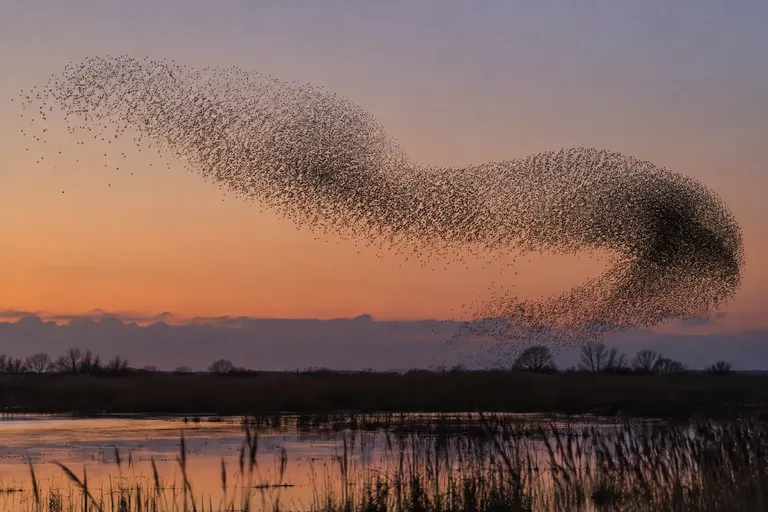
Predators need to lock onto a single target. When dozens or thousands of similar-looking birds move at once, tracking one becomes hard. Experiments with predatory fish and simulated prey, and observations of falcons attacking starlings and shorebirds, support the idea that attack success drops as prey groups get larger and denser. The classic starling murmuration is an extreme example.
Why do flocks bunch up when a hawk appears?
Biologist W. D. Hamilton described the “selfish herd” in 1971. Each animal tries to reduce its own exposure by moving toward the center of the group, putting others between itself and the predator. The result is a tight cluster. Watch a flock of shorebirds, pigeons or starlings when a falcon passes and you will often see them compress. Edge positions are riskier, and dominant birds often claim the center.
Is being in a flock always safer?
No. Large, noisy groups can be easier for predators to find, and some raptors specialize on flocks. Sharp-shinned Hawks and Cooper’s Hawks regularly hunt at bird feeders precisely because small birds concentrate there. Flocking lowers risk for the average member, but it does not remove it. See how to stop hawks hunting at your feeder for what helps in a backyard.
How does flocking help birds find food?
Do birds follow each other to food?
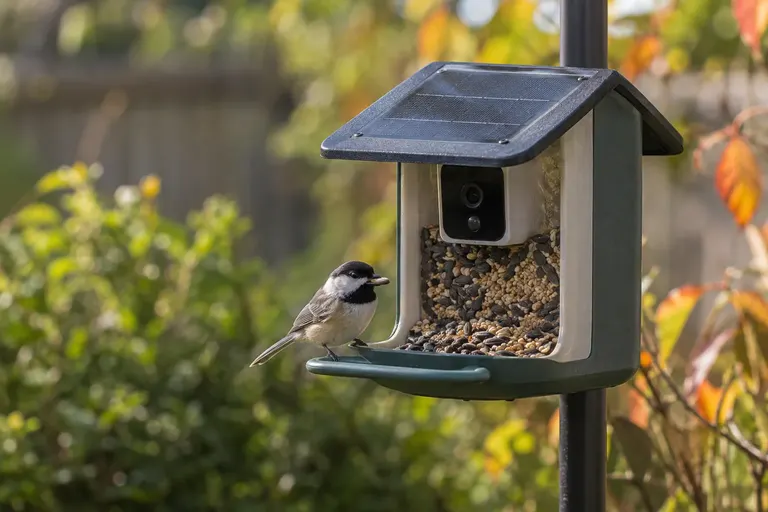
Yes, constantly. A bird that sees others feeding learns that food is present. This “local enhancement” is why a new feeder often sits empty for days, then fills quickly once the first few birds find it. Once a few regulars are feeding, newcomers read their calm behavior as a sign that the spot is both productive and reasonably safe.
For birds that feed on patchy, unpredictable foods, such as seed crops, berries or swarms of insects, searching as a group covers more ground. When one bird finds a rich patch, the rest benefit.
Can flocks catch food that a single bird cannot?
Sometimes. Some water birds cooperate in loose ways. American White Pelicans may swim in lines or arcs to herd fish into shallow water. Cattle Egrets feed around grazing animals that flush insects, and some mixed flocks in forests flush insects that other members catch. Cooperation here usually means overlapping self-interest, rather than planned teamwork.
What is the downside for food?
Competition. Every bird in a flock is a rival for the same seeds or insects. Dominant birds take the best spots, and subordinates may get less. That is why flocks are most common when food is spread out in patches too big for one bird to defend, and why many birds switch to territories when they need a guaranteed supply for their chicks.
Why do different species flock together?
Mixed-species flocks are one of the most interesting kinds of flock and are found on every continent where songbirds live.
Who leads a mixed flock?
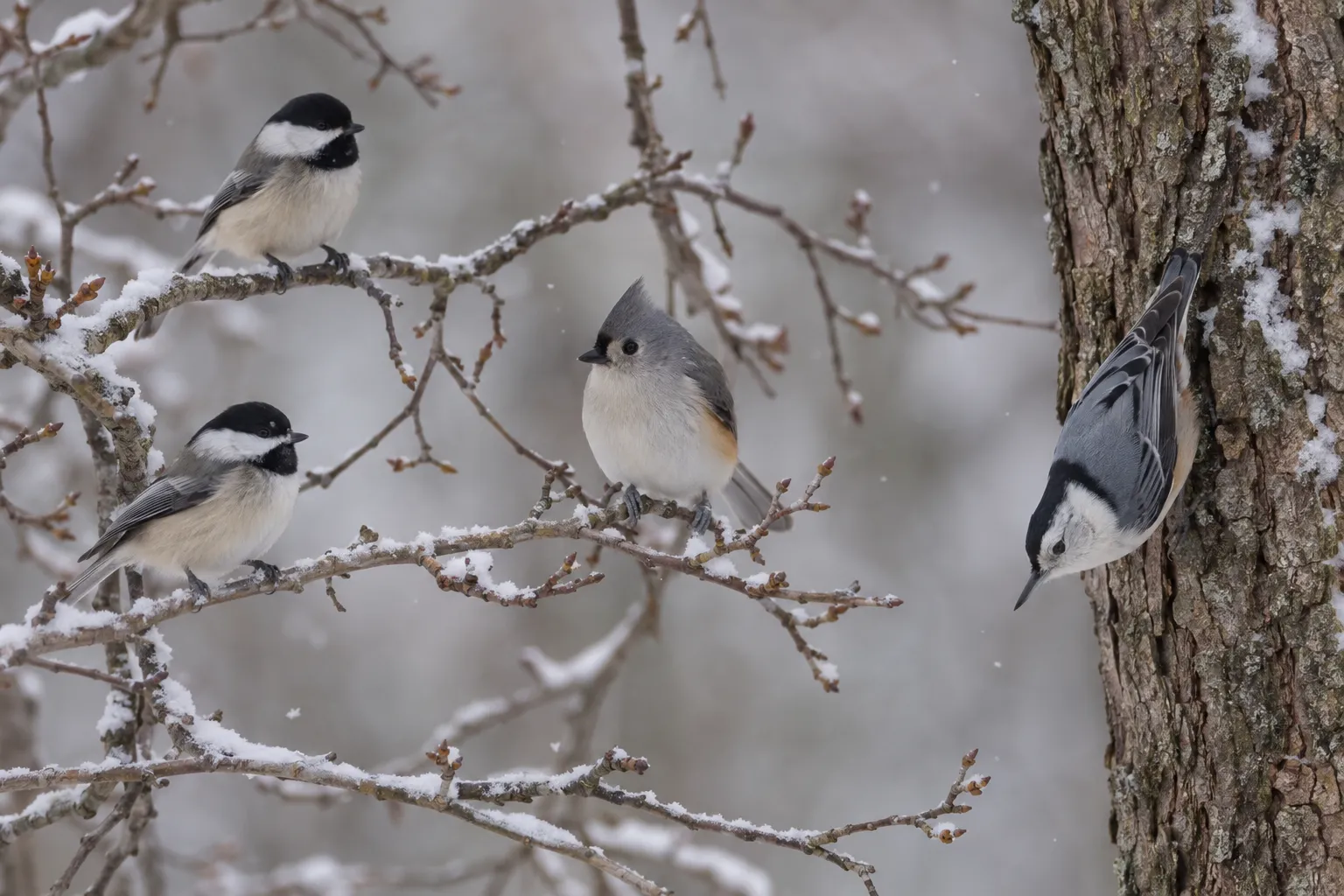
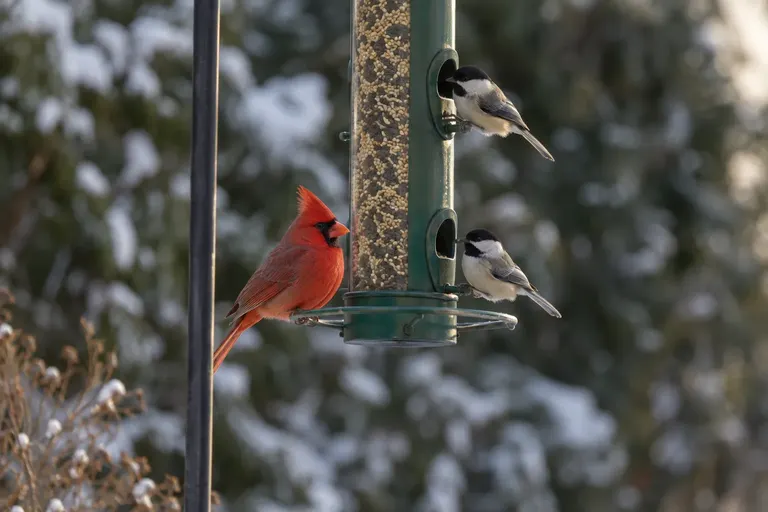
Researchers describe “nuclear” species, which form the core of the flock and are often followed by others, and “attendant” species, which join them. Nuclear species tend to be vocal, social and vigilant. In North American winter woods, chickadees and titmice commonly play this role, joined by nuthatches, kinglets, Downy Woodpeckers, Brown Creepers and sometimes warblers. In European woodland, tits such as Great Tits, Blue Tits and Long-tailed Tits play a similar role. In tropical forests from the Amazon to Southeast Asia, mixed flocks can include dozens of species moving together.
A review published in Animal Behaviour in 2009 by Sridhar, Beauchamp and Shanker compared studies worldwide and concluded that both predator avoidance and foraging benefits explain participation, with predator avoidance often the stronger factor.
Do birds understand each other’s alarm calls?
Many do. Chickadee alarm calls are a well-studied example. Research published in Science in 2005 found that Black-capped Chickadees vary their “chick-a-dee” calls according to the size and threat level of a predator, with more “dee” notes for smaller, more dangerous predators such as small owls. Other species, including nuthatches, respond to those calls. In effect, chickadees act as an early-warning system for the whole flock.
Do all flock members benefit equally?
Not quite. Some species exploit others, for example by stealing food flushed or found by flock mates. Some tropical flocks have “sentinel” species that give alarm calls and occasionally false alarms, which may briefly distract other birds from food they then grab. On balance, though, the benefits appear large enough that flocks persist.
Does flying in a flock save energy?
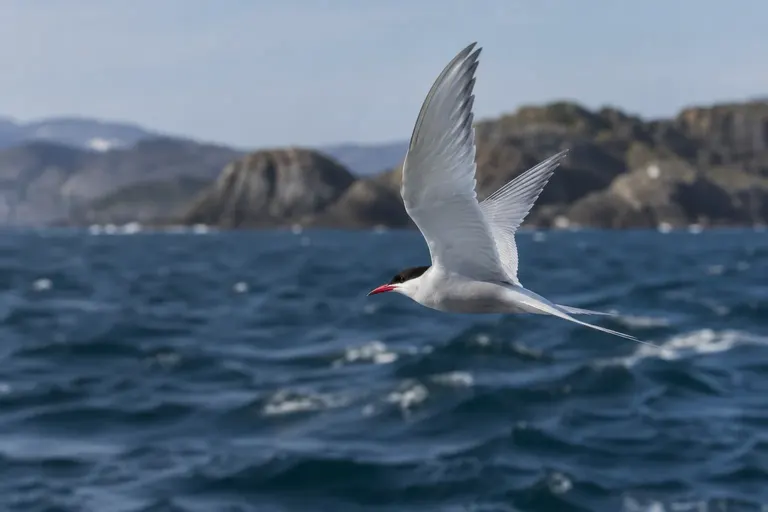
For some birds, yes. Geese, cranes, pelicans and ibises flying in V or line formations are thought to position themselves to use the rising air created by the wingtips of the bird ahead. A 2014 study in Nature fitted Northern Bald Ibises with high-precision loggers and found they positioned themselves and timed their wingbeats in ways that fit aerodynamic predictions for energy saving. Read more in why birds fly in a V.
Migrating in groups may also help young birds learn routes from experienced adults. In cranes, geese and swans, which migrate as family groups, juveniles typically travel with their parents on their first journey.
Do birds flock to stay warm?
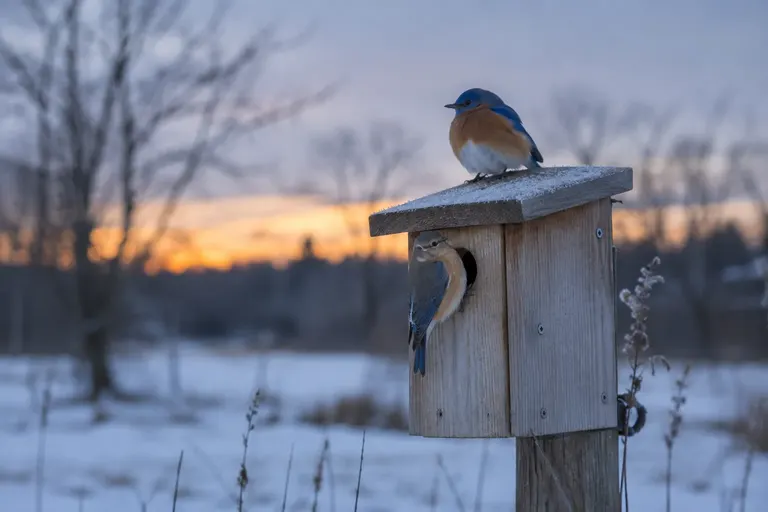
Group roosting reduces heat loss in cold weather. Many small birds huddle together at night in cavities or dense cover. Eastern Bluebirds sometimes pack into a single nest box on cold nights, and several species of tits, wrens and treecreepers have been recorded roosting in tight groups in Europe and North America. Long-tailed Tits are known for roosting in a row, pressed together on a branch.
Communal roosts can also be shelter in their own right: dense reedbeds, conifers or city buildings offer protection from wind and some predators. See where birds go at night and how birds stay warm in winter for more.
Why do some birds flock only in winter?
Flocking is flexible. The same species can be fiercely territorial in spring and sociable in fall. A few examples:
| Species | Breeding season | Non-breeding season |
|---|---|---|
| Black-capped Chickadee | Pairs defend territories | Small flocks with a dominance hierarchy, often leading mixed flocks |
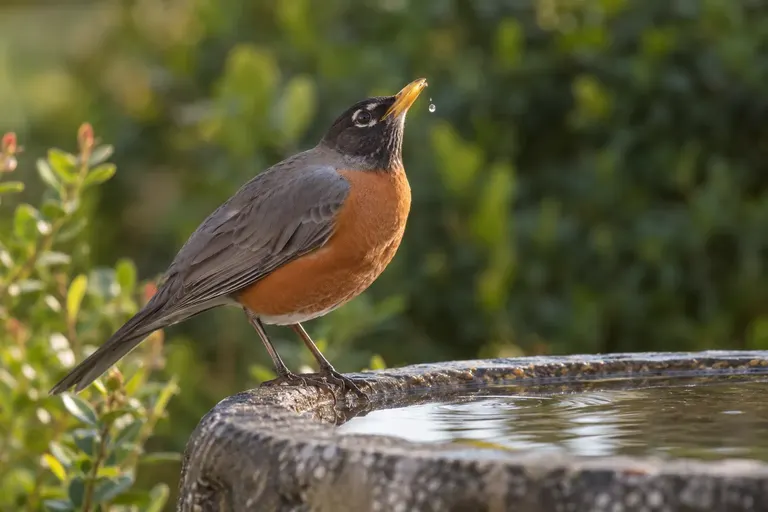
| American Robin | Territorial pairs, singing on lawns | Large roaming flocks feeding on berries and roosting communally |
| European Robin | Territorial | Still largely territorial, and both sexes may hold winter territories |
| Common Starling | Colonial or loose groups near nests | Large flocks and communal roosts, murmurations in Europe |
| Red-winged Blackbird | Males defend marsh territories | Huge mixed roosts with grackles, cowbirds and starlings |
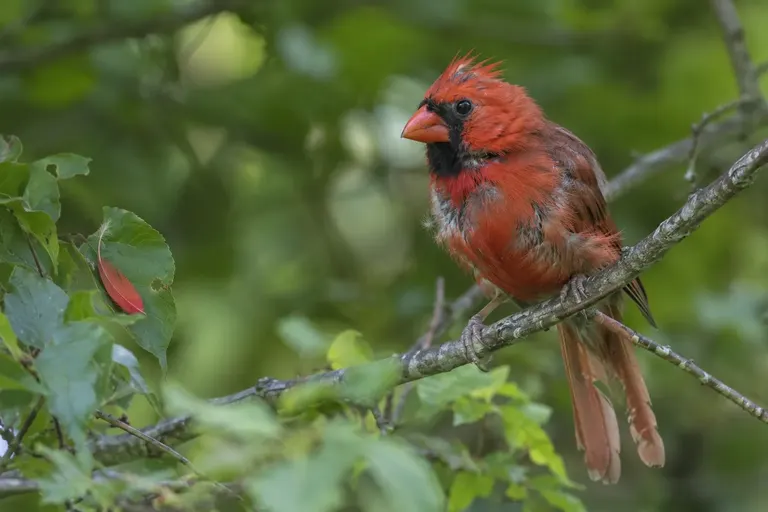
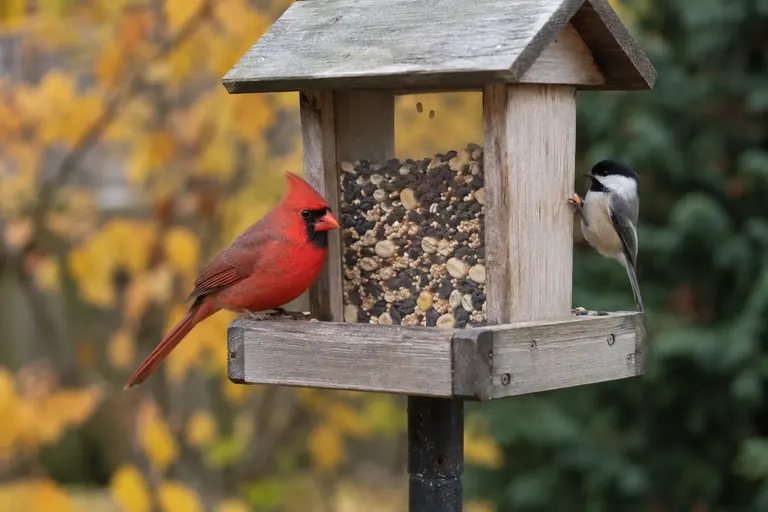
| Northern Cardinal | Territorial pairs | Loose winter flocks at good food sources |
The pattern follows the economics. When a bird needs a reliable food supply close to the nest, defending a territory pays. When food is patchy and breeding is over, joining a flock pays more.
How big can bird flocks get?
Flock size ranges from a pair of birds traveling together to some of the largest gatherings of vertebrates on Earth.
- Red-billed Quelea. This small African seed-eater is often described as one of the most abundant wild birds in the world, and its flocks can number in the hundreds of thousands or more. Large flocks can strip grain crops, which makes the species a serious agricultural pest in parts of Africa.
- Passenger Pigeon. In the 1800s, flocks of this North American pigeon were described by observers as taking hours or even days to pass overhead, with estimates in the hundreds of millions or billions. Those numbers are historical accounts rather than modern counts. The species was driven extinct by hunting and habitat loss, and the last known individual died in a zoo in 1914. Its dependence on huge flocks for breeding and feeding may have made it especially vulnerable once numbers fell.
- Blackbird roosts. Winter roosts in the southern United States that mix Red-winged Blackbirds, grackles, cowbirds and starlings can hold millions of birds, according to past roost surveys.
- Shorebirds and waterfowl. Staging sites on major flyways, such as estuaries in Europe and the Delaware Bay in North America, can host hundreds of thousands of migrating shorebirds, and large lakes can hold vast rafts of ducks.
Why don’t all birds flock?
Flocking only pays when its benefits outweigh its costs, and for many species they do not. Most owls and many hawks and eagles hunt alone for much of the year. For a predator that relies on stealth, company is a handicap: more birds means more noise, more competition for each kill and more chances for prey to notice. Birds that defend a food source, such as hummingbirds at a flower patch or a mockingbird guarding a berry bush in winter, also do better alone, because sharing would drain the resource they depend on.
Body size matters too. Very large birds have fewer predators, so the safety benefit of a flock is smaller. Some large birds still flock for other reasons, such as migration or colonial nesting, but many live in pairs or family groups instead.
Do flocks have a pecking order?
Often yes. Many winter flocks have a stable dominance hierarchy. In chickadee flocks, dominant birds, often older males, get first access to food and the safest positions, while low-ranking birds feed at the edges or at riskier times. Rankings reduce constant fighting because every bird knows its place.
You can see this at a feeder. Watch which birds displace others, and which ones wait. Our guide to reading bird behavior covers the postures and displays that signal rank.
How do flocks move without colliding?
Flocking birds follow simple local rules: keep a minimum distance from neighbors, match their heading and stay close to the group. Studies of starlings in Rome found that each bird tracks about six or seven nearest neighbors. That is enough for rapid, coordinated turns across huge flocks, without any leader directing the whole.
In smaller, more structured groups, influence can be uneven. Research on homing pigeons flying in small flocks has found that some individuals consistently lead and others follow, suggesting a hierarchy of influence rather than strict equality.
Myths and facts about flocking
| Claim | What the evidence says |
|---|---|
| “Birds of a feather flock together” means only one species flocks at a time. | False. Mixed-species flocks are common worldwide. |
| Flocks always follow one leader. | Mostly false. Most coordination emerges from local rules, though some birds have more influence. |
| Birds flock because they are lonely. | Not a scientific explanation. Flocking is best explained by survival and feeding benefits. |
| Flocking is always safer. | Mostly true for the average bird, but edge birds are at higher risk and flocks can attract predators. |
| All birds flock. | False. Many species, such as most owls and many raptors, are largely solitary outside breeding. |
What does this mean for backyard birders?
Understanding flocks makes feeder-watching more rewarding and helps you set up your yard better.
- Expect waves, not a steady stream. In winter, mixed flocks move through yards on a circuit. Quiet periods followed by bursts of activity are normal.
- Provide cover near feeders. Flocking birds feel safer with shrubs or a brush pile within a short dash. Our guide on building a brush pile for birds explains how to create quick escape cover.
- Offer several feeding spots. Spreading food reduces crowding and lets subordinate birds eat.
- Listen for alarm calls. A sudden burst of chickadee scolding or a sudden silence often means a hawk or cat is near.
- Keep feeders clean. Crowds spread disease. Clean feeders and trays regularly, especially when many birds visit at once.
- Feed well in winter. Flocks rely on reliable sources when days are short. See winter bird feeding for foods that help most.
Quick facts
- Protection from predators is the most widely supported reason birds flock.
- Many eyes, dilution, confusion and the selfish herd are the four main predator-related mechanisms.
- Flocks help birds find patchy food, but also increase competition.
- Mixed-species flocks are common worldwide and are often led by vocal, vigilant species such as chickadees and tits.
- Chickadee alarm calls encode predator threat level, and other species listen in.
- V formations can save energy in some large birds, according to studies on ibises.
- Many songbirds switch from territories in spring to flocks in fall and winter.
- Winter flocks often have a pecking order that reduces fighting.
Sources
- Sridhar, Beauchamp and Shanker (2009), Why do birds participate in mixed-species foraging flocks? A large-scale synthesis, Animal Behaviour
- Templeton, Greene and Davis (2005), Allometry of alarm calls: Black-capped Chickadees encode information about predator size, Science
- Portugal et al. (2014), Upwash exploitation and downwash avoidance by flap phasing in ibis formation flight, Nature
- Ballerini et al. (2008), Interaction ruling animal collective behavior depends on topological rather than metric distance, PNAS
- Cornell Lab of Ornithology, All About Birds: Black-capped Chickadee
Frequently asked questions
Why do birds flock in winter but not in spring?
In the breeding season, many songbirds defend territories to secure food and nest sites for their young, so they push rivals away. Once breeding ends, the benefits change. Food becomes patchy, days are short and predators are still hunting, so safety in numbers and shared food-finding outweigh the cost of competition. Many species shift from territorial pairs to flocks in fall.
Do birds of different species flock together?
Yes. Mixed-species flocks are common worldwide. In North American winter woods, chickadees and titmice often lead flocks joined by nuthatches, kinglets, woodpeckers and creepers. In European woods, tits play a similar role, and in tropical forests mixed flocks can contain dozens of species. Followers benefit from the leaders' alarm calls and knowledge of food.
Is it safer for a bird to be in a flock?
Generally yes, though not equally for every member. Flocks spot predators sooner, dilute each bird's chance of being caught and confuse attackers. Birds in the center are usually safer than those on the edge, and subordinate birds may be pushed to riskier spots. Large flocks can also attract predators, so the benefit depends on the situation.
Do flocks have leaders?
Usually not in the sense of a single boss steering the group. Most flock movement emerges from each bird responding to nearby birds. That said, some individuals have more influence than others. In pigeon homing flights, researchers have found hierarchies where certain birds' movements are followed more often, and in mixed flocks certain species act as 'nuclear' species that others follow.
Why do birds all take off at once?
When one bird detects danger and flees, its neighbors react to that sudden movement within a fraction of a second, and the reaction spreads through the flock. Birds are very sensitive to the departure of flock mates, and many also give alarm calls. That fast chain reaction is one of the main safety benefits of flocking, because not every bird has to see the threat.