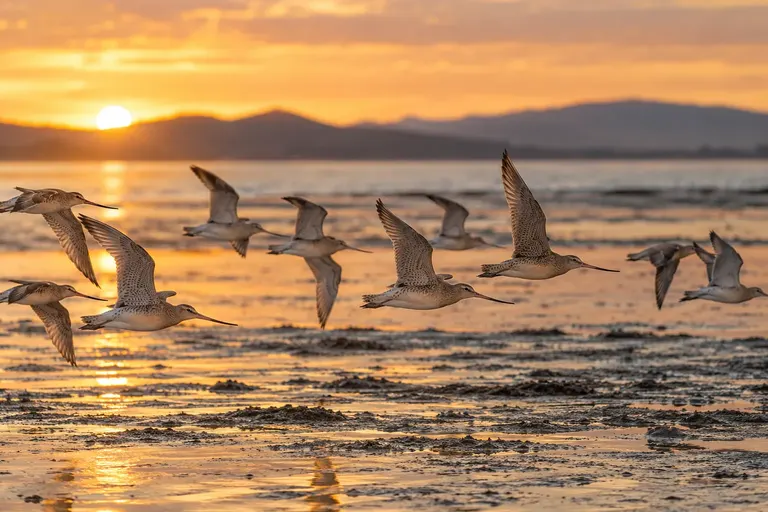
Do Birds Play?
Do birds play? Yes. Ravens slide down snowy roofs, keas toss objects and gulls drop and catch shells. Learn which birds play, how scientists define it and why.
In this article
- Quick answer: types of play seen in birds
- How do scientists decide a bird is playing?
- Which birds play?
- Why do birds play?
- How does play change as a bird grows up?
- Do birds play in the wind?
- Do birds play with other species?
- Can birds play games?
- Which birds are most likely to play, and why?
- Do backyard birds play?
- Is play a sign that a bird is happy?
- Myths and facts about play in birds
- Quick facts
- Sources
- Frequently asked questions
Yes, some birds play. Ravens slide down snowy roofs and roll in snow, keas in New Zealand toss and wrestle over objects, crows hang upside down from wires and gulls drop shells only to catch them again in midair. Play is most common in intelligent, social birds with long childhoods, especially parrots and members of the crow family. In a 2017 study, wild keas that heard recordings of their play call began playing more.
For a long time, play was thought to be mostly a mammal behavior. Careful observation over the past few decades has changed that view. This guide explains how scientists define play, which birds do it, what it may be for and what you might notice in your own yard.
Quick answer: types of play seen in birds
| Type of play | What it looks like | Examples |
|---|---|---|
| Object play | Carrying, tossing, dropping, catching or manipulating items | Keas, ravens, crows, gulls, some raptors |
| Locomotor play | Sliding, rolling, hanging, aerial tumbling | Ravens, crows, galahs, choughs |
| Social play | Chasing, mock fights, tug of war, play-wrestling | Keas, ravens, magpies, parrots |
| Solitary play | A single bird repeating a playful action alone | Hanging crows, feather-dropping swallows |
How do scientists decide a bird is playing?
Play is hard to define, which is one reason it was overlooked in birds. The most widely used framework comes from psychologist Gordon Burghardt, who proposed five criteria. A behavior is play if it:
- Is not fully functional. It does not directly help the animal survive or reproduce in that moment.
- Is spontaneous and voluntary. The animal does it by choice, often seeming rewarding in itself.
- Differs from the serious version. It is exaggerated, incomplete or oddly sequenced compared with the real behavior, such as fighting without injury.
- Is repeated. The animal does it again and again, often with variations.
- Happens in a relaxed setting. The animal is healthy, fed and not under threat.
These criteria help separate genuine play from behaviors that just look fun. A raven tumbling in flight during a territorial chase is not necessarily playing. A raven tumbling again and again, alone, on a calm day with a full crop, very likely is.
Which birds play?
Play has been reported in a wide range of birds, but it is concentrated in a few groups.
Parrots: the kea and its relatives
The kea, a large mountain parrot of New Zealand’s South Island, is perhaps the best-studied playful bird. Young keas wrestle, roll on their backs, kick at each other, toss objects and play tug of war with sticks. They also investigate and dismantle almost anything, from backpacks to car windshield wipers, a trait that has made them famous and sometimes unpopular with visitors.
Researchers have identified a special “play call” in keas, a warbling vocalization given during play. In a 2017 study, Raoul Schwing and colleagues played recordings of this call to wild keas. The birds that heard it began playing more, sometimes with each other and sometimes alone in aerial acrobatics, even when they had not been playing before. The researchers described this as a kind of emotional contagion, a playful mood spreading through the group, somewhat like laughter in people.
Other parrots also play. Galahs and cockatoos in Australia are often seen swinging upside down from wires and branches, sliding down poles or rolling in puddles. In Brazil, captive and wild macaws and parakeets play with sticks, pods and each other. Pet parrots, from budgerigars to African Greys, play readily with toys.
Crows, ravens, jays and magpies
The crow family, or corvids, rivals parrots for play. Common Ravens, found across North America, Europe, northern Asia and parts of Africa, are especially well known for:
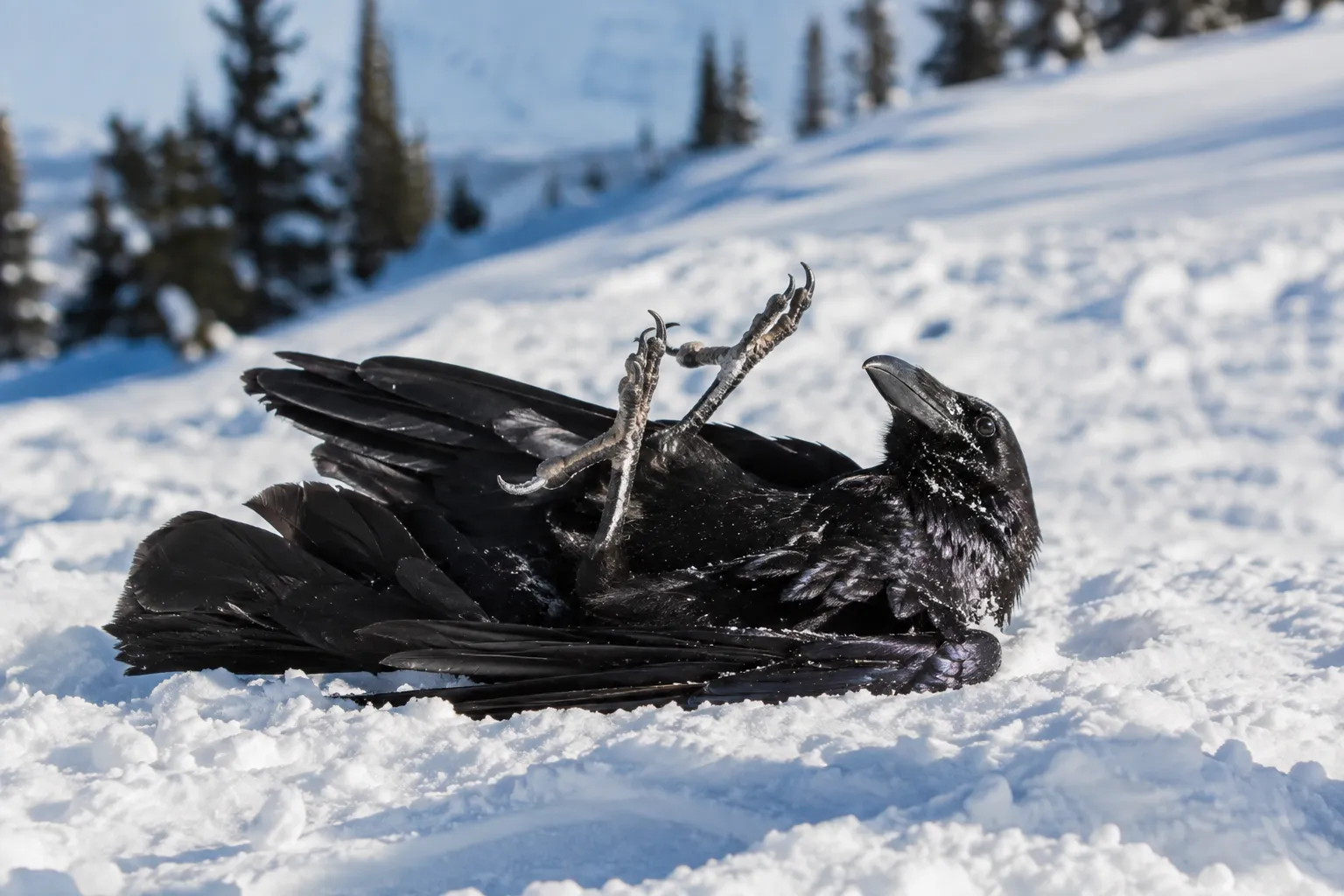
- Sliding down snowy slopes or roofs, sometimes repeatedly, climbing back up to go again.
- Rolling in snow on their backs.
- Aerial games, including flipping upside down in flight, passing sticks between birds and dropping and catching objects in midair.
- Hanging upside down from branches by one or both feet.
A widely shared video filmed in Russia in 2012 showed a Hooded Crow repeatedly sliding down a snowy roof on a small lid, carrying it back up each time. One video is not a study, but it matches many field observations of corvid play. American Crows, Eurasian Magpies, Australian Magpies and Blue Jays have all been described playing with objects or with each other. Our guide on whether crows are really that smart explains the intelligence behind this.
Birds of prey
Young raptors often play with objects as they learn to hunt. Observers have seen young falcons, hawks and eagles pounce on pine cones, chase leaves, carry sticks and drop and catch objects in flight. Ospreys and some kites drop and re-catch items as well. This kind of play looks very much like practice for hunting.
Gulls and other seabirds
Herring Gulls and other gulls sometimes drop shells or objects from the air and catch them before they hit the ground or water. Some drop-catch behavior is clearly part of feeding, since gulls drop shellfish on hard surfaces to crack them. But studies have noted that young gulls also drop-catch objects that are not food, especially in wind, which fits the definition of play.
Swallows and swifts
Several people have described Barn Swallows and Tree Swallows dropping a feather in flight and swooping to catch it again, sometimes with other swallows joining the chase. The behavior may be linked to collecting feathers for nest lining, but it often continues well beyond what nest building would need.
Others
Play or play-like behavior has been reported in some songbirds, including Northern Mockingbirds and babblers, in bustards and in some shorebirds. The evidence varies, and in many cases scientists are cautious, because a single observation cannot separate play from exploration, courtship or aggression.
Why do birds play?
Play costs energy and can expose a bird to risk, so biologists assume it must have benefits. Several ideas are supported by evidence, and they are not mutually exclusive.
Practice for adult life
Many forms of play resemble adult skills: handling food, catching prey, fighting rivals, flying in tricky wind. The practice hypothesis suggests young birds rehearse these skills safely before they matter. Play in young raptors, which often mimics hunting, fits well here.
Learning about the world
Object play overlaps with exploration. By picking up, dropping, pulling and testing things, a young bird learns what objects are, how they behave and whether they are useful. This may help explain why playful birds are also often very good at solving problems.
Building social bonds
Social play in keas, ravens and parrots may help young birds learn the rules of their group, form alliances and practice signals. Play-fighting without injury lets them learn how hard to push and how others respond.
Brain development and flexibility
Some researchers propose that play helps the brain become flexible, training animals to cope with unexpected situations. Loss of balance in sliding or tumbling may even help young birds learn to recover quickly in flight.
Pleasure
Play may also be rewarding in itself. The kea play-call experiment suggests play has an emotional component that can spread between birds. If play feels good, that may be the proximate reason birds do it, while the long-term benefits explain why it evolved.
How does play change as a bird grows up?
In most playful species, play rises after young birds leave the nest, peaks in the first months or year of life and then declines. That timing fits the practice and learning ideas, because it is the period when young birds are mastering flight, food handling and social life.
Young Common Ravens, for example, often spend their first years in loose groups of nonbreeding birds that roam widely and gather at food sources and communal roosts. These juvenile groups are where much raven play has been observed: chasing, tugging, passing objects and aerial tumbling. Once ravens settle on a territory and breed, they play less, though adults still do it at times.
Keas show a similar pattern. Young keas gather in groups and play intensively, while adults spend more time feeding and defending territory. Juvenile keas also seem to explore novel objects more readily than adults, which may help them discover new foods in a harsh mountain environment.
In pet parrots, play continues through adult life, perhaps because captivity removes the pressure to spend long hours finding food. This is one reason enrichment matters so much for companion birds.
Do birds play in the wind?
Many observers think so. On windy days, ravens, crows, Red-billed Choughs, gulls and fulmars can be seen hanging in updrafts along cliffs and ridges, tilting, dropping and climbing again with no obvious aim. Some of this is surely efficient travel or foraging, since birds use rising air to save energy. But birds sometimes repeat the same drop-and-climb over and over, in a relaxed way, for many minutes. That fits several of Burghardt’s criteria.
Wind play may help young birds learn to control flight in turbulence, a skill that matters for survival. Ravens and choughs in mountain areas of Europe, Turkey and Central Asia are especially good to watch on gusty days. Along coasts, young gulls practicing drop-and-catch in the wind make a similar show.
Do birds play with other species?
Occasionally, and these cases are among the most striking. Common Ravens have been described interacting with wolves in North America and Europe in ways that look playful: pulling tails, hopping close and darting away, and being chased without real attack. Researchers who study wolves and ravens together, especially in places such as Yellowstone National Park, note that ravens follow wolves to scavenge kills. Some of the teasing may have a practical side, testing how close it is safe to get. Still, the relaxed, repeated nature of some encounters looks like play.
Crows and magpies are also known to harass dogs and cats by pulling tails or dive-bombing. Most of this is mobbing, a defensive behavior aimed at potential predators. It can look like mischief, but it is usually driven by caution rather than fun.
Can birds play games?
Some play in birds is structured enough to look like a game. Ravens have been seen taking turns dropping and catching sticks in flight, with one bird dropping and another catching. Keas play tug of war with a clear back and forth. Young crows sometimes chase one another around a tree, switching who leads.
Scientists are careful not to claim that birds follow rules in a human sense. But the back-and-forth quality of these interactions shows that birds can coordinate playful behavior with partners, and that they recognize play signals. In keas, the play call serves this role. In ravens and crows, body postures and specific calls may do the same job.
Which birds are most likely to play, and why?
A comparative review by Judy Diamond and Alan Bond, who studied keas for many years, found that play in birds is concentrated in a few families, especially parrots and corvids, with scattered reports elsewhere. Across groups, play tends to appear in species that share certain traits:
- Large brains relative to body size.
- A long juvenile period, with young birds dependent on or near their parents for weeks or months.
- Complex, flexible diets that need learning, such as extracting food or scavenging.
- Social living in groups or families.
- Long lifespans, which make early learning pay off.
These are the same traits linked to intelligence and problem-solving. A seed-eating finch that lives two years and learns most of what it needs in weeks has less to gain from play than a raven that may live for decades.
Do backyard birds play?
Some do, although much of what looks like play at feeders is serious business. Here is how to tell the difference.
Signs that a bird may be playing
- The action repeats with no clear goal. A crow drops a twig, catches it, drops it again.
- The bird is relaxed. No alarm calls, no obvious threat.
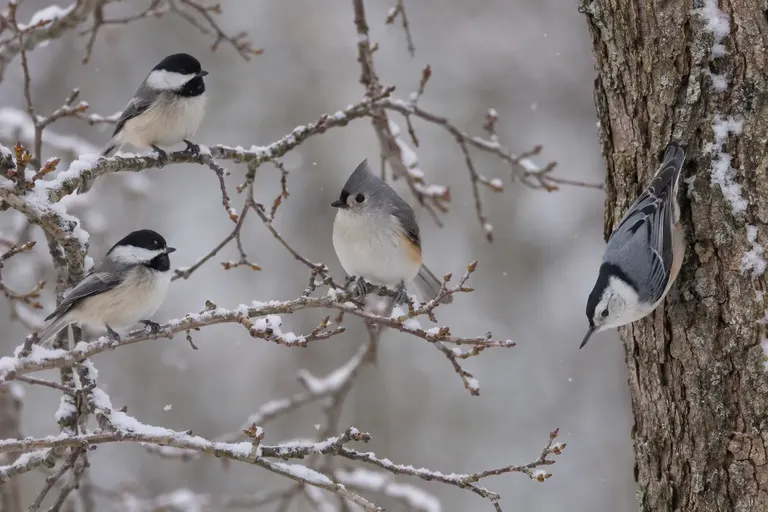
- It is a young bird. Juveniles play more than adults. Our guide on how to read bird behavior explains how to spot young birds by behavior.
- Rules seem flexible. Chases switch direction, roles reverse, no one gets hurt.
What looks like play but usually is not
- Chasing at feeders. Usually competition over food or territory.
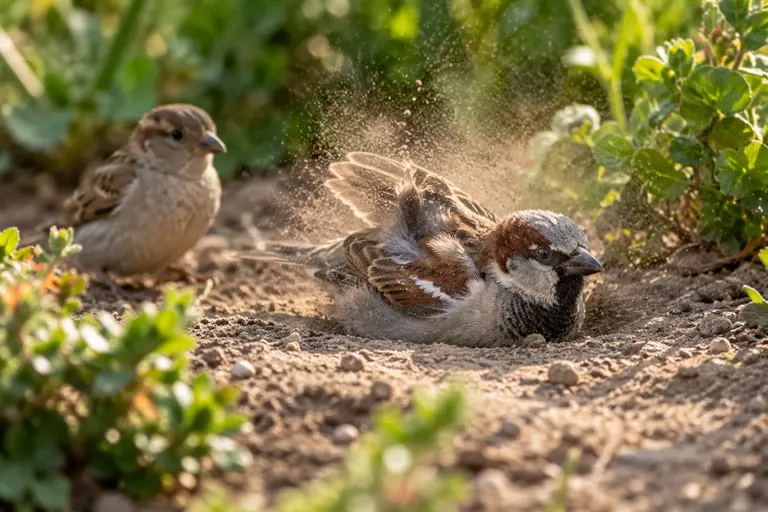
- Rolling in dust or dirt. Normally dust bathing, a feather-care behavior explained in our guide on why birds take dust baths.
- Lying spread out on the ground. Often sunbathing. See why birds sunbathe.
- Rubbing ants on feathers. This is anting, described in our guide on what anting is in birds.
- Tumbling in flight in spring. Often courtship display, especially in pigeons, lapwings and some raptors.
Birds worth watching for play
In North America, American Crows, Common Ravens and Blue Jays are your best chances. In Europe and Turkey, look at Carrion and Hooded Crows, Rooks, Jackdaws, Eurasian Magpies and Common Ravens. In Brazil, keep an eye on parakeets, parrots, toucans and the Plush-crested Jay. Gulls on a windy beach almost anywhere are worth watching too.
Watching for play is also a good way to get children interested in bird behavior. Our guide to birding with kids has ideas for keeping young birders engaged.
Is play a sign that a bird is happy?
Play is one of the better clues we have to positive states in animals, and animal-welfare scientists increasingly use it that way. Because play mostly happens when an animal is safe, fed and healthy, a bird that plays is at least not stressed, hungry or ill at that moment. The kea study adds to this picture, since a playful mood appeared to spread between birds, much as good humor spreads between people.
Caution is still needed. We cannot know exactly what a bird feels, and the absence of play does not mean a bird is unhappy. Many species rarely or never play, and adult birds of playful species spend most of their time on serious work. In pet birds, though, a sudden loss of interest in toys and exploration is worth noting, because it can be an early sign of illness or stress. For wild birds, seeing play is a small bonus: evidence that, at least for now, those birds have food, safety and time to spare.
Myths and facts about play in birds
Myth: Only mammals play. Fact: Play is well documented in birds, especially parrots and corvids, and has even been suggested in some reptiles and fish.
Myth: If a bird is doing something odd, it must be playing. Fact: Many strange-looking behaviors, such as anting, sunbathing and courtship flights, have specific functions.
Myth: Birds play the same way children do. Fact: Some parallels exist, such as tug of war and chasing, but bird play is shaped by bird bodies and bird lives.
Myth: Pet birds do not need to play. Fact: Avian vets and welfare groups consider toys and foraging enrichment important for parrots and other pet birds. Boredom can lead to feather damage and stress.
Myth: Adult birds never play. Fact: Play is most common in juveniles, but adult keas, ravens and parrots play too.
Quick facts
- Scientists use criteria like Burghardt’s five tests to define play.
- Parrots and corvids play the most among birds.
- Keas have a play call that makes other keas start playing.
- Ravens and crows slide on snow, hang upside down and toss objects in flight.
- Young raptors practice hunting through object play.
- Play is linked to large brains, long childhoods and social living.
- Much feeder “play” is actually competition, dust bathing or sunbathing.
Sources
Frequently asked questions
Do birds play?
Yes, some birds clearly play. Play has been described in crows, ravens, jays, magpies, parrots such as the kea, some birds of prey, gulls and a few others. It includes object play, like tossing and dropping sticks, movement play, like sliding and aerial rolls, and social play, like play-chasing and mock fights. It is most common in young birds of intelligent, social species.
How do scientists know a bird is playing?
Researchers use criteria such as those set out by psychologist Gordon Burghardt. Play is behavior that has no obvious immediate purpose, is done voluntarily, differs from the serious version of the behavior, is repeated, and happens when the animal is relaxed, fed and safe. Behavior that meets all five is usually counted as play.
Which birds play the most?
Parrots and members of the crow family show the most play. The kea of New Zealand is famous for it, and ravens, crows, magpies and jays play with objects and each other. Studies comparing bird families suggest play is most common in species with large brains relative to body size and a long period of juvenile learning.
Why do birds play?
The leading ideas are that play helps young birds practice skills they will need later, such as handling food, flying in wind or fighting, and that it helps them learn about new objects and social partners. Play may also help the brain develop flexibility. Some researchers suggest play simply feels good, a reward that keeps birds exploring.
Do backyard birds play?
Some do. Crows and jays may carry, drop and tug objects, swallows sometimes drop and catch feathers in flight, and young birds of many species chase each other in ways that look playful. Much of what looks like play at feeders, though, is feeding competition or territory defense, so context matters when interpreting it.