Is Birdwatching Good for Mental Health?
Is birdwatching good for mental health? Research links seeing and hearing birds to better mood and lower stress. Here is what studies show, and their limits.
In this article
- Quick answer: what the research suggests
- What do studies say about birds and mental health?
- Why might birds be especially good for us?
- What can the research not tell us yet?
- Does watching birds from a window count?
- Can birdwatching help with loneliness and ageing?
- Can birdwatching ever be bad for mental health?
- Is birdwatching used in health care?
- How can you get the most wellbeing from birding?
- Common mistakes that take the joy out of birding
- Does it matter which birds you see?
- Quick facts
- Sources
- Frequently asked questions
Yes, birdwatching appears to be good for mental health. A growing body of research links seeing and hearing birds with better mood, lower stress and greater life satisfaction, including a study of more than 26,000 adults in 26 European countries. Birdwatching also bundles together several habits known to help wellbeing: time outdoors, calm focused attention, gentle movement and a sense of connection. The evidence is promising but mostly observational, so it supports birding as a healthy habit rather than a cure.
That distinction matters. Below is what the studies actually show, why birds in particular might help, what the research cannot yet prove and how to build a birding routine that feels good rather than like another task.
Quick answer: what the research suggests
- Everyday encounters matter: a large smartphone study linked seeing or hearing birds with better mental wellbeing that appeared to last for hours.
- More birds, better mood: a UK study found people living in neighborhoods with more afternoon bird activity reported lower levels of depression, anxiety and stress.
- Birdsong can calm: experiments suggest recorded birdsong may reduce anxiety compared with traffic noise.
- Diversity links to life satisfaction: a Europe-wide analysis linked more bird species nearby with higher life satisfaction.
- Limits: most studies show association, not cause. Birding supports wellbeing; it does not replace care.
What do studies say about birds and mental health?
Research on nature and mental health goes back decades, but studies focusing on birds specifically are more recent. Here are some of the most cited findings.
Seeing or hearing birds and daily mood
A study published in 2022 used a smartphone app to ask about 1,300 people across several countries, mostly in the UK, Europe, the United States and Australia, to report their surroundings and their mood several times a day. When participants reported seeing or hearing birds, their mental wellbeing scores tended to be higher at that moment, and the association appeared to persist for up to several hours afterward.
The link held for people with and without a diagnosis of depression. Because the study captured real moments in daily life rather than lab conditions, it offers a useful picture of how ordinary bird encounters relate to mood. It remains observational, so it cannot prove birds caused the improvement.
Neighborhood birds and depression, anxiety and stress
A 2017 study in southern England surveyed residents in three towns and measured the natural features around their homes, including vegetation cover and the number of birds seen in the afternoon. People who lived in neighborhoods with more afternoon birds reported lower levels of depression, anxiety and stress. The researchers suggested that relatively modest “doses” of neighborhood nature could make a measurable difference to wellbeing across a population.
Bird diversity and life satisfaction
A study analyzing survey data from more than 26,000 adults across 26 European countries linked the number of bird species in a region with people’s reported life satisfaction. Places with more bird species were associated with higher satisfaction, even after accounting for income and other factors. The authors estimated the effect was comparable to a meaningful rise in income, although such comparisons should be treated with caution.
Birdsong and anxiety
Experiments in Germany exposed volunteers to recordings of either birdsong or traffic noise. Birdsong was associated with reduced anxiety and paranoid thoughts in healthy participants, while traffic noise tended to worsen depressive feelings. Other research in national parks in the United States has found that visitors rate natural soundscapes with more birdsong as more pleasant and restorative.
Birding compared with a nature walk
A study with US university students compared short birdwatching sessions with nature walks and a control group. Both outdoor groups showed improvements in self-reported wellbeing, and some measures of distress improved more in the birding group. The sample was small, but it hints that the attentive, noticing quality of birding may add something beyond simply being outside.
Why might birds be especially good for us?
Researchers point to several overlapping mechanisms.
Soft fascination and attention restoration
Attention Restoration Theory, developed by environmental psychologists Rachel and Stephen Kaplan, proposes that everyday life drains our capacity for directed attention: the effortful focus needed for work, traffic and screens. Natural settings offer “soft fascination,” things that are interesting to look at without demanding effort. A flock of finches, a wren moving through a hedge or swallows over a field hold attention gently, which may let the mind recover.
Stress reduction
A related idea, Stress Reduction Theory, suggests that natural scenes trigger quick, positive emotional responses that lower physiological stress. Studies of time in green spaces have linked it with lower self-reported stress and, in some studies, markers such as heart rate and blood pressure. Birds may add to this by making a place feel alive and safe. Some researchers suggest that a steady chorus of birdsong historically signaled the absence of predators.
Mindfulness without the effort
Birding naturally encourages the present-moment attention that mindfulness practices teach. Listening for a call, watching a bird’s movement or noticing plumage details pulls attention away from ruminating thoughts. Unlike formal meditation, it does not feel like work to many people, which can make it easier to sustain.
Movement and daylight
Birding usually involves walking, sometimes slowly, sometimes for hours. Physical activity is one of the best-supported ways to improve mood. Being outdoors in daylight also helps regulate the body clock, which influences sleep and mood. Morning is often the most active time for birds, which our guide to the best time of day to see birds explains.
Connection and community
Birding can be social. Clubs, guided walks, school programs and community science projects connect people with shared interests. Social connection is strongly linked to mental health, and loneliness is a recognized risk factor for depression, especially in later life.
Mastery and meaning
Learning to identify birds by sight and sound gives a sense of progress and competence. Keeping a list, noticing the first migrants each spring or contributing records to science can add meaning and structure to the week. Our guide to how to identify birds is a good starting point.
What can the research not tell us yet?
It is worth being honest about the evidence.
- Most studies are observational. They show that birds and good mood tend to go together, but people who feel better may simply go outdoors more, or live in greener, wealthier areas.
- Self-reported measures dominate. Mood questionnaires are useful but can be influenced by expectations.
- Small experimental samples. Controlled trials of birdwatching specifically are few and often small.
- Birds and green space are tangled. It is hard to separate the effect of birds from trees, parks and quiet.
- Effects vary. Some people find birding deeply calming; others find it frustrating or simply not their thing.
Even with those caveats, the direction of the evidence is consistent, the risks are very low and the activity has other benefits, from exercise to supporting conservation through data.
Does watching birds from a window count?
It seems to. Several of the studies above involved ordinary encounters close to home, not trips into wild places, and the smartphone study counted birds seen or heard wherever people happened to be. That includes kitchens, offices and buses.
Window views of nature have a long research history. A frequently cited study from the 1980s found that hospital patients recovering from surgery in rooms facing trees tended to have shorter stays and needed fewer strong painkillers than similar patients facing a brick wall. That study was about trees, not birds, but later research on views of green space has generally pointed the same way.
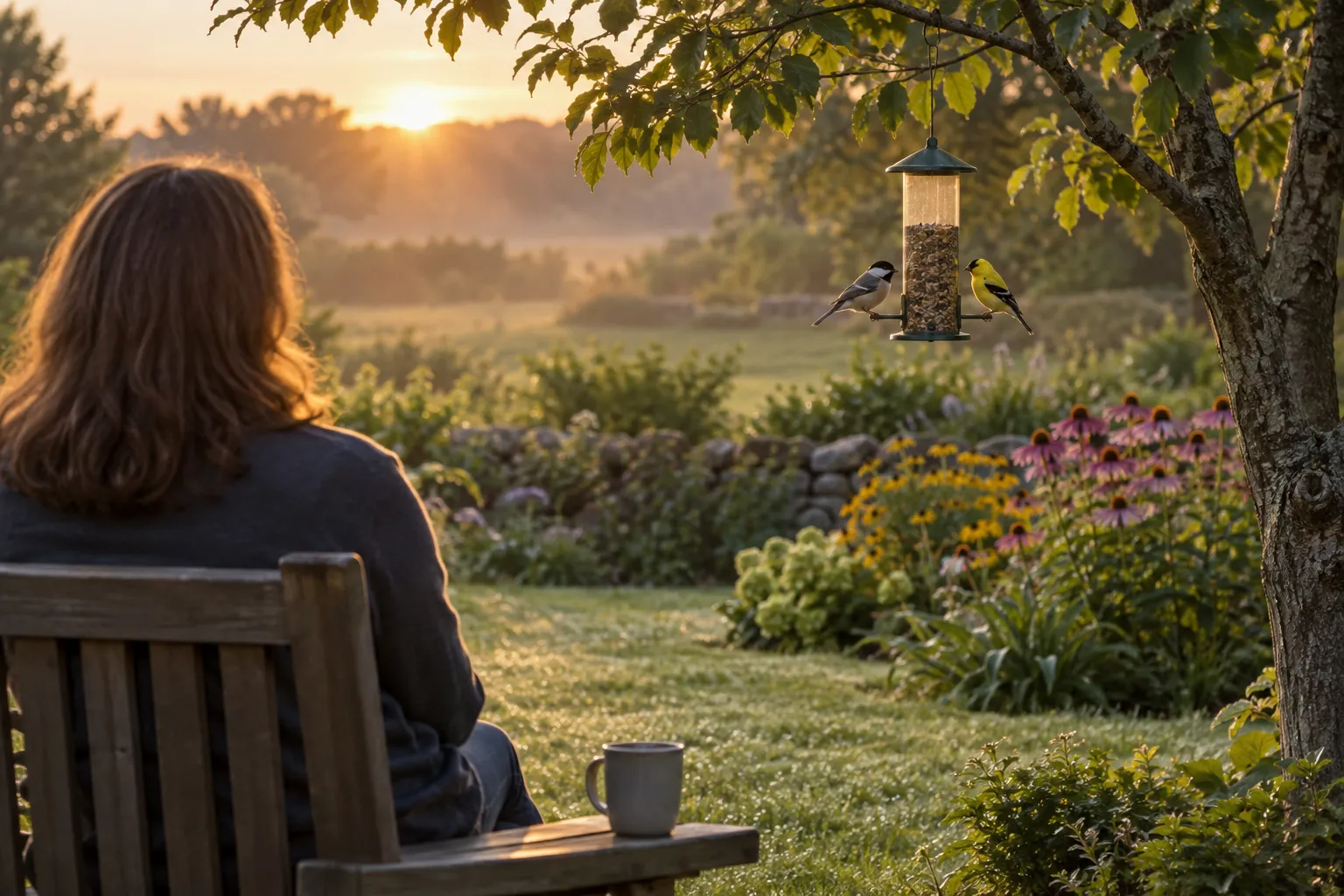
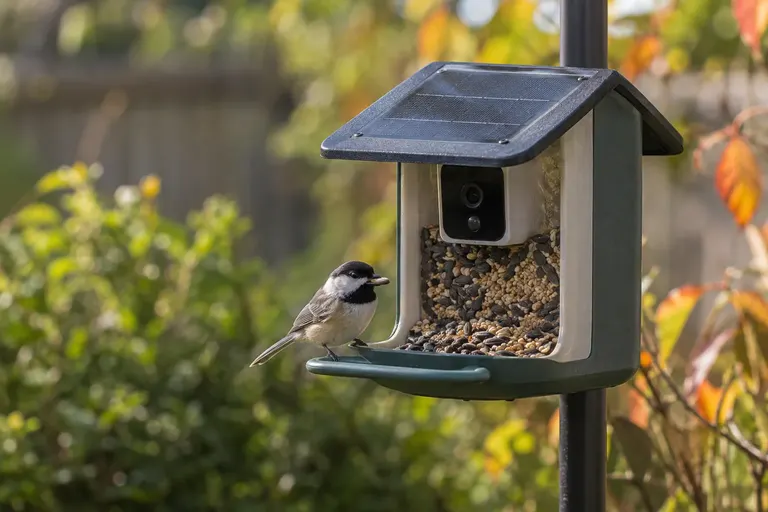
For people with limited mobility, long working hours or caring responsibilities, a feeder outside a window may be one of the easiest ways to add daily contact with nature. Watching a pair of House Finches, a Robin in a European garden or a Great Kiskadee on a Brazilian balcony can become a small, reliable pleasure. Our guide to binoculars for watching birds from your window covers how to see more detail without going outside.
Can birdwatching help with loneliness and ageing?
There are good reasons to think so, although direct studies are limited. Loneliness and social isolation are linked to higher risks of depression, cognitive decline and poorer physical health in older adults. Birding offers several routes to connection.
- Clubs and guided walks give regular, low-pressure social contact built around a shared interest.
- Community science projects such as garden bird counts, breeding bird surveys and eBird checklists let people contribute to something larger than themselves.
- Conversation starters are everywhere. Neighbors often want to know what that bird on the fence was.
- Intergenerational sharing comes naturally, since children tend to be fascinated by birds.
Birding also keeps the mind active. Learning songs, remembering field marks and noticing seasonal changes all involve memory and attention. Whether this protects against cognitive decline is not proven, but mentally engaging hobbies are generally considered good for brain health.
Can birdwatching ever be bad for mental health?
For most people, the risks are small, but it is worth recognizing a few pitfalls.

Competitive pressure
Some birders enjoy chasing rarities, keeping long lists and competing in “big year” challenges. For others, this can become stressful, expensive and time-consuming, and missing a rare bird can feel like failure. If you notice that birding brings more frustration than calm, it may help to step back from lists and alerts for a while.
Eco-anxiety
Paying close attention to birds also means noticing losses: fewer swifts over a town, a hedgerow cut down, a species that no longer returns. Learning about bird declines can bring grief or worry. Many people find that taking small, practical actions, such as planting native shrubs, making windows safer or recording sightings, helps turn worry into something constructive.
Isolation disguised as a hobby
Birding alone can be restorative, but it can also become a way to avoid people. Mixing solo outings with occasional group walks or shared time with friends and family keeps the social benefits in play.
Is birdwatching used in health care?
In some places, yes. “Green social prescribing” or “nature prescriptions” let doctors and health workers refer patients to outdoor activities, including guided walks, gardening and wildlife watching, as part of a broader care plan. The UK has been one of the most active countries in trialing these schemes, including nature prescription leaflets developed with the RSPB that suggest monthly activities such as listening for birdsong.
Similar ideas have spread to Canada, the United States, Australia and parts of Europe. These programs are meant to complement, not replace, conventional treatment. If you are struggling with persistent low mood or anxiety, speaking to a doctor or mental health professional is the right first step.
How can you get the most wellbeing from birding?
The key is to make it restorative, not competitive or stressful. A few practical approaches:
Start where you are
You do not need to travel. A window, a balcony, a park bench or a garden with a feeder is enough. Many of the studies above found benefits from ordinary, local encounters. Our guide to backyard birding covers simple ways to bring more birds close.
Try a daily “sit spot”
Pick a spot and spend 10 to 15 minutes there regularly, ideally at the same time of day. Watch and listen without trying to identify everything. Over weeks, you will notice patterns: which birds arrive first, which call at dusk, how the chorus changes with the seasons.
Listen as much as you look
Close your eyes for a minute and count the different sounds. Apps such as Merlin can help name singers, but they are also easy to over-rely on. Our guide to using Merlin Sound ID explains how to use it without losing the listening habit.
Keep a simple journal
Writing down what you see, even a few lines, slows you down and turns observation into reflection. A journal also becomes a record of seasons passing. See keeping a birding journal for ideas.

Share it
Take a walk with a friend, join a local club or bird with children or grandchildren. Our guide to birding with kids has tips on keeping it fun.
Contribute your sightings
Submitting simple counts to a community science project turns a quiet half hour into a contribution to research. Projects run worldwide, from eBird and Project FeederWatch in North America to the RSPB’s Big Garden Birdwatch in the UK and national atlas projects across Europe and Latin America. Many people say that knowing their records help scientists track bird populations adds a sense of purpose to their watching.
Notice the seasons
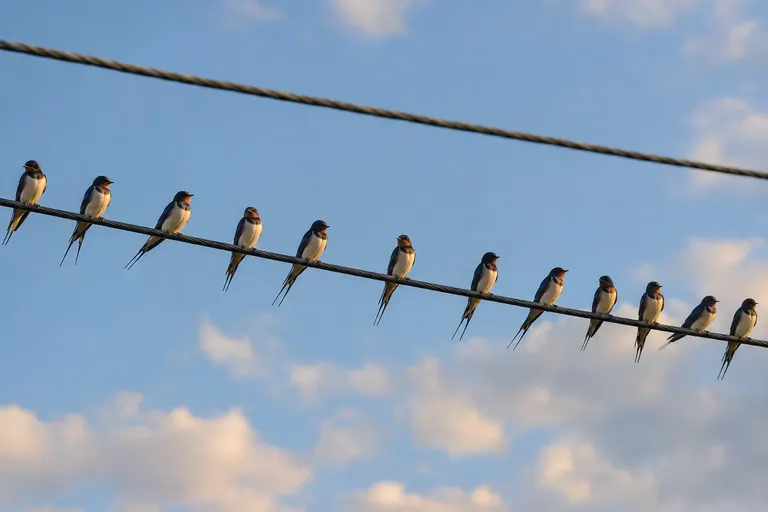
Pay attention to the calendar of bird life: the first spring song, the arrival of swallows or hummingbirds, young birds begging in early summer, flocks forming in autumn. Tracking these changes connects you to the rhythm of the year, which many people find grounding, especially through long winters.
Let go of the list when it stops being fun
Listing and chasing rare birds are enjoyable for many people, but they can also create pressure, frustration and long drives. If birding starts to feel like a test, go back to simply watching the birds in front of you.
Common mistakes that take the joy out of birding
- Trying to identify everything immediately. It is fine to watch an unknown bird and just enjoy it.
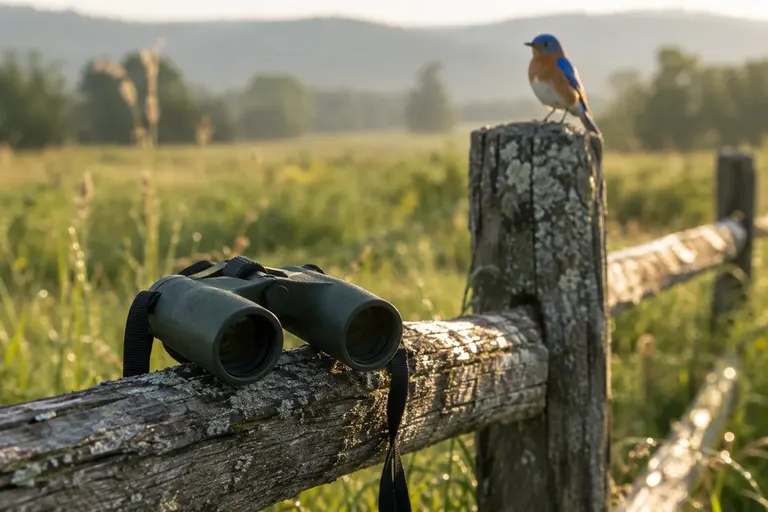
- Too much gear too soon. A basic pair of binoculars is enough. Our guide to birding for beginners covers the essentials.
- Only birding on rare-bird alerts. Chasing can be exciting, but regular local walks build the calm routine that research links to wellbeing.
- Comparing yourself with experts. Skill comes with time. Everyone starts by not knowing a sparrow from a finch.
- Staying on the phone. Checking apps constantly can undercut the mindful benefits. Try putting the phone away for part of each outing.
Does it matter which birds you see?
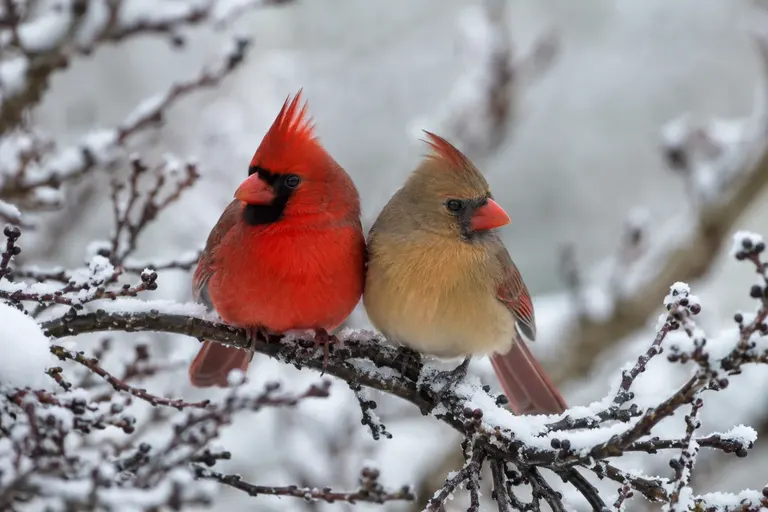
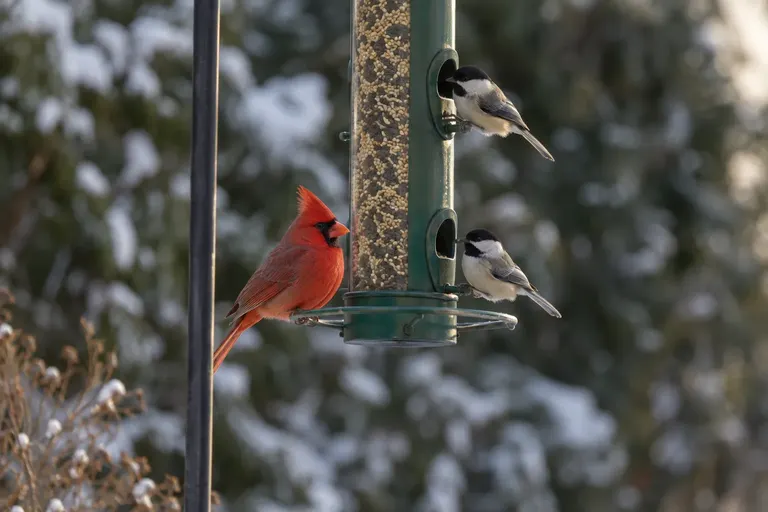
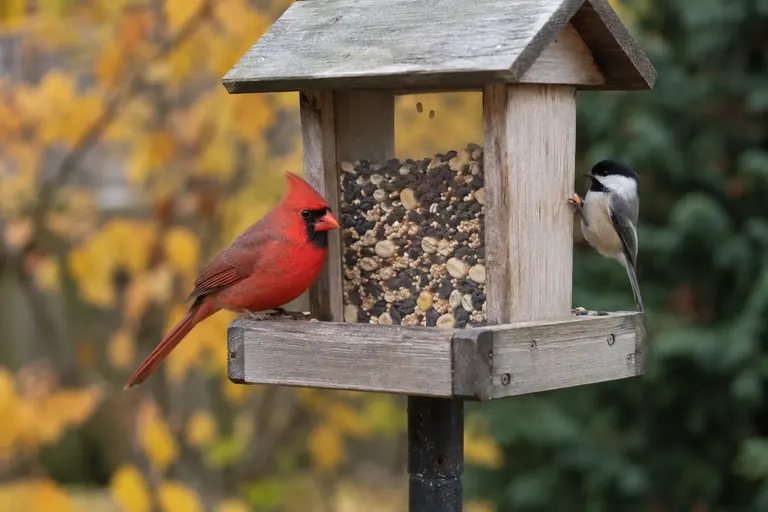
Studies suggest variety and abundance both matter. The European research linked life satisfaction to the number of species, and the UK study focused on the number of birds. Familiar garden birds count as much as rarities. A Northern Cardinal singing in a Midwest yard, a Blackbird singing from a chimney in London, a Rufous-bellied Thrush in São Paulo or House Sparrows chattering in an Istanbul courtyard can all provide the same everyday lift.
This also connects mental health to conservation. Many common birds have declined, which means fewer everyday encounters for millions of people. Protecting birds near homes, through native planting, safe windows and indoor cats, may also protect a small but real source of wellbeing.
Quick facts
- Seeing or hearing birds has been linked to better momentary mental wellbeing that may last for hours.
- More afternoon birds near home were associated with lower depression, anxiety and stress in a UK study.
- More bird species regionally have been linked with higher life satisfaction across Europe.
- Recorded birdsong reduced self-reported anxiety compared with traffic noise in one experiment.
- Birding combines attention restoration, mindfulness, movement, daylight and social connection.
- Nature prescription schemes in some countries include birdwatching activities.
- Most evidence is observational; birding supports but does not replace professional care.
Sources
Frequently asked questions
Does birdwatching reduce stress?
Evidence suggests it can. Studies link time in nature, and specifically seeing or hearing birds, with lower self-reported stress and better mood. Birdwatching combines several things known to help: being outdoors, gentle focused attention, light physical activity and a sense of connection to living things. It is a helpful habit, not a guaranteed cure, and effects vary between people.
Can listening to birdsong help anxiety?
Some experimental studies suggest so. In one study, people who listened to recordings of birdsong reported reduced anxiety compared with those who listened to traffic noise. Field surveys also find that people rate places with more varied birdsong as more restorative. Birdsong is not a treatment for an anxiety disorder, but it may be a pleasant, low-effort way to ease tension.
How long do the mood benefits of seeing birds last?
A large smartphone study in which people reported their surroundings and mood several times a day found that seeing or hearing birds was linked to improved mental wellbeing that appeared to last for up to several hours afterward. The study was observational, so it shows association rather than proof of cause, but the pattern held across people with and without a depression diagnosis.
Is birdwatching good for older adults?
It can be. Birdwatching can be done at any pace, from a window, a garden or a short walk. It encourages time outdoors, gentle movement, attention to detail and often social contact through clubs or community science projects. These are all linked to better wellbeing in later life. It also adapts well to limited mobility, since feeders can bring birds close.
Can birdwatching replace therapy or medication?
No. Birdwatching may support mental health as part of a healthy routine, but it is not a substitute for professional care for depression, anxiety or other conditions. Anyone struggling with persistent low mood, anxiety or thoughts of self-harm should speak to a doctor or mental health professional. Nature activities can work well alongside treatment.