Where Do Birds Go When It Rains? Shelter and Survival
Where do birds go when it rains? Most sit tight in dense shrubs, trees, hedges and under eaves, facing into the wind, and wait. Light rain barely stops them.
In this article
- Where do birds shelter in the rain?
- What birds do in different kinds of rain
- Why don’t birds fly in the rain?
- Do birds get wet in the rain?
- Do birds know when rain is coming?
- Why do some birds feed in the rain?
- How does rain affect nesting birds?
- How to help birds on rainy days
- Sources
- Frequently asked questions
Where do birds go when it rains? Mostly nowhere far. Small birds tuck into the nearest dense cover, such as evergreen shrubs, hedges, ivy, thick tree crowns or the dry side of a building, and wait. They perch facing into the wind with feathers pressed flat so water runs off. In light rain many simply carry on feeding.
So the quiet garden on a wet afternoon isn’t empty. The birds are usually a few meters away, sitting still where you can’t easily see them. Here’s where they hide, why they stop flying, and how rain changes their day.
Where do birds shelter in the rain?
Birds shelter in the densest, closest cover they know. For garden birds that usually means:
- Evergreen shrubs and conifers. Holly, yew, ivy, laurel and conifers keep their leaves all year and break up both rain and wind.
- Hedges. A thick hedge is a long, dry corridor with plenty of perches deep inside.
- Inside tree crowns. Birds move from exposed outer twigs to branches close to the trunk, where the leaves overhead act like an umbrella.
- Buildings. Eaves, gutters, sheds, carports and the lee side of a wall all give cover. Sparrows and starlings often use them.
- Cavities. Tits, sparrows and other hole-nesting birds may wait out bad weather in nest boxes or holes, much as they do at night. More on that in where birds go at night.
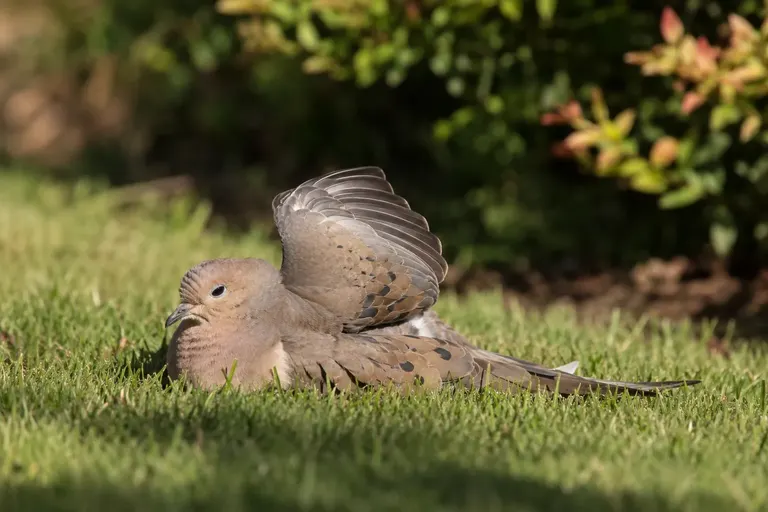
Audubon’s BirdNote describes birds riding out storms under tree cover or sitting on a wire facing into the wind. Facing the wind matters: it keeps rain flowing from the bill back along the feathers instead of lifting them up and letting water in underneath.
Water birds behave differently. Ducks, geese and gulls often stay out in the open in rain, because their dense plumage sheds water very well. If you’re curious how that works, see why ducks don’t get wet.
What birds do in different kinds of rain
Rain isn’t one thing for a bird. A drizzle and a thunderstorm call for very different behavior. This summary pulls together the sources listed at the end of the page.
| Weather | What most small birds do | Why |
|---|---|---|
| Light drizzle or showers | Keep feeding, often in the open | Feathers shed light rain; food matters more than a little water |
| Steady rain | Feed in short bursts, rest in cover in between | Balance energy needs against getting cold and heavy |
| Heavy downpour | Sit still in dense cover, feathers sleeked, facing the wind | Flying is costly and wet feathers lose insulation |
| Thunderstorm or gale | Stay hidden; some birds feed heavily beforehand | Falling pressure is an early warning; wind and hail can injure birds |
| Rain clearing | Burst of activity, preening, sunbathing, feeding | Dry and repair feathers, catch up on food |
| Cold rain for days | Longer feeding time, more feeder visits | Energy runs short; insects are hard to find |
Why don’t birds fly in the rain?
Because it costs more and gains them little. A bird in flight is working hard already, and rain adds extra weight and turbulence. Audubon’s BirdNote also points out that rainstorms usually come with low air pressure, and low-pressure, humid air is less dense, so wings produce less lift.
The best measurements come from hummingbirds. In a 2012 study in the Proceedings of the Royal Society B, Victor Ortega-Jimenez and Robert Dudley filmed Anna’s Hummingbirds hovering at a feeder under simulated rain. In heavy rain the birds held their bodies and tails more horizontal, beat their wings faster through a smaller arc, and shook water off their heads and bodies. The researchers estimated that hovering in heavy rain needed noticeably more power than in dry air.
A hummingbird can afford a short burst of that to reach a feeder. A small songbird flying across open ground in a downpour gets soaked, chilled and slowed down, so the sensible choice is to wait.
Do birds get wet in the rain?
Their outer feathers get wet, but the skin usually stays dry. Contour feathers overlap like roof tiles, and each feather is a fine mesh of barbs held together by tiny hooks. Water beads on the surface instead of soaking in, while fluffy down underneath traps a layer of warm air.
Birds keep this system working by preening: they zip feathers back together and spread oil from a gland near the tail. Audubon describes most birds as “pretty watertight” thanks to this combination. After rain you’ll often see birds shaking, fluffing up and preening for several minutes. The fluffing is the same trick birds use in cold weather, explained in why birds puff up.
Long, cold rain is the real problem. Once feathers are soaked and out of place, they insulate poorly, and a small bird can lose heat fast. That’s why birds sit tight in heavy rain instead of flying around in it.
Do birds know when rain is coming?
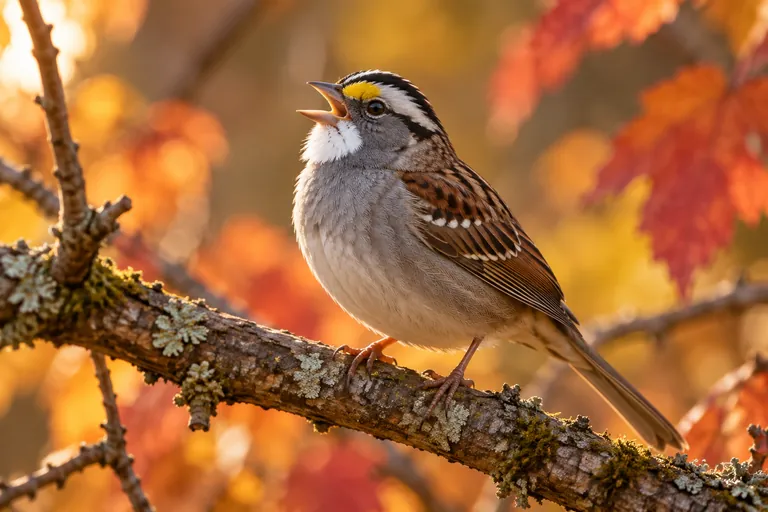
There’s good evidence that they sense storms before they arrive. In a 2013 study in the Journal of Experimental Biology, Creagh Breuner and colleagues lowered the air pressure around captive White-crowned Sparrows, mimicking an approaching storm, and the birds ate more.
A more dramatic example came in 2014. Golden-winged Warblers fitted with tiny trackers in Tennessee left their breeding grounds a day or two before a major tornado outbreak arrived, flew far south and came back after it passed, a round trip of well over 1,400 kilometers (about 900 miles), as described by Henry Streby and colleagues in Current Biology. We cover this in more detail in can birds predict the weather?
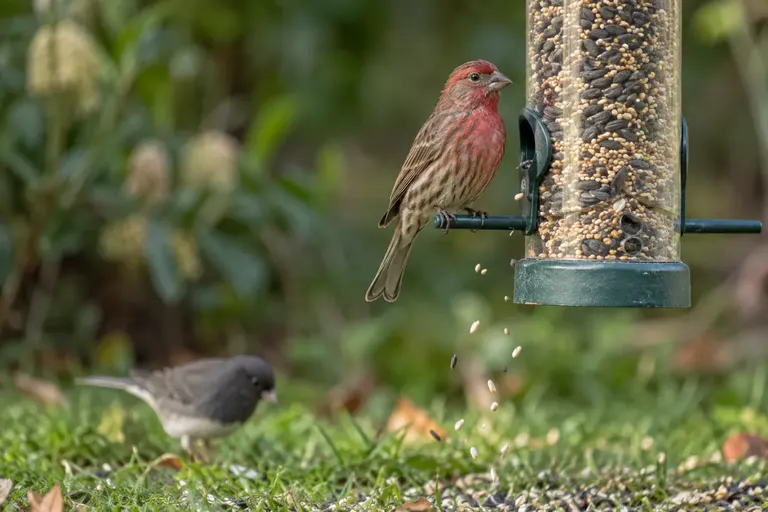
For garden watchers this explains a familiar pattern: feeders get busy on a heavy, grey afternoon, then go quiet when the rain arrives.
Why do some birds feed in the rain?
Because rain brings food to the surface. Earthworms come up onto wet lawns after rain. Soil scientist Chris Lowe told Scientific American that the old idea of worms fleeing flooded burrows is wrong: worms breathe through their skin and need moist soil, and wet ground lets them travel across the surface in a way dry conditions don’t allow.
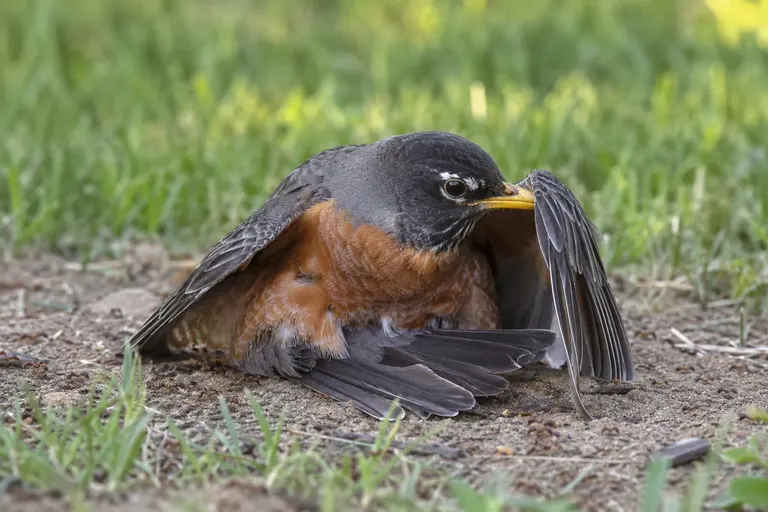
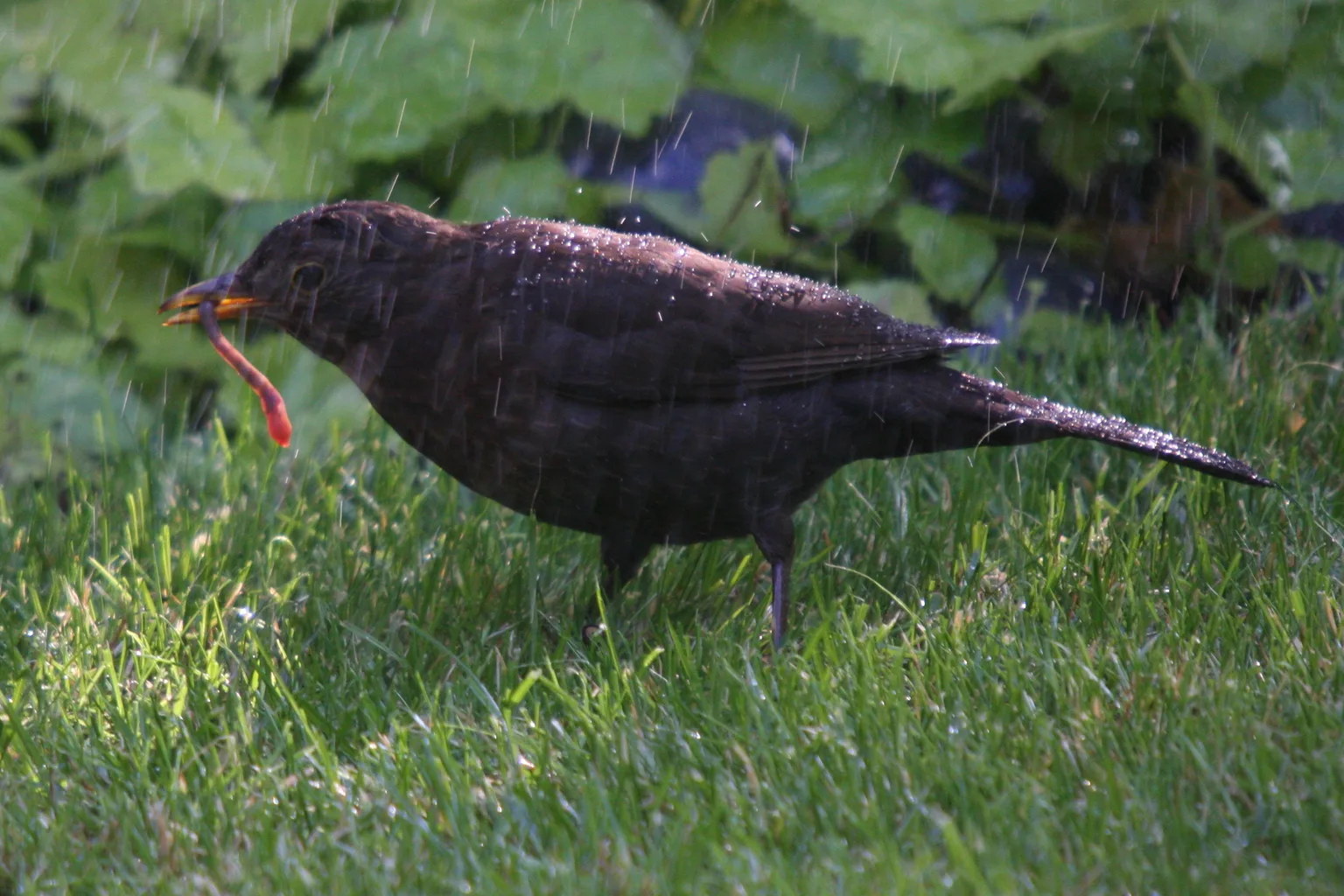
Ground feeders take advantage. The RSPB describes the Blackbird as a bird that feeds mainly on the ground on worms, insects, berries and fruit, and a wet lawn after a shower is one of the easiest places to watch one pull up a worm, just like the bird in the photo at the top of this page. Thrushes, starlings and gulls also work wet grass.
Hunger plays a part too. In cold weather a small bird has only so many daylight hours to eat enough to survive the night, so it can’t wait out a whole day of drizzle. It feeds between heavier bursts.
How does rain affect nesting birds?
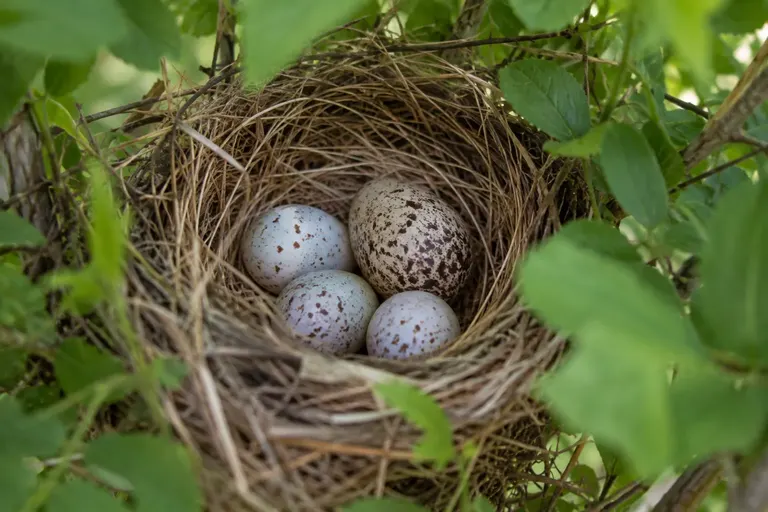
Wet springs and summers can be hard on chicks. Nestlings can’t keep themselves warm, so parents spend more time brooding and less time hunting, and caterpillars and flying insects are harder to find in cold rain.
The British Trust for Ornithology found that the very wet 2012 breeding season was among the worst on record for many species. Its Nest Record Scheme showed Blue Tits raised 13 percent fewer young and Great Tits 18 percent fewer, and Chaffinches 58 percent fewer, their lowest productivity in almost 50 years, linked to a shortage of caterpillars in the cold, wet weather.
Some species have their own coping tricks. Swift nestlings, fed only on insects caught in the air, can drop into a torpid state during long spells of bad weather and survive several days without food, according to the German swift research site apus-apus.com.
How to help birds on rainy days
You can’t change the weather, but you can make a rainy day easier for garden birds.
- Plant or keep dense cover. Evergreen shrubs, ivy on a wall and a thick hedge give birds a dry place close to food. A brush pile in a corner works too.
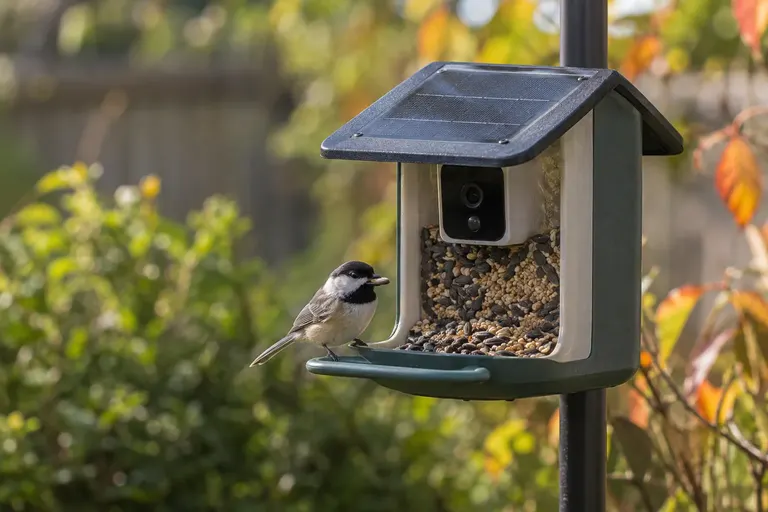
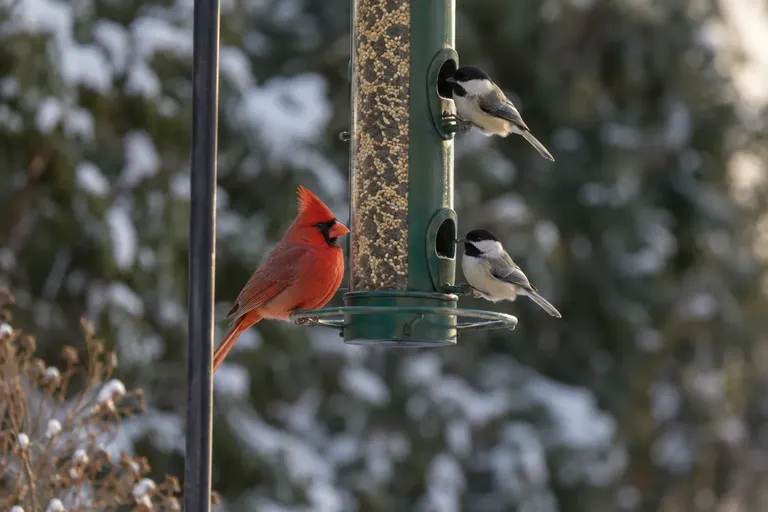
- Use feeders that keep food dry. Tube feeders with covered ports or feeders with a roof stop seed turning into mush. Our guide to the best bird feeders covers designs that drain well.
- Put out smaller amounts more often. Wet seed spoils and can grow mold. Fill feeders with what birds will eat in a day or two, and keep spare food dry, as explained in how to store bird seed.
- Clean feeders after long wet spells. Damp leftovers in trays and ports are where problems start. See how to clean bird feeders.
- Offer energy-rich food in cold rain. Fat balls and mealworms help birds that can’t forage much.
- Don’t disturb sheltering birds. If a bird is sitting fluffed up in a shrub during a downpour, it’s resting, not in trouble. Leave it alone.
Sources
- Audubon (BirdNote): Why do birds avoid flying in the rain?
- Ortega-Jimenez and Dudley (2012), Flying in the rain: hovering performance of Anna’s hummingbirds under varied precipitation, Proceedings of the Royal Society B
- Breuner et al. (2013), Environment, behavior and physiology: do birds use barometric pressure to predict storms?, Journal of Experimental Biology
- BTO: Rain stopped play, 2012 breeding season worst on record for many nesting birds
- Scientific American: Why do earthworms surface after rain?
- apus-apus.com: Mauersegler, Brut und Nestlinge

Frequently asked questions
Where do birds go when it rains hard?
In a heavy downpour most small birds stop moving and sit it out close to where they already are. They pick dense cover: evergreen shrubs, hedges, ivy, the inside of a tree crown, or the sheltered side of a building. They perch facing into the wind with feathers pressed flat so water runs off, and they come back out as soon as the rain eases.
Do birds get wet in the rain?
Only on the surface. Overlapping contour feathers shed water like roof tiles, and the fine hooked structure of each feather holds droplets out while down underneath keeps warm air against the skin. Preening keeps that barrier working. Long, cold rain can still soak small birds and chicks, which is why they shelter instead of flying around in it.
Why don't birds fly in the rain?
Flying in rain costs more energy. Water adds weight to feathers, and the low air pressure and humid air that come with storms are less dense, so wings get less lift. Audubon's BirdNote notes that perching saves energy and limits heat loss. Lab work on hummingbirds found they changed their posture and wingbeat to keep hovering in heavy rain.
Do birds come to feeders when it's raining?
Yes, in light or steady rain many do, especially in cold weather when they need energy. In a downpour they usually wait in cover and then arrive in a rush when it eases. Research on sparrows also suggests birds eat more when air pressure drops before a storm, so busy feeders on a grey day can be a sign that bad weather is coming.
How does rain affect baby birds?
Cold, wet spells are hard on nestlings. Parents spend more time brooding and less time finding food, and insects are scarce. The BTO reported that the very wet 2012 breeding season left Blue Tits with 13 percent and Great Tits with 18 percent fewer young than average. Swift chicks can survive a few days without food by becoming torpid.