Why Are Owls Silent in Flight? The Feather Science
Why are owls silent in flight? Comb-edged, fringed, velvety feathers and big slow-beating wings damp the sound of air, so owls can hear prey and sneak up on it.
In this article
- Quick answer: silent flight at a glance
- Are owls really silent?
- Where does wing noise come from?
- How do owl feathers muffle sound?
- How do owl wings help?
- Why do owls need silent flight?
- Do all owls fly silently?
- How do scientists measure owl flight noise?
- Why don’t hawks and falcons fly silently too?
- Are there other quiet flyers?
- Is there a downside to silent flight?
- How has owl flight inspired engineering?
- Myths and facts about silent owl flight
- What this means for backyard birders
- Quick facts about owl flight
- Sources
- Frequently asked questions
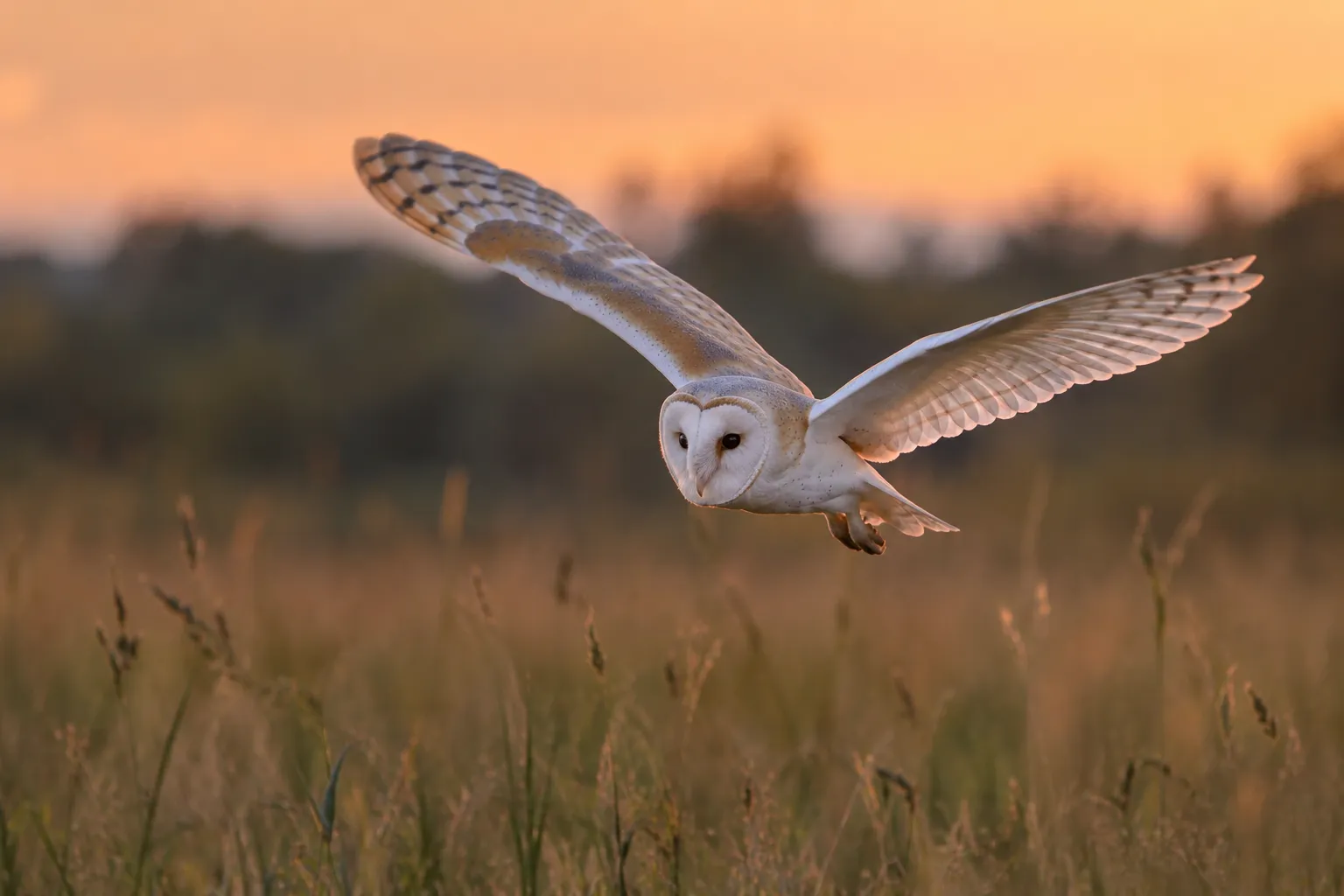
Why are owls silent in flight? Because their wings are built to stop air from making noise, especially above about 2 kHz, so most owls fly with little or no sound we can hear. Three feather features do the work: a comb of stiff serrations along the leading edge of the outer wing, a soft fringe along the trailing edges of the flight feathers, and a velvety surface on top of the feathers. Large, broad wings allow slow flight with few wingbeats, cutting noise further.
The result is flight that is much quieter than that of other birds, especially at higher frequencies. That helps an owl sneak up on prey and, just as important, lets it keep listening for that prey while it flies.
Quick answer: silent flight at a glance
| Feature | Where it is | What it does |
|---|---|---|
| Leading-edge comb | Front edge of the outermost primary feathers | Breaks up air hitting the wing, reducing turbulence noise |
| Trailing-edge fringe | Rear edges of flight feathers | Softens the pressure change as air leaves the wing, reducing trailing-edge noise |
| Velvety surface | Upper surface of wing feathers | Damps rubbing noise between feathers and smooths airflow |
| Large wings, low wing loading | Whole wing | Allows slow flight and gliding with fewer wingbeats |
| Soft body plumage | Body and legs | Reduces rustling as the bird moves |
Are owls really silent?
Not completely, but close enough to fool people and prey. If a pigeon takes off near you, you hear the clatter of its wings. A crow’s wingbeats make an audible whoosh. An owl flying past at the same distance may make no sound you can detect.
Acoustic studies in wind tunnels and flight chambers, many using Barn Owls, show that owls do produce some low-frequency sound, mostly from the flapping itself. What they suppress strongly is higher-frequency noise, roughly above about 2 kHz. That matters because it is where much of the “swish” of a bird’s wing lies, and it overlaps with the range of sharp hearing in both owls and many small mammals.
So “silent” means “very quiet in the frequencies that count.”
Where does wing noise come from?
To understand how owls stay quiet, it helps to know how birds make noise when they fly. Most of it is aerodynamic:
- Leading-edge noise. When air hits the front edge of a wing, especially if it is already turbulent, pressure fluctuations radiate as sound.
- Trailing-edge noise. As air leaves the rear edge of a wing, turbulent eddies passing over the sharp edge produce broadband noise. This is a major noise source for aircraft wings, fans and wind turbines too.
- Friction noise. Feathers rubbing and sliding against each other as the wing flexes create rustling.
- Flapping noise. Every wingbeat pushes air and generates low-frequency sound. Faster, harder flapping means more noise.
Owls have an answer to each of these.
How do owl feathers muffle sound?
Most of the key features were described in the 1930s by the British aircraft engineer and naturalist Robert Graham, who studied owl wings in the hope of making quieter aircraft. Researchers have been refining the details ever since.

The leading-edge comb
On the leading edge of the outermost primary feather, the first flight feather at the front of the wingtip, owls have a row of stiff, separated barbs that stick out like the teeth of a comb. In most birds, this edge is smooth.
The comb appears to break up the air flowing over the leading edge into smaller, weaker swirls and to help control how air flows across the wing surface. The details are still being worked out in wind-tunnel studies, but the overall effect is thought to be reduced turbulence and noise, especially at higher flight angles when an owl is slowing down or maneuvering.
The trailing-edge fringe
The rear edges of an owl’s flight feathers end in soft, hair-like fringes rather than a clean edge. When air leaves a sharp, rigid edge, it produces a sudden pressure change and strong noise. A soft, porous, flexible edge lets pressure even out more gradually.
Theoretical work by aeroacoustics engineers has shown that making a trailing edge porous and compliant can substantially reduce the noise it produces, which fits closely with what owls do. This is probably one of the most important contributors to their quiet flight.
The velvety upper surface
The upper surfaces of owl flight feathers, and many of their coverts, are covered in fine, soft, elongated filaments that give them a velvet-like feel. This pile does two things. It reduces the noise of feathers rubbing against each other as the wing moves, and it may help smooth the flow of air over the wing.
Run your fingers over an owl feather in a museum or rehabilitation center and you notice it immediately. A pigeon or hawk feather feels smooth and slick; an owl feather feels soft and almost furry.
Soft body and leg feathers
Owls also tend to have dense, soft body plumage, and many have feathered legs and even toes. That reduces the rustle of the body as it moves. In northern owls such as the Snowy Owl and Great Gray Owl, the thick feathering also provides insulation.
How do owl wings help?
Feathers are only half the story. The shape and size of an owl’s wings matter just as much.
Big wings for their weight
Owls have large wings relative to their body weight, which gives them low wing loading. The Barn Owl, for example, looks large in flight but is surprisingly light when you see one in hand. Low wing loading means the wing produces enough lift at slow speeds, so the owl can fly slowly, glide and hover over grassland without constant hard flapping.
Slow flight is quiet flight
Aerodynamic noise rises steeply with speed. A slow-flying owl produces much less noise than a fast-flying falcon or pigeon. Owls often quarter back and forth over fields at low speed, then glide in for the final approach, which is the quietest phase.
Broad, rounded wings
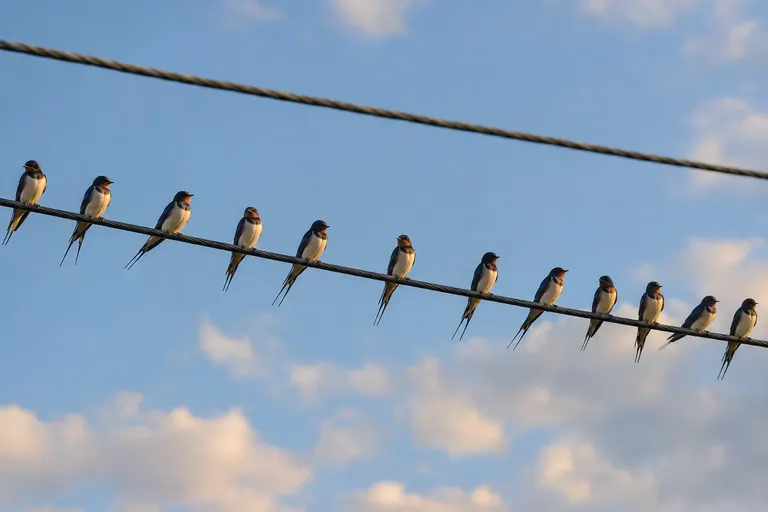
Many owls have broad, rounded wings that suit slow, maneuverable flight among trees and over open ground. Together with the feather features, that makes an owl’s approach both quiet and precise.
Why do owls need silent flight?
There are two main explanations, and they are not mutually exclusive.
The stealth hypothesis
The obvious answer is that owls fly quietly so that their prey cannot hear them coming. Mice, voles and many other small mammals have excellent hearing, including at high frequencies. An owl that clatters in will lose the element of surprise.
The self-masking hypothesis
The second answer is that owls fly quietly so that they can keep hearing their prey. Many owls, especially the Barn Owl, locate prey largely by sound, adjusting their approach in mid-air as a vole moves under the grass. If the owl’s own wings were noisy, that noise would drown out the rustle it is listening for.
Several researchers think this second explanation is especially important. Owls suppress noise most strongly in the frequency range where their own hearing is best, which fits the idea that silent flight evolved partly to protect the owl’s own listening. Our article on whether birds have ears explains how owls pinpoint sound, and how owls turn their heads so far covers how they aim that sound-gathering face.
In practice, both benefits likely work together. An owl that hears better and is heard less has a double advantage.
Do all owls fly silently?
Most owls have quiet flight, but the features vary with how they hunt.
- Fish owls and fishing owls. Owls that feed mainly on fish, such as the fish owls of Asia (including Blakiston’s Fish Owl) and the fishing owls of Africa, have reduced or missing comb, fringe and velvet features. Fish underwater are poorly placed to hear an owl’s wings, and these owls hunt more by sight, so quiet flight offers less benefit.
- Owls active in daylight. Species that hunt partly in the day and rely more on vision, such as the Northern Hawk Owl, are often described as having less developed sound-damping features than strictly nocturnal hunters.
- Nocturnal sound hunters. The Barn Owl, Long-eared Owl, Tawny Owl and Great Gray Owl are among the most specialized, relying heavily on hearing to find prey.
That pattern, with the features strongest in owls that hunt by ear, is strong evidence that silent flight is an adaptation tied to hunting by sound.
How do scientists measure owl flight noise?
Measuring the sound of a bird’s wings is harder than it sounds, because the noise is faint and the bird is moving. Researchers have used several approaches:
- Flight chambers with microphone arrays. Trained owls fly past or through rows of sensitive microphones in quiet rooms, and the recordings are compared with those of other birds, such as hawks or pigeons, flying at similar speeds.
- Wind tunnels. Individual feathers or whole preserved wings are mounted in a wind tunnel, and engineers measure noise and airflow while changing speed and angle. Removing or trimming the comb or fringe shows how much each feature contributes.
- Flow visualization. Smoke, lasers and particle tracking reveal how air moves over the feather surface and edges.
- Mathematical models. Aeroacoustic theory predicts how porous, flexible edges should change noise, and those predictions are compared with owl measurements.
Results vary with method and species, and not every study agrees on which feature matters most. The broad picture is consistent, though: owl wings produce markedly less high-frequency noise than comparable wings of other birds, and the feather features together with slow flight explain most of the difference.
Why don’t hawks and falcons fly silently too?
Hawks, eagles and falcons are also predators, so why haven’t they evolved the same quiet wings? The answer seems to be that they hunt differently.
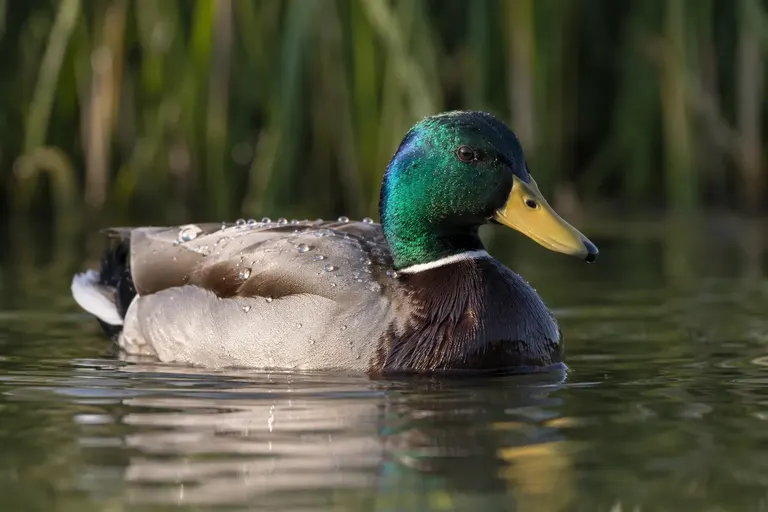
Most daytime raptors find prey by sight and rely on speed, surprise from cover or a steep dive. A Peregrine Falcon stooping on a pigeon is moving so fast that noise matters little; the prey has almost no time to react. A Cooper’s Hawk or Eurasian Sparrowhawk bursting around a hedge relies on surprise and agility. Quiet feathers would also come at a cost: they tend to be softer, less water-resistant and possibly less durable, which is a poor trade for a bird that flies fast and hard.
Owls, by contrast, fly slowly, often in the dark, and many find prey by ear. For them, the benefits of silence outweigh the costs. For more on how fast raptors hunt, see what is the fastest bird.
Are there other quiet flyers?
Owls are the most famous, but not the only ones. Nightjars, frogmouths and some other nocturnal birds have soft plumage and relatively quiet flight, though they are generally less specialized than owls.
At the opposite extreme, some birds deliberately make noise with their wings. Mourning Doves produce a whistling sound on takeoff. The Crested Pigeon of Australia has a modified flight feather that makes a distinctive sound when it flies off in alarm, and research has shown other pigeons treat that sound as a warning. Many hummingbird and snipe species produce display sounds with their feathers. Silent flight is one end of a wide spectrum.
Is there a downside to silent flight?
Yes. The soft, open structure that muffles sound makes owl feathers less water-resistant than those of many other birds. Barn Owls, in particular, are thought to struggle to hunt in heavy rain, and prolonged wet weather can reduce hunting success and body condition. That may be one reason Barn Owls often roost and hunt from sheltered sites such as barns, church towers and hollow trees.
Soft feathers may also wear faster. Like all birds, owls replace their feathers through molt, as explained in why birds molt.
How has owl flight inspired engineering?
Owl wings are a classic example of biomimicry, design inspired by nature.
- High-speed trains. Engineers at JR West designed the pantograph of the 500 Series Shinkansen, the arm that collects electricity from overhead wires, with serrations inspired by owl feathers, to cut aerodynamic noise at high speed.
- Wind turbines. Serrated trailing edges, similar in principle to the owl’s fringe, are now widely used on turbine blades to reduce noise.
- Fans and aircraft. Researchers have tested owl-inspired edges and porous surfaces on computer fans, ventilation fans, drone rotors and aircraft components to reduce noise.
Not every design copies an owl directly, and many engineering solutions work differently in detail, but owl wings helped point the way.
Myths and facts about silent owl flight
| Claim | Reality |
|---|---|
| “Owls make absolutely no sound when flying.” | False. They are very quiet, especially at high frequencies, but not literally silent. |
| “Owls fly silently only to surprise prey.” | Only part of it. Quiet flight also helps owls hear their prey. |
| “All owls are equally silent.” | False. Fish-eating owls have reduced sound-damping features. |
| “Owl feathers are waterproof like a duck’s.” | False. Owl feathers are generally less water-resistant. See why ducks don’t get wet for the contrast. |
| “Silent flight is just about the feathers.” | False. Wing size, shape and slow flight speed matter just as much. |
What this means for backyard birders
- You may never hear an owl pass. Many people only discover owls in their neighborhood through calls at night or pellets and whitewash under a roost.
- Listen instead of looking. Owls are easier to find by their calls. Our guide on why birds chirp at night and how to bird by ear can help.
- Look for owls at dusk over open ground. Barn Owls hunting meadows and field edges are among the easiest owls to watch in flight.
- Keep your distance. Owls hunting or roosting near homes are easily disturbed. Follow good birding etiquette.
Quick facts about owl flight
- Owls fly much more quietly than other birds of similar size.
- A comb of serrations on the leading edge of the outer primary breaks up airflow.
- Soft fringes on trailing edges reduce trailing-edge noise.
- Velvety feather surfaces damp rubbing noise.
- Large, light wings let owls fly slowly and glide.
- Owls suppress noise most strongly above about 2 kHz.
- Quiet flight helps owls avoid being heard and helps them hear prey.
- Fish-eating owls have reduced sound-damping features.
- Owl-inspired designs have been used on trains, fans and turbine blades.
Sources
- Cornell Lab of Ornithology: All About Birds, Barn Owl species account
- Cornell Lab of Ornithology: All About Birds, Great Gray Owl species account
- RSPB: Barn Owl species information
- Audubon Guide to North American Birds
- Graham, R. R. (1934). The silent flight of owls. Journal of the Royal Aeronautical Society 38: 837-843.
- Jaworski, J. W. and Peake, N. (2013). Aerodynamic noise from a poroelastic edge with implications for the silent flight of owls. Journal of Fluid Mechanics 723: 456-479.

Frequently asked questions
Why are owls silent when they fly?
Owls are quiet in flight because of a combination of feather and wing features. A comb of stiff serrations on the leading edge of the outer wing breaks up airflow, a soft fringe on the trailing edges smooths the air leaving the wing, and a velvety upper surface damps friction noise. Large wings also let owls fly slowly with few wingbeats.
Are owls completely silent in flight?
No. Owls are much quieter than most birds of similar size, especially at higher frequencies, but they are not literally silent. Sensitive microphones pick up low-frequency sound from their wingbeats. The key point is that owls reduce the noise most in the frequency range where their own hearing, and that of many of their prey, is most sensitive.
Why do owls need to fly silently?
Two reasons are usually given, and both probably matter. Quiet flight helps owls approach prey without being heard, and it reduces the noise the owl itself makes, so it can keep listening for the rustle of prey while flying. Research suggests the second benefit, not masking its own hearing, is especially important for owls that hunt by sound.
Do all owls fly silently?
Most do, but not all equally. Fish-eating owls, such as the fish owls of Asia and the fishing owls of Africa, have reduced or missing sound-damping features. Their prey is underwater and cannot hear flight noise well, so quiet flight offers less benefit. Owls that hunt partly by day also tend to be somewhat less specialized.
Have owl feathers inspired technology?
Yes. Engineers have studied owl wings to reduce noise from fans, wind turbines, aircraft parts and trains. A well-known example is the pantograph, the arm that collects power from overhead wires, on Japan's 500 Series Shinkansen, which used a serrated design inspired by owl feathers to cut wind noise. Serrated trailing edges are now common on turbine blades.
Are owl feathers waterproof?
Owl feathers are generally described as less water-resistant than those of many other birds, because the soft, open structure that muffles sound does not shed water as well. Barn Owls in particular are thought to struggle to hunt in heavy rain, and wet weather can reduce their hunting success. This is one trade-off of silent flight.